Tag Archives: Seattle

The Spirit of Aunt Shiz and Kharma


Although my Aunt Shiz passed away ten days before my son and I were to travel to her childhood home in Hiroshima, I believe it was her caring soul that made our journey eerily complete.

Time for heebie-jeebies.

______________________
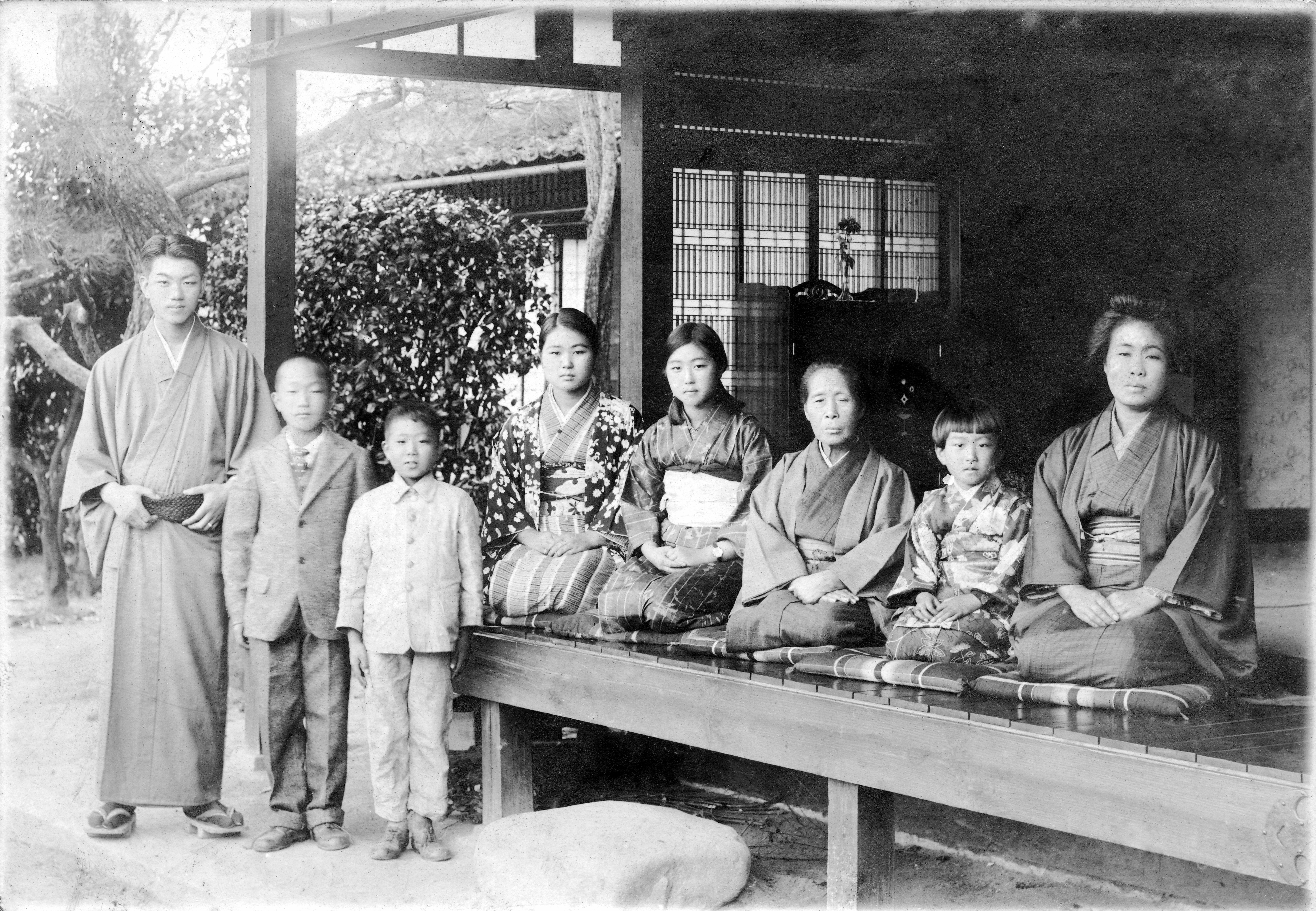
L to R: Uncle Yutaka, Dad, Uncle Suetaro, Aunt Michie, Aunt Shiz, Great Grandmother Kame, Aunt Mieko and Grandmother Kono at the Hiroshima home. Circa 1928.

Like all but one of the siblings, Aunt Shiz was born in Seattle in 1916.  My grandparents operated a barbershop as mentioned in “Masako and Spam Musubi“, the first story in this blog.  In the picture below likely taken early in 1918, she is standing in front of her mother Kono at their barbershop in Hotel Fujii near King and Maynard in downtown Seattle.  Grandma Kono is smiling while looking on; she appears to be holding a straight razor.  My relatives tell me Grandma was great with the customers and gave excellent shaves. (If it is a straight edge razor, she’s holding it in her left hand. We have a number of lefties in our family. Hmmm.) Notice the wooden sidewalk:
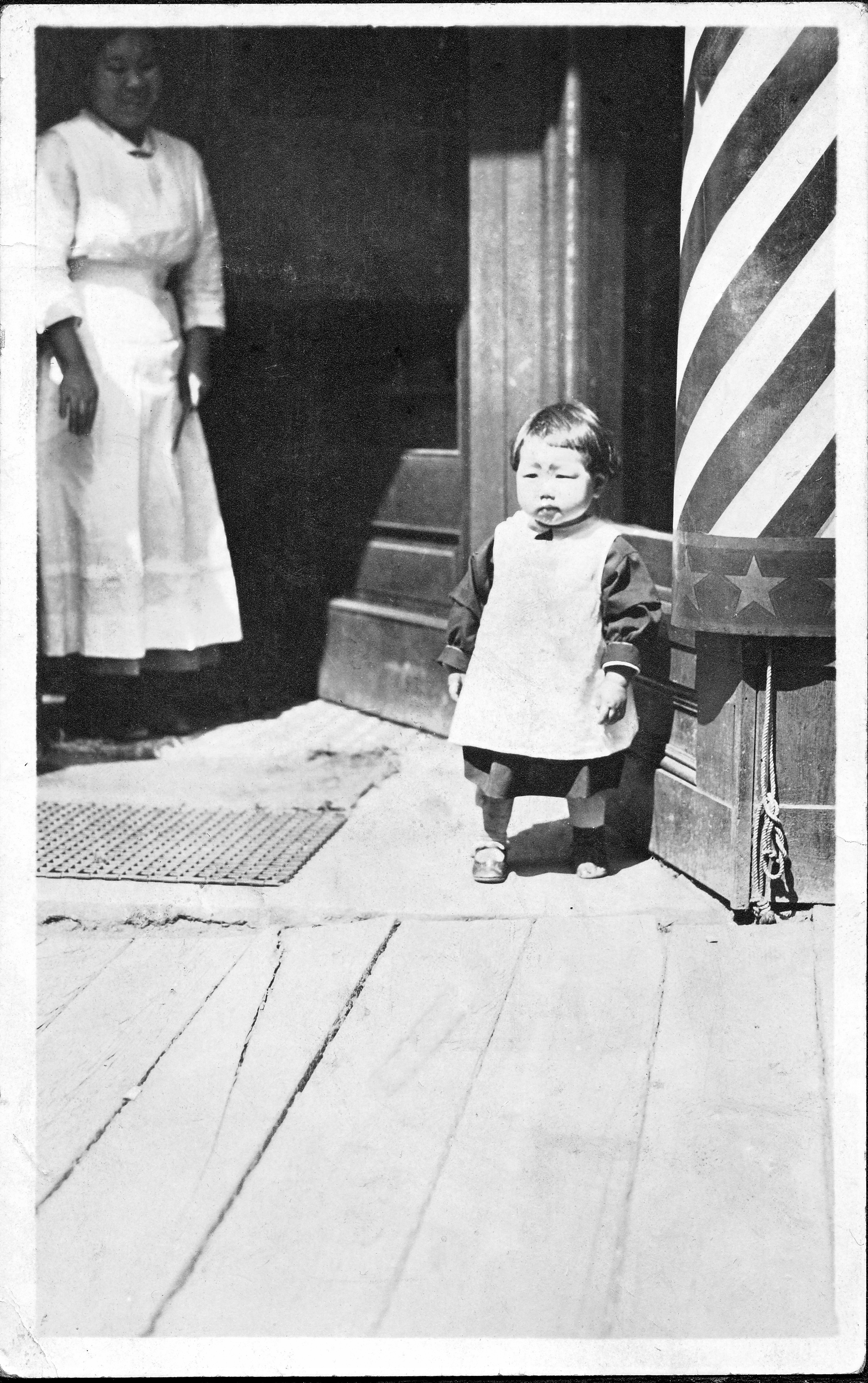
Aunt Shiz standing out in front of the barbershop; her mother (my grandmother) Kono smiles while looking on. Kono is holding a straight razor; she apparently gave great shaves and the customers enjoyed her friendliness.

In this photo taken about five or six years later, the wooden sidewalk has been replaced with concrete.  Aunt Shiz shows her friendly character while dancing on the left.  You can make out “Fujii” on the sign hanging overhead in the background:

A happy and smiling Aunt Shiz dancing on the left. The barbershop’s poles can be seen behind her. Circa 1923 in downtown Seattle.

Masako tells me Aunt Shiz was the village “hottie” as she grew up back in those days.  It made us laugh but it was true.  Surely, she broke a lot of the young boys’ hearts in the village.

She returned to Seattle on April 7, 1935, a vibrant young lady.  Amazingly (well, really not), her granddaughter looks very much like her at that age.  Genes.

She married and had three boys and one girl.  All but one were imprisoned during World War II.  They had the dehumanizing horror of having to first stay in vacated horse stalls at the Santa Anita Racetrack in Los Angeles before being transported under armed guard in blacked out trains to Manzanar where they stayed until war’s end.  They were American citizens.  Incredible, isn’t it?

_______________________

Aunt Shiz, who was my dad’s older sister and last lving sibling, was a true “Kanemoto” as the saying goes.  They were much alike…especially when they talked in their “Hiroshima dialect”.  Funny they aren’t able to remember when their birthdays are but they sure remember their happy days as children in that Hiroshima home.  Both loved to eat.  And eat they did.  Most of all, they loved sweets.  Don’t ask why.

When I see Dad now, I always take him Japanese treats – mainly “manjyu” and “youkan”.

Typical Japanese sweet treat called “manjyu”. Aunt Shiz and Dad love them.
Sweet Japanese treat made out of sweet beans, or “yokan”.

Last October, shortly after her 95th birthday, I took Dad to visit with Aunt Shiz.  It is a long drive to and from.  While Dad had great difficulty remembering why he was in my car – not just once but several times – there was no hesitation by either of them when they first got a glimpse of each other at Aunt Shiz’s senior home:

Yes, I took a bag of yokan.  Its on the front right in the video in a cellophane bag.  There were three different flavors, too.  They ate them ALL.  Really.

But they couldn’t remember who was older.  Absolutely precious to our family.

At her funeral service in Los Angeles, her grandson described her perfectly as a very warm person.  She loved to hug and give her young relatives a peck on the cheek.  That was Aunt Shiz.

_____________________

But back to the story…  Some heebie-jeebie stuff.  You know…  Stuff that gives you a year’s supply of chicken skin.

Our journey to Hiroshima was planned for months.  My decision to do so was made after I met with Masako and the others in Hawaii in May and returned home…or so I thought I made that decision.  It was as if something took over my thoughts and actions.  It was kharma.  I was also going to take my oldest son Takeshi (24 years old – very important.  Remember that.) who had NEVER been out of the country.

As the time neared, our Hiroshima family was excited my son and I were going.  Although those of us here in the States were unaware, in the extreme heat and humidity of Japan, my cousin Toshiro went deep into a 100 year old wooden shed which still exists in a last ditch effort to uncover past family information.  He found it…about a thousand pictures from the late 1800’s through shortly after war’s end.  That is where the photos of Aunt Shiz and the barbershop emerged from although all were damaged by mildew and insects.  They were extremely elated and flabbergasted to have found these vintage family treasures still existing.  They began to go through them in the main family room where their “butsudan”, or family altar was.  The altar is also about a hundred years old.

A few days after they looked over the treasure, Aunt Shiz passed away quietly…  She had fallen asleep in her wheelchair like she frequently did but this time, just didn’t wake up.  Oddly, her daughter and my cousin Bessie, who diligently and energetically cared for her for many years, said “…she said she wasn’t that hungry that evening then just passed away”.  Not having an appetitite is NOT Kanemoto.  I will have to remember that.

_____________________

Bessie immediately notified the family in Hiroshima at which time Masako immediately said, “I saw Shiz in the room while we were looking at the pictures.  She passed through the house.”  We all got chicken skin when we heard that.  Masako does not make things up and is as sharp as a tack at 78 years of age.  She has all her wits about her.  (That last trait is NOT typical Kanemoto, by the way.)  We don’t doubt her.

Bessie suddenly requested I take some of her ashes back with me to the family home for interment.  I was honored.

After my son and I arrived at the family home with Aunt Shiz, my cousin Toshiro immediately placed her ashes on the 100 year old altar…in the same room where Masako saw Aunt Shiz.  Again, Masako said to us she saw Aunt Shiz in that room before she passed through the house.  Creepies.
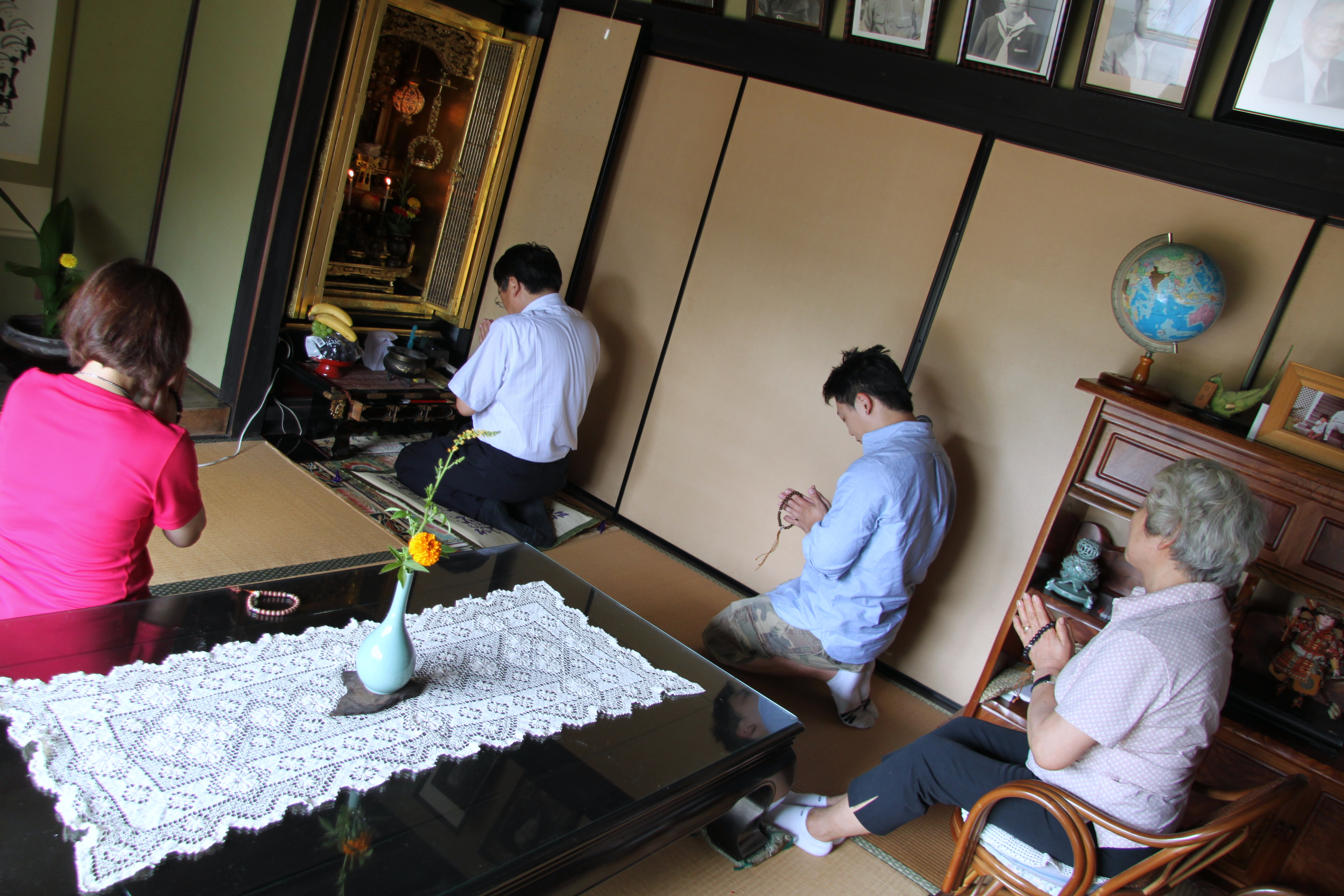
Toshiro placed Aunt Shiz’s ashes on the family altar. The room is basically the same as it was when Aunt Shiz lived here about 80 years earlier.

Shortly thereafter, my Hiroshima family surprised my son and I with the many, many vintage photos.  Then to add to the heebie-jeebies, Toshiro remarked, “We know Masako saw Aunt Shiz’s spirit in this room shortly before she died while we were looking over our ancestors’ pictures.  Aunt Shiz could have passed away two months ago or next year.  But she knew you were coming and in her soul, she wanted to come home now with you.  She arranged for all this to happen at this time.  She is happy now.”

Wow.  I felt like if a day’s worth of chicken skin out of Foster Farms was thrown on my arms.  Really creepie-crawly.

_________________________

Not over yet…  We had her official interment into the family crypt a few days later.  My other cousin Kiyoshi – another kind hearted person and the man who invented the first EDM device – came with us to the family burial plot, or “ohaka”.  The stone ohaka holds the ashes of my grandparents and their deceased children – including my Uncle Suetaro who was killed on Leyte in the Philippines during World War II as a soldier of the Japanese Imperial Army.

As my son was cleaning the ohaka prior to the interment, Kiyoshi said to my son and I, “Suetaro was 24 years old when he was killed.  Now, your son is meeting Suetaro for the first time.  Your son is 24 years old.  It was all planned for by Aunt Shiz.  She picked this time to come home and for Takeshi to be here and to meet Suetaro.  It was meant to be this way.  To help strengthen our ancestral family bonds although an ocean separates us.”
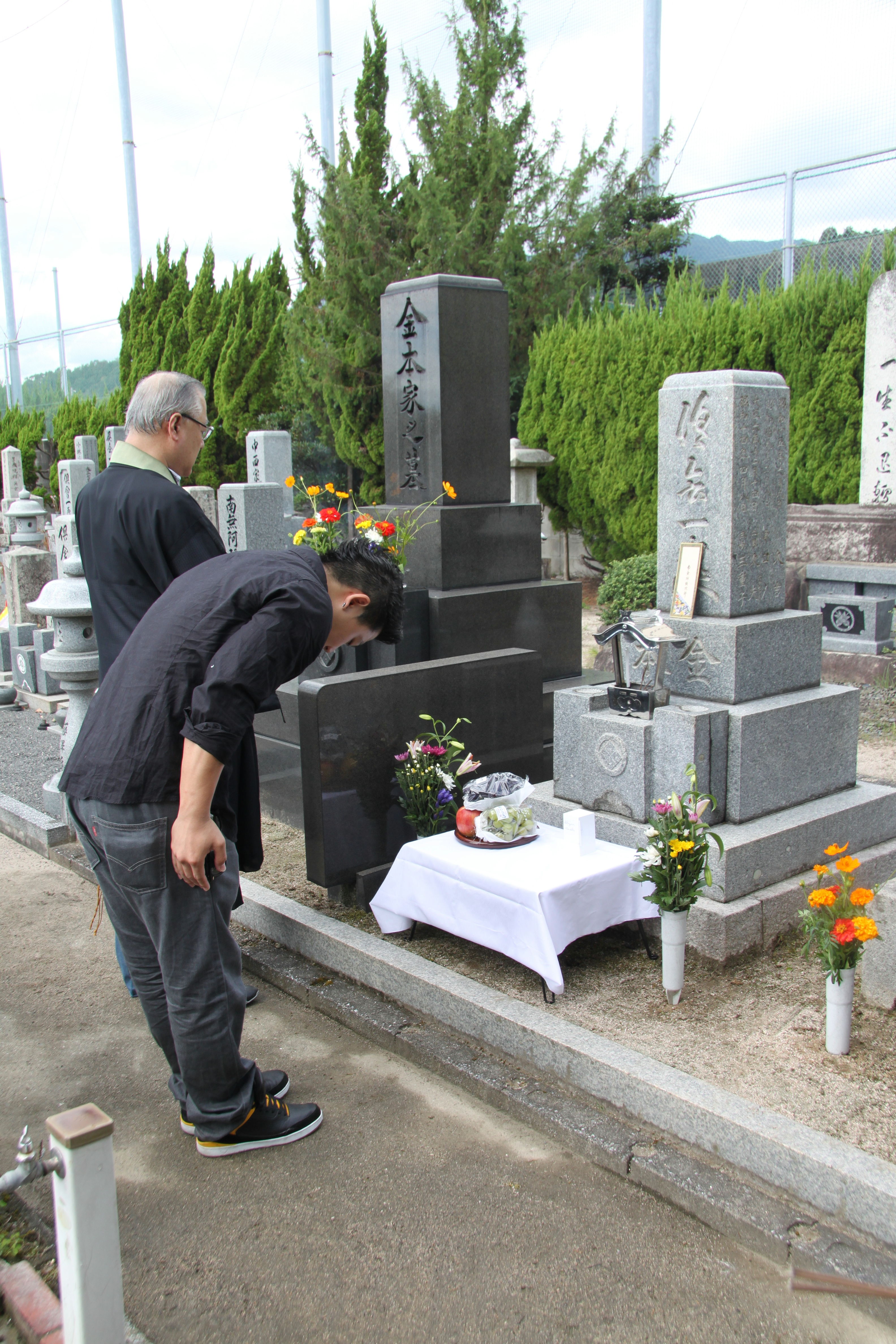
My 24 year old son bows deeply and reverently in front of the family crypt holding the ashes of Suetaro who was killed at 24 years of age.  The ashes of Aunt Shiz can be seen in the small white box on top of the white cloth.

_________________________

He was right.  Masako and Toshiro are right.  Aunt Shiz picked this time to come home.  She knew we were going.  She decided Takeshi was to come.  She made everything happen as they did.  My son was very moved and affected by this coming together of family…so much so he cried at our farewell dinner.

Do I believe in spirits and kharma?

Yes.

“There’s No Toilet Paper in the Jungle of Burma”


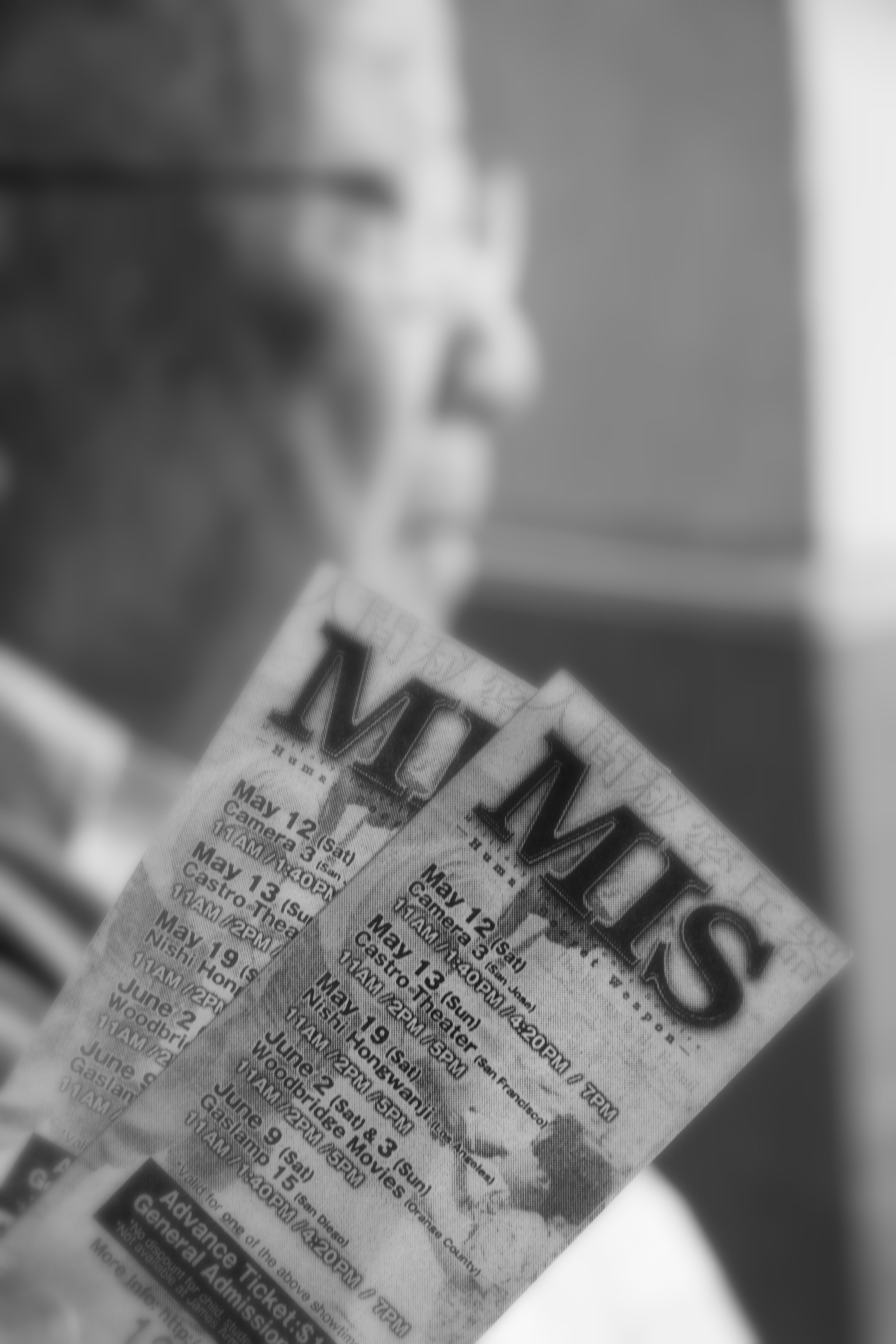
Dad and I waiting to go in to watch MIS

Dad broke his silence.

“War is no good,” he said as we left the small community movie theater near his assisted living home today; we had just watched the limited release documentary “MIS: Human Secret Weapon”.  It was about his highly classified World War II US Army unit.  He had silently watched and with a ghostly stillness.  But I saw him wipe his eyes twice after gently lifting his glasses.  Others openly wept…but I had never, ever seen him shed a tear before today.

I was ignorant.  Combat isn’t necessary for the ugliness of war to be buried in a person’s mind.  The documentary made it clear that it is also easily dug out.  All one needs to do is scratch.

Official US Army document certifying his Military Intelligence Service days.

___________________

The documentary reveals the conflicted state of mind of the then young Japanese-Americans who made up the US Army’s Military Intelligence Service (MIS).  About 3,000 of them – including two of my uncles – secretly and faithfully served the red, white and blue, hastening the Japanese surrender on board the USS Missouri.

Another 3,000 served during the Occupation of Japan.  My dad was one and worked out of General Eichelberger’s US 8th Army’s GHQ in Yokohama.  That’s when he was able to journey to Hiroshima and see his mother for the first time in ten years…and when a hungry Masako first relished the flavor of Spam.

__________________

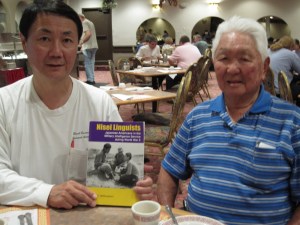
Grant Ichikawa, MIS, CGM and me. 2010

One Nisei veteran interviewed was Grant Ichikawa.  He was gracious enough to not only greet me and my family in 2010 near his home in Rosslyn, VA, he also secretly treated us to lunch.  Pun intended.  He had lost his wife Millie just months before.  She was an even rarer female member of the MIS as well.

He and Terry Shima (also interviewed in the documentary) gave me the jump start in finding out about Dad’s involvement in the MIS.  During that all too brief get together, Grant did touch on what he did on the battlefront in a GI uniform.  He also said it “got dicey”.

In this documentary, you learn of one such experience.  He was told there were Japanese soldiers who had agreed to surrender.  Grant said he was the point man.  They proceeded to the rendezvous point where he met the Japanese commander; they were in the middle of an open field.

It turns out there were 200 to 250 of them; all their weapons were in good working order he says in the documentary.  Grant suddenly realized – out in the middle of this field – that these Japanese soldiers were “toukoutai”, or “suicide corps”.  Grant just as quickly and with great consternation realized there were only ten of them… GI’s, that is, armed only with rifles.  I’m sure Grant picked his words wisely.  He is still alive.

“Dicey” was a definite understatement.

_______________________

In a lighter moment, Ken Akune described how they were searching a Japanese soldier that had surrendered in the jungle of Burma.  They came across one of the American propaganda leaflets promising safe passage for those Japanese soldiers that surrendered.  It was neatly folded in a pocket.

Surrender Propaganda Written by MIS Nisei.

Akune asked the Japanese soldier if he believed what the leaflet promised since the MIS Nisei wrote it.  The Japanese soldier said no but that it made for good toilet paper.  “There was no toilet paper in the jungle of Burma,” said the prisoner.

_______________________

Thomas Tsubota broke down at the end of his interview.  Many did.

Tsubota was one of the top secret MIS members of Merrill’s Marauders.

They had just stumbled across ten Japanese soldiers in a small jungle clearing, he says.  “Boom,” he said, in a split second they killed them all.  He described how his commander, Colonel Beach, called him over to inspect a photo album taken off one of the now dead Japanese soldiers

They looked through the album.  Tsubota told Col. Beach there was nothing of military importance in it but as they came upon the last page of the album, there was a picture of a mother and a daughter.

Tsubota said Colonel Beach’s eyes got red, filled with tears and he said, “Thank you, Tom.”

While crying, Tsubota ended the interview by saying this is why he isn’t enthusiastic about talking about the war.  Too painful.  He doesn’t want to think about that sad moment.  Tsubota is 96 years old.  I thought Dad was old.

______________________

The documentary intensely yet humanely describes the internal turmoil within these young American GIs of Japanese descent.  Quite a few had brothers who were left in Japan when war broke out and were killed as Japanese soldiers.  Deep down, many carried guilt that their own secret actions led to the deaths of their own brothers.  My Dad’s youngest brother – my Uncle Suetaro – was one of those casualties.

But these 3,000 young American boys of Japanese heritage did their job as did millions of other young American boys…but in secret.  They translated diaries covered with blood or offered cigarettes to Japanese prisoners to extract military intelligence while battles were raging.

They endured years of discrimination and intimidation to boot – both from GI’s fighting alongside them as well as back home.  A barber in Chicago wouldn’t cut Dad’s hair because of his race – and he was wearing his perfectly creased US Army uniform with sergeant’s stripes, sleeve highlighted by the proud shoulder patch of the US 8th Army.

The secrecy was officially lifted in 1972 by Executive Order 11652.
______________________

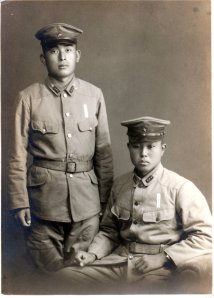
Uncle Suetaro on right.

Just the two of us, I thought, were going to see this movie and that this may help Dad slow down his growing dementia.

I was wrong.

His quiet tears and with his exiting comment, I am sure Uncle Suetaro was there, too, in Dad’s heart – as if it was 1937 in Hiroshima when he last saw his brother alive.

Over the past two years, I’ve asked, “Dad, tell me about what you worked on in the MIS.  What was the one thing you remember the most?  A picture?  A diary?”  Each time, the answer was vague or “I don’t know.”  I chalked it up to senility.

He doesn’t want to talk about it…just like Tsubota painfully recalling Col. Beach and the photo of a mother and a daughter taken from a Japanese soldier they had just killed.

Ugly recollections from war wanting to be masked need not come from battlefields, bullets or bombs.

The Letter from 1945


The Letter from 1945

February 19, 1945 – Men with names like Kuwahara and Koyanagi were with the US Marines on the sands of Iwo Jima.

No, not the Japanese soldiers within the concrete fortifications led by General Tadamichi Kuribayashi of the Japanese Imperial Army. These were Americans of Japanese descent, or Japanese-Americans. Nisei. And to make matters worse, they were in the uniforms of the US Army. GI Joes. The Japanese were trying to kill them, too.

Sorry, Marines. It wasn’t all your show – lightheatedly, of course.  (One of the greatest US Marines, John Basilone, CMH, Navy Cross gave his life on those black talcum powder-like sands.)

Having said that, ever watch the iconic B&W World War II classic, “The Sands of Iwo Jima”? John Wayne might just be turning over in his grave.  But to his credit, the movie is one of my faves.  It’s theme song, “The Marine’s Hymm”, gives me goosebumps even to this day.

________________________

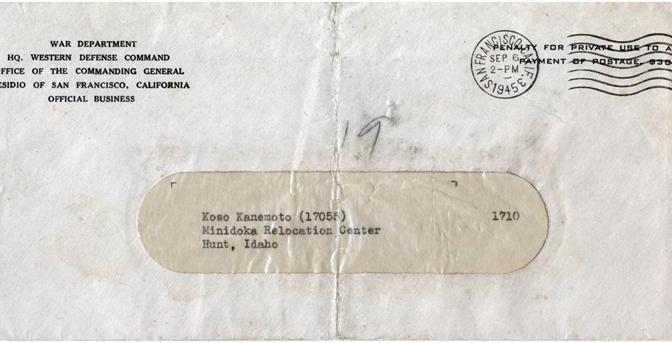
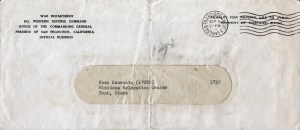
The envelope immediately caught my attention. Aside from a crease, the envelope looked pristine. It was addressed to my Dad while he was in Minidoka, an Idaho prison camp where he and over 10,000 Japanese-Americans were imprisoned by FDR. It was postmarked September 6, 1945 – just about seven months after the bloody fight for Iwo Jima. The return address was the “War Department”.

If you’ll get past the lawyer speak, the letter says Dad is now free to go about America as he chooses.

___________________________

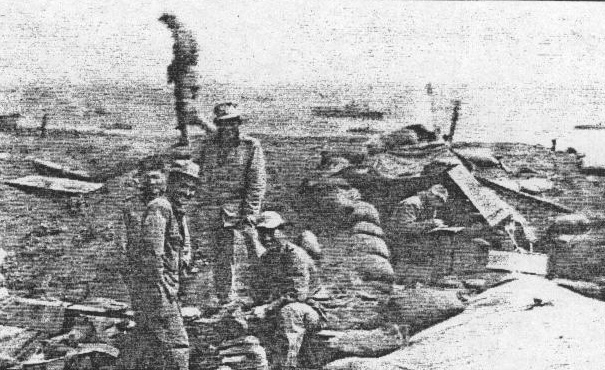
Because of secrecy, photos of Japanese-Americans in the US Army’s MIS are rare. This one shows Nisei on the sands of Iwo Jima.

About one thousand young Nisei men volunteered for the US Army while their families remained imprisoned in Minidoka. That’s about ten percent of the total camp’s population. Most who volunteered were from my Dad’s home state, Washington. While Dad was not one of those volunteers, 71 of these young men from Minidoka were killed fighting for the red, white and blue. Two were bestowed the Medal of Honor – posthumously. Silent patriots to this day.

“Kibei” were amongst those 1,000 men. Kibei’s were a sub-set of Nisei’s as a whole. A Kibei is a Japanese-American who actually spent time being raised in Japan. One result was they were absolutely fluent in Japanese – read, write, speak. Even slang and dirty words. No land-locked Nisei could come close. Dad was a Kibei.

___________________________

During the war, over 6,000 Nisei became part of the Military Intelligence Service (MIS). The MIS were top secret. They were largely all volunteers.

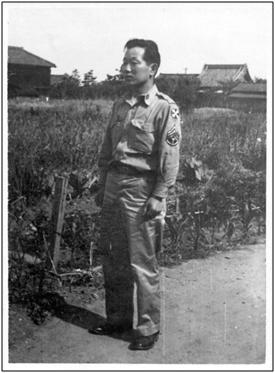
But the Kibei – they formed the crucial core of the group. The most fluent. The decisive secret weapon. As luck would have it, many of these Kibei were from Hiroshima. Their fathers came to Hawaii or Washington in droves from Hiroshima for a better life – just like my Grandfather Hisakichi. (Dad is pictured here standing next to his Hiroshima home in 1947.)

MIS Kibei were the ones who intercepted and swiftly translated the Japanese Imperial Navy radio transmissions that led to the shoot down of Admiral Yamamoto’s transport. Kibei also swiftly and accurately translated captured critical secret military plans written in Japanese (“Z-Plan“) for the defense of the Marianas Islands and the Philippines; this led to the lopsided American naval victory called the “Marianas Turkey Shoot” in 1944 – as well as to the death of my Seattle-born Uncle Suetaro. My dad’s youngest brother.

Interestingly, due to continuing suspicions, the US Navy and the Marine Corps refused to enlist the Nisei. Their loss.

___________________________

Actual “Z-Plan” report translated by Nisei of the top secret MIS.

The cloak and dagger actions of the MIS were only declassified in the 1972 by Executive Order 11652. That’s a long time. And true to their oaths, these Nisei kept their heroics to themselves for all those decades. They sought no honor or recognition.

____________________________

But back to the letter of 1945 – mailed to my Dad just seven months after the vicious fight for Iwo Jima. While my father finally volunteered for duty in February 1947 and became part of the famed MIS, his silent and patriotic Nisei brothers that preceded him hastened the end of war and saved millions of casualties – for both sides.

In recognition for their patriotism, sacrifices and loyalty, Congress bestowed upon the MIS and other Nisei who fought for the US in 2010 the Congressional Gold Medal. Two of my uncles were recipients although they had passed away.

By the way, the first recipient of the Congressional Gold Medal was George Washington. I believe the Nisei are in pretty good company.

__________________________

No credit is being taken from the young Marines who fought and died for Iwo Jima. The Marines did take Iwo Jima with their blood…but they were not alone. About 50 Nisei MIS’ers landed in the first assault waves alongside the Marines.

Just ask Mineo Yamagata, a MIS veteran of Saipan and Tinian. He accompanied the 28th Marines to the summit of Mt. Suribachi and witnessed the flag raising.

Oh… He was from Hawaii.