
PFC Louis Wiesehan, Jr., killed in action at Tarawa while serving with F/2/8th Marines, has been accounted for according to a DPAA press release.
PFC Louis Wiesehan, Jr., killed in action at Tarawa while serving with F/2/8th Marines, has been accounted for according to a DPAA press release.
In complement to my series on Admiral Isoroku Yamamoto, the Truly Reluctant Admiral…
Battle of Midway: Second World War II-era Japanese carrier apparently found in Pacific
https://www.foxnews.com/science/warship-wwii-battle-of-midway-pearl-harbor-second-japanese-carrier
Bestowed the Medal of Honor for heroic actions, December 21, 1944. Malmedy, Belgium.

Great American couple.
Outstanding
View original post 6 more words
My aunt is now fragile at 93 years of age. Gotta give her credit for what she went through.
 Cover Shot – Aunt Eiko
After a war’s end, the war for food continues for a losing country. Japan was no exception.
____________________________
In “There Be Gold in My Family,” Taro was mentioned. He was miraculously able to track down my mother and Aunt Eiko in what remained of Tokyo after Japan’s surrender in WWII. He was part of the US 8th Army’s Military Intelligence Service and had brought them much needed food, clothing and cigarettes.
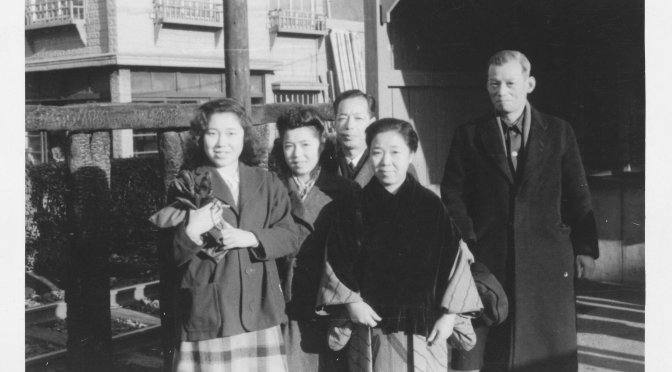
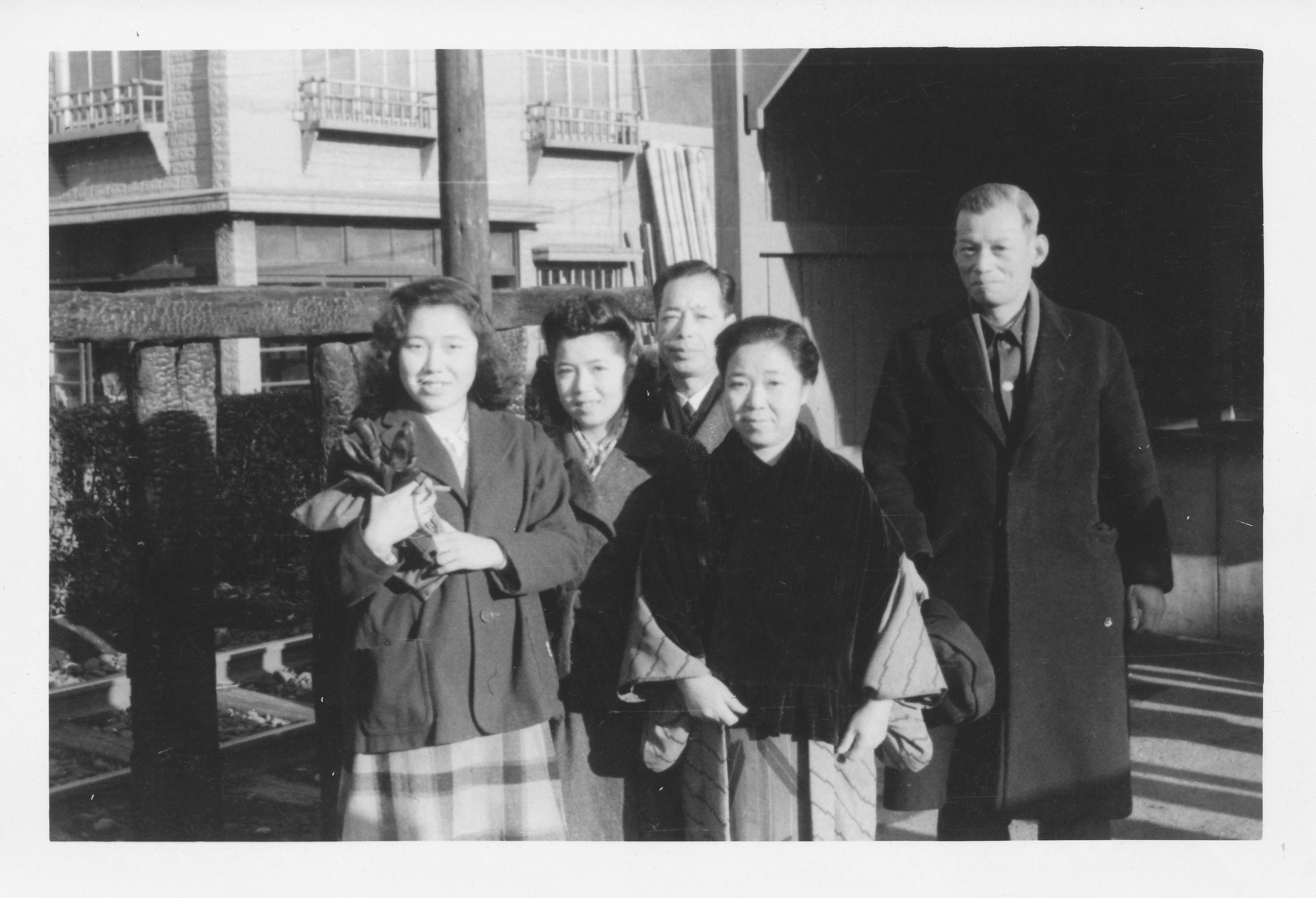 L to R: Aunt Eiko, mom, Grandfather, Grandmother and Uncle Shibayama. Aunt Eiko, mom and uncle are wearing clothing given to them by Taro who took the picture. It is dated January 2, 1947 on the back.
After being discharged from the Army in early 1947, he returned to his family’s farming roots in Livingston, CA. With his meager income, he still managed to buy clothing and shipped them to my mother and Aunt…
View original post 542 more words
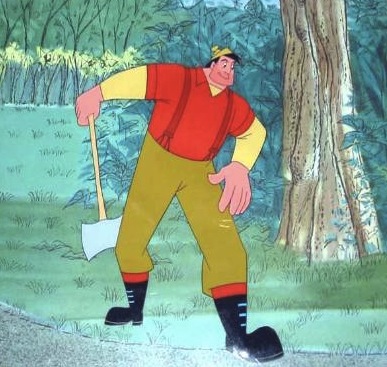
Yes, Paul Bunyan went to war for the U.S.

Well, that was his stage name. You can see him without his stage makeup above. His real name was David B. Bleak. He stood about 6′ 6″ and weighed 250 pounds… and he was a Medic.
In short, Sgt Bleak killed four Chinese soldiers with his hands; a fifth with his trench knife. He smashed the last two Chinese heads together like cymbals after alluding their bayonet charge. He did all this while treating the wounded; he himself took a round to his leg.
Due to his unswerving devotion to duty, all 20 soldiers – including the wounded of which he carried one – made it back.
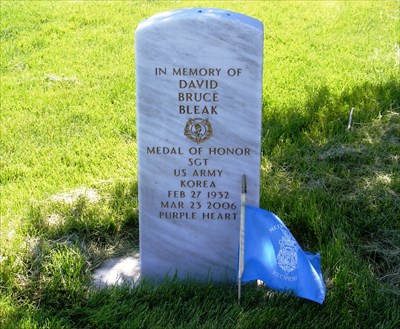
He was bestowed the Medal of Honor. Ike presented the decoration:
He passed away at the age of 74, the exact same day that another medic MOH recipient from WWII passed away – Desmond Doss.
__________________________________________
From the Congressional Medal of Honor Foundation:
David Bleak was 18, living in Wyoming and “shaking the trees” to make something happen in his life early in 1950. Dissatisfied with his other options, he decided to volunteer for the Army. He was surprised when the recruiting sergeant told him that there was not much need for soldiers right then. But a few months later, after war broke out in Korea, the sergeant called him back and told him that things had changed and that the Army needed him and needed him now. Bleak joined up.
He started his basic training and was slated to be a tanker. Then one day his sergeant gave him an appraising look and said, “You look like a medical aide man to me.” Bleak understood that he had just
been volunteered. He was soon transferred to a medical company and, in the Spring of 1951, was sent to Japan as part of the 40th Infantry Division.
Early the next year, Bleak was sent to Korea where he was promoted to sergeant and experienced a brutal winter of constant fighting. By June his infantry unit was in the vicinity of Minari-gol, North Korea, facing a large force of Chinese dug into a mountain. While the bulk of the U.S. force prepared for a frontal assault, Bleak volunteered to join a reconnaissance patrol assigned to circle around to the rear of the Chinese position to capture prisoners for interrogation.
The patrol stealthily advanced up a hill, captured three isolated enemy soldiers in the enemy trench line, and was starting to withdraw when Bleak and his fellow soldiers were discovered by the enemy. Large numbers of Chinese appeared and opened fire. Several Americans went down almost immediately and Bleak went to help them. Jumping into a trench to tend one wounded soldier, he was charged by three of the enemy. He killed two of them with his bare hands by smashing their heads against rocks. He killed the third Chinese soldier with his trench knife. After treating his comrade he saw a Chinese concussion grenade hit the ground. Bleak used his body to shield the man from the impact of the blast. He continued to treat his wounded comrades despite his injuries from the grenade. The heavy fighting continued and he was shot in the leg.
As the patrol withdrew with its prisoners, Bleak, despite his wounds, grabbed another wounded American and began carrying him to safety.
As he was limping down the hill two more Chinese soldiers came at him with fixed bayonets. Bleak dropped his comrade and managed to evade the bayonet thrusts. He grabbed both men, smashing their heads together and killing one of them. Then he picked up the wounded American again and made it back to safety.
Bleak’s neck was so big that Ike struggled to fasten the ribbon and whispered to him, “You have a damned big neck.”
Bleak went on to raise four children with his wife on a small farm he owned and operated. Later, he went to work for Argonne National Laboratory in the nuclear industry, developing electricity from nuclear energy.
___________________________________
The official U.S. Army Medal of Honor Citation reads:
Sgt. Bleak, a member of the medical company, distinguished himself by conspicuous gallantry and indomitable courage above and beyond the call of duty in action against the enemy. As a medical aidman, he volunteered to accompany a reconnaissance patrol committed to engage the enemy and capture a prisoner for interrogation. Forging up the rugged slope of the key terrain, the group was subjected to intense automatic weapons and small arms fire and suffered several casualties. After administering to the wounded, he continued to advance with the patrol. Nearing the military crest of the hill, while attempting to cross the fire-swept area to attend the wounded, he came under hostile fire from a small group of the enemy concealed in a trench. Entering the trench he closed with the enemy, killed 2 with bare hands and a third with his trench knife. Moving from the emplacement, he saw a concussion grenade fall in front of a companion and, quickly shifting his position, shielded the man from the impact of the blast. Later, while ministering to the wounded, he was struck by a hostile bullet but, despite the wound, he undertook to evacuate a wounded comrade. As he moved down the hill with his heavy burden, he was attacked by 2 enemy soldiers with fixed bayonets. Closing with the aggressors, he grabbed them and smacked their heads together, then carried his helpless comrade down the hill to safety. Sgt. Bleak’s dauntless courage and intrepid actions reflect utmost credit upon himself and are in keeping with the honored traditions of the military service.
BORN: February 27, 1932
Idaho Falls, Idaho
DIED: March 23, 2006
Arco, Idaho
September 15, 1944.
MacArthur demanded this wretched island be taken… That’s all I want to say about that. So many violent deaths.
This is just a Hollywood movie (“The Pacific” by Hanks/Spielberg). No Hollywood movie can ever “show” war. I cannot imagine what it truly must have been like.
(Editor’s Note: My apologies but when I try and post with my phone Word App like here, things get “messed up”.)
“In the first six to twelve months of a war with the United States and Great Britain I will run wild and win victory upon victory. But then, if the war continues after that, I have no expectation of success.” – Admiral Yamamoto to Japanese prime minister Fumimaro Konoe.

The date of Admiral Yamamoto’s death was ironic.
Admiral Yamamoto was killed exactly one year after the famous Doolittle Raid on Tokyo on April 18, 1942.
It was like an omen.
______________________________________
The Japanese military and government did not disclose his death for about a month. When they did, they conducted a grand state funeral.
Here is a link to a Japanese video of his funeral. At the beginning, it shows the last known movie footage of him on Rabaul, waving to the pilots as they take off to attack Guadalcanal in Operation I boosting morale tremendously. There is also a glimpse of the only memorial statue of Admiral Yamamoto and a look inside his small home that is now in disrepair. During the funeral procession, it is very important to note you see Tokyo as it once looked before being leveled. I wonder if my grandparents, mom and aunt were in the crowds:
While his ashes were met in Tokyo by his widow (1), one half of his ashes remained in Tokyo, the other half taken back to his home town of Nagaoka. There, an unremarkable crypt of about three feet tall entombs one-half of his remains in a small family plot that is visited much more so by history nuts and the curious than by family and relatives.

In a bit of lost history, the funeral procession passed in front of his favorite geisha Chiyoko’s residence.
______________________________________
Similar to how WWII history has become to being taught here in America (meaning forgotten), Japan had chosen post-war to teach very little of WWII if anything. Because of this, many Japanese younger than say 55 years of age know very little about the war with America… except for the atomic and fire bombings.
For instance, my second wife and her mother never even heard of Iwo Jima. When I told them it was an island and part of the Tokyo prefecture, they were in disbelief. They didn’t even know there was a horrendous battle that took 30,000 young Japanese and American lives. Imagine that… but “the forgetting” is happening here in America too because of misguided emotional beliefs and attitudes of the teachers and school administrations.
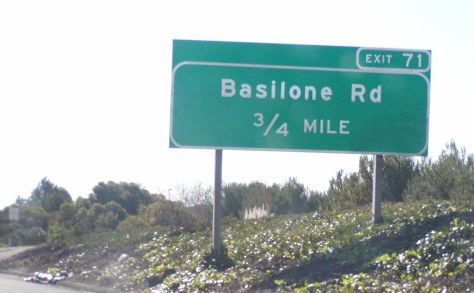
Here in America, we have ships, airfields and streets named after heroes. Aircraft carriers USS Chester Nimitz, USS Dwight D. Eisenhower, USS George H. W. Bush, O’Hare International Airport, or John Basilone Road near Camp Pendleton.
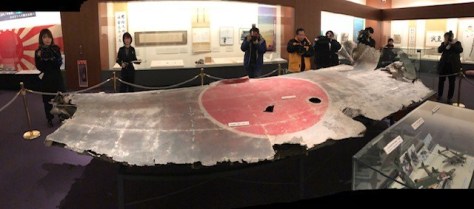
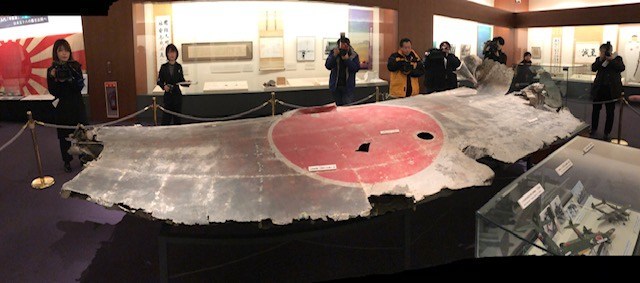
Yamamoto has nothing. He is rarely even mentioned in Japanese textbooks. There are no ships, airfields or streets named after him. Just two unassuming crypts and they are rarely visited by offspring or family. There is a small museum I was able to see back around 2001 soon after it opened during a business trip but it was hard to find. Even the train conductor whom I asked for directions didn’t even know who Yamamoto was. He told me to go to the police kiosk and luckily, one of the officers heard of it and gave me directions – about a 15 minute walk. It does house a piece of the wing that was part of the Betty bomber he was shot down in. Oh, there is a small statue of him in his hometown near his crypt.
The lack of honorariums is an insult, in my opinion, as he gave his life to a war he knew he couldn’t win. He was simply loyal to his emperor. I also believe from my civilian’s chair that Yamamoto was one of the greatest prophetic naval minds in history – so much so that Nimitz viewed him as his greatest threat.
In his time, those in the Japanese military who wanted to see him assassinated believed he was “pro-American” or just a cowardly “dove”. I don’t see it that way. I believe he was a patriot, loved his country and was the consummate military man wearing the uniform of his country – just like Patton, Ike, and Nimitz. He simply did what he thought best for his country given his orders and conditions – that the pompous Army-led government wanted a war that Yamamoto knew they could not win. He therefore believed the only way to achieve this haughty vision of victory against the US and England was to execute a surprise attack on Pearl Harbor and disabling the US Navy’s Seventh Fleet.(2) He may have succeeded if Nagumo had indeed attempted to carry out Yamamoto’s full orders and battle plan. Nagumo failed to do so.
(Note: As an American, I fully accept that any attack on a country should be preceded by a declaration of war. However, just as I/we believe a declaration of war is necessary before hostilities, the samurai roots of Japan totally accepted surprise attacks as the norm. Just a fact.)
…but as a military leader, I feel for him. He knew Japan could not win. What was he to do? Step aside and let others lead the young men to their deaths under less competent leadership? Or lead them himself into a war they could not win and should not fight? Of course, he chose the latter and appropriately so. In my opinion, he should not be condemned because he did.
But it cost him his life.
The man whose name was his samurai father’s age at birth, the man who did handstands to break the thick air and bring laughter, the man who was a winner at gambling around the globe, the man who was nicknamed “Eighty Sen” by geishas… died fighting for the country who would then quickly bury him in their lost history.
_________________________________________
If he was not killed in the daring and risky attack hastily put together by the USAAF, what would have happened to him if he was alive on the day of surrender?
Would he have killed himself? Many did. He was the son of a respected samurai.
Or would he have surrendered like General Yamashita did in the Philippines only to be hung shortly thereafter as a war criminal in a hasty trial?
Would MacArthur have spared Yamamoto to be used as a liaison with his understanding of America and his fluent English during the Occupation? After all, he was revered in Japan as was Ike and Patton here. That may have been ideal but unlikely due to the immense hatred bred onto him by American propaganda.
We will never know.
Perhaps it was best he died a warrior while leading his troops.
_____________________________________________
Footnotes:
(1) In the first video, Admiral Yamamoto’s ashes disembark from the train after its arrival in Tokyo on May 23, 1943.
This second video is the “official” national footage of the state funeral procession. You can glimpse the infamous General Tojo at about the 3:10 mark and his widow and three children at about the 3:20 mark:
(2) Against Admiral RIchardson’s stern advice to FDR for which he was fired, the US Seventh Fleet was moved out of San Diego to Pearl Harbor by FDR. Yamamoto, just like Richardson, saw it as a dumb military move. They were both right. This is one reason why I firmly believe FDR wanted Japan to attack the US and get us into a war which he campaigned against.

After radio chatter in supposed secret Japanese naval code was intercepted by MAGIC on April 13, 1943, the US Navy jumped into action. The US Navy brass now knew of Yamamoto’s projected flight schedule just five days later.
But to fully appreciate this, of course, it is critical to note this was 1943 and during a most vile world war. There was no faxing, texting, internet or the like. Also, Yamamoto’s plane may not start that day, weather may alter the flight or he may just get sick (He did suffer from a form of beriberi.).
But some huge questions that had to be answered in only three days if the shoot-down were to occur successfully:
______________________________________

Sources differ on who approved the go-ahead for Admiral Yamamoto’s killing.
Some sources say Admiral Nimitz said go.
Some sources say Admiral Nimitz refused to give the order to kill Admiral Yamamoto and deferred the decision to his superior, Admiral King.
Some sources say no military brass wanted to approve the killing and that it ultimately came from FDR (which by definition becomes an assassination). Although no document from that time could be found, several items indicate FDR was at least involved. (1) (2)
But one thing is certain; when Bull Halsey found out the mission was a go, he stated, “TALLY HO X LET’S GET THE BASTARD.”
____________________________________
Some buried history on the actual mission to kill Admiral Yamamoto:
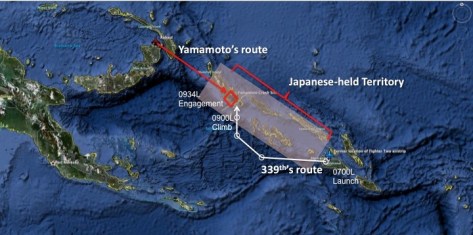
4. It was determined there would be four “killer” attack planes and 14 escort planes to handle the anticipated six Zero escort fighters and to compensate for aborts. The 14 escort fighters were also in anticipation of the dozens of other land-based Zero fighters that may be airborne. The four killer planes were responsible for the single Betty bomber carrying Admiral Yamamoto. (3)
5. Mitchell, in leading the flight, demanded the standard USAAF compass on his P-38G be replaced by a larger and more accurate Navy compass. “Dead reckoning” would be the order of the day and exact headings were an absolute requirement – therefore, the need for the most accurate compass available. All they would see in their 400 mile flight out would be water.


6. One P-38 suffered a flat tire at takeoff and another’s fuel transfer from belly tanks failed, leaving 12 escort P-38s for the anticipated combat. Surprisingly, these two planes that dropped out due to the mechanical failures were two of the four original killer planes.
7. Per a recent Military Intelligence Service’s veteran’s report, “At 7:25 AM on April 18 1943, the American pilots departed
Henderson Field, Guadalcanal, to travel a circuitous all water route at ten to thirty feet above the water and radio silenced to avoid enemy radar detection. At 8:00 AM, 35 minutes later and 700 miles away, Yamamoto’s convoy took off on schedule from Rabaul airfield and (then) arrived over the southwest coast of Bougainville at 9:35 AM, the exact time the P 38s arrived there.”(2) The flight path avoided all possibility of being seen from occupied islands or radar. Being literally at sea level, it was sweltering in the cockpit. Mitchell had to fight of drowsiness as one mistake meant death an instant later.
8. Miraculously, Mitchell had guided his attack force to within one minute of the targeted arrival time. The third pilot spotted the flight but it included TWO Betty bombers, not the single one dictated in the decoded secret message. At this moment, Mitchell was not sure if this was Yamamoto’s flight. Forunately, Mitchell made the snap decision to attack, said, “Skin them (meaning drop fuel tanks),” and began combat.
9. Lanphier and Barber both had hits on the Betty bomber that carried Admiral Yamamoto. However, Lanphier’s gun camera footage shows his rounds striking the Betty bomber, causing part of the left wing to split off. The bomber then crashed into the jungle.
Here is footage from both American and Japanese viewpoints (scroll to the 5:28 mark). It does show in slow motion Lanphier’s gun camera footage where he shoots off part of the left wing of Yamamoto’s plane. (Important note: the “gunfire” you hear in the actual gun footage is edited in. The gun cameras were silent B&W film.)
10. One killer P-38 piloted by Lt. Raymond K. Hine was lost; he originally began the flight as an escort fighter but moved up when the two killer planes had to abort. There were various sightings from Japanese reports which claim his supercharger was hit and engine smoking when he headed out to sea. He was never heard from or seen again. In spite of claims by the USAAF pilots, not one Zero was shot down although several were damaged.
11. The six Japanese Zero pilots assigned to escort Admiral Yamamoto were:

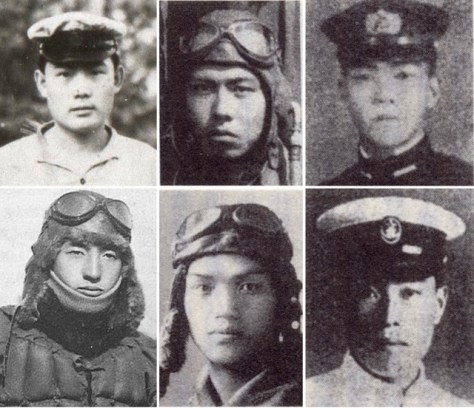
All were shamed, of course, for failing in their duty to protect Admiral Yamamoto but they were up against tremendous odds. Japanese brass decided not to have them commit suicide; the brass knew they would perish in combat in their hopes Yamamoto’s death woukd be kept underwraps. Sure enough, all but Kenji Yanagiya would be killed in action within a short period. Yanagiya was severely wounded, losing his right hand and was sent home. He passed away in 2008 at the age of 88.
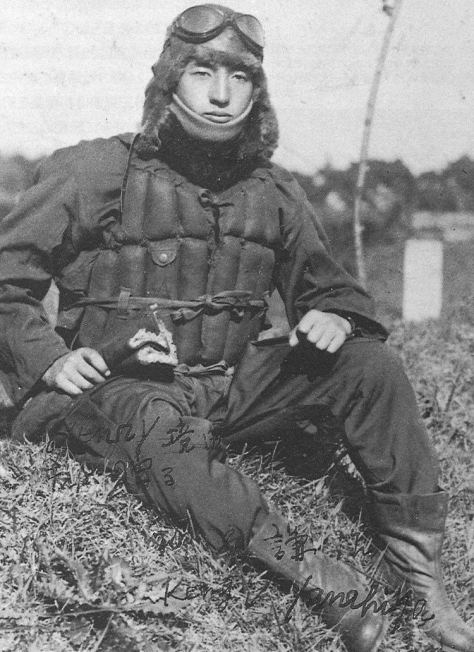
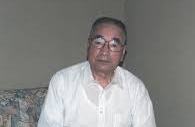
12. Per John Connor, History.net, he writes:
“At every stage, planners had stressed the need for secrecy. But even before the P-38s had landed, security was compromised.
As the returning planes neared Guadalcanal, Lanphier radioed to the control tower: “That son of a bitch will not be dictating any peace terms in the White House.” Lanphier’s announcement was shocking to others on the mission. Air-to-ground messages were broadcast in the clear, and the Japanese monitored American aviation frequencies. Lanphier’s message left little to the imagination. Bystanders on Guadalcanal, including a young navy officer named John F. Kennedy, watched as Lanphier executed a victory roll over the field before landing. “I got him!” Lanphier announced to the crowd after climbing out of his cockpit. “I got that son of a bitch. I got Yamamoto.”
Halsey and Nimitz, when they found out, went nuts as if the Japanese heard the message, they would realize that Lanphier knew Yamamoto was on board which would be impossible unless we broke their JN-25 naval code.
13. Behind the scenes, President Franklin D. Roosevelt reacted with glee, writing a mock letter of condolence to Yamamoto’s widow that circulated around the White House but was never sent:
Dear Widow Yamamoto:
Time is a great leveler and somehow I never expected to see the old boy at the White House anyway. Sorry I can’t attend the funeral because I approve of it.
Hoping he is where we know he ain’t.
Very sincerely yours,
/s/ Franklin D. Roosevelt
14. The US definitely wanted to keep the Japanese Navy from suspecting we had broken their JN-25 code. In a ploy to make it look like Mitchell’s flight was indeed a chance of luck, the USAAF sent out similar patrols on subsequent days. Besides, the Japanese did NOT publicize his death for about two months; as such, the Americans could not possibly know Admiral Yamamoto was killed.
15. Decades later, the feud between Barber and Lanphier continued as to who shot Yamamoto down. At the end, the US Navy officially awarded the “kill” to Barber. When that happened, ironically, Lanphier lost his “ace” status.

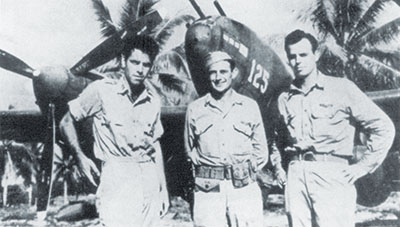
16. Per the Japanese Navy’s coroner’s report, Yamamoto was found ejected from the crashed plane but still strapped into the pilot’s seat. Further, that he was still clutching his family’s samurai sword. The report stated that the seat was upright resting against a tree and that his face looked unchanged. It further stated the cause of death was from two .50 caliber rounds, one into his back and another entering though his jaw and exiting above the right eye. (Author’s note: I am highly suspect of this report given it was from propaganda driven wartime Japan. Although I never served, I cannot fathom his face “looking unchanged” when a .50 caliber round exited above his right eye after entering through his jaw. I also cannot believe he was still clutching his samurai sword after being ejected from the plane.)
17. The second Betty bomber carried Yamamoto’s Chief of Staff Vice Admiral Matome Ugaki. He and two other sailors survived the crash into the ocean after being shot down albeit with a broken arm. He would recover from his wounds but would not return from the infamous last kamikaze attack of WWII which he led on August 15, 1945. He did not make his target. He would leave behind his meticulous diary, a wealth of information.
___________________________________
More to follow in Part X.
___________________________________
Footnotes:
(1) It was vital that the Japanese not know their naval codes (the JN-25) had been broken. If they did, they would react and modify their code. This would terminate the US Navy’s ability to track and sink military and most of all, merchant shipping of vital natural resources taken from captured countries. As written in “What Did FDR Know”, the sinking of many tons of merchant vessels was made possible by our breaking their JN-25.
(2) “…The message was decrypted and translated at FRUPAC by Marine Lt Col Alva Byan Lasswell and was passed the next day to
Commander Ed Layton, CINCPAC intelligence officer. Admiral Chester NIMITZ, CINCPAC, sent the message to Washington. President Franklin Roosevelt approved and requested the
shoot down of Admiral Yamamoto’s air convoy be given the highest priority. This was conveyed to RADM Marc A. Mitscher, commander of the Solomons region, via NIMITZ and Admiral Halsey who was responsible for that region.” – “Admiral Isoroku Yamamoto Air Convoy Shoot Down” report, JAVA, April 18, 2014. The author was a noted Military Intelligence Service member during WWII.
(3) The original flight organization was:
Initial Killer Flight:
Capt. Thomas G. Lanphier, Jr.
Lt. Rex T. Barber
Lt. Jim McLanahan (dropped out with flat tire)
Lt. Joe Moore (dropped out with faulty fuel feed)
The remaining pilots were to as reserves and provide air cover against any retaliatory attacks by local Japanese fighters:
Maj. John Mitchell (In command)
Lt. William Smith
Lt. Gordon Whittiker
Lt. Roger Ames
Capt. Louis Kittel
Lt. Lawrence Graebner
Lt. Doug Canning
Lt. Delton Goerke
Lt. Julius Jacobson
Lt. Eldon Stratton
Lt. Albert Long
Lt. Everett Anglin
Lt. Besby F. Holmes (replaced McLanahan)
Lt. Raymond K. Hine (replaced Moore and KIA)




 Masako and Spam Musubi