Tag Archives: Guadalcanal

Mr. Johnson, USMC – Part II


Yes, Mr. Johnson was in for it.

The carnage he was to experience would be absent even from the worst possible nightmare a nineteen year old boy can possibly have dreamed.

Violence no young boy of 19 should have to endure.

He would have two lives after he stepped into that Marine Corps recruiting station: one of reality during the day and of a nightmare he would never awaken from at night.

____________________________
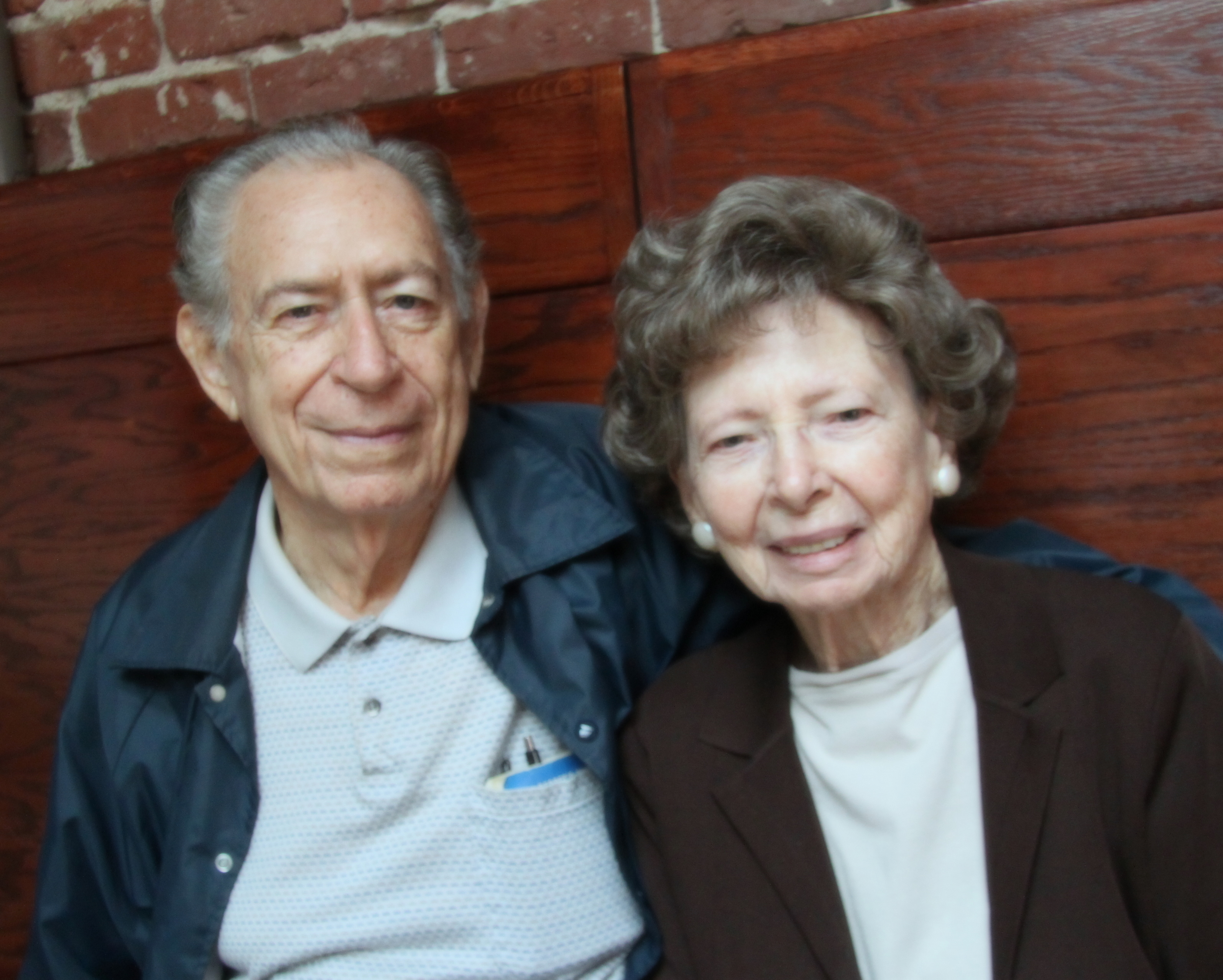
I took them to breakfast for a belated 66th wedding anniversary and 88th birthdays. It’s softened as that’s how Marge wanted it.  Seal Beach, CA. August 14, 2011.

I was not close to Mr. Johnson as I was to Old Man Jack; perhaps it was because for the first five years after I moved into this patriotic Naval neighborhood, he and his good wife Marge traveled about the US in their motorhome.  They were gone for perhaps six to eight months out of the year.  Man, did they enjoy seeing the US of A.  After all, he fought for her.

He stayed indoors most of the time when at home while Marge would walkabout during the warm summer nights with her wine and chat with neighbors and me.  She enjoyed her Chablis very much.  Slowly, her legs would give way to age.  Mr. Johnson’s, too.

____________________________

In the early part of 1942, Mr. Johnson found himself on a little boat out in the middle of the Pacific – the Big E.

The USS Enterprise.

CV-6.

She was one of only three operational carriers in the Pacific.  The Enterprise, Hornet and Yorktown.

The Battle for Midway

He was on his way to the Battle of Midway (Mr. Johnson did not tell me that.  Old Man Jack did.).  June of 1942.

A tremendous gamble of scarce naval assets and young men by Admiral Nimitz.

PFC Doreston “Johnnie” Johnson manned her anti-aircraft batteries as a US Marine.

Thousands of young lives were lost during the most critical sea battle – on both sides.  But the critical gamble paid off for the US.  The Japanese Imperial Navy lost four carriers.  They would never recover.

But we lost the Yorktown.  A tremendous loss for the United States…but the tide of war changed.

The USS Yorktown on fire at the crucial Battle of Midway. She would later be sunk.

Miraculously, the Enterprise escaped damage.

And as far as I understand, so did the young boy from Basile, Louisiana, Mr. Johnson.

At least physically.

_________________________

Guadalcanal and the Solomon Islands Campaign

His next trial would be Guadalcanal and the Solomon Islands campaign.

It would be an insult to to all the brave men that were there if I were to even try and express in writing what brutal sea combat was like.

I was not there.  But every young man there thought – every second – that there was a bomb coming at him.  Constantly.

Like hearing shrapnel from near bomb misses ricocheting off the batteries – or striking flesh.  The deafening, unending thundering of “whump-whump-whump” from AA batteries.  The yelling.  The sound of a mortally wounded enemy plane crashing into the water nearby with a likewise young pilot.  The screams of wounded or dying boys.

This is taken from a naval summary: “After a month of rest and overhaul, Enterprise sailed on 15 July for the South Pacific where she joined TF 61 to support the amphibious landings in the Solomon Islands on 8 August. For the next 2 weeks, the carrier and her planes guarded seaborne communication lines southwest of the Solomons. On 24 August a strong Japanese force was sighted some 200 miles north of Guadalcanal and TF 61 sent planes to the attack. An enemy light carrier was sent to the bottom and the Japanese troops intended for Guadalcanal were forced back. Enterprise suffered most heavily of the United States ships, 3 direct hits and 4 near misses killed 74, wounded 95, and inflicted serious damage on the carrier. But well-trained damage control parties, and quick, hard work patched her up so that she was able to return to Hawaii under her own power.”

“Repaired at Pearl Harbor from 10 September to 16 October, Enterprise departed once more for the South Pacific where with Hornet, she formed TF 61. On 26 October, Enterprise scout planes located a Japanese carrier force and the Battle of the Santa Cruz Island was underway. Enterprise aircraft struck carriers, battleships, and cruisers during the struggle, while the “Big E” herself underwent intensive attack. Hit twice by bombs, Enterprise lost 44 killed and had 75 wounded. Despite serious damage, she continued in action and took on board a large number of planes from Hornet when that carrier had to be abandoned. Though the American losses of a carrier and a destroyer were more severe than the Japanese loss of one light cruiser, the battle gained priceless time to reinforce Guadalcanal against the next enemy onslaught.

Regardless of who is correct – and we’ll never know for obvious reasons – Enterprise gunners shot down more planes at Eastern Solomons in 15 minutes and at Santa Cruz in 25 minutes than did the vast majority of all battleships, carriers, cruisers and destroyers throughout the entire war.

She was the last operating carrier in the Pacific.”

For those of you who are unfamiliar with the violence of World War II, perhaps these photos will give you an idea.

Try – just try – to imagine you are on that ship…  Nineteen years old.  The Japanese planes are shooting at you and dropping bombs on you.  Dead and wounded boys are everywhere.  Fires are raging…  The ship is listing…and through all this, you must continue to man your anti-aircraft guns…  Protecting the ship and the lives of your fellow Americans.

A Japanese bomb explodes on the USS Enterprise
One of the direct bomb hits.  All the young men in this area (Gun Group 3) were killed. Many could not be found.
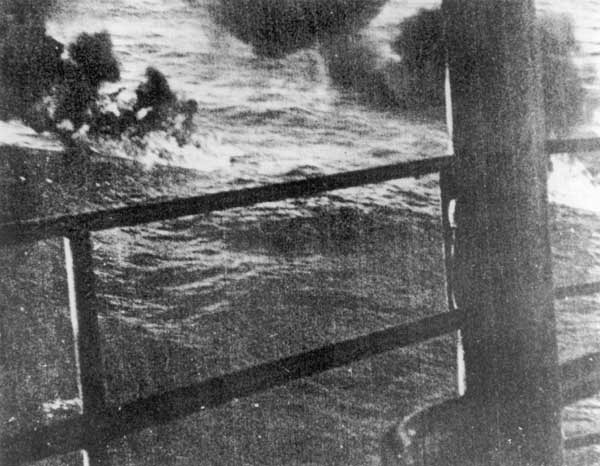
The USS Enterprise under attack. A near miss but men were killed or wounded by the shrapnel.
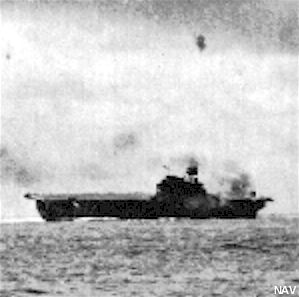
The USS Enterprise on fire. August 24, 1942. Mr. Johnson was on her.
A Val bomber on fire goes past the radar mast on the USS Enterprise. Perhaps one of Mr. Johnson’s rounds hit it.
Damaged hull from one of the near misses.
More hull damage from bomb shrapnel.
The USS Enterprise listing from battle damage.
Burning Japanese planes seen from the deck of the Enterprise. That’s how close they were. Up close and very personal.  Aug. 24, 1942.
Burial service at sea for 44 of the men after the battle at Santa Cruz. Oct 27 1942

Remember these young boys.  I always will.

Mr. Johnson was one of them.

Mr. Johnson was one of those wounded.

Twice.

And I have proof of his valor and guts on board as a US Marine.

___________________________

More to come in Part III.

Mr. Johnson, USMC – Part I


“Koji, funerals don’t do a damn thing for me anymore.”

That was Mr. Johnson’s reply while I was driving us to Old Man Jack’s funeral.  I had asked him to help hold me together as I knew I would fall apart.

“Oh-oh,” I thought to myself when I heard that curt reply.  “I guess I hit a nerve…”

_____________________________

Old man Jack on the left, Mr. Johnson on the right. Taken June 30, 2005.

Mr. Johnson was Old Man Jack’s next door neighbor.

Since 1953.

Nearly SIXTY years.  Hell, I ain’t that old yet.  Well, I’m close.

They got along real well for those 60 years… except Jack was a WWII sailor… and Mr. Johnson was a WWII Marine.  They reminded each other of it often.

Lovingly, of course.

Old Man Jack happily reminisced that “…us white caps would also tussle with them Marines ‘cuz they thought they were better than us”.  But Jack would have gotten the short end of the stick if he took on Mr. Johnson.  He towered over Jack and me…

And Mr. Johnson was a decorated WWII Marine.

Decorated twice…that I know of.

_____________________________

Our cozy neighborhood called him “Johnnie”.  I always addressed him as Mr. Johnson…He used to say, “Damn it, Koji.  I wish you’d stop calling me that.”

I never did call him Johnnie. I just couldn’t.

But in the end, we found out his real name was Doreston.  Doreston Johnson.

Born August 1, 1923 in Basile, Louisiana.  A tiny town, he said, and everyone was dirt broke.

I wish I knew why he wanted to go by “Johnnie” but later, I discovered Doreston was his father’s name.

_____________________________

After Jack passed away, I visited with him.  He opened up a bit.

The Depression made it tough on everybody but then war…

When war broke out, he was gung ho like many young boys at that time.

It was expected.  You were branded a coward if you didn’t enlist or eluded the draft.  You were at the bottom of the heap if you got classified 4F.

He said went to the Army recruiting station.  They said they met their quota, couldn’t take him right away and to try again next week.

He then went to the Navy recruiter.  They also said pretty much the same thing but that there was an outfit “over there that’ll take ya”.

It was the United States Marine Corps.

Notice the 1903 Springfield in this 1942 recruiting poster.

The Marines “took him”…right then and there, he said.

Mr. Johnson said, “I was a dumb, stupid kid at that time”  – slowly shaking his head…but with a boyish little grin.

____________________________

It was 1941…  When the United States Navy had their backs against the beaches…  MacArthur blundered after Pearl Harbor and thousands of soldiers were taken prisoner in the Philippines.

The country’s military was poorly equipped and poorly trained.  With outdated equipment like the 1903 Springfield and the Brewster Buffalo.  And most gravely, the US Navy was outgunned.

Mr. Johnson was in for it.

To be continued.  Mr. Johnson, USMC – Part II here

“Old Man Jack-ism” #4


“Koji, don’t let anyone tell you different.  War makes good boys do crazy things.”

That was the first time Old Man Jack shared something with me about the war in a voice of unfeigned remorse.  In turn, it was one of my first journeys in his time machine in which he allowed me to ride along.

Front row seats.  Free of charge.

It was in 2002 to the best of my recollection.  It was just before my littlest firecracker was born.

__________________________

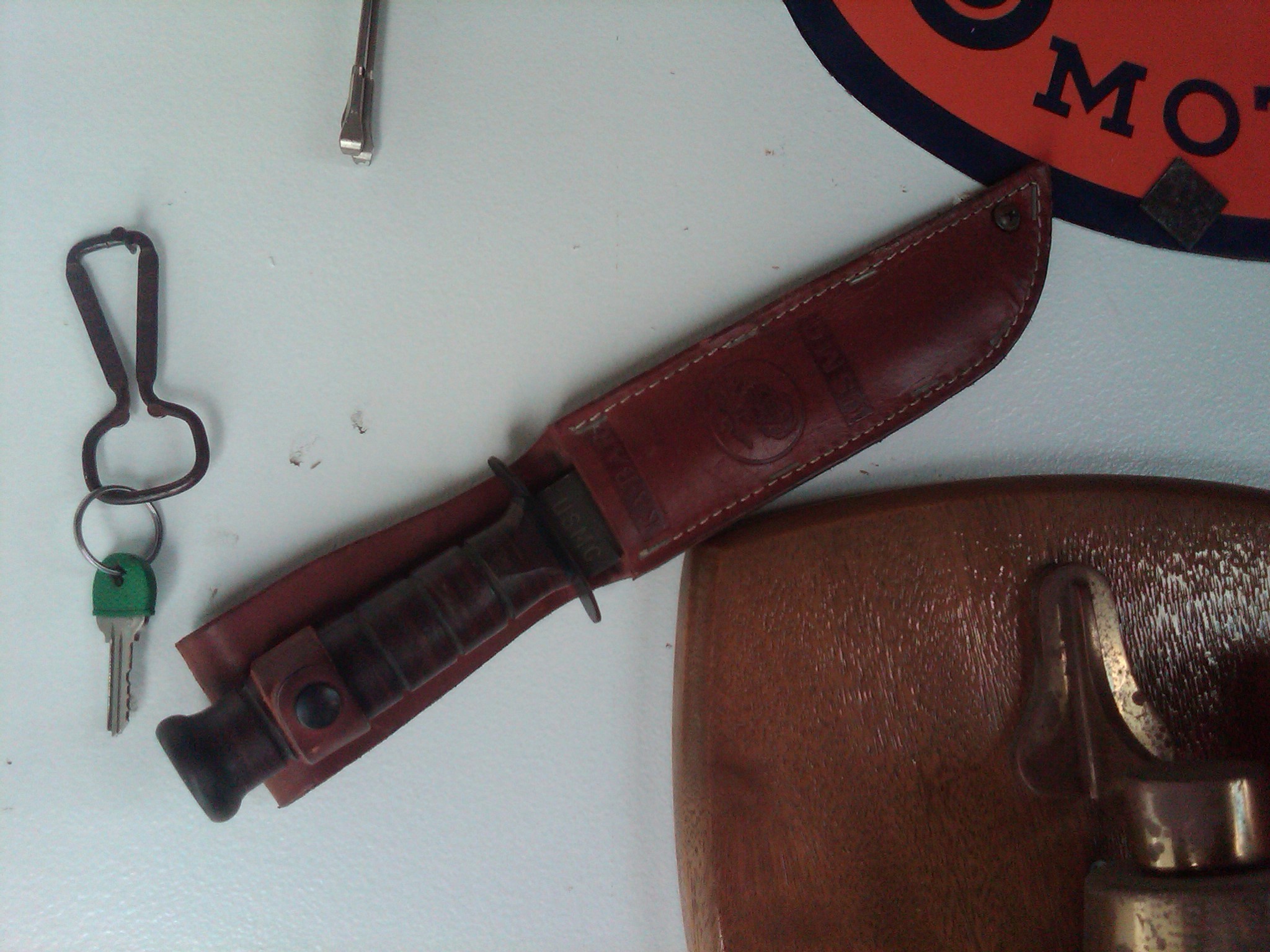
KA-BAR.  If you are a World War II US Marine who served on “those stinkin’ islands”, there is no explanation necessary.

My friend’s KA-BAR. He stated it was his grandfather’s who had served in the Pacific Theater. He allowed me to hold it. Its mass will stun you.

A KA-BAR was a Marine’s most prized personal possession.  It was always at their side.

They opened their C-rations with it.  Dug foxholes with it.  Chopped coconut logs with it.  Hammered nails with it.  Indestructible.

Most importantly, for killing.  Designed for slashing and stabbing.  Desperate hand-to-hand combat.  To the death.

The KA-BAR served them so well that many Marines who survived passed it down to their children.

Old Man Jack said several times, “I’ll tell ya – us white caps always tussled with the Marines ‘cuz they thought they were better than us…but there wasn’t anyone better at protecting your sorry asses with theirs when it came time.”

_________________________

(If you are prone to nausea, you should not continue to read this Old Man Jack story.)

I did not know this free ride was coming.  It was unexpected and spontaneous.  I recall that clearly.

That afternoon, he began describing something vile he witnessed during the war.  Today, I fully realize he was trying to vomit demons out from his soul.

He needed to.

Jack visiting at my house on Sept. 23, 2006. He would fall gravely ill about a year later.

________________________

He didn’t tell me what island; that would be his pattern up until his death.  If he was talking about something a young man should never have witnessed, he would never say what island he was on.  However, my educated guess as to the year would be late 1943 or early 1944.

Old Man Jack said to the best of my recollection that “…the Japs broke through our perimeter”.

“When the fighting broke out, most of us (the ground crew servicing Marine Corsairs) dove straight into the nearest foxholes.  I only had a .45 and I kept my head down except for a dumb ass split second or two…”  He tried to mimic what he did by extending his neck a bit and flicking his head left and right.

“All hell was breaking loose.  Men were screaming all over the place.  You could tell which rounds were from us and which ones were theirs.”

It was all over in a couple of minutes, Jack said.  “I did hear moaning then a CRACK from a .45 or a M1…”  A Marine apparently dispensed a wounded enemy soldier.

“I got up.  There was still a little yelling going on.  And I ain’t ashamed to say I started shaking real bad.  Then I see this kid (i.e., a Marine) dragging this wounded Jap; he was hit pretty bad but I could tell he was still alive.  The Marine grabbed his KA-BAR and sliced open that son-of-a-bitch’s mouth.  I could see the Jap was flinching.  The kid was trying to gouge out gold (from his teeth).”

Another Marine came over and shot the Jap dead with his .45.  The kid yelled, ‘Hey!  Why’d you have to go do that for?!’

The other Marine just looked at him for a split second and walked away.  I stopped looking.”

Jack then just slowly shook his head.

________________________

I remember Old Man Jack was looking down when he finished.  He had on a grey sweatshirt as winter was coming on.

Front row seats in his time machine of nightmares.  He just forgot to mention it was on his roller coaster he kept hidden inside.

He had other free tickets for me in the years that followed.

Old Man Jack-isms #3


One of the few times Old Man Jack would tell me what island something happened on, it would be humorous – as humorous as he could make it.

He HAD to laugh off some of the horror.  He needed to survive being under attack by his own thoughts.

_______________________

On January 16, 2011, eleven months before he passed away, we decided to go to Denny’s for breakfast.  He hated that place – except for their (gawd awful) coffee.  He loved their coffee.  And he complained about the coffee on the islands.  Imagine that.  Denny’s coffee couldn’t have tasted that much different.  Denny’s uses ocean water, too, you know, for their distinctive flavor.  Perhaps that is why he liked their coffee.

Jack with “Green Island” story and his tradmark grin – Jan. 16, 2011.

“Green Island” was Jack’s last combat station when he earned enough points to be rotated back home.  He told me when they yelled out his name, he just ran straight onto this makeshift pier where a PBy was starting up.  He jumped in wearing only his shorts and boots.  They took off.  He was on his way home.

(Click here if you wish to see official US Navy photos of Green Island when Old Man Jack was stationed there.)

In my internet research, I did come across some detailed battle history of Green Island.  I printed it out and not knowing how he would react (even after 11 years of friendship), I presented it to him before the (gawd awful) coffee came.  I didn’t want him to be TOO alert in case things didn’t go well. 🙂

Well, you can see his reaction.  He was “tickled and pickled” I went through the trouble.

________________________________

During breakfast, he told me about one detail he was assigned to on Green Island – the digging of new holes for latrines.   Never mind my eggs were over-easy.  But he’s gone through hell whereas I was spared.  This was everyday fare for him.

He told me he picked out two “dumb new guys” who thought they knew everything for the detail.  They went out where the other “used up” latrines were.  He ordered them to start digging new holes in this hard coral-like stuff not too far from the other “used up” holes while he “supervised”.

I knew I would get his goat if I interrupted him.  That was part of the fun.

So I interrupted him.  For fun.

“Jack…dig?  Why didn’t you just have them make a small hole then throw in a grenade?”

Well, I asked for it…  in Denny’s…  on a busy Saturday morning.

“You dumb shit,” he declared with that boyish grin.  “YOU could have been one of the dumb new guys.  YOU would have fit right in.  We didn’t need any more craters!  We had LOTS of craters – all around us!  So we dug holes like we were ordered to.  So shut up and listen!”

Whooo-ee.  That was fun… in Denny’s… on a busy Saturday morning.

______________________

I never asked him if he read the history on Green Island.  Later on, though, Old Man Jack said he had wanted to go back to those “stinkin’ islands” just to see.  It felt as if he wanted to let some demons out.

He never made it back.

Perhaps he’s there now saluting his young buddies he had to leave behind.

“There’s No Toilet Paper in the Jungle of Burma”


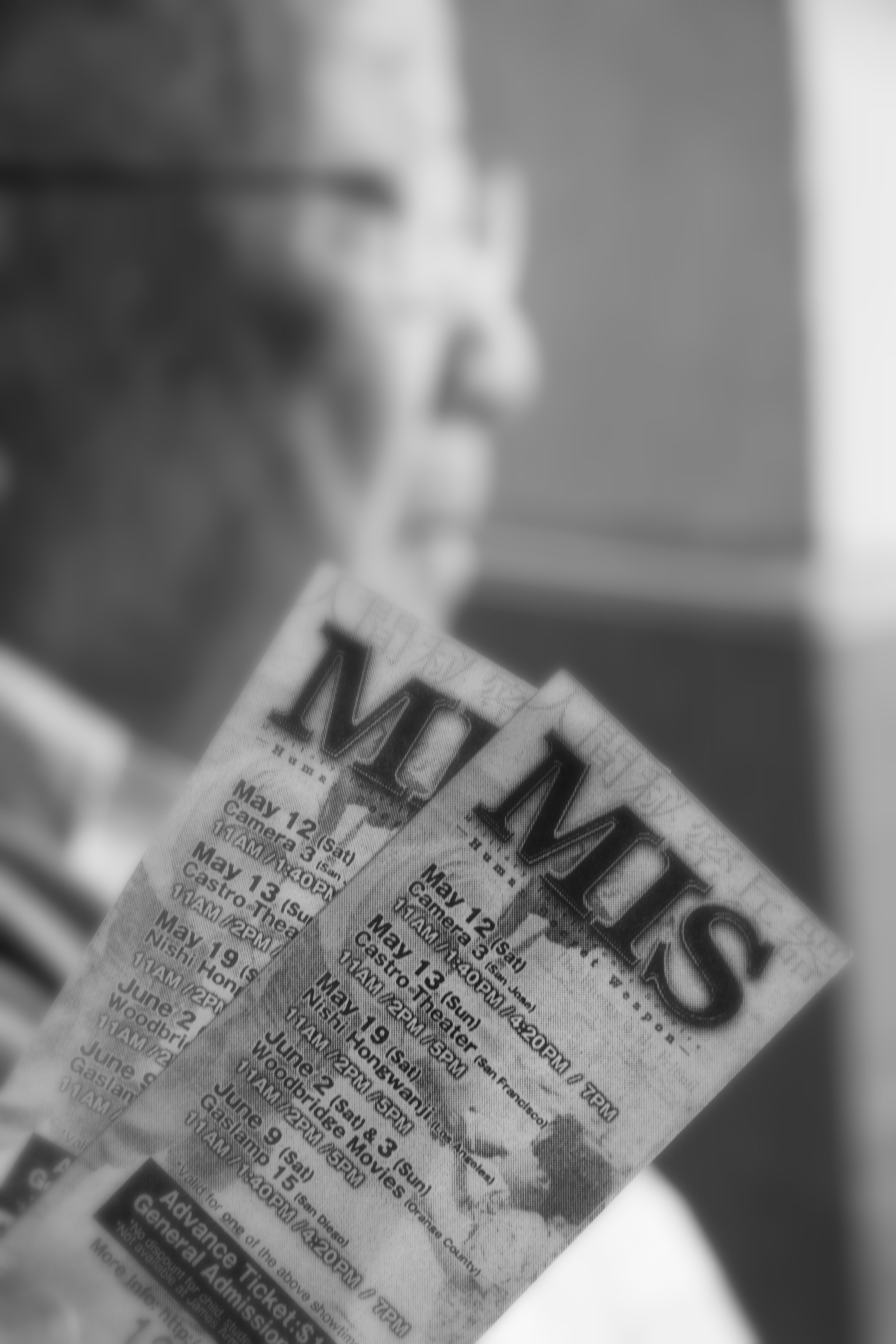
Dad and I waiting to go in to watch MIS

Dad broke his silence.

“War is no good,” he said as we left the small community movie theater near his assisted living home today; we had just watched the limited release documentary “MIS: Human Secret Weapon”.  It was about his highly classified World War II US Army unit.  He had silently watched and with a ghostly stillness.  But I saw him wipe his eyes twice after gently lifting his glasses.  Others openly wept…but I had never, ever seen him shed a tear before today.

I was ignorant.  Combat isn’t necessary for the ugliness of war to be buried in a person’s mind.  The documentary made it clear that it is also easily dug out.  All one needs to do is scratch.

Official US Army document certifying his Military Intelligence Service days.

___________________

The documentary reveals the conflicted state of mind of the then young Japanese-Americans who made up the US Army’s Military Intelligence Service (MIS).  About 3,000 of them – including two of my uncles – secretly and faithfully served the red, white and blue, hastening the Japanese surrender on board the USS Missouri.

Another 3,000 served during the Occupation of Japan.  My dad was one and worked out of General Eichelberger’s US 8th Army’s GHQ in Yokohama.  That’s when he was able to journey to Hiroshima and see his mother for the first time in ten years…and when a hungry Masako first relished the flavor of Spam.

__________________

Grant Ichikawa, MIS, CGM and me. 2010

One Nisei veteran interviewed was Grant Ichikawa.  He was gracious enough to not only greet me and my family in 2010 near his home in Rosslyn, VA, he also secretly treated us to lunch.  Pun intended.  He had lost his wife Millie just months before.  She was an even rarer female member of the MIS as well.

He and Terry Shima (also interviewed in the documentary) gave me the jump start in finding out about Dad’s involvement in the MIS.  During that all too brief get together, Grant did touch on what he did on the battlefront in a GI uniform.  He also said it “got dicey”.

In this documentary, you learn of one such experience.  He was told there were Japanese soldiers who had agreed to surrender.  Grant said he was the point man.  They proceeded to the rendezvous point where he met the Japanese commander; they were in the middle of an open field.

It turns out there were 200 to 250 of them; all their weapons were in good working order he says in the documentary.  Grant suddenly realized – out in the middle of this field – that these Japanese soldiers were “toukoutai”, or “suicide corps”.  Grant just as quickly and with great consternation realized there were only ten of them… GI’s, that is, armed only with rifles.  I’m sure Grant picked his words wisely.  He is still alive.

“Dicey” was a definite understatement.

_______________________

In a lighter moment, Ken Akune described how they were searching a Japanese soldier that had surrendered in the jungle of Burma.  They came across one of the American propaganda leaflets promising safe passage for those Japanese soldiers that surrendered.  It was neatly folded in a pocket.

Surrender Propaganda Written by MIS Nisei.

Akune asked the Japanese soldier if he believed what the leaflet promised since the MIS Nisei wrote it.  The Japanese soldier said no but that it made for good toilet paper.  “There was no toilet paper in the jungle of Burma,” said the prisoner.

_______________________

Thomas Tsubota broke down at the end of his interview.  Many did.

Tsubota was one of the top secret MIS members of Merrill’s Marauders.

They had just stumbled across ten Japanese soldiers in a small jungle clearing, he says.  “Boom,” he said, in a split second they killed them all.  He described how his commander, Colonel Beach, called him over to inspect a photo album taken off one of the now dead Japanese soldiers

They looked through the album.  Tsubota told Col. Beach there was nothing of military importance in it but as they came upon the last page of the album, there was a picture of a mother and a daughter.

Tsubota said Colonel Beach’s eyes got red, filled with tears and he said, “Thank you, Tom.”

While crying, Tsubota ended the interview by saying this is why he isn’t enthusiastic about talking about the war.  Too painful.  He doesn’t want to think about that sad moment.  Tsubota is 96 years old.  I thought Dad was old.

______________________

The documentary intensely yet humanely describes the internal turmoil within these young American GIs of Japanese descent.  Quite a few had brothers who were left in Japan when war broke out and were killed as Japanese soldiers.  Deep down, many carried guilt that their own secret actions led to the deaths of their own brothers.  My Dad’s youngest brother – my Uncle Suetaro – was one of those casualties.

But these 3,000 young American boys of Japanese heritage did their job as did millions of other young American boys…but in secret.  They translated diaries covered with blood or offered cigarettes to Japanese prisoners to extract military intelligence while battles were raging.

They endured years of discrimination and intimidation to boot – both from GI’s fighting alongside them as well as back home.  A barber in Chicago wouldn’t cut Dad’s hair because of his race – and he was wearing his perfectly creased US Army uniform with sergeant’s stripes, sleeve highlighted by the proud shoulder patch of the US 8th Army.

The secrecy was officially lifted in 1972 by Executive Order 11652.
______________________

Uncle Suetaro on right.

Just the two of us, I thought, were going to see this movie and that this may help Dad slow down his growing dementia.

I was wrong.

His quiet tears and with his exiting comment, I am sure Uncle Suetaro was there, too, in Dad’s heart – as if it was 1937 in Hiroshima when he last saw his brother alive.

Over the past two years, I’ve asked, “Dad, tell me about what you worked on in the MIS.  What was the one thing you remember the most?  A picture?  A diary?”  Each time, the answer was vague or “I don’t know.”  I chalked it up to senility.

He doesn’t want to talk about it…just like Tsubota painfully recalling Col. Beach and the photo of a mother and a daughter taken from a Japanese soldier they had just killed.

Ugly recollections from war wanting to be masked need not come from battlefields, bullets or bombs.

Two Old Men and a Father’s Day Anguish


It was Monday, Valentines’ Day 2001.  My wife was five months pregnant at the time we moved into this wonderful neighborhood smothered in US Naval glory.  After I came back from work the next day, she told me a kind old man stopped her as she was wheeling out the trash bin.  She said he hobbled from across our quiet street lined with peppercorn trees then kindly wheeled them out for her.

I found out the “old man” was a World War II combat vet.  Worse yet, he was a sailor in the Pacific – he fought the Japanese in World War II.

“Holy crap,” flashed through my mind, “What if he finds out we’re Japanese?”

Twelve years later, I was honored to have been a pallbearer at his funeral.

I was so far off base about my first thoughts on Old Man Jack that even George Burns could have picked me off without being called for a balk…and this while he was in his grave.

I felt so ashamed.

_____________________________

I snapped this picture of a happy Jack Garrett when we went to the Chino Planes of Fame in 2003.

“Young man, get over here and plant your butt in that chair,” barked old man Jack from his cluttered garage across the street.  Having lived in that house since 1953, it was filled with his life history.

“But I have my stogie going, Jack,” said I.

“Well, I can see it and I sure as hell can smell it.  Now shut up and sit down.  I want to tell you something.”

That was Old Man Jack, my dear neighbor who lived across the street.  I like to think we were close.

He was 87 years old by that summer’s day in 2010 when he called me over.  While he had become feeble, his barrel chest was still prominent.  He was a rabble-rouser in his youth.  He was always “mixing it up” throughout his young years…  Well, he was mixing it up even while working at Northrup in the 50’s.  That makes me grin.

His handshake was always firm and warm; you didn’t need to be psychic to sense his insight and outlook on life.  He always spoke his mind.  He earned that right having been shot at, strafed, and bombed on “those stinkin’ islands” in the Southwest Pacific as he so often said during a most bitter war.

___________________________

Taken on Father’s Day 2010

I had invited Jack to Father’s Day dinner that summer just two years ago; my Dad who was 91 was coming as well.

Jack knew my dad was US Army but I fretted over what they would say to each other when they first met.  Or how they would react to one another.  It was more than just a concern over the centuries old rivalry between Army and Navy.  It was the bitter war.

Dad was in the front room when Jack rang the bell – right on time as always.  Jack had on his favorite blue plaid shirt; he wore it often as it had a pocket for his glasses.  I often wondered how often he washed it, though.  Jack and Dad are shown here on Father’s Day 2010.

“Dad,” I said, “This is Jack, US Navy, Aviation Machinist’s Mate, First Class, the Pacific.”

“Jack, this is my Dad.  US 8th Army, sergeant, Military Intelligence Service.”

Although not as agile as they once were, they immediately saluted each other.

_______________________

You didn’t need a sound system to hear them.  Dad and Jack are both hard of hearing.

It was easy to hear Jack ask Dad what he did in the Army.  During the Occupation of Japan, Dad said he went into a room once a week that reeked of dry cleaning to retrieve a crate.  (The crates contained documents, photos and other personal items such as war diaries written by Japanese soldiers.  They were removed from a WWII battlefield – read on.)  He would then translate the contents for military intelligence (below).

2016-11-12_04-06-14
Dad translating captured war documents in the U.S. 8th Army HQ’s, Yokohama, Japan. 1947.

I had to tend to cooking so I lost track of the conversation.  It was regretful I didn’t keep tuned in.

_______________________

So back to being called over by Jack on that summer’s day.

He was sitting in his favorite blue wheelchair.  He didn’t need it but it belonged to his beloved wife Carol who passed away ten years before.  They married during the waning days of the war.  They had been married for 55 strong years.

“So what did you want to tell me, Jack?” I asked.

He then went into his trance – one signaling evident anguish and wretched remembrances.  When he went into these trances, he always started by staring at his hands while picking at his right thumbnail with his left ring finger.  He would lift his once thick eyebrows now turned snow white with age, then begin talking in a slow, deliberate pace, never taking his eyes off his hands.

“I went on ID patrol…” Jack rasply whispered while ever so slightly drawing out his words.

“ID patrol?  What is that?” I asked.

He ignored me.  It was as if I wasn’t sitting next to him… He had already left the present. He had stepped foot onto that violent SW Pacific jungle of 70 years ago.  I’m sure its smell was as vivid to him in his tormented subconscious as it was seven decades ago.

“They would issue six of us white caps M1’s with bayonets…  Then we’d follow two Marines on a patrol into the jungle.”

“Patrol?  You?  You were ground crew, Jack,” I remarked.

“Ain’t enough of them (Marines) to go around on those stinkin’ islands so we got picked,” he said, still speaking in a lifeless yet pained monotone.  He added, “If you got killed, you rotted real quick in that jungle heat.  And if you got killed with shit in your pants, you got buried with shit in your pants.”

His stare doesn’t change.  His eyes have glassed over.  He is in a different world now – one of 70 years ago in a stifling jungle, his youthful, sweaty hands trying to grip onto his Garand rifle while wearing a smelly steel helmet… Listening in terror for any sound that may signal a Japanese soldier concealed in ambush knowing that the enemy was just there shortly before. A world that only combat veterans understand.  Thankfully, you and I never will.  Never.

“The Marines had two bags – one small one and a big one.  When we found one, the two Marines would stand guard.  We’d hold the rifle by the butt end and use the fixed bayonet to fish out the tags.”

It was then when I realized what he was painfully regurgitating.

This is what he meant by “I.D. patrol”. They were going back into the jungle to locate the dead Marines they had to leave behind after a “tussle” with the enemy as Jack liked to say – a life or death firefight.  Old Man Jack was only 20 years old.  The Marines were likely younger.  Ponder that thought.

“We weren’t allowed to touch the dead (Marine) as the Japs would booby-trap ‘em.  We’d hand over the tags hanging on the the end of the bayonet to one of the Marines who would put a tag in the small bag.  They marked a map for the graves registration guys to come back later.”

Jack’s anguished delivery dimmed even further.  “But we’d come across a dead Jap.  Nobody cared about them so they rotted where they were.  But we’d have to stick the bayonet into the rotting goo and try to fish stuff out.  The prize was a pouch or a satchel.  Those would go into the big duffel bag just as they were, covered with rot and maggots. We headed back to CP and that’s the last I saw of those bags,” he said.

He abruptly ended but his unconscious stare didn’t change.  He was still in the jungle, scared out of his wits. He was still picking at his thumbnail all this time.  His head hardly moved while he sat in the blue wheelchair that belonged to his beloved wife.

I thought to myself, “Is that the end, Jack?  That’s it?  Why did you tell me this?”  I knew not to pry any more so I kept the thoughts to myself.  He was in torment already.  Seventy years had passed but he was reliving the awfulness of a brutal war.  Nevertheless, I wondered why he chose that time to tell me about this horrific recall of something he experienced so very young.

It bugged me for several weeks.

____________________

About a month later, I understood why Jack told me the story after I communicated with Mr. Grant Ichikawa, a more well known veteran of the famed US Army’s Military Intelligence Service and combat veteran himself.  Apparently, the items they recovered from Japanese corpses were dry cleaned to remove the rotting body fluids.  After getting dry cleaned, they ended up in the crates that were in the room my Dad went into once a week when he was in the Military Intelligence Service…and why the room reeked of dry cleaning.

The brief chat with my dad on Father’s Day sparked that vile memory back to life.  It had been eating at Old Man Jack since that day.  He wanted to get it off his once mightily barreled chest.

I lament to this day that an invitation to a Father’s Day dinner had resulted in an unwanted recall of horror Jack was very much trying to forget.  More so, I lament he relived such horrors each night for the last 70 years of his life.  Seventy years.

Jack was a great man to have endured combat in the Pacific during World War II.  He was an immeasurable giant in learning to forgive – although he was never able to forget.

I miss him greatly.  I thanked him for all we have when I visited him today at his grave on this glorious Memorial Day.