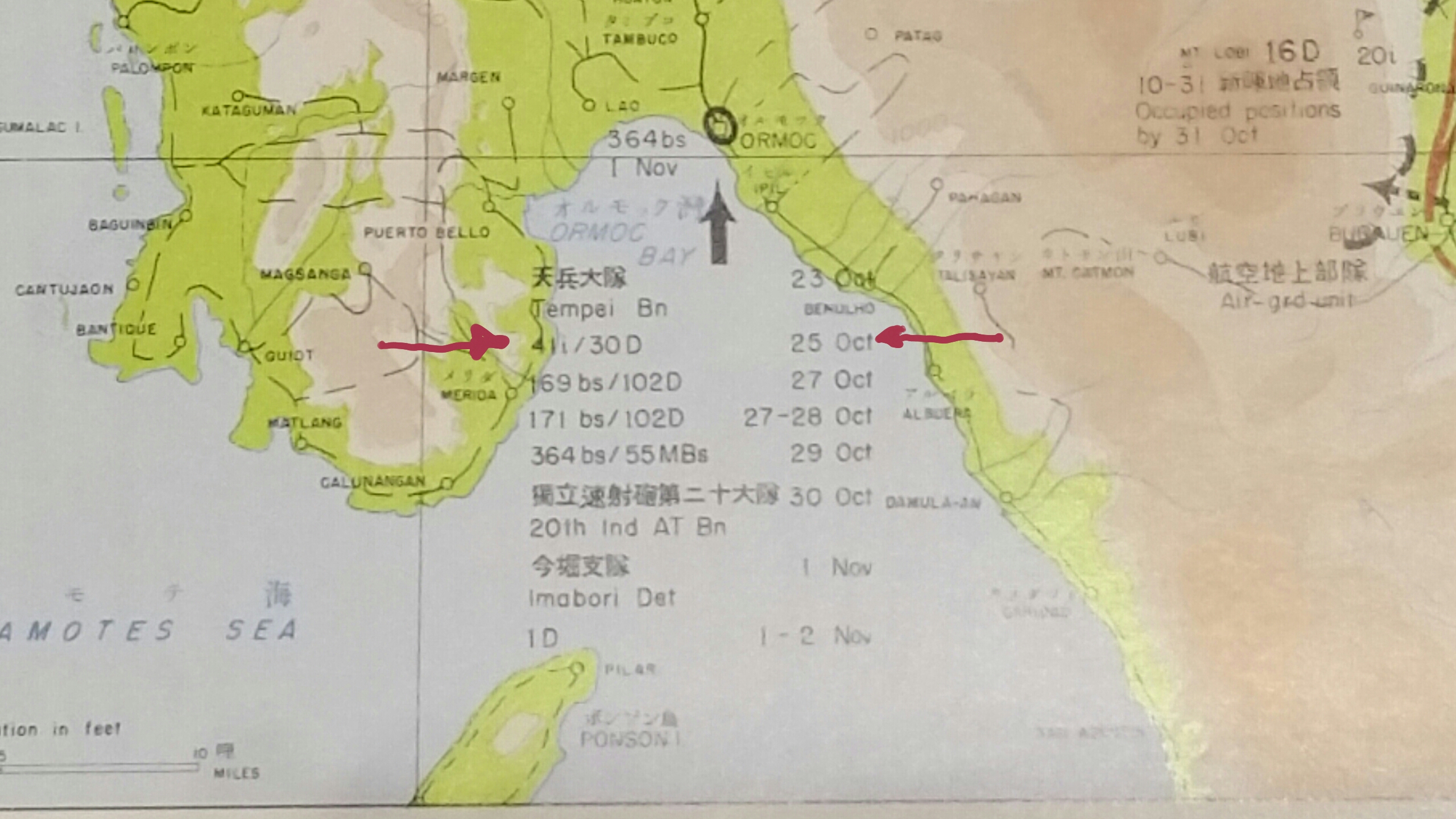
Current Google map of Leyte battle area, inserted for ease of viewing and geographical orientation.
Battle Situation Overview
Even before my Uncle Suetaro and his 41st Regiment of the Imperial Japanese Army landed in Ormoc at dawn on October 26, 1944, the US Sixth Army’s X Corps fought through four miles of beach between the Palo River and the Tacloban airstrip. XXIV Corps further south also made significant progress, overcoming the Japanese resistance. However, incredibly swampy terrain was more their enemy than the Japanese at times.
By the end of A-Day, the 1st Cavalry Division had secured the Tacloban airstrip. Most critically, Lt. General Makino, commanding Uncle Suetaro’s 41st Regiment and the 16th Division, was forced to evacuate his Command Headquarters in Dulag (below) to a village called Dagami.
The inevitable violence of war. Dead Japanese soldiers lay next to a knocked out Type 95 Japanese tank at Dulag Airfield. Dulag was the location of Lt. General Makino’s headquarters. October 20, 1944. National Archives.
First: Irony
In closing Part 2 of this series, the US 8th Army’s Military Intelligence Service (MIS) was mentioned. During the war in the Pacific, nearly all MIS soldiers were Japanese-Americans. Caucasians were primarily officers although a few NCOs were assigned.
Although Uncle Suetaro’s older siblings (my dad, Uncle Yutaka, Aunt Shiz and their families) remained imprisoned in the US concentration camps for people of Japanese blood until war’s end, my dad did volunteer for service in the US Army in February 1947.
After prodding, my dad told me and my cousin Neil (Yutaka’s son) he volunteered because by doing so, he’d get three chevrons on his sleeve; but, if they drafted him, he’d be a lowly buck private. “More pay,” he told us.
The story I choose to believe, however, is that Uncle Yutaka – then living in Chicago and now the leader of the entire family – implored or directed my dad to join up solely to check up on their mother and remaining sister, Michie, in Hiroshima. Of course, the anguish of not knowing what happened to their youngest brother – my Uncle Suetaro – played a deep, silent role. This is a belief that I have not shared with others.
Well, Dad got his chevrons and sergeant’s pay. He became part of the famed MIS, post-hostilities.
Photo of Dad translating a document. Taken at US 8th Army HQs in Yokohama, Japan. April 1948.
________________________________________
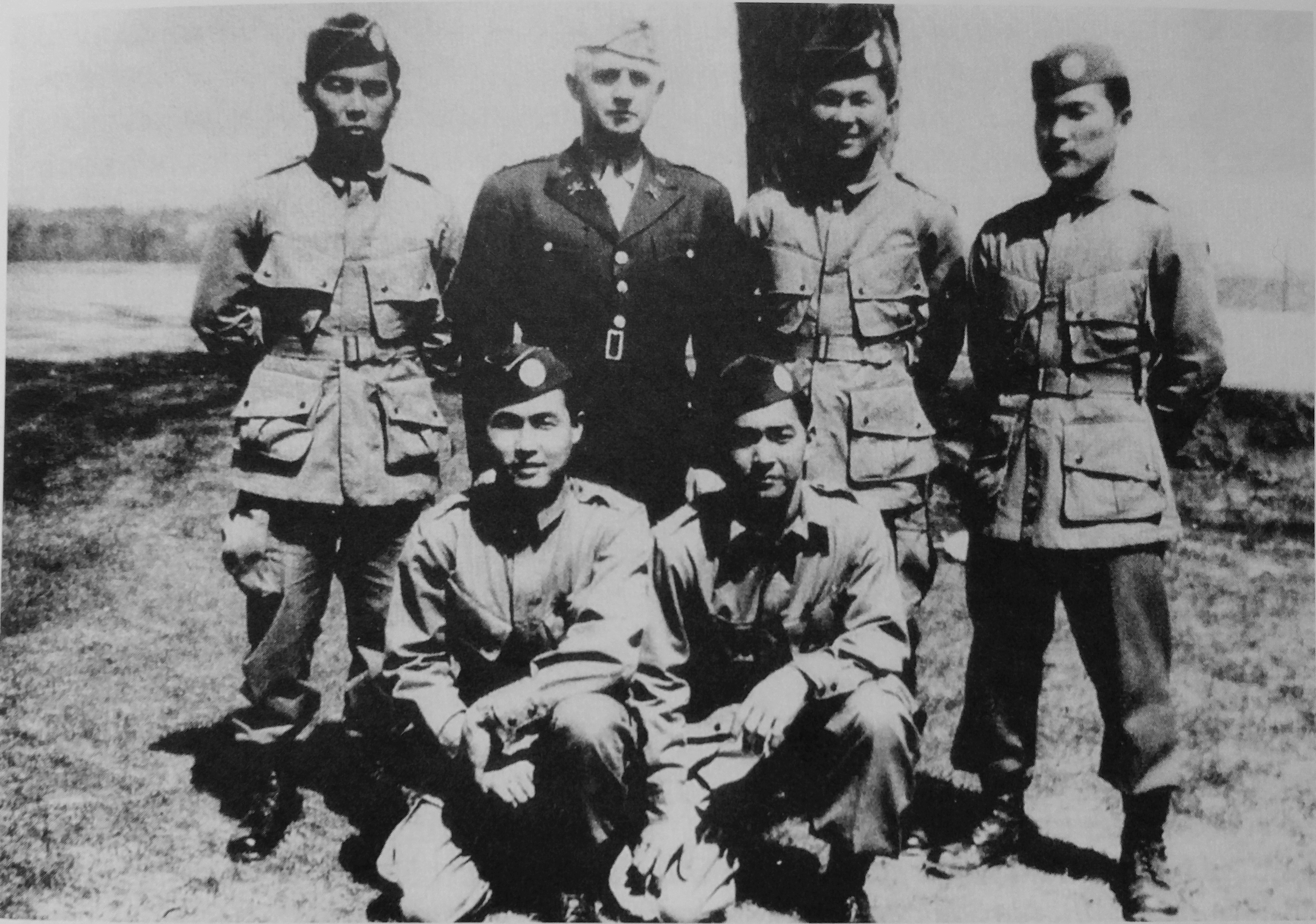
Five MIS Nisei pose with Colonel Rasmussen after receiving their jump wings. Do you think it odd to see Japanese-Americans in US Army paratrooper uniforms? They were assigned to the famed 11th Airborne Division which eventually fought on Leyte and Luzon. From Pg. 127 of Nisei Linguists.
As my Uncle Suetaro fought for Japan and his life on Leyte, the MIS was diligently doing their patriotic duty as US Army soldiers to end his life. Dr. James C. McNaughton writes in his authoritative book, Nisei Linguists:
On 20 October the Nisei language teams went ashore with the assault elements of four divisions and two corps. Maj. George Aurell led the Sixth Army team. His team sergeant, S.Sgt. Kazuo Kozaki, recalled: “We were kept busy all day and immediately. There were loads and loads of captured documents, although no prisoners were taken yet. I had to virtually wade through a pile of papers—operation orders, operation maps, manuals, magazines, books, paybooks, saving books, notebooks and diaries, handwritten or printed, official or private — to find out if there was any valuable information for our immediate use.”
Some Nisei saw direct combat. When the Japanese counterattacked the 7th Infantry Division, the Nisei “were a little bit heroic,” a Caucasian sergeant recalled. “They would climb on board a Japanese tank going by, knock on the things, converse in Japanese, and as soon as the door popped open, they’d drop a hand grenade — boom!”
On 25 October two more Sixth Army language detachments arrived on board a landing ship, tank…”
One hundred and twenty Nisei’s and Kibei’s served on Leyte.¹
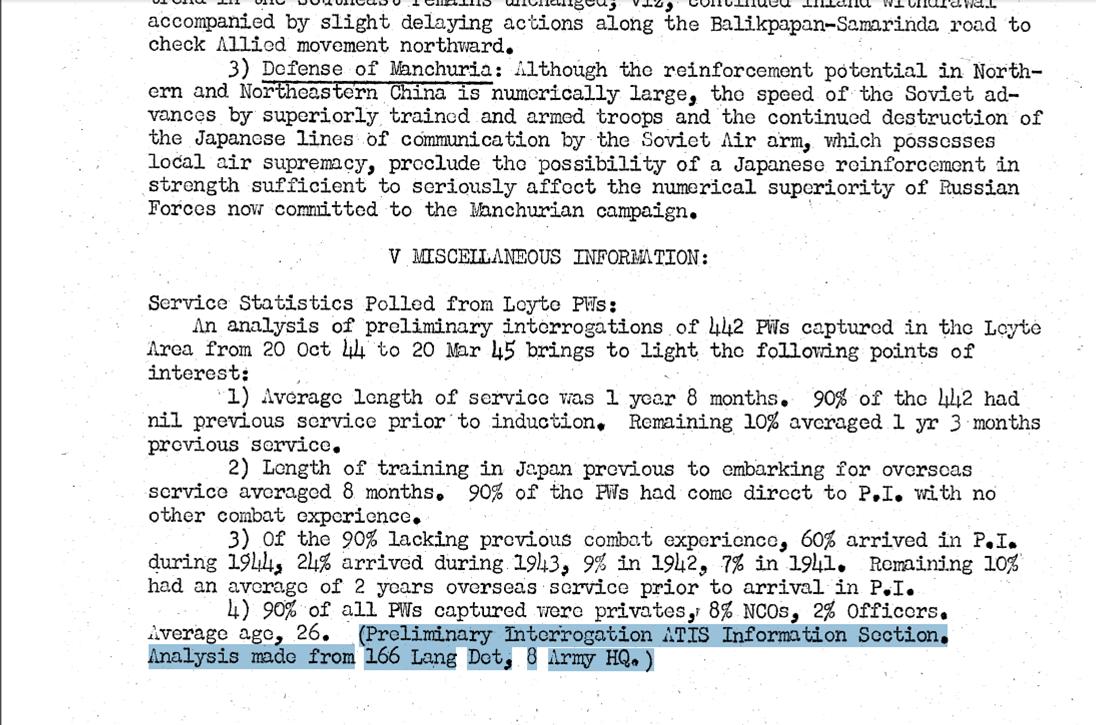
The unspoken irony for my father is here, hidden in this secret behind-the-scenes world. If you note the highlighted print in this once top-secret US 8th Army report, it states, “Preliminary Interrogation ATIS Information Section. Analysis made from 166 Det, 8 Army HQ”.
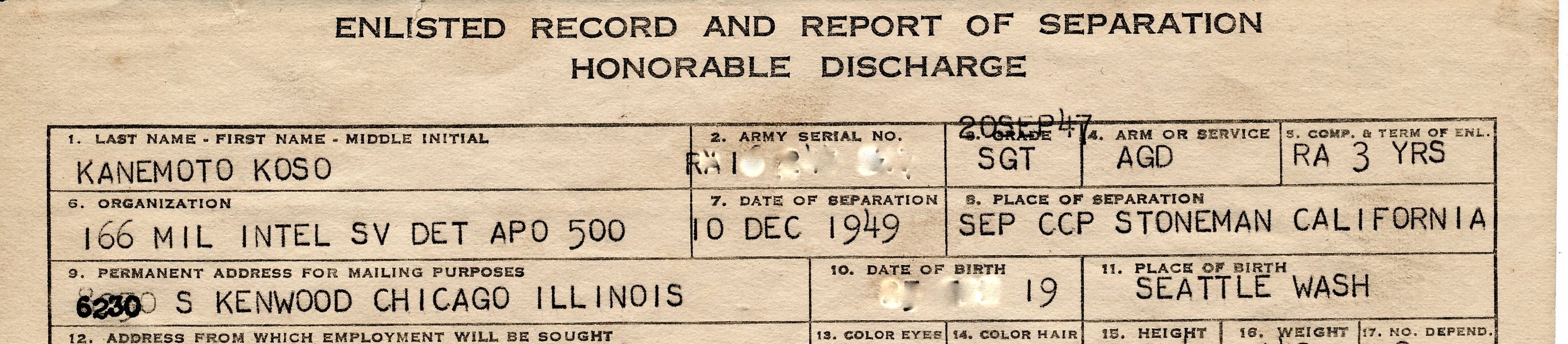
Here is the pertinent section of my dad’s discharge papers:
He served with the same G-2 166th Language Detachment that did their best to kill Japanese soldiers on Leyte – including Uncle Suetaro. While the Nisei’s were on Leyte since the invasion began Oct. 20, 1944, they were reorganized into the 166th Language Detachment on 20 June 1945 per US Army records.
Picture of sign taken by my dad outside his office door in the US 8th Army HQ Building in Yokohama, Japan. Circa 1947.
I am darned sure he translated some documents captured on Leyte… where his favorite brother died. How this must have plagued him for the rest of his life – to this very day.
____________________________________
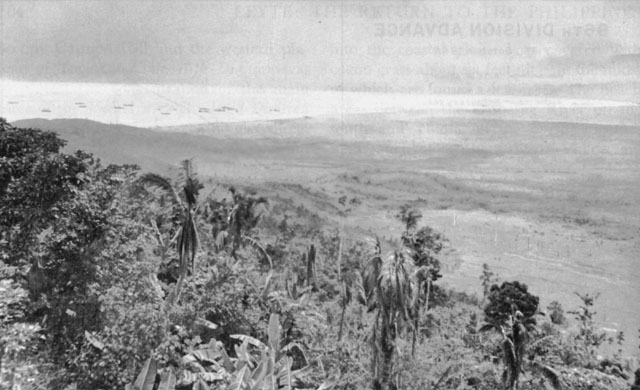
The view from atop Catmon Hill after being taken by the US Army, October 1944. The Japanese observed the US invasion forces from this hilltop position as they landed and directed artillery fire. National Archives.
Back to the War on Leyte and Uncle Suetaro…
Per Mr. Ota’s book, The Eternal 41st, the composition of the 2,550 troops that disembarked at Ormoc was:
Regimental HQ staff
A rifle company (under Sasaki)
An artillery squadron (under Fukunishi)
A signals squadron (under Nakamura)
1st Battalion (under Nishida)
2nd Battalion (under Masaoka)
An attachment of combat engineers
A platoon of litter bearers from a medical regiment
However, their potential effectiveness had already been negated. It was their fate. Per his book, it appears the troops – including Uncle Suetaro – were forced to quickly ship out of Cagayan with but a day’s notice and with only what they could essentially carry on their backs or reasonably transport: ammunition, food, lighter artillery pieces like the 37mm anti-tank gun, etc.¹ This would be the proverbial nail in their coffin as the USN and USAAF would in short order obliterate their supply chain.
Thirty-fifth Army took immediate action to move reinforcements to Leyte in accordance with the Suzu No. 2 Operation plan, which had already been activated on 19 October. Orders were issued during the 20th directing the following units to advance immediately to Leyte, where they were to come under 16th Division command:
1. 41st Infantry Regiment (less one battalion) of the 30th Division (Army reserve from Mindanao)
2. 169th Infantry Battalion of the I02d Division from the Visayas sector.
3. One infantry battalion of the 57th Independent Mixed Brigade, from Cebu.)}
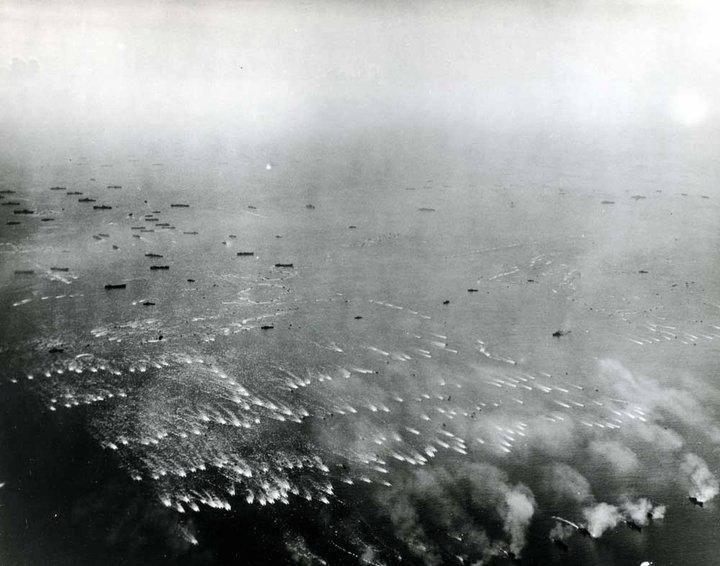
Part of Leyte invasion fleet with US Army troops assaulting Leyte beach. You can see Uncle Suetaro never had a chance. Taken from a USN reconnaissance plane from the USS Portland. National Archives.
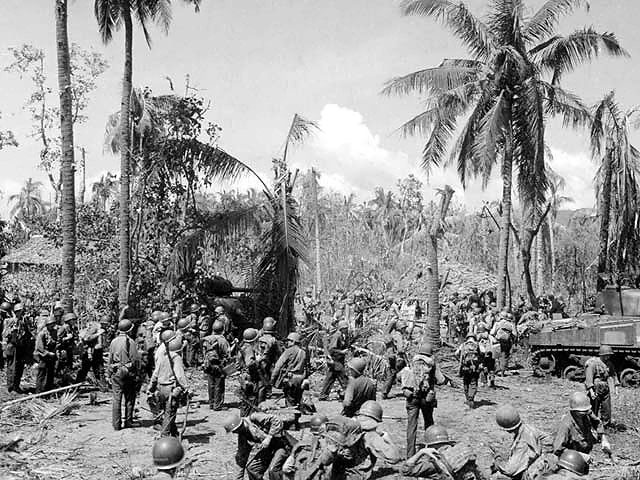
US soldiers on Leyte, October 20, 1944. National Archives
After landing in Ormoc at dawn, they became attached to the 16th Division under Lt. General Makino…but communication had been completely disrupted. Makino’s HQ had been located in the coastal town of Dulag but it had been taken by the US 7th Infantry Division on the first day of the invasion. Makino was in the process of moving his HQ ten miles inland to a town called Dagami five days before Uncle Suetaro landed. Sadly, per the Reports of General MacArthur, orders had been issued by Japanese General Suzuki prior to their landing and were based on faulty intelligence:
Upon receipt of this dispatch, Lt. Gen. Suzuki and his staff began formulating a new operational plan covering the deployment of forces on Leyte. This plan, completed within the next few days, was essentially as follows ²:
1. Operational policy:
a. The Army will act immediately in cooperation with the decisive operations of the naval and air forces.
b. Reinforcements will be concentrated on the plain near Carigara.
c. Enemy troops which have landed near Tacloban and in the Dulag area will be destroyed.
d. The direction of the initial main effort will be against the enemy in the Dulag area.
e. The general attack will begin on or about 10 November.
2. Allocation of missions:
a. The 16th Div. will hold the Dulag area, Catmon Hill, and the heights west of Tacloban in order to cover the concentration of the main forces of the Thirty-fifth Army.
b. The following units, after landing at the ports indicated, will concentrate on the Carigara plain:
1st Div.-Carigara (Uncle Suetaro)
26th Div.-Carigara
102d Div. (Hq. and three battalions)-Ormoc
c. After the concentration of the Army’s main forces on the Carigara plain and adjacent areas to the southeast, operations will begin with the objective of destroying the enemy in the Dulag and then the Tacloban area.
Per Mr. Ota’s book, they slogged north to Carigara; they did make camp to rest one night in Kananga, a half-way point. However, the US-supported guerrillas were constantly pestering the advancing Japanese force by destroying bridges and roads. This wrecked havoc with vehicles and heavy rolling stock. This obviously wore down artillery crews exacerbated by the rain, humidity, and limited food and medical supplies. They still were unable to establish communication with Lt. General Makino; they were essentially going into combat pretty blind.
On or about October 28, 1944, the 41st Infantry Regiment moved from Carigara to the southeast section of Jaro. They were to secure a bridge at a three fork highway junction. {In corroboration, a US report states General Suzuki planned to have these troops move north along the Ormoc-Limon road (Highway 2) through Ormoc Valley, from which they were to diverge in three columns and capture the Carigara-Jaro road.³} I believe this was the Mainit River bridge.
Unfortunately, they would soon clash violently with the US Army’s 34th Infantry, with dwindling provisions and weather combining into an insurmountable force against their staying alive.
To be continued in Part 4.
1. “Nisei” were the children of the first generation Japanese to immigrate legally to the US. Being born here, they were American citizens. A “Kibei” is a subset of Nisei; these Nisei children were rotated back to Japan for a period of time to learn the Japanese language with the understanding they would return to the US. My dad is a Kibei. KIbei’s were absolutely fluent in Japanese and formed the heart of the MIS. In fact, some Kibei’s used to rib the Nisei “translators” because many spoke in a feminine way having learned it from their first generation mothers.
2. ULTRA intercepts reported the approach of this shipping, but MacArthur’s staff at first thought they indicated the beginning of an enemy evacuation. The necessary diversion of Third Fleet and Seventh Fleet aircraft for operations against surviving Japanese fleet units and the incomplete buildup of the U.S. Fifth Air Force on Leyte itself also weakened Allied reconnaissance and offensive capabilities in the immediate vicinity of the battle. Not until the first week in November did MacArthur’s staff realize that an enemy reinforcement was under way. Thereafter, American forces inflicted severe damage on local Japanese merchant shipping, sinking twenty-four transports bound for Leyte and another twenty-two elsewhere in the Philippines, as well as several warships and smaller vessels. By 11 December, however, the Japanese had succeeded in moving to Leyte more than 34,000 troops and over 10,000 tons of materiel, most of it through the port of Ormoc on the west coast. – Per Dai Sanjugo Gun Hatsuchaku Bunsho Utsushi (Document Files, Thirty-fifth Army headquarters) Oct-Dec 44, pp. 21-2, 25, cited in Reports of General MacArthur.
3. Leyte: Return to the Philippines, M. Hamlin Cannon. 1953
It is believed I occupy a potentially unique position when it comes to looking at history as it pertains to the Pacific Theater in World War II. I am American first and foremost and have studied WWII history out of curiosity. As expressed in the description of my blog, my viewpoint is from “one war, two countries, one family”. However, one potential uniqueness is that I am able to read a bit of Japanese; you may be amazed to read what is written about WWII from the Japanese viewpoint of history. As such, I believe each battle will have in the background two broad, driving and dissimilar viewpoints: one from America and one from Japan. The attack on Pearl Harbor is one example. But that is but the surface on war’s history – a high altitude view. One that can be easily manipulated politically. But being on the ground dealing in face to face combat – or interrogation – leaves little to interpretation. However, the fog of time challenges what is seen in a veteran’s mind.
Many of us here in the US interested in this world-wide cataclysm believe the Japanese soldier was a fanatic… freely willing to give his life for the Emperor. The banzai charges. The kamikaze attacks. Individual soldiers throwing themselves under tanks with an explosive charge strapped onto their backs in a suicide attack. The truth of the matter is… they were farm boys. City boys. Just like our boys, they were drafted. Instead of dying in “banzai attacks”, these “fanatical” Japanese soldiers wanted to go home just like our boys…but they couldn’t for fear of reprisal against their families. Being a buck private in the Japanese army was brutal. Perhaps not as brutal as the treatment they gave POWs but brutal nonetheless. My Uncle warned his brother-in-law of that brutality in his farewell letter written on May 3, 1944.
A Look Into Imperial Japanese Army Morale
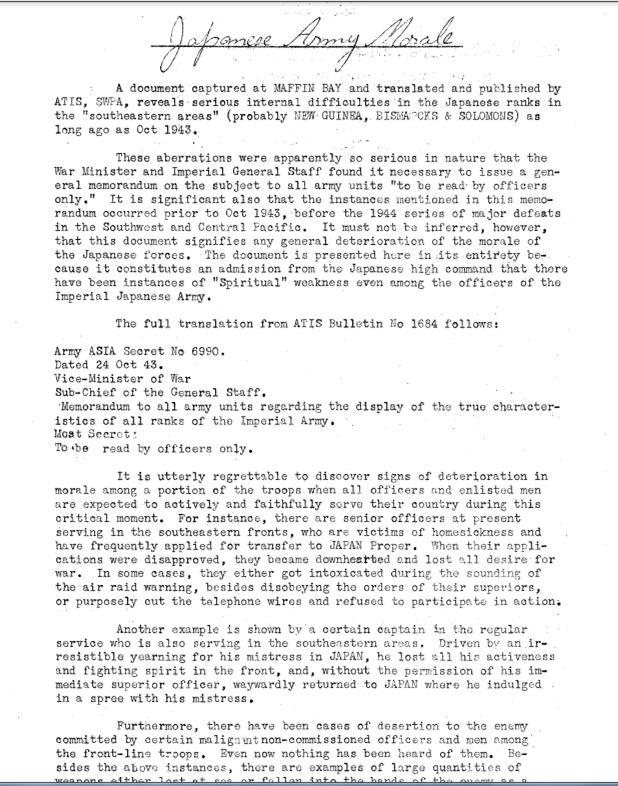
Indeed, as early as 1943, morale amongst the Japanese soldiers was very poor per this US Army G-2 intelligence report:
Excerpt from “Intelligence Bulletin, G-2 USAFPOA, Feb 1945”. The translation was performed by a Nisei in the Military Intelligence Service. The captured Japanese document was dated October 24, 1943.
So perhaps things are not what they seem? I wonder how my Uncle Suetaro felt.
_________________________________
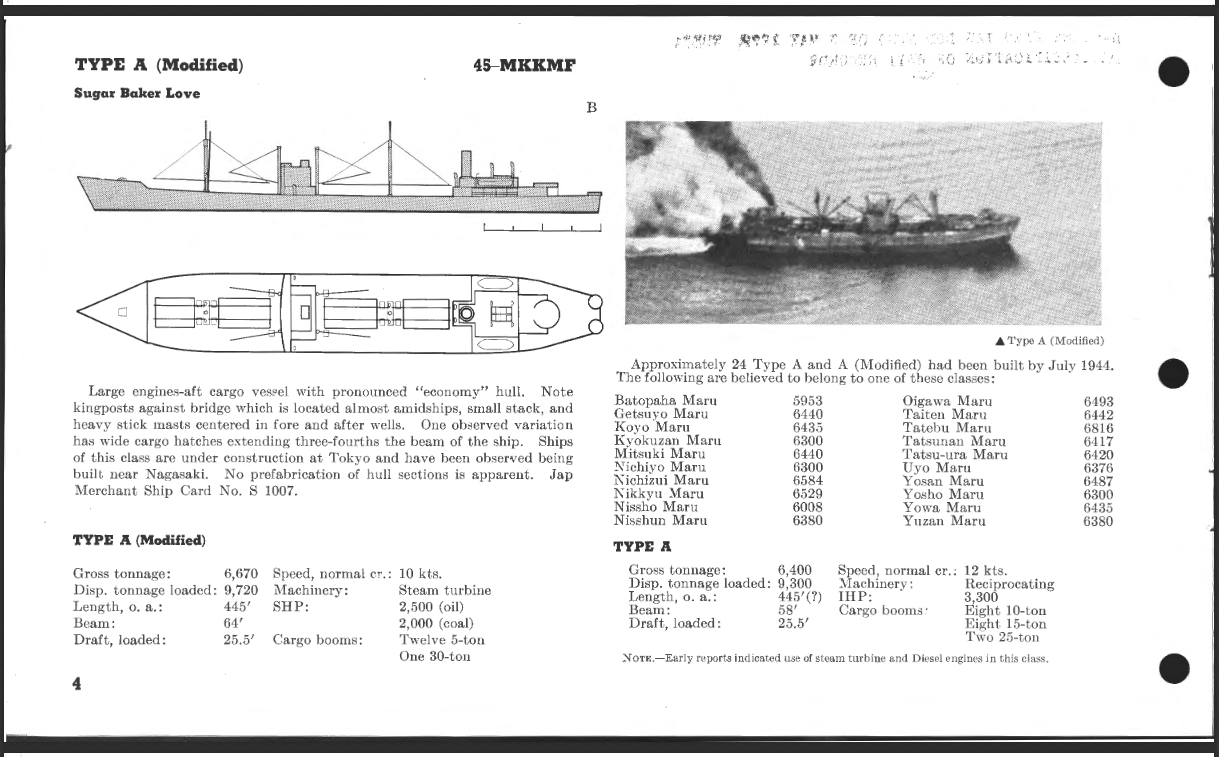
The 41st Regiment, and therefore Uncle Suetaro, was stationed in Pyongyang, Korea in May, 1944 per Mr. Ota’s book. It had become absorbed by the Imperial Japanese Army’s 30th Division. After sunset on May 8, 1944, the 41st Regiment boarded a steam locomotive bound for Pusan. After one day’s ride, they arrived in Pusan on May 9 at 4:00 PM. All 5,000 troops soon began to cram onto a ship called the 日昌丸 (Nissho Maru) with a capacity of 3,000 troops… in addition to supplies and their backpacks. American intelligence reports indicate temperatures could rise to 120F within the holds.
The Nissho Maru is listed in this WWII era Division of Naval Intelligence report.
Per Mr. Ota’s reconstruction, the Nissho Maru departed Pusan on May 10 as part of a Imperial Japanese Navy fleet convoy. At about 3 PM the next day, the convoy docked in Moji Port in Kyushu, Japan to take on more supplies and hook up with other transports. During this time, their destination was disclosed: Mindanao. I am sure thoughts of seeing his mother was enveloping his mind…and heart.
Hiroshima was not far away. In the early dawn hours of May 13, the convoy – now consisting of eleven transports and four destroyer escorts, departed Moji Port. They were vigilant against US submarines and proceeded at best possible speed. They docked at Manila during the evening of the 18th. The troops were already plagued with severe cases of sweat rash.
Soon, the 1st and 2nd Battalions on board the Nissho Maru headed to Cagayan with the 3rd Battalion and headquarters staff headed to Surigao on board the Tamatsu Maru. Because they were splitting up and therefore would be separated from their regimental colors, the commanding officers boarded the Nissho Maru on the 19th as a send off. They reached their destinations on the 23rd. Soon, they were engaging Filipino guerrillas and they were extracting their toll on Uncle Suetaro’s regiment. Per Mr. Ota, Captain Okamoto, a combat veteran from New Guinea was killed. On July 10, Captain Ozaki, commanding officer of the 2nd Batallion, was also killed. Short on officers, Captain Masaoka was appointed commanding officer of the remaining troops, numbering about 1,000.
October 20, 1944 – Invasion of Leyte
By the time of the invasion, General Yamashita had more than 400,000 soldiers stationed about the Philippines. My Uncle Suetaro’s division, the 30th Division, was stationed on Mindanao to the south. Yamashita had access to close to 900 planes, about 100 airfields (the largest of which was Tacloban on Leyte), and a naval fleet spearheaded by four carriers and seven battleships. (However, this paled in comparison to the naval and air forces of the US. For instance, by the time of the Battle of Leyte Gulf, the US had 34 carriers at their disposal.) The invasion of Leyte was preceded by the US 6th Ranger Battalion taking three smaller islands to the east of Leyte Gulf on October 17, 1944. The weather was perfect and all hell broke lose on October 20, 1944 (A-Day) when MacArthur unleashed the Sixth Army’s X Corps, XXIV Corps and the 21st Infantry Regiment in three different assaults on three eastward facing beaches (see below):
From “Leyte”, US Army publication.
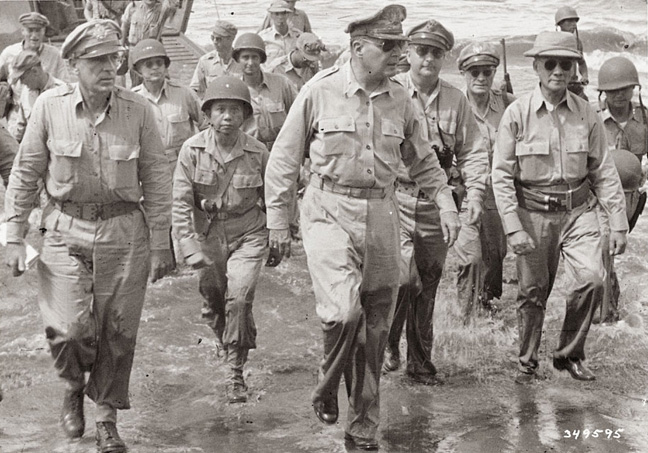
General Yamashita was caught flat-footed. He had anticipated MacArthur would invade Luzon first. He had to scramble. In fact, the invasion’s advance was so rapid that MacArthur made his walk onto the Leyte beach a “Hollywood-esque” event on the first day. Yes, he actually had several takes done of wading ashore being the media seeker he was but it is true there was gunfire off in the distance. Fortunately for our troops, the Japanese had withdrawn her troops from shoreline defensive posts. Even though there had been up to four hours of bombardment by the USN of the shore defenses, many fortifications – including pillboxes – were untouched per an A-Day communication to General Hap Arnold of the USAAF from General Kenney. He concluded there would have been a blood bath similar to Tarawa if the Japanese hadn’t withdrawn.
MacArthur pompously wading ashore on Leyte on October 20, 1944. He would shortly broadcast that speech where he says, “I have returned.” National Archive photo.
The first major coordinated Japanese Army troop movements (i.e., reinforcements) to Leyte involved troop transports, joined by units of Cruiser Division 16 out of Manila. The objective was to transport about 2,550 soldiers (count per Mr. Ota) of the 41st Regiment from Cagayan, on Mindanao, to Ormoc. Named Convoy TA 1 by the USN, it included heavy cruiser Aoba, light cruiser Kinu, Uranami, three new T.1-class transports (T.6, T.9, and T.10), and two new T.101-class transports, (T.101 and T.102). They were to be led by Rear Admiral Sakonju Naomasa in the Aoba but she had been torpedoed two days earlier by the USS Bream. The flag had been transferred to Kinu. This convoy picked up the surviving 1st and 2nd Battalion members of the 30th Division at Cagayan, Mindanao on October 25th and arrived at Ormoc. Fortunately, the Division had been alerted the day before so they were ready. Uncle Suetaro had apparently been in the the 3rd Echelon, 1st wave of five transports that disembarked on the 26th in Ormoc.
Source: Reports of General MacArthur.
Per Mr. Ota and under the command of Lt. General Shiro Makino, Uncle Suetaro’s 41st Regiment headed towards Tacloban. He could not have foreseen what was ahead of him: swamps, jungle, mud, illness, starvation…and the US Sixth Army. …and most poignantly, up against my dad’s US 8th Army’s Nisei’s in the Military Intelligence Service. To be continued in Part 3. (Note: The Battle of Leyte Gulf took place from October 23 to 26, 1944. The immense Japanese battleship Yamato was reportedly only a few hours from Ormoc Bay when she inexplicably turned back during this epic sea battle.)
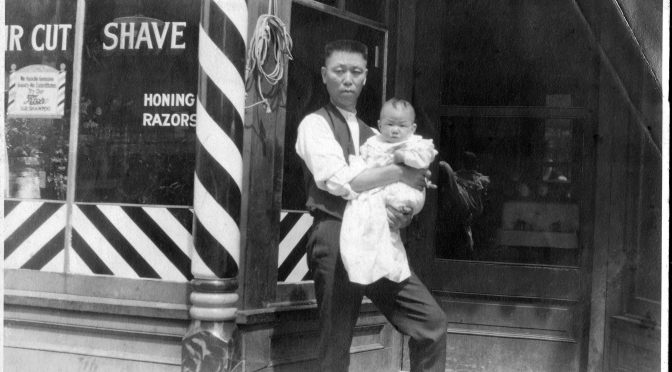
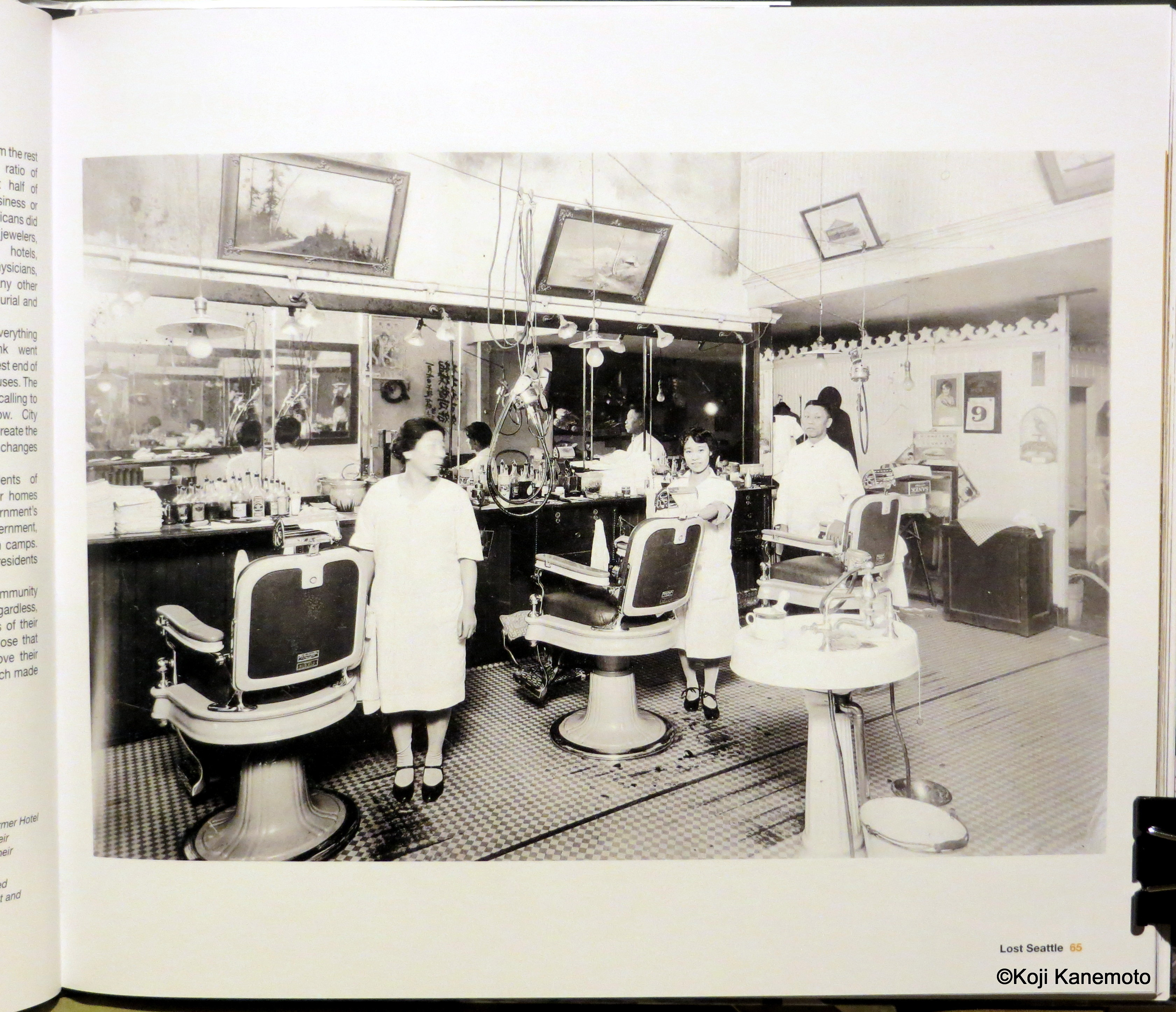
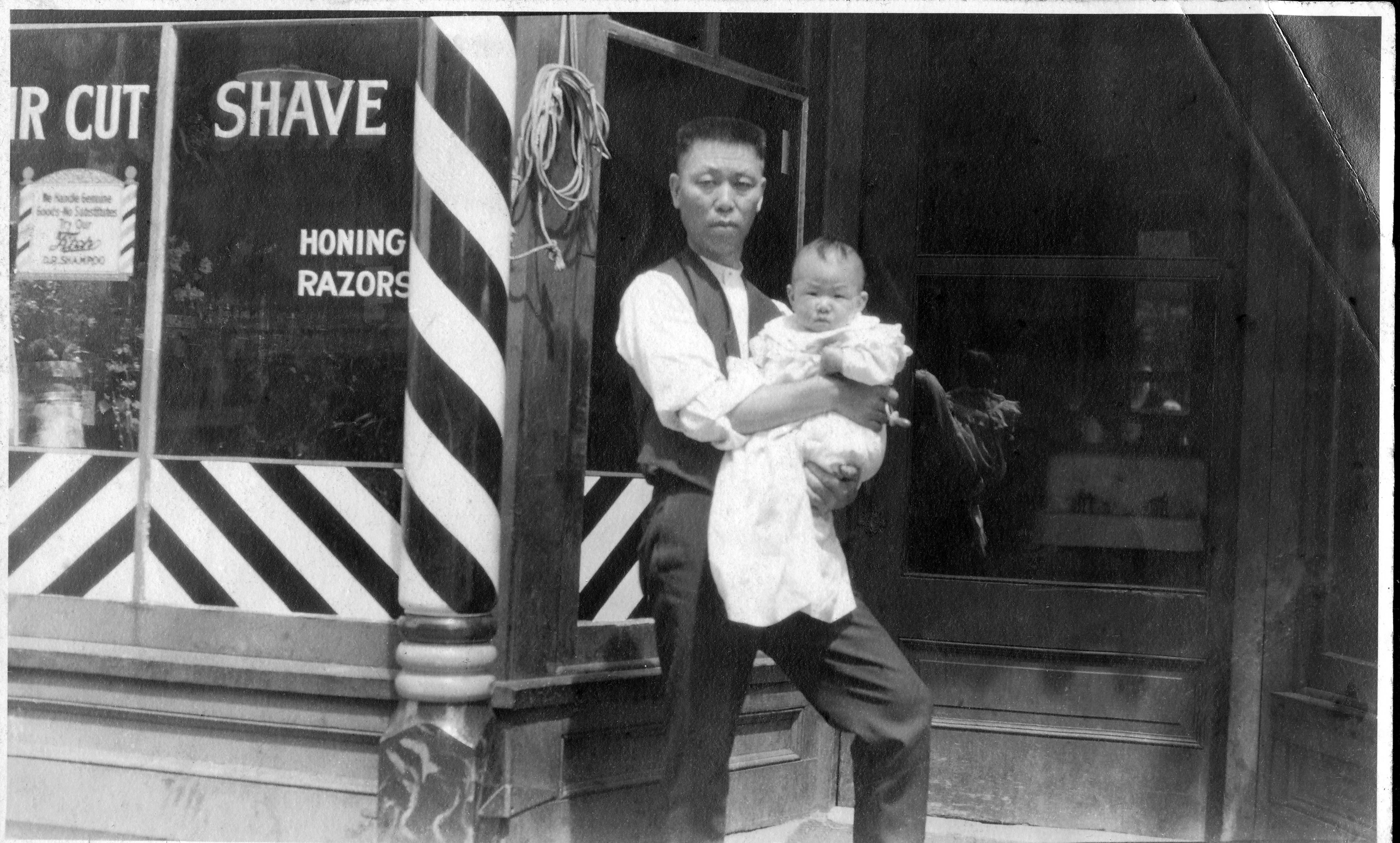
Eighty years or so after he posed for a photo, my Grandfather Hisakichi is in an American book.
Standing “Marine-esque” in his Seattle barbershop.
Incredible to me.
_________________________________
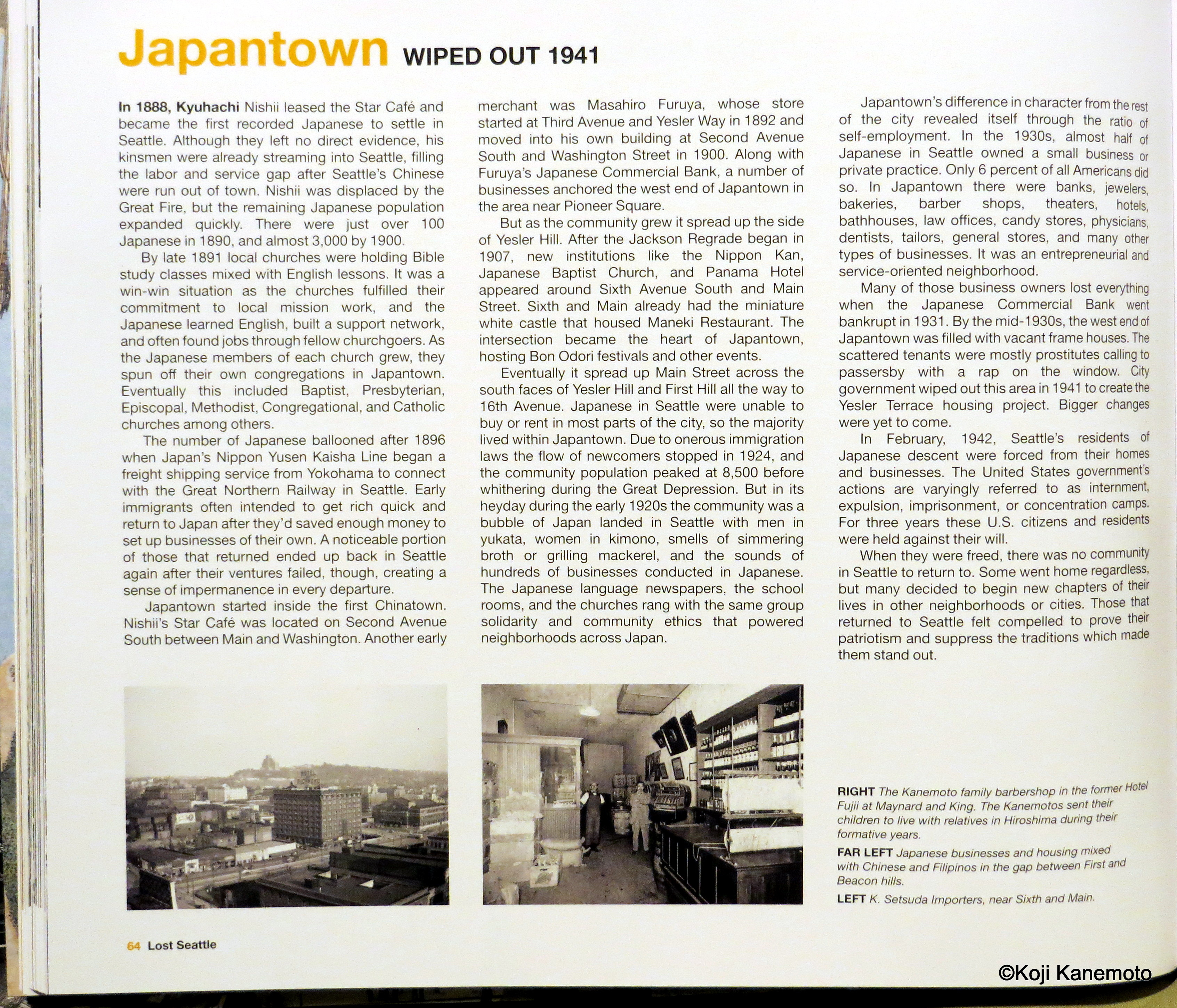
I had come to know Rob Ketcherside from flickr. We had helped each other out looking at some old photos he had of Seattle – where all my aunts and uncles were born (except one). He had some fascinating tidbits on some of my Grandmother’s photos.
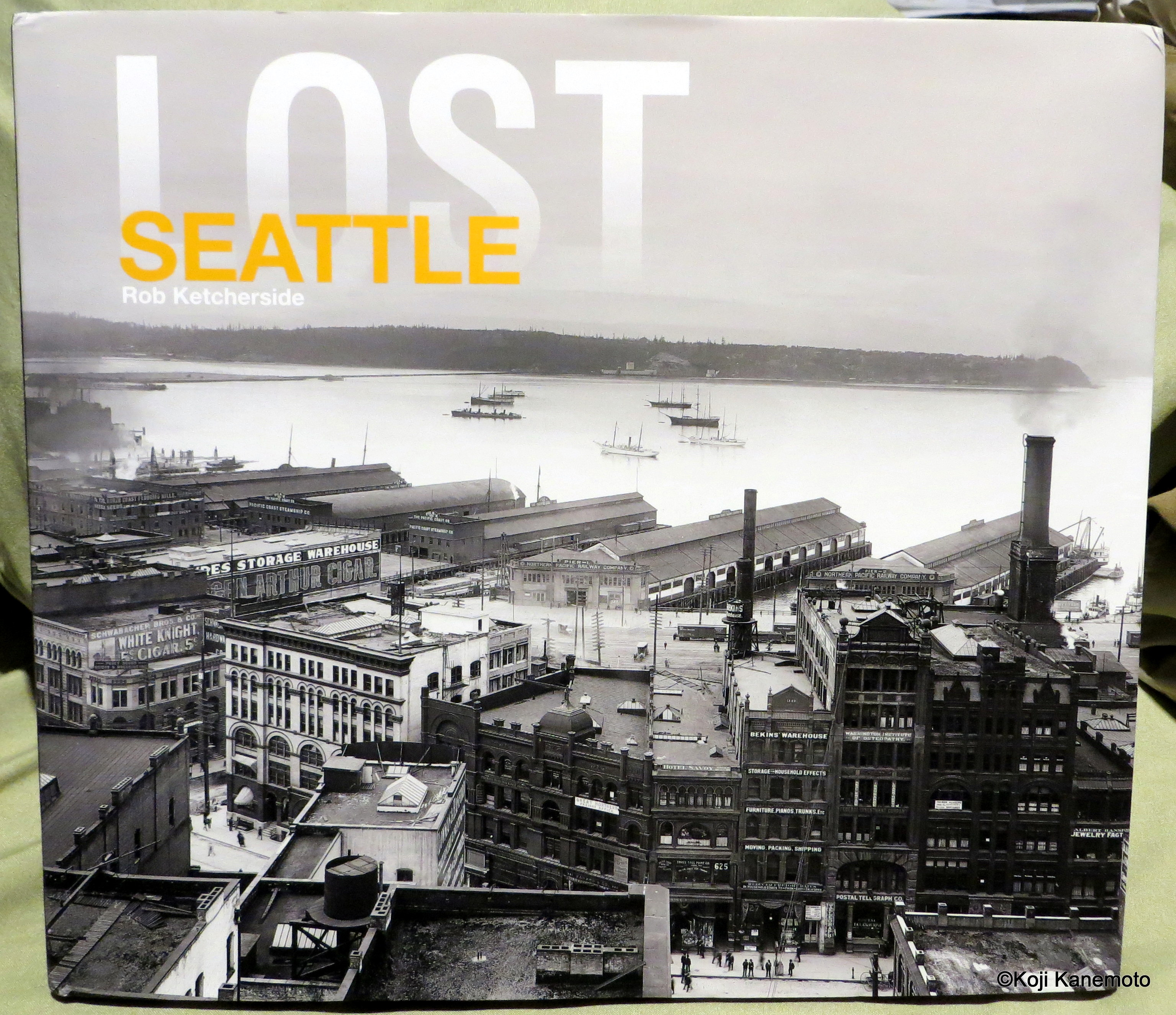
Well, it turned out he was an author. He had been doing a ton of research into “lost Seattle” – skylines and communities now long gone. With his fascination for “what was” (me, too!), those sights are now basking in sunlight once again through this mesmerizing book.
It was boosting to me when he asked if he could use one of the family’s vintage photos in his book; specifically, the photo of my grandfather’s barbershop. It is on loan to me from my cousin Masako (yes, the Masako after whom my blog is named) who luckily kept these family treasures all these years. It is more wonderful in that the home in which the photos were in survived the atomic blast – as did my family.
I hope Rob (and his publisher) don’t mind a couple of pages of his book are shown herein…and I’ll be picking up a few more copies to take back to Hiroshima in a few weeks.
In the description below, Rob also mentions Masahiro Furuya and his business. As it turns out, both my dad’s oldest brother Yutaka and his best friend John Tanaka worked for Furuya… And yes, that is the same John Tanaka my Aunt Shiz married. Small world, yes? Actually, Uncle Yutaka was the matchmaker.
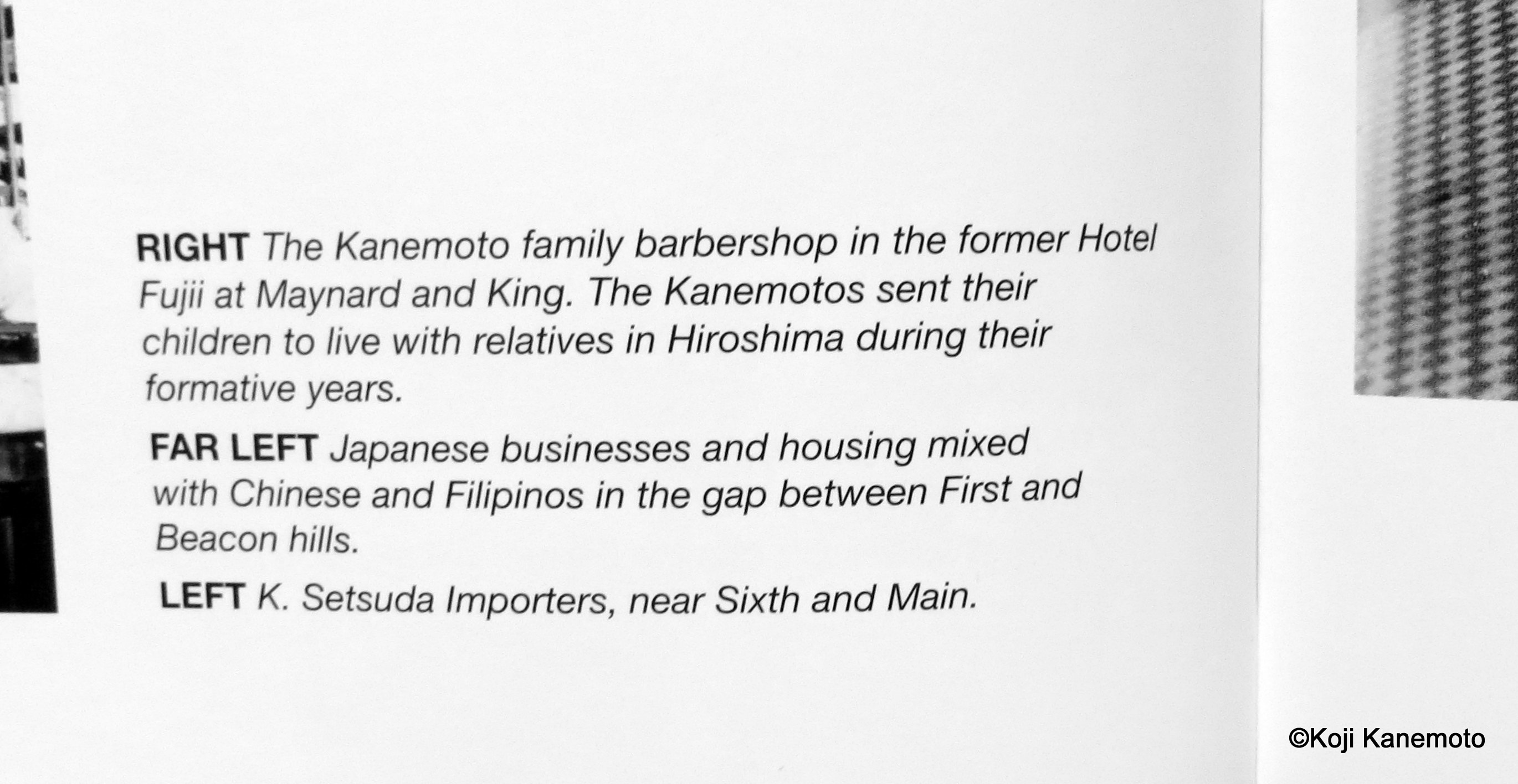
A close up of his photo caption from above:
Grandfather is standing at the right-rear of his barbershop. And the photo is a full pager in Rob’s book! Cool! Grandfather should be pleased. In the original print, you can see the brand names of the hair tonics popular at that time. The gal in the middle was quite a cutie, too. I wonder what happened to her. If she was still there in Seattle when war broke out, it is likely she went to the same prison camp my dad and uncle were incarcerated in.
On an interesting note, the consensus is the calendar shows January 9, 1930.
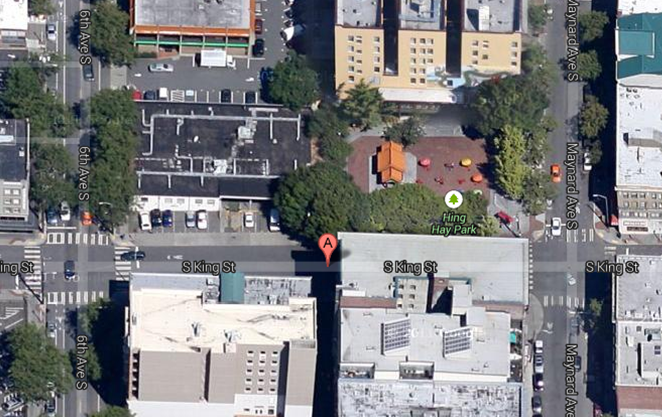
In concert with Rob’s massive research effort, gone is my father’s precious Hotel Fujii and my grandfather’s pride and joy barber shop. It was demolished to make room for “Hing Hay Park” taking its place.
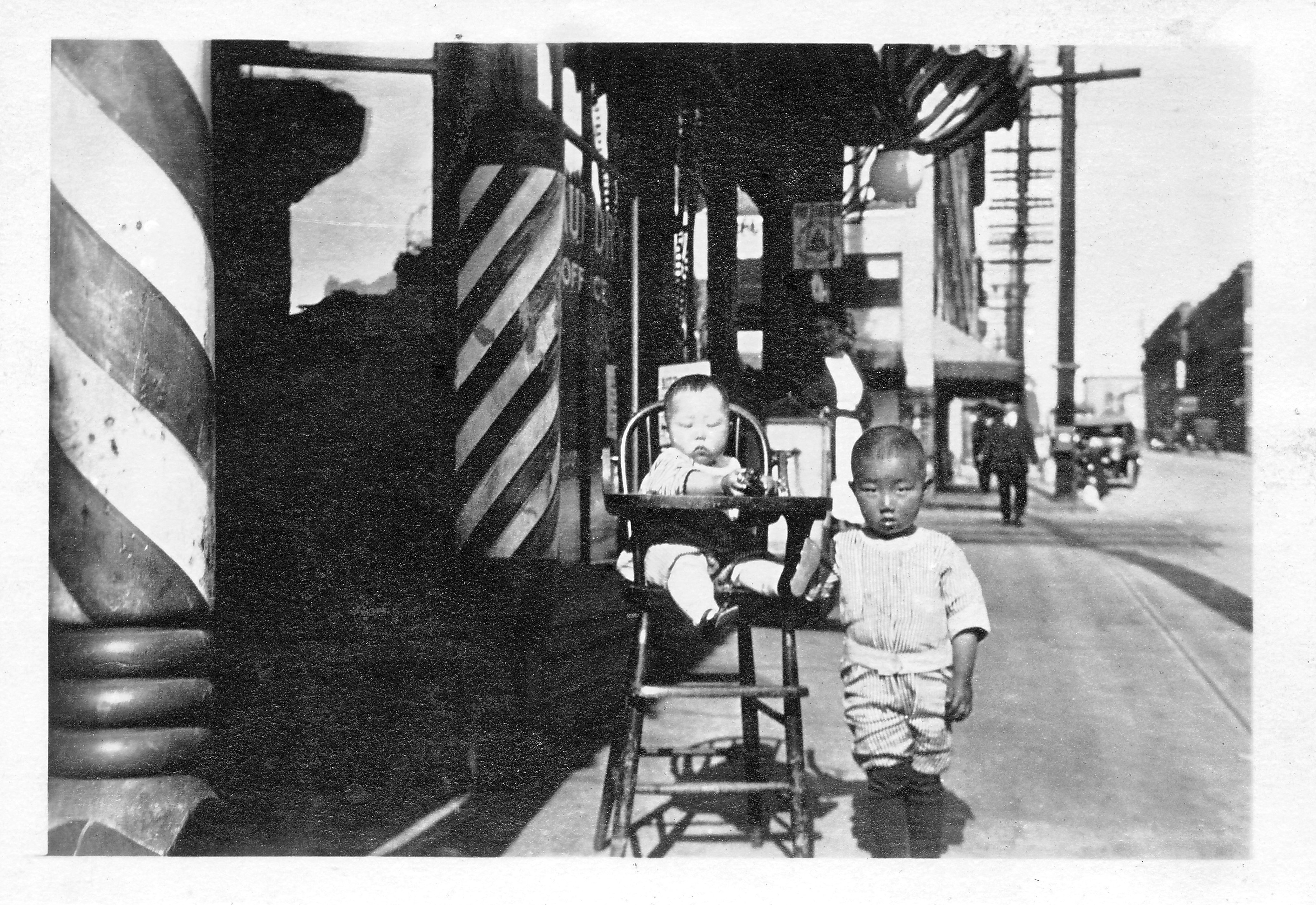
Grandfather Hisakichi holding Aunt Shiz in front of the barbershop. Circa 1918.Dad on right with his youngest brother Suetaro in front of the barbershop (circa 1922). They are likely standing where the label “Hing Hay Park” is on the map above. As readers know, Uncle Suetaro was killed as a Japanese soldier by the US Army on Leyte on July 15, 1945. Dad was imprisoned in Minidoka, ID at the time of his death.
Eighty years later.
My gosh.
And like the barbershop and Hotel Fujii, my dad is the last one standing out of seven siblings and two courageous grandparents.
Thanks, Masako-san and Rob.
I kinda wish my grandparents could have seen this.
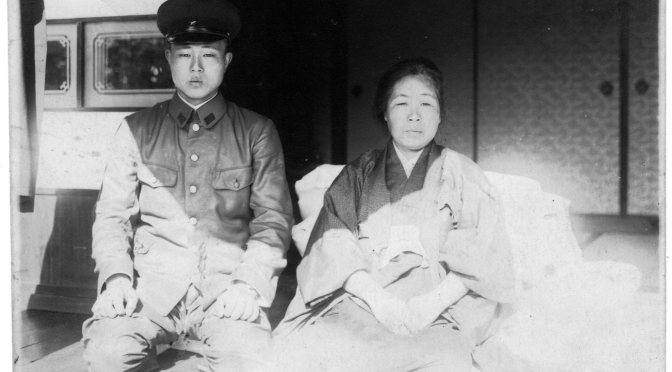
The last known photo of my Uncle Suetaro. He did not return from Leyte during the final stages of World War II. My Grandmother Kono – having suffered a stroke – is propped up by Japanese “shiki-futon” for the picture. Taken in Hiroshima, 1944.
Yes, a small percentage of Japanese soldiers were anxious to die for their emperor.
But a vast majority was frightened of having to go to war. My opinion, of course.
Young Japanese boys were drafted from farms and fishing villages – just like we did here in the US of A during that time. Boys from Parsons, Kansas or from a sea coast shrimping town in Louisiana.
And they all had moms.
__________________________
Like all Americans of my age, we were taught that the Japanese soldiers of WWII were fanatics. That they all were hell-bent to charge into a hail of Allied machine gun fire. To willingly die.
We were also taught that when a US Marine charged well entrenched Japanese soldiers with a satchel charge, he was a hero. Not a fanatic. He was John Wayne or Kirk Douglas. Was Esprit de Corps driving the young Marine to offer his life to save his buddies?
There is no intent to question our American values of valor or honor. Just a quandary.
_________________________
My Hiroshima cousin Masako mentioned in Hawai’i having seen a photo of Uncle Suetaro and Grandmother. It was taken the day before Uncle shipped out for war (1944). Masako said Grandmother – having suffered a stroke the day before – was propped up by “shiki-futon”, or Japanese bedding for the picture. She felt strongly it was the last picture taken of Uncle Suetaro but doesn’t know what happened to it.
_________________________
A few weeks ago, my California cousin Janice came across a number of old photos; she had forgotten about them. She said there were some family photos from Hiroshima. Her father – Uncle Suetaro’s and my Dad’s oldest brother – had apparently been able to hold on to them through the decades.
I asked Janice if there were any photos of my Dad’s two youngest siblings, Suetaro and Mieko, or of Michie (Masako’s mother). Janice then described a picture of Uncle Suetaro in a uniform and Grandmother (seen at the beginning of this story).
I was stunned. Topo Giggio meets Godzilla. It was the photo Masako vividly recalled seeing decades ago.
Is there an air of fearfulness…of fright? You can decide. But as we were led to believe, all Japanese soldiers were fanatics…yes?


 Here is the pertinent section of my dad’s discharge papers:
 He served with the same G-2 166th Language Detachment that did their best to kill Japanese soldiers on Leyte – including Uncle Suetaro. While the Nisei’s were on Leyte since the invasion began Oct. 20, 1944, they were reorganized into the 166th Language Detachment on 20 June 1945 per US Army records.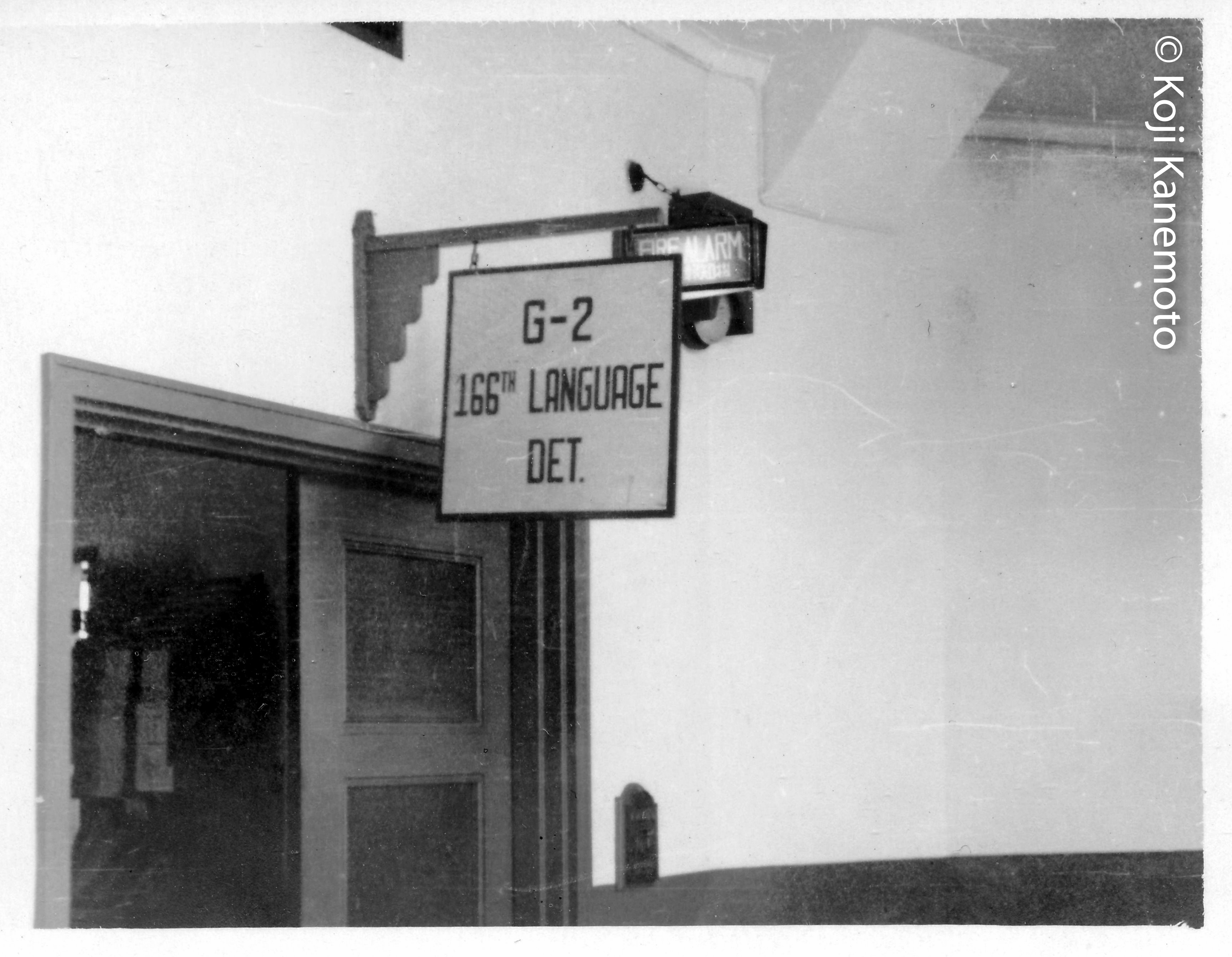
 The Nissho Maru is listed in this WWII era Division of Naval Intelligence report.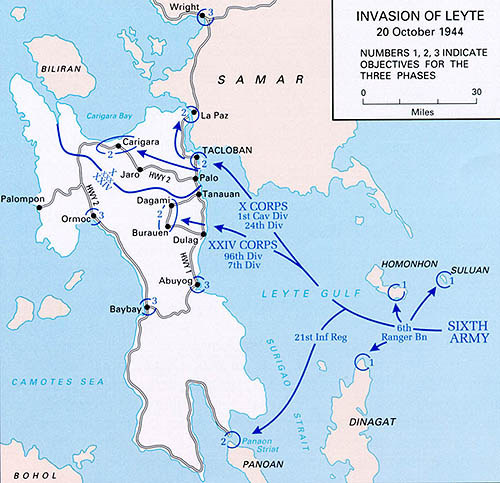

 Masako and Spam Musubi