Category Archives: America

A Soul Lost in a Faraway Jungle – Part 5


hwy 2 carigara
Road conditions between Jaro and Carigara at time of battle. Conditions get much worse. American battle reports state the rain would be so intense that you could not see past several yards. Traversing hilly, slick and muddy jungle terrain was beyond description. US Army photo.

Leyte – November 1, 1944

US version of battle, October 30 – November 1, 1944. Return to Leyte.

When we left Part 4, at least one of Uncle Suetaro’s officers – 1st Lt. Shioduka –  was killed during this battle per Mr. Ota’s book.  If so – and if Uncle Suetaro himself survived – he would possibly left in charge of his 37mm anti-tank gun platoon being a Master Sergeant.

After retreating, Mr. Ota understands that around 2:20 pm, the surviving troops of the 41st Regiment tried to dig in along the banks of the Ginagon River and wait for the US troops to advance into their sights.  However, after doing so, a deluge flooded the river and they were forced to move.  Nevertheless, defensive positions were established just north of Jaro.

Per Cannon’s Leyte: Return to the Philippines:

At 8 am on 30 October, Colonel Newman ordered the 3d Battalion of the 34th Infantry to start for Carigara down the highway. As the battalion left the outskirts of Jaro, with Company L in the lead, it came under fire from Japanese who were dug in under shacks along the road. Upon a call from the commanding officer of Company L, the tanks came up in a column, fired under the shacks, and then retired. The leading platoon was drawn back so that artillery fire might be placed on the Japanese, but the enemy could not be located precisely enough to use the artillery. Colonel Newman then ordered a cautious movement forward without artillery support, a squad placed on each side of the road and two tanks in the center. The squads had advanced only fifty yards when Japanese fire again pinned them down.

When Colonel Newman came forward and discovered why the advance was held up he declared, “I’ll get the men going okay.” Upon hearing that the regimental commander was to lead them, the men started to move forward. The Japanese at once opened fire with artillery and mortars, and Colonel Newman was hit in the stomach. Although badly wounded he tried to devise some means of clearing the situation. After sending a runner back with orders to have Colonel Postlethwait fire on the Japanese position, he said, “Leave me here and get mortar fire on that enemy position.” As soon as possible Colonel Newman was put on a poncho and dragged back to safety.¹

At this point in battle, Mr. Ota reports, a M4 Sherman was proceeding up the left side of the highway when it came under fire.  As the gunner was in the process of reloading (i.e., the breech was open), a 37mm anti-tank round directly entered the M4 Sherman’s 75mm barrel, passed through and carried through the radio before detonating.  While all three tank crew members were wounded, the results would have been more disastrous if a round was chambered.  Uncle Suetaro manned 37mm anti-tank guns.

Around Jaro and Tunga, fierce and intense see-saw battles took place.  Continuing on with Leyte: Return to the Philippines, it reports:

Company E pushed down the left side of the road but was halted by fire from an enemy pillbox on a knoll. A self-propelled 105-mm. howitzer was brought up, and fire from this weapon completely disorganized the Japanese and forced them to desert their position. When the howitzer had exhausted its ammunition, another was brought up to replace it. By this time, however, the enemy’s artillery was registering on the spot and the second was disabled before it could fire a shot.

Elements of the 41st Infantry Regiment, protected by artillery, gathered in front of Company E and emplaced machine guns in a position from which they could enfilade the company. Thereupon Company E committed its reserve platoon to its left flank but shortly afterward received orders to protect the disabled howitzer and dig in for the night. A tank was sent up to cover the establishment of the night perimeter. Company G received orders to fall back and dig in for the night, and upon its withdrawal the Japanese concentrated their fire on Company E.  Although badly shaken, Company E held on and protected (a damaged) howitzer…. Company E then disengaged and fell back through Company F, as Company G had done.

Under the protective cover of night, the 41st Infantry Regiment retreated.

Uncle Suetaro’s 41st Regiment, along with troops that had landed at Ormoc during the naval Battle of Leyte Gulf, had succeeded for the moment to stall the advance of the US 34th Infantry.  But fighting would continue.

2015-02-22 10.48.21
Situational summary of what happened after the fight for Mainit Bridge. You can enlarge the view by clicking on the image. From Reports of General MacArthur.

On November 1, General Suzuki determined defending Carigara was untenable.  As such, and during the night following, General Suzuki withdrew his troops from Carigara.  He ordered his remaining troops – now low on food, ammunition, overwhelmed with dying wounded and no hope for adequate re-supply – to establish strong defensive positions in the mountains southwest of the town in the vicinity of Limon.  By “clever deception as to his strength and intentions,” the enemy completely deluded the Americans into believing that his major force was still in Carigara per the Sixth Army’s Operations Report, Leyte.

Of significant note, a massive typhoon hit the Philippines on November 8, 1944.  Trees were felled and the slow pace of resupply nearly ceased.  Trails were washed away with flooding at the lower elevations.  This affected both the IJA and US forces, likely the Japanese the hardest.

I wonder what Uncle Suetaro was feeling as the intense rain from the typhoon pummeled him in the jungle while being surrounded by the US Army.  He could not light a fire even if it were safe to do so.  I wonder how cold he was or if he was shivering while laying in the thick mud.  I wonder what he was eating just to stay alive let alone fight for his life.

Breakneck Ridge: Second Phase

Per Leyte: Return to the Philippines, the 41st Regiment is documented again:

On 9 November the Japanese 26th Division arrived at Ormoc in three large transports with a destroyer escort. The troops landed without their equipment and ammunition, since aircraft from the Fifth Air Force bombed the convoy and forced it to depart before the unloading was completed. During the convoy’s return, some of the Japanese vessels were destroyed by the American aircraft.

The arrival of these (Japanese) troops was in accord with a plan embodied in the order which had been taken from the dead Japanese officer on the previous day.² This plan envisaged a grand offensive which was to start in the middle of November. The 41st Infantry Regiment of the 30th Division and the 169th and 171st Independent Infantry Battalions of the 102d Division were to secure a line that ran from a hill 3,500 yards northwest of Jaro to a point just south of Pinamopoan and protect the movement of the 1st Division to this line. With the arrival of the 1st Division on this defensive line, a coordinated attack was to be launched–the 1st Division seizing the Carigara area and the 41st Infantry Regiment and the 26th Division attacking the Mt. Mamban area about ten miles southeast of Limon. The way would then be open for a drive into Leyte Valley.

Battle Against the US 12th Cavalry Regiment

16625205006_276938a5a8_o
Situational overview. Blue is US; red is IJA. Villaba and 1st Div are highlighted in green.

Per a US 1st Cavalry Division website (http://www.first-team.us/tableaux/chapt_02/) and with the research performed by Mr. Ota, the 41st Regiment was positively identified as being present on “Hill 2348” and fighting against the US 12th Cavalry Regiment (a subset of the 1st Cavalry Division) :

On 20 November, the rest of the 12th Cavalry became heavily engaged around Mt. Cabungaan, about three miles south of Hill 2348. The enemy had dug in on the reverse side of sharp slopes. Individual troopers were again faced with the task of searching out and destroying positions in the fog. Throughout the night of 21 – 22 November the 271st Field Artillery kept the Japanese on the northwest side of Mt. Catabaran awake by heavy concentrations of fire. Before the day was over, patrols from the 12th Cavalry had established observation posts within 150 yards of Cananga on Highway 2 in the Ormoc Valley.

Mr. Ota uncovered a 12th Cavalry report on microfiche in a Japanese governmental archive, dated November 26, 1944.  It states in part, “Dog tags from Hill 2348 confirmed elements of the 41st Regiment there.”²  In it, it states fog and the muddy terrain made for extreme conditions but they used 81mm mortars to eliminate Japanese positions.

The website continues:

On 26 November, both the 12th and 112th Cavalry Regiments launched attacks against their immediate opposition. The enemy positions that had given heavy resistance to the 112th Cavalry on the two previous days were seized in the afternoon after a pulverizing barrage from the 82nd and 99th Field Artillery Battalions. On 28 November the 2nd Squadron, 12th Cavalry launched another successful attack on Hill 2348 which took the form of a double envelopment. The 1st Squadron renewed their attack on positions on Mt. Cabungaan but sharp ridges held up their advance, The 112th Cavalry continued to move toward its objective…

On 01 December the 112th Cavalry engaged the enemy at the ridge south of Limon. On the night of 02 December, the battle for Hill 2348 reached its climax. The 2nd Squadron, 12th Cavalry suffered heavy casualties from the heavy machine gun fire, mortars, and waves of Japanese troops in suicidal attacks. On 04 December, the 2nd Squadron, 12th Cavalry attacked and overcame a position to its front with the enemy fleeing in the confusion. “A” Troop, of the 112th, in a drive to the northwest, made contact with the left flank elements of the 32nd Division. Thus the drive became an unremitting continuous line against the Japanese and enemy elements that were caught behind the line were trapped.

Throughout 07 and 08 December, patrols of the 5th and 12 Cavalry continued mop up operations. The 1st Squadron, 112th Cavalry moved out to locate and cut supply lines of the enemy who were still holding up the advance of the 2nd Squadron. On 09 December, heavy rains brought tactical operations to a near standstill and limited activity to patrol missions…

…The Division continued the attack west toward the coast over swamps against scattered resistance. By 29 December the 7th Cavalry had reached the Visayan Sea and initiated action to take the coastal barrio of Villaba. On 31 December after four “Banzai” attacks, each preceded by bugle calls, the small barrio fell.
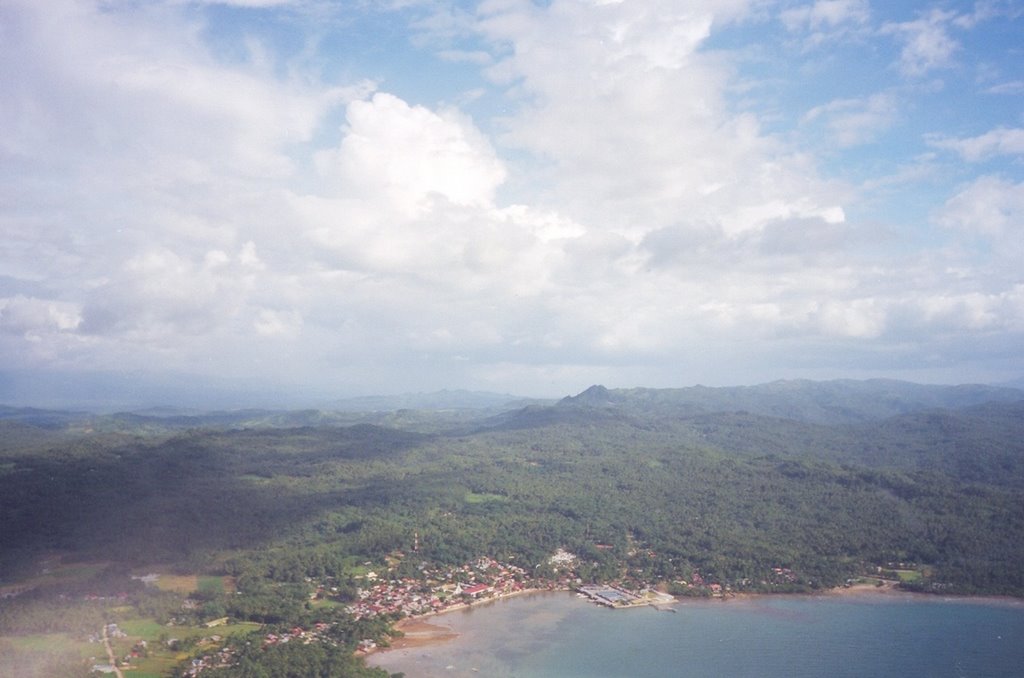
can
A view from offshore looking east towards the town of Villaba. Mt. Canguipot – where the survivors of my Uncle’s IJA regiment reportedly retreated – is at center.

Attempts to Leave Leyte

By January 1945, Japanese command was in shambles.  However, some planned effort was made by the IJA to retreat (evacuate) to other islands.  Certain departure points were selected south of Villaba, east of the island of Cebu.

The Japanese only had 40 seaworthy landing craft available to evacuate survivors.  (A record exists which estimated 268 soldiers of the 41st Regiment were left out of the 2,550 that landed at Ormoc on October 26, 1944.)  The US ruled the seas and the skies making any large scale evacuation impossible.

The Reports of General MacArthur states only about 200 soldiers were able to board the landing crafts; however, only 35 made it to Cebu.  Once MacArthur figured out this was an evacuation attempt, the Villaba coastline came under intense attack.  Evacuation hopes ended for Uncle Suetaro.

Lt. General Makino attempted as best possible to assemble any IJA survivors in the Mt. Canguipot area, just a couple of miles east of Villaba.

By April, 1945, only a small number of tattered, hungry and ill soldiers were believed to still be alive.  In a Japanese book called Rising Sun, it was reported up to 100 Japanese soldiers were dying each day during this time from starvation and/or illness.³

If Uncle Suetaro was still alive, I passionately wonder what intense emotions were raging through him.  Perhaps he thought of his mother or of his remaining siblings in America.  I am here fighting to free my brothers and sister from the American concentration camps.

He must have known his young life would be ending on that island – on that hill to become another soul lost in a faraway jungle.

I can but hope his fear was overcome by tranquility.

______________________________________

The war ended four months later, on August 15, 1945.

No one walked down off Mt. Canguipot that day… in particular, my Uncle Suetaro.

An epilogue will follow and will close this series.

Part 1 is here.

Part 2 is here.

Part 3 is here.

Part 4 is here.

Part 6/Epilogue is here.

NOTES:

1. Although Aubrey “Red” Newman would survive his grievous stomach wound, he would not return to battle before war’s end.  However, he was awarded the Distinguished Service Cross for his command actions and retired a Major General.  He passed away in 1994 at 90 years of age.

2. It is just my opinion but only one of the 120 US 8th Army Nisei’s in the Military Intelligence Service on Leyte could have translated this key document in less than a day.
3. I am not convinced of this information’s authenticity.

1945


marine barToday.

Seventy years ago.

February 19th.

The 3rd, 4th and 5th Marine Divisions began their assault on a tiny island in the Pacific.

At the end, about 7,000 Marines and 21,000 Japanese had their lives end on that island… An island called Iwo Jima.

Remember… for our schools don’t.

Just Some Snapshots #12


c-10-81

c-10-83

c-10-82

38 CALIBER CIRCUMCISION


Wanna see a bad guy get it? LOL

http://safeshare.tv/w/LbPrqyRwwI

Screenshot (10)

Just Some Snapshots #11


c-10-80
1956 Chevy


c-10-78
In front of Belmont Shores fire station, Long Beach, CA.


c-10-77
Chevy pick up truck


c-10-75
Chevy Corvette convertible


A Volcanic Week


c-10-52
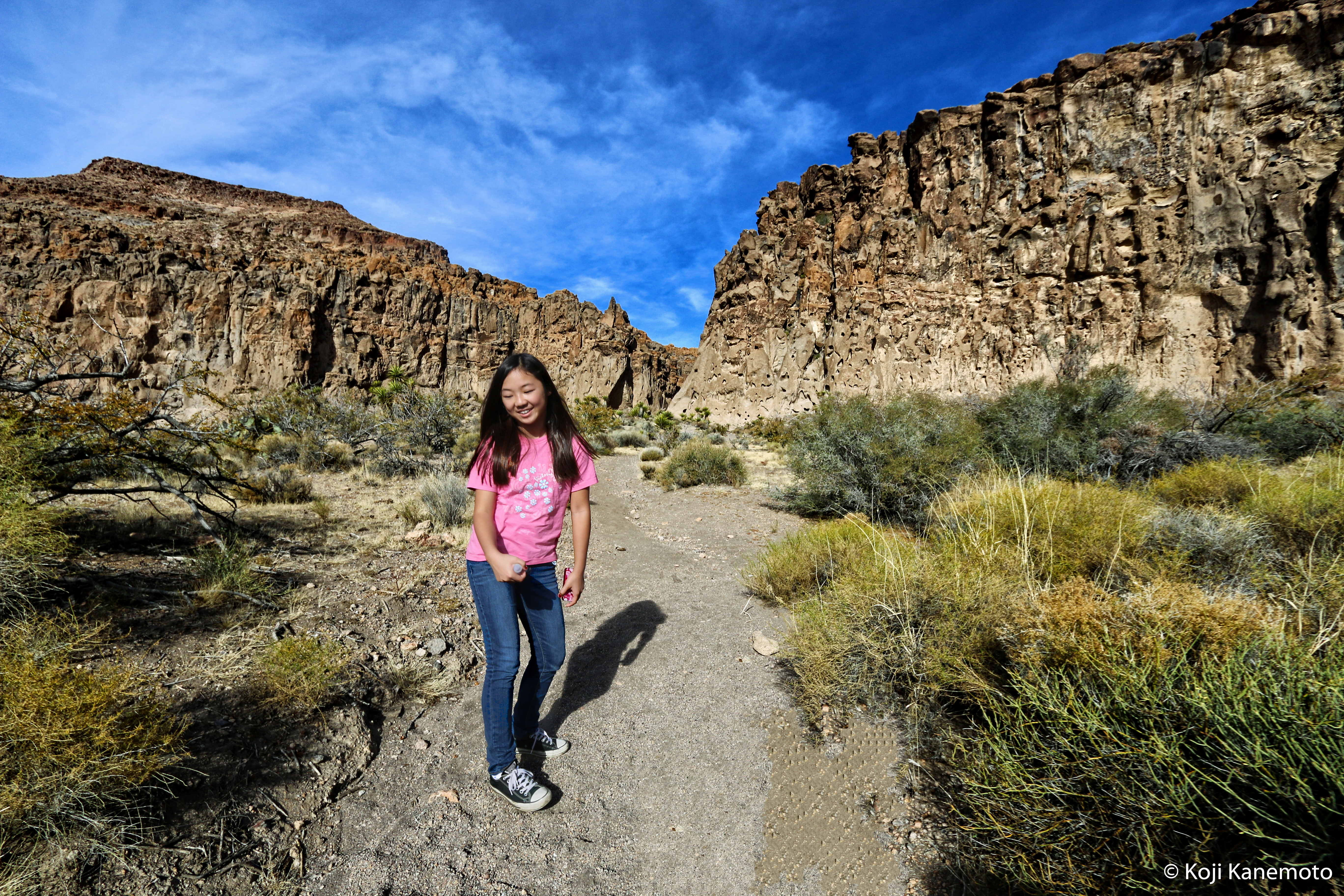
The Little Cake Boss doing her dance thing out in the middle of nowhere. Notice her iPhone? The Texting Princess was not too keen about having no signal.

It indeed turned out to be a volcanic week.  The end began the night before on Saturday at 10:30 pm when my son asked, “Papa, can we go to the Mojave Road tomorrow?”

Mojave Road??  In the morning??  Egads.

_____________________________________

The week was already in shambles… full of surprises.

My 13 year old son requested one of my apples pies so I baked one on Tuesday night…from scratch.  Crust included – never mind it looked like a clone of Shaq’s head. The pie turned out pretty darned good if you ask him.  Can you hear it sizzling as it came out of the oven?:

My 11 year old daughter has multiple dance classes every week night except Friday plus 2-1/2 hours on Saturday – right in the middle of the day.  On Thursdays, although she has a two hour window in between two classes, she chooses to stay to chat up a storm with her friends…except last week.  As I take her to her 4:30 pm class on the 4th (late again as she is never ready on time), she asks me to pick her up at 5:30 instead!  Plus, as she exits the car, she manipulatively says, “…and today’s National Cookie Day, Papa.  Can we bake some chocolate chip cookies later tonight?”  Geez.  Rushed across the street to Ralph’s to pick up more brown sugar and some walnuts then headed home…

As I was pre-mixing the dry ingredients for her cookies, Jack rushes into the kitchen at 5:15 pm all excited.  He said, “Papaaa…  I forgot to tell you but there’s an orientation night at the high school.”

“Oh…OK.  When?” I ask.

“Toooo-night…” in a shy voice…

Holy crap!!  I never got a notification of the orientation but it turns out he had taken something home to his mama; of course, she didn’t bother sharing that with me!  Then double crap!  (There’s a triple crap coming.)  I had to pick up my daughter in 15 minutes but the orientation started at 6:00!  Arrgghh!

Throw some snacks into a bag, load my son hurriedly into the car, then zip off to her dance studio.  I was a few minutes late and she was waiting outside.  I am NEVER late when it comes to the kids and especially with my little girl.  As I hand her the snacks, I tell her she has to stay because…..  😦  Boy, did she get upset at my son…from a distance!

We get to the auditorium in the nick of time.

20141204_175724

We transitioned to a classroom later listening to the IT department head give his presentation when… the triple darn hits.  My phone starts vibrating…  It’s 6:45 pm…  It’s my little girl calling from the dance studio.  She forgot a piece of her dance clothes for her 7:30 class.  Geez.

I couldn’t leave Jack alone so I had to pull him out of the orientation and rush back to the dance school.  I picked her up to take her home as I have NO idea what “thing” she needs.  I take her back by 7:20 only to have to pick her up at 8:30.

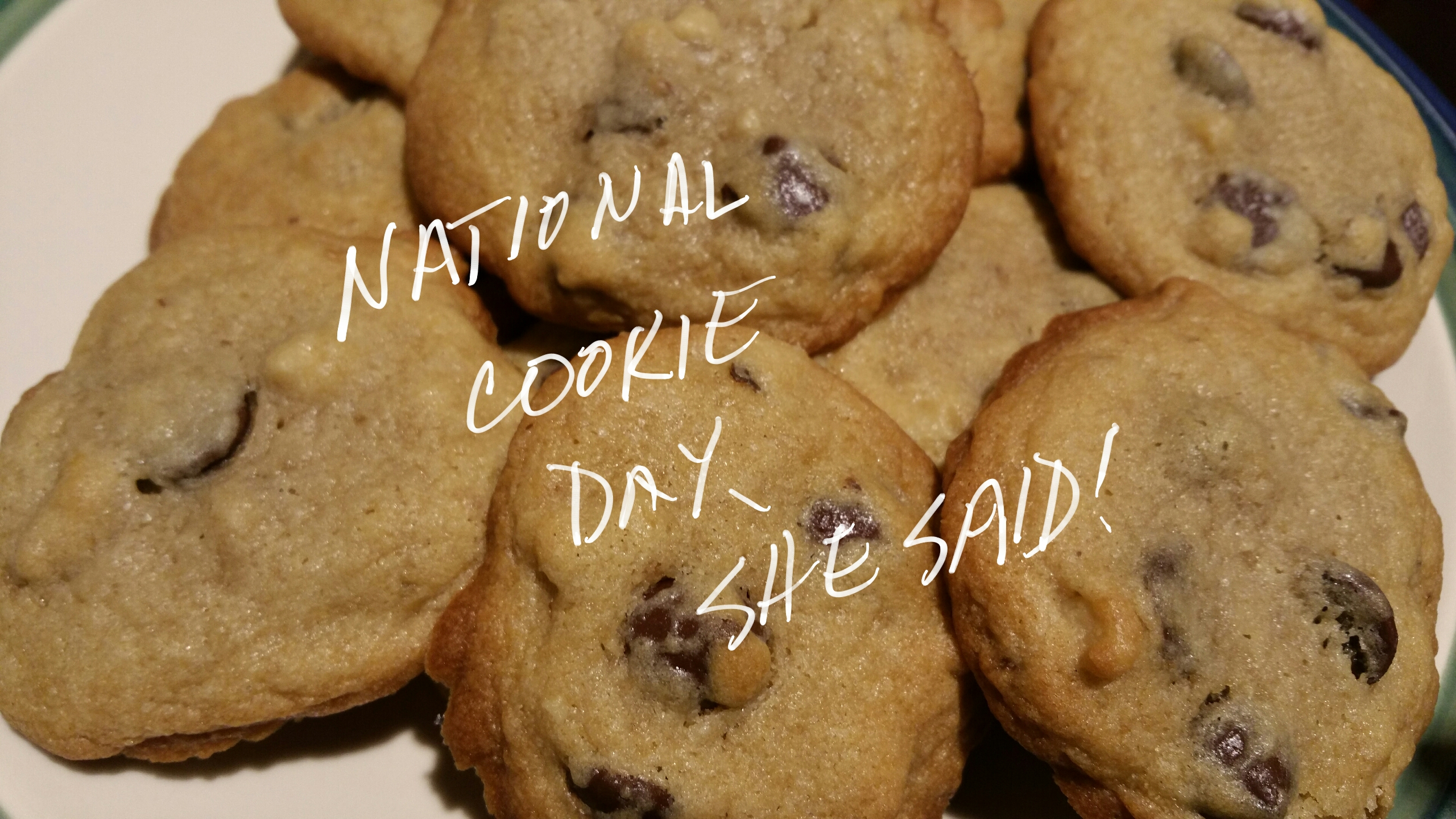
With all the excitement, I had forgotten how many 1/4 cups of brown sugar I had put into the cookie mix.  Criminy.  Anyways, four batches of toll house cookies emerged… And the Little Cake Boss – she’s the one who wanted to bake the cookies for National Cookie Day – didn’t help…  She said she was too tired…  Arrgghh.

15949434082_7fd2617840_o
Yielded about 40 cookies.

__________________________

Ah, the volcanoes…

I had been asking Jack where he would like to go on a Sunday especially since the last two months have been Brooke’s dance, dance, dance for competitions and dance “conventions” every weekend.  Saturdays and Sundays. Get up by 5:30 am.  Criminy.  I felt bad leaving him home but I had no other choice.

So at 10:30 pm on Saturday, he brings up the Mojave Road.  He would like to go there.  I looked it up.  It was a dirt road that makes the Baja 500 look like skateboarding on a sidewalk.  Sadly, I said we couldn’t go because it’s 4 x 4 terrain; plus, the rainstorms had made some sections really rough going.

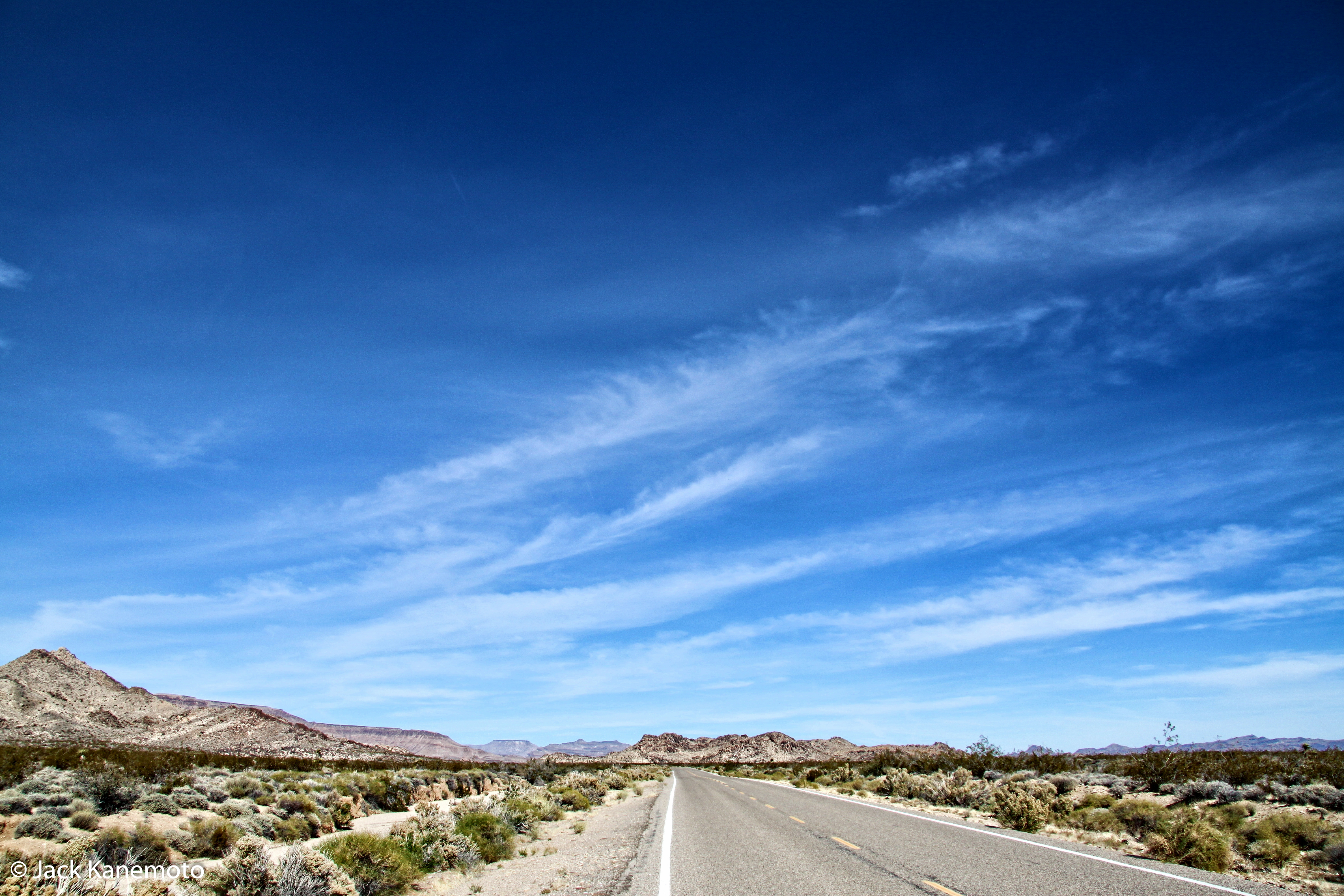
Then he says, “Papa, isn’t the Subaru 4WD?”  Gadzooks.  I had to show him photos of the road damaged by flooding and how raised monster off-road vehicles even get stuck.  Besides, the car only has cheap two-ply street tires.  He was disappointed.  I asked him to pick somewhere else…after I had said to pick a place.  He decided on “Hole-in-the-Wall” in the middle of the Mojave National Preserve.  It’s roughly 240 miles from home… One way.  Man, you should have heard my daughter moan and groan while chomping on the toll house cookies her PAPA baked for HER.  She did NOT want to go!

“Jack!!  What are you going to do when we get there! Duh!” she asked, then stormed to her room.  Oh, man.  I feel sorry for her future boy friend.  Did I write that?  Where’s the backspace…

________________________

Believe me, I’d rather fight Godzilla rather than getting the Little Cake Boss out of bed early on a Sunday.  Braving an apocalypse, I cracked open her door at 7:30 am; I escaped with just one black eye and a broken arm.  But we all managed to get into the car by 8 am.  Drove like crazy as it gets awfully cold and DARK real quick out in the desert.  We got there a little after noon.

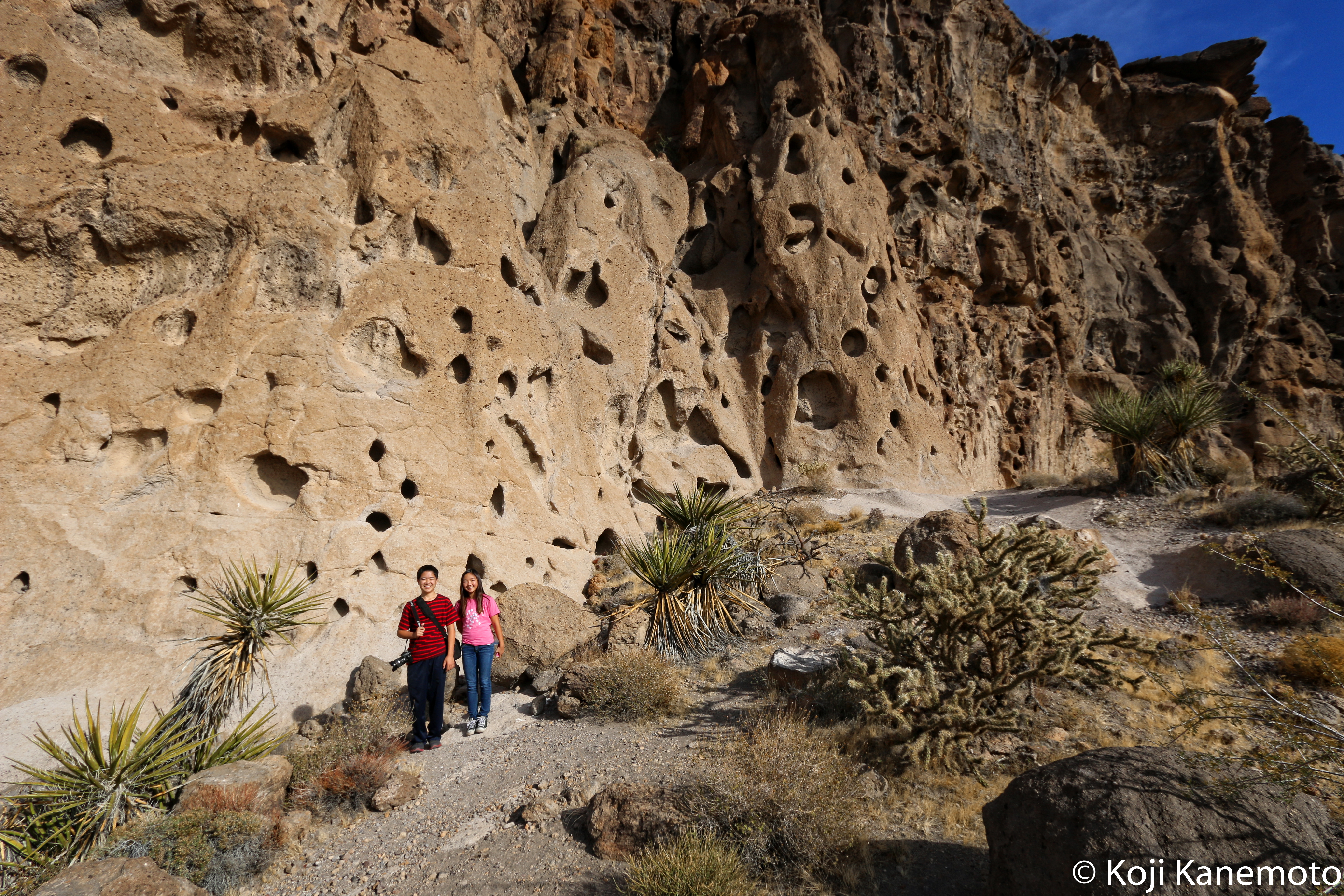
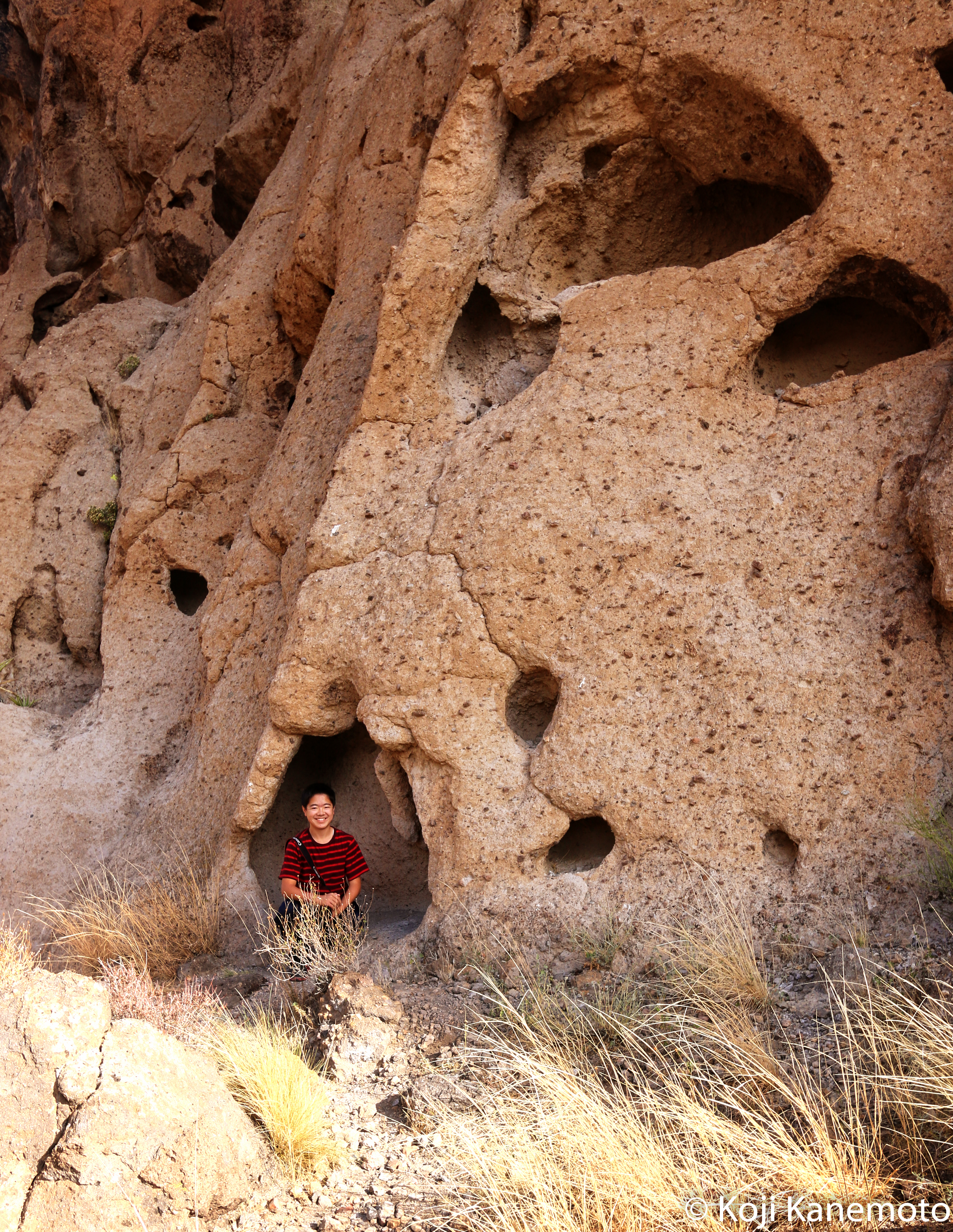
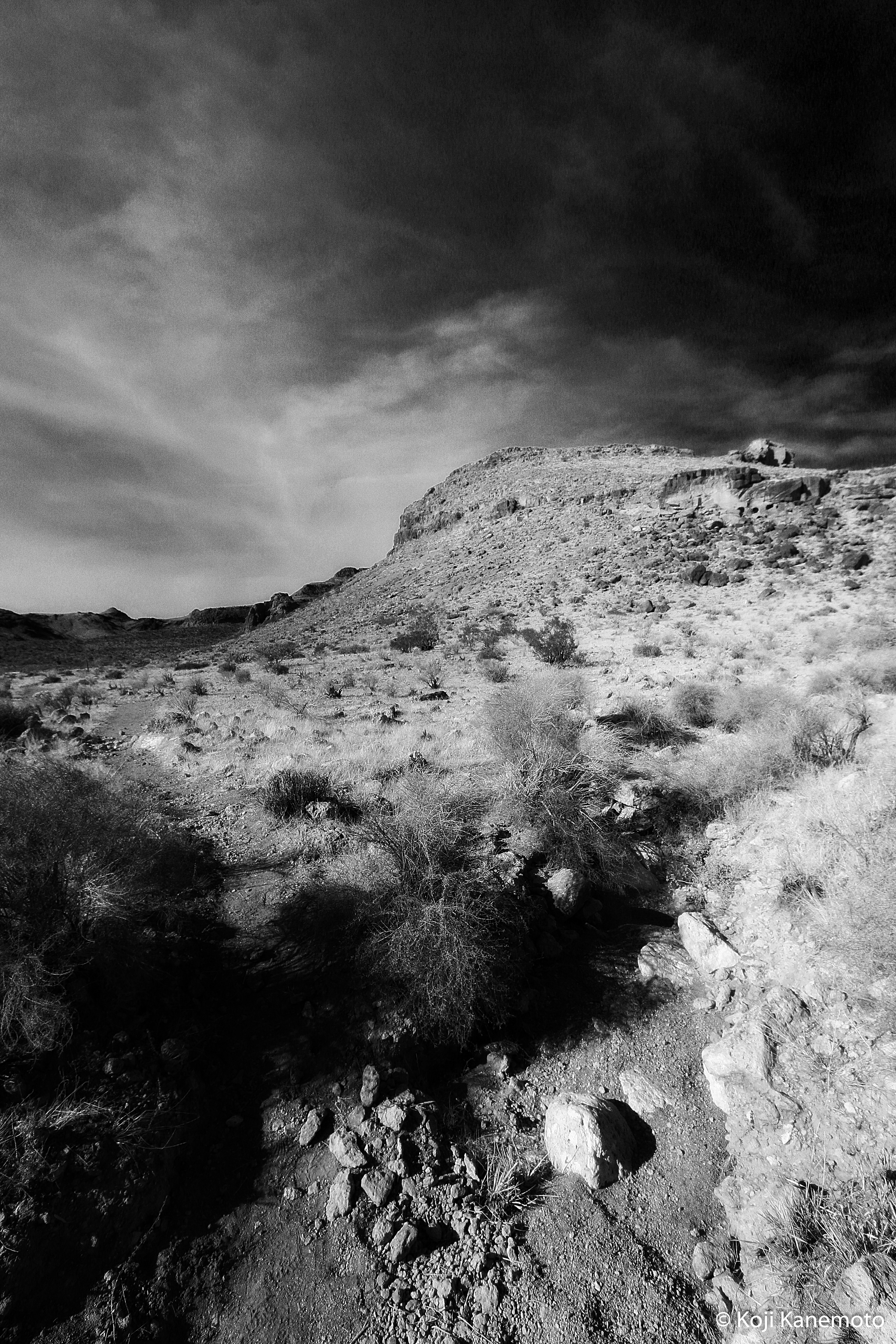
Hole-in-the-Wall is an area where volcanoes spewed lava over millions of years.  Geologists theorize that uneven cooling of the layers of lava aided in creating pockets of trapped gasses within.  Through the eons, time had eroded away the lava layers, exposing these “holes”.  The plateaus surrounding the area were what remains of the tops of the original lava flows millions of years ago. It has also been rumored to have been a hideout for outlaws in the days of the Wild West.  Their saddles must have had built-in GPS to have been able to come back to this forsaken place.  If it weren’t for Sparklett’s making door-to-door deliveries, they wouldn’t have had water, either.

As this story is getting too long, some snaps by my son and I from Hole-in-the-Wall:

c-10-61

c-10-62
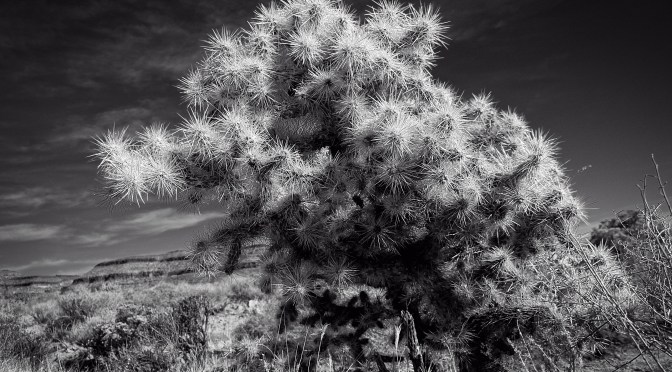
Avoiding cacti and other thorny stuff… as well as tarantulas that wouldn’t fit in a dog cage.
c-10-63
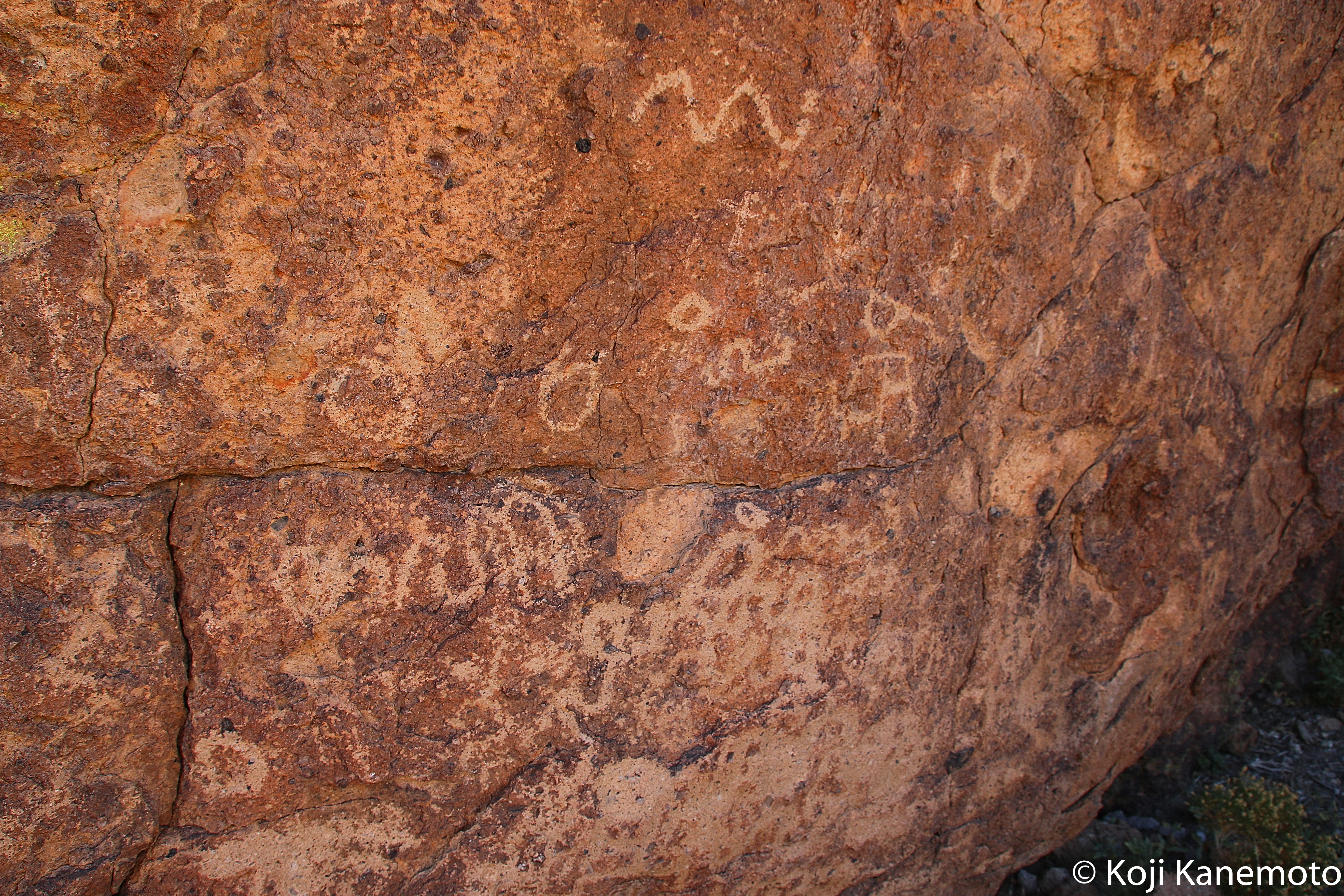
Some petroglyphs.

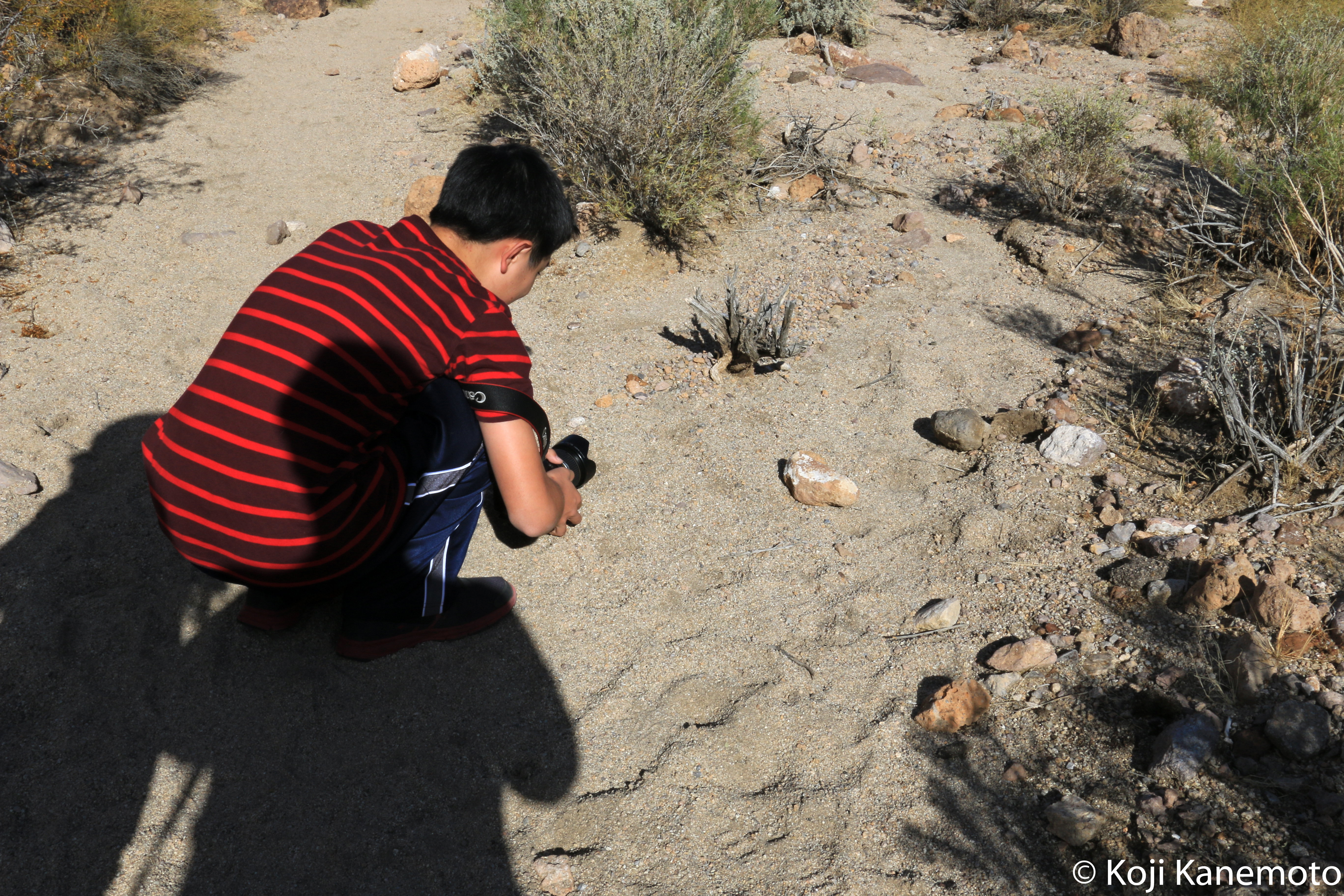
I encouraged Jack to take photos as there is an art show at his school early next year:

c-10-64
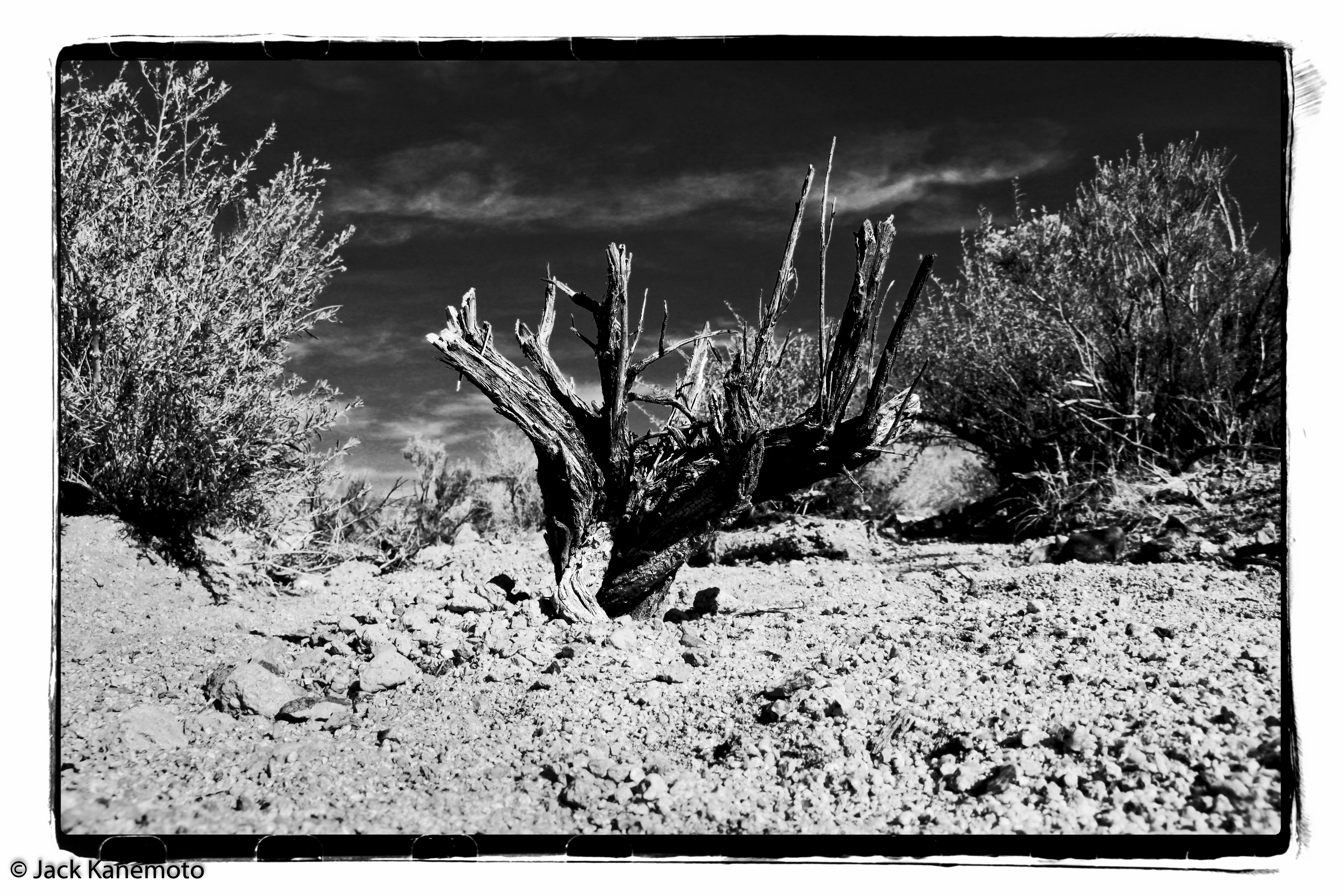
Me bending down is out of the question so I encouraged Jack to take a photo of this dead plant.

This is his result:

c-10-60
Jack’s photograph. Pretty darn cool!

c-10-65

c-10-66

c-10-54 - Copy
A billion cacti meant a gadzillion thorns.
c-10-55 - Copy
On the three mile desert hike that nearly killed me.
c-10-72
Canon, baby.
c-10-68
Another one of my son’s photos.
c-10-69
There must be a zillion people smarter than me as we didn’t see a single car for over 20 minutes… but then we were trying avoid potholes the size of the Meteor Crater. Taken by Jack.
c-10-70
Natural cotton gin.

c-10-71

c-10-73
A last one from my son.

_____________________________


Old Man Jack-ism #7


Whhhoooo-eee!

c-10-56

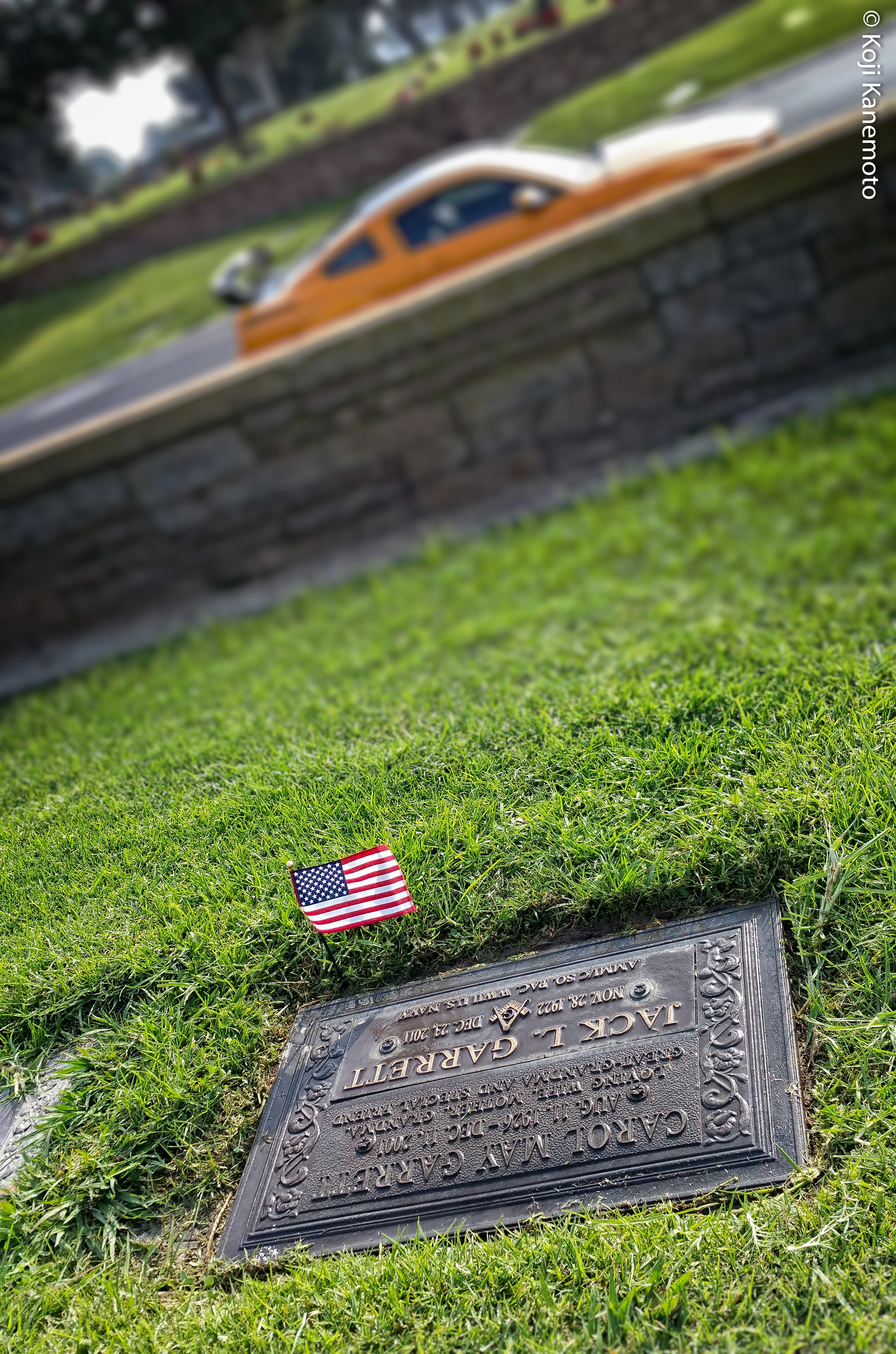
I have been remiss in visiting Old Man Jack; when I arrived there today, I made sure he heard my Mustang he loved to ride in so much…  I hope his now silent neighbors didn’t mind too much.  As I neared his resting place walking on very sodden soil, it was clear I was his last visitor from some months ago.  The grass had definitely encroached on his gravestone; even the hole where the water decanter should be seen was covered up.

As I trimmed away the overgrown grass, I fondly remembered a “Whhhoooo-eee!” Old Man Jack let out once.   That one time, he had an extra emphasis on the “Whhhoooo”… with even more of a sopranic “eee” at the end.  He then proceeded to tell me about how his old man kept him in line as a boy while handing me something from his past.  More on that later.

And that word’s made up, you know…”sopranic”.  But for that moment, he was definitely Julie Andrews. 🙂

___________________________

In our chats in his cluttered garage, Old Man Jack used to tell me how he used to “tussle” a lot while growing up in Glendale, CA.  You know.  Fight.  He wasn’t embarrassed to say he took a lickin’ – once in a while.  He frequently said one reason why he took a lickin’ was that he was a runt so he took up body building for protection – as well as for the girls.  He had flashed his trademark grin while gently shaking his head fondly left and right as while talking about his youthful adventures; you wonder what crazy memories flashed in his mind filled with life’s wisdom to power that grin.

He reminisced that his dad was also a bit of a trouble maker, especially when he had a bit too much libation but that he was the family enforcer.  Old Man Jack said his dad was also a sailor – a baker in the US Navy to be exact but he also had worked as a barber.  They were together out in the SW Pacific during the war but on different islands.  He said his dad would once in a while send him a cake and cookies on a B-25 Mitchell that was making some kind of supply run.  Old Man Jack instantly became the most loved sailor on that island when the cake and cookies were unloaded… provided the pilots didn’t eat them along the way.

lee whitty garrett Sept 1 1945
Old Man Jack’s father was Lee Whitty Garrett and can be found on line 11 corroborating his story. You can clearly see he was a baker on the destroyer tender USS Markab’s Muster Roll, dated Sept. 1, 1945.  He survived the war, too, and was on his way home.

_______________________________

On the way to visit him at his resting place, I decided to listen to the news.  Well actually, the only time I can hear the news is while in my Mustang is stopped at a light – the exhaust isn’t exactly quiet (listen below)… and in that brief instant, the newscaster reported again about a pro sports figure and an alleged “beating” he gave his son.  I turned it off as I am tired of the media making a circus out of every perceived “socially incorrect” behavior.  Of course, I wouldn’t know of the intimate details of the allegations.  Can’t trust the media, you know.

Don’t get me wrong.  I sure as hell don’t condone BEATING a kid.  No way.  But… I believe there is nothing wrong with a spanking – or a “whippin'” as Old Man Jack’s generation used to say.  Because of the social pressures exerted by a faction of our culture, taking a hand – any kind of hand – to your child means police show up at your door – at least here in California.  “Positive reinforcement” goes only as far as your front door.

There is nothing wrong with a good spanking, in my opinion…  Or, when I was going to junior high school, it was called a “swatting”.  There was our PE teacher, a Mr. T.  He had a swat board the size of Rhode Island made out of balsa wood thicker than Arnold Schwarzenegger’s biceps.  It was even taped at the handle to enhance the grip for his elephant sized hands AND he had several large holes drilled into the paddle section to increase the device’s aerodynamic characteristics, i.e., more paddle speed, more pain.  I’m positive he had its aerodynamics tested in a wind tunnel.  If any of my male high school buddies are reading this, they know exactly what I’m talking about.  I think the paddle section was even painted black.  All the PE teachers carried one of their own design.

Believe me, the threat of a swat kept MANY a kid in line…  meaning they really gave it a thought before crossing that line and risk getting caught – and greeting the aerodynamically enhanced swat from Mr. T.  One benefit was it taught respect – the hard way.

Frankly, the prohibition of spanking – in my opinion – has contributed to the growing disrespect and behavioral problems being shown by many of today’s younger folks.  A kid never gets a well deserved licking, i.e., pain, if you did something bad.  All a kid gets now is a painless lesson in positive reinforcement or detention.  No pain, you gained.  You learned it was OK to whine, too.

______________________________

But back to his “Whhhoooo-eee”…

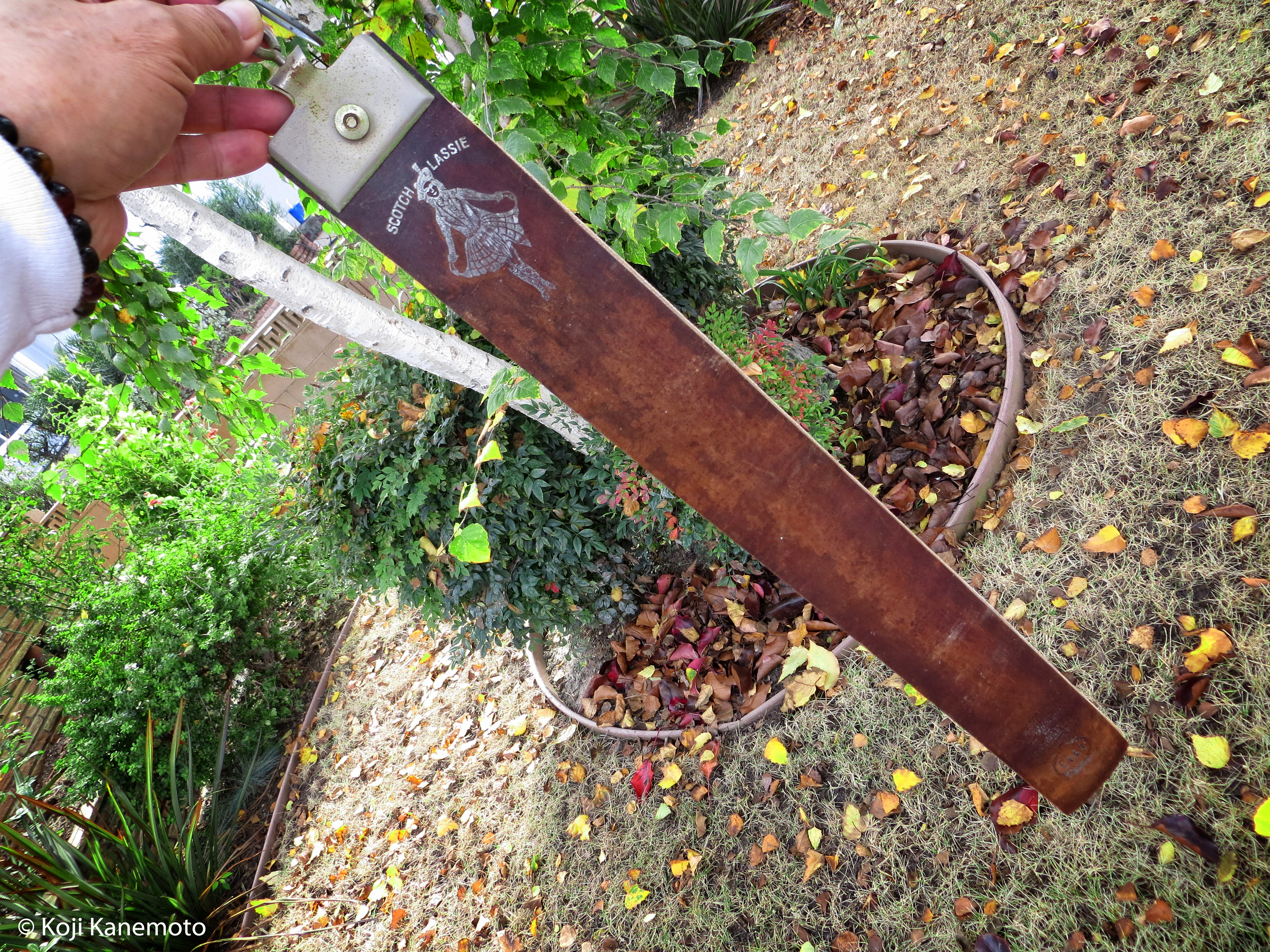
As Old Man Jack belted out the whhhooo-eee, he handed me this; it has been hanging safe and sound in my hall closet since he gave it to me:

c-10-57
Its two feet long and is used to sharpen a barber’s straight edge razor.

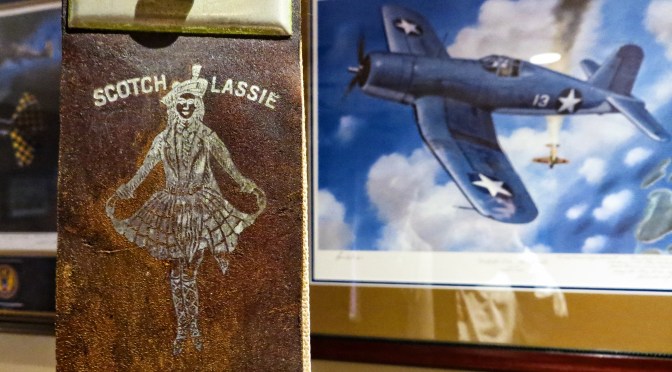
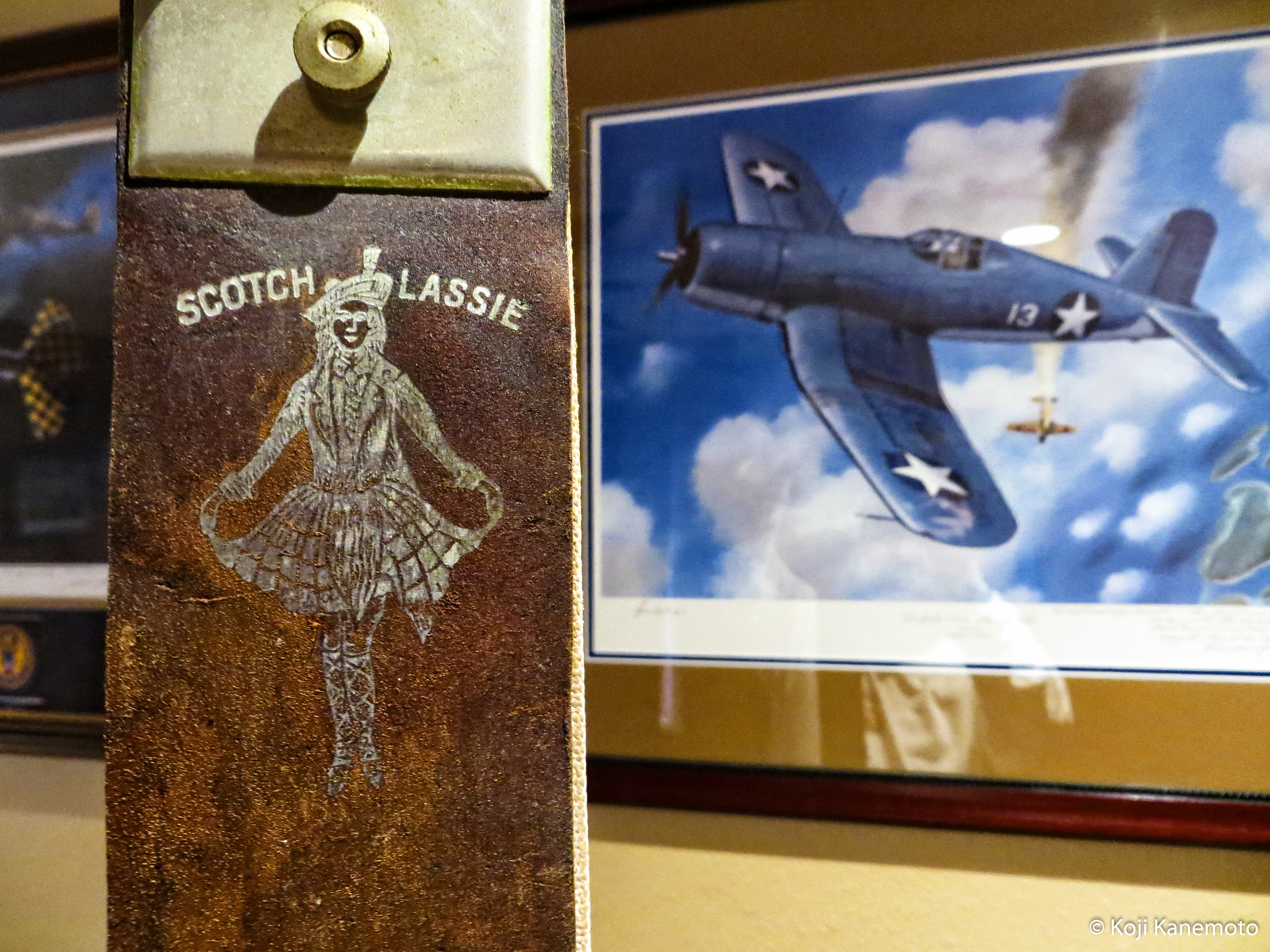
It’s a barber’s leather razor blade sharpening strop (not strap).  Specifically, a “Scotch Lassie”; it was his father’s:

c-10-58
His Scotch Lassie with Old Man Jack’s second love in the background – the F4U Corsair from WWII.

While I wasn’t clear if this was the one that was used or not, Old Man Jack got a whippin’ with this on occasion from his dad…the same one who sent him cakes and cookies out in the Pacific during a vicious war.  From a couple of the stories he told me, it sure sounds like he deserved the whippings and therefore, the reason for his whhhoooo-eee.  And you know what?  Old Man Jack turned out to be one helluva respectful and forgiving man.

Remembering he was giving me that trademark grin while handing it to me, he said something to the effect of, “Koji, I’ll tell ya…  The thought of getting another whippin’ from my dad sure kept me from getting into more trouble…but not ALL the time.”  Knowing Old Man Jack well by then, it made me grin, too.

With that, he said it was time for him to part with it, to move on and that he wanted me to keep it… if I wanted it.

Knowing how it was an intimate guiding influence of how this great man turned out to be as he was, of course I did.  I think he was glad.

But I sure miss his trademark grin and I think he misses my cigar in return… but not the whippin’ I gave him when he challenged me at stop lights in HIS ’68 Mustang on our way to breakfasts.

He hated getting whipped, you know.

c-10-59

The Firebombing of Tokyo – Epilogue


YOKOTA AIR BASE, Japan — Lt. Gen. Burton Field, United States Forces Japan commander and 5th Air Force commander, gives Tomo Ishikawa, Gakushuin Women’s College student, a hug after she presented him 1,000 origami cranes March 16, 2012. The students made a total of 4,000 origami cranes and gave 1,000 to a member of each service. This was in appreciation for all the help given by the 5th Air Force to the Japanese citizens stranded by the tsunami.  (U.S. Air Force photo/Staff Sgt. Chad C. Strohmeyer)

The Firebombing of Tokyo – Epilogue

War is hell.

Vile.

Scars are left on those who had to endure the horror…

Those who witnessed it…

Those who fought in it…

But then hopefully there is a healing.

Perhaps it will take a generation or two.

But it will happen.

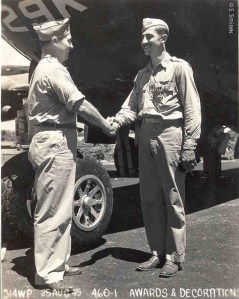
Capt. Ray Smisek receiving his second Distinguished Flying Cross on Guam, August 25, 1945. Incredible bravery indeed. Courtesy S. Smisek.

Perhaps one will never forget… but one can forgive.

Perhaps is it wrong of me – a person who never endured war – to say it so simply.  Forgive.

But I have witnessed forgiving with Old Man Jack… Mr. Johnson…

Warriors have forgiven and tried to move on with their life in spite of nightmares for the rest of their lives.

Civilians, too.

The result is endearing friendship.  The same USAF that bombed Japan assisted thousands of stranded Japanese civilians after the tsunami.  The world has benefited but at the cost of the sanity of single souls so many decades ago.

Captain Ray B. Smisek

On Sept. 2, 1945, Captain Ray Smisek once again made a round trip flight to Tokyo.

air_superfortress17
A glimpse at a formation of B-29s flying over the USS Missouri on Sept. 2, 1945. Perhaps Capt. Smisek’s B-29 is pictured. National Archives.

This time, it was as a member of one of the great air armadas ever assembled in history.  Over 300 carrier based Navy planes and hundreds of B-29s.  MacArthur rightfully wanted to make an impression upon the Japanese people by ordering a huge flyover Tokyo Bay and the USS Missouri, where the formal surrender documents were signed.  (They were to fly over at the moment of the signing but were late, upwards of ten minutes.  MacArthur apparently whispered to General Hap Arnold of the USAAF something to the effect of, “Now would be a good time, Hap,” with respect to his missing armada.)

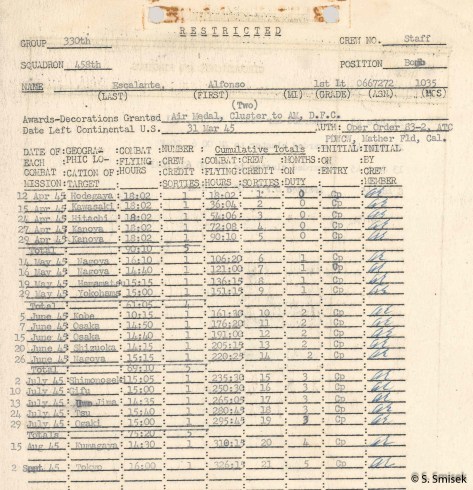
It was the crew’s 21st mission.  They were going home.

smisek-1-4
Official Mission List, retained by Capt. Smisek’s bombadier, Capt. Alfonso Escalante. Courtesy of S. Smisek.

______________________________

In Part 1, son S. Smisek said of his father that he hated to kill anything – even bugs.  That was his character.

Capt. Ray Smisek returned home to his parents after the war and tried his hand in the Los Angeles real estate market; he also worked as a cook in a restaurant.  He must have made one heckuva Sauerkraut, one of his favorites.

smisek-10-11
Capt. Ray Smisek with his parents after returning home. They must have been proud. Photo courtesy of S. Smisek (Copyright).

But…  Ray Smisek had met a young woman while he and a back-seater were on a cross-country training flight in 1942.  They were flying from Greenville, Mississippi when the BT-13 trainer developed engine trouble.  To make matters worse, there was a bad storm.  Not swell conditions when you’re training to be a pilot.  Fortunately, the clouds miraculously parted and a small town below was bathed in forgiving sunlight.  He said he did a barrel roll and dove through the break in the clouds.  It turned out to be a rural airport in Springfield, MO (now known at the Springfield-Branson National Airport).

On the USAAF’s dime, he was put up in a posh hotel.  After noticing “this sweet thing walk by” per his son, Ray Smisek asked a desk clerk if he knew who she was.  Seeing the twinkle in his eye, the clerk contacted the gal’s father who agreed to let him meet his daughter…but under the father’s mindful eye.  She apparently “had a guy”, so to speak, but they still ended up becoming pen pals.  Those letters must have been so important to a young man off in a faraway place facing death at any time.  It may have been fate but her beau tragically perished in a B-24 Liberator accident in England.
She was a singer in the “big bands” era of the 40’s and traveled extensively.  Remembering there was no internet, Ray finally tracked her down in 1947.  She was in Houston for a gig.  His son tells me he drove for two days straight to get to where she was performing.  Ray had a note he had written and asked a waiter to hand it to her.  It said, “Let me take you home and love you forever.  Ray!”  The note is a precious heirloom; the family still has it.
After getting married, Ray re-enlisted in the newly organized USAF (It was separated from the US Army.).  He flew for 16 more years in service of our country and retired from the USAF as a Colonel in 1963.  Along the way, they had five children; one was born at each station at which he was assigned.  Talk about the hardships of a military family.
smisek-10-10
Family picture taken in the 1980’s, with Ray (plaid shirt) and his wife (red blouse), five children and the grandparents to the right of center. Courtesy of S. Smisek.

S. Smisek explained to me that his father rarely, if ever, talked about his time at war while he was growing up.  That was very typical, you see.  His son wrote very eloquently:

When I was growing up, he never spoke much of his time during the war. When asked about those times, I could see a sullenness come over his face, then he would most often ask me another question just to change the subject. In those rare exchanges when he would answer, he made it very clear that he desired no recognition for what he had done. He desired no contact with his fellow comrades, felt no honor for the devastation he had helped cause, and amazingly to me, felt no affection whatsoever for the incredible aircraft which had brought he and his crew back safely from so many missions over so many horrible places.

He, along with the rest of these brave young men, was an ordinary and yet an extraordinary human being – a person who offered some of his life’s most vital years in the service of his country, and who sacrificed his ambitions so that countless others would have the freedom to accomplish theirs.

Raymond B. Smisek was diagnosed with a very aggressive cancer in 1989 and passed away at home, surrounded by his family, in August 1990.  He was just 70 years old.  His son believes his father also suffered from another cancer – one related to unhealed scars from war.  His son said they were cancers of the soul and spirit, much more damaging than those of the body.  His wife – the singer in the big bands of the ’40s – passed away in 2001.

____________________________________

Please visit his son’s tribute to the men of the 330th Bombardment Group at www.330th.org.  For the sake of the families of the WWII airmen, S. Smisek has researched and brought many of the pieces together of what it was like for their fathers at war.  Through his website and in a sterling triumph several years ago, S. Smisek played a key role in coordinating the meeting of a Japanese gentleman living in Canada with a B-29 pilot from his father’s squadron. Seventy years earlier, the Japanese gentleman was in Kumagaya Japan as an eight year old, running from the bombs being dropped from the pilot’s aircraft.  The two finally met and it was moving and emotional moment per S. Smisek.  For an article of the meeting, please click here.

____________________________________

Aunt Eiko

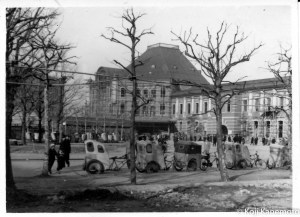
tokyo station-1
Dad took this picture of the Tokyo Station in 1947. His G-2 HQ was to his left in front of the Palace. The station was being rebuilt, courtesy of the US. Notice the rickshaws lined up in front; the Japanese had no cars until the late 50’s. Also note the trees; they are burned.

There was no escaping bombardment for Aunt Eiko, even after moving to Fukui slightly inland from the Japan Sea; the US Navy shelled their farming neighborhood heavily.  She also vividly remembers a small group of high school aged Japanese soldiers relaxing at the nearby beach and still cries inside knowing their fate.

Preceded by my mother, Aunt Eiko and grandma returned to Tokyo sometime in mid-September to find it in shambles.  People were living in lean-to’s, she said, and running water still had not yet been re-established in devastated areas.  Food was a tremendous daily hurdle.  She cannot recall when but she remembers it was such a relief when MacArthur began rationing out beans and drinkable water…but it was American beans.  Still, the beans were appreciated.

image0-108
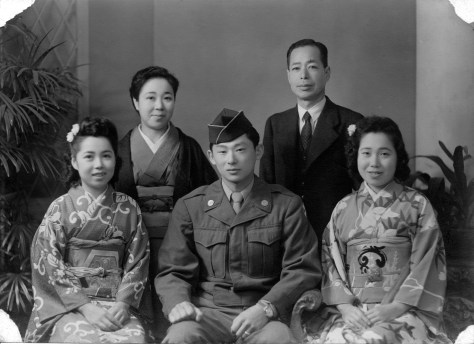
PFC Taro Tanji seated in center flanked by (from left) mom, grandparents and Aunt Eiko. You can make out Taro’s US 8th Army emblem. Taken in Tokyo, December 8, 1946.
image0-38
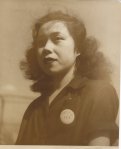
Aunt Eiko got a job at the Tokyo PX, working out of the Matsuzakaya Department Store in the Ginza. You can see “Tokyo PX” on her badge. 1947, Tokyo. Copyright Koji D. Kanemoto.

But their greatest savior surviving the first few months after war’s end was another relative – an American.  An American of Japanese descent that is.  Taro Tanji was born in Livingston, CA but was drafted out of the Amache War Relocation Center in Colorado by the US Army.  He became a member of the famed Military Intelligence Service.

He arrived in Tokyo at war’s end as part of the US 8th Army’s Occupation Force.  Through his intelligence connections, he was able to track down Aunt Eiko and family in a suburb called “Toritsu Daigaku”.  Some of it had miraculously escaped burning.

Driving up in his US Army jeep, he stayed at their house every weekend.  Each time, he would bring a duffle bag filled with C-rations, instant coffee and American cigarettes for my Grandfather (which he reluctantly accepted – funny story).  Yes, Aunt Eiko ate the Spam and deviled ham.  Taro managed to get in a good word and found both Aunt Eiko and my mother jobs at the PX.

TouritsuDaigaku - Summer 1952
Aunt Eiko and her love in her life, Puri. Circa 1952, Toritsu Gakuen, Tokyo. Copyright Koji D. Kanemoto

Things were tough until the early 50’s.  Dogs as pets were still rare as they also needed to be fed…but Aunt Eiko wanted dearly to achieve one of her dreams – to have a dog.

And so she did… She named him “Prince”, or “Puri” when you shorten “Pu-ri-un-su” pronounced in Japanese.  She loved him until he passed away in 1968.  She was devastated, of course.  I think Puri was an escape from the war’s ugliness for her.

She met Paul Sakuma sometime in the late 60’s; he was a Hawaiian born Sansei who was also drafted by the US Army into the Military Intelligence Service by the US Army.  He was attached to the 720th MP Battalion to serve as a translator.  He told a funny story to Aunt Eiko where the MPs frequently raided certain types of “houses”…  You know…  GI’s were prohibited from “fraternizing with the enemy” so they would raid them.  One time, there was a fellow MIS Nisei caught inside.  He made sure the “howlies” couldn’t escape…but held the door open for the Nisei.  After being discharged, he decided to stay in Tokyo to live and worked for the USAF as a civilian employee, using his knowledge of Japanese as a go-between.

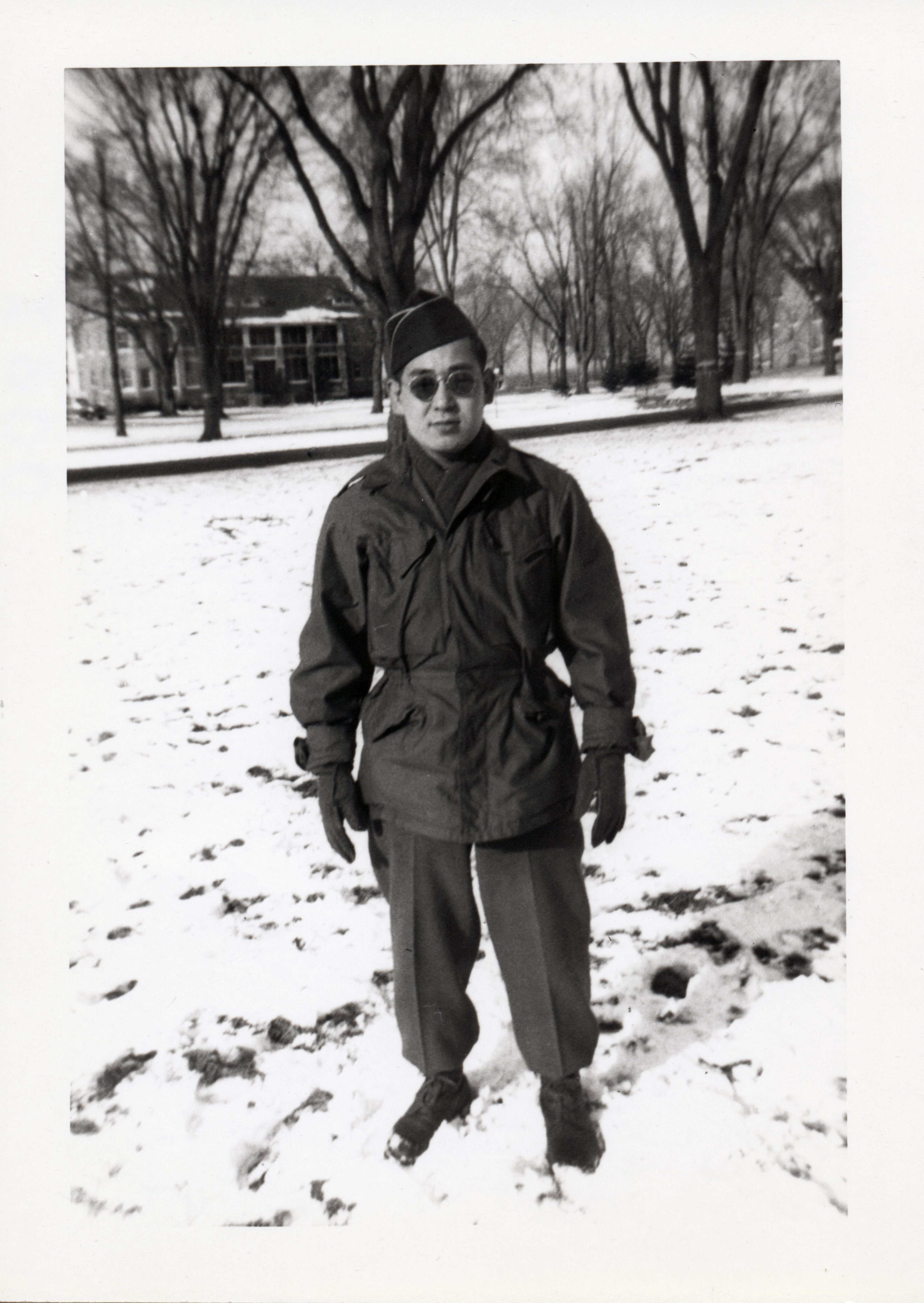
Uncle Paul at Ft. Snelling's top secret Military Intelligence Service Language School, circa Winter 1945.  The old barracks is seen in the background.
Uncle Paul at Ft. Snelling’s top secret Military Intelligence Service Language School, circa Winter 1945. The old barracks is seen in the background.

They married but had no children – but a week before my first marriage in 1980, I got a phone call from Aunt Eiko in Tokyo.  She was sobbing uncontrollably.

Uncle Paul had gone upstairs in their beautiful home he just had built for them after washing her car.  He screamed, “Eiko!”  It would be his last word; he suffered a massive heart attack and died, right there at the top of the stairs in his brand new home.

Soon after his death, Aunt Eiko immigrated to the US along with my grandmother.  She became an US citizen about a dozen years ago.

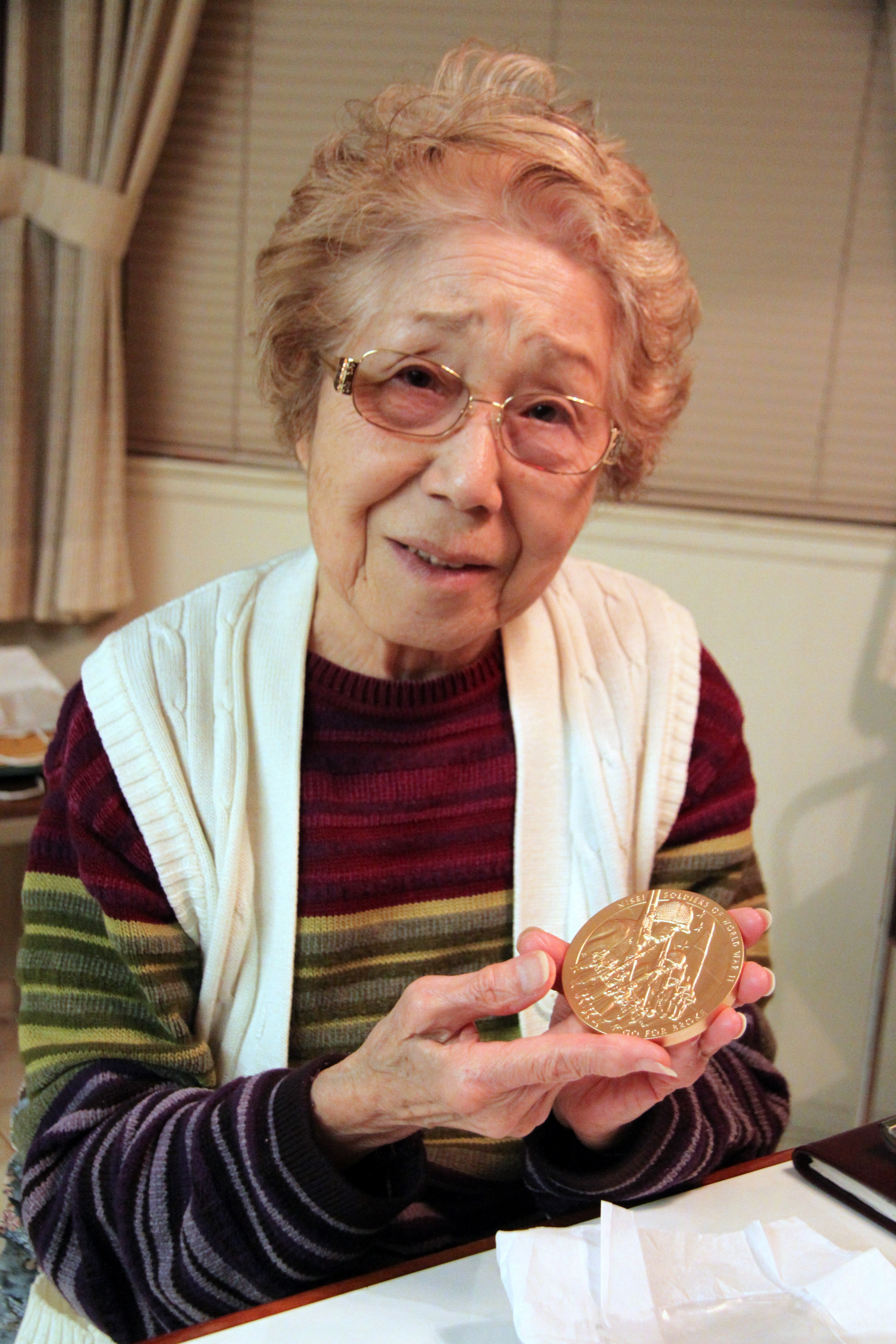
In an irony, the country that bombed her city to ashes in 1945 bestowed upon her beloved husband Uncle Paul (as well as to Uncle Taro) the Congressional Gold Medal in 2010 for their service to the country.  While both had passed away before the award, Aunt Eiko cried for happy when I surprised her with the medal.  She said, “Even after all these years, Paul still brings me happiness.”

Holding Uncle Paul's Congressional Gold Medal for the first time, Aunt Eiko cried for happy.  Incidentally, she became an American citizen about ten years ago.
Holding Uncle Paul’s Congressional Gold Medal for the first time, Aunt Eiko cried for happy. Incidentally, she became an American citizen about a dozen years ago. Copyright Koji D. Kanemoto.
With her best friend - August 1963
Aunt Eiko with her childhood friend – the one who was burned during a firebombing. August 1963, Tokyo. Copyright Koji D. Kanemoto

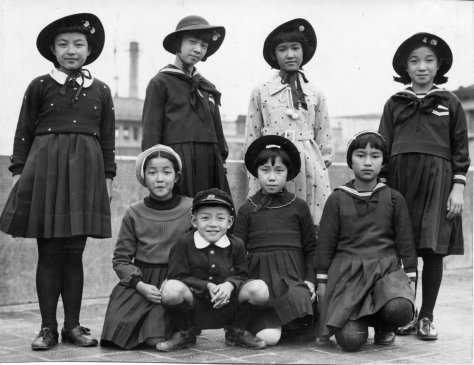
As for her childhood friends, she is all who remains now at 88 years of age, just like Old Man Jack.  Her friend who was burned during the firebombings was one of the last to pass away.  She was the tall girl standing behind Aunt Eiko atop the Asahi Newspaper Building on October 30, 1937 and shown here in 1963.

__________________________

A most sincere thank you to S. Smisek without whom this series would not have been possible.  I wish him continued fortune with his 330th Bomb Group’s website, helping those descendants piece together their father’s contribution in World War II.

IMG_3413
My two youngest kids standing beneath the Enola Gay in 2010, the most famous B-29. Her single bomb destroyed my father’s Hiroshima high school and damaged my grandmother’s home as well. Read the story by clicking on the photo.  Copyright Koji D. Kanemoto.

Previous parts can be found by clicking on the links below:

The Firebombing of Tokyo – Part 1

The Firebombing of Tokyo – Part 2

The Firebombing of Tokyo – Part 3

The Firebombing of Tokyo – Part 4

The Firebombing of Tokyo – Part 4


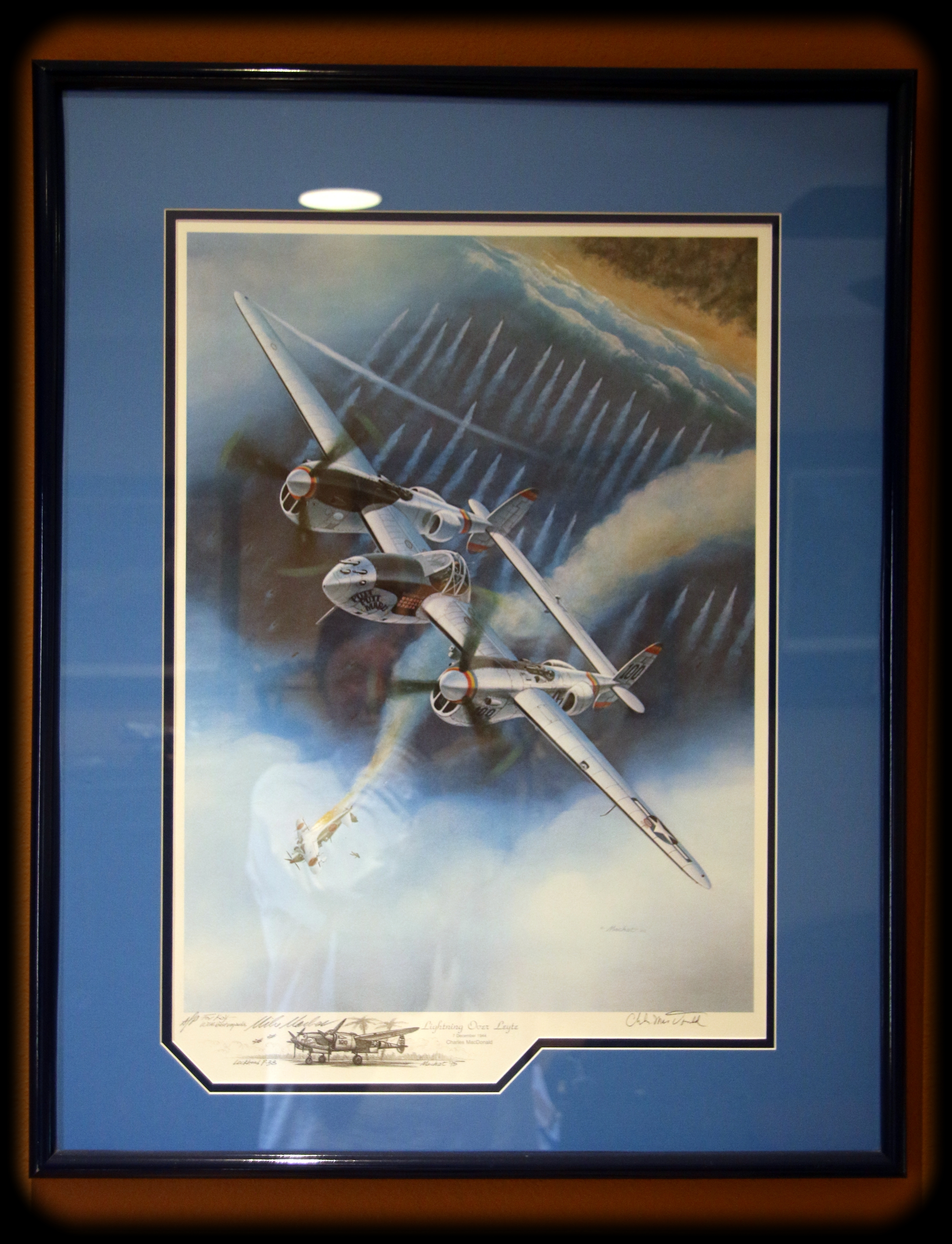
p38
One of my WWII aviation lithographs; it shows a P-38 Lightning ironically over Leyte where my uncle was killed. Drawn by my good friend Mike Machat.

The View From the Ground

“うわぁ。。。二つの尻尾。。。それはその時代の飛行機だ。。。”, my Aunt Eiko said. “Oh, my… The twin tails… Its that plane from (the war).”

She just saw my lithograph of a WWII P-38 Lightning.  She and my parents had come for the first time after we moved into our house across the street from Old Man Jack. I had just put up my WWII aviation art gallery and she immediately recognized this US fighter plane with its distinctive twin tails from the war.  She said it strafed the high school that she was walking near.  She was about 18 years old.

Funny how things stick in your mind from war.

___________________________

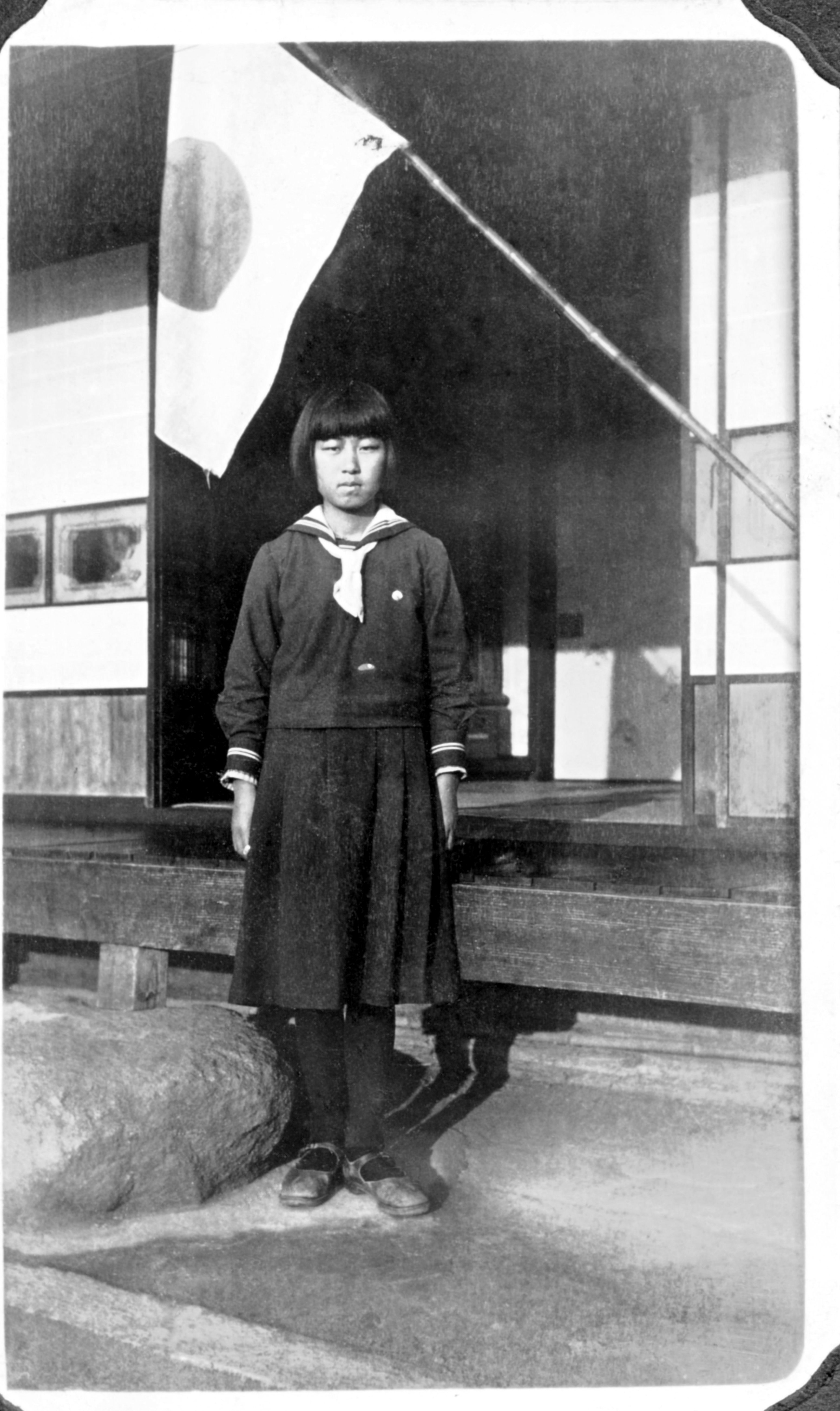
Circa 1930
(L to R) Mom and Aunt Eiko, circa 1931. Tokyo.

Along with my mom and grandparents, Aunt Eiko lived within walking distance of the Imperial Palace in Shimbashi, Tokyo.  Back then, the Emperor was god.  To live so close to the Imperial Palace meant your family had some extra change.

Although a photo of their house from that time no longer exists, the home was typical of that time.  Beams and floors made of wood. Doors called “shoji” (framed in light wood with paper “windows”) slid open and close.  By sliding, they saved space as regular doors would have to swing open and close, taking away precious space.  The floors were “tatami”, or boards wound with rice straw.  Believe me, they are uncomfortable to sit on to say the least.  Many homes still sported thatched roofs, or kusabuki, made with layers of a type of reed.  But all in all, the homes were made with wood products or straw.  Not exactly fireproof.

image0-017retouched
My Aunt Mieko (dad’s side of family) standing in front of our traditional style home, circa 1936. Although my dad’s home shown here is in Hiroshima, the construction is the same as my aunt’s: wood and paper. Behind her are the “shoji”, or sliding door panels as well as the hard tatami mats. As a side note, all these shoji were blown out by the atomic shock wave.

________________________________

As three generations usually lived in a family home, Aunt Eiko had the same close knit circle of girl friends having stayed together through high school.  Families rarely moved back then.  The girls took classes in “kimono”, shamisen (a guitar of sorts) and cooking – very traditional fare for a Japanese girl.  To them, etiquette was to be followed, never to be broken.  I would think she had a crush on someone just as any girl would have…but she has not said.

image0-34
Aunt Eiko, front row, third from left, and circle of close friends. Her closest friend, standing to the left of her, was slightly burned during a firebombing.  Taken atop the Asahi Newspaper Building, Tokyo, Oct. 30, 1937.

__________________________________

Before the Firebombing

Sometime in late 1943, my aunt says my grandfather decided to move the family, a rarity, due to her illnesses.  Apparently, my grandfather thought the unhealthy downtown Tokyo air was exacerbating her ills so they moved into another wooden frame home in Higashi Senzoku, a couple of kilometers south of Shimbashi.  It does not appear potential bombings by US planes was the reason to move at this time.

Soon thereafter, though, the family received mandatory evacuation orders (強制疎開). My Aunt believes this to be late in 1944… Times were tough.  Food supplies had already dwindled to nearly nothing. To make it worse, only older doctors remained as many younger ones were conscripted into the Imperial Japanese Army as well.

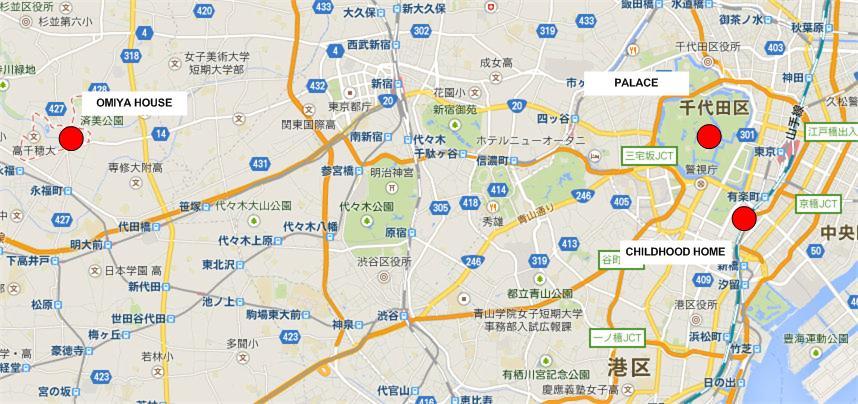
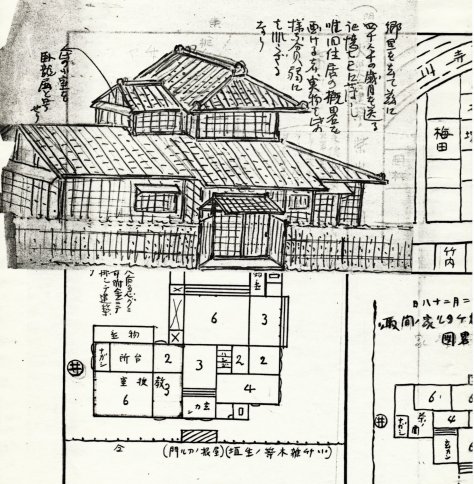
They moved to her grandfather’s home in Omiya, Tokyo; it is about a mile due west of the Imperial Palace:

omiya visio
Omiya, the Imperial Palace and childhood home.

A drawing of the wood home in Omiya:

keizu crp
The actual traditional wooden home (立ての木) in Omiya, Tokyo where my family took refuge during the bombings. It is about a mile west of the Imperial Palace. This was drawn on extremely thin paper – much thinner than the old tracing paper we had here in the States – by my great-grandfather, Wakio Shibayama. Undated but post-war.

The Firebombing

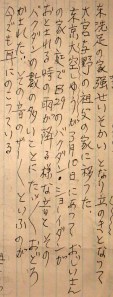
bakudan1
My aunt’s writing. (Copyright Koji Kanemoto)

March 9, 1945 was about two weeks before my Aunt Eiko’s 19th birthday.  Due to the strenuous and meager living conditions, I doubt any birthday party was in the works.  I doubt there were many birthday parties at all.  There was little to be had as Japan was losing… and losing badly.

Aunt Eiko was at their grandfather’s house in Omiya that night when the pathfinders found their mark.  She says they all gathered in the front yard to gaze towards the Imperial Palace after hearing the first explosions.

She notes on the left:

東京大空襲が3月10日にあっておじいさんの家の庭でB-29の爆弾、焼夷弾が落とされる時の雨が降る様な音とその爆弾の数の多いことにだいたいおどかされた。そのおとのザ~ザ~というのが今でも耳にのこっている。

In doing my best at translating, she says:

We were in the front yard of my grandfather’s house when the firebombing started on March 10.  The B-29s were dropping shocking amounts of bombs and firebombs – so many that they sounded like heavy rain coming down.  I will never forget that sound (of the falling bombs); it is still vivid in my ears even today.

A year earlier, my youngest daughter was interviewing her for a 5th grade family biography project.  One requirement was that the family member’s history was interesting or unusual.  Naturally, since experiences like my aunt’s are not found in school textbooks today, I recommended she interview Aunt Eiko about her war experiences in Tokyo.

ちょうちん
提灯 or paper lantern.

During the interview, Aunt Eiko said the (AN-M69) incendiary sticks were like thousands of 撥 (bachi, or the drumsticks used for taiko drums) raining down from the sky… that there were so many of them that it looked like swarms of insects.  She also described the thousands of trailing streamers (attached to each stick) reminded her of ribbons fluttering in the breeze.¹  Unlike what many of us believe, she said the B-29s came for hours… that there would be a rash of explosions then the B-29s would disappear only to hear the now familiar drone of more B-29s approaching then more bombs.

In earlier conversations², she described seeing hundreds of flashes of light at roof top level during the firebombings.  It wasn’t clear to me then but it is clear now that the flashes she witnessed were likely the smaller high explosive bombs dropped from the B-29s hitting structures and exploding.  She also sadly described the homes burned like 提灯 (chouchin, or paper lanterns) and that the waves of heat distorted distances (like looking through the heat waves rising from your street in summer).  It made it hard to judge how far – or how close – the fires were.

The Firestorm

The main concentrations of fire occurred not just in the area behind and to the left of the Imperial Palace; Aunt Eiko said incendiaries (possibly dispersed due to the heat thermals) ignited neighborhoods just to the left of her Omiya house where they were staying. (Embers would have achieved the same results, however, and may be more likely.)

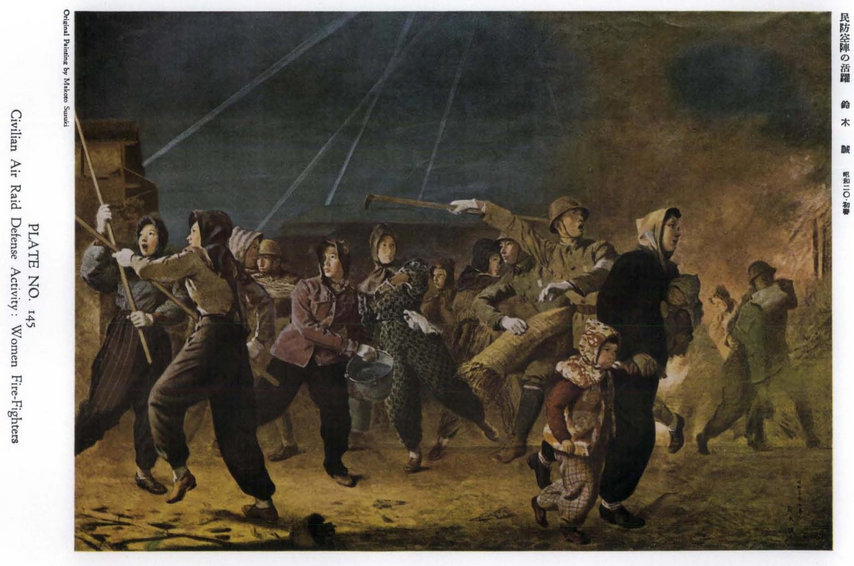
Screen
The city’s fire department was largely staffed by women who were not professional firefighters. Importantly, note the clothing worn by the mother and child in the forefront. Source: “The Reports of General MacArthur“.

According to studies, death occurred through suffocation, incineration, and heat.

Fed by winds and with a fire department largely staffed by women volunteers, the fires spread rapidly and raged out of control. These firefighters attempted throwing dirt or sand on the incendiaries, a hopeless effort. When there was water pressure, the water pressure was low.  Reports indicated the firefighters tried to douse the civilians as they fled but the water would soon evaporate from the heat.

Suffocation occurred as the great fires sucked all the oxygen out of the air. They just couldn’t breathe.  Those that were able to find cooler river water tried to keep their faces above the water; but they, too, simply suffocated due to the lack of oxygen. In some instances, fleeing civilians attempted to seek shelter in areas that had pretty much burned but their bodies were found later in a small cluster.  They suffocated to death together as oxygen became depleted.

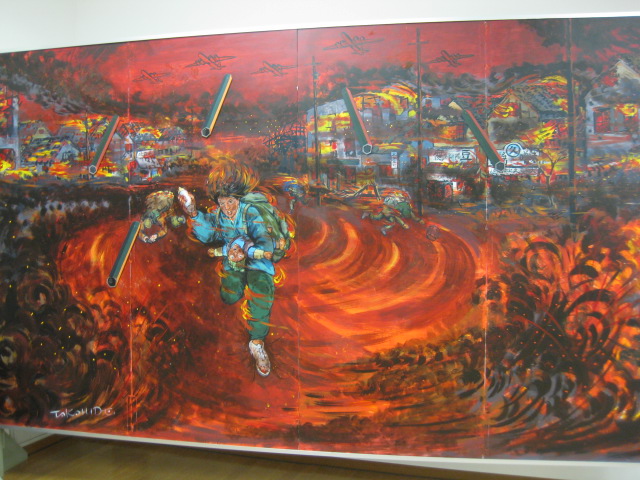
Extreme heat was another cause of death as temperatures soared to 1,800F.  Asphalt bubbled and steel bridges became frying pans.  People panicking ran or were herded towards bridges or rivers only to be pushed into the waters by the ensuing masses of humanity trying to flee.  Unfortunately, the water was at boiling temperatures and they were essentially boiled to death once they fell in.  Escape paths were blocked with debris, downed power poles, burning trees…and bodies.  If one could not escape the heat, that person simply burst into flames.  Horrifically, superheated air swirled down towards street level.  People would then literally burn from the feet up when their pants would catch fire.

taka-hide
A Japanese artist’s depiction. Note the pants on fire and the swirling heat.  While unsure, the name appears to be Takahide.

Incineration was the worst, the most painful death I would assume.  One aspect not widely known by the general populace is their type of clothing contributed greatly to their demise of burning to death.  Their cloth-based head gear (see painting of women firefighters shown earlier) was meant to protect their ears and head from bomb explosions – not a firestorm.  In the end, this protective head gear easily caught fire as did their loose fitting trousers.  Aunt Eiko reported a girl she knew ran from the fires with a baby strapped onto her back in traditional Japanese style.  Through all the noise, screaming, running and panic, the girl was unable to notice until too late that burning jellied gasoline had landed on the baby’s face and had died.

No photos of corpses are deemed necessary here.

Aftermath

tokyofires
A wall exhibit at the Tokyo History Museum, showing the extent of the area destroyed by firebombing. The Imperial Palace is just right of center. The Omiya house is in the burned zone, in the very center.

Aunt Eiko has never said whether the Omiya home survived the firebombings and I don’t intend to ask.  While this Tokyo raid was the first of several, I cannot understand why my great-grandfather would have sketched the home out, apparently from memory, unless it no longer existed.

Japanese reports of the aftermath indicate that due to the thousands of burned corpses or of those who suffocated, it was nearly impossible to walk through Tokyo without stepping on bodies.  Further, as the seared corpses disintegrated, their ashes would swirl up into the air.

She, my mother and grandmother finally fled the city on or about July 1, 1945; grandfather stayed behind for reasons never known to her.  They lived at another cousin’s yam farm in Fukui, helping to farm the fields while living on meager rations.

The war ended six weeks later.  What happened in between is another story altogether.

Part 5 of “The Firebombing of Tokyo” will be an epilogue.

I hope you will stay tuned.

Part 1 is here.

Part 2 is here.

Part 3 is here.

Part 5 (Epilogue) is here.

__________________________________

NOTES:

1. That even surprised me as I didn’t know the incendiaries had streamers, so much so that I asked her what she was talking about.

2. Just like Old Man Jack and many other combat veterans, Aunt Eiko (along with my father) suppresses many of the horrific war experiences she witnessed.  She “gives” things out little by little.

The Firebombing of Tokyo – Part 1


A View From Both Sides

IMG_5039-1
From left: Grandmother, Dad in US Army uniform 1947 and his youngest brother (seated), circa 1943. The writing is my aunt’s; you can see “B-29”.  Copyright Koji D. Kanemoto

My Aunt Eiko called me in April of 2011; you can tell she was crying.

“I’ve seen this before,” she said in Japanese.  She was watching the TV footage of the disaster caused by the 9.0 earthquake and tsunami in Japan.

Dumbfounded, I asked, “How could you have seen this before?  The earthquake just happened.”

“完全な破壊。。。戦争思い出したわぁ。。。” or loosely translated, “From the war…  I remember seeing this (complete destruction) from the war…”

Ironically, she was recalling what she saw exactly 66 years earlier – April 1945 – when Tokyo and many other cities were firebombed in an all out world war.

She was there.

And so was someone else from the other side of the Pacific.

________________________________

Through the miracle of WordPress, many of us here have met in the most peculiar of ways –  the hub being World War II…  Perhaps ironic but nevertheless destiny.

For instance, pacificparatrooper‘s father was in the US Army’s 11th Airborne and parachuted into combat over the Philippines with my Dad’s youngest brother killed later on Leyte as a Japanese soldier.  JeanneRene‘s father fought on the wretched islands as a critical Seabee.  Of course, my neighbor Old Man Jack was a sailor fighting to survive in the thick of things on those “stinkin’ islands” – Guadalcanal, Rabaul, Okinawa and Green Island.  Mr. Johnson fought and was wounded on-board CV-6, the USS Enterprise, manning the 20mm AA guns as a US Marine.  Although they returned, they did not return home unscathed.

None of them did.

The Main “Human Beings” of this Story

This series hopes to present the ugliness of war as personally experienced by two human beings – one who was on the ground and one who was in the air.

…The scarring of a Tokyo teen-aged girl on the ground: my Aunt Eiko.

Circa 1932
(L to R) Aunt Eiko, Mom, Grandpa and Grandma. Circa 1938, Tokyo. Copyright Koji D. Kanemoto

…AND the scarring of a young B-29 Superfortress pilot in the US Army Air Force’s 330th Bomber Wing: Capt. Ray B. Smisek who flew bombing missions over Japan.

Capt Smisek 2
Ray B. Smisek (to right of nose gear) after a safe return from a bombing mission to Gifu. Behind him is the B-29 he captained with a crew of ten young men, the “City of San Francisco”. 1945. Courtesy of son S. Smisek (copyright).

There is one sad, dreadful thing about their fateful relationship: neither had asked for it.

Neither had asked for war.

A very bitter war.

________________________________

Ray B. Smisek, the Gent

Capt Smisek Catalina island
A “life is good” portrait of Ray Smisek on Catalina Island. Copyrighted photo courtesy of S. Smisek.

One person I met online was S. Smisek.  He has an extensive photo collection on flickr of his father’s service during World War II; that is where our paths crossed (his photo link is here).  His father was Capt. Smisek, the captain of “City of San Francisco”, a B-29 bomber flying out of Guam as part of the 330th Bombardment Group, 458th Squadron.  Born in Minnesota in 1920, he was also a lead pilot – a very heavy responsibility let alone if under attack.

His son shared with me his remembrances of his father.  He shared that Capt. Smisek liked flying above all else – especially open cockpit.

“(His dad) liked Czech and German food, like Sauerkraut, sausage and beer. Polka music. Baseball and football.  He loved baking bread and pastry.  Made amazing sourdough pancakes and Christmas bread. He loved gardening.  He could grow ANYTHING and liked to tinker on anything and everything around the house.  Fix it… or break it if it already was fixed.

Capt Smisek Football at 18 yo Thrid from front right
A young Ray Smisek, third from right. Copyrighted photo courtesy of S. Smisek.

He hated hunting. Did not like to kill anything.  He would pick up bugs and release them outside.  Used to freak us kids out!

He liked his newspaper and watching the news.  He occasionally smoked a pipe.  Wore Old Spice aftershave all the time I knew him (I keep some around to this day.).  He loved licorice. 

He was honest as the day is long.  A man of his word.  A handshake was an agreement.  A promise.  A very strong Republican who loved Richard Nixon and John Wayne.  He liked Louis L’Amour books.  I think he dreamed of being a cowboy.

(Dad) hated racists.  Always gave everyone a chance. Maybe two and that’s it.”

Aunt Eiko, the Teenager

(L to R) Aunt Eiko and mom. Circa 1932, Shimbashi, Tokyo.

My Aunt Eiko and my mother had lived with my grandparents in Tokyo since their births in the mid-1920’s. Their childhood home was next to the Ginza at Shimbashi 5 Chome; think of it as Japan’s Beverly Hills.  It is within walking distance from the Imperial Palace.  My aunt says the picture to the left was taken near their Shimbashi home and next to a relative’s kimono shop in the Ginza.

As a child, she was apparently sickly.  They say she was quite skinny from this ailment and that ailment; the food shortage didn’t help much although my grandfather reportedly had black market connections to obtain food once in a while.  Nevertheless, she had a weak digestive system.  She has it to this day.

Like most Japanese “upper society” girls of that time, she was required to know how to play the shamisen, or a Japanese stringed instrument.  She was also trained on the silk kimono – it was an elaborate dress that took a couple of hours to put on properly.

Showa 14 Aki - Fall 1939 / Grandma in center, Aunt Eiko on right
Aunt Eiko on right playing the “shamisen”. Tokyo, Autumn 1939.

Aunt Eiko didn’t disappoint anyone’s ear drums when she saw a bug.  She screamed really loud when a bug got near her.  It was easy to see them since they get as big as footballs there in Japan.  Ok, I’m exaggerating – a little.

She had an artistic flair, with her grandfather being a noted painter and art professor.  She loved “ikebana”, or flower arranging.  In fact, she made it her career after war’s end, becoming one of the top ranked ikebana instructors in Tokyo.

Amazingly, in spite of her stomach ailments, she liked cooking; unfortunately, she had a knack for burning things.  I know.

Most of all, she loved dogs.  After feeding one with her chopsticks, she’d just go right back to using them to feed herself… but with food a scarcity, her love for dogs would have to wait until quite a while after war’s end.

________________________________

In Part 2, we will visit the B-29 Superfortress, her crews and the ordnance she would typically carry into battle above Japan.

Hope you’ll stay tuned.

Edit: You can find the other chapters in the links below:

The Firebombing of Tokyo – Part 2

The Firebombing of Tokyo – Part 3

The Firebombing of Tokyo – Part 4

The Firebombing of Tokyo – Epilogue