Loyal readers know of my love for WWII combat veteran “Old Man Jack”.
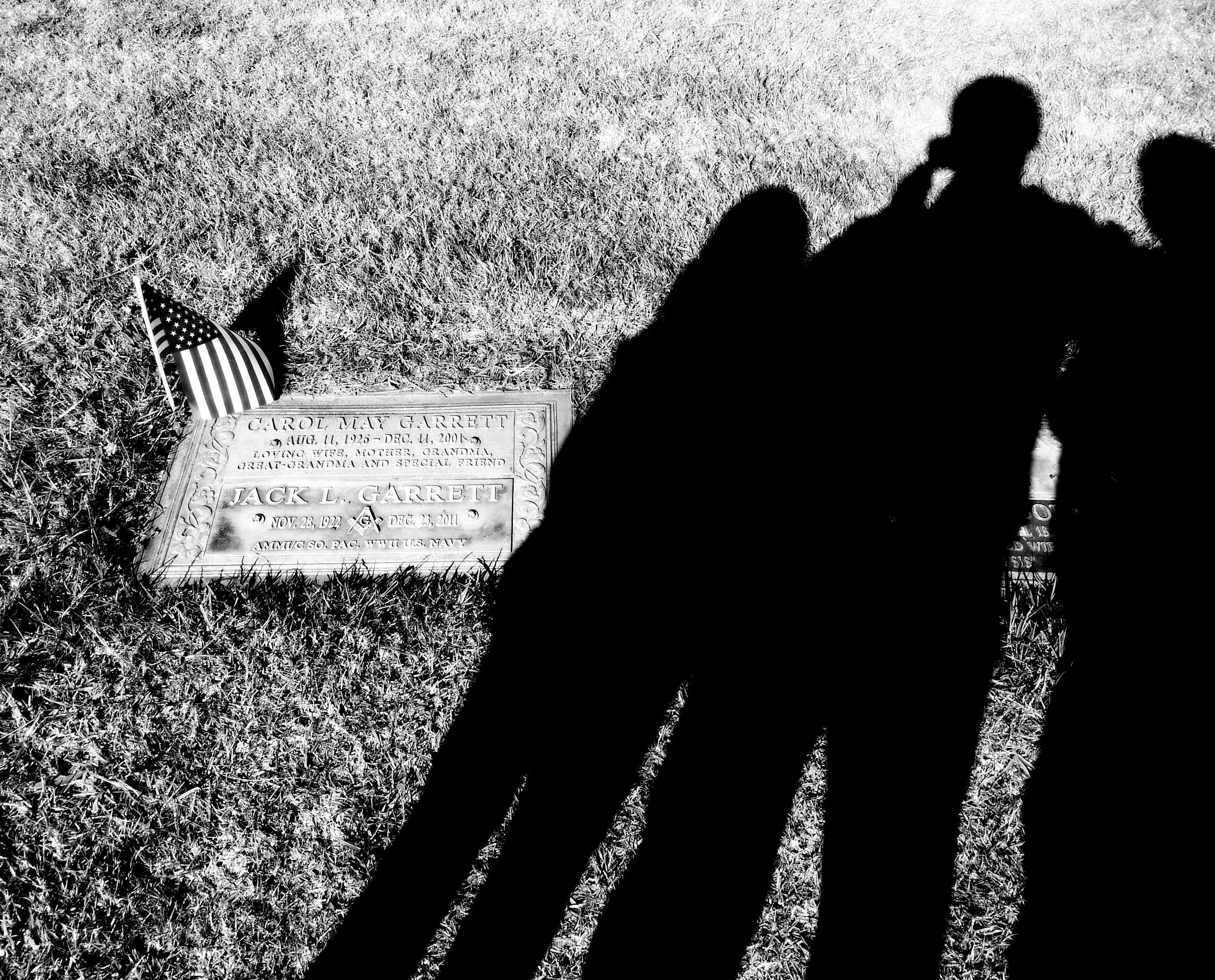
After suffering through seven decades of nightmares of war, he is now finally at peace. Hopefully, he is resting comfortably beneath these shadows cast by my two youngest kids and I:
And a shadow cast by Old Glory:
For new visitors, please feel free to click and read one story of this great American who is now all but being forgotten in our new “Common Core” history textbooks. He earned the honor to be remembered:
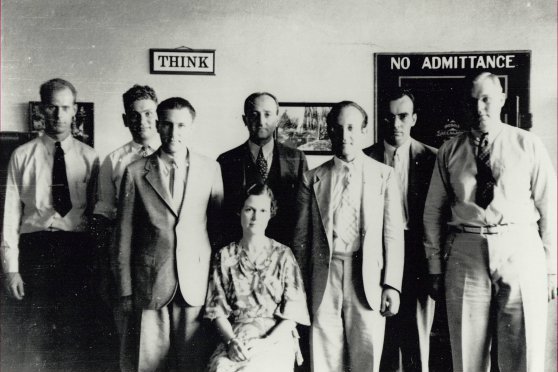
William F. Friedman, standing in center. Friedman was charged with the responsibility of cracking the highly complex “Purple” diplomatic code. This SIS team did so in eighteen months. Friedman was hospitalized for four months from the strain. (US Army)
In Part 1 of “What Did FDR Know?”, I submitted tidbits that FDR – in spite of his campaign promises of not sending American boys to war – DID secretly plan with Churchill on how to get America into war without damaging their political images. Their secret discussions were nearly made public by Tyler Kent but he was tried secretly in a British court and admonished to prison until war’s end. Secretary of State Cordell Hull, on November 29, 1941, tried to leak to a major newspaper man intelligence gathered about the Imperial Japanese Navy heading towards Pearl Harbor.
In Part 2 of “What Did FDR Know?”, some history at Pearl Harbor before December 7, 1941 was provided as well as a brief history into cryptanalysis, the Japanese JN-25 and Purple codes and how the US Army and Navy broke them before and after Pearl Harbor.
In this Part 3, I will attempt to present evidence on intelligence gathered BEFORE the surprise attack on Pearl Harbor.
Part 4 will attempt to present evidence on the extent of our “listening in” on Imperial Japanese Navy battle plans post Pearl Harbor.
Part 5 will attempt to present evidence on the imprisonment of Japanese and Japanese-Americans in the “war relocation centers”, as FDR called them.
The goal is to allow you to come to your own conclusion as to “What Did FDR Know?”
___________________________
We learned that the US Navy struggled to break the JN-25 code that was changed immediately before the attack. However, OP-20-G was able to decipher coded messages immediately prior to a reasonable extent. The number of JN-25 messages intercepted between just September 1 and December 4, 1941 numbered 26,581. Of these, 2,413 were released by the (now famous) NSA in 1979. Although there were more than 1,000 just between Tokyo and the attack fleet, only 20 are reportedly in the National Archives. (So much for the IJN operating under “strict radio silence” during the voyage to Pearl Harbor.)
The Purple code also became another critical source of intelligence, especially the week before Pearl Harbor. Luckily, we had been intercepting and deciphering them since September 1939… more than two years before Pearl Harbor.
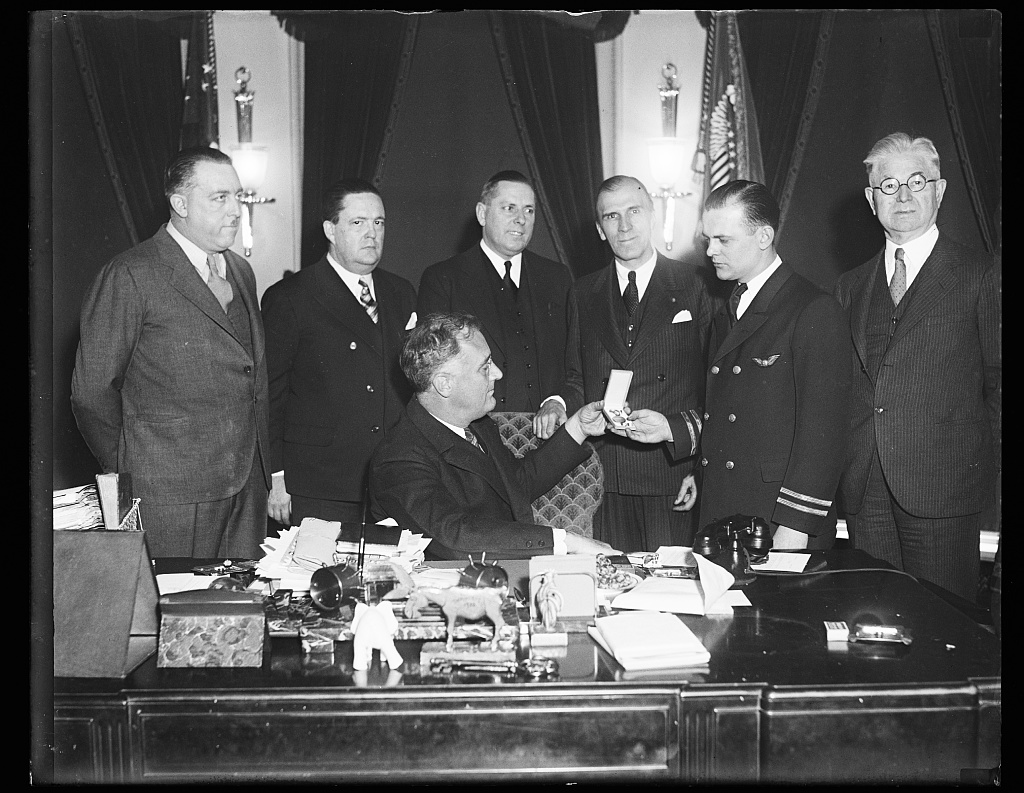
The Oval Office, 1933. Criminy, isn’t that a telephone on FDR’s desk?
Just what was transmitted by the Japanese diplomats about Pearl Harbor and intercepted through MAGIC? What other events occurred either in relation to the intercepts or the looming signs of the attack on Pearl Harbor? Please note that in 1941, they did not have emails, fax machines, TV, FedEx or SMARTphones. However, they did have TELEphones. Remember those things?
As shown above, there were more than 26,000 in JN-25 messages alone so going into detail about what was known in total would not be appropriate for this blog. However, if I were to summarize:
With respect to the Purple analog machines built from scratch, eight were made by the Naval Gun Factory in DC. Two each were used by OP-20-G and SIS; two were sent to the British. One was sent to Cavite in the Philippines. The last one was intended for Pearl Harbor – it was instead given to the British. It is likely true that even if Pearl had a Purple machine, it may not have been of too much value as it is reported the Japanese Consulate there did not have a deciphering machine.
Selected MAGIC ciphers were indeed placed into locked briefcases then shown to the top ten men in power over war – including FDR, just like in the movies.
Lt. Com. Arthur H. McCollum of Office of Naval Intelligence signed an eight point memo for FDR on how to coerce Japan into war with the US (aka “McCollum Memo”, the first page of which is shown at right). It was presented to FDR on October 7, 1940; FDR began implementing them the next day; all eight were eventually put into place.
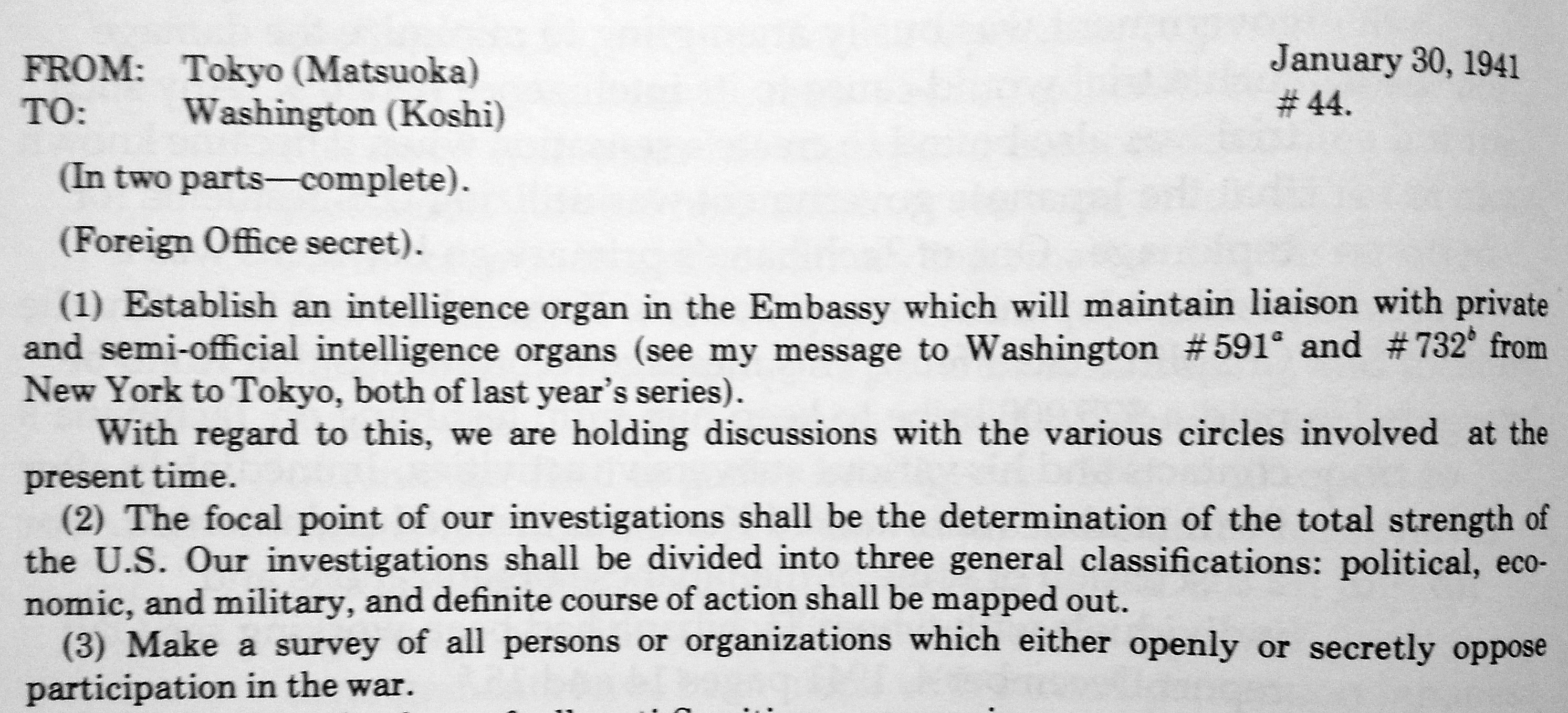
A Purple message was intercepted on January 30, 1941. Tokyo instructed its diplomats to recruit agents covertly to spy on Allied movements and production. Issei and Nisei were mentioned for recruiting in the message. This espionage net could be for no other reason than to supply military information to Tokyo.
Typed copy of the Purple transmission of January 30, 1941.
Per “President Roosevelt and the Coming of War 1941”, FDR actually proposed losing six cruisers and two carriers at Manila in order to get into war but was stopped by Navy Chief Stark.
On July 10, 1941, the US Military Attache in Japan reported the Imperial Japanese Navy was conducting secret training missions at Ariake Bay involving torpedo runs at moored ships.
After the Atlantic Conference and meeting with FDR, Prime Minister Churchill cabled his Cabinet on August 14, 1941 that FDR was intent on getting into the war.
A high level US Navy report was submitted on March 31, 1941 clearly stating that Pearl Harbor would be targeted, even so far as stating the Japanese Navy would utilize six carriers and surprise attack at dawn. That was because Japan strategically had few options and definitely could not have the Pacific Fleet to contend with.
A Korean agent by the name of Kilsoo Haan met with Eric Severeid of CBS that there was solid evidence that Japan would attack before Christmas. In October, Haan was able to convince US Senator Guy Gillette of these plans. Gillette alerted the State Department, Army and Navy Intelligence and FDR personally.
A coded message of September 24, 1941, from Japanese Naval Intelligence headquarters in Tokyo to the Japanese consul general in Honolulu, was intercepted and deciphered.(1) It requested the exact locations of all US Navy ships in Pearl Harbor; it even specifically asked to know if two ships were moored alongside each other. It was a map. Such detailed information would only be required if the Japanese were planning an attack on the ships at their moorings. The Japanese had not asked for such detailed information before. However, two top US officers, Stark and Turner, prohibited informing Pearl Harbor and Kimmel of this critical intelligence.
A JN-25 message was deciphered on November 1, 1941. It ordered the Japanese fleet practicing the attack to continue drills against anchored warships at at Ariake Bay. Words included “to ambush and completely destroy the US enemy.” References to using armor-piercing bombs and “near surface torpedoes” was also mentioned.
A Purple message of November 5th: Tokyo notified its Washington ambassadors that November 25th was the deadline for an agreement with the U.S. (to avoid war).
A Purple message of November 11th from Tokyo to its diplomats warned, “The situation is nearing a climax, and the time is getting short.”
Admiral Kimmel, following established Naval doctrines concerning unstable international conditions, ordered 46 (roughly one-half) of the Pacific Fleet out to sea in late November – specifically into the North Pacific. He did not inform Washington and when FDR found out, he ordered the fleet back to port under the guise such an exercise would provoke the Japanese. Undaunted, Kimmel had Admiral “Bull” Halsey put together a carrier-focused plan to protect Pearl Harbor which was never carried out. Instead, on November 26, 1941, Admiral Stark in Washington ordered Halsey to take to sea with his carriers; their mission was to ferry fighter planes to Midway and Wake Islands. Now you know why the carriers – the main target of the Imperial Japanese Navy – were “by luck” not at Pearl on December 7th.
A JN25 order of November 23 – “The first air attack has been set for 0330 hours on X-day.” (Tokyo time)
Another Purple message November 16th changed the deadline to November 29th. However, it stated, “The deadline absolutely cannot be changed. After that, things are automatically going to happen.”
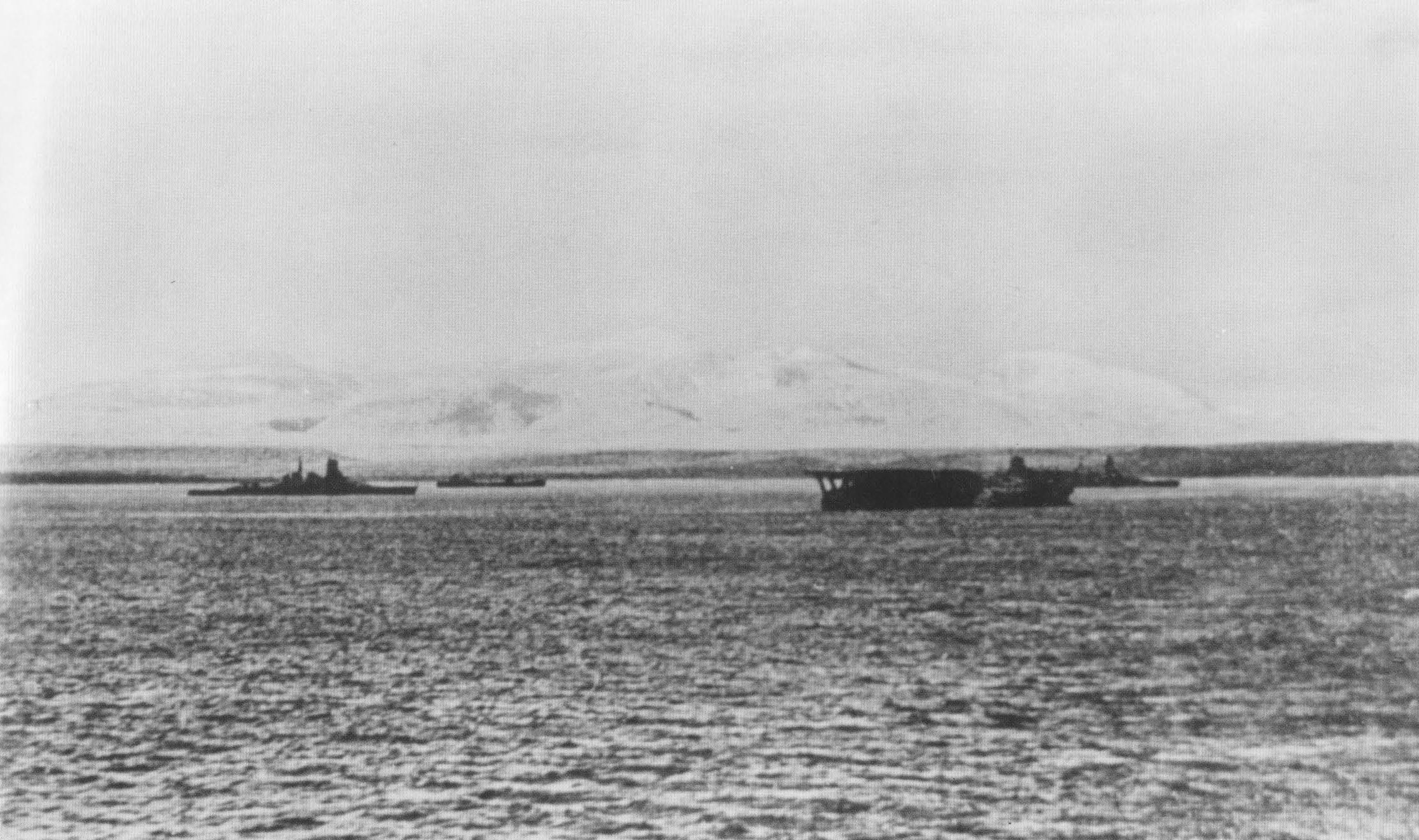
The Japanese fleet left Japan (Hitokappu Bay) on November 25th. Remembering we were intercepting all Japanese Naval transmissions, about one hour after the Japanese attack force left port for Hawaii, the U.S. Navy issued an order forbidding U.S. and Allied shipping to travel via the north-west Pacific. All transpacific shipping was rerouted through the South Pacific. It should be easy to figure out why. If any commercial ship accidentally stumbled on the Japanese task force, it might alert Pearl Harbor. As Rear Admiral Richmond K. Turner, the Navy’s War Plans officer in 1941, stated: “We were prepared to divert traffic when we believed war was imminent. We sent the traffic down via the Torres Strait, so that the track of the Japanese task force would be clear of any traffic.”
Imperial Japanese Navy’s carrier Kaga and battleship Kirishima at Hitokappa Bay, November 23, 1941. They would set sail in a couple of days for Pearl Harbor. Kaga would be sunk at the Battle of Midway. Kirishima would be attacked and would capsize on November 15, 1942 in Ironbottom Sound.
British initially decrypted a message sent Nov. 19 setting up the “Winds” alert. The US decoded it Nov. 28. The message stated there would be an attack and that the signal would come over Radio Tokyo as a weather report – rain meaning war, east (Higashi no kaze ame) meaning the US.
On November 25, 1941, the great Admiral Isoroku Yamamoto himself, using the cracked JN-25 code, sent this message to his fleet: “(a) The task force, keeping its movements strictly secret and maintaining close guard against submarines and aircraft, shall advance into Hawaiian waters and upon the very opening of hostilities, shall attack the main force of the United States Fleet in Hawaii and deal it a mortal blow. The raid is planned for dawn on X-day — exact date to be given by later order. (b) Should the negotiations with the US prove successful, the task force shall hold itself in readiness forthwith to return and reassemble. (c) The task force will move out of Hitokappu Wan on the morning of 26 November and advance to the standing-by position on the afternoon of 4 December and speedily complete refueling.” This was decoded by the British on November 25 and the Dutch on November 27. WHEN it was decoded by the US is still a national secret; however, on November 26, ONI reported the concentration of units of the Japanese fleet at an “unknown port” ready for offensive action. ONI knew the fleet had been assembled at Hittokappu Bay since November 22, 1941.
Actual message sent to the Pacific on November 27, 1941 by Admiral Stark, Chief of Naval Operations. Please read the alert carefully and see if Pearl Harbor is mentioned. Kimmel and Short received this alert.
In reaction to #17 above, Churchill himself sent FDR a secret message likely warning him about war erupting; this was presumably in response to British intelligence decoding Yamamoto’s message. (Note: Likely due to implications even today and in spite of the enumerable messages sent between them, this is the only message that has not been released.) C.I.A. Director William Casey, who was in the OSS in 1941, wrote, “The British had sent word that a Japanese fleet was steaming east toward Hawaii.”(2) In response to Churchill’s message, FDR secretly cabled him that afternoon, “Negotiations off. Services expect action within two weeks.” Note that the only way FDR could have linked negotiations with military action, let alone have known the timing of the action, was if he had read the message to set sail. In other words, the only service action contingent on negotiations was Pearl Harbor. Regardless, can it be coincidence that on Nov 26, Washington ordered both US aircraft carriers, the USS Enterprise and the USS Lexington out of Pearl Harbor? On board were 50 fighter planes diminishing Pearl Harbor’s already inadequate fighter protection.(3)
A Purple intercept from Emperor Hirohito himself to the Combined Fleet commander – Admiral Isoroku Yamamoto. Sent on December 6, 1941 (Tokyo time).
The FBI had put in wire taps on the Japanese Embassy phone lines. The FBI listened in on an uncoded Japanese telephone conversation on November 29 in which Special Envoy Saburo Kurusu asked, ‘Tell me, what zero hour is. Otherwise, I won’t be able to carry on diplomacy.” The voice from Tokyo (later identified as K. Yamamoto) said softly, ‘Well then, I will tell you. Zero hour is December 8 (Tokyo time, ie, December 7 US time) at Pearl Harbor.” (US Navy translation 29 Nov)
On December 1, 1941, the Japanese tanker Shiriya radioed she was “proceeding to a position 30.00 N, 154.20 E. Expect to arrive at that point on 3 December.” Key those coordinates into Google Maps yourself. This message in the National Archives destroys the myth that the attacking fleet maintained radio silence. Transmission serial numbers prove that the Striking Force sent over 663 radio messages between Nov 16 and Dec 7 or about 1 per hour. (The NSA has not released any raw intercepts because the headers would prove that the Striking Force did not maintain radio silence. On Nov 29 the Hiyei sent one message to the Commander of the 3rd fleet; on Nov 30 the Akagi sent several messages to its tankers.)(4) There are over 100 messages from the Striking Force in the National Archives.(5) Reports from Dec 5 show messages sent from the Striking Force picked up by Station Cast, P.I.
ONI located Japanese fleet on December 1, 1941 by correlating reports from the four wireless news services and several shipping companies that they were getting strange signals west of Hawaii. Remember Johann Ranneft visiting ONI and being shown the location of the Japanese fleet north-west of Hawaii in Part 1? The Soviet Union also knew the exact location of the Japanese fleet because they asked the Japanese in advance to let one of their ships pass.
On December 2 and 3, the passenger liner SS Lurline was en route from San Francisco to Honolulu. Its radio operator, following standard operating procedures, intercepted strong signals from the IJN fleet. The messages were so lengthy and numerous that the radio operator made out “JCS”, the call sign for the IJN HQ. The signals were plotted and showed the fleet’s location heading eastward and was north-west of Hawaii. When the USS Lurline docked in Hawaii on December 5, the radio intercept logs were immediately taken to the Office of Naval Intelligence at Kimmel’s Pacific Fleet HQs. The logs were never recorded as received nor ever seen again.
Ralph Briggs was a qualified Japanese-speaking radio intercept operator and was working at the Navy’s signals intercept station early in the morning of December 4. Buried inside the official IJN weather broadcast was the code “Higashi no kaze ame (東の風雨)”, or “East winds, rain”. (See #18 above.) The operators had been briefed to listen for those words. Per SOP, he logged it then transmitted via a secure channel to Commander Safford, in charge of the Fleet Intelligence Office in Pearl. To substantiate this, he was given four days’ leave as a reward.(6) On December 7, he was already back stateside in his Ohio home and was noted to have said something to the effect that the Japanese must have taken a licking (because he had intercepted the coded message and mistakenly believed the Navy was ready). After the attack, both the log and related communications were “lost” as well many other documents that were in safes.
While there were many other events and intercepted secret communications, the most famous one is the 14 part Purple transmission from Tokyo to Kurusu. It officially terminated diplomatic relations with the US, i.e., it is war. Amazingly, the first 13 parts had already been deciphered by MAGIC on December 6th. When Lieutenant Lester Schulz delivered to FDR his copy of the intercept later that day, Schulz heard FDR say to his advisor Harry Hopkins, “This means war.”
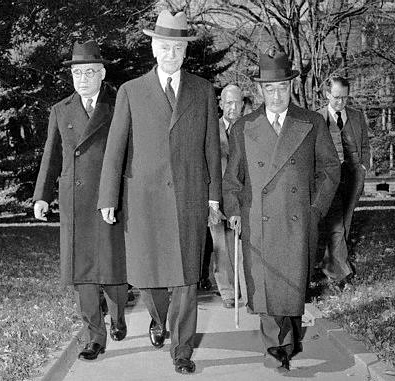
As the story goes, Kurusu failed to type up the Japanese ultimatum in time. However, Secretary of State Cordell Hull had already read the Purple intercept decoded the day before as did FDR. In essence, Hull had to look…surprised… when Kurusu handed him the ultimatum on December 7, 1941 albeit late. But at least, he was indeed angry.
We are now at war.
November 17, 1941. Cordell Hull, center, with Special Envoy Saburo Kurusu at right. Kurusu would be imprisoned at Hot Springs, NY until war’s end.
______________________________
The above is by no means any-wheres near a complete accounting of the events leading up to Pearl Harbor. And yes, there will be blanks in information flows, other communications that will show things countering the above, etc. But it does show how a government can disguise the truth or create lies for whatever purpose…even if it involved the deaths of human beings.
You can imagine what is going on today. Benghazi. The complete killing of SEAL Team Six. Fast and Furious. It goes on.
But some questions may be in order to perhaps counter what you believed in or were taught until now? Perhaps you can ask yourself:
Did FDR blind the commanders at Pearl Harbor?
Were Kimmel and Short set up to be the fall guys by denying them very critical intelligence or lead them to believe war was not imminent?
Was Pearl Harbor alerted to the location of the attacking Japanese fleet?
Points to ponder, indeed.
And to close this (long) story, a Hollywood movie depicted Kimmel and Short receiving a telegram of all things alerting them of the possible attack on Pearl Harbor – many hours after it was over. That is true. However, how it became a late telegram is another story all together. By all accounts, Chief of Staff George C. Marshall orchestrated a delicate ballet to delay even sending that telegram for the critical few last hours. In fact, he was difficult to nail down during the critical hours before the attack, arriving late to his office to go over the critical Ultimatum. Although known for near photographic memory, he claimed he was horseback riding but his aides testified after the war that he wasn’t. Further, his aides urged him to contact Pearl Harbor but delayed that decision by reading then re-reading the ultimatum and then asking superfluous questions about what method of communicating with Pearl would be faster, for example – several times. He chose not to use the “telephone” nor use a fast, secure Navy system but sent the warning through commercial wire, of all things. Even then, the warning language he dispatched was watered down.
____________________________
So what do you think?
What did FDR know? What do you think he did not know?
More to follow in Part 4 – key naval battles, code breaking and what really happened on the waters of the Pacific.
Henceforth, we would like to have you make reports concerning vessels along the following lines insofar as possible:
1. The waters (of Pearl Harbor) are to be divided roughly into five subareas (We have no objections to your abbreviating as much as you like.)
Area A. Waters between Ford Island and the Arsenal.
Area B. Waters adjacent to the Island south and west of Ford Island. (This area is on the opposite side of the Island from Area A.)
Area C. East Loch.
Area D. Middle Loch.
Area E. West Loch and the communication water routes.
2. With regard to warships and aircraft carriers, we would like to have you report on those at anchor (these are not so important) tied up at wharves, buoys and in docks. (Designate types and classes briefly. If possible we would like to have you make mention of the fact when there are two or more vessels alongside the same wharf.)”
There is nothing unusual about spies watching ship movements — but reporting precise whereabouts of ships in dock has only one implication. Charles Willoughby, Douglas MacArthur’s chief of intelligence and my dad’s big boss in the US 8th Army, later wrote that the “reports were on a grid system of the inner harbor with coordinate locations of American men of war … coordinate grid is the classical method for pinpoint target designation; our battleships had suddenly become targets.” This information was never sent to Kimmel or Short.
(2) Per his book, “The Secret War Against Hitler”.
(3) There are strategic evaluations asserting that not having US fighter aircraft sortied in great number against the invading Japanese fleet was “best” in the long run. Some armchair strategists claim that if the US carriers had “gone after” Nagumo’s fleet, indeed, our two vital carriers and her invaluable pilots would have been sunk, never to be recovered. That, however, is another story.
(4) The Hewitt Report, page 474.
(5) “Day of Deceit”, page 209.
(6) There is some bickering between opposing viewpoints as to the validity of this point. After the war, Japan stated it never issued such a broadcast. Other historians doubt Briggs’ testimony as there are no documents.
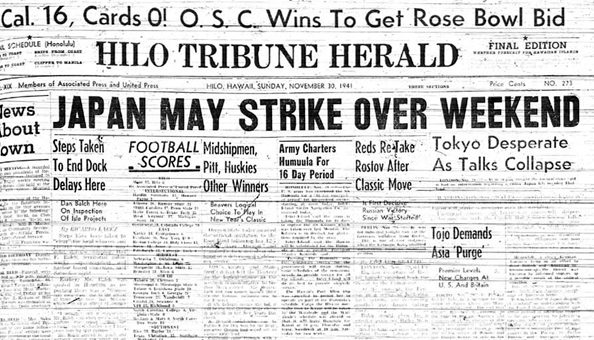
The above: a front page published one week BEFORE Pearl Harbor.
OK… So the newspaper was published on Hilo.
Well, then, how about a second front page? And from a different island this time – Oahu.
Pearl Harbor is on Oahu.
Honolulu Advertiser, November 31, 1941.
______________________________
To continue with “What Did FDR Know?”, let’s go over some once secret stuff, shall we?
And stuff that wasn’t so secret – like the headlines above. These NEWSPAPERS were in newsstands or tossed onto front lawns a WEEK before the attack on Pearl Harbor. How can that be when our textbooks and history tell us our Navy and Army were caught with their pants down?
It may be fascinating and perhaps eye opening for some of you. To some of you old hats in military history, not so eye opening.
This story will be centered on “MAGIC”, the cover name given to the secret diplomatic messages sent between Japanese diplomats and intercepted.(¹)
MAGIC intercepts will be the foundation for this story and subsequent ones.
The Japanese diplomats sent message after message believing their code was secure.
They were wrong.
______________________________
But first, some background on Pearl Harbor itself. It’s important in your quest to conclude on “What Did FDR Know?”
Adm. Richardson
Before December 7, 1941 and as we read in Part I of this series, did you know the Pacific Fleet was based in San Diego? The powers to be moved the fleet from San Diego to Pearl Harbor. Even the decision to move the Pacific Fleet to Pearl Harbor was suspect at that time. And have you thought about who was commanding the fleet before the hapless Admiral Husband Kimmel at Pearl Harbor?
Admiral J. O. Richardson was Commander in Chief, CINCPAC as of January 1940. Per the “Final Secret of Pearl Harbor”, Richardson was the foremost expert on Japan and studied ad finitum Pacific naval warfare and mostly, of Japanese naval strategies. He also knew well of Japan’s pattern of secret attacks.
Richardson disagreed with FDR’s opinion that basing the Pacific Fleet at Pearl Harbor was indispensable towards protecting American interests. Richardson stoutly disagreed and said, “I came away with the impression that, despite his spoken word, the President was fully determined to put the United States into the war if Great Britain could hold out until he was reelected.”
He asserted that Pearl Harbor would be a “… g_d d_mned mousetrap”. His belief was the fleet should remain on the West Coast in San Diego; out at Pearl Harbor, the fleet would be a strategic target for any Japanese surprise attack which he correctly foresaw. His opinion was because not only did Pearl Harbor lack adequate fuel dumps and repair facilities, the Fleet lacked sufficient personnel and the waters around Pearl were unsuitable for training. The fleet would need to return to San Diego and the like for such purposes.
Those who chose to ignore Richardson’s educated opinion did so by saying Pearl’s shallow harbor would preclude torpedo plane attacks amongst other things.
Adm. Kimmel
Richardson asserted too strongly. Although Richardson was highly qualified militarily, FDR removed him from command on January 19, 1941. (Similar events are taking place notionally even today; about 200 top military commanders have been removed or forced out by the current Adminstration.) FDR replaced Richardson with the more amenable Admiral Kimmel. He was far down the list of able commanders but was still selected by FDR to run the Pacific Fleet. While he somewhat shared Richardson’s belief, he was obedient as FDR expected. Kimmel also wrongly assumed he would be “kept in the loop” by FDR insofar as military necessities, including intel. Was he expendable career-wise?
…and that is how Kimmel ended up in command of the Pacific Fleet on December 7, 1941.
__________________________
This is a copy of the actual PURPLE message and is the first part of the 14-part message which was delivered by the Japanese to the US Government on December 7, 1941 – late.
BACKGROUND ON JAPANESE CODES
The Japanese military, just like the US military, had “secret codes” as did diplomats. For the purposes of this blog, we will concentrate on two groups of code: the Imperial Japanese Navy’s code (JN-25) and of the Japanese Foreign Office (code named “Purple”).
Talking about Communications Intelligence, or “COMINT”, would take a number of blogs; indeed, entire books and papers are written about COMINT during this time. For purposes of this blog, allow me to say COMINT is the acronym covering the analysis and usage of an enemy’s radio communications. Codes are when words are replaced by groups of letters or digits and are usually manual. A cipher, however, is the replacement of individual letters or groups of letters according to a plan; it is much more complex and are based on machines.
During this time, US COMINT was somewhat loosely organized, largely due to the rivalry between the US Navy and Army.
However, the cover name “MAGIC” was given to the intelligence obtained by both services involving the Japanese Foreign Ministry radio messages. While at the embassy level, great amounts of military information – and espionage – was disclosed in these secret messages and were therefore at the disposal of the US Government and military.
Imperial Japanese Navy JN-25
The US Navy began its covert intelligence gathering in the early ’20s when they actually broke into the Japanese Consulate in NYC and copied the secret Japanese code in use at that time. By 1926, the US Navy had broken the Japanese navy’s “Flag Officer’s Code”. The Imperial Japanese Navy at that time conducted fleet maneuvers about every three years; they would send coded messages throughout the maneuvers. The US Navy, by virtue of having broken the Flag Officer’s Code, easily listened in on them.
Their “listening in” on the Japanese fleet was so extensive that the US Navy knew of the capabilities of the Japanese warships. The US Navy knew the speeds, armaments, designs, etc., of the Japanese warships, so much so that the US Navy made improvements to their own warships to counter them.
During this period, the US Navy established a small group within the Office of Naval Communications called “OP-20-G”. It was formed without extensive knowledge of the US Army as infighting was common. The same was true for the Japanese military. Think of the Army-Navy rivalry in football – just grow it tremendously.
While the Japanese navy changed their code along the way, the OP-20-G had little difficulty breaking those, too… until late in 1940. Knowing they were headed to war with the US, the Japanese navy prudently introduced an entirely new code, the JN-25. It was much, much more complex than its predecessor. It proved difficult to crack but they had made progress when… the Japanese navy once again made amendments to JN-25 immediately before the attack on Pearl Harbor.
The US Navy, therefore, was pretty much “blind” intel-wise for pretty much a week before Pearl Harbor. It would not be broken until March 13, 1942.
But there was another group of cryptanalysts… an ace in the hole.
__________________________________
“Purple”
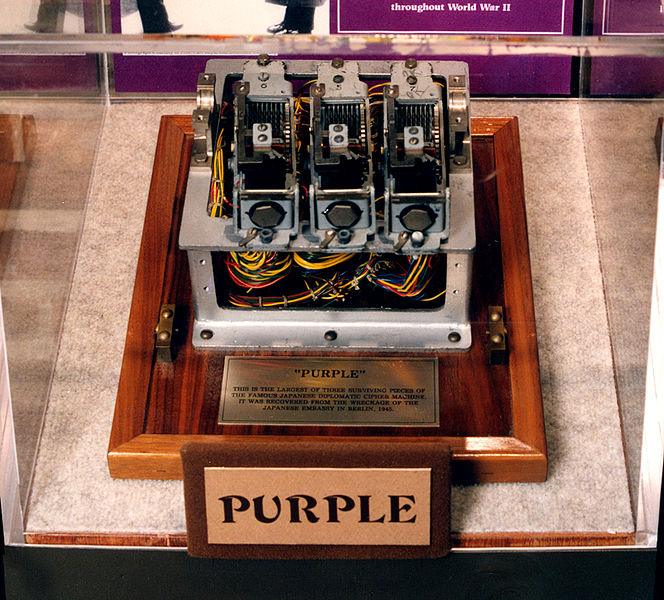
As the Purple machines were destroyed by the Japanese, this is the only surviving section of an actual Purple machine. National Archives
Alongside OP-20-G, the US Army’s cryptanalysis group called “Signal Intelligence Service”, or SIS, focused their energies on the Japanese diplomatic code. The group was headed up by William F. Friedman; he was very successful in designing our own encrypted codes.
Japanese diplomats (NOT military commanders) communicated with each other using an existing code designed in 1932; the US cryptanalysts called this code “Red”.(²) In 1937, the diplomats began using a newer, more complex code; the US referred to this code as “Purple”. In total, there were fourteen codes used by the Japanese diplomats; two of these were of the most value, Purple and “J-19”. Purple was used at the embassy level; J-19 was used at the consular level. Both were machine crypts.
The Purple machine, built from readily available parts. It supposedly cost $684.65. Eight were made. National Archives.
In September 1939, the “unbreakable” Purple code, in the defective thinking of the Japanese, was broken; a key contributor to Friedman breaking Purple was that the Japanese had sent the same message using BOTH Red and Purple codes, a huge blunder in the cryptanalysis arena. In eighteen months, the SIS, headed up by Friedman, cracked the code(³). They even BUILT an analog machine from a blank chalkboard which quickly deciphered the “secret” messages. (The code was so complex that the machine contained 25 connections, which could be arranged 6 pairs of connections, yielding over 70,000,000,000,000 possible arrangements which would determine the method of encryption.) This was an AMAZING feat to have built a deciphering machine since SIS had not even seen the Japanese one. Remember, this was 1938. Nevertheless, these intense eighteen months landed Friedman in the hospital for four months from exhaustion and emotional strain.
With Purple broken, the US was able to immediately decipher all highly secret messages between all top level members of the Japanese diplomats located worldwide… and most importantly, without them knowing. Given the originators of the messages, they had nearly indisputable validity. The reach of MAGIC extended to the European Theater of war as well as briefly mentioned in Part I.
These diplomatic communications also clearly indicated espionage was taking place on the west coast of the United States.
Part 3 and 4 will show the contents of MAGIC intercepts so that you can answer on your own, “What did FDR know?”
(¹) Unbelievably, Secretary of State Stimson was definitely upset when he learned we were intercepting messages. He championed the statement, “Gentlemen, do not read each others mail.” At the same time, consider the Snowden/NSA “scandals” of today.
(²) Ironically, Hitler had loved Baron Oshima so much he allowed Oshima to purchase a commercial version of Nazi Germany’s famous Enigma machine. The machine used for Red was based on this Enigma construct.
(³) While Friedman was the man burdened with the responsibility of deciphering PURPLE, it is acknowledged that a man named Frank B. Rowlett was the man who actually broke the code.
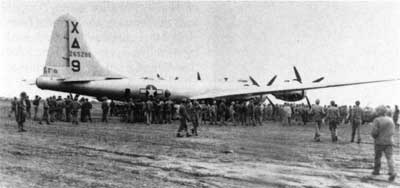
Sixty-nine years ago today, the B-29 Superfortress “Dinah Mite” made the first emergency landing on Iwo Jima. The battle for the tiny sulfur island was still raging as she landed.
7,000 young US Marines and 21,000 young Japanese soldiers died violent deaths for this tiny sulfur island.
(Note: Combat was still going on the left side of the makeshift runway as they were landing. Although the B-29 was repaired and left the same day, she returned a month later for another emergency landing. She was so heavily damaged that Dinah Might was abandoned.)
Imagine being a Marine. You’re in Afghanistan. You see your buddies getting blown up by the cowardly enemy’s IED or killed after an ambush. Then, after a bitter, maniacal all-out war, their religious leader capitulates.
Now, suddenly, you are standing out in the desert, outside of Fallujah, waiting to go in as part of the “occupying force”. Your feelings and emotions are going amok – anger coupled with fear of the unknown… You will be surrounded by the enemy who also fought the exact same bitter war against you.
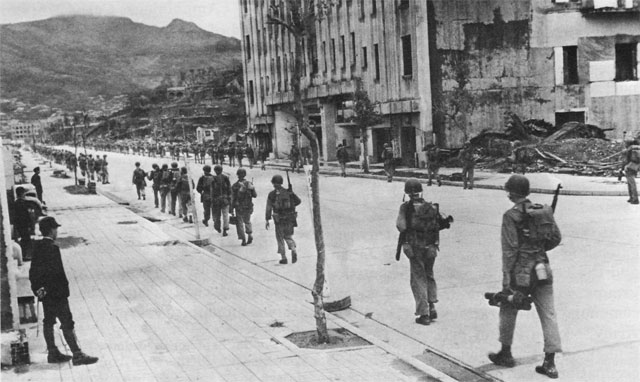
US 26th Marines marching into Sasebo, Japan – August 1945. Notice the Japanese standing to the left and the general absence of civilians.
Now… imagine you are a young Marine on a troop ship off the Japanese coast. It is August 30, 1945. A few weeks earlier, you became acquainted with the term atomic bomb. The Emperor of Japan just capitulated.
You are to go ashore onto the Japanese homeland. But in this case, you are not wading ashore to occupy a city. You are wading ashore to occupy an entire country.
_______________________
As we now know, the initial “invasion” of Japan by Allied forces ended up being entirely peaceful; no one was killed. Perhaps there was a small incident or two, but I have not read anything to indicate a single shot was fired. How could that be? How could hundreds of thousands of Marines, soldiers and sailors have stormed ashore – under an assault mindset – onto a homeland populated with maniacal military and millions of civilians – and not erupt in combat?
Per a report of the US Army’s 98th Infantry Division dated December 20, 1945:
“The mission assigned the Division was participation in the occupation of Japan; however, due to uncertainty as to the attitude of the people, the real intentions of the Japanese army, and the possibility of treachery or sabotage, the Division was directed to be combat loaded and prepared for any eventuality. Thus planning for the occupation of Japan was based upon an assault landing rather than an administrative movement…”
There is no single answer. The peaceful invasion was the result of hundreds of contributing influences.
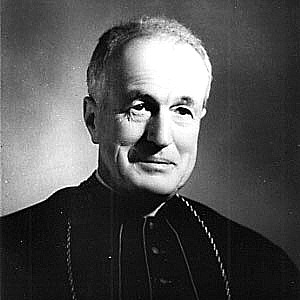
One came from Father Patrick Byrne, a Catholic priest in a country dominated by Buddhism.
Father Patrick Byrne. He was elevated to Bishop prior to his death.
Father Byrne had been sent to Kyoto in 1935 to set up a mission. As he was respectful of the peoples, he was put under house arrest (confinement) when war broke out. Of course, it was very harsh. His only companions were a cat and a parrot. Food was poor and scarce, just like it was for the unfortunate civilians.
Per “Escape from Manchuria” by Paul K. Maruyama (USAF, Ret.), he emphasizes the importance of the role fulfilled by Father Byrne immediately after the Emperor broadcast his surrender. Although in very poor health, Father Byrne with the aid of a newspaper reporter and a Father Furuya, hurriedly put together a radio broadcast intended for TWO audiences: (1) one for the Japanese homeland and (2) one for the “invading” Allied forces.
As hordes of civilians were escaping to the countryside, getting from Kyoto to Tokyo in the few available trains was hard but after 15 hours, he made it being escorted by police. He then recorded his speech on or about August 20, 1945, which was re-broadcast many times via radio and shortwave…to the Japanese people and to the countless number of Allied occupying forces staging off-shore.
His radio broadcast:
“The war is over. What can I say first of all to the Japanese people whom I have loved and who love me as a brother for more than 10 years? I share their grief when the Emperor spoke to them and told them that they had fought a good fight but now he wanted them to give up the war and turn to peace. I, an American, speak to you Japanese in the name of those soldiers about to enter your land to assure you that you need to have no fear. They are not coming to the shores as invaders, with tanks, bayonets and bullets, but merely as representatives of their country, taking occupation of Japan to help you once more to reconstruct and build on the new foundation of democracy. The eyes of the world are on this occupying army. You may rest assured they come peaceably.
What can I say to you, the soldiers of my native land, regarding these people? Their feelings will naturally be mixed with emotions as you look up on the victors entering their land, where the homes have been destroyed or burned, their sons and fathers of families killed or maimed and wounded. It is only natural that you look with anger, fear, mistrust, and frustration at your arrival. Should you add to their present feelings by any any ruthless attacks upon the women and young people in this land, I am afraid of what the consequences might be. So I urge you to cooperate with me as I assure the Japanese people that you will commit no degradations, that you would have goodwill and charity in trying to realize what these people, the real victims of the war, have suffered and will not do anything to add to the pain they endure.
You are on trial before the eyes of the world. Any violence or immorality, any unjust or criminal act on your part will not only be a stain on your character but on that the nation you represent.
I believe I may assure you people of Japan that the army chaplains would do everything they can to remind our soldiers of their moral responsibility. The Military Police, too, will carefully protect your interests and will arrest anyone found violating the law. If there seems to be any violation of this protection which is your due, I have been assured by the Archbishop of Tokyo that he will appeal to the Holy Father in Rome who in turn will make known to the whole world by radio and the press any form of injustice. Freedom of the press in the United States will cooperate so that such news will not be suppressed.
I am not afraid because I know these Americans and trust them, but I can understand the fears of the Japanese people. Soldiers coming into Japan, I strongly urge you to come with kind hearts and be good friends of these people. You have fought hard and want a victory. I know you want to enjoy it and want to be proud of it, but please try to understand the distress of the Japanese and make your behavior calm and warm as representatives of a great nation. Perhaps after two or three months, they will begin to understand you better, and then I think there will come an intimate friendship between you and them.”
________________________
The Allied Forces – with the words of Father Bryne questioned in many soldiers’ minds as to intent – stormed ashore on August 30, 1945 on many beaches all around Japan. Once ashore, they were largely astonished to learn over the next few hours the truth in Father Byrne’s words.
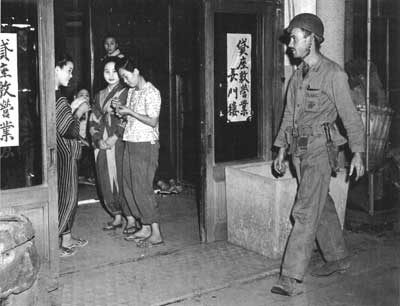
A Marine walks past young Japanese women on a routine patrol. Thousands of vials of poison were distributed to thousands of young girls in preparation for the “invasion”. (USMC Photo)
________________________
According to “Escape from Manchuria”, Father Byrne made a recovery back in the United States after the war and was elevated to Bishop when he was sent to Korea in 1947. In 1950, he was captured by the North Koreans and once again was subjected to horrifying treatment and captivity before being put on the Korean War equivalent of the Bataan Death March.
He fell ill during the march in freezing conditions and when he could not continue, he was taken to a shack. There, on a frozen floor and without any warmth, he passed away on November 20, 1950 at a place called Ha Chang Ri, North Korea.
(Note: Edited Feb. 2, 2014. For some reason, the photo of Father Patrick Bryne had been removed.)
Marines escort Saipan civilians. It was estimated that 22,000 civilians died, most by suicide. It was traumatic for our young Marines to witness, too.
There is personal pain in a full-fledged war that only those who were fully involved can feel. Those feelings will differ by how that person was involved.
We somewhat understand through survivors that a soldier, airman, sailor or Marine near or on the front lines will have an intimate kinship with instantaneous fear. They know combat is immediate, unfair, cruel, and barbaric. But hopefully, they know their families and country are behind them – perhaps giving them the edge to overcome their fears and survive.
And this is true for the enemy as well. As I become more knowledgeable on the Pacific Theater during WWII, I have learned the young Japanese combatants had the same fears (please see “There’s No Toilet Paper in the Jungle of Burma“). But unlike the Allied forces who had millions of tons of war materiel, food and medical care backing them, the Japanese military fell way short.
But what about the Japanese home front? Have you paused to ponder that? Were their countrymen any different from us in their ways of supporting their young men dying by the hundreds of thousands?
I never did myself until recently.
____________________________
I met Rob on the internet through his facebook page, “WWII U.S. Capture Photos“. He focuses on the spoils of war, bringing back to the forefront the war souvenirs seized by military personnel.
He acquired a letter from a now elderly Marine who was fighting on Saipan in mid-1944. He had told Rob that he removed it from a Japanese corpse.
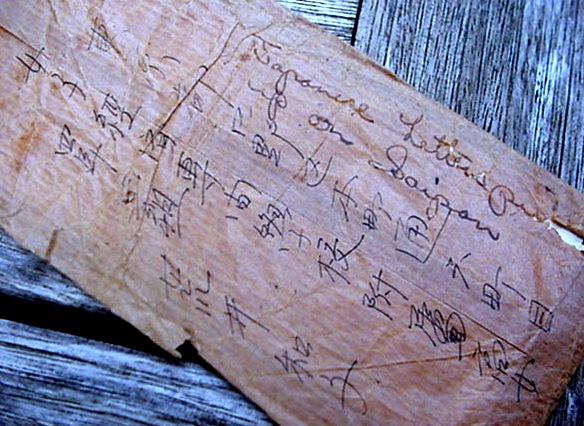
The now tattered envelope is anonymously addressed to”海軍の勇士様” or “Dear Courageous Sailor”.
Apparently, this letter had ended up to haunt the Marine who was at time very young and fighting for his life on Saipan. The once young Marine is pictured in the center of this photo:
The young Marine who seized this letter is pictured in the middle. For an original image, please click on the picture.
Rob asked if my father could read the letter and translate it.
The letter was haunting Rob, too.
______________________________
My friend and I went to see Dad in October 2013. Below, Dad is reading the letter taken by the then young Marine from Saipan in 1944.
The backside of the envelope is below showing the sender’s name and return address. The image was enhanced to bring out the writing. The Marine had written “Japanese letter picked up on Saipan”.
The letter was anonymously addressed and sent by a young girl named “Kazuko Arai (荒井和子)”. The return address shows she was a student of a girl’s economics school in Tokyo, Nakano City, town of Honcho (東京都中野区本町通六丁目女子経済専門学校 – 附属高女). While I believe the school may have been at least damaged by the fire bombings, I may have located the successor school. It is called “Nitobe Bunka Gakuen” with its current address as 東京都中野区本町6-38-1. (While I did send a blind email of inquiry to them in my far from perfect Japanese, there has been no response. I doubt that there will be given the Japanese culture.)
While the scans were of low resolution, the two pages of the letter are as follows:
Because my father will be 95 next month, it was difficult to keep him on course. In spite of reminding him to just read the letter in Japanese (I would understand most of it), he continually tried to translate its sentences into English. Perhaps somewhere in his buried conscious, he is doing as he was trained by the US Army’s Military Intelligence Service. Admittedly, there were about a half-dozen characters that were just tough to make out due to creases and lack of clarity. And he wasn’t able to figure out one paragraph in particular…but I did! Got one on my old man.
夏も過ぎさり戰局は日一日と厳しく今こそ物心はおらか私どもう総べてを国家に捧げつくすべきと秋となりました。
As summer passes and turns into autumn, the war situation is getting more severe and now we must physically and mentally dedicate ourselves for our country.
海上での勇士様にはお変わりなく軍務に御精勵(励)の事を存じます。
As a courageous sailor out at sea, I know your unwavering fighting spirit continues.
大東亜の全戦線に於いては、今や彼我の攻防戦は、まことに熾烈極めて居るという事等、すでに日々の報道により私共の耳に刻々傳えられてをります。
Per our (radio) broadcasts, we hear that the intensity of battle and such has increased for both sides at all the front lines in the Far East Asia theater of war.
A radio broadcast announced that Lt. General Yasuyo Yamasaki and 2,000 of his garrison died honorably defending an island in the North Sea. All we could do was bow our heads (in honor) and swallow our grief (voices).
– – – – – – – – – – – – – – – – – –
[ NOTE: In researching this report, I discovered that Lt. General Yamasaki was assigned to defend the island of Attu. He was killed with his remaining garrison in a banzai charge on May 29, 1943. Please click on the following for more information:
今私達は本当に容易ならぬ戰争の只中におかれている事を強く感じました。
Now, with the daily war situation, we strongly feel as if we are in the midst of the battle and realize (winning) will not be easy.
学校ではもうじき秋の軍動會が開かれますので一生懸命身体をきたへてをります。
Soon, it will be time for the autumn (military) athletic meet; I will train hard to strengthen my physique.
断じて米英女性には贁けない覧唔です。
We resolve to not lose against the American and English women.
ではどうぞう勇士様くれぐれ御身体御大事に大切にお国の為しっかり戰って下さい。御武軍を祈り致します。
So please, courageous sailor, sincerely take good care of yourself and fight hard. I pray for your fighting spirit.
さよなら
Good bye.
_____________________
So now we realize that Japan also had a “home front”.
Perhaps they did not have a “Rosie the Riveter” like we did.
But the Japanese homeland did endure pain, fear and sorrow as we did…and depression. They were not the inhuman creatures depicted on war posters and in propaganda of that time. And thanks to Rob and the young Marine, we see a letter written in Tokyo by a high school girl named Kazuko Arai in the autumn of 1943 and simply addressed to an anonymous sailor. Kiyoshi also believes that the watermarked stationery was of high quality and issued out of military stock for this purpose.
Sadly, we do not know the name of the sailor from whose corpse the letter was removed from, nor do we know if Ms. Arai survived the war and raised a family.
Picture taken at Kazuko’s school pre-war.
Things like this sort aren’t evident in our (current) history textbooks. Now, WWII has pretty much been erased from school textbooks altogether, replaced by “politically correct” topics…that there was simply a war between Japan and America. A disgrace to those who endured or died.
In closing, there is a diary written by a young Japanese doctor up to the time of the final banzai charge on Attu. He was one of the attackers who was killed. As mentioned in my other posts about the Military Intelligence Service, Japanese military forces were allowed to write diaries. When these diaries were taken from the battlefield, the Japanese-Americans (Nisei) soldiers were able to read then extract valuable intel on the enemy – both for their battle front and their homeland. In his last entry, the young doctor writes a goodbye to his wife and two small children back home.
It’s not just Obama approving a paltry 1% pay increase for our military… It’s that a military man or woman can’t support his or her family. Paltry pay. And it keeps getting worse.
Please view the related short news broadcast and news print by clicking on the image below… Hear the extent of the horrendous impact on our military and veterans – AND THEIR FAMILIES.
And remember, they got SEQUESTERED earlier this year. More cuts in household income.
You don’t need to be accurate to get your point across.
Congress people pay themselves somewheres over $150,000 a year – certainly no ILLICIT income, of course – and don’t get shot at or maimed. They take LONG recesses (i.e., vacations), too.
And Obama sends these poor guys and gals to get shot at? At less than a $20,000 salary? (And he takes vacations to Hawai’i costing us MILLIONS each time.)
But wounded or disabled vets? THEY should get lifetime pay.















 Masako and Spam Musubi