Category Archives: World War II

Combat! – Part 1


c-10-645

Back in the very early 1960’s, my dad picked up a used B&W TV set from an appliance store’s outdoor parking lot sale at Atlantic Square in Monterey Park, CA.  It was loaded into the cavernous trunk of his 1955 Ford Victoria coupe, also bought (really) used.  He probably should have spent the money on repairing the car instead of buying that TV.  Anyways, the TV was our first one, dust covered vacuum tubes and all.  At least it turned on.

Well, mom commandeered it.  Don’t ask me why.  After all, she didn’t speak much English at all having come here just a few years earlier.

While I was able to watch The Mouseketeers, Sheriff John and Engineer Bill in the morning, the night belonged to mom.  She decided what to watch.  I don’t recall dad ever saying anything either, but then, he never did.  (ps Sheriff John read off my name during his show on my birthday.  He even pronounced it correctly.)

I remember some of “her” shows.

combat 06

“Sea Hunt”.  She loved seeing Lloyd Bridges in his swimming trunks.  (He did enlist in the Coast Guard when WWII started.)

“Rawhide”.

“The Ed Sullivan Show”.

“Have Gun – Will Travel”.

“The Lucy Show”… although I can’t figure out for the life of me how she could have laughed at the lines.  She couldn’t have possibly understood the English.  American humor is so different from that of Japan’s, too.  I guess she just laughed at her physical comedy and wacky faces.  (Another ps: I watched re-runs of the Lucy Show when I stayed in Japan for two years as a young adult.  You will be shocked to learn the lines were radically changed and replaced with dubbed Japanese which would be funny in their culture.)

Near the top of her list was the “Dean Martin Show”.  Of course, it was because of Dean Martin.  While he didn’t get into swimming trunks like Lloyd Bridges, man, she thought he was man’s equivalent of Marilyn Monroe.

But sadly for dad, the show at the top of mom’s list was…  Wait for it…  Combat!

“Combat!”?  How could that be?  How could she possibly want to watch a TV series based on a war Japan just brutally lost 15 short years earlier?  Her city of Tokyo was burned to the ground in 1945 by us Americans and she was hungry all the time.   Even grandma used to call the men of the US military occupying Japan as the “invaders” or “long legs”.  Dad, a Japanese-American, was one of the invaders but definitely sans the long legs.

Uniform
Dad on the left in his summer US 8th Army uniform with two of my cousins in Hiroshima (1948). By the way, dad had one more stripe than Sgt. Saunders.

Did she know what “Little John, take the point” or “Kirby, set up your BAR over there to provide cover” meant?  Of course not.

Well, if you haven’t guessed yet as to why she loved to watch Combat!…  it was because of…  Sgt. Saunders.

___________________________

Sgt. “Chip” Saunders.  He was played by Vic Morrow.  He outdid Dean Martin and Lloyd Bridges – and my dad – by far in her epitome of manliness department.  Hell, she couldn’t even pronounce his TV name correctly: SAN-DAZU is how she pronounced it with her Japanese pronunciation.  All she saw was testosterone.  Machismo.

combat 01
Sgt. Chip Saunders. Source unknown.

Even though I was young, I vaguely remember I felt kind of odd towards dad as every time we got together with her “Nisei” lady friends, mom would rant and rave of Saunders – all in Japanese – with dad next to her.  “Daddy kara chigatte San-dazu-san wa otokopokutte kakko ii!” or translated, “Unlike dad, Saunders is so manly, rugged and handsome.  He’s a man!”  I also recall her scolding at dad every now and then in the house or car to be more “manly”.

Poor dad.

Of course, there was co-star Lt. Gil Hanley, played by Rick Jason.  She noticed him too, of course, but all she felt about him was that he was “cute” like a teen movie star – not a man’s man.

combat 10
Lieutenant Hanley on Combat!, played by Rick Jason.  Source unknown.

The other regulars were:

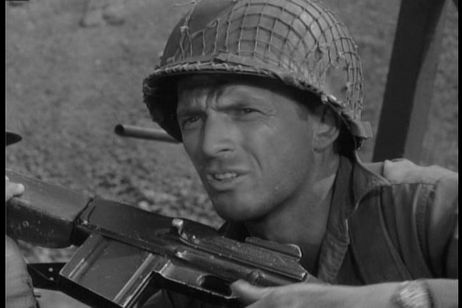
Pvt. William G. Kirby, who started the series with a M-1 Garand but eventually got his wish to man the BAR.  He was well played by Jack Hogan and was always getting yelled at for doing something lame-brain:
combat 11
Talkative and excitable PFC Kirby, manning his BAR, was played by Jack Hogan. Source unknown.

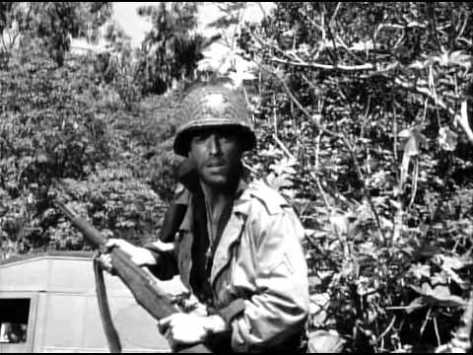
PFC Paul “Caje” LeMay was Saunders go-to man on patrol or in a firefight; he was played by Pierre Jalbert.  In the series, he is of Cajun heritage and comes from New Orleans where he spoke French fluently.  In real life, he was a Canadian skiing champ in his teens and was destined to ski in the Olympics.
combat 04
PFC Paul “Caje” LeMay. Source unknown.

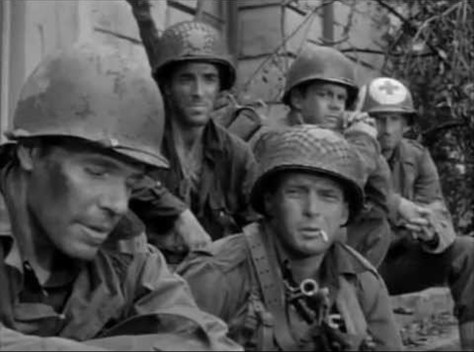
“Little John” rounded out the long playing cast members.  His TV name was a gag; he towered over everyone else being 6′ 6″ tall.  I don’t know if it was custom made but his standard issue GI helmet fit like a condom as it looked like a tiny beanie on his head.  His real name was Dick Peabody and he wrote a column later in life which I’ll mention later.  He often wrote about the “great times” they had while shooting the episodes.
comzbat 01
“Little John” at left, played by Dick Peabody. To his immediate right are Caje and Kirby.

_______________________________

The show was unique, even for today.  It did its best to convey the war from the GI Joe’s point of view.  Sure, the “kills” on the set were theatrical nor were the on-set explosions or artillery barrages real but it had a human streak throughout its run on TV.  It tried to convey what war was really like for the suffering civilians or the everyday soldier – well, as best it could do for TV.  Themes focused on fear, bravery, hatred, cowardice, heroism, pain and randomness of death.  Filthiness of being on the front lines without baths, crawling in mud, wading through streams with gear, protecting their buddies, killing with their bayonets and endless but deadly patrols.  As in real life, replacement soldiers were grocery clerks, dancers, used car salesmen, baseball players or worked on telephone lines.
comzbat 039
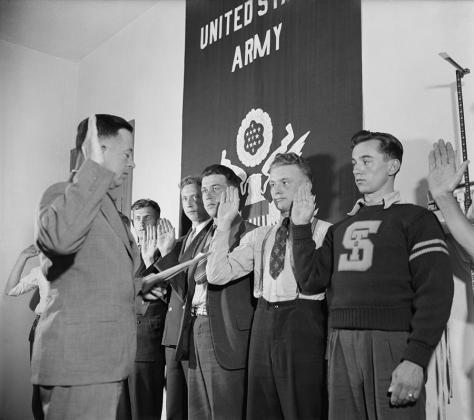
Induction. Source unknown.

One possible reason the show was able to convey the feelings of the everyday Joe so well was that all of these six regulars had served in the military, some during WWII itself.  “Kirby” and “Little John” served in the US Navy while “Hanley” served in the Army Air Corps (before it broke off from the US Army and became the US Air Force) during WWII.  “Caje” also served as a drill sergeant during WWII in Canada in an air training corps.  “Saunders” served in the US Navy in 1947.  It is unknown if any of them were subjected to combat.

Another bit of uniqueness was not only its early-for-its-time human interest story line but its script.  There really weren’t many spoken lines except for when it counted; just a lot of Army-based jargon otherwise but well researched.  But one funny bit of trivia at this time: one of the most oft said lines was, “Shut up, Kirby.”

comzbat 023
According to various articles, the men totally enjoyed “playing soldier” and getting paid for it. Here, they are actually crossing a stream.

Also adding to its TV land “realism” was that all chatter was in German between Nazi soldiers or in French between the local townspeople; there was no translation or sub-titling.  The Nazi uniforms were so well replicated by the costume folks that some Jews working at MGM’s cafeteria were upset when actors came in from the set wearing very authentic-looking Nazi uniforms (No political statement being made; just fact.)
comzbat 040
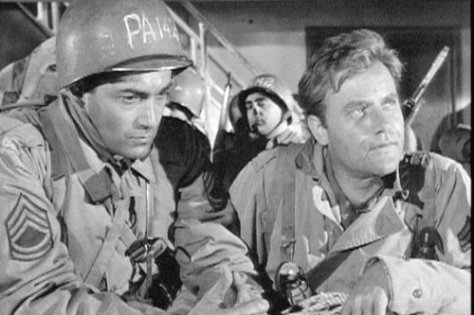
A scene from Episode One with “green” Hanley and combat-hardened Saunders on board a transport heading to Omaha Beach on D-Day. Note the chalk denoting “PA 142” on Hanley’s helmet (still a sergeant). They were so marked to indicate which craft the soldier was to board upon “going over the side”.

Its first episode aired on October 2, 1962, set in England a day before D-Day.  In this initial episode, both Saunders and Hanley were sergeants.  By the second episode, Hanley had gotten a battlefield promotion to lieutenant and issued his Garand M-1 Carbine.  Saunders will be issued his trademark Thompson .45 caliber machine gun.  There is a very interesting history behind who got what weapon.  Both of their helmets will change for the subsequent episodes and will become identified with them for the entire series.

Hollywood stars clamoring for guest star roles, filming schedules and behind the scenes trivia to come in Part 2.
comzbat 022
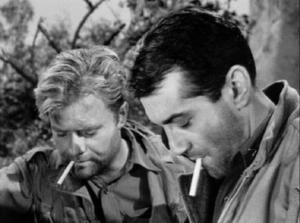
As with all real GI Joes in WWII, the trademark Lucky Strikes… filterless.


Ironman Naturally


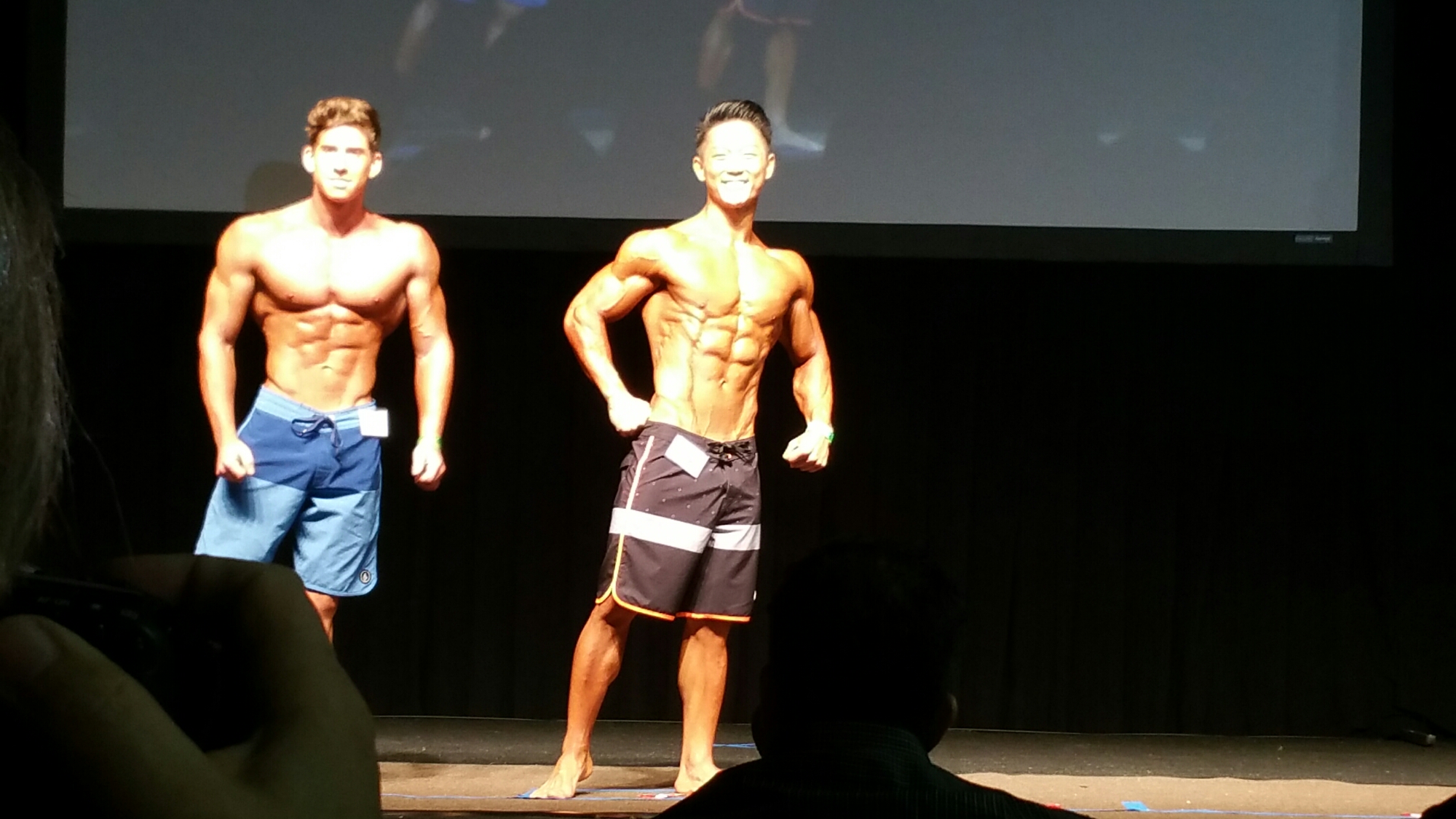
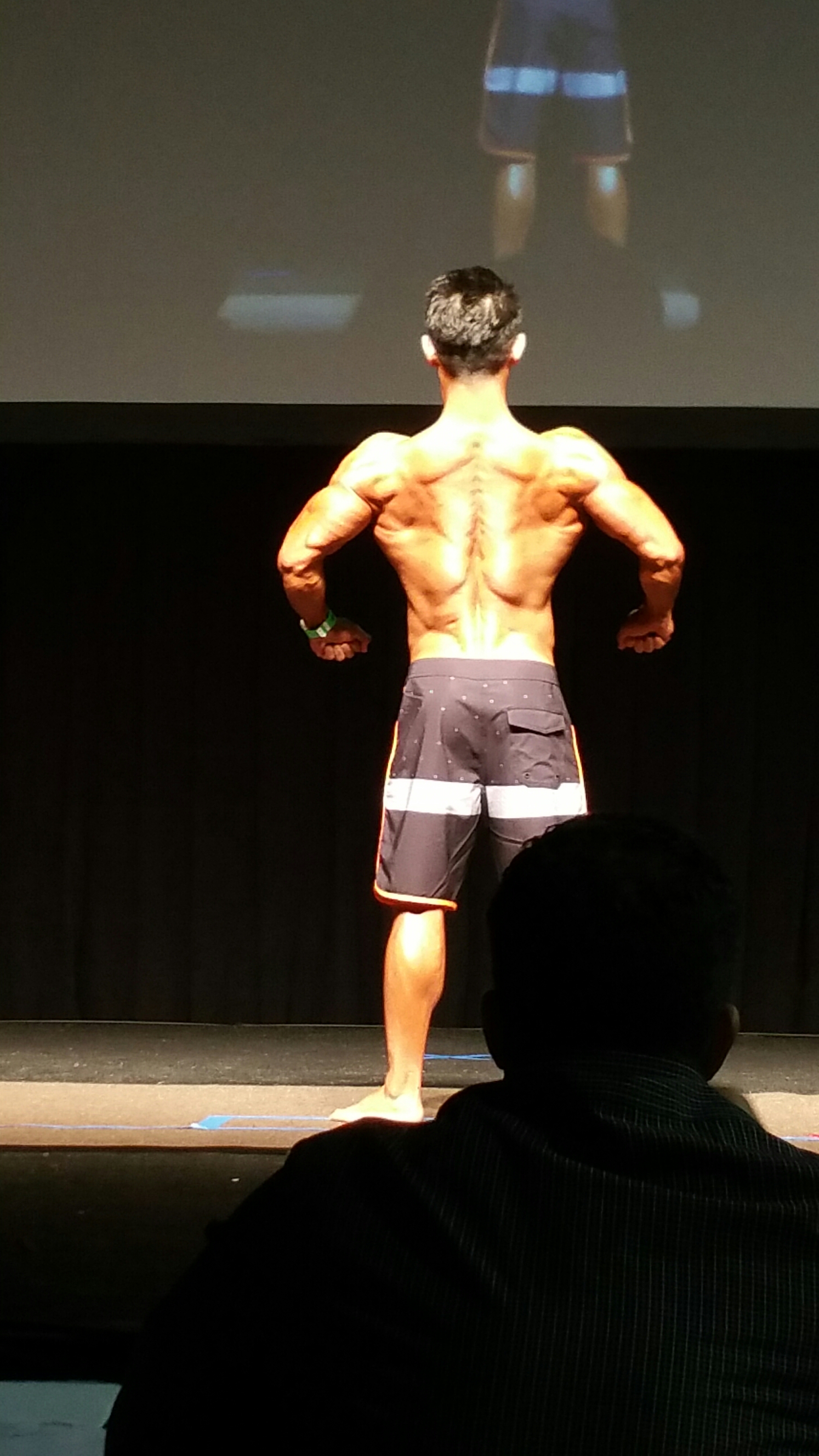
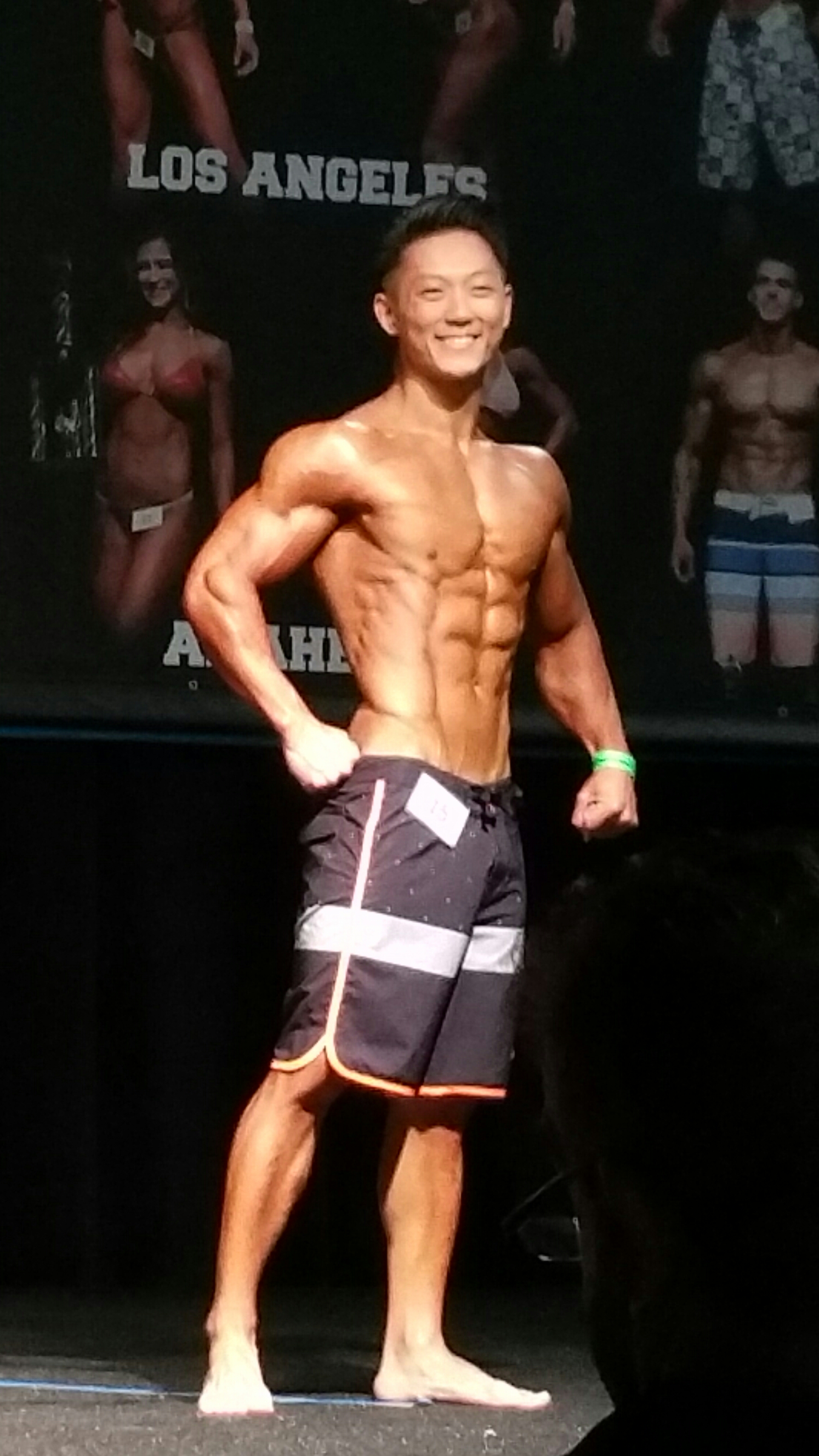
So my oldest son – who is pursuing a doctorate in physical therapy – competed today in his first body building competition here in LA. It was called “Ironman Naturally”.

image

image

image

image

I also think Dr. Lynn would have done very well here, too.  She would’ve run away with a trophy!  One of the female contestants:

image

My son trained hard for today! Now he looks exactly like I did 40 years ago… LOL. Not.

WWII – Packages from Home


mail1
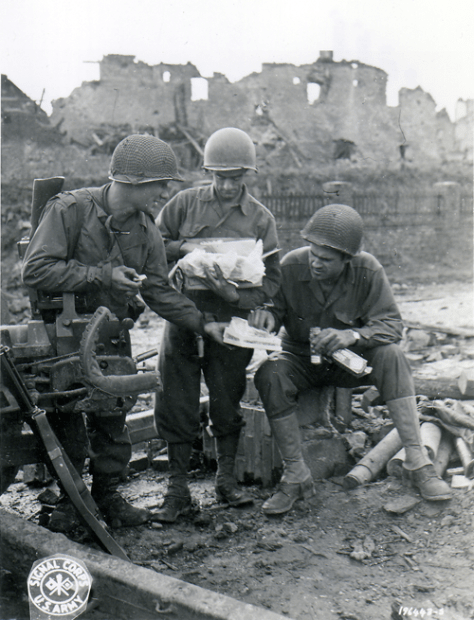
These Marines were fortunate to have mail call out in the Pacific during WWII. A package from home – with new socks perhaps being the ultimate gift – provided huge emotional uplifts.

During WWII, receiving a package from home was the ultimate morale booster for our boys in uniform.  These packages brought tremendous joy to the men, especially when they were near or at the front, subjected to the brutality and extremes of environments.

Upon experiencing the joy of receiving a parcel, very little could surpass finding the lingering scent of their girl’s perfume on a knitted muffler; candy and gum ranked up there, too.   Socks were also in high demand as socks wore out much more quickly than sweaters or mufflers and dry socks were essential necessities to ward off trench foot.  Indeed, trench foot¹ and frostbite took their toll on our boys in battle more than being wounded by bullets or shrapnel.

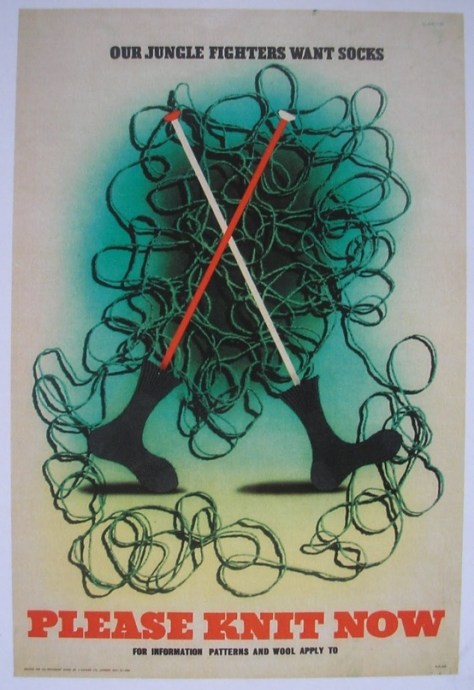
While machines produced millions, there were even “knitting parties” where women knitted socks, scarves, vests and “fingerless” mittens.  In fact, Eleanor Roosevelt just months before Pearl Harbor founded a “Knit for Defense” effort in the US.

knit 3

But within today’s capsule of electronic bliss, many of us civilians in all walks of life see no difficulty with a family trying to communicate with their loved one who is not at home because he/she is in uniform.

Cell phones.  GPS.  Email.  “Facetime”.  Skype.

Even packages from home are viewed as no big thing anymore by the general public.  They are taken for granted by many civilians because the packages leaving the front porch seem to be riding on a beacon radiating from a soldier’s open palms now – think FedEx.  Perhaps this could be one possible reason why so many Americans seem to feel gifts from home are “no big deal”.  They see our men in uniform as being as close as a laptop.  That is far from reality as are many TV shows.  They still long for home.

One thing hasn’t changed from World War II: the morale-boosting smile that erupted on a soldier’s face when he received a package from home.

____________________________________

Operation Gratitude

So what got me thinking about these now long-forgotten packages from home that brought so many smiles to GI Joes on a WWII battlefield?

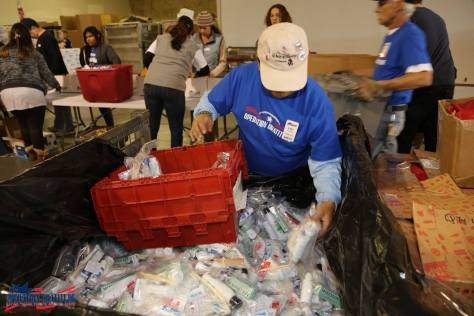
My oldest daughter Robyn spearheaded an effort with family and friends to bring together hundreds of donations to be sent anonymously to our military through the efforts of a non-profit organization called “Operation Gratitude“.  Among many other essentials, there were razors, hand wipes, sunscreen, foot powder, Chapstick and most importantly, letters from students thanking the unknown recipient for their service to our country.  In addition, Robyn purchased thousands of yards of “paracord“.  It had to first be cut in 7.5 foot lengths; then, the open ends have to be sealed with a small flame.  These were then hand braided into survival bracelets – 300 of them.

op grad 004
My oldest daughter applauding her three siblings on their effort to braid survival bracelets after Thanksgiving Dinner. A total of 300 were eventually made.  Survival bracelets can be quickly unraveled then used for many situations while deployed: bundling, strapping down equipment, securing netting… and in the worst scenario as a tourniquet.


op grad 006
My youngest son Jack the morning before heading off to volunteer for the day at Operation Gratitude. The items were donated by my oldest daughter, family and friends.


op grad 001
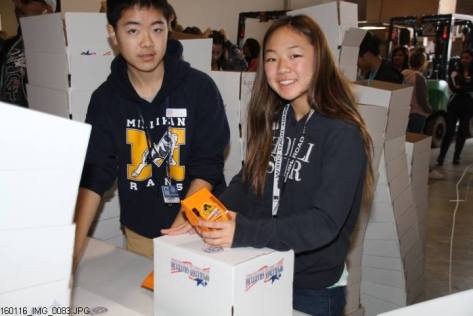
Jack and Brooke taping together boxes at Operation Gratitude. Jack kept count of the number of rolls of tape he used. With four rolls used, he taped together about 280 boxes. Photo from http://www.operationgratitude.com.


op grad 003
A volunteer is transferring bags of personal items donated by donors. These were then taken to the “assembly” line where volunteers stuffed Priority Mail boxes with them and other items. Photo from http://www.opeationgratitude.com.


op grad 002
There were HUNDREDS of volunteers this day. It was Operation Gratitude’s first assembly day at their new location in Chatsworth, CA. Photo from http://www.opeationgratitude.com.

Through their volunteers and generous donations from the public, Operation Gratitude has delivered over 1.4 million parcels so far!

These smiles make it all worth it, yes?

op grad 008

____________________________________

The Journey of a WWII Package

44 christmas pgk

During WWII, a package sent from home took weeks if not months for a soldier to get it…  Or in the worse possible scenario, the young man would never receive their package from home because they were either killed or missing as this photo below graphically shows.  It would exponentially worsen for the family as they would have likely received the infamous telegrams only to have the battered package marked “DECEASED” left at their doorstep many weeks later:

package decease
All of these packages – many for Christmas of 1944 – were returned as they were undeliverable. All are marked “Deceased” or “Missing”, visible if you enlarge the picture. I cannot imagine how the sender felt having the package being returned. National Archives.

The packages from home would make their way via ship.  For the European Theater of War and before D-Day, a number of supply ships were likely attacked or sunk by U-Boats.  After surviving the voyage and unloading at a European port (permanent or man-made like at Normandy), the packages, along with sacks of mail, would be transferred to trucks.

Europe did have mapped roads making delivery somewhat more certain but the trucks were subject to destruction via enemy air attacks, shelling or road mines.  I understand mail pieces were primarily sorted at battalion headquarters then filtered down to a company or OP level which could be moving in the course of battle.

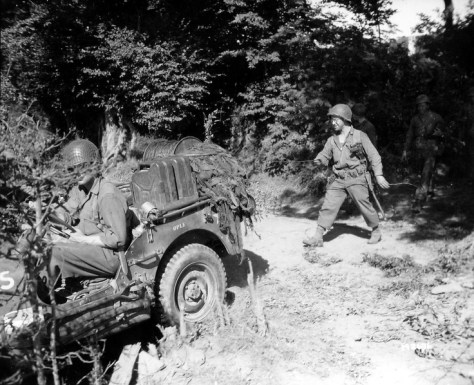
op grad 014 wire
These soldiers were lucky to be able to use a jeep to reel off phone line. My thought would be the area was pretty secure. Otherwise, foot soldiers would have to work through the combat zone and quietly lay down then cover up the phone lines. Signal Corps photo.

Making it to the individual soldier was not a sure thing.  The package would have to make its way to the platoon then to the individual soldier’s last known position.  Perhaps there was a makeshift “post office” but if the front was fluid, their location would be a question mark.  Communication with a unit on the move was by field radio with an average range of five miles or so until actual phone lines could be reeled off (above).

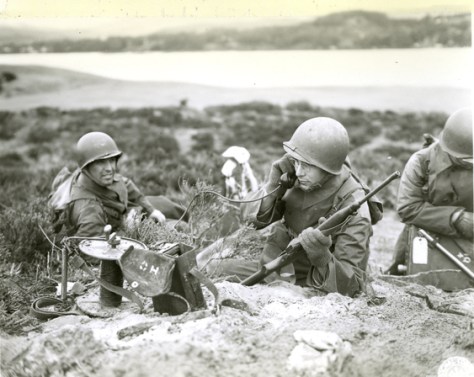
op grad field phone
Wire reel can be seen next to field radio. Signal Corps photo.
op grad 009 phone
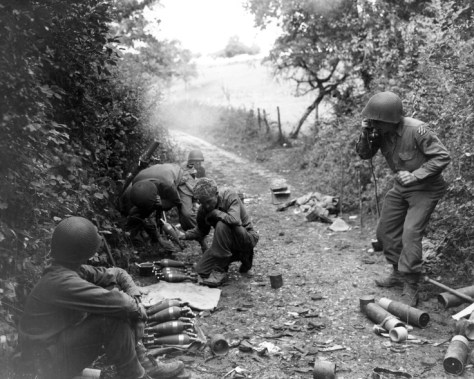
A corporal receives firing orders via a field phone for a mortar crew. National Archives.
w t
When close to or in a combat zone, walkie-talkies with a maximum range of about a mile (under ideal conditions) were used to communicate with units. Signal Corps photo.

It was MUCH less certain for Marines serving on those islands scattered about in the Pacific.  For example, the package may never get there as a ship would be sunk or damaged, would rot in humid cargo holds exceeding 130F, or the Marine just couldn’t be located because they kept moving, especially if in combat.  Communication was a wild card and without it, finding the Marine’s location was difficult.

Op grad Guadalcanal Lunga_River
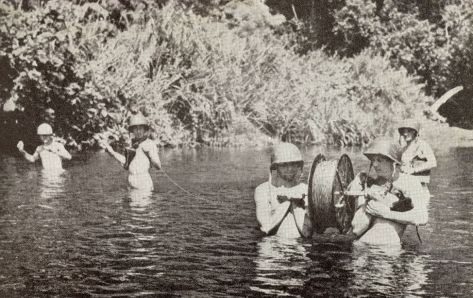
Marines ford a river, laying down phone wire on Guadalcanal, 1943. Imagine the luxury of cell phones in combat today. USMC photo.

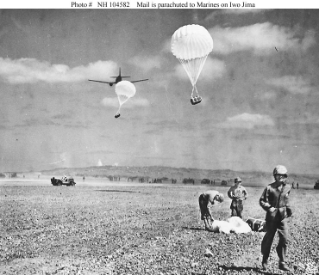
On these sweltering Pacific islands and unlike Europe, few or no roads were the norm until the engineers came ashore to build them.  Mud greeted the Marines.  Any dirt road became mud rivers and muddy hills made it worse.  When mail did reach their island, the mail drops on many an occasion were truly drops – they were pushed out of cargo planes with parachutes at low altitude:

iwo mail 2

In some Pacific battles, mail would be delayed as there were no “front lines” on these islands for some time.  Iwo Jima was a typical one as the enemy for the most part were hidden underground and would pop up out of holes and caves to kill.

op grad iwo
A Marine tries to communicate with HQ using a field phone while hunkering down for dear life in a foxhole. Communication woes made for difficulty in mail delivery.  USMC photo.


USMC 5th Tin
A long awaited mail call for Marines on Tinian, 1944. USMC photo.

_______________________________

“CARE” Packages

Today, we frequently call packages sent either from home or from efforts like Operation Gratitude “CARE packages”.

red c
A sample WWII Red Cross package, sent to POW’s in German POW camps. Source unknown.

During WWII, the American Red Cross spearheaded monumental efforts (below) to produce Prisoner of War packages.  They were not called “CARE” packages as of yet.

red cr 1
National Archives

More than 27 million parcels were prepared by over 13,000 volunteers and shipped by the American Red Cross to the International Red Cross Committee in Geneva, Switzerland, for distribution in the POW camps.

These packages may have included:

op grad 015 package 10
The sample contents of a Red Cross Prisoner of War Package No. 10. Source unknown.

Prisoners held by the Germans did better than those in the Pacific.  While many packages were intercepted by Nazis and used for their own use, the Japanese provided almost no cooperation to the International Red Cross efforts.  In some cases, the prisoners in German POW camps would keep only the cigarettes and chocolate then “volunteer” the rest of the food articles to the Nazi camp cooks.

However, the actual term of “CARE Package” did not pertain to these life-saving parcels.  Instead, “an organization called CARE was founded in 1945, when 22 American organizations came together to rush lifesaving CARE Packages to survivors of World War II. Thousands of Americans, including President Harry S. Truman, contributed to the effort. On May 11, 1946, the first 20,000 packages reached the battered port of Le Havre, France.”²

_______________________________

All in all, Operation Gratitude fulfills both roles: the precious package from home combined with the CARE package concept.  With the economy the way it is and coupled with the unacceptably low budget for our military, I feel these packages do bring smiles to our men and women in uniform.  It tells them that in spite of how the media chooses to report on mostly negative incidents involving them, it shows millions of us support them 100%.

A crisp salute to Operation Gratitude, my daughter Robyn and of course, our men and women wearing our country’s uniforms so proudly and valiantly.

op grad 020
The GI in the driver’s seat shares his cherished Christmas package from home. National Archives.


NOTES:

  1. During WWII, there were about 60,000 trench foot casualties requiring removal from the battlefield.  85% of these casualties were from rifle companies.  Only about 15% made it back to the field.
  2. Source: CARE
Americans


image

Simple.
U.S. Politics: It’s an ‘American’ thing


Well written words addressing my disdain for our “paid for life with bebefits” politicians.

Iwo Jima Flag Raising(s) – the MOVIE (Part 1)


In reflection of the upcoming 240th birthday of our United States Marine Corps (Nov. 10) and to pay homage to one Marine who lost his life on Iwo Jima after filming the most iconic movie footage in Marine Corps history…

Mustang.Koji's avatarMasako and Spam Musubi

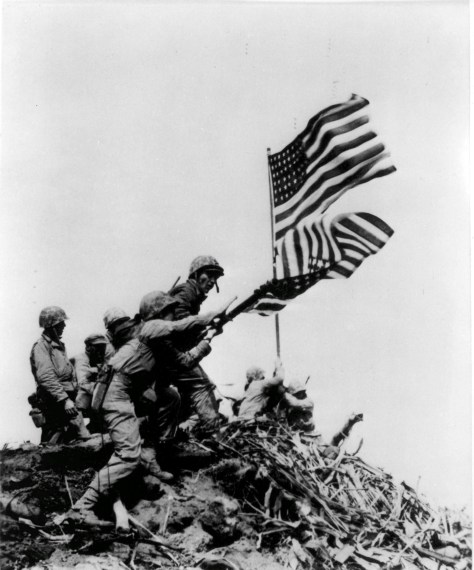
battle_iwojima256 The more immortalized flag was just hoisted in the background, with a few of the seven famous Marines still trying to secure it. The group of Marines in front have just lowered the first smaller flag that had been raised a bit earlier. February 23, 1945. USMC photo.

I assume you know of the iconic flag raising atop Mt. Suribachi by our courageous US Marines on Iwo Jima?¹  It was immortalized, in my opinion, by the most iconic photo of WWII.

But did you know there were TWO flags?  And that THREE cameramen were involved with capturing the two flag raisings?

And did you ever wonder where the movie of the flag being raised came from…or who shot it?

______________________________________

You have seen the above color footage of the US flag being raised on Iwo Jima (above) during WWII countless of times.  On TV.  In movies (that’s important – the…

View original post 997 more words

Losing Her Life


A most touching story…of what may be in our own future.

Current News – Chesty Puller’s Home


Important stuff … unlike that bozo Jenner!

GP's avatarPacific Paratrooper

Chesty Puller USMC Chesty Puller USMC

SALUDA, Va. — Some Marine veterans are on a mission to purchase the former home of one of the Marine Corps’ most revered generals.

When the group found out that Lt. Gen. Lewis Burwell “Chesty” Puller’s retirement home inSaluda had hit the market, they scrambled to both form a nonprofit and launch a GoFundMe site to raise the $400,000 needed to purchase it.

By contributing to help fund the purchase, former intelligence Marine Sgt. Maleesha Kovnesky, who is spearheading the effort as chair of the nonprofit, said supporters will be directly contributing to a place that will serve as a standing monument to other Marines.

“It’s the perfect place, perfect opportunity and perfect time to make sure there’s a place that fosters camaraderie (so) all Marines everywhere know they have a place to go and people who care,” she told Marine Corps Times.

Puller, who died in 1971 at the age of 73, had one of the most…

View original post 895 more words

A Father-ly Invasion


In a hope for peace today, I re-post this story.

Mustang.Koji's avatarMasako and Spam Musubi

Imagine being a Marine. You’re in Afghanistan.  You see your buddies getting blown up by the cowardly enemy’s IED or killed after an ambush. Then, after a bitter, maniacal all-out war, their religious leader capitulates.

Now, suddenly, you are standing out in the desert, outside of Fallujah, waiting to go in as part of the “occupying force”. Your feelings and emotions are going amok – anger coupled with fear of the unknown… You will be surrounded by the enemy who also fought the exact same bitter war against you.

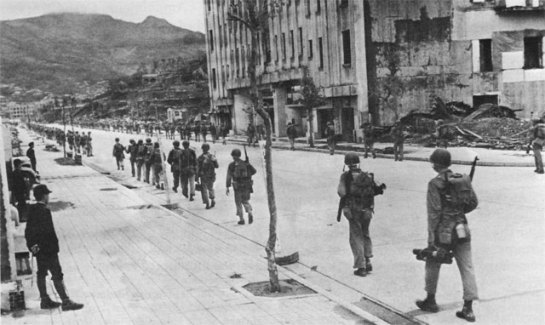
USMC US 26th Marines marching into Sasebo, Japan – August 1945. Notice the Japanese standing to the left and the general absence of civilians.

Now… imagine you are a young Marine on a troop ship off the Japanese coast. It is August 30, 1945. A few weeks earlier, you became acquainted with the term atomic bomb. The Emperor of Japan just capitulated.

View original post 1,220 more words

Patriot Day – 9/11/2001


Our protector is NOT the government.

GP's avatarPacific Paratrooper

Some of the destruction caused when the high-jacked American Airlines flight slammed into the Pentagon on Sept. 11. The terrorist attack caused extensive damage to the west face of some of the destruction caused when the high-jacked American Airlines flight slammed into the Pentagon on Sept. 11. The terrorist attack caused extensive damage to the west face of the Pentagon

AFTER FLIGHT 77 hit the Pentagon on 9/11, the following incident occurred:

A chaplain, who happened to be assigned to the Pentagon, told of an incident that never made the news:
“A daycare facility inside the Pentagon had many children, including infants who were in heavy cribs. The daycare supervisor, looking at all the children they needed to evacuate, was in a panic over what they could do. There were many children, mostly toddlers, as well as the infants that would need to be taken out with the cribs.

Pentagon Memorial Pentagon Memorial

“There was no time to try to bundle them into carriers and strollers. Just then a young Marine came running into the center and asked what they needed…

View original post 467 more words