Tag Archives: World War II

The Pain of Survival and Aunt Michie – Part 5


japansurrender88
A rare photograph taken after listening to the Emperor’s surrender speech, August 15, 1945. There was a coup attempt the night before the speech was broadcast.

Although the violence of World War II was nearing an end, other aspects of the war could continue against Japanese civilians for years to come.

Their infrastructure was gone.  Essential assets such as manufacturing plants, machinery, trains, roads, housing, utilities, even fishing boats had been destroyed.

And most of all, food.

And Aunt Michie’s dignity – the entire family’s dignity – will continue to be tested until the late 1940’s.

____________________________
boy genmai mainichi
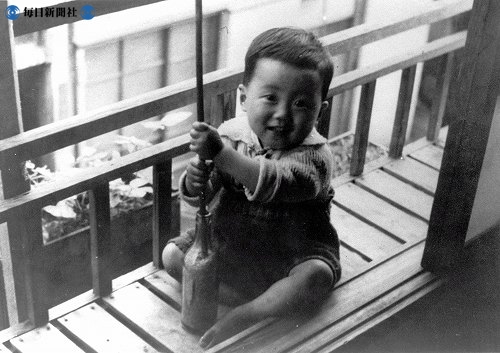
Dated April 1943. A boy poses holding a stick in a bottle filled with unpolished brown rice. This is not the polished brown rice you eat today at Panda Express. It was more wild. Japanese would insert a stick into a bottle partially filled with brown rice then repeatedly jab at the rice until the husk came off. It was low grade rice with the germ still on. (From the Mainichi Shimbun archives.)

For eons, Japan has been unable to produce enough rice for their people let alone food.  In fact, it was not until about the time Japan hosted the 1964 Olympics that Japan could produce enough rice for themselves.

The war took a terrible toll on regular folks from getting their “rice fix” – they were just not able to eat it.  This deprived them savoring it, the mental and biological satisfaction of just eating it.  Think of it this way – what if not just bread itself was kept from you but also the sweet smell of the freshly baked bread with the perfect crust..with melting butter?  Talk about attacks on your psyche: deprivation.  Deprivation for years.  Prolonged sensual deprivation makes for huge changes in one’s outlook on life.

Like the photo of the little boy, millions of civilians would acquire a wild form of brown rice (玄米 genmai) and de-husk them as shown.  Along with barley, it served as a substitute for the flavorful white rice with the higher calories.

_____________________________

Confronted by not only the absence of medical supplies, Aunt Michie’s house was now filled with 23 men, women and children with varying degrees of burns.  I doubt emergency rooms could handle such a sudden load of burn victims… but Michie’s family did.  On top of that, her house was damaged by the atomic bomb’s shockwave.  It pains me to even see in my mind what they had to do to make the house habitable enough so quickly to nurse the injured.

It was mayhem and Michie personally did not ask for this horrific situation… but now, on top of trying to provide medical care for 23 people, she was confronted with one ominous problem: how to feed them all.  There was no food left in the city of Hiroshima and it was just over the hill.  And any food left in the village of Tomo was fresh.  It would spoil quickly anyways in the heat as there was no refrigeration.  No supermarket.  No canned goods either.

She did as Aunt Michie only could.  She used her precious reserve of rice and only served it to the ailing victims.  I am sure she believed that would be the only way to truly help them survive as all of them were malnourished.  As a result of rationing the remaining rice to the victims, her own children who weren’t physically injured were delegated to survive on cooked pumpkins, stems, stalks or taro roots for the duration.

A huge, gut wrenching decision for Aunt Michie, I’m sure.
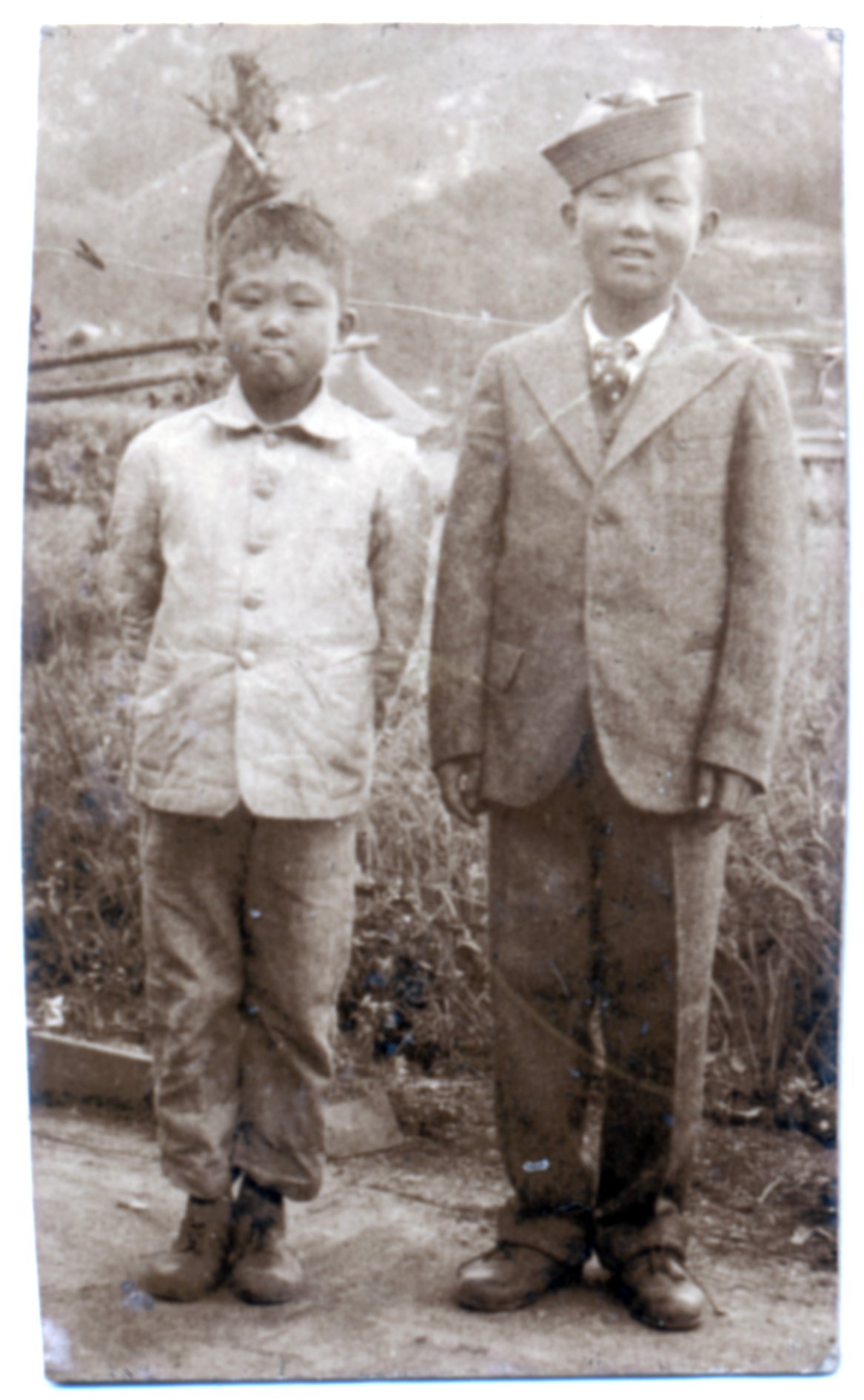
image0-012
Some of the wild grass or other vegetation boiled for emergency eating can be seen behind my father and Uncle Suetaro. Hiroshima, circa 1929. Copyright Koji Kanemoto

To help this dire situation, the Hiroshima aunt who was not badly injured went about the area with Mikizo’s parents scavenging for wild grass and other vegetation to boil.  That, too, became part of their food.  Although likely not very nutritious to say the least, there was no other alternative.  And it is important to note such wild vegetation they boiled or ate had been subjected to the black rain…

What do you have in your yard?

Perhaps you can somewhat understand why my cousin Masako thought Spam was the most delicious thing she ever ate.

____________________________

In spite of all Aunt Michie could do, my cousins tell me some of the burn victims’ injuries wouldn’t heal.  They had worsened.  Their wounds began to fester or decay for lack of a better description.  Pus formed.  There was nothing they could do.

The odor of the decaying flesh permeated out of the house.  They say you could smell it from the dirt road immediately outside.

It became so intense that people would hold their noses to scurry past the house.

None of my cousins who were there tell me they will ever forget that vulgar smell of rotting flesh… or death.  Never.

Just like Old Man Jack.

___________________________

IMG_5861
From Aunt Michie clockwise: Aunt Michie (holding Kiyoshi), Namie, Mikizo’s father, Masataka, Sadako, Masako, Mikizo and Mikizo’s mother. Taken in 1948 at their farmhouse where they cared for 23 victims. Courtesy of Kiyoshi Aramaki.

My cousins tell me some didn’t make it.

Others would pass away in the next couple of years from the effects of their injuries or radiation.

Nevertheless, the struggle for food and other essentials would continue…but my Aunt Michie’s immediate family survived.  Even Tomiko who was in Hiroshima proper.

And Aunt Michie’s dignity and strength reigned supreme.

They all made it to tomorrow.

__________________________

The surrender documents were signed by Emperor Hirohito’s representatives aboard the USS Missouri on September 2, 1945.

Unbelievably, Mikizo also survived the war.  Although taken prisoner upon Japan’s surrender as a soldier in the Imperial Japanese Army, he was released from Manchuria and allowed to return to his Hiroshima farm in late 1946.

To be continued in Part 6….

The Pain of Survival and Aunt Michie – Part 4


You can hardly tell this is a young girl anymore. As Masako and Mr. Tsukamoto told me, they were walking dead. Flesh literally melted off their bodies and dangled. Grotesque forms which were once human beings.

The aftermath of the bombing was no different from hell.  Not that I’ve seen hell nor that I would want to…

But Aunt Michie and my very young cousins saw it.

They visited hell.

_____________________________

a-bomb1
Atomic bomb survivors. Perhaps this is what Aunt Michie and her cousins saw in their search for relatives on the other side of the hill. If you notice the flask the young girl is holding to her lips.  It was likely filled with radioactive water.

Nearly all doctors and nurses within the city had been killed or seriously wounded on August 6, 1945.  If they survived the blast, they were likely to fall ill from radiation poisoning and they themselves would die within days.  All remaining medical supplies – which had been nearly non-existent due to the war – had been destroyed as well.  Most food – even unpicked fruits or vegetables – were contaminated with radiation as was water(¹).  Thousands of corpses plugged the rivers as they would go in to soothe their burns but would soon perish.

It is important to note that food rationing in Japan was much more extreme than what was imposed on the American public.  While the rationing in America began in May 1942, it started with just coffee and sugar.  In Japan, rationing of a far more extensive reach began in 1939 if not earlier.  It extended to nearly all first quality food stuffs.  Rice, barley, seafood, meat, soy bean paste and soy sauce, vegetables, fruit, seafood, etc.  Groups called “tonari-gumi” were established in villages and the like; they monitored and rationed food to the Japanese families based on what work they were doing, e.g., war production, number of family members along with their age and sex.  The rationing was so severe that when one family member died, the family did not report it.  The average caloric daily intake was cut down to less than 2,000 a day by 1945.

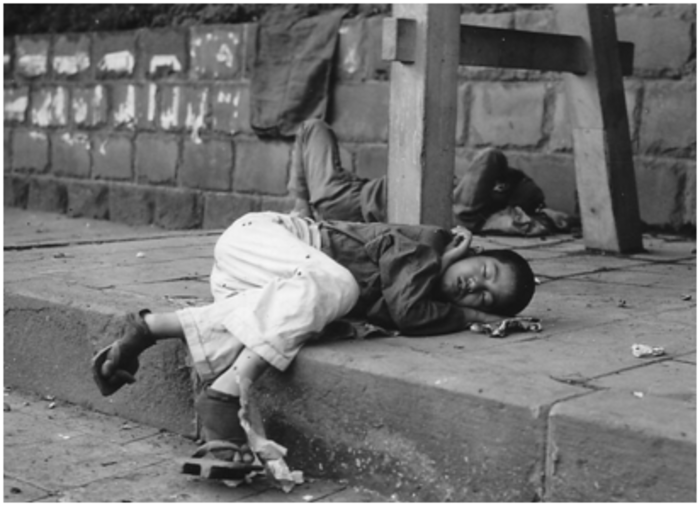
homeless_orphan_in_postwar_tokyo
Homeless orphan in Tokyo. He would have to be determined if he was to survive.

The Japanese civilians were starving, so to speak, and were without question malnourished.

Aunt Michie was no different.  She was hungry like everyone else and likely tired easily due to low nutritional intake and daily physical and emotional demands upon her.  It is important to have an understanding of her condition at this crucial moment in history.

________________________________

2-sadako1
Sadako – taken in early 1948 by my father while on furlough. She would marry a distant cousin (common cultural practice at that time) who was also badly burned in the atomic explosion.  She is wearing clothing my father bought for her at the Tokyo PX.

After the shock and black rain subsided, Aunt Michie’s thoughts immediately went to her treasured family.  According to my cousins, she went into her priceless family rice reserves and cooked real rice for the children.  Sadako, the second oldest, remembers to this day how she savored that bowl of rice, a definite luxury at that time.  While but a child of ten years and filled with anxiety about eating such a fine meal, she saw at that moment her mother’s love and affection for them was unconditional.

Aunt Michie’s thoughts went to the Aramaki family (aunt and uncle’s family) who lived in Hiroshima.  She had no way of knowing that day but they had become direct victims of the atomic bombing.  They had been burned over most of their bodies and had even been trapped under their destroyed house.  They managed to struggle with their searing injuries to Aunt Michie’s house to seek refuge and care.  They had realized that only strong family support would allow them to live.

Grotesquely, the path going over the 300 meter high hill which the relatives traveled became littered with scores of dead people.  Masako said they were unrecognizable lumps of flesh and died where they crumpled.  Many had their clothes burned away.  While thousands were killed instantly, other thousands suffered for days before dying from intense burns, radioactive poisoning and other injuries.  As radiation poisoning was unheard of amongst them, some were told they had dysentery and the like.  Many before dying oozed pus from their ears and blood ran from their noses.  You will not read this in any Western textbook.  In fact, the gruesome information about the days, months and years after August 6th was suppressed for a couple of decades by both governments.

While the dazed and immensely pained adults struggled to Michie’s farm, there were young children of the family unaccounted for(²).  Without hesitation and unbelievably, Aunt Michie – in her weakened state – pulled a two wheel cart over the hill to Hiroshima to look for them.

Over a hill.

大八車
I believe this to be the type of cart Aunt Michie pulled to Hiroshima to look for the unaccounted for children of the family. Kiyoshi called it a 大八車, or large two wheeled wooden cart.

Miraculously and while the details are lost, she found some of them and hauled them back to the farm on the cart, now laden with the additional weight of the children…  on the same road that was further littered with dead and dying people.  Think of the mental anguish Michie had to endure when dying people came up to her and asked for her help…  It would be difficult to not look at them.  It was more difficult to ignore them, I’m sure.

According to my cousins, a total of 23 people got refuge and care at Aunt Michie’s farm.  I understand many were relatives from the Aramaki side of the family.

There were more hurdles for Michie and her children immediately ahead – caring for the injured and dying.

_____________________________

526
You can tell which way this woman was facing when the bomb went off. Her left side is burned. Photo was likely taken after August 6, 1945.
Caring for Victim of Hiroshima Bombing
A mother looks after her child. This photo was also likely taken after August 6, 1945.
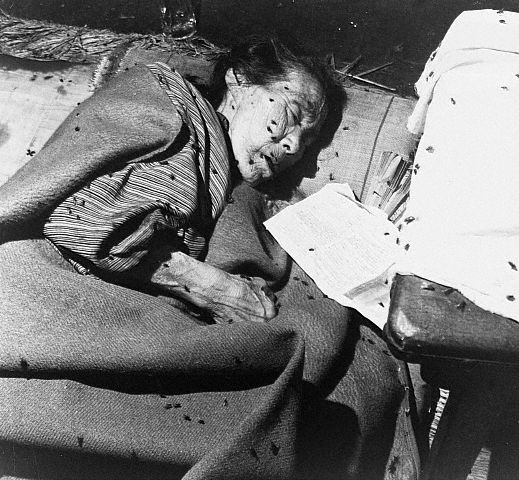
Victim of Hiroshima Bombing
An elderly woman lies dying on the floor covered with flies. Perhaps this is just one of the sickening sights Michie and her children have buried in their conscious.

The preceding photographs may show what Michie and the children were faced with.  And the children were just that – children.

How old are your children, by the way?

The older cousins recall that they, Michie, Mikizo’s parents and the less injured relatives took on a 24 hour a day field hospital of sorts to treat the injured.  It was stifling hot and humid; yet, they had to be given constant attention and there were so many of them.  I cannot imagine how exhausting this task could have been, especially when you are hungry and malnourished yourself.

pattern
Taken sometime after August 6, 1945. The side of her you see is what had faced the atomic explosion. The patterns are from her clothing she wore that day. It was where the dark patterns of her clothing had been in contact with her skin. Masako recalls vividly this type of pattern among the burn victims and that the maggots followed that pattern.

The common injury were burns.  Severe burns…and they had no medicine whatsoever.(³)  No Bactine.  No Motrin.  No aloe.  All Michie could do was to coat the burns with a type of cooking oil and bandage them with pieces of cloth.  She must have endured unlimited anguish in knowing she could not measurably lessen their pain and suffering.  There must have been constant crying and unbearable moans of pain.

And on their hands, blood from human beings.

3-namie1
Namie – taken in early 1948 by my father while on furlough.

Six year old Namie could never forget what she had to do.  Flies were swarming having sensed dying flesh.  Namie was tasked with shooing them away with a fan but they wouldn’t stay away.  And worse yet – time and time again, she had to remove the maggots that were feeding on dead flesh…with chopsticks.  I do not know if I could have done that…but Namie did.

The turmoil that must have stormed inside Aunt Michie to tell her daughters to do what they had to do for the sake of survival…and then to be stern with them and tell them to continue when they wavered or cried…  must have been punishing to her as a loving mother.  She must have wanted to cry.

Aunt Michie was the point woman.

And she fulfilled that role.

Her goal was to get everyone to tomorrow.

_____________________________

To be continued in Part 5….

Notes:

(1) Per my 2012 meeting with Mr. Tsukamoto in Hiroshima, water is the main theme of the Cenotaph at the Peace Park.  Survivors clamored for water.  Where there was well water, many survivors were suffocated as dozens more pressed against them for the precious liquid.  Please see “A 1937 Yearbook, the Atomic Bomb and Hiroshima” for further information and links to their personal story.

(2) The number of unaccounted for children is unclear.

(3) Mr. Tsukamoto recounted how they had to constantly mash yams and place them over their burns to temporarily lessen the pain.  They did that for over a month, he says.

The Pain of Survival and Aunt Michie – Part 3


Japanese-home-defense-training_1945
Japanese women being given “home defense training”. My grandmother on my mother’s side underwent such training on a Tokyo schoolground. 1945.

The Japanese home front had essentially collapsed by 1945.  Instead of focusing on food, supplies, building air raid shelters and organizing orderly evacuations of civilians, Japanese military leadership focused on misleading news reports and propaganda.  Millions fled the cities into safer rural areas(¹) on their own initiative but once there, supplies of daily sustenance was meager.

_______________________

In one’s own life, you are tested.  A good human being will at times prove oneself to be a good brother or sister, son or daughter, friend or life partner.  Some fail.  Some pass.

Aunt Michie was one who passed; her heart led her to care for others before herself.  It is as if she knew being good to others was the way to have a good life.

As an example, US air and naval forces ruled the skies and the seas.  A key staple of the Japanese diet – fish – had been nearly cut off  as fishing boats were attacked once out to sea.  Yet, when Aunt Michie came across sashimi, she traveled hours with Masako in tow to take a precious portion to her brother Suetaro at his army base in Fukuoka:

“…(Masako) remembers a couple of trips (to see Suetaro). It was not easy travel in war-torn Japan.  For one trip, Aunt Michie managed to take sashimi – in this time of little food, it was a tremendous treat and gift. On that trip, Masako remembers her mother stealthily sliding over to Uncle Suetaro the wrapped sashimi. He was being stared at by many of his fellow soldiers – they were not well fed either.  She remembers Uncle slowly turning so that the others could not see and quickly devoured the treat.”

(From Masako and Spam Musubi)

Aunt Michie could have eaten the precious sashimi herself…but didn’t.

___________________________

With her husband taken by the Imperial Japanese Army then dispatched to war in Manchuria, she was burdened with running the farm… still laboring to produce crops only to be taken by the military.  She would get up before sunrise, help prepare meals, tend to the family then toil in the fields.  And when her mother became partially paralyzed and alone in her own home five miles away, Aunt Michie knew she had to take care of her, too.  Michie was the last of her children left in Japan.

My Grandmother Kono – having suffered a stroke – is propped up from behind by Japanese “shiki-futon” for the picture. She would not see her son alive again. Taken in Hiroshima, May 3,1944.

While Michie and Grandmother Kono managed to get part-time care, Aunt Michie still took it upon herself to check in on her stricken mother.  My cousins tell me their mother Aunt Michie would take them along for the ten mile round trip to her Kanemoto family home.

No car.  No bus.  No taxi.  No trains or bicycles.  They had to walk.  After all, it was 1944 and fuel was a huge luxury.  One memory the youngest happily recollect is that they would take turns riding in some kind of baby stroller that Michie would push to Grandmother Kono’s.  Neverthless, it was still a great deal of effort and sacrifice on Michie’s part in any case… and she did this after working in the fields, too.

Masako will eventually end up caring for Grandmother Kono.

___________________________

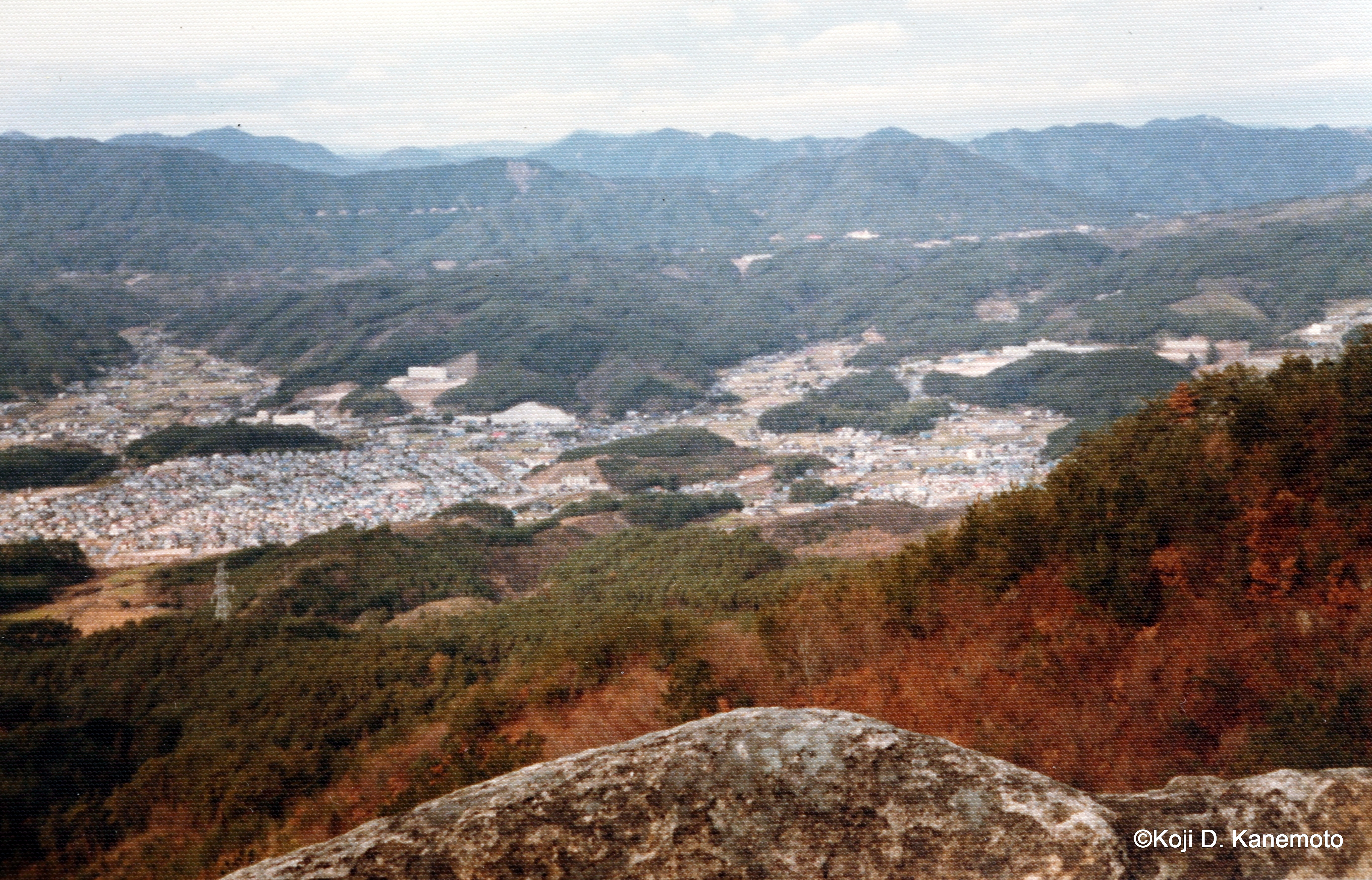
IMG_5869
Family photo taken of the town of Tomo about 35 years ago atop the 300 meter tall hill separating it from Hiroshima. Hiroshima is directly behind. This short hill served to partially deflect the atomic bomb’s shockwave. Courtesy of Kiyoshi Aramaki.
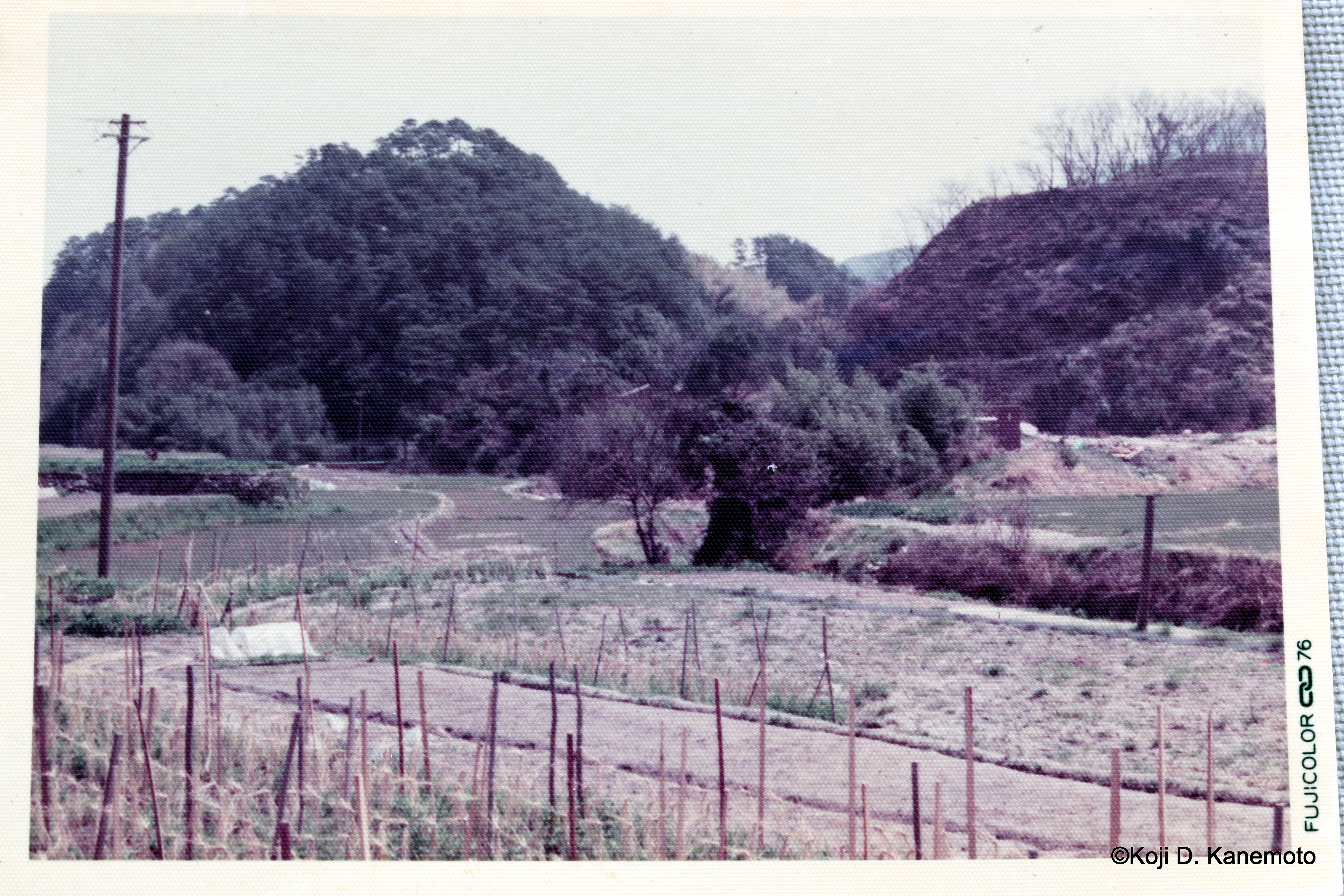
IMG_5870
Per Kiyoshi, this was taken from the house and shows some of the field Michie had to cultivate. She was here when the shockwave hit. While the one on the right is no longer there, the family burial plot was between the two small mounds you see here. Courtesy of Kiyoshi Aramaki and dated 1976.

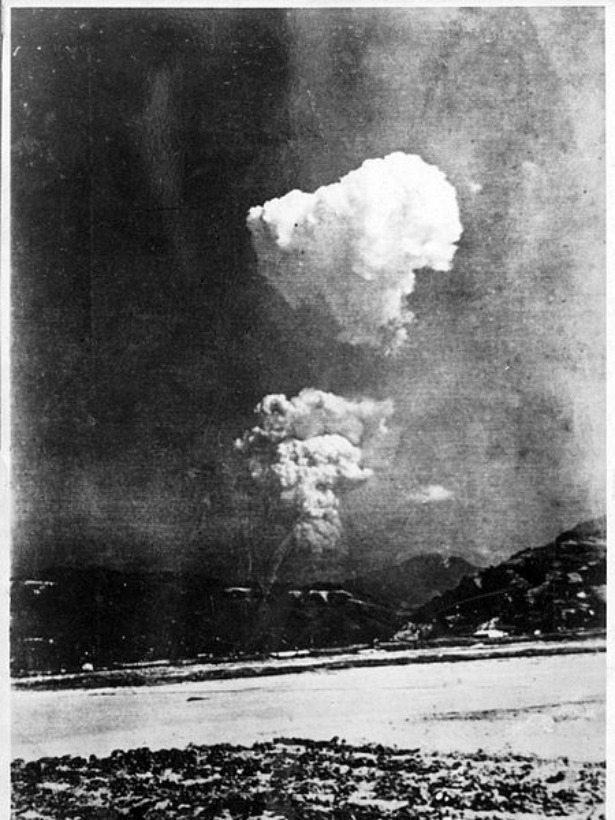
After picking herself off the ground, Aunt Michie saw an evil yet mystifying mushroom cloud slowly rising up beyond the 300 meter tall hill separating her village from Hiroshima proper.  At that instant, she knew her life had taken a wrenching turn for the worse… as if it could get any worse.

I cannot imagine what was going through her mind and heart watching that mushroom cloud rising.  She could not have even dreamed that it was one massive bomb, a couple of kilometers away, that could cause this sort of force and devastation.  It must have defied belief.

Hiroshima_10
A relatively unseen image of the explosion, taken from a Kataitaichi, six miles east of Hiroshima. Michie was nearly due west and on the other side of the cloud. The cloud would reach 40,000 feet in just four minutes. It would ultimately rise to 60,000 feet. (Horikawa Elementary School)

According to Michie and my cousins, the shockwave blew out all the sliding doors, all the tatami mats were flung and the ceiling was shoved up in the house.  Try to imagine yourself being inside the house.  The same thing happened to Grandmother Kono’s house five miles south (See map in Part 1).

As per their daily air raid drill, they apparently all ran to the air raid shelter in the small hill behind their house.  After about half an hour and with the mushroom cloud still rising, a black, syrupy rain began to fall on them.  According to the cousins, Michie believed that the Americans were dropping oil from space.

She could not have fathomed it was contaminated with over 200 kinds of radioactive isotopes.  We now call it black rain.

IMG_6116
I took this photo of a preserved wall section stained with actual black rain from that fateful day. Hiroshima Peace Museum, November 2013.

Sadako, who was ten years old, clearly remembers their white blouses had turned black from the rain.  No one – absolutely no one – knew that other than staining skin, clothing, and buildings, but that ingesting black rain by breathing and by consumption of contaminated food or water, would lead to radiation poisoning.  Even flowers would bloom in distorted shapes and forms from the radiation.

_______________________________

With the enormity and the suddenness of the brilliant flash of light followed by a shockwave and the swirling mushroom cloud, Michie deep inside knew her world had forever changed.

Horror was to literally come into hand shortly to enforce that foreboding thought.

_______________________________

To be continued in Part 4….

(1) Albeit late, my mother’s family fled to the Fukui Prefecture in early July 1945 to escape the bombing of Tokyo.

The Pain of Survival and Aunt Michie – Part 2


Taken in 1945 after a B-29 bombing attack on Tokyo. There is little left of the city and many, many families were without food and homes. Sadly, there were thousands of orphans as well, many of whom would perish.

Human dignity is as crucial to an earnest life as is air, water and food.

Aunt Michie drew upon that dignity inside her to help her family and others survive the day to day ruthlessness of life during war and ultimately, the atomic bombing.

While her dignity was larger than life, Michie would ultimately sacrifice her health and well-being to ensure her family and others would survive…and survive strongly.

___________________________

obaachan
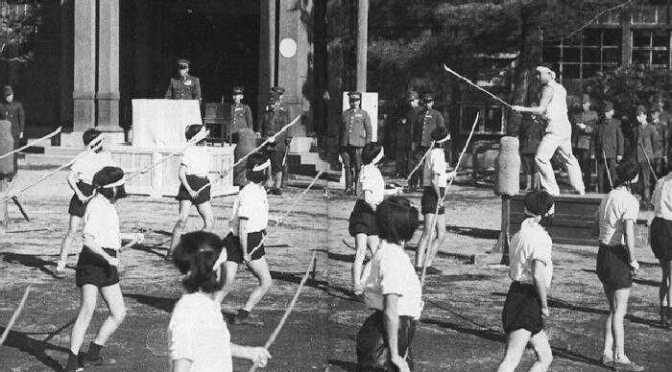
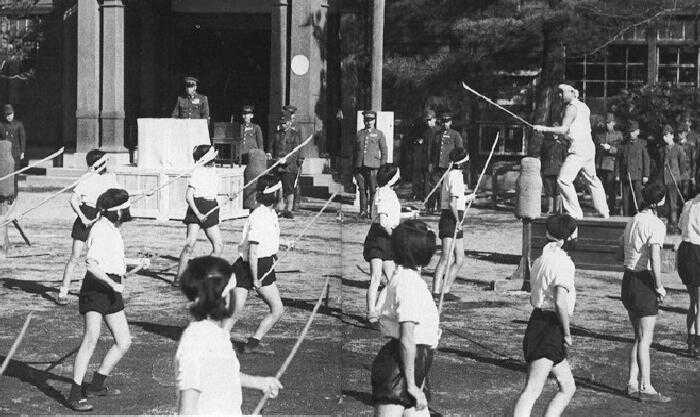
Japanese high school girls being drilled on how to use bamboo spears to ultimately repel “the invaders”. Notice the presence of the Imperial Japanese Army in the background observing.  Tokyo 1944.

By January 1945, Japan had already lost the war.  While the Japanese military leaders controlled the country and its path to ultimate destruction, the civilians took the brunt of war.  Many cities had been destroyed by US bombing raids leaving millions of families homeless.  There was not enough food to go around.  Many starved to death, especially orphaned children, if not from neglect as others would shut their eyes to them.

However, Hiroshima was largely spared from aerial attack.  The US did carry out bombing raids in March and April 1945 against military targets in Hiroshima but it was not frequent…but it was frequent enough to require air raid drills  The naval port of Kure though, where the battleship Yamato was built, was essentially destroyed in June 1945 by US Army and Navy bombing attacks.

HiroshimaBombingMap
A hand drawn map showing targets and damage to Hiroshima by US bombing raids including the atomic bombing. For a zoomable map, please copy and paste this link into your search bar: http://www.digital.archives.go.jp/DAS/meta/DGDetail_en_0000000611
Source: National Archives of Japan

___________________________

After her marriage in 1933, Michie was tasked to arduous farm labor at the Aramaki farm.  Their primary crop was rice.  She also gave birth to five children before war’s end: Masako (1933), Sadako (1936), Namie (1939), Tomiko (1942) and Masataka (1944).  Kiyoshi would follow in 1947.  She loved them unconditionally.

Michie image1
A happy Aunt Michie and likely Tomiko. Tomiko would soon be adopted by another family in the actual city of Hiroshima.  Undated but perhaps 1943.

On the farm lived Mikizo, his parents and Michie.  The four of them – and eventually three of her oldest daughters (a total of seven family members) – would work the land from a little before sunrise to sunset.  It was hard, arduous labor.  Back breaking work.  They did not have John Deere tractors or combines to aid them but had an ox to plow the fields with.  This was 24/7.

After all that hard labor, nearly the entire crop was taken by the Japanese military for the war.  They were allowed to retain a small portion of the crop for their own use.  As a result, rice was even further rationed for family consumption.  They had no choice.  On top of that, there was little else to eat.  They lived a meager life per my cousins.

__________________________

As the war dragged on, Japan was descending into the abyss…and it kept getting more and more darker.

In the story “Dear Mama”, Michie’s youngest brother Suetaro (my uncle) hurriedly wrote a somber good bye letter to Grandmother Kono in his war diary.  He was being sent off to war and certain death.

Farewell
Farewell sendoff for Suetaro who was heading to certain death. Michie is to his left and holding Masataka; Mikizo to his right. It is only an educated guess but the older man to the right of Mikizo is his father.  May 3, 1944.

I wonder how she really felt, knowing that Suetaro was going to fight to his death against the country in which his two older brothers and sister were imprisoned.  They were her brothers and sister, too.  An ugly internal conflict.

______________________________

The area around Tomo was nearly barren of younger, physically capable men.  All the men up to 35 years of age were taken by the army, regardless of their family status.  Mikizo was no exception.

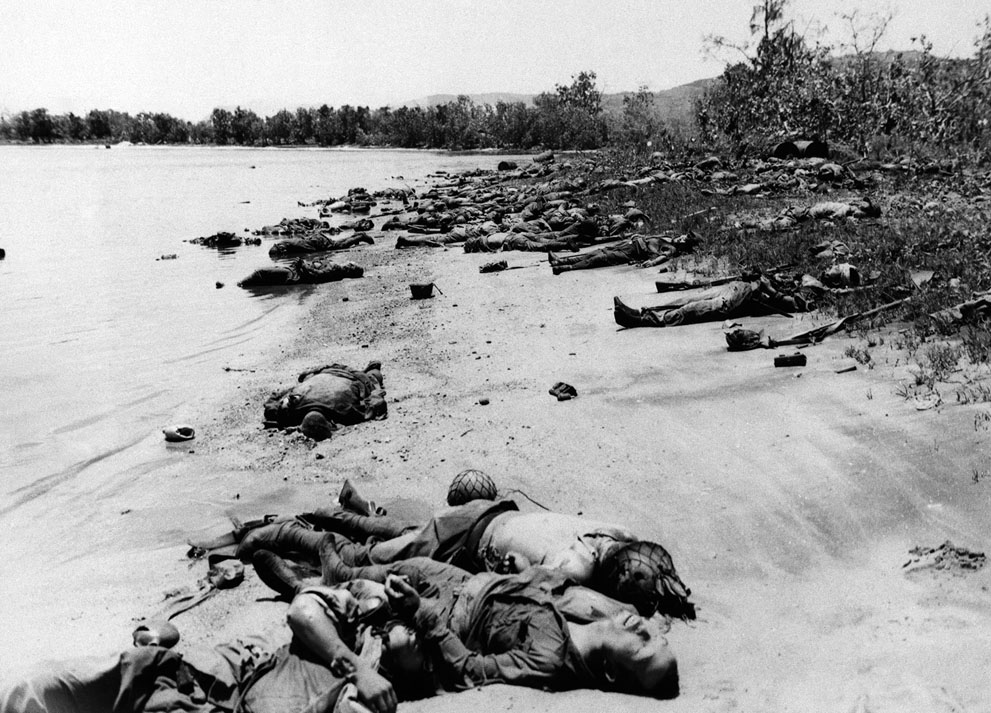
In late 1944, at 35 years of age, he was taken by the Imperial Japanese Army.  Suetaro foresaw that happening in his farewell letter; he warned Mikizo to fully cooperate with the officers and to do exactly as he was ordered.  This was because it was brutal even within the non-commissioned ranks of the Imperial Japanese Army; the training officers routinely beat recruits into submission.  These recruits were largely the men who were ordered to their deaths in “banzai charges” by the thousands.  They greatly outnumbered the “hard core” Japanese officers.

banzai killed
Aftermath of a banzai charge.

Aunt Michie’s family who tended to the back breaking labor on the farm was now lessened by one.  As with her brother Suetaro, she foresaw never seeing Mikizo again.

To make matters worse, her mother (my Grandmother Kono) suffered a cerebral infarction the day she learned Suetaro was being sent off to war.  She became paralyzed on her left side.  To get about the now empty house, she would have to pull herself around with her right arm.

On top of everything else – tending to the crops, the house and the children – Aunt Michie now had to care for her disabled mother.

Michie’s daily life was now further strained with even more stress…  Life must have appeared darker to Aunt Michie.

Michie’s willpower and dignity will now be on trial and severely tested.

But the struggles she will endure will have purpose.

She would not let her family down.

____________________________

To be continued in Part 3….

America


My best to you, America, for the New Year.

Image

Old Man Jack-ism #6 – The Zero


Image
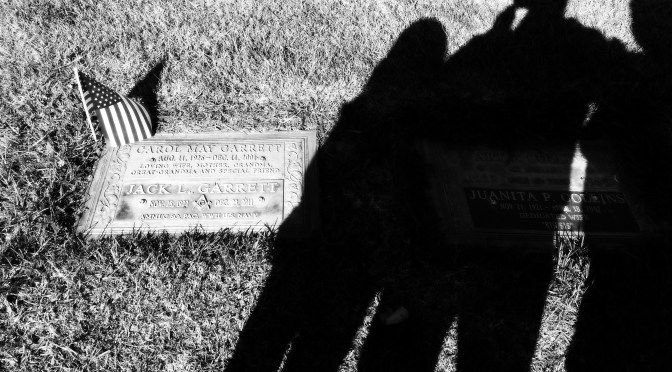
I stopped by with a cigar to visit with Jack today.  I hoped there will be others visiting given the date and holiday season…

Today, I thought I’d visit with Old Man Jack for a while.  I didn’t drive my supercharged and unmufflered Grabber Orange Mustang to visit him although he loved it so much.  It looked like rain.  But I did take a cigar with me.

I know he didn’t mind the cigar.

He said it “doesn’t smell much better than the stinkin’ islands…but anything smelled better than those stinkin’ islands”.

____________________________

He would reminisce much more frequently about the war on those islands when it involved “fun memories” and I recalled one while chatting with him today at his grave. Believe me, whether it be a “fun” memory or not, a tear or two always tags along.

Old Man Jack always described the islands in the Southwest Pacific to be “those stinkin’ islands”.  He had said that while things always stunk, “everything smelled like shit”.  Pardon the French but those are the words expressed by the now old man who was back then a young boy of nineteen.  Hell, put it into perspective.  That spoiled young singer Justin Bieber is nineteen.  I’ll leave it at that.

“When I got there, I wondered why things smelled like shit,” he said with his trademark grin.  The one where the left corner of his mouth rises.  “Well, I was a dumb shit punk myself back then.”

_______________________________

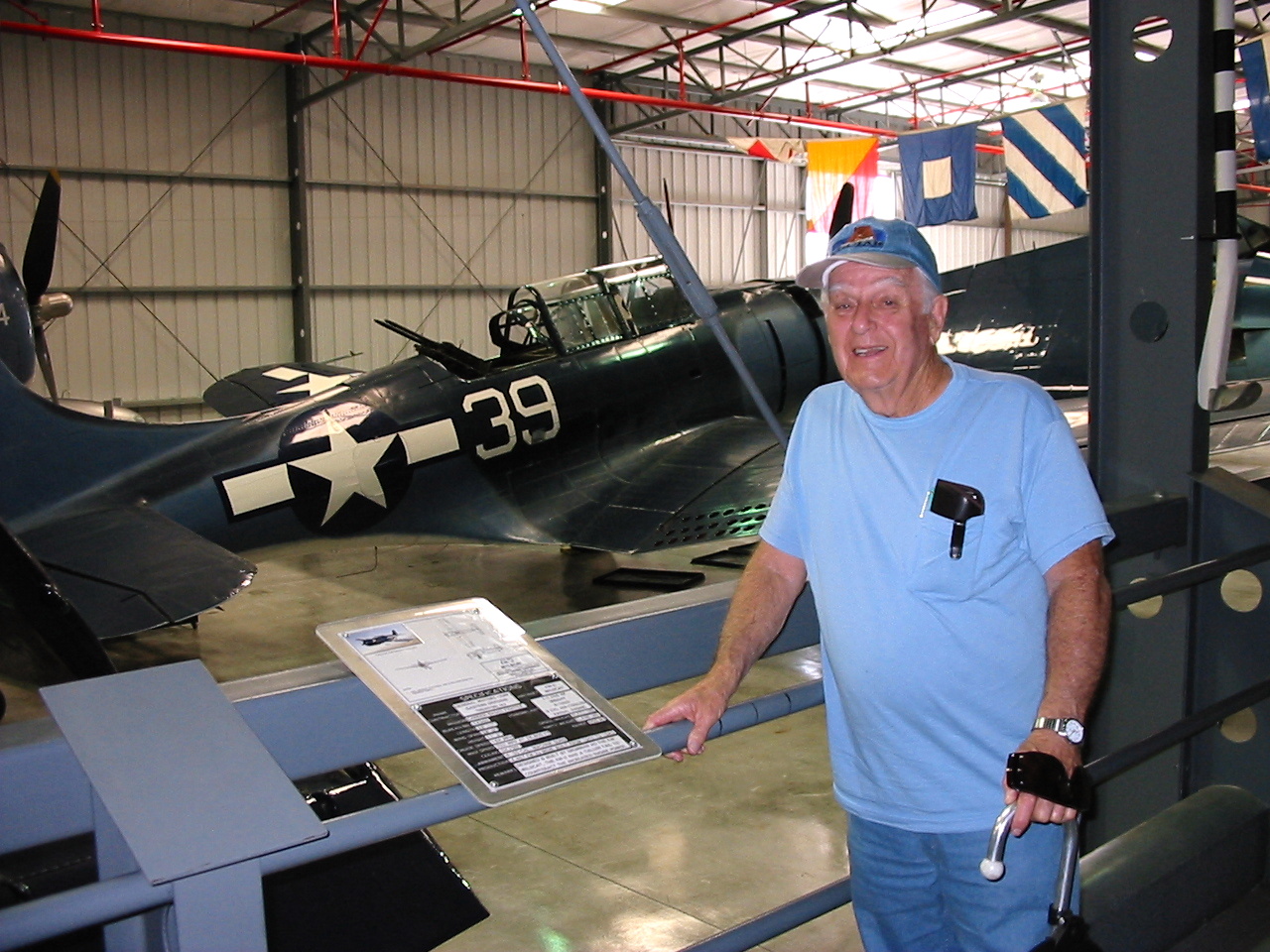
We had been touring the mock up of the CV-6 carrier deck (USS Enterprise) at the Chino Planes of Fame Museum back in 2003.  Our friendship had begun solidifying by then.  I had taken him there primarily to see his beloved F4U Corsair so this was a side trip at the museum.

On the “flight deck” was a Douglass SBD-5 Dauntless dive bomber.

Image
Jack in 2003 with the Douglas SBD-5 Dauntless behind him.  You can make out his boyish grin.

One thing he immediately spit out was after seeing the plane was, “That rear seat is just a metal plate.  You sat on your parachute for a cushion…”  He then continued, “…and those were twin .30’s back there.”

He told me once a Navy dive bomber pilot “grabbed him by the collar” early on and told him to get into the rear seat “quick-like”.  I remember asking him why because at that time, I didn’t know he was certified to fly.  In typical Old Man Jack fashion, he quipped, “‘Cuz I was the only one there.”  Accent on the “there”, please.

“Well, we were flying up there.  Man, that parachute made for a lousy cushion,” he said.  “Then a Zero got on our six…and then I saw these little flashes.  I figured out real quick he was shooting at us.”  Jack’s still got that grin on his face.

“The pilot yelled, Shoot, you son of a bitch!  Shoot!  Shoot!  So I did.”

“The pilot kept yelling, Shoot!  Shoot!“.  Then I yelled, “I did! I did!”

He wasn’t afraid to say it.  Jack said he got so scared he just laid on the triggers and didn’t let go.  There was only about 15 seconds worth of rounds.  He had fired off all his ammo.

“Man, I heard every god damn cuss word from that pilot,” he chuckled, still with that trademark grin.

But then he ended it by saying, “…And whoo-ee, I crapped in my pants…  And that’s how I figured out why everything smelled like shit.”

rear gunner
A WWII period photo of rear gunner and the twin .30 caliber machine guns.

____________________________

I never asked him what happened to that Zero…or if they successfully dropped their bomb…or what happened to that Navy pilot.

But one thing is for sure.  I would have liked to have seen Justin Bieber in that back seat behind those twin .30s.

I’m sure his voice would get even higher…permanently…and would have needed a diaper change.

Real men don’t wear diapers.  Jack sure as hell didn’t.  He just shit in his pants and wasn’t ashamed to admit it.

____________________________

I enjoyed our chat today, Jack.

And I’ll be sure to drive the Mustang next time so you can hear it.

Miss you.

Dear Mama – A Farewell Letter


image0-012
Uncle Suetaro (L) and my dad (R). Taken from the Hiroshima house with Mt. Suzugamine in background. Circa 1929

During my visit to my father’s childhood home in Hiroshima last summer, I was entrusted with hundreds of vintage family photos and mementos.  I brought them back here stateside, promising my Hiroshima family I would “restore” them.

Well, after a good start, I developed a painful case “tennis elbow” from using the mouse so much during the retouching process.  Sadly, it came to a screeching halt sometime in November last year.

But one very, very special item was entrusted with me – my Uncle Suetaro’s war diary.

Although born an American citizen in Seattle with the rest of his siblings, he was writing this war diary as a sergeant in the Japanese Imperial Army.

The last entry was a farewell letter to his Mother.

______________________________

The photo above had been secreted away behind another photo that was in Uncle Suetaro’s album.  He meticulously kept the album up to the time of war.  His oldest brother, my Uncle Yutaka, had conscientiously sent him family photos they had taken in Chicago and Los Angeles before imprisonment.  Suetaro complimented the photos with his beautiful Japanese calligraphy, written in a silver, whitish ink.

20131007_183754

The photo of Uncle Suetaro and my dad shown at the beginning was so very tiny – but there was something Uncle Suetaro loved about it to keep it.  I wish I knew what it was.

IMG_0451
Actual size

__________________________________

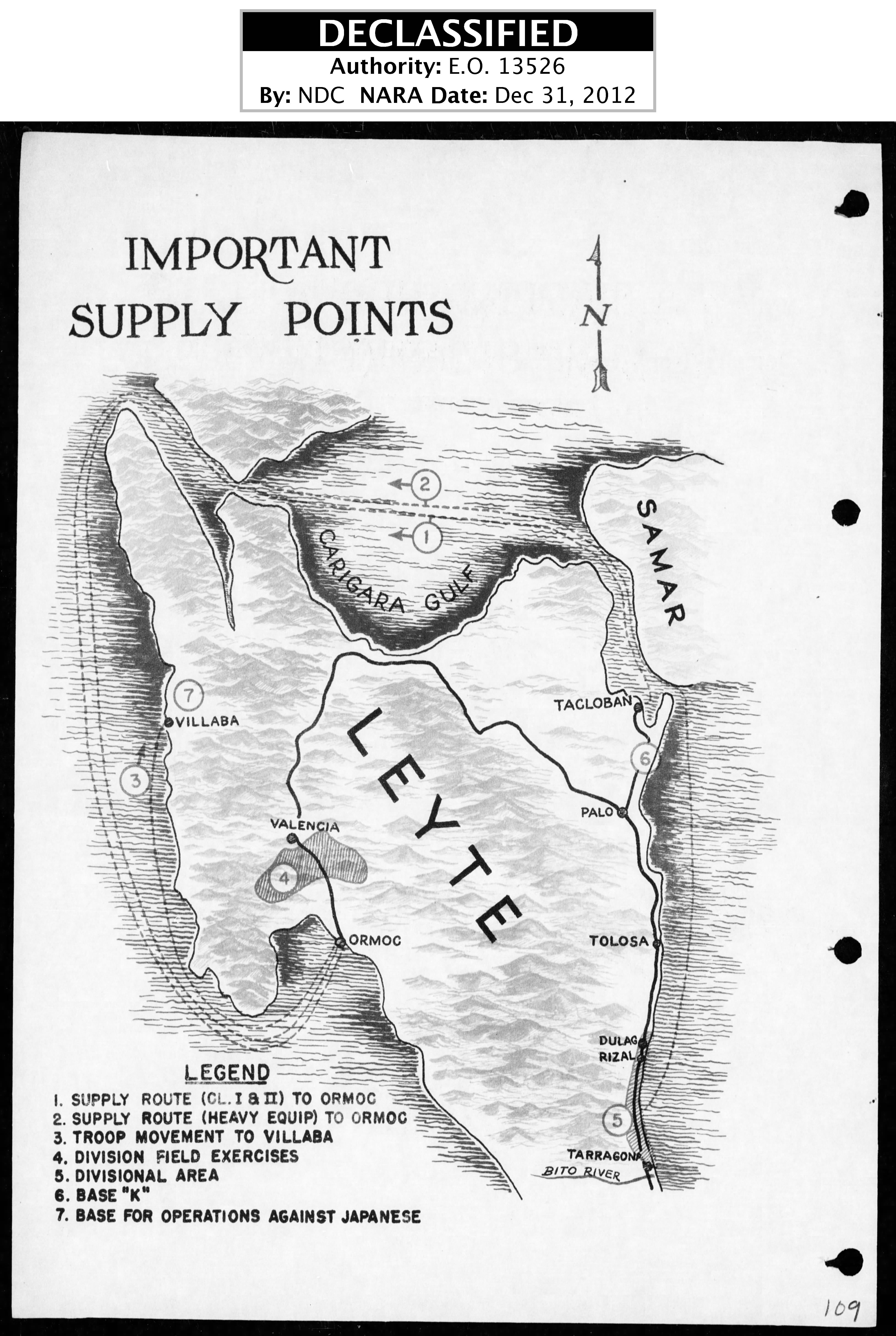
Uncle Suetaro was killed as a sergeant major of the Japanese Imperial Army on Leyte apparently near a town called “Villaba”.  Below is an actual page from a “war diary”, an official report written and published by the US Army.  Villaba is located on the western shore of Leyte but not far from Ormoc Bay, which was a killing field for Japanese ships by US aircraft.

Page 109
Source: US Army 81st Infantry Division Headquarters / Report of Operations

His remains were never recovered.  In the family grave are his tiny pieces of his fingernails and a lock of hair.  It was custom at that time to leave parts of your earthly body with your family as returning was unlikely.

Not much to bury… but it was better than not returning at all.

In a spiritualistic way, he had never left.

____________________________________

This is his farewell letter to his Mother (my Grandmother).

It is clear it was very hurriedly written.

With the help of my cousin Kiyoshi in Hiroshima and my dad, we’ve typed up Uncle Suetaro’s farewell letter – complete with old Japanese characters and translated as best possible into English.  When reading this, please remember these are the words as written as a soldier going off to fight the Americans – but he was once a young American boy born in Seattle, WA.

image0-038_originalhigh
Cover. His name is at the bottom.
金本 末太郎
image0-034_original
ママ様
Dear Mama,
御無沙汰致しました。
I am sorry for not writing for a while.
お元気ですか。 自分も相変わらず元気旺盛御奉公致しております故、何卒ご放念く
ださい。
How are you? As usual, I am full of life fulfilling my duty to my country so please feel at ease.
(元気で国のために力を尽くしてるので心配しないでください)
愈(いよいよ)自分も日本男子としてこの世に生を受け、初陣に臨むことを喜んでいます.
More and more, as I realize I was born into this world as a Japanese male, I am overjoyed to be going into my first combat.
勿論(もちろん)生還を期してはいません(生きて帰ることは思ってはいません)。
Of course, I do not expect to come back alive.
image0-035_original
併せ(しかしながら)自分に何事があっても決して驚かないように、また決して力を
落とさないよう平素より力強く暮らしてください。
And for you, Mother, whatever happens, do not be taken by surprise and please fight back with even more energy than you normally would.
24年の長いあいだスネかじりにて非常にご心配をかけ誠にすいませんでした。
I deeply apologize for these 24 years of worry and concern I have caused you.
お赦し下さい(おゆるし下さい)。
Please forgive me.
今の時局は日本が起つか亡びるかの境です。
At this time, Japan is at the boundary of either winning or perishing.
どうしてもやり抜かねばいけないのです。
We must persevere.
兄さん達を救い出すことも夢見てます。
I still dream that we can free our older brothers (from forced imprisonment in America by FDR – Ed.).
自分のことは決して心配せずお体をくれぐれも気をつけて無理をしないよう長生きを
してください。
Please do not worry about me but instead, please take it easy on yourself and live a long life.

(Note: Green indicates an edit inserted for clarification purposes.)

image0-036_original
何事あっても荒槇、小林の方に相談して下さい。
If something comes up, please discuss it with the Kobayashis or Aramakis.
金本家は絶対に倒してはいけないのです。
No matter what, do not allow the Kanemoto name be extinguished.
伴の兄さんもお召の日が必ずあることと思います。
Mikizou-san will also be drafted.
(荒槇幹造さんも必ず徴兵されることと思う)
歳はとっていても軍隊に入れば初年兵です。一年生です。
Although he is much older in age, he will be treated like any other draftee. As a young recruit.
絶対服従を旨とするようよく言って下さい。
Implore upon him to obey every command without question.
近所の皆さん、河野,倉本、白井、武田、永井、正覚寺、梶田、山城、山根、杉本、
辻、河野…、橋本,西本、松本繁人、小林、中本、新宅、武蔵、水入、土井、堀田、住岡、見崎、長尾、加藤、三好、内藤、島本、(Writing continues next page from here) 宮本先生、谷口先生、慶雲寺などの人によろしくよろしくお伝えください。
image0-037_original
ではこれにて失礼します。
With that, I will say farewell.
何時までも何時までもお達者のほどお祈り致しております。
I pray for all eternity for your good health and prosperity.
南無阿弥陀仏の御6文字と共に行きます。
I go blessed with the six realms of Namu Amida Butsu.
サヨウナラ
Sayonara
昭和19年5月3日
May 3, 1944
末太郎より   ママ様へ
From Suetaro To Mama-san

His farewell send-off is pictured below.  Masako-san believes Suetaro wrote the letter around this time.  It was at gatherings such as this when a Japanese soldier was given a “good luck” battle flag – the ones that many WWII combat veterans “removed from the battlefield” as souvenirs.  There are many cases now where their sons and daughters – or grandchildren – are making efforts to return such flags to the Japanese families.

One of the treasures found during our journey to the family home in Hiroshima this month. Uncle Suetaro is going to war and his death.
Uncle Suetaro (center) is pictured just before going off to war and his death.  You will notice my grandmother is missing from the photo; that is because she suffered her first stroke knowing her last son was going to his death.

_______________________________________

Bertrand Russell wrote, “War does not determine who is right – only who is left.”

He is correct.

On a much smaller scale, though, Grandmother Kono was all who was left in that house when war’s end came.  Her precious son Suetaro – who she kept from returning to America for the purpose of keeping the Kanemoto name going – was dead.  She was now alone.  I wonder how she felt.

A mother’s anguished solitude.

image1-007retouched
Grandma and four youngest children at the corner of King and Maynard in Seattle, circa 1926. From clockwise right-front: Suetaro, dad, Mieko, Grandmother Kono and Shizue.

(For other related stories:

A Mother’s Anguished Solitude, Part I

A Mother’s Anguished Solitude, Part II

Were Japanese Soldier’s Frightened?

Online Dating… Hmmm


d g
The Dating Game from the 70’s.

Gut wrenching words: online dating.

There.  I wrote the words.  After all, this is WordPress.

__________________________

It’s blasphemy.

Marge and Carol from the Greatest Generation would be so dismayed that I would be searching online for a gal.  Marge met Mr. Johnson at a USO dance in WWII.  Carol met Old Man Jack at his mom’s house in Eagle Rock during one of his two furloughs from warring on those “stinkin’ islands”.  The commonality?  They met face-to-face and it wasn’t at a bar.  And it wasn’t at 2:30 AM before they were to ship out to war.  (Clicking on the highlighted links will take you to one of their stories.)

____________________

Online dating began for me last month…I mean, online searching.  Duh.

Dating comes later – if at all.

Unbelievable – an old fart like me is using the internet to “shop” for a lady.  I’m now a (nearly) 60 year old rookie up against lady pros who reportedly have been picking and choosing “online” for their PERFECT man…for the last three years some of them write.  Gee, think of the tricks they must have up their sleeves against old geezers like us.

Frightening…especially since they have the upper hand.  A royal flush, ace high.  Why is it that the woman always has the right to pick and choose and not the man?

____________________

The thought of online dating really repulsed me; it still does.  A last resort for social misfits unsuitable for mainstream society, I thought.  I also envisioned it as a “meat market” of sorts.  You know, pick out the best side of beef by looking at your screen then bid on it.  The highest bid wins and it is just that in substance.

Well, I haven’t learned enough during my years on this planet so I was ignorant enough to have tried it out…mostly because I knew I would likely end up in a “Why did I do that?” moment if you found your “soul mate” at a bar half-drunk out of your wits.  That would also include her, too.  The other reason was that I don’t like to mix with large crowds for one reason or another.  So where would I meet my Disney princess of dreams, I thought?

Ergo, online dating.  Old Man Jack and Mr. Johnson must be shaking their heads at me from above.

___________________

A Marine amputee who has become a heart throb amongst women.

Well, this is what I’ve found out so far… and it’s my view only:

  1. Because of “PC”, women do have the upper hand.  Delete or reply.  One sweetheart of a gal told me she gets over a hundred emails a day from interested men.  Over a HUNDRED.
  2. Nearly all of the women say on their “profile” that LOOKS are certainly “a plus” BUT they are “truly” looking for HONEST and loyal men…not players.  However, nearly all of the ladies post photos of themselves taken years earlier or they are blurred.  Many also understate their age – a few by ten years! Honesty starts with oneself, ladies.  Practice what you are looking for.  🙂
  3. Nearly all of the women – even little 5’1” Asian women – seek Caucasian men a bazillion feet tall and who look like this famous wounded Marine amputee and poster boy (above).  Me?  I’m but 5’7”.  (Kinda like the actor who said, “Look! Zee plane!  Zee plane!”)
  4. Nearly all of the more “attractive” women expect to be taken to the Maldives, Paris, Sedona, sailing, a winter ski vacation in the Swiss Alps…on a regular basis.  Well, you get the message.  With me, they’ll be lucky to be taken to Chuck-e-Cheese.
  5. Some women state in their profile their ideal man must earn over $150,000.
  6. One story that was told to me was that one attractive woman told a man at their first meeting that she wants $3,000 month (starting now), a luxury car, and an $18,000 wedding ring for the opportunity to “date” her.  You get the message on this one, too.
  7. Nearly all of the women are of Christian/Catholic faith.  I’m not.  That’s understandable.
  8. Nearly all of the women are divorced as well but their kids are now adults.  I can’t blame any of them they don’t wish to live with a man with two teens even if get A’s and B’s… Well, most of the time.  They’ve had their share of stress already.
Essence of online dating.  I chose this picture as the corgi is a spittin' image of my daughter's corgi.
Essence of online dating. I chose this picture as the corgi is a spittin’ image of my daughter’s corgi.

In essence, online dating isn’t working for me.  Perhaps I’m more towards the Walmartian level than I choose to believe or many ladies are not including “Asian” in their search criteria.  Tripped up at the starting gate even before the “race” started… Yes, that’s supposed to be a pun.

I even added a couple of links to some of my short stories here on WordPress.  Perhaps six ladies actually went so far as to click on the links.

Old Man Jack and Mr. Johnson were right in shaking their heads from above.

Oh.  Forgot.  If I did get an email from an “interested” female, they were likely from the Philippines or were most definitely specialists in “night activities” – call girls.  That was how I got “conned” into purchasing membership to be honest.  You were alerted “someone” was interested in you but you could only see them if you paid up.  How fortunate for the internet site!

____________________

So in summary, if you, as a male my age is wanting to seek a lady via online dating, you will have great success if:

  1. You are Caucasian;
  2. You are a bazillion feet tall (i.e., a few feet taller than ‘Zee Plane’ dude);
  3. Built like Superman and look like him (body suit and cape optional.);
  4. You are a Powerball winner and will take your lady traipsing all over the globe (on your dime);
  5. Earn over $150,000;
  6. Are Christian/Catholic;
  7. And your own kids do not live with you.

dating

____________________

But in summary and in logical thought, online dating is very similar to what Old Man Jack and Mr. Johnson did 70 years ago.

The only difference back then was the eligible lady is there in front of you.  No fake profile pic or dishonesty of body type.  You didn’t ask a gal to dance if she didn’t strike your fancy.  And your chances for a girl increased exponentially if you were the varsity football team’s quarterback, had a hot car (I do) and moolah (I don’t).  And Mr. Johnson cheated, by the way.  He wore the dashing uniform of a United States Marine.

I took them to breakfast for a belated 66th wedding anniversary and 88th birthdays.  Seal Beach, CA.  August 14, 2011.
I took Mr. and Mrs. Johnnie Johnson to breakfast for a belated 66th wedding anniversary and 88th birthdays. Seal Beach, CA. August 14, 2011.

On the positive side, you don’t have to feel the rejection when the gal tells you “no” when asked to dance.  They just don’t reply to your emails now.

___________________

Perhaps I should be dishonest and classify myself as Caucasian.  Nah.  That’s as bad as ladies using photos of themselves from 20 years ago.

Maybe I should realize I’m a Walmartian in the eyes of eligible women.

Or perhaps I should go back to the tried and true Japanese method that’s worked for centuries – contract (arranged) marriage, or お見合い.  Just exchange pictures and you’re set.  Both sets of grandparents met that way.

6155585321_36eb83ce0f_o
My grandparents on my mother’s side at their contract marriage.

Oh, dang.  I did something similar to that the last time.

Aw, nuts.

Thriving Love


2013-05-25 11.08.19
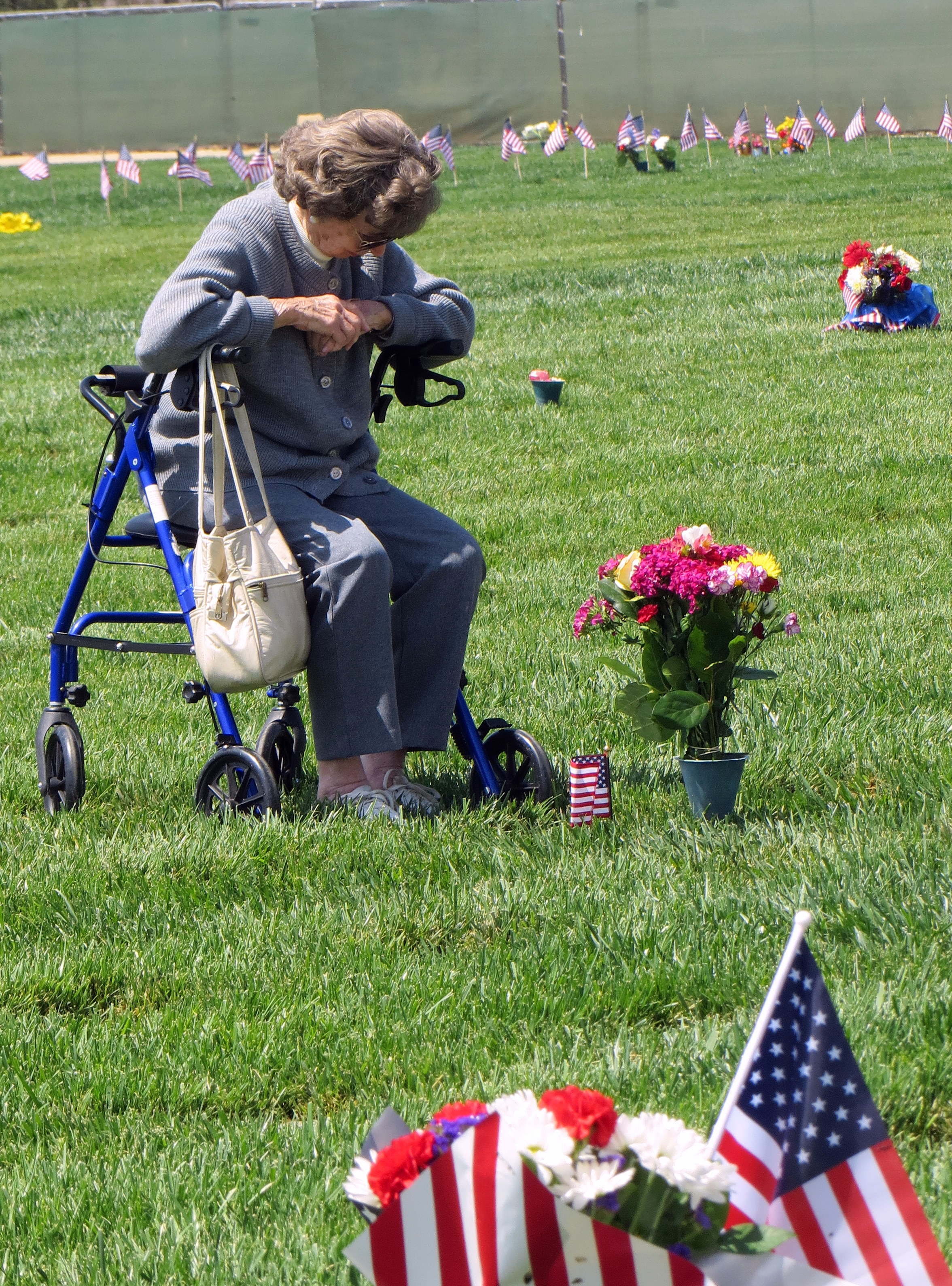
Marge and I at Riverside National Cemetery, Memorial Day Weekend 2013

A LETTER…

[Please also see “Mr. Johnson, USMC” if you wish to learn the background of this couple from the Greatest Generation by clicking on the link.]

Dear Marge,

Well, Marge, you made it indeed…  To see your beloved husband Johnnie for Memorial Day.

A heroic US Marine who fought on-board the USS Enterprise in World War II.

Decorated.

And he was but 17 years old when he set sail for the Battle of Midway.

Seventeen.  You said he was still in high school when he signed up for the Marines.  Unbelievable.

We were met by thousands of American flags being planted by hundreds of Boy Scouts and volunteers.  You were so happy to see the red, white and blue saturating the cemetery, bit by bit.

IMG_0773

While the Boy Scouts hadn’t made it to your husband’s resting place yet, we had our own little flag… and your beautiful bouquet we were able to pick up along the way.  You were so pleased with them but we made it a promise the next bouquet will be the colors of the USMC – scarlett and gold.  You knew he would like that.  Yes you did.

It was only the Saturday before Memorial Day but you were so elated to see how many people were there already…and we arrived at 10:00 AM!  You were worried we wouldn’t be able to find a place to park when someone upstairs opened one up for us.

You were so anxious to visit him that you made it out of my car in record time and walked as quickly as you could!

While you used your stroller to get to the general area of his grave site, we had to leave the stroller and walk the last twenty yards on very saturated ground.  You were holding onto my arm so tightly as the muddy earth gave way as we walked.  Remember?  My shoe sunk into the soil and inch or more.

And when we got there, we couldn’t find any water decanters…  They were all being used by the hundreds of other mourners…but by some lucky grace, we ran into Vicky…  She had bought 1,000 beautiful flags on her own and her niece was placing them neatly all along the columbine.  She went out of her way to find one for you!

IMG_0769
Vicki and her niece holding another bunch of the 1,000 flags she had bought to place along the columbine.
IMG_0770
Some of the 1,000 flags purchased by Vicki and placed by her niece for our fallen.

Your bouquet was so beautiful, Marge.  You said quietly Johnnie – your husband of 66-1/2 years – would like them so much.  You miss him dearly, don’t you Marge?  I miss him…

IMG_0764

And like the last time, on Easter Sunday, you talked with him…

IMG_0753
She is talking to Johnnie… True love and devotion…

IMG_0755

You shared with me again of how he left your life…and you were there for him til the very end… and how alone you felt because you are the last one alive from amongst your friends.  There is no one else.  You said you still look for Johnnie at your assisted senior care center to ask him a question but he doesn’t answer…

Thriving love…

____________________________

We promised to go back in two months, yes?

I will be calling you because he means so much to you… and it means so much to me.

I wish people would understand your love and devotion.

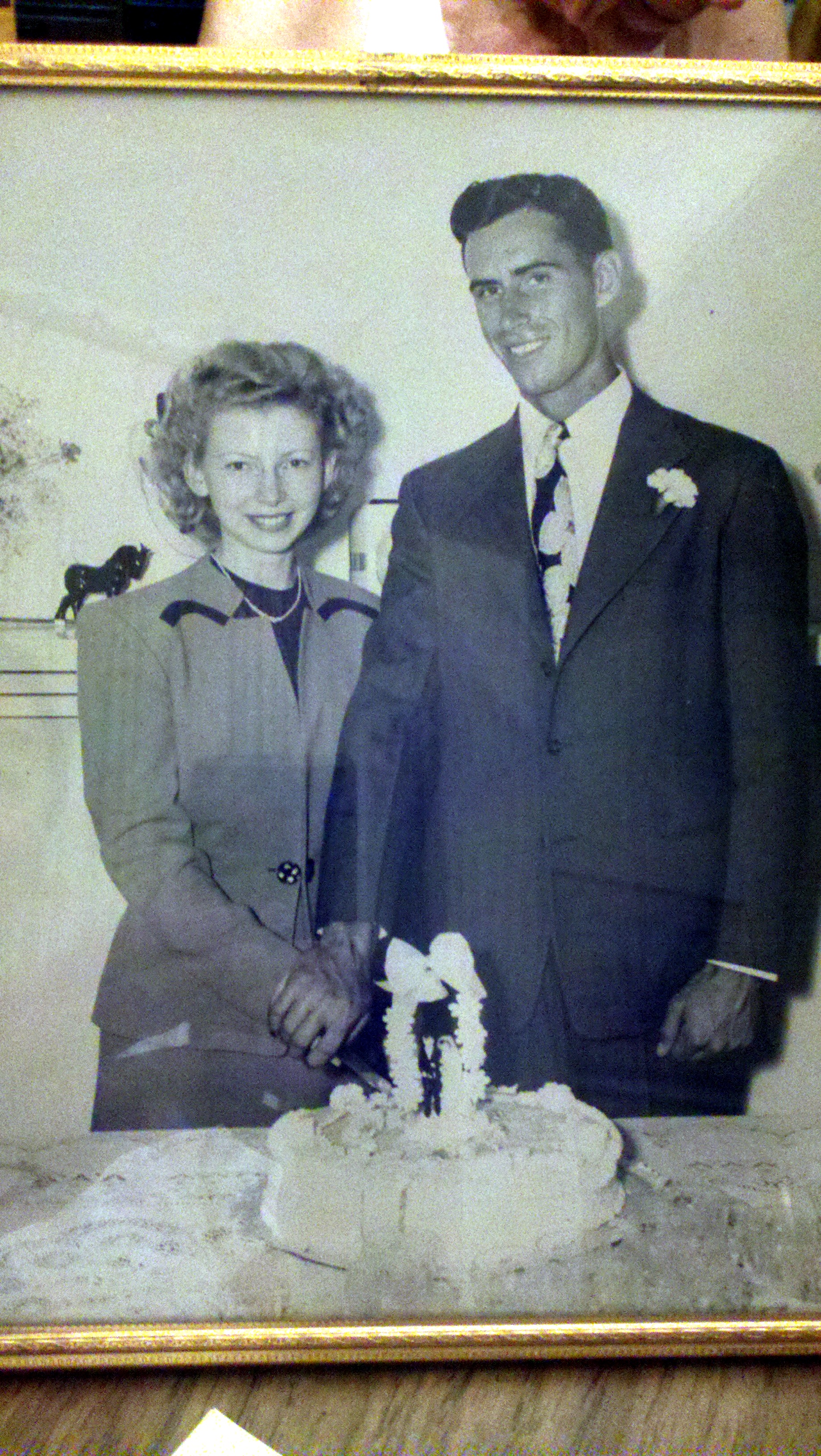
Marge and Mr. Johnson on their wedding day in June 1945.

With love and admiration,

Koji

The Photographer for My Daughter’s Wedding


“Just photos,” as they say…  Photos of my beautiful daughter’s wedding a couple of weeks ago.

Well, with just a little writing, perhaps, with a smidgeon of our American history tossed in.

In my other blog posts, there has been mention of the “internment camps” in which one-half of my dad’s family was imprisoned in the US during WWII.

Internees were not allowed to bring in cameras amongst many other things deemed to be a threat to national or camp security – like knives, guns, tools…and cameras.

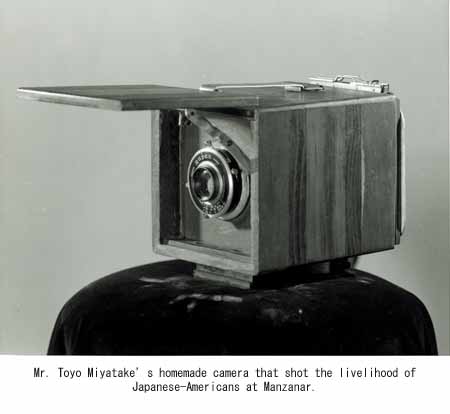
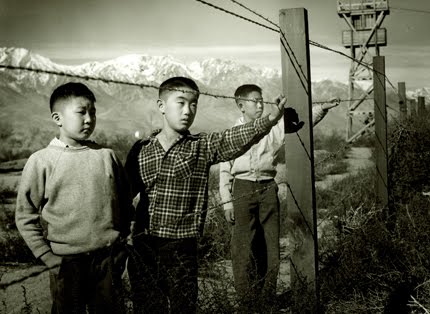
However, at one camp called “Manzanar” (where my Aunt Shiz and cousins were imprisoned), one brave soul braved the tight security measures and actually made his own camera…in secret.  He then took prohibited photographs during his interment.  His name was Toyo Miyatake…  (Note: there is a super documentary on Toyo Miyatake called “Toyo’s Camera“: http://www.toyoscamera.com/.  One contributor was George Takei who played “Sulu” on “Star Trek”.  Takei was also imprisoned during the war.)

toyoscamera
Copyright Toyo Miyatake Studios

The actual camera he made is shown below; it is still in the possession of the Miyatake family:

camera
Copyright Toyo Miyatake Studios

In what I believe is a Signal Corps official photograph, the Toyo Miyatake family is pictured in their Manzanar barracks:

toyo_miyatake_family
Toyo Miyatake’s family in Manzanar

This is one of the more well-known photographs taken by Toyo Miyatake at Manzanar during WWII:

Copyright Toyo Miyatake Studios

_____________________________

Jump forward to today.

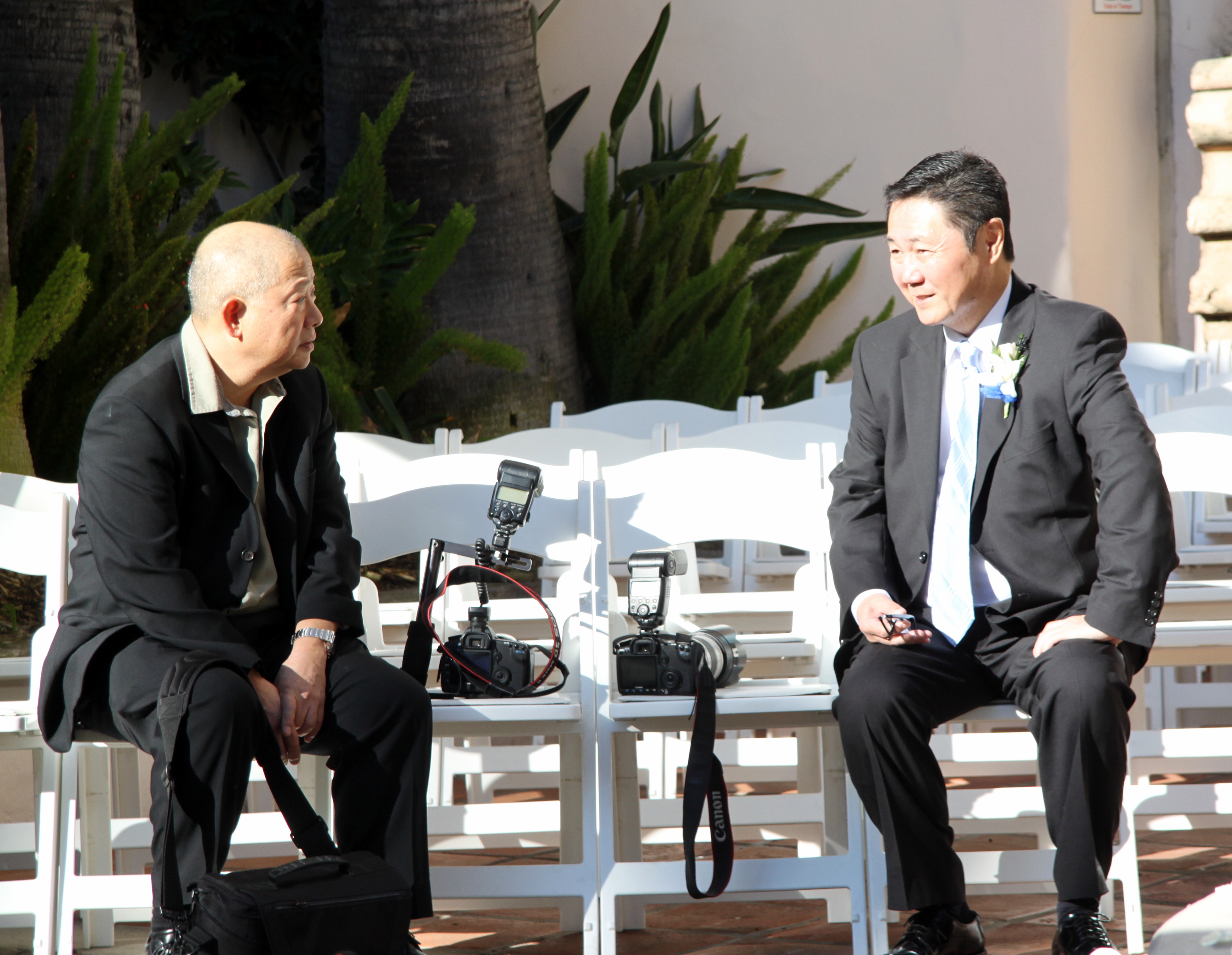
Toyo Miyatake’s grandson is Alan Miyatake; my 11 year old son sneakily grabbed my EXPENSIVE DSLR and snapped this photo of Alan and I chatting at my daughter’s wedding.  The  gent on the left is Alan.  We are the same age……but I do look YOUNGER, of course.  Just kidding, Alan!

Alan Miyatake on the left

We’ve known each other for over five decades now; we attended the same church.  When we played B-ball in the church league, he played guard.  When he let loose a shot, his form reminded me of a graceful ballet.  He was good… and his photography was fortunately much better. (Smile)

He shot my weddings…both of them, unfortunately.  And there was no one else I was honored to have shooting my daughter’s.  Both of us were joking before the wedding that we were both extremely grateful for auto-focus…

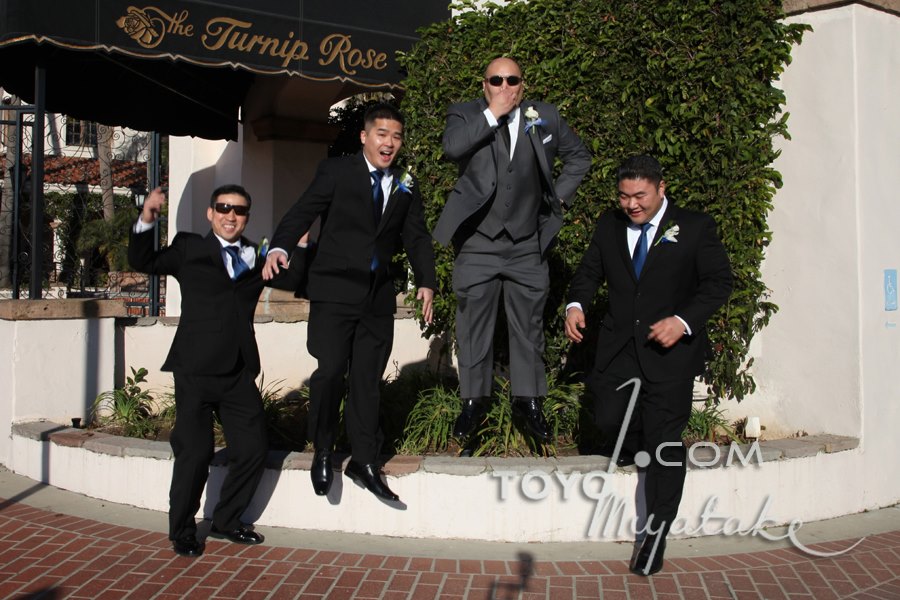
The following proofs are Alan’s work where noted.

Thanks, Alan…but I still challenge you in sports photography! LOL

________________________________

19487_10151280500243985_1721626854_n
Copyright Toyo Miyatake Studios.  Isn’t my daughter just beautiful?  Takes after mom, I am told.
409720_10151263339763985_797407911_n
Copyright Toyo Miyatake Studios
542282_10151457570194665_1145731824_n
Copyright Toyo Miyatake Studios
431310_10151263339593985_467757909_n
Copyright Toyo Miyatake Studios
602943_10151263339898985_171487557_n
Copyright Toyo Miyatake Studios

409587_10151263339233985_1217325672_n

My four wonderful kids:

150002_10151457570254665_1505063580_n
Copyright Toyo Miyatake Studios.  This would be the last photo of the four kids together before her marriage.  I was honored to have Alan take this portrait.
424970_10151457570344665_548793061_n
Copyright Toyo Miyatake Studios.  My oldest son Takeshi and my ex.
602892_10151457569494665_1099971633_n
Copyright Toyo Miyatake Studios
65268_10151457570624665_1340253585_n
Copyright Toyo Miyatake Studios.  Doesn’t she look gorgeous?

_____________________________

And now, some of my snapshots…  Gotta throw these in:

aIMG_4206

aIMG_4252
My son was the officiant (i.e., he married them off).  He got choked up a few times.  The bridesmaid on the far left is my cousin’s daughter, seven months pregnant.

aIMG_4251

IMG_4278

IMG_4237
Ever faithful and reliable Alan at work…
aIMG_4310
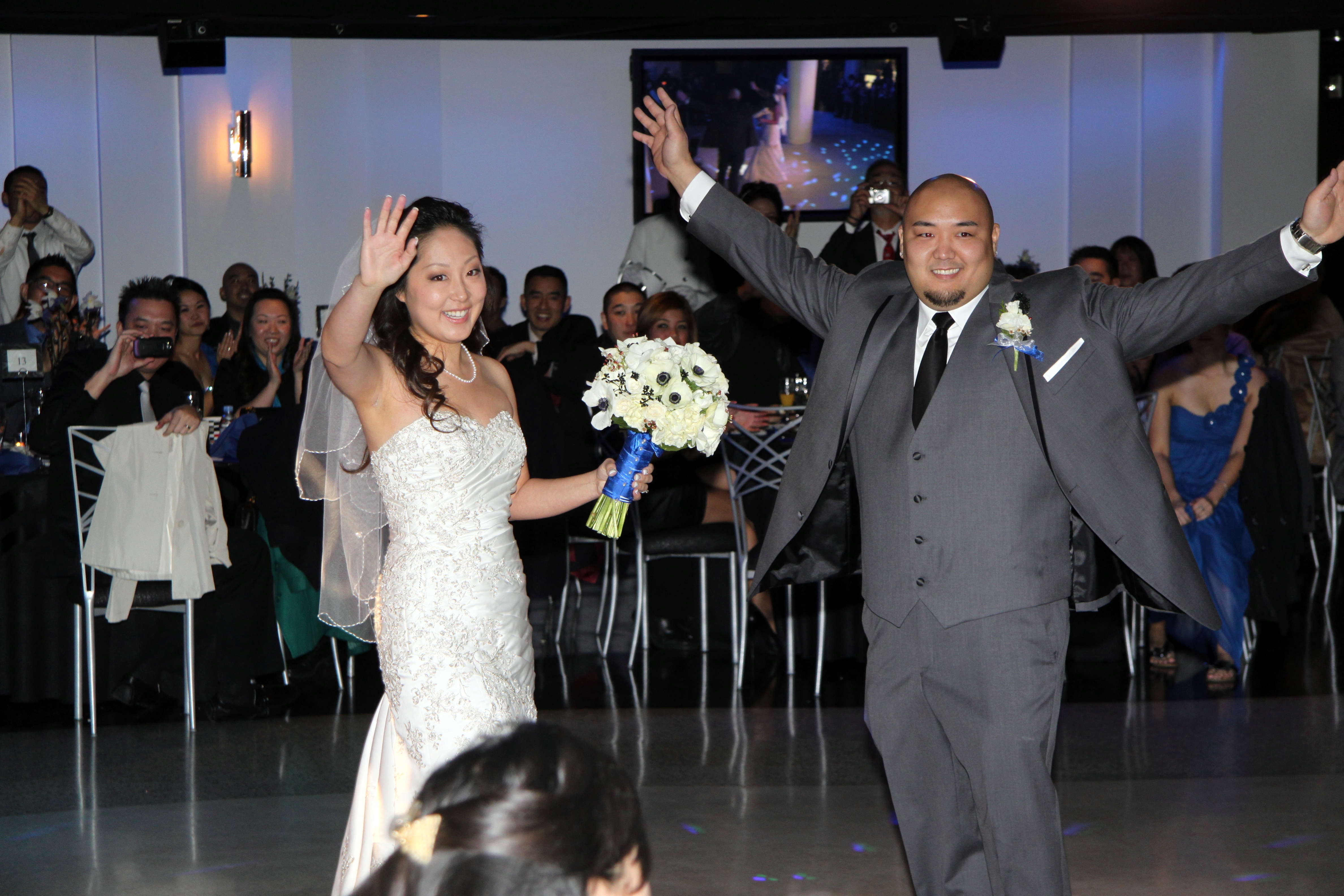
They make their entry as husband and wife
aIMG_4327
First dance…

aIMG_4337

aIMG_4365
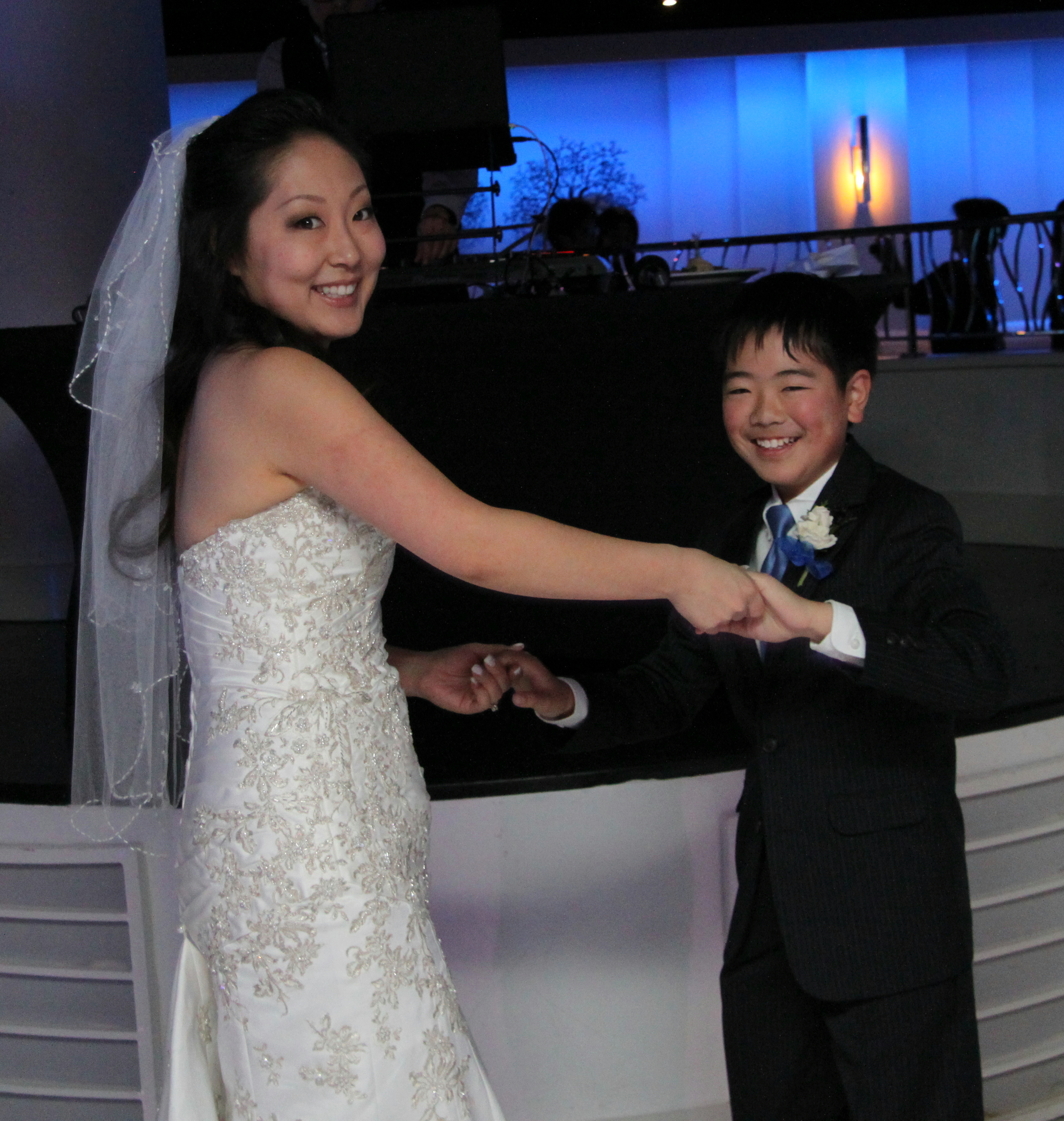
James and my youngest girl Brooke on their way for a dance. It was (HOPEFULLY) her first one.
aIMG_4362
My littlest son’s (hopefully NOT his) first dance.
aIMG_4403
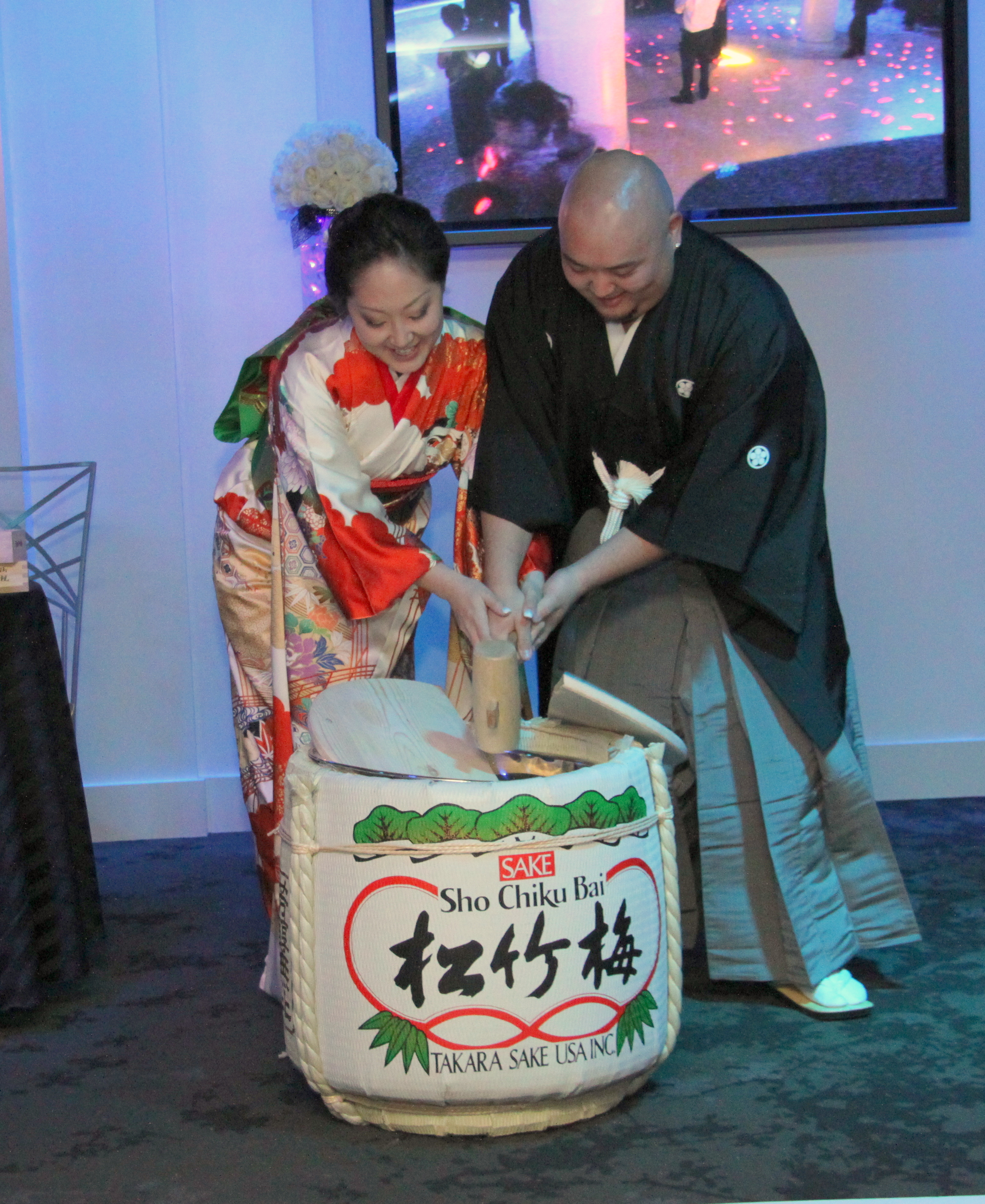
Breaking of the ceremonial cask of “osake” graciously provided by my new in-laws.
IMG_4374
Remember Jake and Brady? Their parents, too…but Brooke was too embarrassed to dance…yet.
IMG_4359
Jake lost! She was too embarrassed to dance. 🙂
IMG_4414
My bud Don and his wife Marie. A guy couldn’t ask for a more loyal and faithful friend. Thanks, Cap.

_______________________________

Alan, great job once again.  I was honored to have you shoot my daughter’s wedding.

And congratulations, James and Robyn.  Love you both.