Tag Archives: WWII

The Truly Reluctant Admiral Yamamoto – Part VII


Yamamoto’s Barriers to Becoming the Ultimate Admiral

I never served… I never donned on a uniform for this great country.

That in itself qualifies any opinion I may have to offer on World War II military leadership… but from my armchair civilian’s viewpoint, Admiral Yamamoto was one of the elite admirals of World War II.

I certainly feel he was likely the one with the most military foresight and highly likely the most well balanced.  Yes, he was the enemy and FDR approved his assassination in vengeance for the attack on Pearl Harbor… but I am looking at this broadly.

And I also feel he may have become one of the greatest admirals in history if the barriers obstructing him had not existed.  Regardless, his military achievements could have been much, much greater had he not been encumbered by conditions smothering him – and yes, he did have one prominent military weakness in my humble opinion.

Factually, he may have succeeded in bringing the US to the peace table if Pearl Harbor was an unqualified success.  No, not for “surrender” or to occupy America; that would have been impossible as he knew… but to get America to concede to Japanese expansion in Asia.

His Balls and Chains – Plural

The Uncontrollable Japanese Imperial Army

His first ball and chain was the misguided yet all domineering Japanese Army.  Since the Boshin War victory, their newly formed Imperial Army’s self-centered view of themselves had snowballed.  In other words, they were full of themselves and Yamamoto was handcuffed militarily and politically from a naval standpoint. They were second fiddle.

In American terminology, Yamamoto was a “dove” in a way, primarily because he realized Japan relied on imports of oil and steel from America.  The Army clearly wanted to invade neighboring Asian countries and take these resources by force.

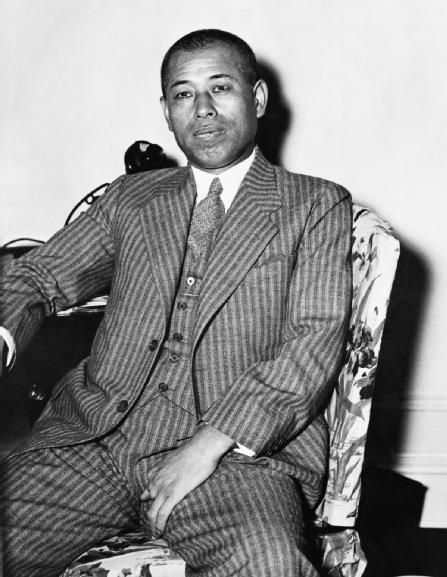
Signing of Tripartite Pact in Berlin, Sept. 27, 1940. Kurusu is on left. Yamamoto vigorously argued against this pact with Nazi Germany and Italy to the point he became a target for assassination.

Yamamoto was also forced into planning the attack on Pearl Harbor because the hawks in the Imperial Army-controlled government signed the Tripartite Pact in September 1940.  He knew this would cause Japan to become a clear enemy and anger FDR.  As the nail in the coffin, FDR through the League of Nations instituted an embargo on oil and steel. The “hawks” went berserk.

“If I am told to fight regardless of the consequences, I shall run wild for the first six months or a year, but I have utterly no confidence for the second or third year. The Tripartite Pact has been concluded and we cannot help it. Now that the situation has come to this pass, I hope you will endeavor to avoid a Japanese-American war.” – Admiral Yamamoto to Premier Konoye Fumimaro after Japan signed the Tripartite Pact.

Further, the “hotheads” in the Japanese military were so war focused that they lost sight of the fact their own natural resources – being an island country – was dismal.  “How could Japan wage a war,” Yamamoto knew; Japan’s natural resources were (1):

Copper                 75,000 tons yearly (less than 50% required militarily)

Iron Ore               12% of national requirements

Coking Coal         None

Petroleum          10% of needs

Rubber                 None

In another lesser known angle, the production of military aircraft in any great number was a pressing matter for Japan. In fact, the Imperial Army-controlled leadership simply allocated aircraft production right down the middle: one-half to the Army, one-half to the Navy.  Yamamoto was tasked with protecting the entire Japanese empire with his allocation of aircraft while the Army was only focused on land action.  This was more ironic in that Yamamoto championed the development of these Zeroes and the Betty bombers, both used by the army.

The “Overly Cautious” Vice-Admiral Nagumo

The second and likely Yamamoto’s heaviest ball and chain – if not the sinker at the end of a fishing line – was Admiral Chuichi Nagumo  (南雲忠一).  It is my belief that most importantly, the outcome of the attack on Pearl Harbor may have been truly been a death blow to the U.S. if Yamamoto himself had been in command of the attack fleet instead of Nagumo.

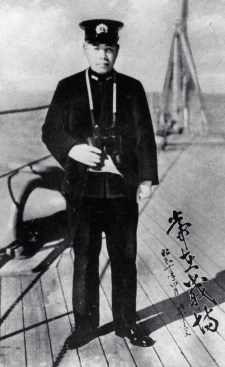
Admiral Chuichi Nagumo (南雲忠一)

Long story short, Nagumo was Commander in Chief, 1st Air Fleet.  He was in command of the world’s most deadliest carrier-based naval air strike force in history at that time, bound for Pearl Harbor.

However, he was raised a ship-based torpedo man and was well versed in surface maneuvering.   He had only had commands of destroyers, cruisers and a battleship before being appointed to this position of commanding the most powerful carrier based air strike force.  Even a fellow admiral (Tsukahara) opined that essentially Nagumo had zero experience in the capabilities and potential of offensive naval aviation let alone in battle.

Nagumo on left in Seattle, 1925. He spent two years in the U.S. to learn of naval equipment and strategies. My dad was also in Seattle at that time.

By the way, Nagumo and Yamamoto were like oil and vinegar.  In fact, while Yamamoto’s attack plan for Pearl was extremely well planned out, Nagumo had little faith in it and argued against it.

So how did he become in charge of Yamamoto’s six carrier Pearl Harbor attack force if he wasn’t qualified and did not support the attack plan orchestrated by Yamamoto?

It was because of… his seniority.  Simple as that.

You see, in those days and even today, Japan is entrenched in “etiquette” and social ladders.  Nagumo had the most seniority among admiral-rank officers and therefore was “rightfully” given the “honor” to command.  Not even Yamamoto could change that. (Accepting Nagumo would be fleet commander, Yamamoto ensured his two most highly regarded lieutenants were assigned to surround Nagumo during the Pearl Harbor attack –  Minoru Genda and Mitsuo Fuchida.)

Nagumo seated in the center of this 1943 family portrait. He himself would commit seppuku the next year at Saipan. Source unknown.

But most of all, Nagumo was overly cautious.  Timid may be another word to describe what I see forthwith:

  1. In spite of heeding Genda and Fuchida’s strong urging to send a third wave at Pearl Harbor, he assessed the situation conservatively.  He ordered the planes and ordnance below and turned the fleet around after only two waves.  His apparent reasoning was to not lose a carrier to air attack from the Americans while Yamamoto was prepared for two carriers lost.  Nagumo made this decision in spite of Fuchida circling above Pearl in the clouds for about two hours during the attack, professionally observing the damage at Pearl and providing a detailed accurate report in person to Nagumo. The purpose of the third wave to was destroy repair and fuel facilities.  By destroying such assets, the U.S. would NOT have as quickly re-floated/repaired the badly damaged ships.  However. to be fair, this is not to say that if Nagumo had sent the third wave that the mission would have been accomplished.
    While Japanese propaganda blatantly lied to the public that the American fleet had been completely destroyed by Nagumo, that was far from the truth.  While Yamamoto had heard smatterings of what really happened on board the Akagi (Nagumo’s flagship), Fuchida flew in ahead of the fleet and personally gave Yamamoto a detailed report of the situation and how Nagumo’s timidity resulted in an incomplete mission.  The whole PURPOSE of the secret attack was to totally cripple the U.S. fleet including fuel and repair docks.  Yamamoto concluded the Nagumo-led attack failed to complete its mission. Because the propaganda had made Nagumo into a national hero, Yamamoto could not do much. In typical Japanese fashion, i.e., a veiled insult, he didn’t congratulate Nagumo when they met.  Instead, he told Nagumo to ready himself for another battle.  Think about it.  In essence, if Nagumo had completed his mission, there would be no further battle.  Yamamoto was furious but did not show it.
  2. The next ultimate Nagumo failure was at the Battle of Midway.  Again, he was in command of a four carrier strike force which outnumbered the American fleet of three carriers.(2)  In support of Nagumo, however, the Americans had cracked the Japanese naval code, knew of the impending attack and had taken an immense gamble to set up an ambush at sea.  During the battle, Nagumo’s overly cautious nature resulted in delays in launching another strike against Midway.(3)  The carrier decks were loaded with bombs, torpedoes and fuel when attacked by dive bombers from the Enterprise (on which Mr. Johnson was again manning anti-aircraft guns).  Within minutes, two Japanese carriers were sunk. Nagumo would lose the last two in short order while the U.S. lost the Yorktown.
    Per his quote above, Admiral Yamamoto had forecast that his navy may rule the Pacific for six months to perhaps a year without a successful preemptive strike to eliminate the US naval fleet at the get-go.  He was right.  The Battle of Midway was six months after Pearl Harbor… and the preemptive strike had failed.
  3. Two months after Midway, August 1942, there was an intense sea battle, the Battle of the Eastern Solomon Islands near Guadalcanal.  The U.S. had only two carriers in the area (Enterprise and Saratoga under Admiral Fletcher) while Nagumo, who was again in command, had SIX.  Yamamoto’s orders to Nagumo were for his 3rd Fleet to seek out and destroy the American carrier force. In spite of the numerical superiority, Nagumo lost the carrier Ryujo but damaged the Enterprise severely.  (My neighbor, Mr. Johnson USMC, was a US Marine serving on board the Enterprise manning 20mm anti-aircraft guns and was wounded. See his story here.)  While both Nagumo and Fletcher didn’t have the bellies to engage the other and fight, Yamamoto was furious that Nagumo once again failed to successfully engage the two carriers and sink them due to indecisiveness and from being overly cautious.
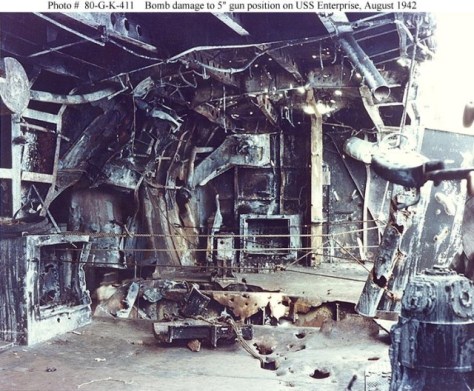
USS Enterprise damage. At dry dock.

Yamamoto’s Major Flaw

From early in his career, Yamamoto’s vision for a future offensive carrier based navy showed tremendous insight and intelligence.  His rise up the ranks allowed him to achieve his goals in steps.  Train the best aviators, develop advanced specialized attack aircraft, cease building battleships and build world-class carriers and institute intensive training and safety regimens. He was also an excellent planner and a man faultlessly devoted to the Emperor and the Japanese empire.

But one aspect of naval warfare he was unable to get his arms around involved his submarines.  The subs were innovative and fired the tremendously effective and reliable Type 95 and Type 93 “Long Lance” torpedoes. One, the I-400, was the largest sub ever built.

I-15 fleet sub
I-400 aircraft carrying sub, the largest sub built for WWII.

However, Yamamoto did not veer from his belief that his submarines (of which there were not many) were primarily to be deployed against capital ships, i.e, destroyers, cruisers, battleships and hopefully carriers.  While the submarines did sink the USS Wasp and fired the final blow to finish off the Yorktown, their successes were not many, thankfully, due to defensive measures taken by the U.S. Navy.

But within this belief, he failed to deploy them effectively against merchant shipping and supply ships. In tabular form, the table below reports the number of merchant ship sinkings by submarines (rounded):
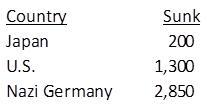
While Nagumo failed to complete the mission to completely destroy the naval assets and facilities at Pearl Harbor, Yamamoto himself contributed to allowing the US to rebuild its Pacific Fleet quickly through his short-sighted and defective deployment of his lethal submarines.  While many subs of various classes were deployed about the Hawaiian islands (4), they were generally recalled by January; they were only able to sink a couple of merchant ships and were plagued by mishaps and strong anti-submarine warfare tactics by the US Navy.

______________________________________

The death of Admiral Yamamoto in Part VIII to follow.

______________________________________

Footnotes:

(1) “Yamamoto” by Edwin P. Hoyt.

(2) The four Japanese carriers that were sunk, the Akagi, Kaga, Soryu and Hiryu, were four of the six  carrier fleet that attacked Pearl Harbor.  This sweetened the victory for the U.S.  Japan would NEVER recover from this loss.

(3) To the defense of Nagumo, true military historians cite that Nagumo may have been following Japanese naval doctrine in that it required launch of strike aircraft in full force rather than in piecemeal.  Further, that Spruance had already given orders to launch his aircraft so Nagumo’s cautious approach to delay launch would not have made much difference.

(4) Another tip-off to an imminent attack were the number of radio transmissions from Japanese submarine headquarters to it sub fleet off the shores of Hawaii.  Per “The Japanese Submarine Force and World War II” by Carl Boyd in 1995: “Part of the reason for the failure of the I-boats in Hawaiian waters concerned the manner of directing operations from afar. The commander of the Sixth Fleet, Vice Adm. Mitsumi Shimizu at Kwajalein, filled the air each night shortly before the air strike with radio messages to his submarines around the Hawaiian islands.  A U. S. Navy intelligence officer, then stationed at Pearl Harbor, wrote 25 years later that “port authorities in Hawaii were thus made conscious of the magnitude and to some extent the location of the Japanese submarine menace. They were consequently cautious in routing ships, and this had some bearing on the Japanese lack of success.”
The Truly Reluctant Admiral Yamamoto – Part VI


Admiral Yamamoto on Rabaul in 1943 and shortly before his death.

The Imp and a Nickname

In direct contrast to his smug and no nonsense military face while on duty, Admiral Yamamoto was indeed a complex yet unselfconcious man.  He was a strategist and used spontaneity to his utmost advantage…

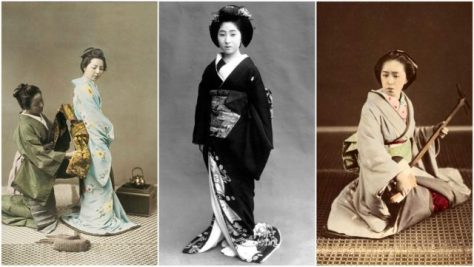
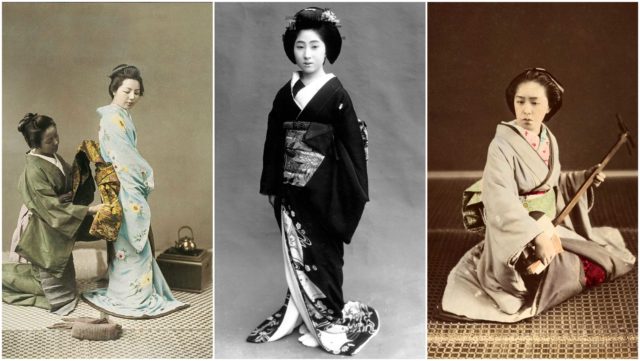
…and typical of that time, Admiral Yamamoto sought relief and amusement in true geisha houses. (1)

The Impish Admiral Yamamoto

In Part II of this series, you learned that Admiral Yamamoto pursued gymnastics given his small build and illness-ridden childhood.  He had persevered and became quite good at it.  This skill came into good use throughout his military career.

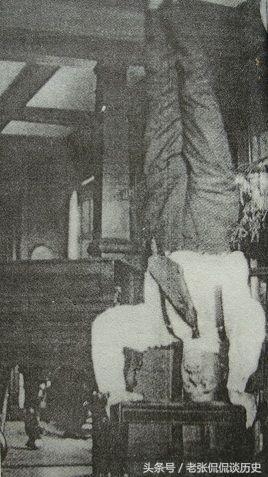
Even as a young ensign, he would love to see his companions’ reactions; on the spur of the moment, for example, he would do a handstand on a ship’s rail.  He was that confident in his gymnastic abilities. I wouldn’t even get near the handrail just standing on my two aging feet.  I hate heights.

Admiral Yamamoto doing a handstand at a geisha house. Source unknown.

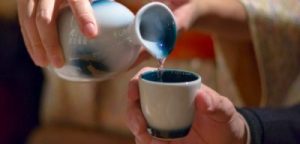
Still later in life, at dinner parties most often held in geisha houses, he would refrain from drinking more than a small cup or two of osake while his other navy fellows would drink to excess.  If you recall, he couldn’t drink as he would turn bright red even after a sip like my Dad.  All of a sudden, he would do a handstand to the amusement of not his fellow sailors but the geisha as well.  As they would break out into laughter at his spontaneity then settle down, he would quietly observe them as he knew they would either serve together or under him.  He sought out their weaknesses and strengths.

This is what is meant by “a cup or two” of osake.

On yet another show of spontaneity, he was sailing to America in 1919 on board the Suwa Maru.  His Japanese contingent was dining with Western diplomats when the Westerners started to get drunk and began to sing and dance.  They tried to get the stoic Japanese to also dance but they refused.  Very typical; I am like that. Yamamoto saw a relational rift already developing and to break it, did yet another handstand to the joy of the Westerners.  He then took some dishes from a bus boy and began spinning them on his fingers to the great joy of the Westerners.

It was also said that upon his return in 1935 from failed talks in London, the now Rear Admiral Yamamoto childishly stuck his tongue out at some Akasaka geisha who were at the Tokyo train station just to get a reaction.

The Gambler Admiral Yamamoto

Admiral Yamamoto was indeed a gambling man – and a very good one at that.  He would empty many a pocket of his opponents in several countries during his official and unofficial travels… even in Siberia.  He remarked that the British were the easiest victims.  Indeed, he had mastered bridge and later poker during his travels in America and England.

He was so openly against warring with America that the navy “hawks” despised him so much that he was “put out to pasture”, so to speak, in the Navy Affairs Bureau in 1935.  At that time, he was depressed to the point that he confided with his closest friends that he was thinking about resigning – and that he would be totally happy retiring in Monaco while opening up a casino there.  He was that confident in his gambling abilities.

A Nickname from the Geisha

In Part I, it was mentioned Admiral Yamamoto was given a nickname by the geisha – it has to do with money.  But before I disclose what it was, some time machine action has to take place.

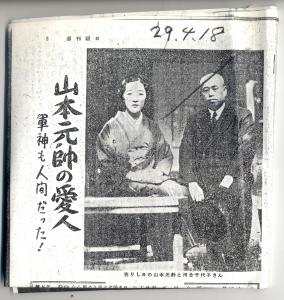
Admiral Yamamoto with apparently one of his favored  geisha named “Chiyoko”. Someone unfamiliar with the military had written on April 18, 1954、「軍神も人間だった!」or “Gunshin mo ningen datta!” I translate it to read “The army God was a human!” As you know, Admiral Yamamoto was not army; he was Navy and despised the Army. Source unknown.

Admiral Yamamoto would often get his manicures from the geisha.  At that time, manicures would run about one yen.

“Yen” is the monetary unit in Japan as you all know.  In the 1920’s, just one yen went a long ways; it was a different time.  I understand one yen could have bought about a dozen eggs or about 5 pounds of rice (which was hard to get your hands on) or about ten bowls of ramen. However, there are “100 sen” in “one yen”.

Well, he was lovingly called “八十戦” or “Eighty Sen” by the geisha.  They apparently felt bad charging him one yen for a full manicure.

He only had eight fingers.

__________________________________________

More to follow in Part VII.

__________________________________________

Footnote:

(1) There are only several hundred true geisha left in Japan.  A once ancient tradition, their number and appeal has diminished so much that many Kyoto merchants who had solely serviced the geisha for centuries (silk kimono making, elaborate accessories, wooden sandals, etc.) have closed their doors.


The Truly Reluctant Admiral Isoroku Yamamoto – Part V


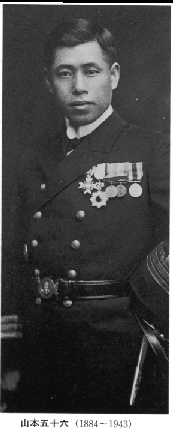
A still youthful looking Admiral Yamamoto. Source unknown.

Just as Patton, Ike and Nimitz led with their hearts and souls for America, Admiral Yamamoto did the same for his country… from even before WWII started.

He had tremendous foresight and used it to modernize the Japanese fleet – both on the water and most of all, in the air.

This is not said to glorify or sympathize with the Japanese military of World War II.  It is just a statement of fact.  Admiral Yamamoto – given his duty and orders by the Japanese government and as career military – was going to do his utmost to defeat America if it came to war…

…but he knew down to the tips of his ten toes and eight fingers the Japanese Empire would end if they were to take on the Americans and Brits.

______________________________________

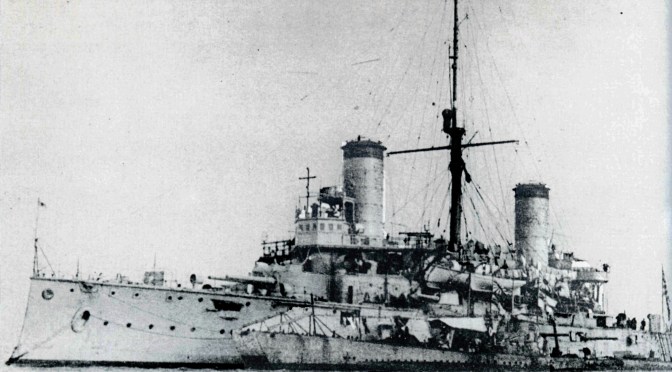
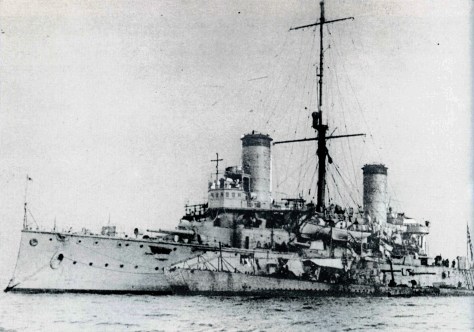
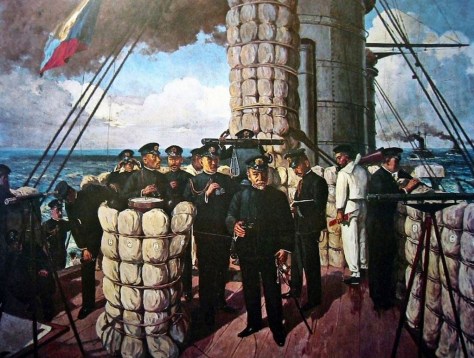
Up to the beginning of WWII as we know it, Japan’s professional military had an unreal view of their invincibility after their lop-sided victory over an European power in the Russo-Japanese War.  While Admiral Togo did soundly defeat the Russians, the Japanese military failed to realize Togo had much better gunnery equipment and newer warships.

For the losing Russians, they had taken a knife to a gunfight.  In a way, you can say the Japanese military – especially the Imperial Army – were full of themselves after this “impressive” victory…

But not Admiral Yamamoto.

He was always a cool cookie.

_____________________________________

Foresaw End of Battleships and Need for Carriers/Naval Aviation Superiority

In his steady rise to the admiralty and while attending Harvard, Yamamoto had heard of (but not witnessed) the famous demonstration of General Billy Mitchell sinking an obsolete German battleship by dropping bombs from now primitive biplanes (see video).  This was in 1921. The American military scoffed at Mitchell initially but as you can see here, aerial bombardment did sink a battleship.

Up to that time, the battleship ruled the seas.

No longer.

While the successful demonstration failed to awaken the US military (1), that historic moment sparked Yamamoto’s insatiable belief that aircraft, their pilots and aircraft carriers – and NOT battleships – would be the heart of all victorious naval fleets of the future.

He was dead on.

Achieving Aerial Supremacy

In 1924, Yamamoto was a captain.  While he briefly captained the cruiser Fuji, Japan’s ascent to naval aerial supremacy started when he was assigned to the Imperial Japanese Navy Aeronautical Technology and Training Center (海軍航空技術講習所) at Kasumigaura.

Located north-east of Tokyo near a beautiful lake, Captain Yamamoto was met by disdain by the young “hot-shot” aviators, brash with  swash-buckler attitudes: long hair, a general disregard for uniform code and a lot of drinking.  (Think of the fantasy “Baa-Baa Blacksheep” TV show and Robert Conrad.)  They further looked down on this much older officer; his 5’3″ frame certainly didn’t help nor did his “battleship” experience.  Yamamoto believed to achieve his vision of aerial supremacy, it had to begin with the pilots.

Cast of TV’s “Baa-Baa Blacksheep” which fictionalized the heroic escapades of MOH Pappy Boyington’s true “Blacksheep” squadron.

Yamamoto knew he had to get them in shape in all aspects.  It took over a month with some hot-heads even resigning during the ordeal, but it began with everyone getting crew cuts; when questioned about length, he rubbed his own head and crew cut and simply said exactly like mine.  He also “urged” strict adherence to the uniform code.  His solid character was critical to success.

He knew and wanted to know how to fly.  He began taking flying lessons at 40 years of age and studied late into the night to earn his wings. (2)

In addition, he would set the example.  He would not order a pilot to do anything he would not do himself.  In tests for structural integrity, HE would fly the aging craft himself.

When there were three fatalities during a training flight, he was out in the freezing sleet and cold rain along with the recovery team for three days and did not quit until all three cadets were recovered.   During those three sad days, he stoically yet quietly showed a very solemn side of his character to those around him – remorse and compassion.  Yamamoto had won them over.

He had turned around the aviation school’s reputation and glamor of being a pilot so much that many sailors flocked to apply.  He would then handpick candidates to become aviators; that’s how strongly he felt about achieving aerial supremacy.

He had now planted the seed for a world-class aviator force.  The next step necessary to achieve his vision of aerial superiority required building a fleet of aircraft carriers and advanced aircraft for the pilots fly off them. (3)

_____________________________________

The Imperial Japanese Navy’s Akagi Aircraft Carrier commissioned in March 1927 (apparently colorized). Akagi is written 赤城 in Japanese which means “Red Castle”.


Hell With the Battleships

In January 1929, he took the captain’s chair on board the Imperial Japanese Navy’s Akagi aircraft carrier. He was thrilled but without further mention at this point, his captaincy was marred by tragedies.

But later that year came a crucial development in his career that would have a direct impact on his hopes for an offensive air arm of the Navy.  He was assigned as director to Japan’s Naval Affairs Bureau of the Navy Ministry.  This was a magic door opening up for him as the bureau issued decisive policies on naval assets – the critical weapons and equipment.

You see, at this point in Japan’s naval history, their leaders still viewed aircraft as defensive weapons – not offensive.  Their admirals (as well as those of other world powers at that time) saw naval guns  (i.e., the big guns used on battleships) as the primary offensive weapon.  They believed in utilization of planes only for scouting/short range reconnaissance and perhaps some pestering of enemy targets until a battleship’s big guns could be brought to bear.

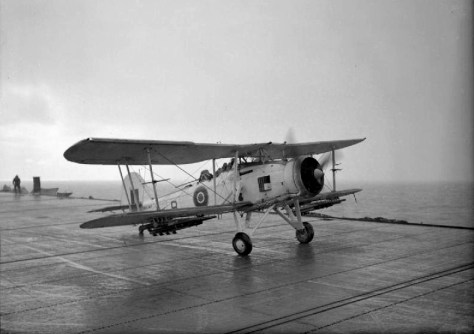
This strategy was disdained by Yamamoto.  He believed an elite navy requires a totally separate arm comprised of specialized offensive aircraft – fighter planes, bombers and torpedo planes – capable of inflicting severe damage to enemy targets on land or on the sea far beyond the range of a battleship’s guns.  Yamamoto’s vision was years ahead of his counterparts including America’s and England’s. (Even as late as 1943, England still used biplanes like the Swordfish which could do nothing well.)

Fairey Swordfish taking off an English aircraft carrier in 1943. Source unknown.

This new responsibility, which Yamamoto invested all his energy and time, was welcomed by him.  His task was parallel with his goal: to build a peerless naval air force.

He immediately began a program to replace the now antiquated battleship-based strike force with a deadly carrier-based task force that King Neptune would be proud of.

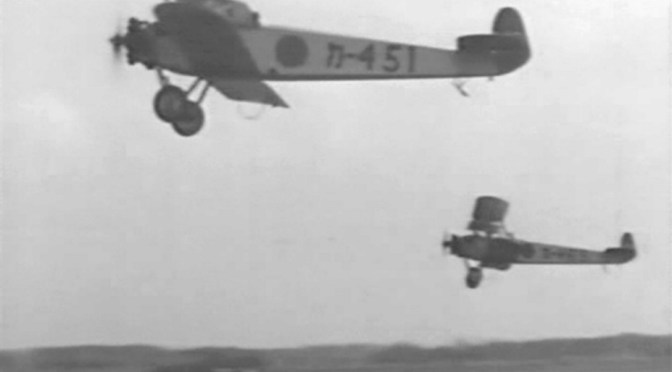
One aircraft of note that Yamamoto had a hand in at the get-go was the Mitsubishi Type 96 (A5N) all-metal monoplane fighter (below).  This became the predecessor to the now famous Mitsubishi “Zero” of which he again was instrumental in bringing to existence.

The Type 96 Mitsubishi A5N(A5N) all-metal monoplane fighter. It was master of the sky over China but it still lacked retractable landing gear.

______________________________________

More to follow in Part VI.

Part I can be found here.

Part II can be found here.

Part III can be found here.

Part IV can be found here.

______________________________________

Footnote:

(1) Even at the time of the historic Battle of Midway, US Naval pilots were still flying the obsolete Grumman F4F Wildcat, outgunned and outmaneuvered by the more agile Mitsubishi Zero which Yamamoto championed.

(2) I may be incorrect but in all the materials I have read about WWII, it appears that Admiral Yamamoto was the only command admiral who was an aviator.

(3) Of note is that the little known Mitsubishi Type 10 carrier fighter was designed by the former English Sopwith designer Herbert Smith; Sopwith had filed for bankruptcy after WWI so Mitsubishi hired him and his team.  It was of wooden frame and fabric covering. Ironically, the world’s first carrier takeoff took place in December 1922.  William Jordon, a test pilot and part of Smith’s team, took off in a prototype Type 10 from the Japanese Navy’s first aircraft carrier, Hosho.


The Truly Reluctant Admiral Isoroku Yamamoto – Part IV


Losing His Last Name

Yamamoto’s gift for leadership and his intelligence was noticed by his superiors.  In 1915, Yamamoto was rewarded by a jump in rank to Lieutenant Commander.

Trouble was… He possibly felt being called Lt. Commander Torano just didn’t cut it.  He may have felt there was a ball and chain in having the last name of Torano.  If you recall, that was still his last name.  His father – Sadayoshi Torano, one of the last true samurai – chose the wrong side and lost in a civil war.

In another way of looking at it, if you had an opportunity, would you stay with the last name of Clanton…  or change your name to Earp?

_________________________________________

It’s All in the Name

Now that he was on the rise, Lt. Commander Isoroku Torano caught the eye of the – you guessed it – the Yamamoto family.

“Yamamoto” was a very honorable name throughout history.  One Yamamoto in the small group of men controlling Japan at the time of the Russo-Japanese War commissioned Admiral Togo to attack the Russian fleet at Port Arthur.

Then there was Tatekawa Yamamoto, another samurai in the mid-1800’s.  He also fought for the emperor in the Boshin War alongside with Isoroku’s father.  If you recall from Part II, Sadayoshi Torano and his two eldest sons survived the war but had been wounded.

But Tatekawa Yamamoto was higher up the leadership ladder than Isoroku’s father.  In fact, he was one of the faction leaders trying to protect the emperor.  He, too, was wounded but was captured, a tremendous disgrace for a samurai.  He was beheaded by his captors.  In many ways, it was putting an exclamation point on being victorious.

Unfortunately, for Tatekawa Yamamoto’s family, when his head was severed, so was that Yamamoto family line.  You see, he fathered only girls.  No son to carry on the family name. (1)  That’s when Isoroku Torano caught the eye of the surviving illustrious Yamamoto family members.

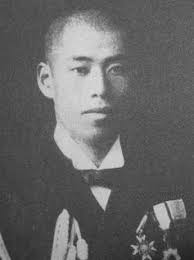
A young Isoroku Yamamoto. Source unknown.

In the meantime, Isoroku Torano knew the cards he was dealt being born into poverty.  There would be very little to inherit, especially since his older brothers made it clear to Isoroku early on in his life that he would not be receiving any  of the father’s minimal assets .

So as it happened, the Yamamoto family approached Isoroku and asked if they could adopt him and take on the Yamamoto family name.  In that period of Japan’s history – and even up to several years after WWII ended – it was not uncommon for a family to adopt males into a family to alleviate the issue of no sons. (2)

It was a no brainer for Isoroku Torano.  Besides, his parents had passed away a number of years earlier.  Isoroku humbly accepted the respected and wealthy Yamamoto family’s offer.

Through an elaborate Buddhist ceremony, Lt. Commander Isoroku Torano became Lt. Commander Isoroku Yamamoto.

Now you know.

Marriage

Now burdened with “carrying on” the Yamamoto family name, he realized he would need to marry.  No, it was not a case of going through hundreds of pictures of girls on match.com and asking them out on a date.  He saw it more of a duty than as an act of love.

He consulted with several close relatives and friends.  He apparently passed up on well-to-do aristocratic ladies as he deemed them to “require too much of their husbands”, so to speak.

Yamamoto and his new bride, Reiko, 1918. Source unknown.

He decided on taking on a girl named Reiko who had been educated at a girl’s school.  He wrote to his older brother:

“She stands about 5’1″ or two and is extremely sturdy.  It looks as though she could put up with most hardships which is why I am in favor of the match.”
After a very short courtship, they wed in 1918.  He fulfilled his family duty to the prestigious Yamamoto family by fathering two boys and two girls – all while fulfilling his duty as the consummate Imperial Japanese Navy officer.

_________________________________________

More to follow in Part V.

Part I is here.

Part II is here.

Part III is here.

Footnotes:

(1) In a similar fashion, that is why my grandmother kept my Dad’s younger brother Suetaro from returning to Seattle – to carry on the name and ownership of the Kanemoto home in Hiroshima.  Unfortunately, by keeping Suetaro in Hiroshima, he was conscripted by the Imperial Japanese Army only to be subsequently KIA in the Philippines in 1944 as a Japanese soldier. Like millions worldwide, his body was never recovered.

(2) The young male population in Japan was decimated from many years of war.  You have to remember “WWII” for Japan started in the early 1930’s but young men like my uncle perished by the millions, peaking from 1942 through the surrender in August 1945.  That was one overriding reason my Mom married my Dad, an “invader” as my grandma called the Occupying Forces – there were no young men.  Even my aunt (Mom’s younger sister) married a Nisei like my Dad.

The Truly Reluctant Admiral Isoroku Yamamoto – Part III


Admiral Yamamoto’s white gloves. Source unknown.

Admiral Yamamoto nearly always had on white gloves when in public.

Do you wonder why?

Please read on…

_______________________

By the time he graduated from the Naval Academy, he had established himself as a leader among the cadets.

His samurai familial heritage helped form the foundation of his strong character, a requirement of a strong leader. This was enhanced with his high school education which promoted cooperation.  He was calm, even when hassled by fellow cadets.

Yamamoto’s white gloves on board ship.

In one example and throughout his training, Yamamoto (remember his last name is still Torano) always carried around his Bible. His thirst to learn of Western ways was insatiable. With his diminutive size an invitation, a group of fellow cadets confronted him in his room about it. They interrogated him if he was Christian to which he calmly replied he wasn’t, and that he read the Bible to learn of Western ways. The cadets weren’t satisfied and continued throwing question after question at him. Yamamoto continued to calmly answer the questions then threw them out of his room.

The cadets, including Yamamoto, put out to sea on warships to learn seamanship on relatively short cruises due to national fuel reserves.  At this time, tensions between Japan and Russia began to percolate.  Both were eyeing conquering  Manchuria and Korea for their resources.  As such, the cadets talked frequently of what they would do if war erupted.  Yamamoto decided gunnery would be his specialty.

When Russia did not comply with a treaty with Japan, war did erupt.  A man named Heihachiro Togo was put in command as admiral of the combined Japanese fleet. While Yamamoto was still in school, Togo was victorious in two battles against the Russians.

Yamamoto graduated from the Naval Academy on November 14, 1904, commissioned as an ensign.  He graduated 7th in his class of 200. (Admiral Chester Nimitz also graduated from Annapolis the same year; he was also seventh in his class but it only numbered 114.)

Nisshin 1904. Masthead clearly visible. Source unknown.

By early 1905, Yamamoto had been assigned to the new cruiser Nisshin with Russo-Japanese War still raging. The fleet was under command of Admiral Togo. Yamamoto’s duty on deck as gunnery and watch officer was to man the masthead and scan the horizon for Russian warships. On May 26, 1905, he did so but did not see anything during his watch.

Depiction of Togo on the Mikasa.

His watch ended at 4:00 am and had retired but was awakened at 4:45 am. The Russians had been sighted. In typical samurai fashion, he completely changed his uniform down to his underwear and went back topside.

In the early afternoon, Togo engaged the Russians in a historic battle referred to as the Battle of Tsushima Straits. (1)

Yamamoto was able to observe the tactics of Togo first hand. Gunfire was exchanged but the Japanese gunnery was more accurate. Thousands of Russian sailors were killed and warships sunk.

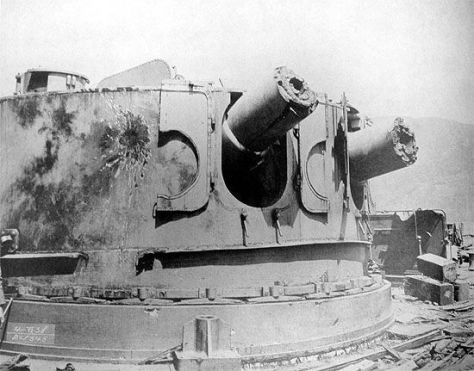
However, during the battle, it appears that the two guns just below Yamamoto’s battle station on deck exploded, knocking him unconscious momentarily.  (2) When he regained consciousness, he found a baseball-sized chunk of thigh had been blown away and shrapnel had peppered his body. He then looked at his left hand – his first and second fingers were dangling.  While remaining calm and ignoring the pain, he used his handkerchief to bind up his hand and it is documented he continued with his duties.

Gun damage on the Nisshin.
Closeup of the guns that apparently exploded during the engagement, seriously wounding a young Ensign Isoroku Torano. Source unknown.

When the battle was over, he was taken below for immediate treatment.  They removed his blood stained uniform but he asked they be kept.  He was later transferred to a hospital ship then to Sasebo for treatment.

A rare photo taken of Admiral Yamamoto showing his injured left hand – ungloved.

He would lose his two fingers. You can see in this rare photo.

Now you know why Admiral Yamamoto usually wore white gloves in public.  He wanted to try and hide his injuries from view.

His missing two fingers, however, would also become well known later in geisha houses.  He would be given a loving nickname on account of them.

___________________________________________

By the way, why did he have his bloodied uniform saved?  He shipped them to his father, Sadayoshi Torano, to evidence he did his duty.  Being a samurai, Sadayoshi was extremely proud and kept them in a special box until his death in 1913.

___________________________________________

Yamamoto received a commendation from Admiral Togo, a huge feather in his cap.  While the combat, coolness in battle, injuries and commendation shaped Yamamoto’s psyche and future rise in the Imperial Navy, the Russo-Japanese had a much larger effect on the Japanese military and therefore, directly on the young ensign.

The Japanese military was extremely angry that Theodore Roosevelt prevented Japan from getting any cash reparations from Russia.  Japan had gone into tremendous debt building their warships and military to fight the Russians.  The career military would never forget; it would fester.  Roosevelt’s political decision had tremendous consequences on Japan trusting Western powers, ultimately contributing to war against FDR-led America.

(Editor’s Note: The original post was removed due an error caught by my good friend Mustang and also because of formatting issues caused by the WP editing application.)

More in Part IV.

Part I is here.

Part II is here.


Footnotes:

(1) The Battle of Tsushima Straits was significant as it involved the first naval battle between all steel warships and used a primitive form of radio (sometimes called wireless telegraphy).

(2) Some military and combat experts report a squib round was the likely cause of the explosion which destroyed the guns.

The Truly Reluctant Admiral Isoroku Yamamoto – Part II


yama 22 yo
A young Isoroku Yamamoto as a cadet at Eta Jima Naval Academy.

Isoroku Yamamoto was NOT his birthname.  He was born Isoroku Takano, another surprise of buried history.

(And to make it easier for those who find Japanese names hard to follow, I will still refer to him by Yamamoto for this post.)

_________________________________

Indeed, his father Sadayoshi Takano, was a very proud and well respected samurai in the mid-1800’s. He lived his life as one. By this time, the samurai were peaceful and to while away their time, they studied art, philosophy and poetry. They were twiddling their thumbs, so to speak.

However, Admiral Perry showed up and caught the eye of many politicians and of a changing class of samurai who saw the European military style and assets.

The world had passed Japan by due to their isolationist ideals.

Tensions rose – the faction who wanted to keep Japan as it was and the faction who wanted change (modernization).  A bitter civil war erupted; it is referred to here in the Western World as the “Boshin War”.

soldiers in Western style uniform
The “modernized” Imperial Army soldiers as they were called instead of samurai. Notice the rifles and uniforms.. including boots. Samurai wore sandals.

Sadayoshi Takano, being the consummate samurai, chose to defend the existence of the samurai way of life and therefore isolationism.  While overall war casualties were low, indeed, he and his two oldest sons were wounded.

Unfortunately, he chose the wrong side.  His side, mired in old traditional ways of close quarter combat, i.e., samurai swords, was no match for the winning forces as they were armed with European rifles and cannon.(1)   Takano’s losing side even resorted to wooden cannon barrels bound with ropes towards the end.  They shot rocks instead of cannon balls and the wooden barrels would burst after but firing several rounds.(2)

yama last
A depiction of the traditional samurai (of which Yamamoto’s father was a member of) . They really had no chance against rifles and cannon.  They had to resort to using improvised wood cannon, bound with rope.  They shot rock for the most part and would burst after several shots.

After peace was achieved, the end results were that the samurai culture was abolished and troops were now called Imperial Army soldiers.  This period in history is referred to as the Meiji Restoration.(3)

______________________________________________

His Unusual Name

yama home
The Yamamoto home, heavily restored.

Being on the losing side, the proud samurai father Sadayoshi encountered a financially brutal life.  Because he had supported the wrong side, the victors would not give them employment. He, his wife and four sons wandered from place to place trying to survive. They decided to return to Nagaoka where they had a small shanty.

His wife died shortly after and Sadayoshi married her younger sister.  She gave birth to three more children: a girl and two boys.  Isoroku was the youngest, born in 1884.

yama 25
Sadayoshi Takano, Father

Admiral Isoroku Yamamoto had an unusual first name even by Japanese standards. In Japanese, it is spelled with NUMBERS: 五十六, or five-ten-six (56). It turns out his father Sadayoshi was 56 years old when Admiral Yamamoto was born. (Sadayoshi beat me by seven years. I last fathered at 49 years of age.)

Yamamoto was small; he was but 5’3″ as an adult. He was quite sickly in youth but he persevered; his father even kept a diary on his numerous bouts with the flu. (Like his father, Yamamoto himself ended up keeping detailed diaries.) At first, he attended missionary schools but never adopted the Christian religion – but he carried a Bible around and had critical exposure to this Western religion.

At his elementary school, there was a missionary named Mr. Newell.  With him, he achieved his introduction to the English language.  He would even stop by Mr. Newell’s house to have coffee of all things (very bizarre for 1890’s Japan) and further his exposure to Western culture and learning English – a very critical influence towards his rise to the admiralty.

_________________________________________

Another critical influence on his young life began when Mr. Newell moved to another city.  Once immersed in Western ways, he was now in an elementary school steeped in Japanese culture.

Although very poor, he was fortunate enough to be in Nagaoka and in 1894 began attending a progressive middle school, one of the largest in Japan.  With Japan’s modernization in mind, the school focused on Western technologies and sciences; yet, it expounded on the Japanese spirit.  Philosophies like individual responsibility and seeking opportunity, fortitude and cooperation were infused into the students.  The young Yamamoto absorbed it all, getting them embedded in his soul.  It would follow him for the rest of his life.

While not strong, he loved gymnastics and participated in a very small gymnastics program.  He knew he would have to try harder than the other boys due to his condition but he succeeded.  Gymnastics also becomes important in his naval career’s development as you will see.

He studied vigorously, realizing at his young age that to get out of this poverty, he would need to excel.  He knew some kind of scholarship or program would be the only way out.

His studious, serious nature paid off.  He placed second in the entire country in a very competitive entrance examination.  In the summer of 1901, at the age of 16, he therefore earned an appointment to the Japanese Navy’s Naval Academy on the small island of Etajima, just off the shores of Hiroshima.(4)

A young and focused Isoroku Yamamoto was on his way to become Admiral Nimitz’s most feared enemy 40 years later.

More to follow in Part III.

Part I is here.

______________________________________

Footnote:

(1) To clarify, both sides had rifles and used samurai swords. Takano’s Western armaments, however, numbered many times less.

(2) Another Hollyweird movie tries to depict this period of the Boshin War: “The Last Samurai” with the nutty Tom Cruise depicting an American soldier brought over to train the “winning” side on rifles.  He is captured by the “losing” side (the samurai) and at the end, fights for them.  Long story short, the fictional American soldier he portrays somewhat follows an actual man, a French soldier named Brunet.

(3) Meiji banned samurai from carrying swords; in fact, nearly all swords had to have their handles ground down so they would be difficult to wield. Sounds like California. However, my grandmother told me several times “the long nose, long legged invaders” (the occupying Americans of which my dad was one) came to each house and confiscated all ancestral swords. She tells me their ancestral swords that were taken away were from the 1600’s.

(4) Understandably, the occupying Americans shuttered the Naval Academy in 1946 but Japan reopened it in 1957. It is now home to Japan’s Maritime Self-Defense Force. I was extremely fortunate to have been given a personal tour in 1999 but the few pictures that were allowed are now lost. Their is a solemn memorial hall for kamikaze. Maybe that will be another post in the future.

Two Old Keys to Memorial Day | Masako and Spam Musubi


It’s not about a three day sale or a BBQ, folks.

https://p47koji.com/2014/05/21/two-old-keys-to-memorial-day/

The Passing of Dad


Dad was born nearly a century ago.

It’s amazing when you think of it that way.

February 25, 1919 in Seattle, WA to be exact.  Over 99 years ago.

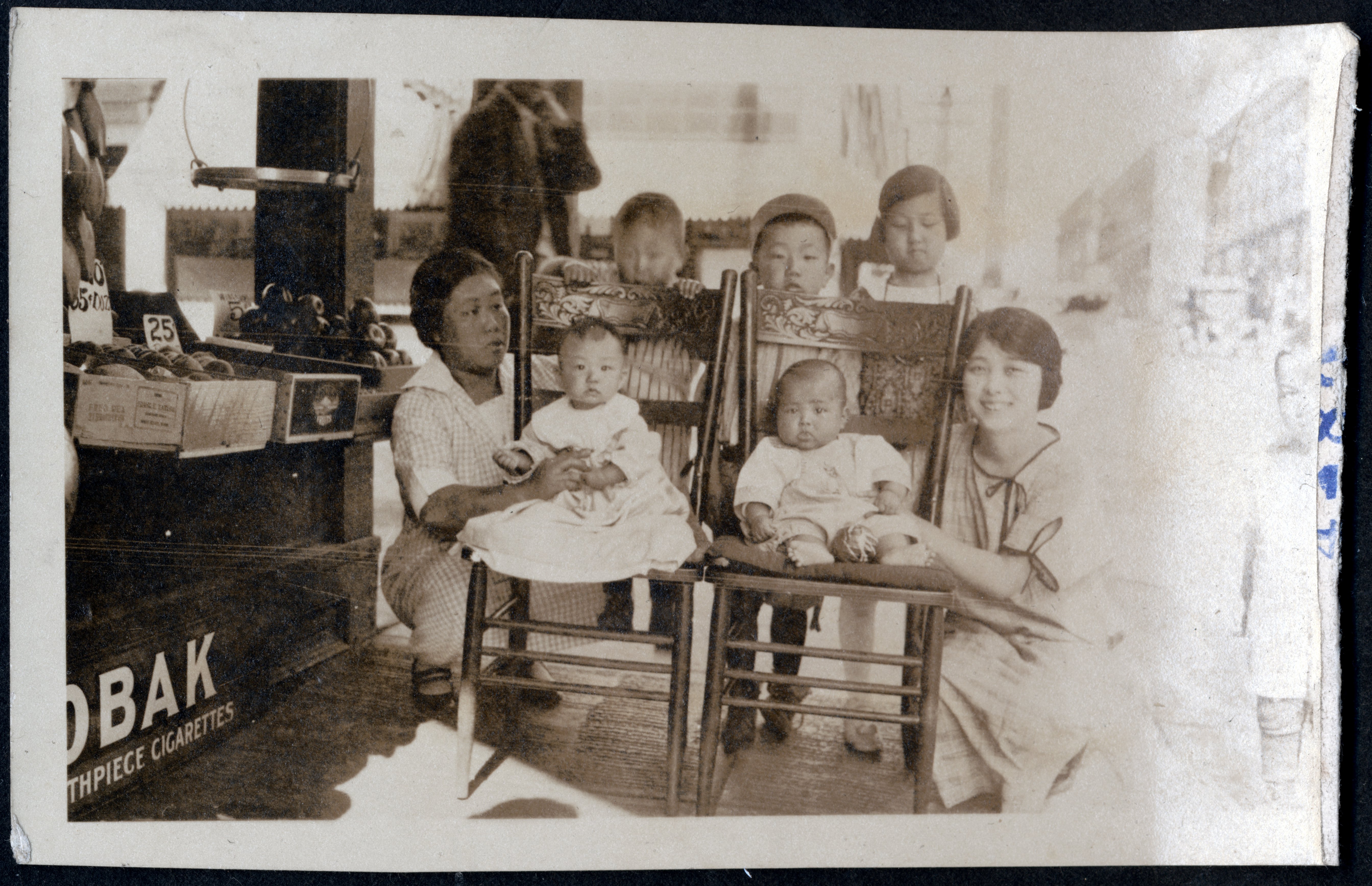
The fifth of seven siblings born to Hisakichi and Kono Kanemoto, both legal immigrants from Hiroshima.

…but Dad passed away quietly at 99 years of age on Good Friday, March 30, 2018 in Los Angeles, CA – at the same facility where his older sister, my Aunt Shizue, passed away just a few years earlier at 95.

Just an eulogy in photographs of Dad:

1920a
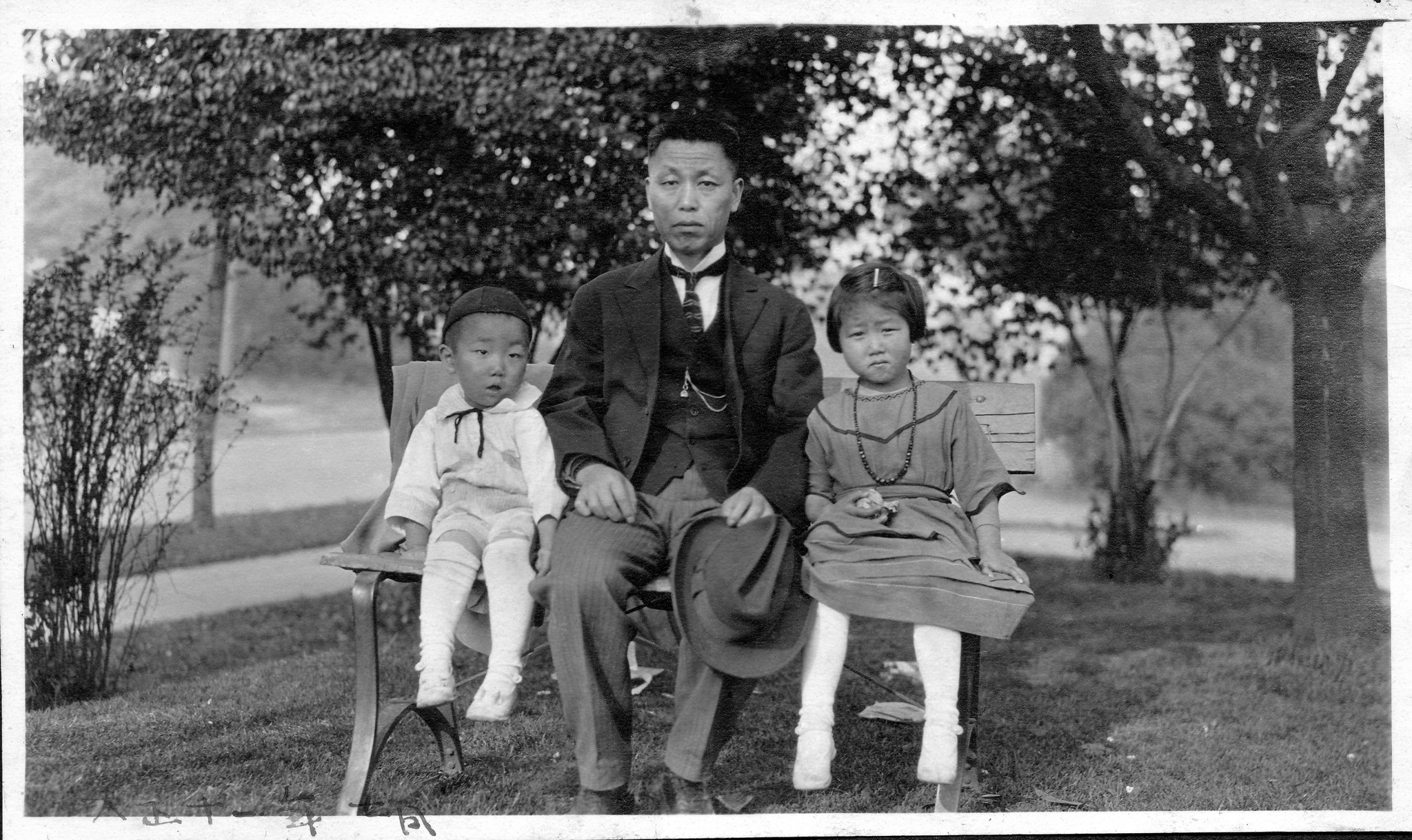
Dad on left, somewhere in Seattle with his father Hisakichi and older sister Shizue. Circa 1920.

1920
Circa1921, King and Maynard Streets, Seattle, WA

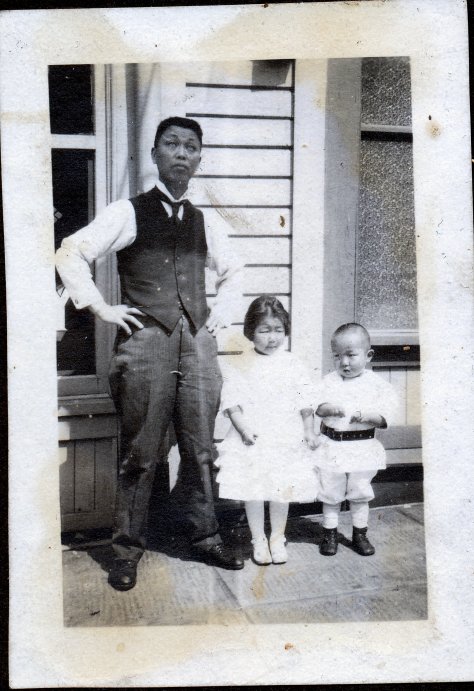
Dad at right with Grandpa Hisakichi and Aunt Shiz near their barbershop on King and Maynard, Seattle, WA. Circa 1922.


1923
Dad at far right. Grandfather holding Suetaro with Shiz holding a precious doll. Circa 1923, Seattle, WA.


1924
Dad second from left holding what appears to be a rice ball in front of their Seattle barbershop. Far left is Suetaro; to his right is Aunt Shiz. Circa 1924.


1924b
From left clockwise: Grandmother Kono, Suetaro climbing on chair, Dad with cap, Shiz, Mrs. Fujii and her son (?) and the youngest Kanemoto, baby Mieko who would pass away at 15 years of age in Hiroshima.  Circa 1925, corner of Maynard and King Streets, Seattle, WA.


1927a
My guess is circa 1925; the youngest sister Mieko appears to be about two years old. Dad on left, Uncle Suetaro is the boy in the center (KIA as a sergeant of the Japanese Imperial Army on Leyte October 1944). By 1927, all but the oldest boy (Uncle Yutaka seated on the left) would be living in Hiroshima. Only two would return to the United States before the outbreak of war. Of those left in Japan, only my Grandma will be alive by war’s end.
This was taken in Seattle. The finish was heavily soiled by oils left by those who handled it decades earlier and could not be smoothly removed.


1928a
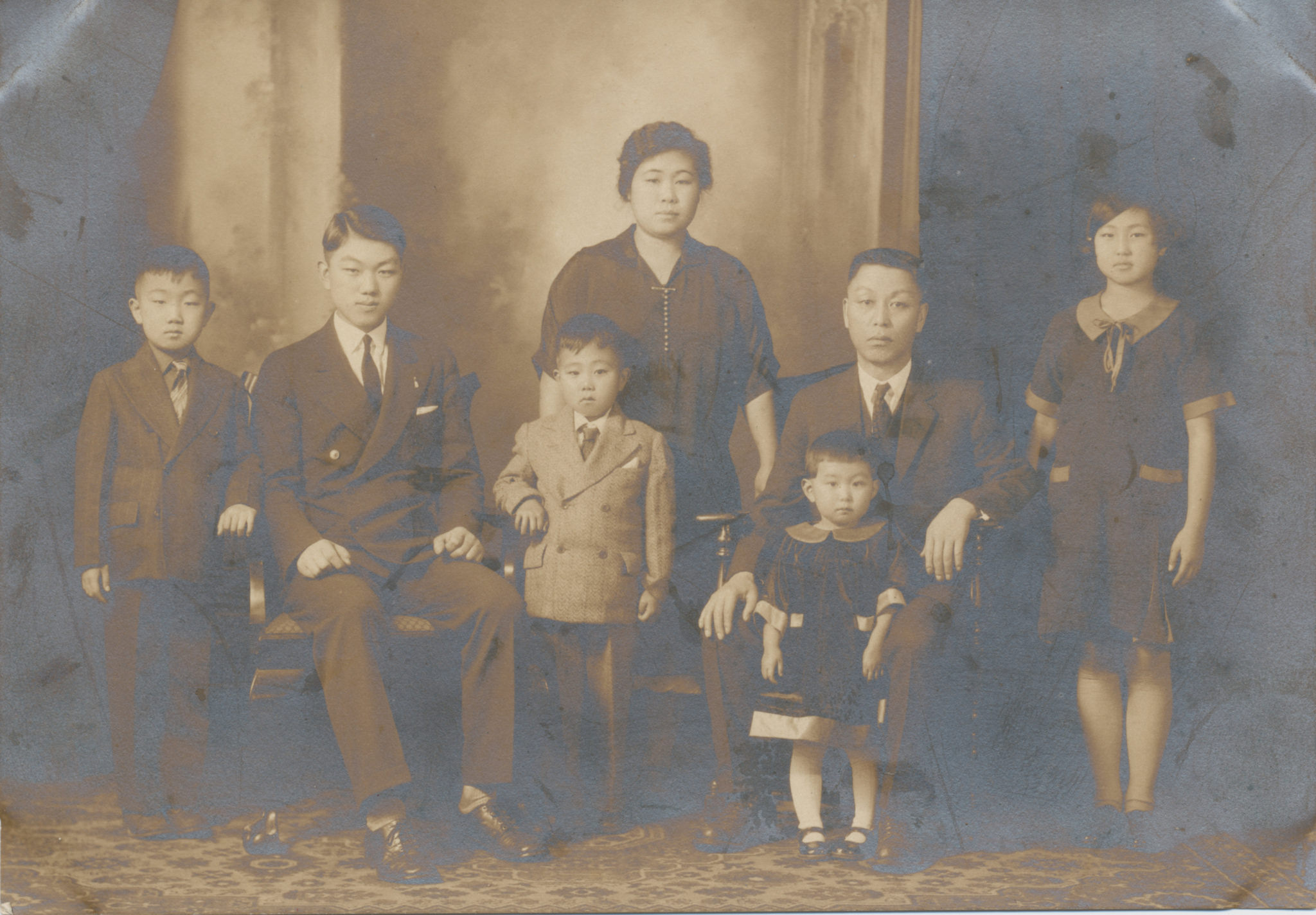
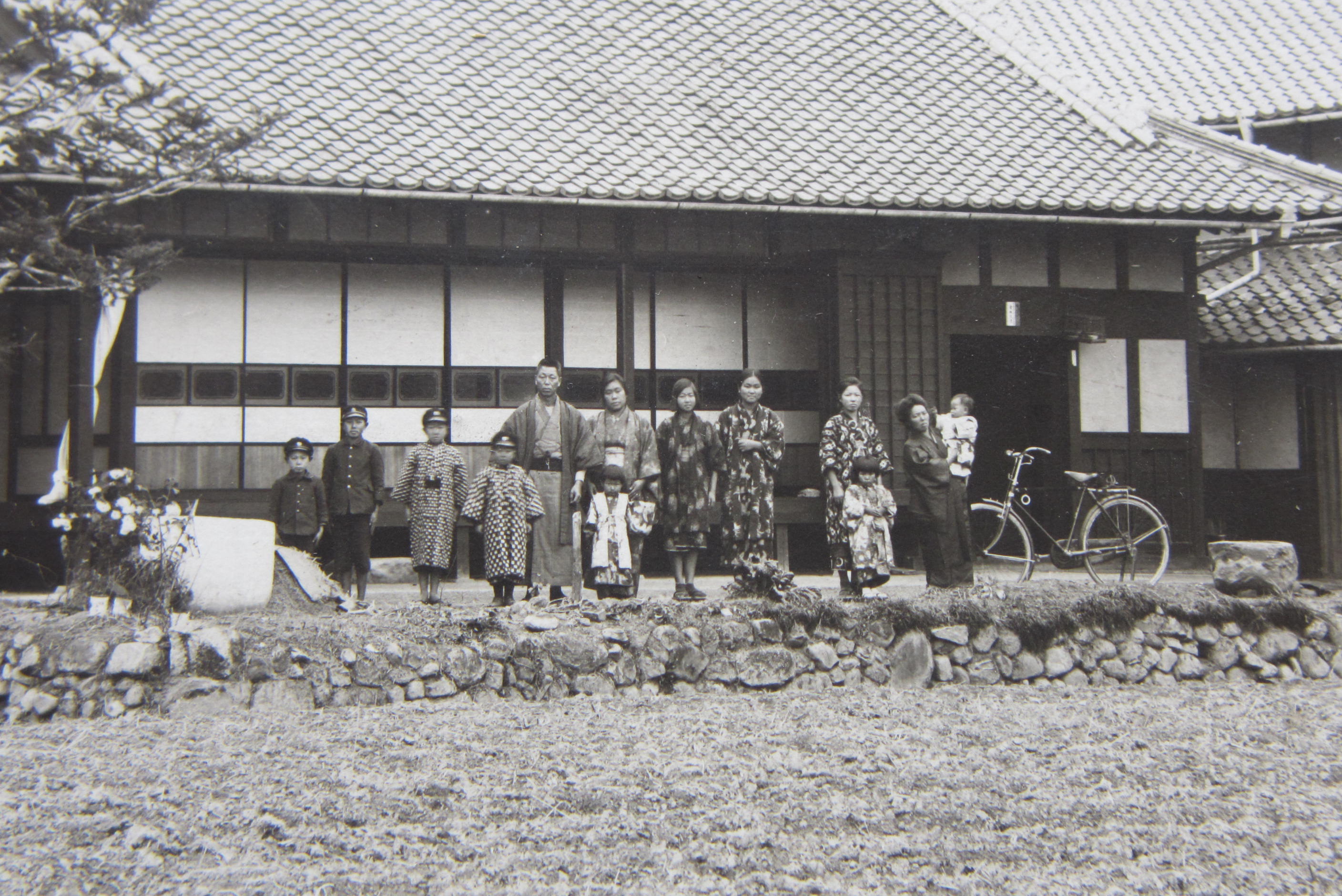
This is the first and oldest known photograph taken of my father’s Hiroshima home, still owned today by the Kanemoto family, circa 1928. Dad is the third from the left. The photo includes all of my dad’s siblings except for his oldest brother who had returned to Seattle and another brother who died at two years of age in Seattle.
The house was damaged by the atomic blast.


Dad on right next to his favorite brother, Suetaro. It is a tiny picture, about the size of a quarter, and it fell out from behind a larger picture glued in place in Granmother Kono’s photo album. Taken in front of family home in Hiroshima. My guess is 1928.


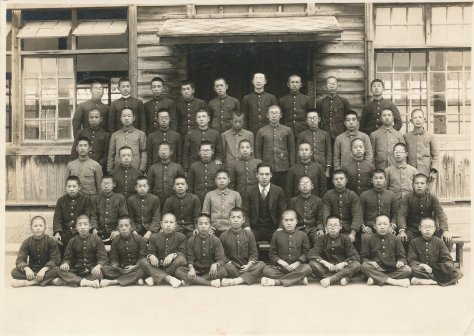
Dad is second from left, fourth row back in a lighter uniform, in a class photo at his Hiroshima high school, Nichu. It was totally destroyed by the atomic bomb. Sadly, the odds are tremendous all of his classmates were killed or wounded in the war as was his brother.  Up to a few years ago, he still remembered perhaps six of his classmates pictured. Dad was the last to pass away. Likely 1936.


I think of all the pictures of Dad spanning 99 years, this is the happiest I’ve seen him (right), posing at his Hiroshima home with his two younger siblings. Both siblings would pass away before the end of WWII. Circa 1936 is a guess.


Dad on his high school track team. He was a track star! Dad is in first row center, in white cap.


A page out of his Hiroshima high school’s yearbook: Dad in his senior high school portrait, bottom right. As verified by his predecessor high school administrative staff, he was the last one still living as of three years ago. He would return to Seattle after this. 1937.


Dad showing off his pride in his varsity sweater in front of his brother Yutaka’s home on Fir St. in Seattle. Likely taken between 1937 and Pearl Harbor.


Dad (standing) with his sister-in-law and my Aunt Haru and his oldest brother Yutaka holding his first son Seiichi Robert. Robert would die at six years of age at the Minidoka prison camp in 1944. All would be imprisoned three years later by President FDR, a Democrat. Taken in Seattle 1938.


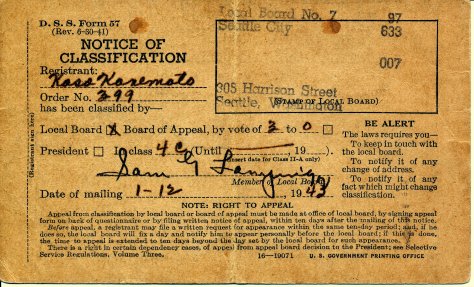
Dad’s draft card that classified him as an Enemy Alien (4c). Ironically, he had to carry it around in his wallet at all times while imprisoned at the Tule Lake and Minidoka prison camps – therefore the crease. 1943.


Dad preparing to ship out to Japan with the rest of his US 8th Army Military Intelligence Service buddies. He was one of the first graduates of the now US Army’s Defense Language Institute Foreign Language Center. Presidio of Monterey, November 1947.


Dad somewhere in Occupied Japan, March 1948.


Dad on his fateful day. Poor guy. I never heard him talk back to mom… ever. Tokyo February 1951.


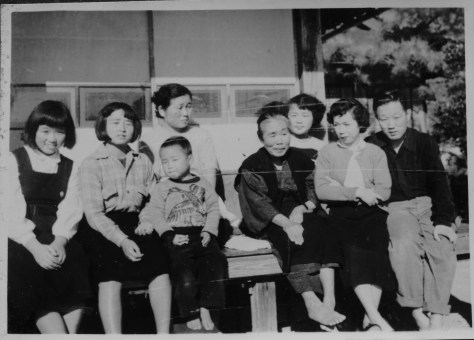
When Dad (at right) took mom to meet his Hiroshima relatives – including my Grandma (circa 1951). I can sense the tension between aristocrat Mom and coubtry woman Grandma Kono! LOL His mom would pass away in 1954, his oldest sister Michie (center) in 1963. All were survivors of the atomic bomb.


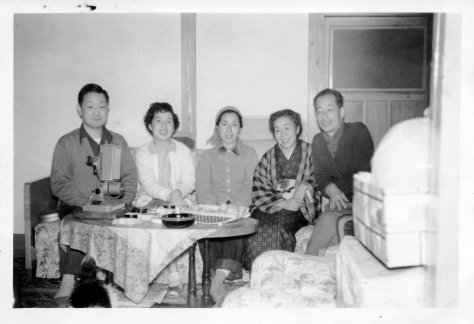
Likely taken soon after their wedding in 1951. Dad, mom, Aunt Eiko, Grandma and Grandpa. Notice the heavy metal 16mm Bell & Howell movie projector. I remember using it in Los Angeles as a kid. Tokyo.


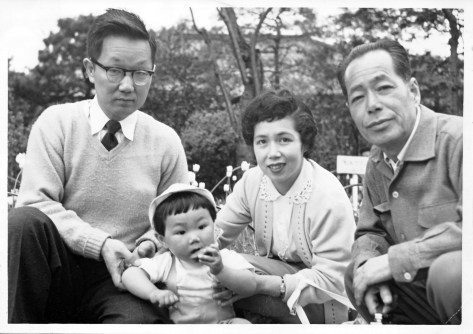
Dad of left with mom and Grandpa.  I’m the kid.  May 1956 – Tamagawa Park, Tokyo.


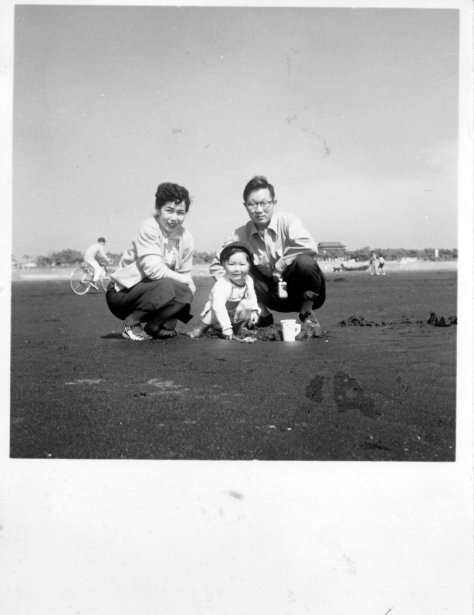
Dad with mom and me. Dad will decide to leave for America for good the next year. April 7, 1957 – Enoshima Beach, Tokyo


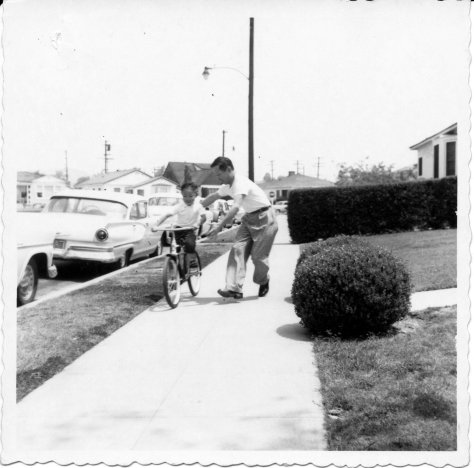
Dad watching over me trying to ride my first bike, a Sears Outlet J.C. Higgins. His beat up 1955 Ford Victoria Custom’s fender can be seen at left. Taken at home on Oakford Drive in East Los Angeles. Circa 1962


Dad in yellow sweater with some of mom’s Nisei friends. My guess is circa 1969. My guess also is that they have all passed away. East Los Angeles.


Dad still wearing that yellow sweater! His first new car (now eight years old in the picture) – a 1963 Mercury Meteor Custom – behind us at LAX, picking up Aunt Eiko and Uncle Paul (also a US 8th Army MIS veteran) who flew in from Tokyo. May 1971.


Dad with his older brother Yutaka and oldeer sister Shizue. Best guess is 1985, location unknown.


Dad (R) returned to Hiroshima for a vacation in 1997; Masako is in the center. This was taken at his family home. Notice the stepping stone; it is the same one Masako stood next to in a picture taken in 1948. Sadly, this would be his last time in his beloved Hiroshima.


Dad actually “died” on his birthday in 2010 when he slumped over just before eating lunch. My oldest daughter Robyn (back to camera) saved the day by jumping in then shaking him until his heart started beating again. What was funny was after starting to breathe again after about a minute, he had no idea anything happened. Paramedics tend to him. Irvine, 2010.


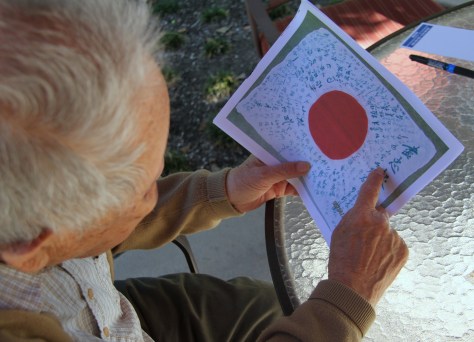
Dad in 2012 deciphering the names written on a captured Japanese battle flag from WWII. Some of the people who came across my WWII blogs contacted me about such souvenirs their grandfather’s brought back from the Pacific; they were hopeful Dad would be able to read the key names and village from where the deceased Japanese soldier came from in their attempts to return the flags.  I thought it good for him, just to keep his mind active.  Truthfully, there aren’t many left who can read these old characters.  Not even my mom or aunt could read them. Dad reads them like he was 18 years old.


This will be the last time Dad and his older sister Aunt Shizue would see each other. She would pass away quietly a short time later at the age of 95. Dad would pass away at the same facility.


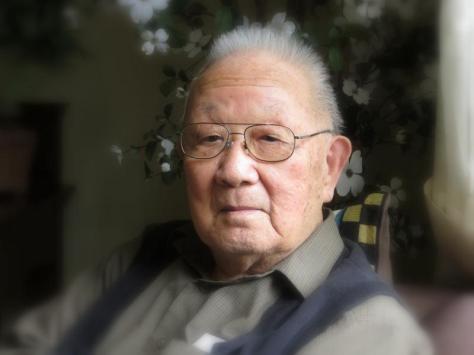
A cell phone portrait of Dad several years ago at his assisted living facility. After eating, the dining room servers would tell me Dad would sometimes come back a short time later, sit down, and begin to order breakfast again.  The server would say, “Koso, you just ate!” and he would say, “”Oh, yeah?  Pumpkin head.”


Dad in center at my oldest daughter’s wedding, January 2013. Photo courtesy of Toyo Miyatake Studios.


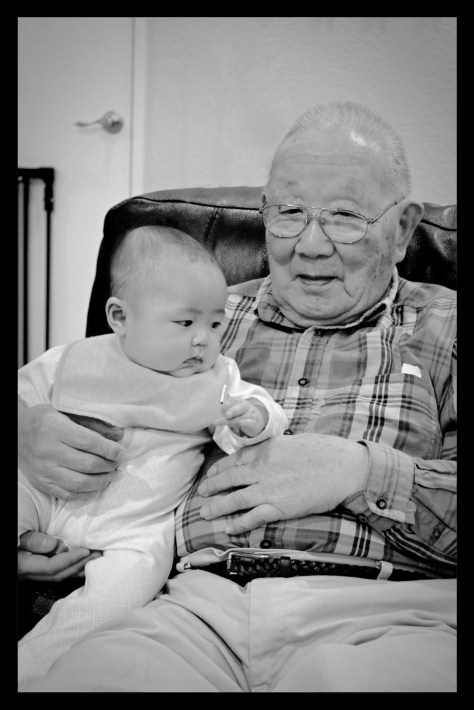
Although 96 years of age, Dad meets his only great-grandchild Emi. I think everyone was scared he was going to drop her. 2014.


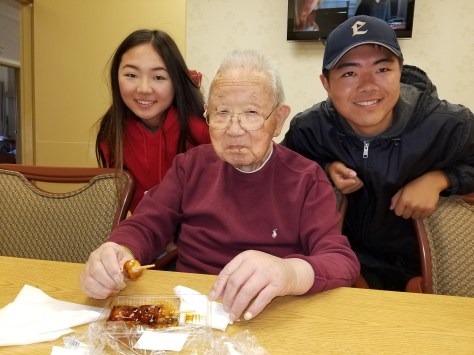
My last picture of Dad, flanked by my two youngest kids, taken on his 99th birthday last month. Yes, he is smiling because he got to eat his favorite sweet, “Odango”. February 2018, Los Angeles.


And my last video of Dad:

Dad, I wish I were a much better son…  but I know you are joyfully back playing “oninga” or jump-frog in front of your Hiroshima home with your favorite brother Suetaro.  I hope you have all the odango you can eat now.  You will be forever young.

In Case You All Forgot…


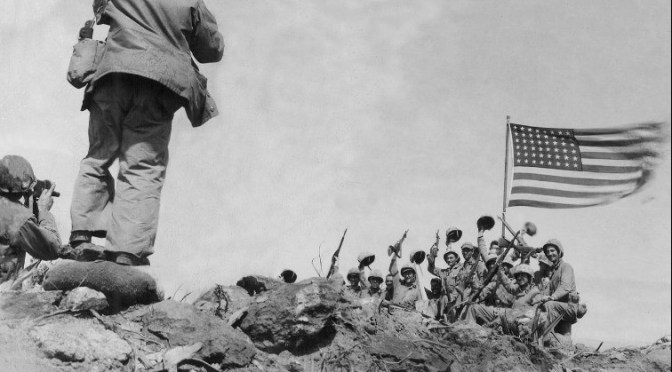
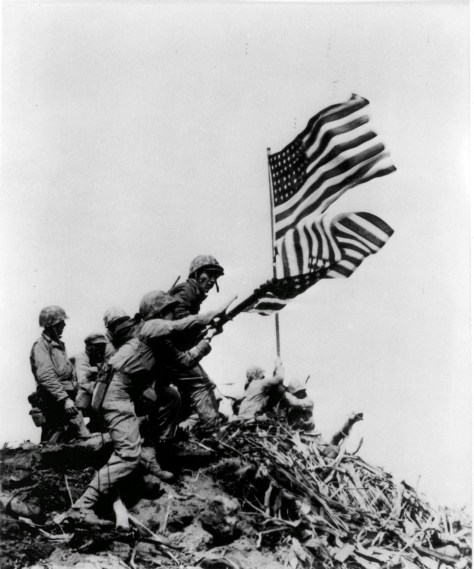
Today was the day in 1945 that our flag was raised – TWICE – on Iwo Jima by our courageous Marines… and there there is only ONE movie of the historic event explained in my story below:

https://p47koji.wordpress.com/2015/04/17/iwo-jima-flag-raising-the-movie-part-1/

battle_iwojima256

Cherish our US Marines and all those who wear our uniforms.

Combat! – Part 3


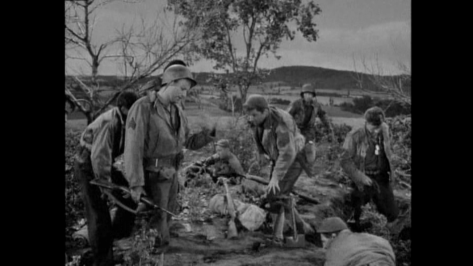
Screenshot (69)
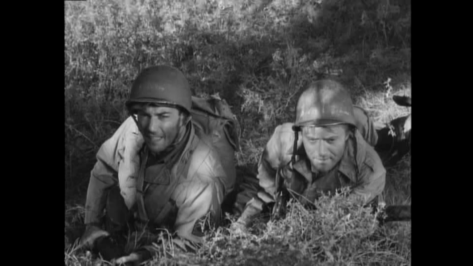
While my screenshot is of poor quality, both Hanley and Saunders are in their standard issue steel helmets and while obscured, both are carrying M-1 Garand rifles in this first episode.

The Weapons, Equipment and Explosions

comzbat 020
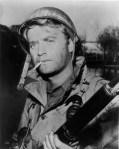
A publicity still of Sgt. Saunders from Episode 1, “A Day in June”, holding a Garand M-1.

People who watched Combat! from the get-go pretty much think of Sgt. Saunders in their mind when they see a Tommy gun and Lt. Hanley when they see a M-1  carbine, yes?  The power of media herewith.

But the truth of the matter is both Saunders and Hanley started out with the 30.06 firing M-1 Garand rifle as they hit the beach at Omaha Beach on D-Day in the first episode which began shooting on June 2, 1962.

And they both had standard issue steel helmets.

Sgt. Saunders, His Thompson Machine Gun and Camo Helmet

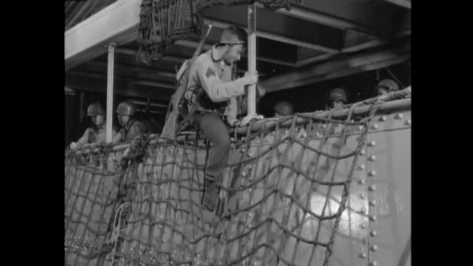
As proof Sgt. Saunders “went over the side” with a M-1 Garand in Episode 1’s D-Day, here he is trying to board his landing craft #PA-142 (The landing craft PA-142 does show up in real D-Day footage.) with it slung over his shoulder.  He also has on a standard issue two-piece steel helmet:

Screenshot (64)
My screenshot of Saunders “going over the side” on D-Day in Episode 1, complete with his 30.06 firing M-1 Garand and standard issue helmet.

He carries this weapon throughout the first episode…but never fires a shot.

In Episode 2, no one fires a shot.

However, his Thompson and his distinctive camo helmet shows up ever so quietly and out of sequence series-wise in Episode 3 below:

Screenshot (75)
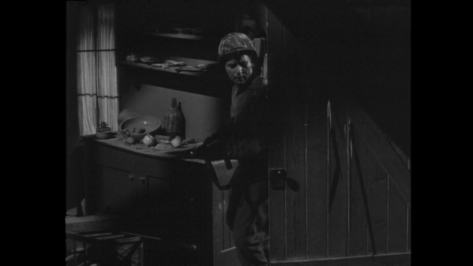
Saunder’s Thompson’s muzzle is the first to make its appearance as he nudges the door open with it, followed by his trademark camo helmet.

However, before he fires a shot, he is captured by the Nazis.  He loses his Thompson and camo helmet as he is taken prisoner.

I say it was out of sequence as in Episode 4, Sgt. Saunders reverts back to his standard issue helmet but is also unusually equipped with a M-1 carbine.  This also is Lt. Hanley’s first episode with his trademark M-1 carbine.  However, Sgt. Saunders never fires a shot nor does Lt. Hanley.

Screenshot (76)
My screenshot of Sgt. Saunders holding a M-1 carbine in Episode 4. He still hasn’t fired a shot on this TV series.

So when does Saunders get to shoot?  Read on…

In Episode 5, Saunders’ trademark camo helmet makes its permanent re-appearance for the rest of the show.  But how did he become the one and only to wear such a distinctive helmet?

Because to make my mom feel more overcome with his macho? Nope… It was because he… complained!  Sorry to blow another iconic image you may have had of your childhood idol.  According to statements made by Morrow and others per various websites and interviews, Morrow had begun to complain that the weight of the standard issue steel helmet was compressing his vertebrae on those week long shoots.  Therefore, it was replaced with a custom made, lighter fiberglass one, designed by the award winning prop crew.  The helmet’s camo covering – which is bona fide US Army paratrooper parachute material that was used in Europe – became necessary to hide the fact the helmet was fiberglass.

comzbat 072
Actual combat photo of US Army paratroopers with camo covers on helment. At their feet is a dead German.

The US Army paratrooper camo patterns, colors and construction differed from the Marine versions (sometimes nicknamed “frogskin”) for which it has frequently been mistaken.

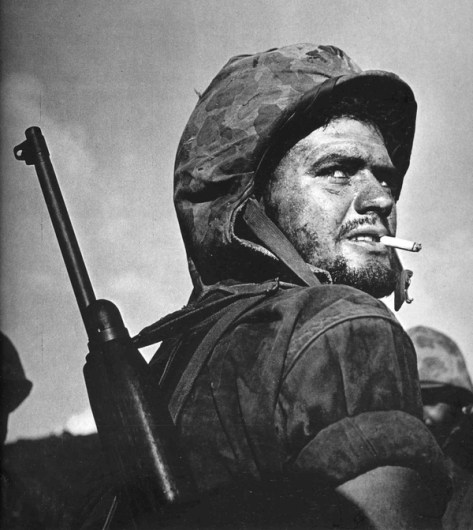
comzbat 079 saipan
The iconic WWII photo of a US Marine on Saipan. Notice his camo cover and a M-1 slung over his shoulder sans bayonet mount.

In a comment made by one of the directors, he jokingly said the oddball helmet covering made it easier for the cameramen to follow him.  One other bit of trivia on his helmet: one drawback was that it was so light, it would fall off when he would “hit the dirt” or bump it against an object.

_______________________________

The Tommy Gun

Like any other American boy, I wanted a Tommy gun so bad so that I could pretend to be like Sgt. Saunders.  Many other boys wanted it, too!  But alas, dad couldn’t afford one.

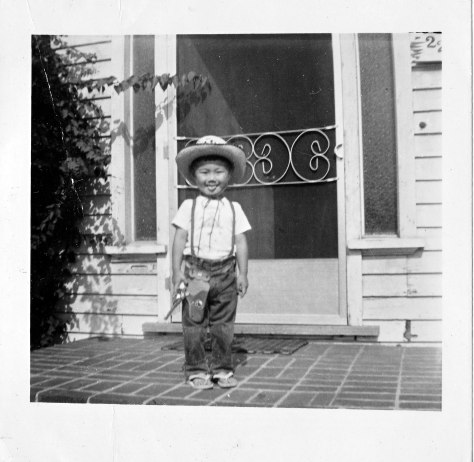
But I did get a cap gun, holster and cowboy hat when I was about four, believing they belonged to Roy Rogers:

23358500261_6a3644341d_o(2)
Me. Ever see a cowboy wearing flip-flops?

As for his Thompson, which fired .45 caliber rounds, here is a real one in full auto in case you’re new to this:

But back to the TV Thompson and I won’t go into discussions of what model it was because there were apparently several in use… including a wooden one.

Yes, a wooden one.  Sorry to burst your bubble once again, guys.

comzbat 085

After Morrow lugged a real one around for a couple of weeks, he realized why Jason turned it down.  For argument’s sake, a real one weighed roughly about 10-1/2 pounds empty.  Can you imagine what a real soldier or Marine thought when he would lug it around while actually getting shot at and likely suffering from dysentery?  The prop men therefore fashioned one out of wood for Morrow.

Saunders would carry the wooden mock up when walking or running during a shoot.  Weapons experts can spot it a mile away.  He would then switch to the real Thompson for a firefight.

However, the set version of Saunders’ “real” Tommy gun was not without problems as it was modified to shoot blanks.  According to various sources, the barrel was choked down¹ for set use.  The weapons guys thought by choking it down, the spent cartridges would eject better.  However, they were wrong.  For you Combat! buffs, do you recollect Saunders firing the Thompson in long bursts?  I don’t think you will.  Saunders only fires it in 2-3-4 round bursts as it would jam up³.  He had a nickname for it: Jammomatic.  In some firefight scenes, you can see Saunders trying to unjam it.  Cut!

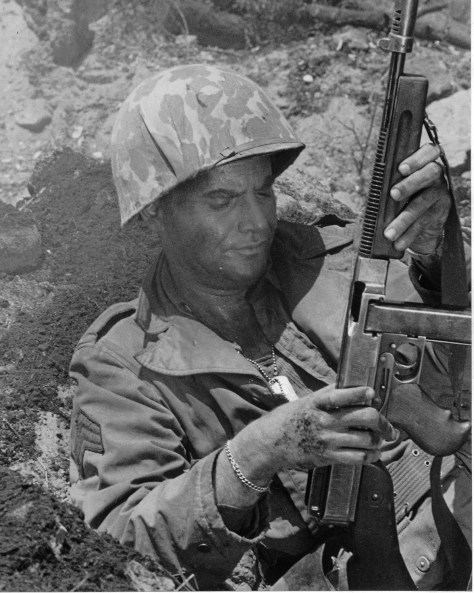
combat 03
The “real” Thompson. Source unknown.

So…to answer the question when Sgt. Saunders finally get to shoot anything?²  Indeed, it was his trademark Thompson in Episode 5.  He and Hanley locate a sniper while under fire and he lets lose two single shots.  Not a spray, mind you.  Hanley also fires his M-1 carbine for the first time as well.

Lastly, many collectors years ago were seeking to find this Thompson that Sgt. Saunders made famous.  While some stories vary, the most common answer is that the several Thompson’s that were used in the series were rented from Stembridge Rentals, a common source for Hollywood at that time.  As a result, this famous prop is likely lost for all time.

Rick Jason and His M-1 Carbine

comzbat 083
Publicity still of Lt. Hanley. Just my opinion but I’ve not seen a bayonet stud (shown here) on a WWII era M-1 carbine.

As mentioned, the Thompson was originally meant for Lt. Hanley.  When they first handed him the Thompson, he said no way.  “Get me something lighter,” he said.  You see, he knew about guns being a hunter; he even did his own reloads.  And that’s how Saunders eventually got the Thompson – it was basically a hand-me down.

His M-1 carbine was also choked down for use with blanks.  However, with him being the only one of the regulars being an avid shooter, he looked the most natural shouldering a weapon.  He once wrote that the real M-1 carbine’s round wouldn’t kill a “sick mouse”, implying it had no stopping power.  However, during the Battle for Okinawa in 1945, websites report that 75% of the Japanese casualties were inflicted by M-1 carbine rounds.

comzbat 075
None of the M-1 carbines in this US Marine Corps photo show a bayonet stud as seen on Hanley’s M-1 carbine but their style of helmet camouflage material can be clearly seen.

For those of you who have not seen one of these fire, here is a video.  As there is a bayonet stud, it may not be true WWII vintage but the message is clear.  It can take down a sick mouse with ease.  While watching this, imagine you are 18 years old on a hostile battlefield:

So what happened to Lt. Hanley’s actual M-1 carbine?

According to a letter he wrote, Rick Jason stated that against the studio’s direction, he simply took it home.  While it was registered to the Culver City Police Department, he told the prop man that after lugging it around on the sets for five years, it was his.  Period.  So he stole it… I mean, took it home on a permanent basis.

After taking it home, he wrote he poured lead into the barrel to ensure it cannot be loaded and then accidentally fired.  He then left it in his cabinet for about four years.

Shortly thereafter, the well known comedian Charlie Callas stopped by Jason’s home and quickly spotted the M-1.  Being a gun collector, Callas immediately figured out it was the one Jason had made famous on Combat!  After a few libations around the pool, Jason gave it to Callas as it was “taking up space where a nice rifle could occupy”.  Before Jason passed away, he indicated that Callas still had it in his collection.  However, Callas passed away in 2011; I haven’t come across any mention of “Lt. Hanley’s M-1” since then.

Kabooms and Bullet Holes

By all accounts, Combat! was blessed with an excellent special effects team, headed up by A. D. Flowers.  Flowers would eventually win an Oscar for his work on Tora! Tora! Tora! years later.

comzbat 016

While many “explosions” in movies today are computer generated, the explosions and bullet impacts on walls and such filmed on “Combat!” were actual controlled explosions.  Vic Morrow always said that the actors felt very secure and safe in spite of all the explosive commotion due to Flowers’ exacting expertise.

While far from an actual barrage (I cannot imagine the horror of being at the receiving end of real ones.), the special effects team and cameramen did a spectacular job simulating them for TV.  Here’s an example:

To accomplish this, the special effects team would actually exactingly dig holes, plant the explosives called “pots”, then run wires.  When you hit the switch, the explosives would go off.  These pots – made out of iron at that time – would be narrow at the bottom and wide at the top.  This “shaped” the “explosion” up, protecting the actor.  A portion of the pot would extend above the ground then was covered by peat moss which could not be made out in the movie footage.  Actors had very specific routes to run but safety was the rule.

I cannot be certain but for the above footage, Flowers said in an interview that 20 special effects guys were used at a cost of $25,000 for two days and 300,000 feet of electrical wire was run.  He also said that in a three month time, they blew up 1,500 bags worth of peat moss.

Amazing talent, I say.

“Squibs” were used to mimic bullet impacts (above).  For wood, they actually drilled a hole into the wood for every scripted bullet hit then inserted a small charge connected by wire to a control switch.  Extra care had to exercised to ensure the safety of the actors and crew as at times, the charge would be stuffed with balsa wood pieces and powder.  In the same three month period mentioned directly above, 15,000 bullet hits were used.  Incredible.  Dust pellets fired by air guns were used to mimic bullet hits on masonry.

What happened to the regulars, final bits of trivia and a conclusion in Part 4.

Part 1 is here.

Part 2 is here.

Part 4 is here.

NOTES:

  1. A choked barrel is one in which there’s a reduction in the diameter of the bore near the muzzle.
  2. In an episode a short time later, he is re-united with a soldier he fought alongside with him on D-Day.  In this episode, the studio inserted other footage they had taken for the first episode but had not used.  In this sequence, Saunders does fire his M-1 Garand on the beach.
  3. In actual combat, the Thompson was usually fired in short bursts to help improve accuracy as well due to something called “creep”, encountered when firing long bursts.  The recoil would cause the barrel to creep up and to the right if you were right-handed.