I have found that "family" around you is a product of twists of fate, world events and personal decisions made long ago. Anguish, happiness, despair and harmony. The effect of war on families and the resulting peace from the untold sacrifices made by the Greatest Generation.
While I am not a writer, I hope to be able to bring to light the spontaneity of life. As I wish to be historically accurate, some quotes will be as I heard them...but there was no malice coming from those that spoke those words. They were reliving the past horrors of war - a war that you nor I fought in. They did.
Today is the 239th Birthday of our US Marine Corps. In recognition yet in a selfish manner, I wish to bring back the story of Mr. Johnson, USMC in mid-stream. Happy Birthday, Marine.
I figured if Mr. Johnson wanted to tell me more, he would have.
But as with Old Man Jack, I never asked for more.
I believe that’s how these combat vets want it.
They don’t want to be quizzed about what they said or asked to describe more.
They will tell you some things of what they experienced. Probably to let the devils out that have been eating away at them for 70 years.
They have a built in limiter to keep more memories from popping back up…the things they saw or did that they try so hard to suppress to stay sane. Every minute for the rest of their lives.
They deserve that respect. Always. And you feel honored they felt enough confidence in your character that you would accept what they were telling you as is.
From left: Grandmother, Dad in US Army uniform 1947 and his youngest brother (seated), circa 1943. The writing is my aunt’s; you can see “B-29”. Copyright Koji D. Kanemoto
My Aunt Eiko called me in April of 2011; you can tell she was crying.
“I’ve seen this before,” she said in Japanese. She was watching the TV footage of the disaster caused by the 9.0 earthquake and tsunami in Japan.
Dumbfounded, I asked, “How could you have seen this before? The earthquake just happened.”
“完全な破壊。。。戦争思い出したわぁ。。。” or loosely translated, “From the war… I remember seeing this (complete destruction) from the war…”
Ironically, she was recalling what she saw exactly 66 years earlier – April 1945 – when Tokyo and many other cities were firebombed in an all out world war.
She was there.
And so was someone else from the other side of the Pacific.
________________________________
Through the miracle of WordPress, many of us here have met in the most peculiar of ways – the hub being World War II… Perhaps ironic but nevertheless destiny.
For instance, pacificparatrooper‘s father was in the US Army’s 11th Airborne and parachuted into combat over the Philippines with my Dad’s youngest brother killed later on Leyte as a Japanese soldier. JeanneRene‘s father fought on the wretched islands as a critical Seabee. Of course, my neighbor Old Man Jack was a sailor fighting to survive in the thick of things on those “stinkin’ islands” – Guadalcanal, Rabaul, Okinawa and Green Island. Mr. Johnson fought and was wounded on-board CV-6, the USS Enterprise, manning the 20mm AA guns as a US Marine. Although they returned, they did not return home unscathed.
None of them did.
The Main “Human Beings” of this Story
This series hopes to present the ugliness of war as personally experienced by two human beings – one who was on the ground and one who was in the air.
…The scarring of a Tokyo teen-aged girl on the ground: my Aunt Eiko.
(L to R) Aunt Eiko, Mom, Grandpa and Grandma. Circa 1938, Tokyo. Copyright Koji D. Kanemoto
…AND the scarring of a young B-29 Superfortress pilot in the US Army Air Force’s 330th Bomber Wing: Capt. Ray B. Smisek who flew bombing missions over Japan.
Ray B. Smisek (to right of nose gear) after a safe return from a bombing mission to Gifu. Behind him is the B-29 he captained with a crew of ten young men, the “City of San Francisco”. 1945. Courtesy of son S. Smisek (copyright).
There is one sad, dreadful thing about their fateful relationship: neither had asked for it.
Neither had asked for war.
A very bitter war.
________________________________
Ray B. Smisek, the Gent
A “life is good” portrait of Ray Smisek on Catalina Island. Copyrighted photo courtesy of S. Smisek.
One person I met online was S. Smisek. He has an extensive photo collection on flickr of his father’s service during World War II; that is where our paths crossed (his photo link is here). His father was Capt. Smisek, the captain of “City of San Francisco”, a B-29 bomber flying out of Guam as part of the 330th Bombardment Group, 458th Squadron. Born in Minnesota in 1920, he was also a lead pilot – a very heavy responsibility let alone if under attack.
His son shared with me his remembrances of his father. He shared that Capt. Smisek liked flying above all else – especially open cockpit.
“(His dad) liked Czech and German food, like Sauerkraut, sausage and beer. Polka music. Baseball and football. He loved baking bread and pastry. Made amazing sourdough pancakes and Christmas bread. He loved gardening. He could grow ANYTHING and liked to tinker on anything and everything around the house. Fix it… or break it if it already was fixed.
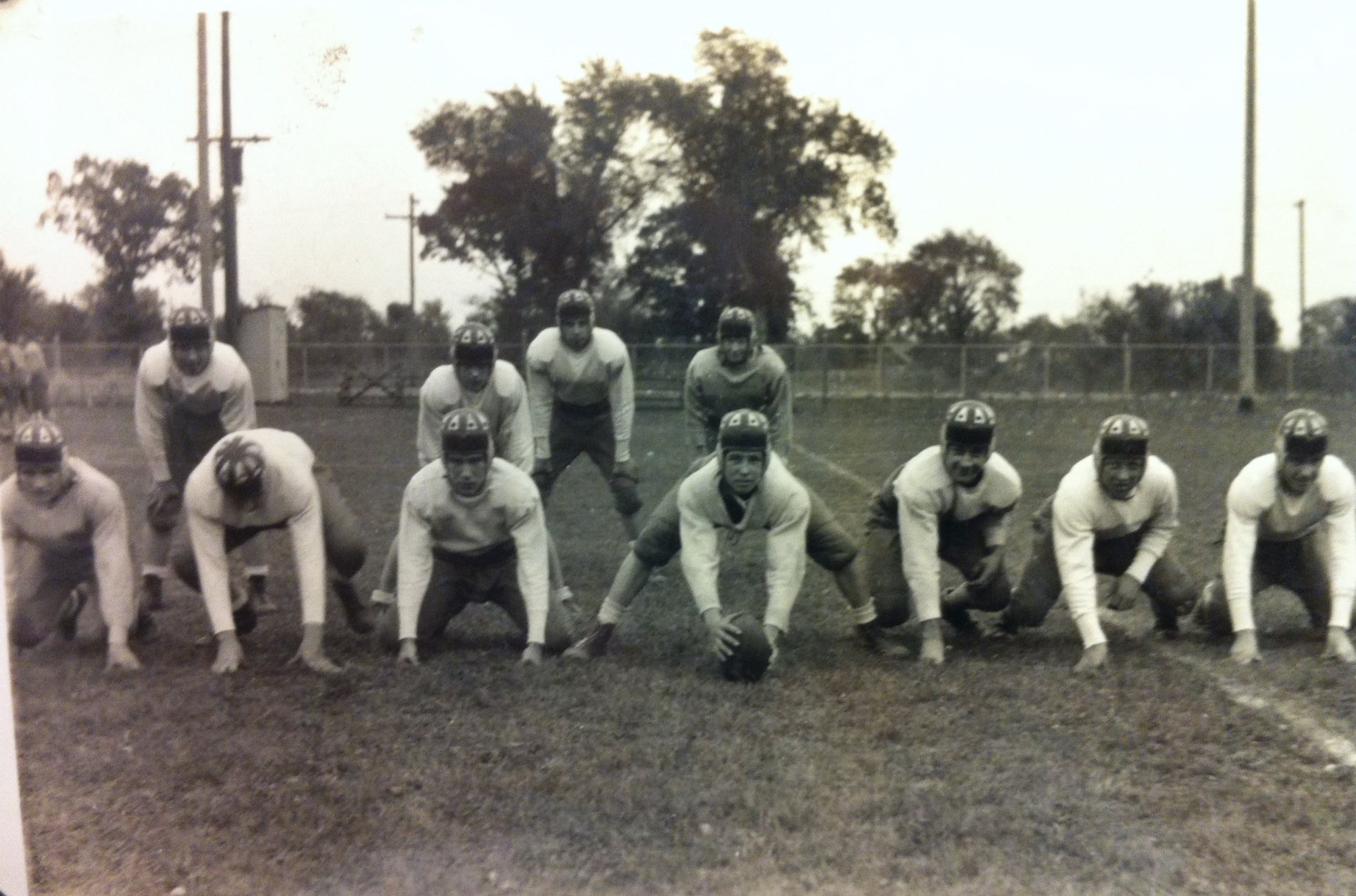
A young Ray Smisek, third from right. Copyrighted photo courtesy of S. Smisek.
He hated hunting. Did not like to kill anything. He would pick up bugs and release them outside. Used to freak us kids out!
He liked his newspaper and watching the news. He occasionally smoked a pipe. Wore Old Spice aftershave all the time I knew him (I keep some around to this day.). He loved licorice.
He was honest as the day is long. A man of his word. A handshake was an agreement. A promise. A very strong Republican who loved Richard Nixon and John Wayne. He liked Louis L’Amour books. I think he dreamed of being a cowboy.
(Dad) hated racists. Always gave everyone a chance. Maybe two and that’s it.”
Aunt Eiko, the Teenager
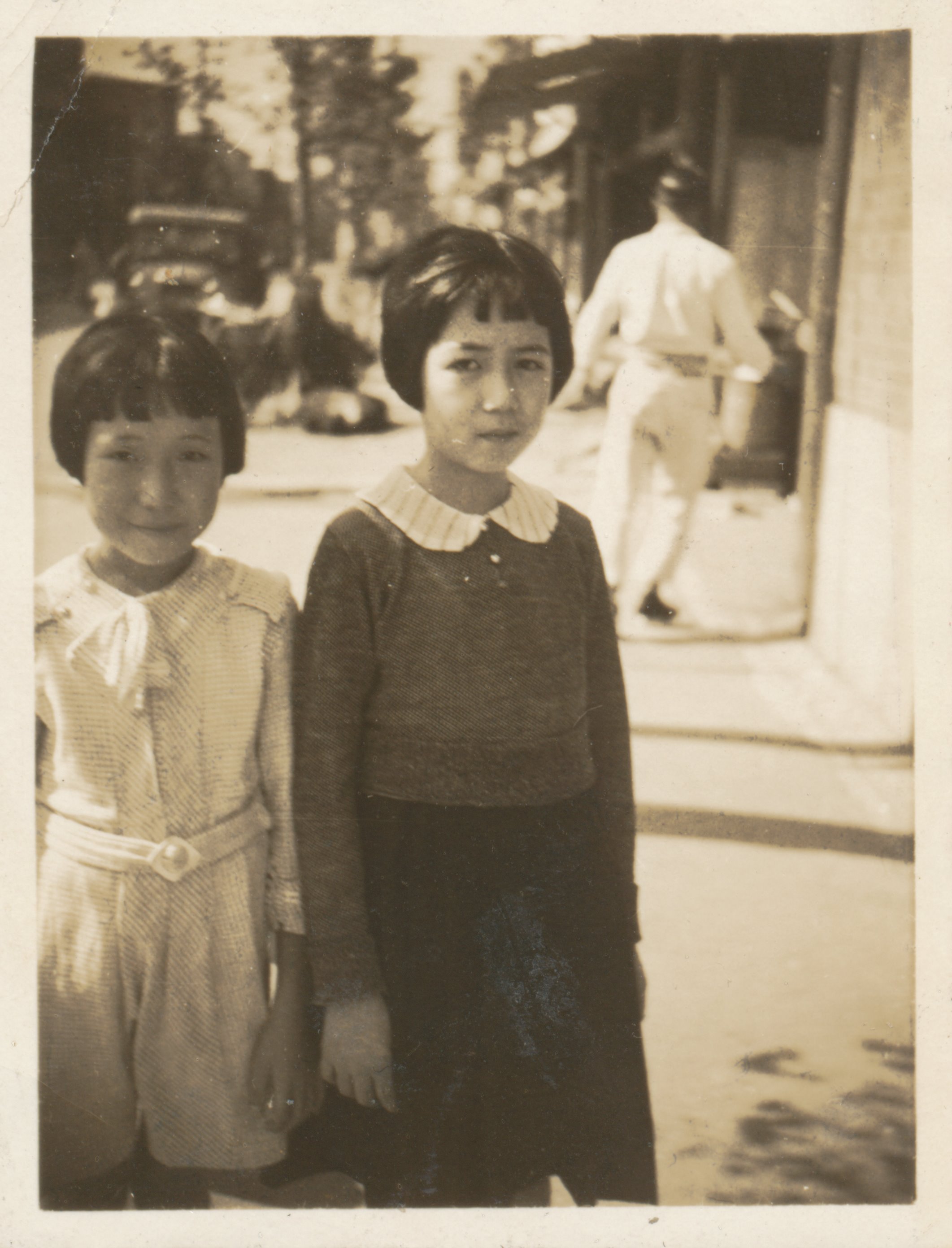
(L to R) Aunt Eiko and mom. Circa 1932, Shimbashi, Tokyo.
My Aunt Eiko and my mother had lived with my grandparents in Tokyo since their births in the mid-1920’s. Their childhood home was next to the Ginza at Shimbashi 5 Chome; think of it as Japan’s Beverly Hills. It is within walking distance from the Imperial Palace. My aunt says the picture to the left was taken near their Shimbashi home and next to a relative’s kimono shop in the Ginza.
As a child, she was apparently sickly. They say she was quite skinny from this ailment and that ailment; the food shortage didn’t help much although my grandfather reportedly had black market connections to obtain food once in a while. Nevertheless, she had a weak digestive system. She has it to this day.
Like most Japanese “upper society” girls of that time, she was required to know how to play the shamisen, or a Japanese stringed instrument. She was also trained on the silk kimono – it was an elaborate dress that took a couple of hours to put on properly.
Aunt Eiko on right playing the “shamisen”. Tokyo, Autumn 1939.
Aunt Eiko didn’t disappoint anyone’s ear drums when she saw a bug. She screamed really loud when a bug got near her. It was easy to see them since they get as big as footballs there in Japan. Ok, I’m exaggerating – a little.
She had an artistic flair, with her grandfather being a noted painter and art professor. She loved “ikebana”, or flower arranging. In fact, she made it her career after war’s end, becoming one of the top ranked ikebana instructors in Tokyo.
Amazingly, in spite of her stomach ailments, she liked cooking; unfortunately, she had a knack for burning things. I know.
Most of all, she loved dogs. After feeding one with her chopsticks, she’d just go right back to using them to feed herself… but with food a scarcity, her love for dogs would have to wait until quite a while after war’s end.
________________________________
In Part 2, we will visit the B-29 Superfortress, her crews and the ordnance she would typically carry into battle above Japan.
Hope you’ll stay tuned.
Edit: You can find the other chapters in the links below:
There is such a thing as luck… but it never relates to winning the lottery, it seems.
But I did hit a jackpot – a photographic one. Its been busy trying to supplement my photographic artwork these past few weeks; being an amateur, it’s not easy.
As there’s been some dew on the flowers outside, I took to shooting them at first light. Fortunately, Lady Luck flashed a big smile as a number of them were selected for flickr.com’s “Explore” which showcases 500 photographs each day for “interestingness”:
Here are a few others:
Unbelievably, there’s been over 100,000 views in the past three days, now nearing 1,000,000 views in total.
It would be nice to have that many visitors to this blog!
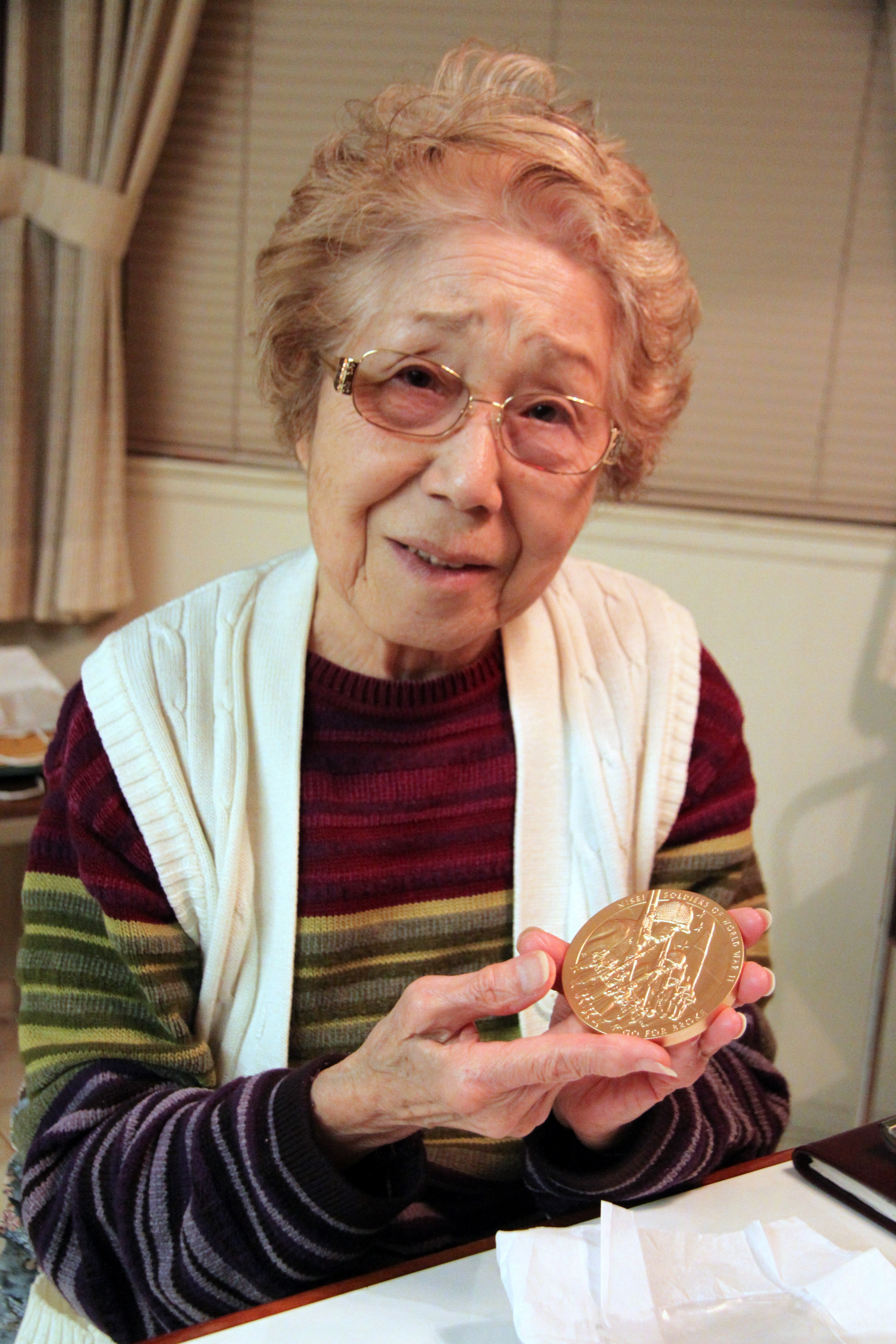
My Aunt holding Uncle Paul’s Congressional Gold Medal for the first time, Aunt Eiko cried for happy. Incidentally, she became an American citizen about 15 years ago.
Writing about the firebombing of Tokyo during WWII based upon my aunt’s written notes and conversations has been a project in process.
My simple goal is to be factual; however, I hesitate as I am fearful some people may view it for what it not.
We’ll see.
____________________________________
In the meantime…
For many of you, Autumn is in full swing. Here, in southern California, it is barely starting with daytime temps still in the high 70’s and 80’s. There is forecast of nearing 90F this week!
Here are just some recent snapshots taken here and there:
An aster Explored on flickr
A plumeria in B&W
A petunia petal in B&W
This cute pup always comes to sit on my lap while I wait at my local barbershop. Just too cute!
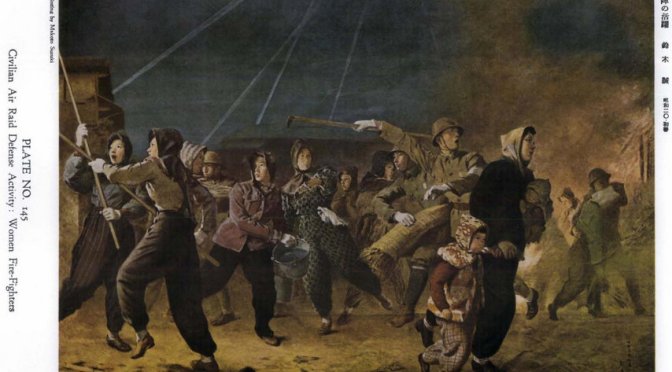
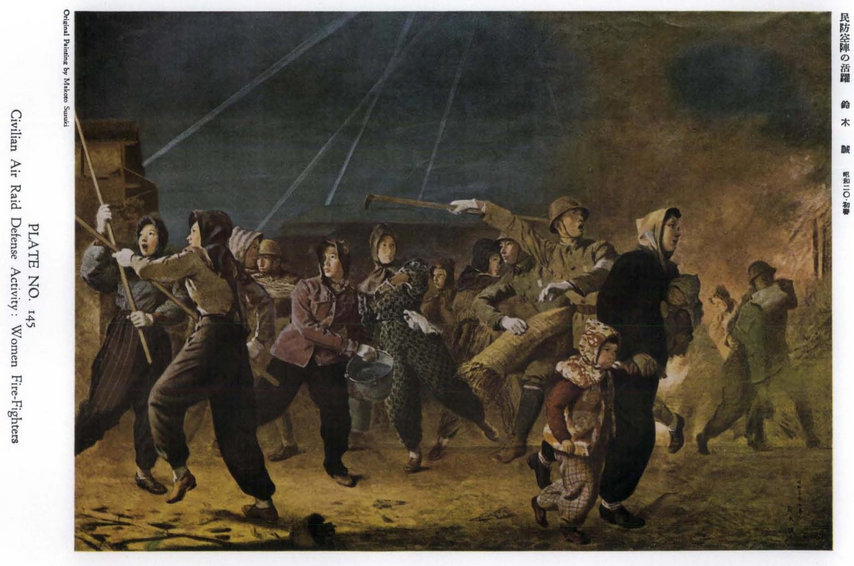
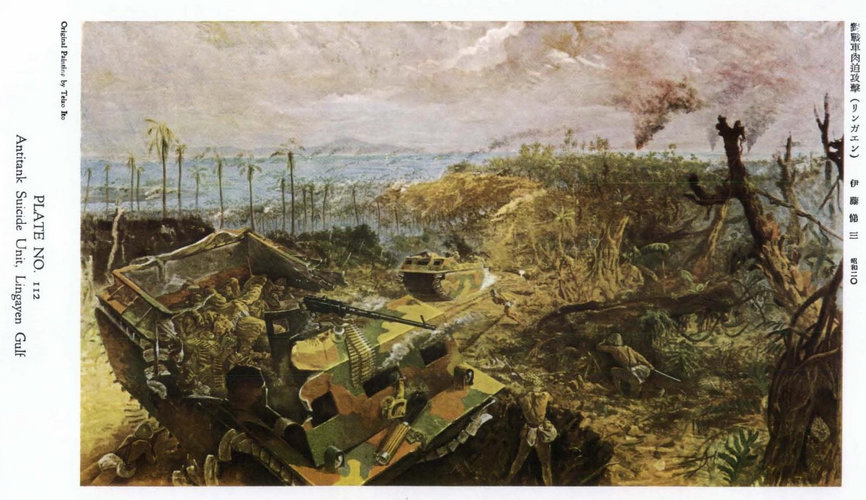
Mitsuko went about Tokyo seeking artists to paint war scenes from the Japanese point of view. This task was made much easier as Willoughby gave her permission to ride about in her own private jeep. This was a definite indicator of his affection for Mitsuko as all Japanese women were prohibited from even riding in any Allied military vehicle, let alone have one assigned to her.¹ With her purse flush with cash from Willoughby, Mitsuko paid starving artists large sums of money for art pieces depicting the war from the Japanese point of view. It was reported that she paid these artists up to several hundred dollars for one piece; this caused great dissension amongst the Japanese men who were assigned to compile the history. At that time, a year’s average salary rarely exceeded $150. Many of these men were also former Japanese military and were required to address their superiors as if they were still in the military. Kawabe ran the group as if it were still his army. Some of them found it dishonorable to be even working “for the invaders”, as my Tokyo grandmother liked to say.
Japanese artwork from “Reports of General MacArthur Japanese Operations in the Southwest Pacific Area Volume II Part II”, Page 472. US Army
Fraud was suspected with respect to Kawabe and Arisue. To further their spying, they asked for and received a tidy sum of money from Willoughby to supposedly increase spying activities on the Communists in the surrounding Asiatic regions. Similar to what is happening today but on a grander scale, some of these supposed spies just “disappeared” after receiving a supposed cash payment. While the CIA apparently came to the conclusion there was a scam going on, they failed to take remedial action.
In a further documented twist, the subservient Hattori was himself pursuing his own agenda in secret. Actually, he had two secret and separate agendas.
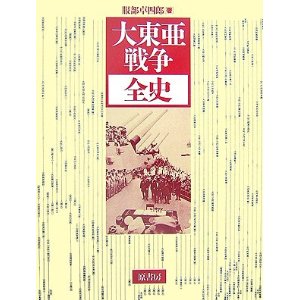
Hattori’s condensed 大東亜戦争前史 , or “The Complete History of the Great East Asia War”. It is also in DVD.
First, as he solely determined what would go into the Japanese-version of the history, Hattori was absconding with selected crucial documents that came across his desk. He had schemed that once “the invaders” left, he would write his way into history by publishing his own “true” version of the war against the Allies. By 1953, he was partly successful in that he did put together an eight volume history entitled “大東亜戦争全史”, or “The Complete History of the Great East Asia War”.
Second, he was gung-ho to re-arm the new Japan. It is reported that by 1949, the brilliant planner Hattori had drawn up a four division army with key officer positions already determined, complete with detailed arms and logistics laid out.
He passed away in 1960. In another twist of fate, his original publication was condensed into a thousand page book and published five years later under the same title.²
________________________________
As for Willoughby, he also pursued his own agenda. Yes, he was motivated to glorify his commanding officer, General MacArthur, in the history books. Using the funding from G-2, the project moved along out in the open. Most anyone knew about it although it was done under a military intelligence umbrella.
However, in late 1947, G-2’s history department requested copies of the documented history. In a bewildering response, Willoughby replied by saying it was not ready; he also replied in like for the Japanese volumes. But what made it bizarre was that he stated it was but MacArthur’s personal record – a report, if you will – of what happened during the war… Essentially, that it was not an official US Army publication. As such, it would not be subject to review and approval by the US Army prior to publication. However, in a kind gesture, Willoughby indicated they would receive copies once it was published.
Willoughby went to a former Army officer, General Stackpole, in 1948; he owned a publishing company specializing in military history. Due to the immenseness of the volumes, Stackpole declined participation on the grounds it was too large a printing effort for his company. Willoughby then sought out Japanese printing companies but they were still in shambles from the war. He was unsuccessful. It was reported unofficially that MacArthur had known, at least, of the attempt.
Eventually, five samples of the “report” were published in 1950 by a Japanese printing company with the assistance of Washington. However, during this time, Willoughby – for (their) mutual protection – ordered all extraneous documentation collected during this five-year project that may jeopardize MacArthur’s hero status destroyed… and they were. Even notes and drafts were burned. The burning was supervised on March 2, 1951 by two US Army officers assigned to Willoughby’s history detachment.
The reasoning and significance behind this burning at that time is now clear. On April 11, 1951, President Truman relieved General MacArthur of his duties for his handling of the Korean War. To give you an idea of the volumes of documentation collected yet remaining after the burning, MacArthur brought back 32 footlockers full of documentation. Willoughby himself brought three more which apparently contained the galley proofs. He claimed these were MacArthur’s personal property… a diary of sorts. Willoughby managed to convince the government to finally print the “report” in 1953; however, MacArthur intervened and squashed the agreement citing the documentation was full of errors and was just a draft. It was not printed.
MacArthur did sell his memoirs for nearly $1 million in 1963 but like Hattori, MacArthur passed away soon thereafter in April 1964 and ironically never saw his memoirs published.
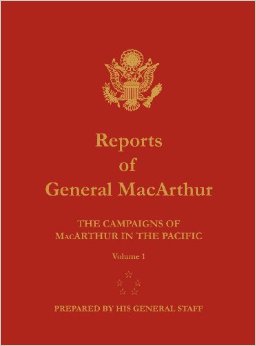
Nevertheless, the US Army finally did publish the two-sided “history” of WWII in 1967 after MacArthur’s death. The publication is entitled “Reports of General MacArthur” and can be read online at several websites. Previously owned hard copies are also available online. It is immense. From what I understand, the Army disclaimed any responsibility over its accuracy throughout its four volumes. It does contain the original Japanese artwork sought out by Mitsuko.³
Willoughby passed away in October 1972 in Naples, Florida. He is buried in Arlington.
_________________________________
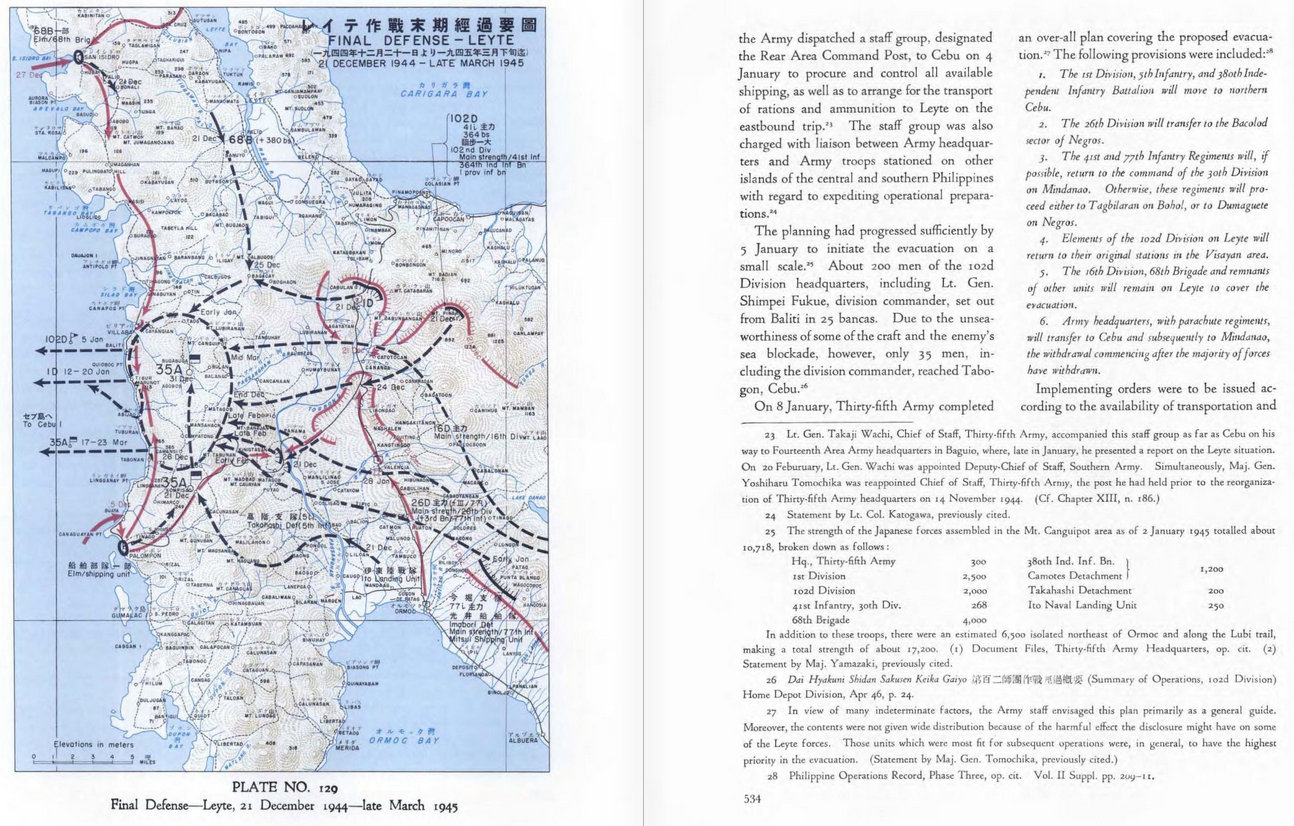
“Reports of General MacArthur”. Page 533. While the Imperial Japanese Army informed my grandmother Uncle Suetaro was killed on July 15, 1945 at Villaba, this battle report is unfortunately dated for March 1945.
In closing, I came across some information in the “Reports of General MacArthur” as to the action that potentially led to the combat death of my own Uncle Suetaro on Leyte near a village called Villaba…on Page 533 of Volume 2, Part 2. My Hiroshima cousins believe he was assigned to the Imperial Japanese Army’s 41st Mixed Regiment; it had been annihilated on Leyte. He was reportedly killed on July 15, 1945 but it is clear per MacArthur’s “report” that centralized Japanese army command on Leyte had ceased in March 1945 per this Japanese record.
Perhaps finding out exactly what happened to my Uncle Suetaro will only occur in a fairy tale. To realize I will never find out is my dragon to slay.
____________________________
Footnote:
1 Though I have yet to see one photo, my mother and aunt claim our Uncle Taro took them around what was left of Tokyo in his US Army jeep. Uncle Taro was a Private in the US 8th Army’s Military Intelligence Service.
2 Unbelievably, it is available on Amazon Japan.
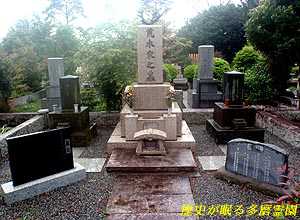
3 Although I have scoured Japanese websites, only scant sentences can be found about Mitsuko. Her fate is unknown to me except for her grave marker.
As I watched “How to Train Your Dragon” on Blu-Ray for the third time with my kids, it became clear that knights in shining armor kill dragons…and only in fairy tales.
A tremendous Einstein moment for this old geezer.
But then I realized that sometimes, what we read about WWII history can be sort of a fairy tale, complete with a knight in shining armor trying to slay a dragon… the dragon being what truly happened in war.
History becomes what the writer – or a leader – wants it to be in the public domain.
_____________________________
Unknown to many is that another battle raged after the surrender of Japan. It was about what was to be recorded as an official history of WWII. It was a battle involving glorification, greed and politics of both the victors and the defeated.
And of course, it involved General of the Army Douglas MacArthur.
First, a quick opinion and summary of MacArthur from this arm-chair (amateur) historian’s viewpoint.
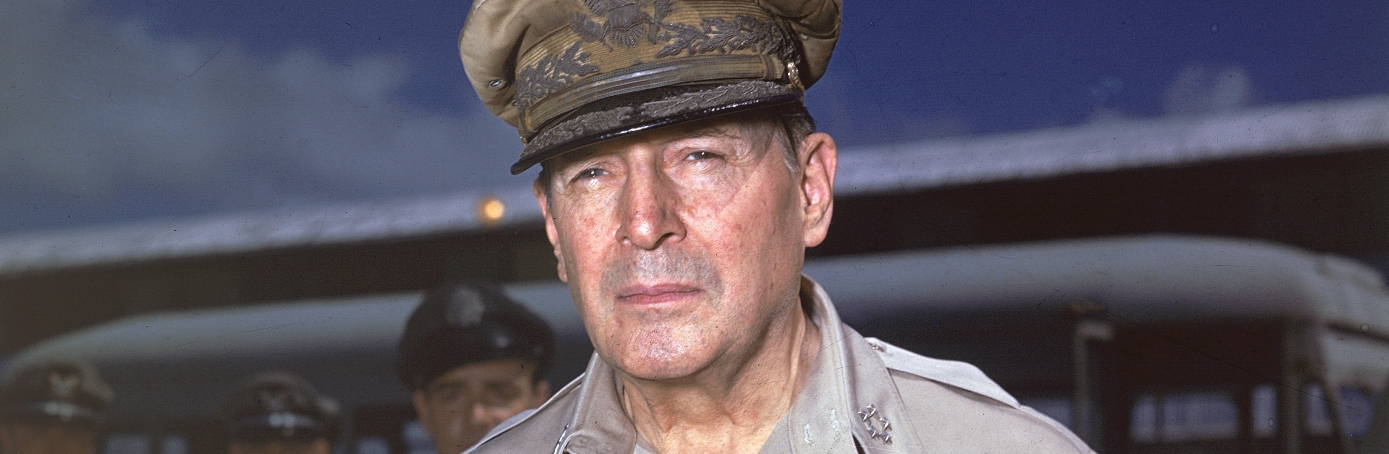
MacArthur had a helluva an ego as did George Patton and Bernard Montgomery. He was suspicious, short tempered, short on patience and embittered. MacArthur – as did Patton – studied military history extensively; he loved Napoleon. As commander, he failed to appropriately alert the troops under his command in the Philippines immediately prior to Pearl and worse yet, in the hours after. He had to flee the Philippines on a PT boat along with his family to avoid capture leaving behind his troops. However, supported by a brilliant, top notch staff and highly critical intel derived from intercepted then deciphered Japanese transmissions, he was highly successful in winning the war in the Pacific. He was a hero at war’s end to his great gratification. He was so loved by the American public that quite a few babies were named Douglas.
____________________________
Primarily due to a ridiculously small and inexperienced staff, only a relatively short written history of WWII in the Pacific emerged in late 1946 to the chagrin of MacArthur. He immediately then placed Major General Charles Willoughby in charge of generating an “official” history.
Willoughby was in charge of the US Army’s G-2 (i.e., military intelligence) in the Southwest Pacific theater of war and was trusted by MacArthur. (I briefly reported on Willougby in “Ike, a German-American Soldier”.) Having a heavy German accent, Willoughby was very loyal to MacArthur, pompous and stoutly anti-Communist. He seized the opportunity to “write the history” on victory in the Pacific under MacArthur’s leadership.
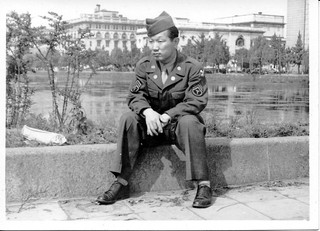
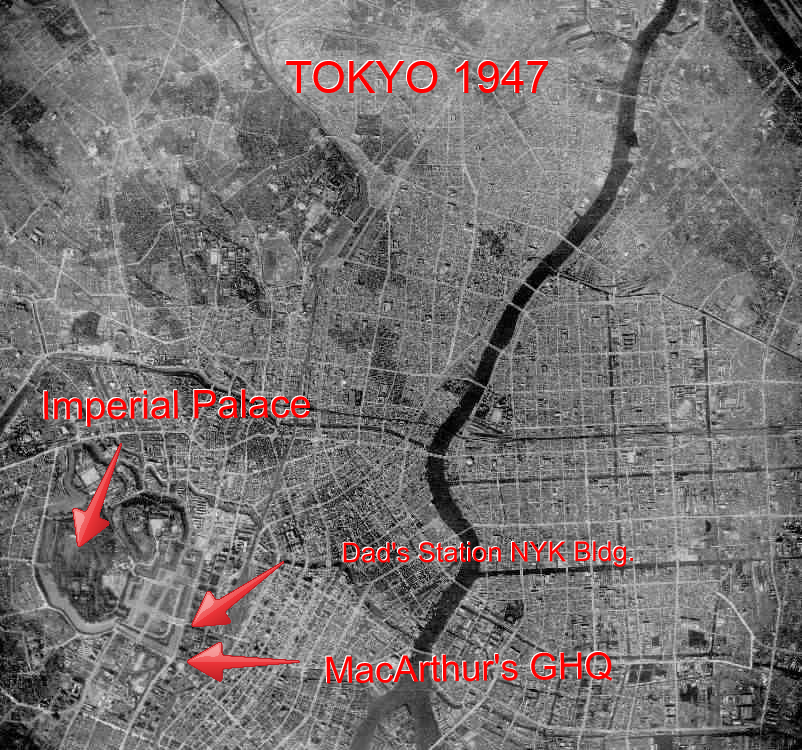
The tiny staff then blossomed under Willoughby to over 100 and was headquartered on the 3rd floor of the “NYK Building (Nippon Yusen Kaisha)” just a block from MacArthur’s GHQ in the Dai-Ichi Seimei Building; both are situated directly across the Imperial Palace. (Coincidentally, my dad was stationed in the NYK Building on the 4th Floor as a US 8th Army Technical Sergeant, 3rd Grade in Willoughby’s G-2. He is pictured below with the edge of MacArthur’s GHQ seen on the extreme right. The NYK Building is off the picture to his left. Behind him is the moat of the Imperial Palace.)
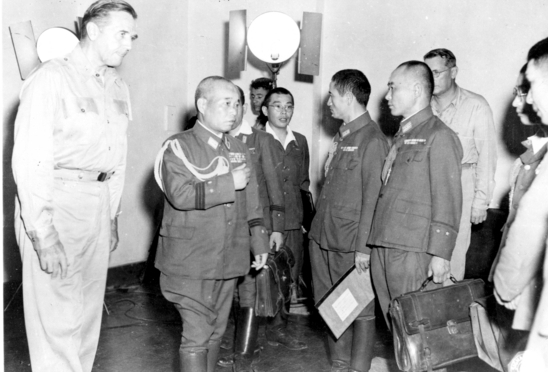
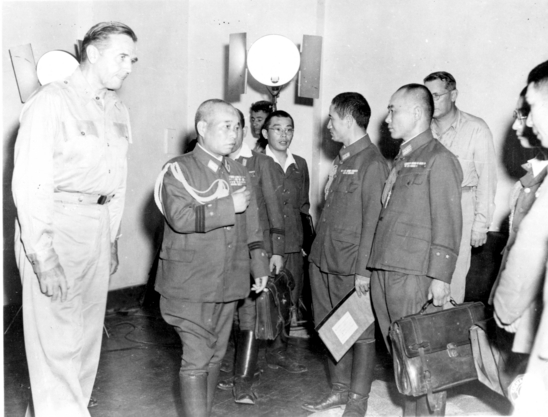
Seeking glory in this mission, Willoughby recruited by the end of 1946 top Japanese military officers, spies and even war criminals. Each had their own personal goals and copious amounts of US money flowed into these Japanese hands. One Japanese officer who Willoughby met in Manila was the Imperial Japanese Army’s Lt. General Torashiro Kawabe (photo above). Amazingly, because Kawabe also spoke German very well and was anti-Communist, he and Willoughby struck it off well.
A short time later, still in 1946, Willoughby met Lt. General Seizo Arisue who was the intelligence chief for the Imperial Japanese Army. By sheer luck, Arisue was also fluent in German and a staunch anti-Communist and reported he had the extensive spy network in place mentioned above. A triad had thus formed and the project to document history took off but with a twist: to Willoughby’s credit, he foresaw a “dual” history. As history always gets written by the victor, Willoughby wanted two volumes. One would be the US side of the story, the second volume to be Japan’s.
In early 1947, Willoughby was introduced to a former colonel who served at the Imperial General Headquarters in Tokyo during the war. His name was Col. Takuhiro Hattori. Hattori was known to both Kawabe and Arisue as a genius in planning and organizing. Hattori eventually became the person from Japan’s side to determine what went into the war history.
Generous money flowed through Willoughby to Kawabe and Arisue, reportedly to help fund the spy network. Along the way, they brought in an “Issei” (a Japan-born first generation immigrant to the US like my grandfather) plus a university professor named Mitsutaro Araki. He also received education in Germany but no history would be complete without sexual escapades. Professor Araki’s wife was a socialite who used her beauty to charm others, primarily men. Her name was Mitsuko Araki. As a bit of trivia, Mitsuko was the only Japanese who was allowed free, unhindered entry/exit to GHQ. It was believed the CIA concluded she and Willoughby were having an affair.
In his efforts to make his recorded history unique, Willoughby paid Mitsuko to find and compensate artists who could paint battle scenes from Japanese eyes. He felt photos were too ordinary plus many were from US sources.
So when I picked up my two kids from school today, I thought I’d surprise them.
I said, “Your Papa had a couple of his stories published in a book!”
Their response? “Oh…”
“Would you like to read it?”
Brooke said, “Umm… No-ah!”
The “-ah” is because she talks valley-girl sometimes and accentuates the end of words at the end of a short sentence with a “-ah”. In this case, her answer was resounding”No.”
________________________________
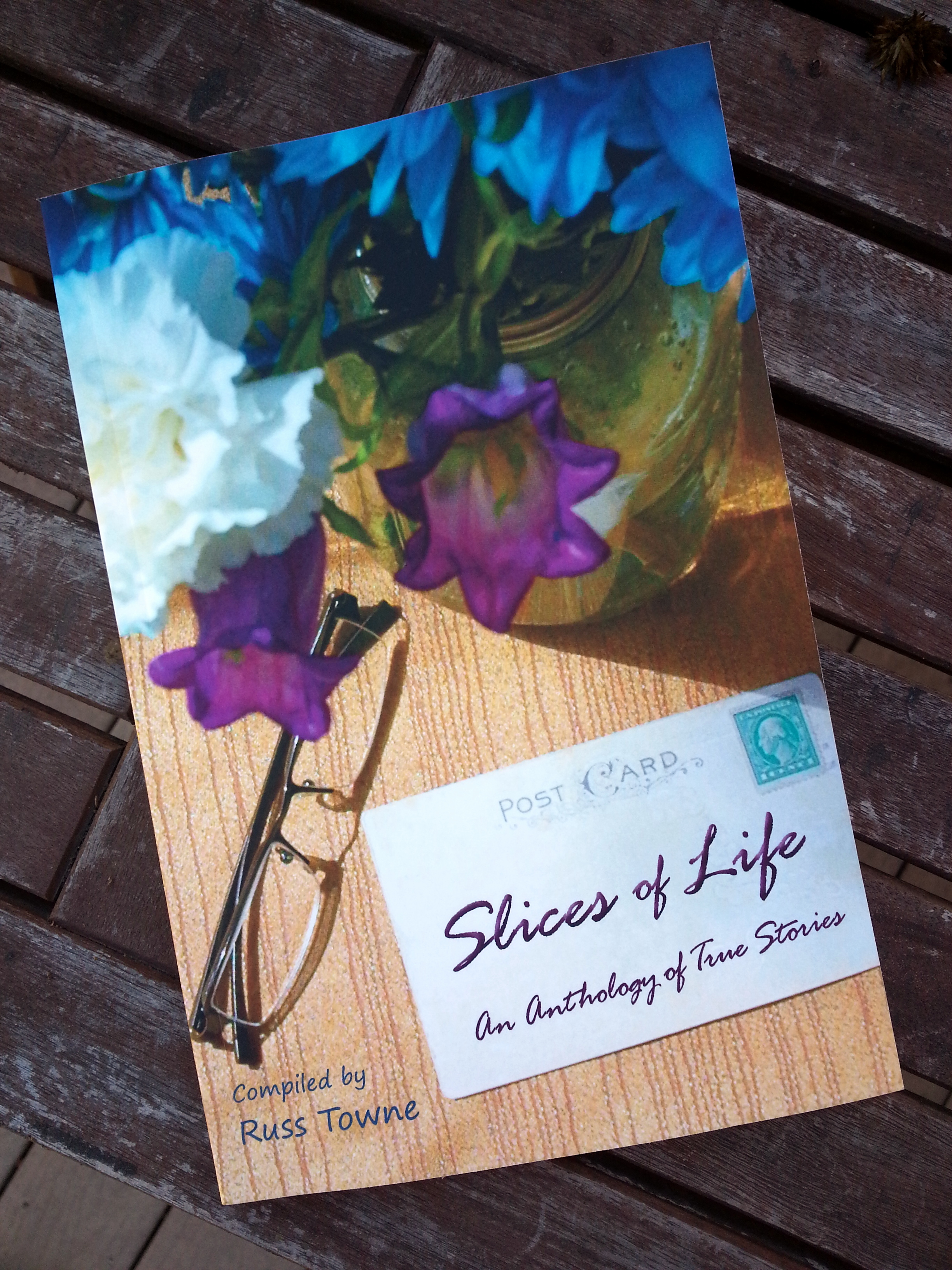
Fellow blogger Russ Towne (his blog here) invited me to consider contributing to a non-fiction anthology. Considering this would be the first time ever any story of mine would be published, I gave it a shot! Not that I know anything about writing let alone publishing.
The book is now published and available on Amazon for $8.99 – less than minimum wage! What a deal! He entitled his anthology “Slices of Life”. Russ wrote on his blog:
“I’m pleased to announce that Slices of Life has been released and is available on Amazon.com!
Slices of Life is an anthology of the selected non-fiction stories. From heart-warming memories of childhood, to humorous perspectives on aging and inspiring stories of survival to hilariously disastrous social encounters, this non-fiction anthology has it all! It features thirty-plus stories exploring the challenges, triumphs, and humor of life as seen through the eyes and experienced in the hearts of more than a dozen writers.
Please spread the word that this long-awaited book is now available.
Thank you to everyone who helped to turn this dream into a reality.”
A peek:
I’ll hope you’ll visit his blog and Amazon, too A direct link to Amazon is here.

 I was alone with Old Man…










 Masako and Spam Musubi
