If your eyes don’t spring a leak, there is something amiss… like with our current administration.
It really says something when your own country can’t afford a flyover for a rare duo burial.
If your eyes don’t spring a leak, there is something amiss… like with our current administration.
It really says something when your own country can’t afford a flyover for a rare duo burial.
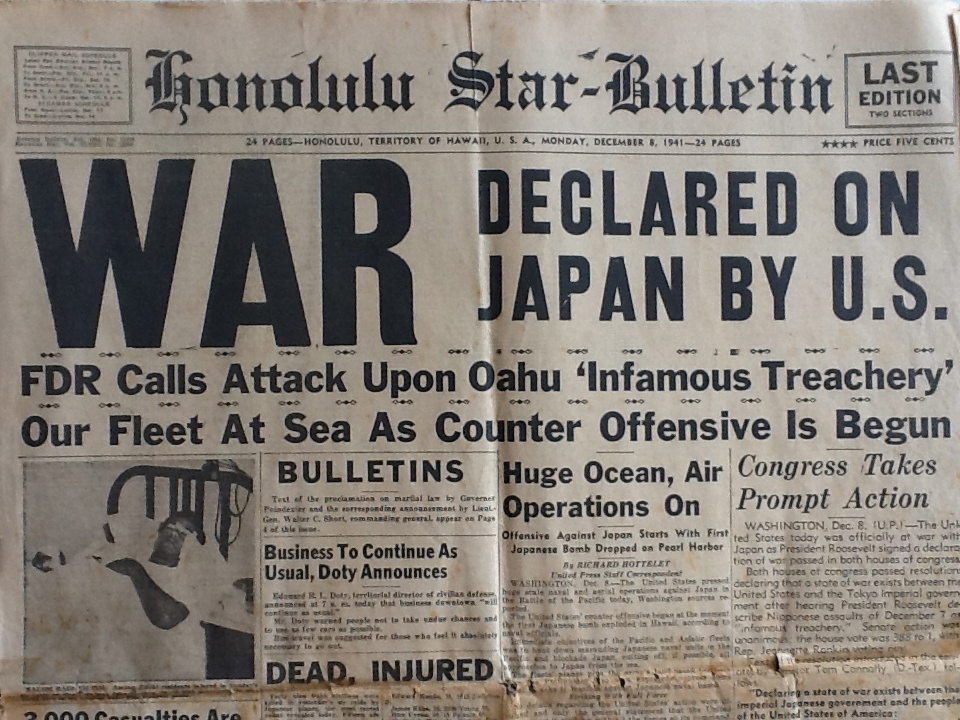
As we saw in Part 3, Japan and America are now at war.
While not directly related to the question of “What did FDR know?”, it is deemed critical for readers to understand the damages suffered by the US military – and specifically its naval and air assets – on December 7, 1941. It is also important to realize the huge advantage the Japanese Imperial Navy had over the U.S. Navy. Lastly, it is important for readers to note the unbridled successes of the Japanese military at that time… and what unbelievably followed.
For the vast majority, Americans are under the belief that the US was caught flat-footed with the surprise attack on Pearl Harbor. Indeed, 21 ships of the U.S. Pacific Fleet were sunk or damaged.
Of those ships damaged, all but three of the ships at Pearl Harbor were refloated and repaired (Note: Pearl Harbor at its deepest is about 50′.):
In addition, the US had 188 aircraft destroyed plus 159 were damaged; the majority were hit before they had a chance to take off.

There were a total of 2,403 American casualties, including 68 civilians. Most of the military killed were on the USS Arizona (1,177 killed). Most of the civilians killed were from improperly fused anti-aircraft shells fired by US batteries hitting in Honolulu. There were 1,178 wounded military personnel and civilians combined. (1)

Japanese naval forces sailing for the raid included four heavy aircraft carriers, two battleships, two heavy cruisers, two light cruisers, 35 submarines, and 11 destroyers. Indeed, a powerful fleet projecting tremendous offensive firepower. All survived unscathed; all but 29 Japanese aircraft returned to their carriers.
In the Pacific Theater, Japanese forces were rolling over Allied forces at will with victories in Thailand, Malaya, Wake Island, Guam Island, the Philippines, Hong Kong, Singapore, Burma, Dutch Indonesia and the invasion New Guinea. The Imperial Japanese Navy dominated in the Pacific, attacking Allied bases in Australia and Ceylon; they even bombed or shelled coast of North America at will albeit with minimal effect.
But, the great sea battle of the Coral Sea and more specifically at Midway essentially put a halt to the wave of Japanese victories… barely five months after Pearl Harbor.
How could that possibly be? Wasn’t our Pacific fleet crippled?
____________________________
So… how DID the US Navy stop the Japanese advance at these critical battles at Coral Sea and Midway? After all, at the time of Pearl Harbor, the US Navy only had three aircraft carriers in the Pacific: the USS Enterprise, USS Lexington, and USS Saratoga. (The USS Hornet was still on shakedown cruise and the USS Yorktown and USS Wasp were deployed in the Atlantic.)
Of course, the heroics of our sailors and Marines played a most dominant role but you may wish to ask yourself:
If it wasn’t the above, how was the US Navy able to engage the Imperial Japanese Navy at Coral Sea and Midway then stop them?
It was MAGIC.
___________________________
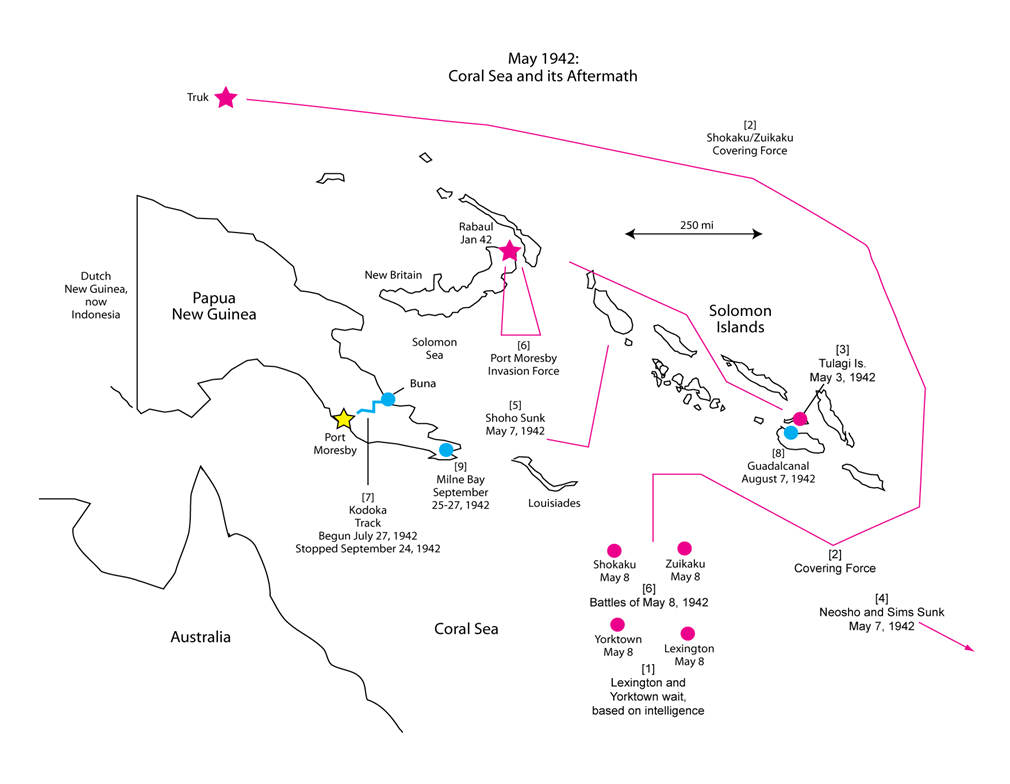
By March 13, 1942, OP-G-20 had completely broken JN-25. Until then, about 10% to 15% of a JN-25 message that was intercepted could be read. (2) However, enough could be deciphered to understand the Japanese were gearing up to attack Port Moresby in Papua, New Guinea on May 7, 1942. By taking Port Moresby, Japan could extend its reach beyond northern Australia and further south.
Upon receiving the intelligence from the deciphered JN-25 messages, Admiral Chester Nimitz decided to move a fleet into position in between Port Moresby and Australia. He issued such orders on April 17, 1942. However, he had but two carriers available for action – the USS Lexington and the USS Yorktown. This battle was definitely NOT a chance encounter; it was planned.
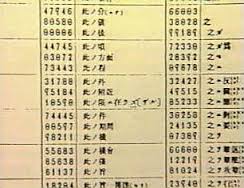 In fact, deciphered messages allowed the US Task Force 17 to be in position before the Japanese fleets arrived to attack. But lacking sufficient capital ships and aircraft that were inferior to the Japanese Zero, the outcome was far from certain. The sailors and Marines were largely untested as well. (The USS Hornet and USS Enterprise were unavailable due to their critical roles in the Doolittle Raid on Tokyo; it took place two days later on April 18, 1942.)
With but two carriers and support ships, the US fleet was outgunned especially considering our aircraft was obsolete. The Japanese fleet sailed with a Shoho (a carrier), several cruisers and destroyers, and a dozen transports filled with troops. A smaller invasion force would move down the Solomons, which laid on New Guinea’s eastern flank, with the target being Tulagi. To protect these two invasion fleets, the Japanese carriers Zuikaku and Shokaku would spearhead yet a third fleet to provide air protection.

While the ensuing two-day Battle of Coral Sea was considered a draw, U.S. forces inflicted enough damage on the Japanese navy to force it to withdraw. In addition, as the Japanese were unable to secure the port, their military was forced to fight in land warfare, which proved disastrous for the Japanese. Of most importance, the fruit of the battle saw the Japanese carrier Shoho sunk, with both the Zuikaku and Shokaku damaged and forced to retire. Therefore, they were made unavailable for the critical Battle of Midway, just about four weeks later.
However, we lost the USS Lexington, a major loss. And while the USS Yorktown suffered heavy damage as well, the Japanese believed her to have been sunk; instead, the USS Yorktown was made seaworthy through the extreme efforts of repair crews at Pearl Harbor. While two weeks had been estimated for repairs, the repair crews had her back on the seas in just 48 hours.
This strategic victory was made entirely possible because of secret MAGIC intercepts. The Japanese still did not believe their complex JN-25 had been broken.

Arguably, the paramount triumph from the breaking of JN-25 on March 13, 1942 was the Battle of Midway. This is one battle that my neighbor, Mr. Johnson, fought on board the USS Enterprise as a very young US Marine. From decrypting the Japanese naval messages, the U.S. naval commanders knew the general battle plans of Admiral Yamamoto – even the timetable. Yamamoto’s strategy was to have aircraft carrier task forces launch both a diversionary raid off the Aleutian Islands then lure the U.S. Navy to Midway Island. His goal was to decimate once and for all what remained of the American fleet after Pearl Harbor.
Yes, the deciphered intercepts did not state in the clear Midway was the target; the messages simply designated “AF.” While CINCPAC felt strongly it was Midway, it was Captain Joseph Rochefort of OP-20-G who wily suggested how to establish for certain what “AF” stood for.
Rochefort was Officer in Charge (OIC) of Station Hypo in Pearl Harbor, the nerve station in Hawaii for deciphering JN-25 intercepts. An expert Japanese linguist and during the most critical month of May 1942, Rochefort reviewed, analyzed, and reported on as many as 140 decrypted messages per day. These reports were directly piped to the highest-ranking fleet commanders. He brilliantly strategized for American forces on Midway to send out a radio message saying that they were running short of fresh water. Rochefort and his group waited anxiously to see if Japan would take the bait. Finally, OP-G-20 intercepted a Japanese message: AF was running short of fresh water.
Establishing Midway as the target, the U.S. Navy assembled what it could. America was still short on capital ships and better aircraft. After a 48 hour turnaround, the USS Yorktown joined the USS Enterprise and USS Hornet.
While remembering that by virtue of deciphering coded Japanese messages, the Japanese Imperial Navy had three less carriers to deploy after their losses at Coral Sea – a very critical fact. After a fierce three-day battle at Midway, U.S. naval aviators sank all four Japanese aircraft carriers in Yamamoto’s task force – the Hiryu, Soryu, Akagi and Kaga. All four participated in the assault on Pearl Harbor, effectively turning the tide in the Pacific. Yes, luck was involved during the actual battle but certainly, the courage of our young men at sea and in the air was incredible. They had proven themselves but at great cost in lives and materiel… including the USS Yorktown.
Unbelievably, the Chicago Tribune published a darned story revealing that the U.S. had known about Japanese battle plans in advance. They had, in effect, revealed that JN–25 had been broken. Inexplicably, key Japanese leaders never found out about the article. Darned media – even back then.

As school history books had once shown, the battle planner of the Pearl Harbor attack was Admiral Yamamoto. He did know of the might of the U.S. having attended Harvard University – yes, Harvard – from 1919 to 1921, studying English. He did, in fact, oppose taking on the U.S. But Yamamoto had one trait which would lead directly to his death: his intense desire to be punctual. The US counted on this.
Codebreakers intercepted then learned after deciphering messages that the admiral was scheduled to inspect a naval base on Bougainville in the Solomon Islands on April 18, 1943. The detail even included his minute by minute itinerary. Some top US officials were hesitant to use this information for fear that doing so would tip off the Japanese that their codes had been broken. Nevertheless, the decision was made to assassinate Yamamoto. That morning, eighteen P–38 fighters left their base at Guadalcanal at the other end of the Solomon chain and arrived at Bougainville precisely ten minutes before Yamamoto’s plane was making its approach. The admiral was killed in the attack, depriving Japan of its most experienced and accomplished admiral and sapping Japanese morale.
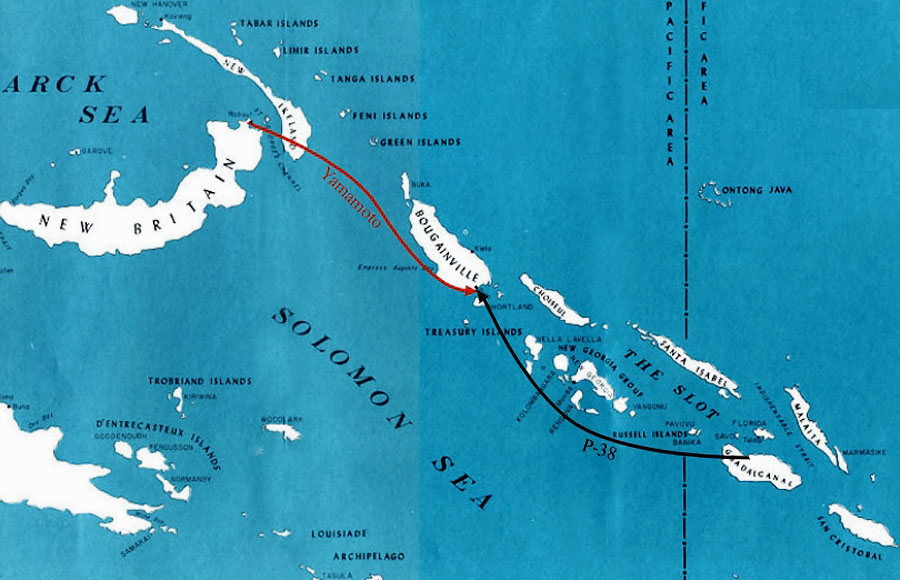
To mislead the Japanese that the fighters had arrived purely by chance, the air force flew other risky patrols to the area, both before and after the attack. It was not a “one shot in the dark” mission. It was deeply thought over and planned out – because we were able to intercept and decipher coded Japanese messages.(3) They also spread “rumors” that the information was from coast watchers.
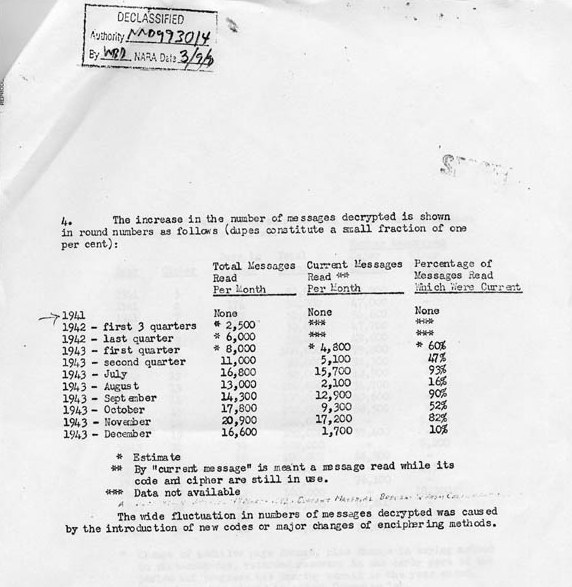
The Japanese did not change JN–25, and for the remainder of the war, U.S. intelligence intercepted and read thousands of Japanese messages. A portion of a secret OP-20-G report, circa 1943, is below listing the number of coded Japanese messages intercepted:
Early in 1942, Japan decided to block the Allies from setting up bases in Australia. Operation MO would send a large invasion force to Port Moresby, the capital of New Guinea. From Port Moresby, the Japanese would be able to project air power beyond the northern tip of Australia and establish bases even further south (Hearn).
The Port Moresby landing force sailed with about a dozen transports filled with troops, several cruisers and destroyers, and a half-size carrier, Shoho (Bennett, Hearn). A smaller invasion force would move down the Solomons, which lay on New Guinea’s eastern flank. The specific target in the Solomons was Tulagi, which was the colonial capital. To protect these two invasion fleets, Zuikaku and Shokaku would lead a separate covering force to create a blanket of air protection (Bennett).
By March 1942, the United States had cracked part of the current Japanese Naval (JN) code, JN-25. However, U.S. intelligence could intercept only about 60 percent of all Japanese transmissions and had the resources to analyze only about 40 percent of the messages it did intercept (Parshall and Tully). Even then, code breakers typically could read only 10 to 15 percent of the code groups in a message (Parshall and Tully). U.S. intelligence primarily used direction-finding equipment to learn where many Japanese ships were and where they were heading (Parshall and Tully).
Beginning on April 16, U.S. intelligence began using this spotty information to piece together an understanding of a Japanese plan to move south with carriers (Parshall and Tully). On April 17, Nimitz ordered the carrier Lexington to join Yorktown in the Coral Sea (Bennett). If Halsey had been able to move Enterprise and Hornet there too, the U.S. might have been able to destroy the Japanese fleet. But Enterprise and Hornet needed refitting after the Doolittle raid of April 18, 1942, and could not get there in time for the fight (Parshall and Tully).
– See more at: http://www.pacificaviationmuseum.org/pearl-harbor-blog/battle-of-the-coral-sea#sthash.P5voInlO.dpuf
Early in 1942, Japan decided to block the Allies from setting up bases in Australia. Operation MO would send a large invasion force to Port Moresby, the capital of New Guinea. From Port Moresby, the Japanese would be able to project air power beyond the northern tip of Australia and establish bases even further south (Hearn).
The Port Moresby landing force sailed with about a dozen transports filled with troops, several cruisers and destroyers, and a half-size carrier, Shoho (Bennett, Hearn). A smaller invasion force would move down the Solomons, which lay on New Guinea’s eastern flank. The specific target in the Solomons was Tulagi, which was the colonial capital. To protect these two invasion fleets, Zuikaku and Shokaku would lead a separate covering force to create a blanket of air protection (Bennett).
By March 1942, the United States had cracked part of the current Japanese Naval (JN) code, JN-25. However, U.S. intelligence could intercept only about 60 percent of all Japanese transmissions and had the resources to analyze only about 40 percent of the messages it did intercept (Parshall and Tully). Even then, code breakers typically could read only 10 to 15 percent of the code groups in a message (Parshall and Tully). U.S. intelligence primarily used direction-finding equipment to learn where many Japanese ships were and where they were heading (Parshall and Tully).
Beginning on April 16, U.S. intelligence began using this spotty information to piece together an understanding of a Japanese plan to move south with carriers (Parshall and Tully). On April 17, Nimitz ordered the carrier Lexington to join Yorktown in the Coral Sea (Bennett). If Halsey had been able to move Enterprise and Hornet there too, the U.S. might have been able to destroy the Japanese fleet. But Enterprise and Hornet needed refitting after the Doolittle raid of April 18, 1942, and could not get there in time for the fight (Parshall and Tully).
– See more at: http://www.pacificaviationmuseum.org/pearl-harbor-blog/battle-of-the-coral-sea#sthash.P5voInlO.dpuf
The importance of MAGIC and the breaking of the “Purple” Japanese consulate code cannot be understated. For non-historian readers, the reach and military value extends far beyond the waters of the Pacific. It extends to Europe…specifically D-Day and the shores of Normandy.
As revealed in “What Did FDR Know? – Part 2” of this blog series, the US broke the code for this cipher before the attack at Pearl Harbor. The US did their best to keep the wraps over this great intelligence triumph. However, Nazi Germany’s own intelligence had good evidence that SIS had broken Purple and informed the Japanese. Unbelievably, Japan refused to believe it. (I believe this is part of the Japanese culture – to not place importance on “water cooler” talk.) Only when Congressional hearings and investigations into who knew of the Pearl Harbor attack reveal this did the Japanese accept it. Unfortunately, is was much after war’s end.(4)
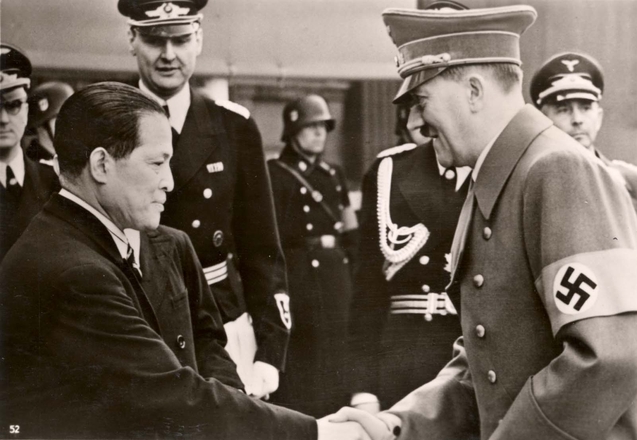
Per “What Did FDR Know? – Part 1”, Baron Hiroshi Oshima was the Japanese envoy to Berlin and used his Purple machine to communicate frequently with Tokyo. Luckily for the US, Oshima was also an Imperial Army colonel at the time of appointment and loved war strategy and armaments. He followed intimately the German conquests in Europe and their latest technologies. He sent very detailed reports to his superiors in Tokyo of what he had learned using the purple cipher machine, which the US was able to intercept and decipher immediately.
Oshima became a favorite and a confidant of Hitler. Hitler – being so full of himself and pompous – shared with Oshima the most secret and sensitive of his war plans with him. Hitler even gave Oshima a tour of the German defenses in Normandy! As per his character and routine, Oshima transmitted very detailed reports of the Nazi defenses at Normandy. This was obviously key in the preparations for D-Day, so much so the deciphered intel was immediately transmitted to General Eisenhower. Not quite what we read in our textbooks…
And while the public is led to believe the U.S. did not know if the German commanders took the bait that the D-Day invasion would take place at Pas-de-Calais, Oshima secretly gave the US confidence that the Germans had taken the deception through his messages to Tokyo. The Nazis were preparing for the landing at the wrong beaches. (Note: this is not to lessen the somberness of those killed or missing in action at Normandy. Further, this is not to lessen the importance of wartime security.) Further, with their true belief that the invasion at Normandy was a diversion, the Panzer divisions were not immediately released to engage the Allied invading forces until too late.
In recognition of this value to Japan, he was promoted in a few short years from Colonel to Lt. General. Oshima’s prolific reporting prompted US General George C. Marshall to say Oshima was, “…our main basis of information regarding Hitler’s intentions in Europe” in 1944. (5)
_____________________________
Why did the U.S. decide to take intense preparatory military action for Coral Sea based only on partial deciphers of JN-25? As stated, OP-20-G did not break JN-25 completely until March 1942. However, OP-20-G was able to adequately decipher JN-25 messages – even one sent by Yamamoto himself – only until about one week before Pearl Harbor when a code key was changed. What could the reasons be for the U.S. not taking similar defensive or offensive action at Pearl Harbor before the actual attack commenced? Was it because of incomplete intel? Were deciphered messages not of importance to FDR… or they not reach FDR at all? Were diplomatic deciphers not important? Did top brass feel their carriers would be sunk facing tremendous attacks and therefore, the Pacific War would be lost from the get-go? Or…?
Of course, there can be as many reasons as there are people.
_____________________________
NOTES:
(1) National Park Service
(2) “At the Interface” documentary based on interviews of Donald M. Showers, USN, ret.
(3) Public teaching in the past was true at the surface – that the US had intercepted a radio message “sent out in the open” by a brash young officer. Now you know it was the work of cryptanalysts working under tremendous secrecy.
(4) National Cryptologic Museum
(5) “Hitler’s Japanese Confidant” by Carl Boyd
For “Cee’s Fun Foto Challenge: Shadows” of this week…
Loyal readers know of my love for WWII combat veteran “Old Man Jack”.
After suffering through seven decades of nightmares of war, he is now finally at peace. Hopefully, he is resting comfortably beneath these shadows cast by my two youngest kids and I:
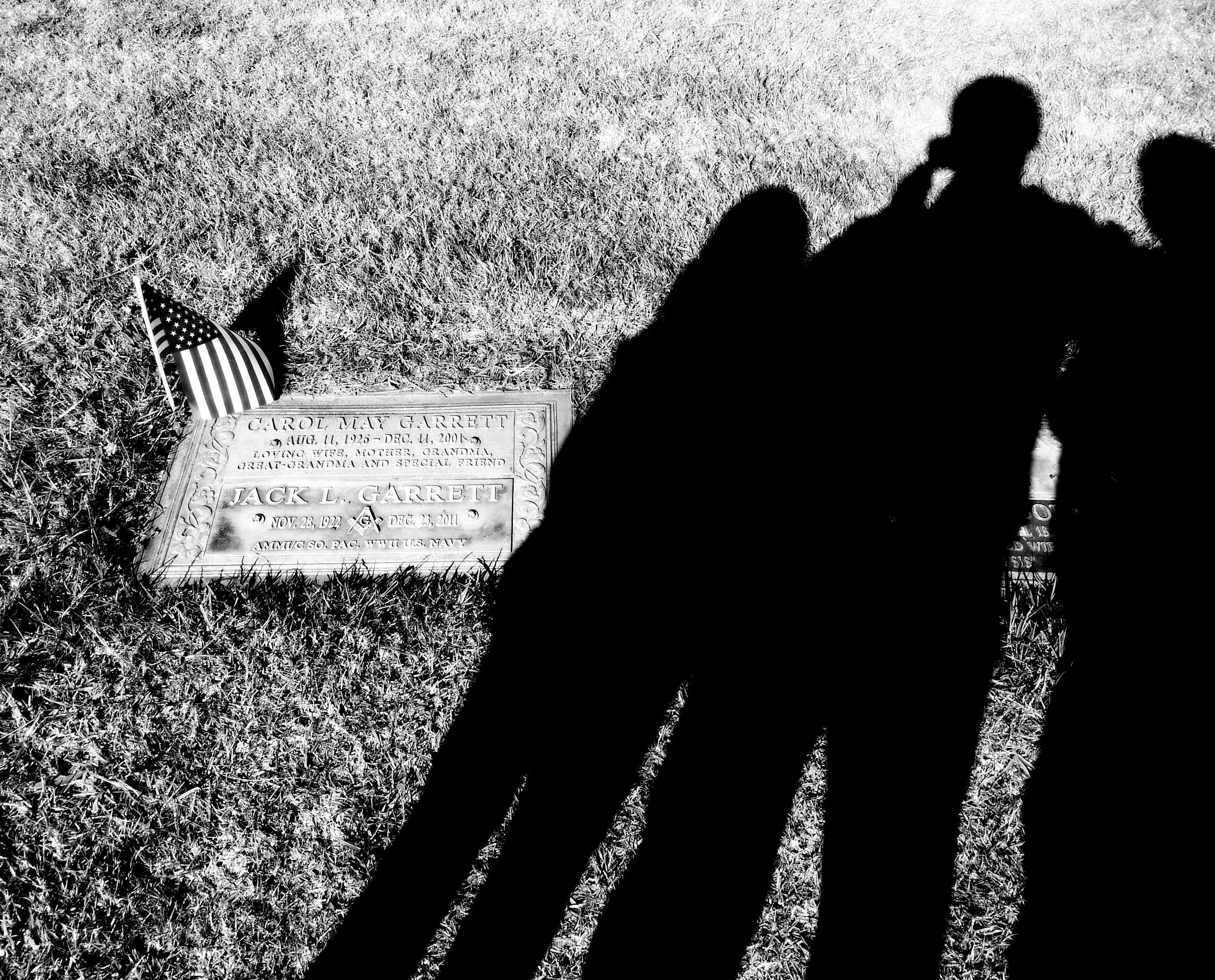
And a shadow cast by Old Glory:

For new visitors, please feel free to click and read one story of this great American who is now all but being forgotten in our new “Common Core” history textbooks. He earned the honor to be remembered:

In Part 1 of “What Did FDR Know?”, I submitted tidbits that FDR – in spite of his campaign promises of not sending American boys to war – DID secretly plan with Churchill on how to get America into war without damaging their political images. Their secret discussions were nearly made public by Tyler Kent but he was tried secretly in a British court and admonished to prison until war’s end. Secretary of State Cordell Hull, on November 29, 1941, tried to leak to a major newspaper man intelligence gathered about the Imperial Japanese Navy heading towards Pearl Harbor.
In Part 2 of “What Did FDR Know?”, some history at Pearl Harbor before December 7, 1941 was provided as well as a brief history into cryptanalysis, the Japanese JN-25 and Purple codes and how the US Army and Navy broke them before and after Pearl Harbor.
In this Part 3, I will attempt to present evidence on intelligence gathered BEFORE the surprise attack on Pearl Harbor.
Part 4 will attempt to present evidence on the extent of our “listening in” on Imperial Japanese Navy battle plans post Pearl Harbor.
Part 5 will attempt to present evidence on the imprisonment of Japanese and Japanese-Americans in the “war relocation centers”, as FDR called them.
The goal is to allow you to come to your own conclusion as to “What Did FDR Know?”
___________________________
We learned that the US Navy struggled to break the JN-25 code that was changed immediately before the attack. However, OP-20-G was able to decipher coded messages immediately prior to a reasonable extent. The number of JN-25 messages intercepted between just September 1 and December 4, 1941 numbered 26,581. Of these, 2,413 were released by the (now famous) NSA in 1979. Although there were more than 1,000 just between Tokyo and the attack fleet, only 20 are reportedly in the National Archives. (So much for the IJN operating under “strict radio silence” during the voyage to Pearl Harbor.)
The Purple code also became another critical source of intelligence, especially the week before Pearl Harbor. Luckily, we had been intercepting and deciphering them since September 1939… more than two years before Pearl Harbor.
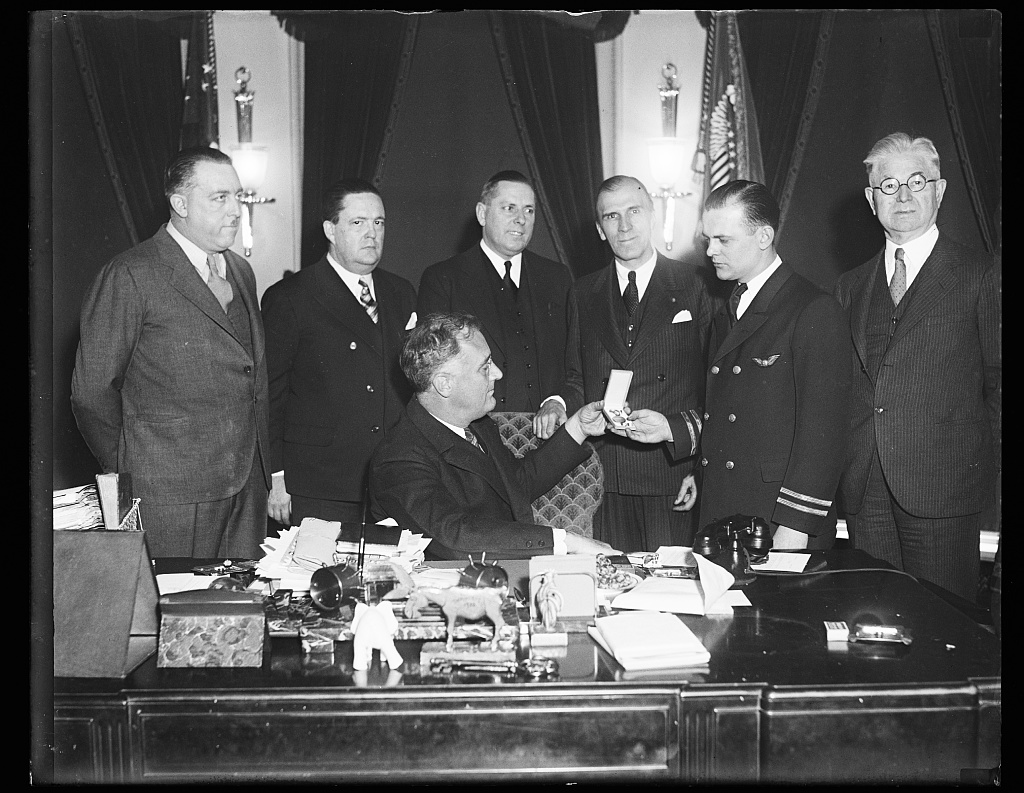
Just what was transmitted by the Japanese diplomats about Pearl Harbor and intercepted through MAGIC? What other events occurred either in relation to the intercepts or the looming signs of the attack on Pearl Harbor? Please note that in 1941, they did not have emails, fax machines, TV, FedEx or SMARTphones. However, they did have TELEphones. Remember those things?
As shown above, there were more than 26,000 in JN-25 messages alone so going into detail about what was known in total would not be appropriate for this blog. However, if I were to summarize:

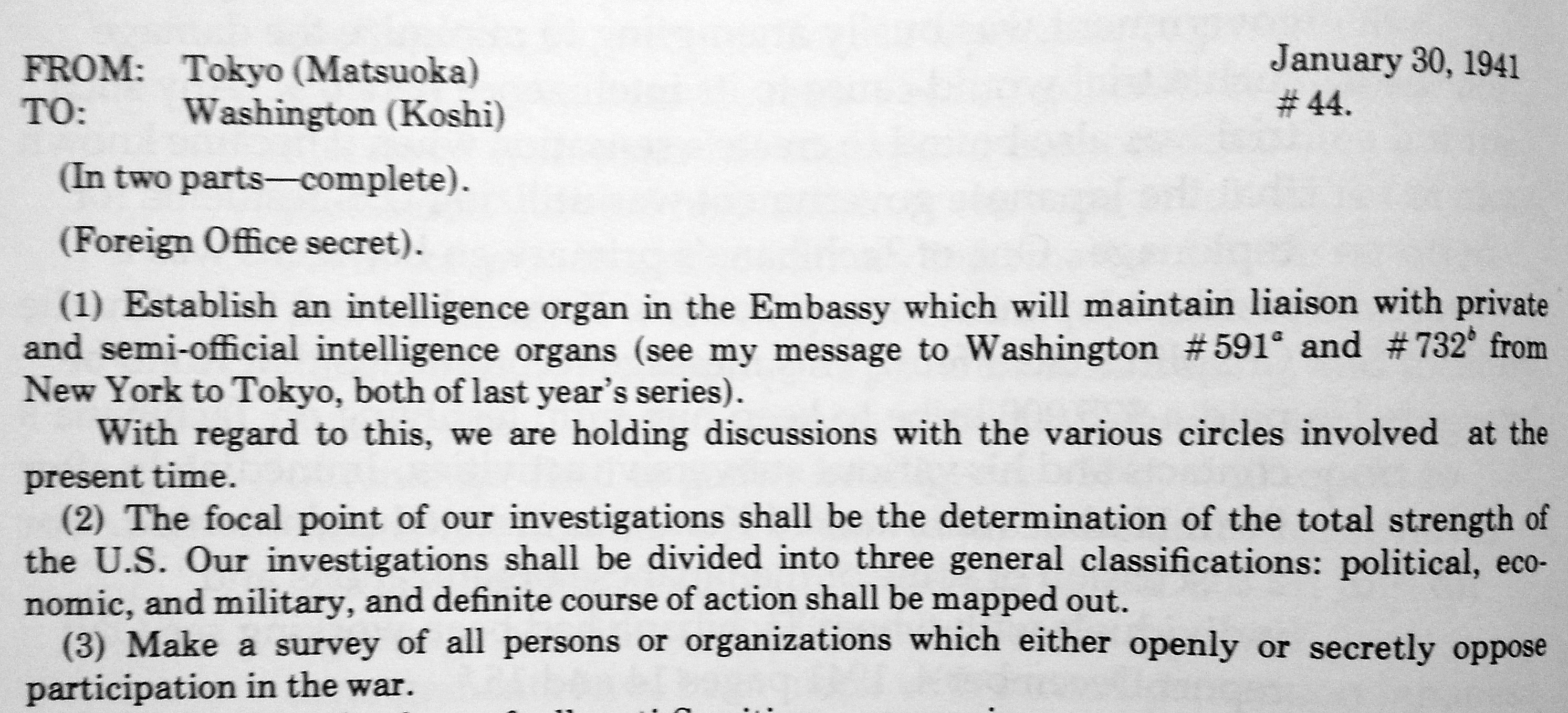
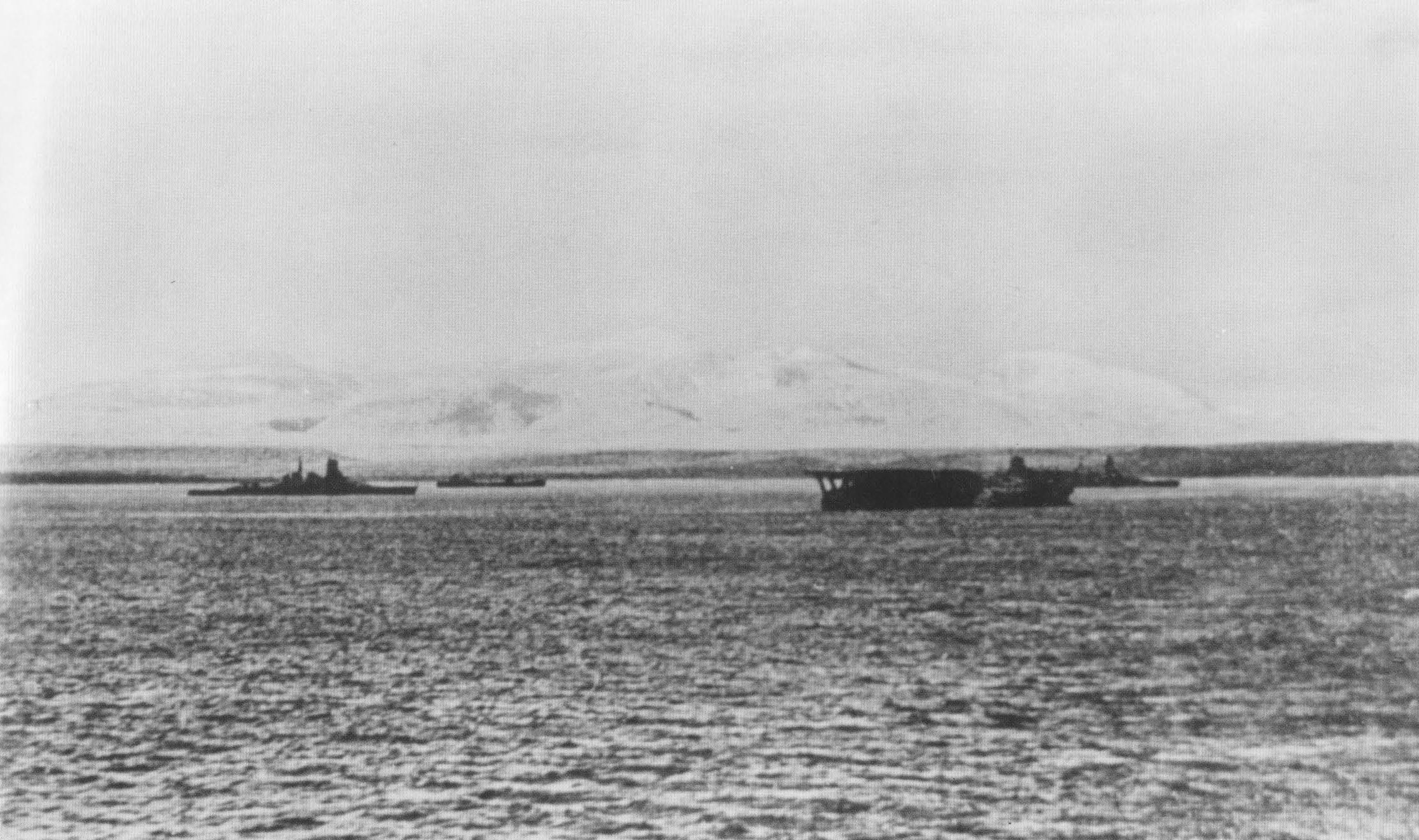

In reaction to #17 above, Churchill himself sent FDR a secret message likely warning him about war erupting; this was presumably in response to British intelligence decoding Yamamoto’s message. (Note: Likely due to implications even today and in spite of the enumerable messages sent between them, this is the only message that has not been released.) C.I.A. Director William Casey, who was in the OSS in 1941, wrote, “The British had sent word that a Japanese fleet was steaming east toward Hawaii.”(2) In response to Churchill’s message, FDR secretly cabled him that afternoon, “Negotiations off. Services expect action within two weeks.” Note that the only way FDR could have linked negotiations with military action, let alone have known the timing of the action, was if he had read the message to set sail. In other words, the only service action contingent on negotiations was Pearl Harbor. Regardless, can it be coincidence that on Nov 26, Washington ordered both US aircraft carriers, the USS Enterprise and the USS Lexington out of Pearl Harbor? On board were 50 fighter planes diminishing Pearl Harbor’s already inadequate fighter protection.(3)

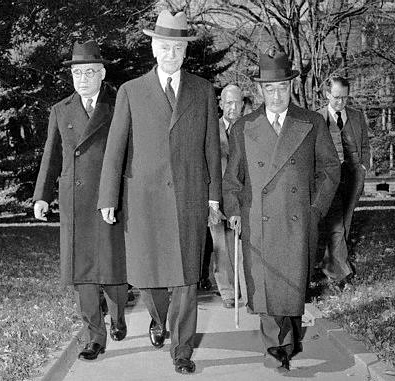
The FBI had put in wire taps on the Japanese Embassy phone lines. The FBI listened in on an uncoded Japanese telephone conversation on November 29 in which Special Envoy Saburo Kurusu asked, ‘Tell me, what zero hour is. Otherwise, I won’t be able to carry on diplomacy.” The voice from Tokyo (later identified as K. Yamamoto) said softly, ‘Well then, I will tell you. Zero hour is December 8 (Tokyo time, ie, December 7 US time) at Pearl Harbor.” (US Navy translation 29 Nov)
We are now at war.
______________________________
The above is by no means any-wheres near a complete accounting of the events leading up to Pearl Harbor. And yes, there will be blanks in information flows, other communications that will show things countering the above, etc. But it does show how a government can disguise the truth or create lies for whatever purpose…even if it involved the deaths of human beings.
You can imagine what is going on today. Benghazi. The complete killing of SEAL Team Six. Fast and Furious. It goes on.
But some questions may be in order to perhaps counter what you believed in or were taught until now? Perhaps you can ask yourself:
Points to ponder, indeed.
And to close this (long) story, a Hollywood movie depicted Kimmel and Short receiving a telegram of all things alerting them of the possible attack on Pearl Harbor – many hours after it was over. That is true. However, how it became a late telegram is another story all together. By all accounts, Chief of Staff George C. Marshall orchestrated a delicate ballet to delay even sending that telegram for the critical few last hours. In fact, he was difficult to nail down during the critical hours before the attack, arriving late to his office to go over the critical Ultimatum. Although known for near photographic memory, he claimed he was horseback riding but his aides testified after the war that he wasn’t. Further, his aides urged him to contact Pearl Harbor but delayed that decision by reading then re-reading the ultimatum and then asking superfluous questions about what method of communicating with Pearl would be faster, for example – several times. He chose not to use the “telephone” nor use a fast, secure Navy system but sent the warning through commercial wire, of all things. Even then, the warning language he dispatched was watered down.
____________________________
So what do you think?
What did FDR know? What do you think he did not know?
More to follow in Part 4 – key naval battles, code breaking and what really happened on the waters of the Pacific.
I hope you’ll stay tuned. Part 4 is here.
____________________________
NOTES:
(1) Coded message of September 24, 1941:
Strictly secret.
Henceforth, we would like to have you make reports concerning vessels along the following lines insofar as possible:
1. The waters (of Pearl Harbor) are to be divided roughly into five subareas (We have no objections to your abbreviating as much as you like.)
Area A. Waters between Ford Island and the Arsenal.
Area B. Waters adjacent to the Island south and west of Ford Island. (This area is on the opposite side of the Island from Area A.)
Area C. East Loch.
Area D. Middle Loch.
Area E. West Loch and the communication water routes.
2. With regard to warships and aircraft carriers, we would like to have you report on those at anchor (these are not so important) tied up at wharves, buoys and in docks. (Designate types and classes briefly. If possible we would like to have you make mention of the fact when there are two or more vessels alongside the same wharf.)”
There is nothing unusual about spies watching ship movements — but reporting precise whereabouts of ships in dock has only one implication. Charles Willoughby, Douglas MacArthur’s chief of intelligence and my dad’s big boss in the US 8th Army, later wrote that the “reports were on a grid system of the inner harbor with coordinate locations of American men of war … coordinate grid is the classical method for pinpoint target designation; our battleships had suddenly become targets.” This information was never sent to Kimmel or Short.
(2) Per his book, “The Secret War Against Hitler”.
(3) There are strategic evaluations asserting that not having US fighter aircraft sortied in great number against the invading Japanese fleet was “best” in the long run. Some armchair strategists claim that if the US carriers had “gone after” Nagumo’s fleet, indeed, our two vital carriers and her invaluable pilots would have been sunk, never to be recovered. That, however, is another story.
(4) The Hewitt Report, page 474.
(5) “Day of Deceit”, page 209.
(6) There is some bickering between opposing viewpoints as to the validity of this point. After the war, Japan stated it never issued such a broadcast. Other historians doubt Briggs’ testimony as there are no documents.

Here’s a different (and correct) “Cee’s Fun Foto Challenge” entry: Patterns.
July 4th week, The Wall.

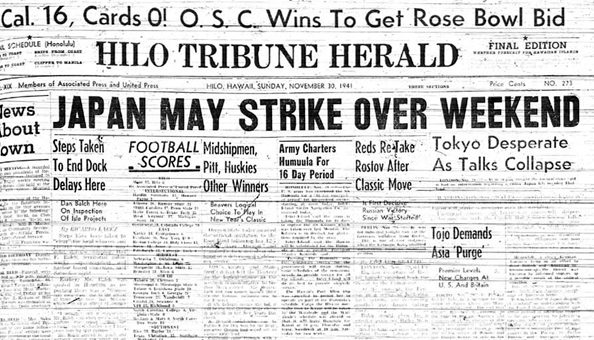
The above: a front page published one week BEFORE Pearl Harbor.
OK… So the newspaper was published on Hilo.
Well, then, how about a second front page? And from a different island this time – Oahu.
Pearl Harbor is on Oahu.

______________________________
To continue with “What Did FDR Know?”, let’s go over some once secret stuff, shall we?
And stuff that wasn’t so secret – like the headlines above. These NEWSPAPERS were in newsstands or tossed onto front lawns a WEEK before the attack on Pearl Harbor. How can that be when our textbooks and history tell us our Navy and Army were caught with their pants down?
It may be fascinating and perhaps eye opening for some of you. To some of you old hats in military history, not so eye opening.
This story will be centered on “MAGIC”, the cover name given to the secret diplomatic messages sent between Japanese diplomats and intercepted.(¹)
MAGIC intercepts will be the foundation for this story and subsequent ones.
The Japanese diplomats sent message after message believing their code was secure.
They were wrong.
______________________________
But first, some background on Pearl Harbor itself. It’s important in your quest to conclude on “What Did FDR Know?”

Before December 7, 1941 and as we read in Part I of this series, did you know the Pacific Fleet was based in San Diego? The powers to be moved the fleet from San Diego to Pearl Harbor. Even the decision to move the Pacific Fleet to Pearl Harbor was suspect at that time. And have you thought about who was commanding the fleet before the hapless Admiral Husband Kimmel at Pearl Harbor?
Admiral J. O. Richardson was Commander in Chief, CINCPAC as of January 1940. Per the “Final Secret of Pearl Harbor”, Richardson was the foremost expert on Japan and studied ad finitum Pacific naval warfare and mostly, of Japanese naval strategies. He also knew well of Japan’s pattern of secret attacks.
Richardson disagreed with FDR’s opinion that basing the Pacific Fleet at Pearl Harbor was indispensable towards protecting American interests. Richardson stoutly disagreed and said, “I came away with the impression that, despite his spoken word, the President was fully determined to put the United States into the war if Great Britain could hold out until he was reelected.”
He asserted that Pearl Harbor would be a “… g_d d_mned mousetrap”. His belief was the fleet should remain on the West Coast in San Diego; out at Pearl Harbor, the fleet would be a strategic target for any Japanese surprise attack which he correctly foresaw. His opinion was because not only did Pearl Harbor lack adequate fuel dumps and repair facilities, the Fleet lacked sufficient personnel and the waters around Pearl were unsuitable for training. The fleet would need to return to San Diego and the like for such purposes.
Those who chose to ignore Richardson’s educated opinion did so by saying Pearl’s shallow harbor would preclude torpedo plane attacks amongst other things.

Richardson asserted too strongly. Although Richardson was highly qualified militarily, FDR removed him from command on January 19, 1941. (Similar events are taking place notionally even today; about 200 top military commanders have been removed or forced out by the current Adminstration.) FDR replaced Richardson with the more amenable Admiral Kimmel. He was far down the list of able commanders but was still selected by FDR to run the Pacific Fleet. While he somewhat shared Richardson’s belief, he was obedient as FDR expected. Kimmel also wrongly assumed he would be “kept in the loop” by FDR insofar as military necessities, including intel. Was he expendable career-wise?
…and that is how Kimmel ended up in command of the Pacific Fleet on December 7, 1941.
__________________________

The Japanese military, just like the US military, had “secret codes” as did diplomats. For the purposes of this blog, we will concentrate on two groups of code: the Imperial Japanese Navy’s code (JN-25) and of the Japanese Foreign Office (code named “Purple”).
Talking about Communications Intelligence, or “COMINT”, would take a number of blogs; indeed, entire books and papers are written about COMINT during this time. For purposes of this blog, allow me to say COMINT is the acronym covering the analysis and usage of an enemy’s radio communications. Codes are when words are replaced by groups of letters or digits and are usually manual. A cipher, however, is the replacement of individual letters or groups of letters according to a plan; it is much more complex and are based on machines.
During this time, US COMINT was somewhat loosely organized, largely due to the rivalry between the US Navy and Army.
However, the cover name “MAGIC” was given to the intelligence obtained by both services involving the Japanese Foreign Ministry radio messages. While at the embassy level, great amounts of military information – and espionage – was disclosed in these secret messages and were therefore at the disposal of the US Government and military.
The US Navy began its covert intelligence gathering in the early ’20s when they actually broke into the Japanese Consulate in NYC and copied the secret Japanese code in use at that time. By 1926, the US Navy had broken the Japanese navy’s “Flag Officer’s Code”. The Imperial Japanese Navy at that time conducted fleet maneuvers about every three years; they would send coded messages throughout the maneuvers. The US Navy, by virtue of having broken the Flag Officer’s Code, easily listened in on them.
Their “listening in” on the Japanese fleet was so extensive that the US Navy knew of the capabilities of the Japanese warships. The US Navy knew the speeds, armaments, designs, etc., of the Japanese warships, so much so that the US Navy made improvements to their own warships to counter them.
During this period, the US Navy established a small group within the Office of Naval Communications called “OP-20-G”. It was formed without extensive knowledge of the US Army as infighting was common. The same was true for the Japanese military. Think of the Army-Navy rivalry in football – just grow it tremendously.
While the Japanese navy changed their code along the way, the OP-20-G had little difficulty breaking those, too… until late in 1940. Knowing they were headed to war with the US, the Japanese navy prudently introduced an entirely new code, the JN-25. It was much, much more complex than its predecessor. It proved difficult to crack but they had made progress when… the Japanese navy once again made amendments to JN-25 immediately before the attack on Pearl Harbor.
The US Navy, therefore, was pretty much “blind” intel-wise for pretty much a week before Pearl Harbor. It would not be broken until March 13, 1942.
But there was another group of cryptanalysts… an ace in the hole.
__________________________________
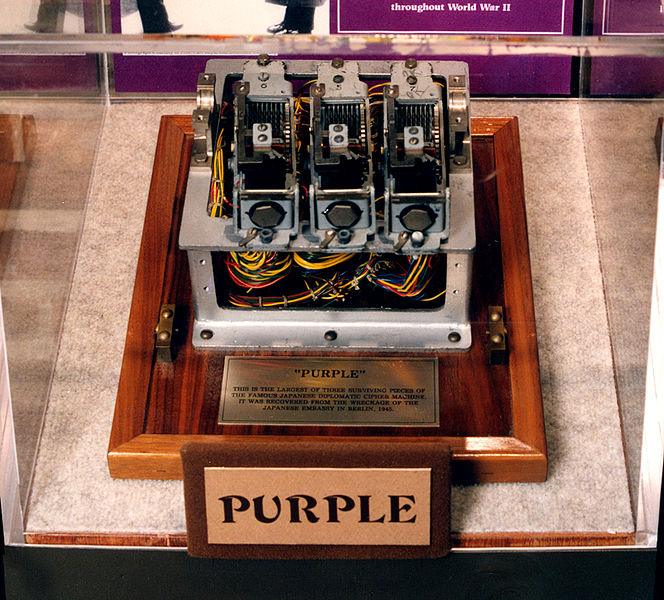
Alongside OP-20-G, the US Army’s cryptanalysis group called “Signal Intelligence Service”, or SIS, focused their energies on the Japanese diplomatic code. The group was headed up by William F. Friedman; he was very successful in designing our own encrypted codes.
Japanese diplomats (NOT military commanders) communicated with each other using an existing code designed in 1932; the US cryptanalysts called this code “Red”.(²) In 1937, the diplomats began using a newer, more complex code; the US referred to this code as “Purple”. In total, there were fourteen codes used by the Japanese diplomats; two of these were of the most value, Purple and “J-19”. Purple was used at the embassy level; J-19 was used at the consular level. Both were machine crypts.

In September 1939, the “unbreakable” Purple code, in the defective thinking of the Japanese, was broken; a key contributor to Friedman breaking Purple was that the Japanese had sent the same message using BOTH Red and Purple codes, a huge blunder in the cryptanalysis arena. In eighteen months, the SIS, headed up by Friedman, cracked the code(³). They even BUILT an analog machine from a blank chalkboard which quickly deciphered the “secret” messages. (The code was so complex that the machine contained 25 connections, which could be arranged 6 pairs of connections, yielding over 70,000,000,000,000 possible arrangements which would determine the method of encryption.) This was an AMAZING feat to have built a deciphering machine since SIS had not even seen the Japanese one. Remember, this was 1938. Nevertheless, these intense eighteen months landed Friedman in the hospital for four months from exhaustion and emotional strain.
With Purple broken, the US was able to immediately decipher all highly secret messages between all top level members of the Japanese diplomats located worldwide… and most importantly, without them knowing. Given the originators of the messages, they had nearly indisputable validity. The reach of MAGIC extended to the European Theater of war as well as briefly mentioned in Part I.
These diplomatic communications also clearly indicated espionage was taking place on the west coast of the United States.
Part 3 and 4 will show the contents of MAGIC intercepts so that you can answer on your own, “What did FDR know?”
I hope you will stay tuned.
Part 3 is here.
NOTES:
(¹) Unbelievably, Secretary of State Stimson was definitely upset when he learned we were intercepting messages. He championed the statement, “Gentlemen, do not read each others mail.” At the same time, consider the Snowden/NSA “scandals” of today.
(²) Ironically, Hitler had loved Baron Oshima so much he allowed Oshima to purchase a commercial version of Nazi Germany’s famous Enigma machine. The machine used for Red was based on this Enigma construct.
(³) While Friedman was the man burdened with the responsibility of deciphering PURPLE, it is acknowledged that a man named Frank B. Rowlett was the man who actually broke the code.
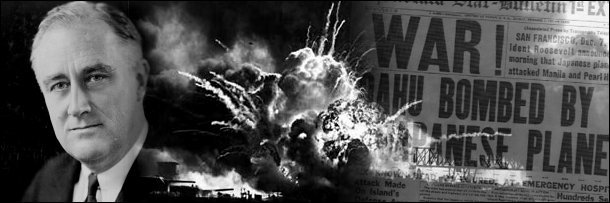
Good day, everyone.
The more frequent readers of this blog, “Masako and Spam Musubi”, likely see that my main focus is on World War II and my family’s involvement on both sides of the Pacific. Although I definitely am not a historian by any means, stories here are based on family records supplemented by tidbits of historical “facts”.
And some of these historical facts are public knowledge…while some are kept or suppressed from public knowledge.
Some were destroyed.
The White House also has perhaps the most insurmountable power over what is written – or how events are presented to or withheld from the public. At times, this leads to the distrust of the very government the people have elected into power. This distrust continues today and arguably, the worst its been in our country’s history.
This is a knotty topic without a doubt…about FDR’s involvement – or even orchestration – in what happened during these critical years. But these factual conflicts have perplexed me for years. Conflicts between what we were taught versus what wasn’t.
I wish to express some facts here and in the next couple of stories about the Pacific war and allow you to come to your own conclusions about FDR. They will center around Pearl Harbor and the interment of my dad’s family in “war relocation centers”. Please note that entire books and research papers have been written on this general topic so my blog will do as best possible to reveal the facts involving FDR – before Pearl Harbor, immediately after and up to his death late in the war.
So… What did FDR know?
Let’s get into it, shall we?
____________________________
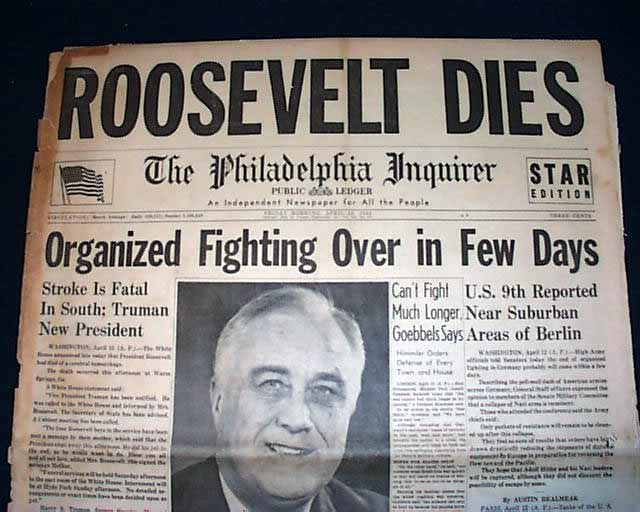
FDR was our only president to be elected to four terms in office. He passed away while serving his fourth term on April 12, 1945, just weeks before the surrender of Nazi Germany. The nation was distracted from the war for that moment. They mourned his passing. Indeed, there was great stress being President of the United States in time of World War. Some general background before I get into it:


♦ The Battle of Coral Sea
♦ The Battle of Midway
♦ The Solomon Islands Campaign
♦ Battles for Pelileu, Iwo Jima and Okinawa
♦ The shootdown of Admiral Yamamoto.
(Flights to and from the shootdown point occurred before and
continued afterwards, solely to conceal the fact we broke their code.)
_______________________________
The above tries to give you an at altitude look down on what was happening prior to the attack on Pearl Harbor. In the ensuing stories, I hope to present “things to think about”… Things like secret codes, espionage, internment and even D-Day in a roundabout way. Things that FDR knew then orchestrated actions as a politician should.
I hope you will stay tuned… then come to your own conclusions as to what FDR knew.
To be continued… Part 2 is here.
NOTES:
(1) However, the following comment was not part of his speech: Of course, we’ll fight if we’re attacked. If someone attacks us, then it isn’t a foreign war. – Yale University
(2) There were several codes being used by the Japanese Army and Navy in addition to the diplomatic code mentioned above. All were broken by US cryptologists. The Japanese also had their cryptologists but were nowhere’s near as successful in breaking US or British codes.
(3) It is important to note that CHAMBERLAIN was the Prime Minister of England, not Churchill. Yet, FDR and Churchill were secretly making promises unbeknownst to Chamberlain.
(4) Source: Henry Lewis Stimson diaries.
(5) “Military Intelligence Blunders and Cover-Ups: New Revised Edition”
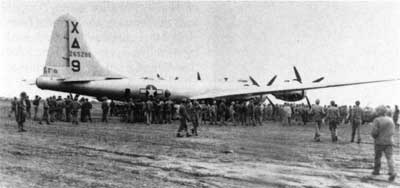

Sixty-nine years ago today, the B-29 Superfortress “Dinah Mite” made the first emergency landing on Iwo Jima. The battle for the tiny sulfur island was still raging as she landed.
7,000 young US Marines and 21,000 young Japanese soldiers died violent deaths for this tiny sulfur island.
(Note: Combat was still going on the left side of the makeshift runway as they were landing. Although the B-29 was repaired and left the same day, she returned a month later for another emergency landing. She was so heavily damaged that Dinah Might was abandoned.)

There is personal pain in a full-fledged war that only those who were fully involved can feel. Those feelings will differ by how that person was involved.
We somewhat understand through survivors that a soldier, airman, sailor or Marine near or on the front lines will have an intimate kinship with instantaneous fear. They know combat is immediate, unfair, cruel, and barbaric. But hopefully, they know their families and country are behind them – perhaps giving them the edge to overcome their fears and survive.
And this is true for the enemy as well. As I become more knowledgeable on the Pacific Theater during WWII, I have learned the young Japanese combatants had the same fears (please see “There’s No Toilet Paper in the Jungle of Burma“). But unlike the Allied forces who had millions of tons of war materiel, food and medical care backing them, the Japanese military fell way short.
But what about the Japanese home front? Have you paused to ponder that? Were their countrymen any different from us in their ways of supporting their young men dying by the hundreds of thousands?
I never did myself until recently.
____________________________
I met Rob on the internet through his facebook page, “WWII U.S. Capture Photos“. He focuses on the spoils of war, bringing back to the forefront the war souvenirs seized by military personnel.
He acquired a letter from a now elderly Marine who was fighting on Saipan in mid-1944. He had told Rob that he removed it from a Japanese corpse.

Apparently, this letter had ended up to haunt the Marine who was at time very young and fighting for his life on Saipan. The once young Marine is pictured in the center of this photo:

Rob asked if my father could read the letter and translate it.
______________________________
My friend and I went to see Dad in October 2013. Below, Dad is reading the letter taken by the then young Marine from Saipan in 1944.

The backside of the envelope is below showing the sender’s name and return address. The image was enhanced to bring out the writing. The Marine had written “Japanese letter picked up on Saipan”.
The letter was anonymously addressed and sent by a young girl named “Kazuko Arai (荒井和子)”. The return address shows she was a student of a girl’s economics school in Tokyo, Nakano City, town of Honcho (東京都中野区本町通六丁目女子経済専門学校 – 附属高女). While I believe the school may have been at least damaged by the fire bombings, I may have located the successor school. It is called “Nitobe Bunka Gakuen” with its current address as 東京都中野区本町6-38-1. (While I did send a blind email of inquiry to them in my far from perfect Japanese, there has been no response. I doubt that there will be given the Japanese culture.)
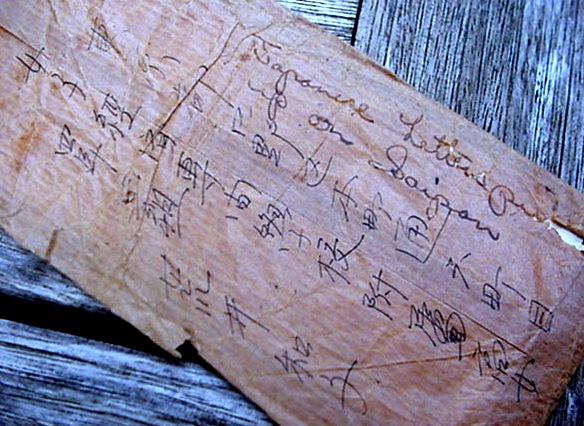
While the scans were of low resolution, the two pages of the letter are as follows:


Because my father will be 95 next month, it was difficult to keep him on course. In spite of reminding him to just read the letter in Japanese (I would understand most of it), he continually tried to translate its sentences into English. Perhaps somewhere in his buried conscious, he is doing as he was trained by the US Army’s Military Intelligence Service. Admittedly, there were about a half-dozen characters that were just tough to make out due to creases and lack of clarity. And he wasn’t able to figure out one paragraph in particular…but I did! Got one on my old man.
I also sought out help from my good Hiroshima cousin, Kiyoshi, and he filled in the blanks.
Kazuko wrote:
夏も過ぎさり戰局は日一日と厳しく今こそ物心はおらか私どもう総べてを国家に捧げつくすべきと秋となりました。
As summer passes and turns into autumn, the war situation is getting more severe and now we must physically and mentally dedicate ourselves for our country.
海上での勇士様にはお変わりなく軍務に御精勵(励)の事を存じます。
As a courageous sailor out at sea, I know your unwavering fighting spirit continues.
大東亜の全戦線に於いては、今や彼我の攻防戦は、まことに熾烈極めて居るという事等、すでに日々の報道により私共の耳に刻々傳えられてをります。
Per our (radio) broadcasts, we hear that the intensity of battle and such has increased for both sides at all the front lines in the Far East Asia theater of war.
– – – – – – – – – – – – – – – – – –
– – – – – – – – – – – – – – – – – –
(Letter continues)
今私達は本当に容易ならぬ戰争の只中におかれている事を強く感じました。
Now, with the daily war situation, we strongly feel as if we are in the midst of the battle and realize (winning) will not be easy.
学校ではもうじき秋の軍動會が開かれますので一生懸命身体をきたへてをります。
Soon, it will be time for the autumn (military) athletic meet; I will train hard to strengthen my physique.
断じて米英女性には贁けない覧唔です。
We resolve to not lose against the American and English women.
ではどうぞう勇士様くれぐれ御身体御大事に大切にお国の為しっかり戰って下さい。御武軍を祈り致します。
So please, courageous sailor, sincerely take good care of yourself and fight hard. I pray for your fighting spirit.
さよなら
Good bye.
_____________________
So now we realize that Japan also had a “home front”.
Perhaps they did not have a “Rosie the Riveter” like we did.
But the Japanese homeland did endure pain, fear and sorrow as we did…and depression. They were not the inhuman creatures depicted on war posters and in propaganda of that time. And thanks to Rob and the young Marine, we see a letter written in Tokyo by a high school girl named Kazuko Arai in the autumn of 1943 and simply addressed to an anonymous sailor. Kiyoshi also believes that the watermarked stationery was of high quality and issued out of military stock for this purpose.
Sadly, we do not know the name of the sailor from whose corpse the letter was removed from, nor do we know if Ms. Arai survived the war and raised a family.

Things like this sort aren’t evident in our (current) history textbooks. Now, WWII has pretty much been erased from school textbooks altogether, replaced by “politically correct” topics…that there was simply a war between Japan and America. A disgrace to those who endured or died.
In closing, there is a diary written by a young Japanese doctor up to the time of the final banzai charge on Attu. He was one of the attackers who was killed. As mentioned in my other posts about the Military Intelligence Service, Japanese military forces were allowed to write diaries. When these diaries were taken from the battlefield, the Japanese-Americans (Nisei) soldiers were able to read then extract valuable intel on the enemy – both for their battle front and their homeland. In his last entry, the young doctor writes a goodbye to his wife and two small children back home.
2013 was a year of further cutbacks in military spending.
Unfortunately, this means fewer military flyovers – from burials with full military honors to big events.
Well, Americans did step up to the plate at Arrowhead Stadium.
Forty-nine pilots flying their own planes made for a spine-tingling, most memorable flyover.
They only people missing were Ronnie and John Wayne.
(Thanks to Lou Smith)

 Masako and Spam Musubi