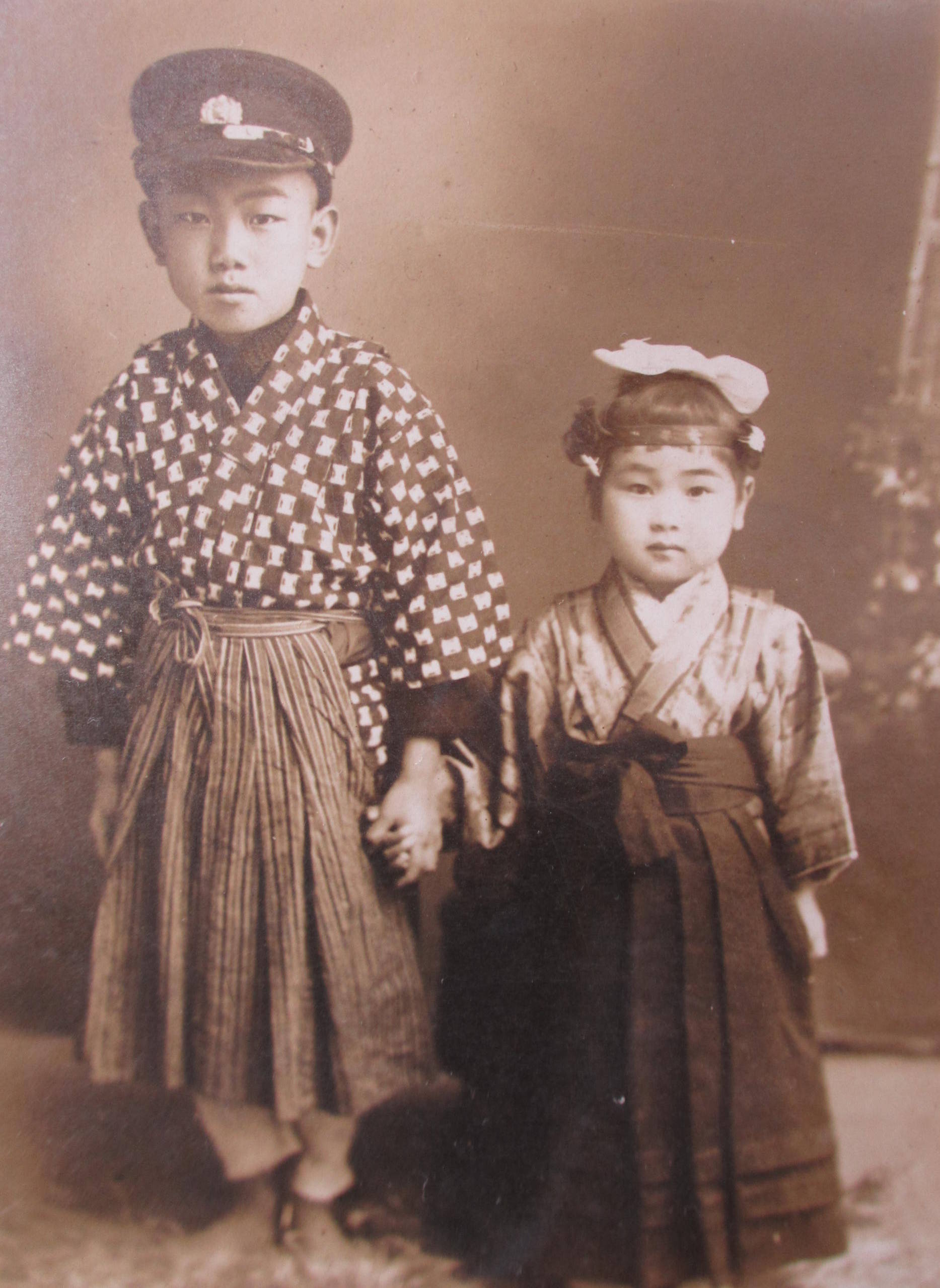
Uncle Yutaka and darling little Aunt Michie in Hiroshima. Circa 1918.
Life in Hiroshima was uncertain and grueling in 1945 – especially for women and children. It is a fact that nearly all the men up to the age of 35 had been taken by the Japanese military. For many, it was truly day to day.
Little food, clothing and medical care. It all went to the military…and then there were the B-29’s and the bombings. Devils associated with being on the losing side of war.
But at 8:15 AM on August 6, 1945, my Aunt Michie’s already tough life would be cast into wretchedness to test her mortal soul. She was in her farm’s field clearing old crops on that hot summer morning. There was an intense flash of light then the atomic bomb’s shockwave traveling close to the speed of sound slammed into her. She was catapulted and hit the ground.
At the same instant, her oldest daughter and my cousin Masako – who was eleven and in her classroom nearby – was hurled across the classroom by the same shockwave. The schoolgirls that were standing in front of her were pierced by shards of glass and debris.
Below is an eye opening re-enactment supplemented by computer simulation of the atomic blast in 1945. Perhaps you can put yourself into Aunt Michie’s or Masako’s shoes on that morning and experience what they did:
After years of a most grueling life, Aunt Michie and her children would now face the searing pain of surviving.
__________________________
Even while giving shaves at my Grandfather’s barbershop in Seattle, Grandma Kono was busy in her early years of marriage. She gave birth to Yutaka (1910), Hisao (1912) then Michie in 1914. Other children followed: Shizue (1917), Dad (1919), Suetaro (c. 1921) and Mieko (c. 1924). A total of seven.
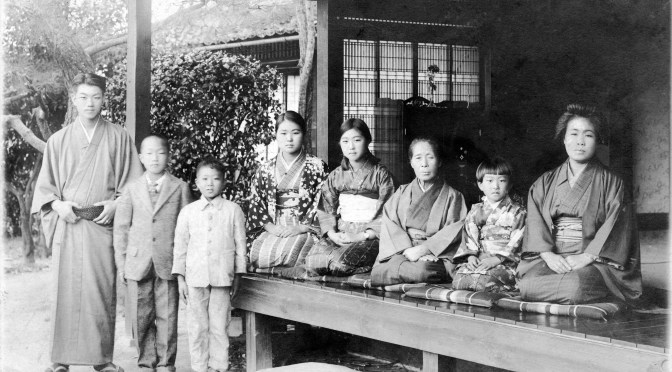
(L to R) Yutaka, Dad, Suetaro, MICHIE, Shizue, Great Grandmother Kame, Mieko and Grandmother Kono. Circa 1928, Hiroshima.
All seven of the siblings were born in Seattle… All except for Michie who was born in Hiroshima.
My cousins tell me their mother Michie told them she would wistfully ask her family, “Why couldn’t I have been born in America like everyone else?!” Lovingly, of course.
Aunt Michie never did get a chance to visit America.
__________________________
Dad’s siblings came to Hiroshima and half of them were able to return to Seattle to continue their lives as Americans before war with America. But Michie lived her entire life in Japan. She was the oldest sister to the siblings and helped Grandma Kono raise them.
Michie’s father (my Grandfather Hisakichi) was a devout Buddhist. He required the family to chant Buddhist mantras daily; it was not “praying” but a way through which a follower “energized” himself to the teachings of Buddha. Dad’s Hiroshima home to this day has the altar in the main room where they chanted; it is unchanged in nearly a hundred years having survived the shockwave from the atomic blast.
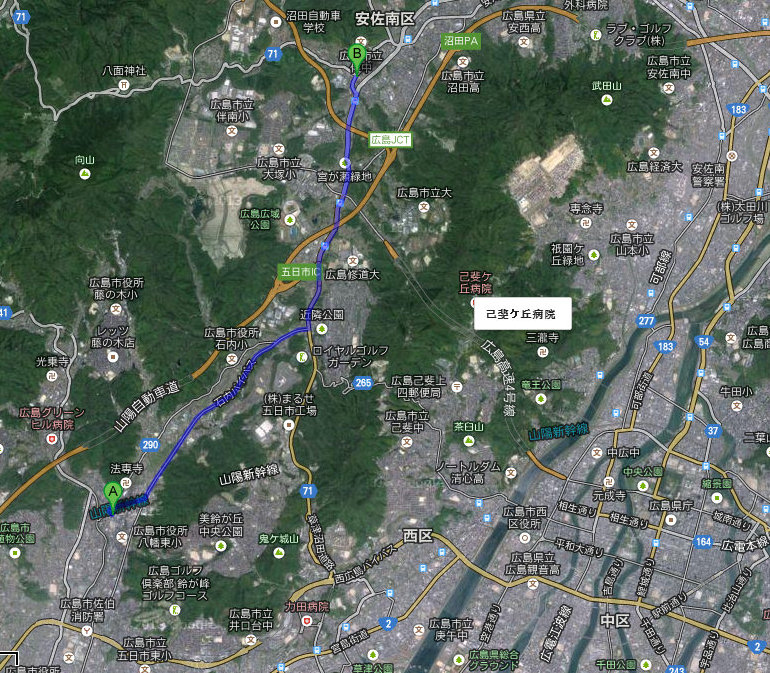
My father’s family home is at “A”; Aunt Michie’s home in the village of Tomo is at “B”. About five miles separates the two homes. The atomic bomb’s hypocenter is towards the bottom right where rivers split up.
According to well accepted family lore, a man from a village called Tomo came to the house one fateful day apparently to seek one of his daughter’s hand in marriage. His name was Mikizo Aramaki. He immediately went to the altar and chanted. Grandfather Hisakichi was so impressed by his devotion to the Buddhist way of life that he immediately gave his daughter away in marriage…but apparently, Grandather gave away the wrong daughter – Aunt Michie. It is said Mikizo had come seeking the hand of my Aunt Shiz. (Aunt Shiz was the prize of the village according to my cousin Masako.)
Being of farming heritage, Mikizo had acreage and a home. After Aunt Michie was told she was to marry Mikizo, she was, to say the least, not very happy. I guess that is a slight understatement if I say so myself. She argued – pleaded – with my Grandfather that she didn’t want to marry him and that she was not raised to be a farmer…but to no avail.
Aunt Michie was given away in marriage. Done deal.
Imagine being a Marine. You’re in Afghanistan. You see your buddies getting blown up by the cowardly enemy’s IED or killed after an ambush. Then, after a bitter, maniacal all-out war, their religious leader capitulates.
Now, suddenly, you are standing out in the desert, outside of Fallujah, waiting to go in as part of the “occupying force”. Your feelings and emotions are going amok – anger coupled with fear of the unknown… You will be surrounded by the enemy who also fought the exact same bitter war against you.
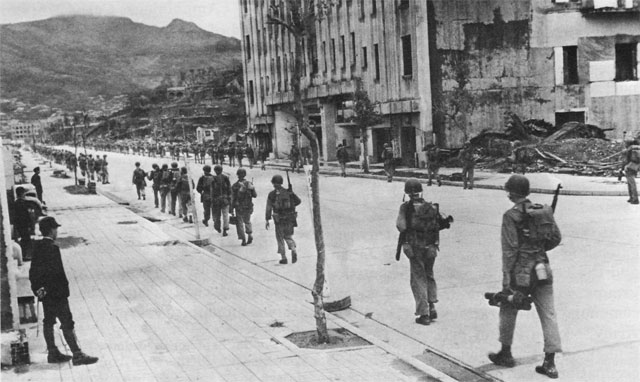
US 26th Marines marching into Sasebo, Japan – August 1945. Notice the Japanese standing to the left and the general absence of civilians.
Now… imagine you are a young Marine on a troop ship off the Japanese coast. It is August 30, 1945. A few weeks earlier, you became acquainted with the term atomic bomb. The Emperor of Japan just capitulated.
You are to go ashore onto the Japanese homeland. But in this case, you are not wading ashore to occupy a city. You are wading ashore to occupy an entire country.
_______________________
As we now know, the initial “invasion” of Japan by Allied forces ended up being entirely peaceful; no one was killed. Perhaps there was a small incident or two, but I have not read anything to indicate a single shot was fired. How could that be? How could hundreds of thousands of Marines, soldiers and sailors have stormed ashore – under an assault mindset – onto a homeland populated with maniacal military and millions of civilians – and not erupt in combat?
Per a report of the US Army’s 98th Infantry Division dated December 20, 1945:
“The mission assigned the Division was participation in the occupation of Japan; however, due to uncertainty as to the attitude of the people, the real intentions of the Japanese army, and the possibility of treachery or sabotage, the Division was directed to be combat loaded and prepared for any eventuality. Thus planning for the occupation of Japan was based upon an assault landing rather than an administrative movement…”
There is no single answer. The peaceful invasion was the result of hundreds of contributing influences.
One came from Father Patrick Byrne, a Catholic priest in a country dominated by Buddhism.
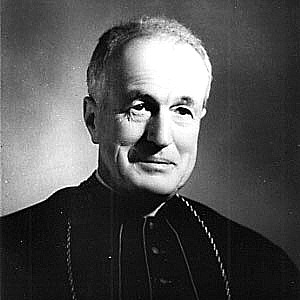
Father Patrick Byrne. He was elevated to Bishop prior to his death.
Father Byrne had been sent to Kyoto in 1935 to set up a mission. As he was respectful of the peoples, he was put under house arrest (confinement) when war broke out. Of course, it was very harsh. His only companions were a cat and a parrot. Food was poor and scarce, just like it was for the unfortunate civilians.
Per “Escape from Manchuria” by Paul K. Maruyama (USAF, Ret.), he emphasizes the importance of the role fulfilled by Father Byrne immediately after the Emperor broadcast his surrender. Although in very poor health, Father Byrne with the aid of a newspaper reporter and a Father Furuya, hurriedly put together a radio broadcast intended for TWO audiences: (1) one for the Japanese homeland and (2) one for the “invading” Allied forces.
As hordes of civilians were escaping to the countryside, getting from Kyoto to Tokyo in the few available trains was hard but after 15 hours, he made it being escorted by police. He then recorded his speech on or about August 20, 1945, which was re-broadcast many times via radio and shortwave…to the Japanese people and to the countless number of Allied occupying forces staging off-shore.
His radio broadcast:
“The war is over. What can I say first of all to the Japanese people whom I have loved and who love me as a brother for more than 10 years? I share their grief when the Emperor spoke to them and told them that they had fought a good fight but now he wanted them to give up the war and turn to peace. I, an American, speak to you Japanese in the name of those soldiers about to enter your land to assure you that you need to have no fear. They are not coming to the shores as invaders, with tanks, bayonets and bullets, but merely as representatives of their country, taking occupation of Japan to help you once more to reconstruct and build on the new foundation of democracy. The eyes of the world are on this occupying army. You may rest assured they come peaceably.
What can I say to you, the soldiers of my native land, regarding these people? Their feelings will naturally be mixed with emotions as you look up on the victors entering their land, where the homes have been destroyed or burned, their sons and fathers of families killed or maimed and wounded. It is only natural that you look with anger, fear, mistrust, and frustration at your arrival. Should you add to their present feelings by any any ruthless attacks upon the women and young people in this land, I am afraid of what the consequences might be. So I urge you to cooperate with me as I assure the Japanese people that you will commit no degradations, that you would have goodwill and charity in trying to realize what these people, the real victims of the war, have suffered and will not do anything to add to the pain they endure.
You are on trial before the eyes of the world. Any violence or immorality, any unjust or criminal act on your part will not only be a stain on your character but on that the nation you represent.
I believe I may assure you people of Japan that the army chaplains would do everything they can to remind our soldiers of their moral responsibility. The Military Police, too, will carefully protect your interests and will arrest anyone found violating the law. If there seems to be any violation of this protection which is your due, I have been assured by the Archbishop of Tokyo that he will appeal to the Holy Father in Rome who in turn will make known to the whole world by radio and the press any form of injustice. Freedom of the press in the United States will cooperate so that such news will not be suppressed.
I am not afraid because I know these Americans and trust them, but I can understand the fears of the Japanese people. Soldiers coming into Japan, I strongly urge you to come with kind hearts and be good friends of these people. You have fought hard and want a victory. I know you want to enjoy it and want to be proud of it, but please try to understand the distress of the Japanese and make your behavior calm and warm as representatives of a great nation. Perhaps after two or three months, they will begin to understand you better, and then I think there will come an intimate friendship between you and them.”
________________________
The Allied Forces – with the words of Father Bryne questioned in many soldiers’ minds as to intent – stormed ashore on August 30, 1945 on many beaches all around Japan. Once ashore, they were largely astonished to learn over the next few hours the truth in Father Byrne’s words.
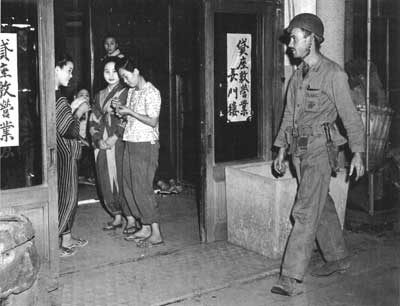
A Marine walks past young Japanese women on a routine patrol. Thousands of vials of poison were distributed to thousands of young girls in preparation for the “invasion”. (USMC Photo)
________________________
According to “Escape from Manchuria”, Father Byrne made a recovery back in the United States after the war and was elevated to Bishop when he was sent to Korea in 1947. In 1950, he was captured by the North Koreans and once again was subjected to horrifying treatment and captivity before being put on the Korean War equivalent of the Bataan Death March.
He fell ill during the march in freezing conditions and when he could not continue, he was taken to a shack. There, on a frozen floor and without any warmth, he passed away on November 20, 1950 at a place called Ha Chang Ri, North Korea.
(Note: Edited Feb. 2, 2014. For some reason, the photo of Father Patrick Bryne had been removed.)
My girl friend Linda fretted for a couple of weeks before going to Japan with me.
She fretted about the (we-know-they’re-coming) typhoons.
She fretted about the (we-don’t-know-they’re-coming) earthquakes.
But what did she fret about the most? She fretted about getting butt-naked in front of my cousins for a Japanese-style bath at a hot spring in Japan.
Silly lady… All Japanese do that.
Oops. I forgot. She is Irish with blue eyes.
Well, I guess if I were her and experiencing a panic attack, I’d just put a brown paper bag over my mouth… and drink all the scotch inside.
That would help. After all, she is Irish.
___________________________
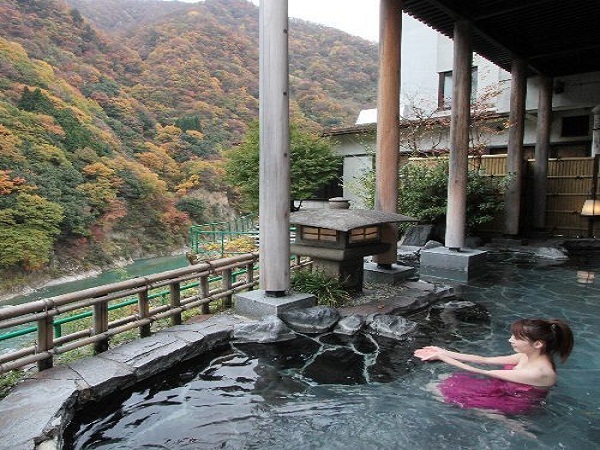
The hot spring inn, “Entaijisou” or 延対寺荘.
During our ten-day visit to Japan in November, my cousin Kiyoshi (Masako‘s youngest brother) treated us to a most wonderful journey to Toyama Prefecture, just inland from the Sea of Japan. One such destination was famous for its hot springs and a beautiful gorge. We stayed at the inn called “Entaijiso (延対寺荘)” near “Unazuki Hot Springs (宇奈月温泉).” Started in 1900, the hot spring’s water is naturally heated to a most perfect temperature and has an open-air spa area called a “rotenburo (露天風呂)”. Literally, you are soaking outside under the heavens. Butt-naked.
Of course, I was unable to take photos inside the bathing area for obvious reasons but here are other photos from their website to give you a taste of the relaxation that can be had.
Yes, my Irish lady did go in with my (female) cousins! In a form of endearment, my cousin Masako even washed her back. Butt naked. After relaxing in the water for a while then dry off, you notice your skin is just ultra silky smooth. My cousins did say the geothermically heated ground water has therapeutic powers… That there is some kind of magical healing power bubbling up. I kind of doubted it. But there IS something in the water. 🙂
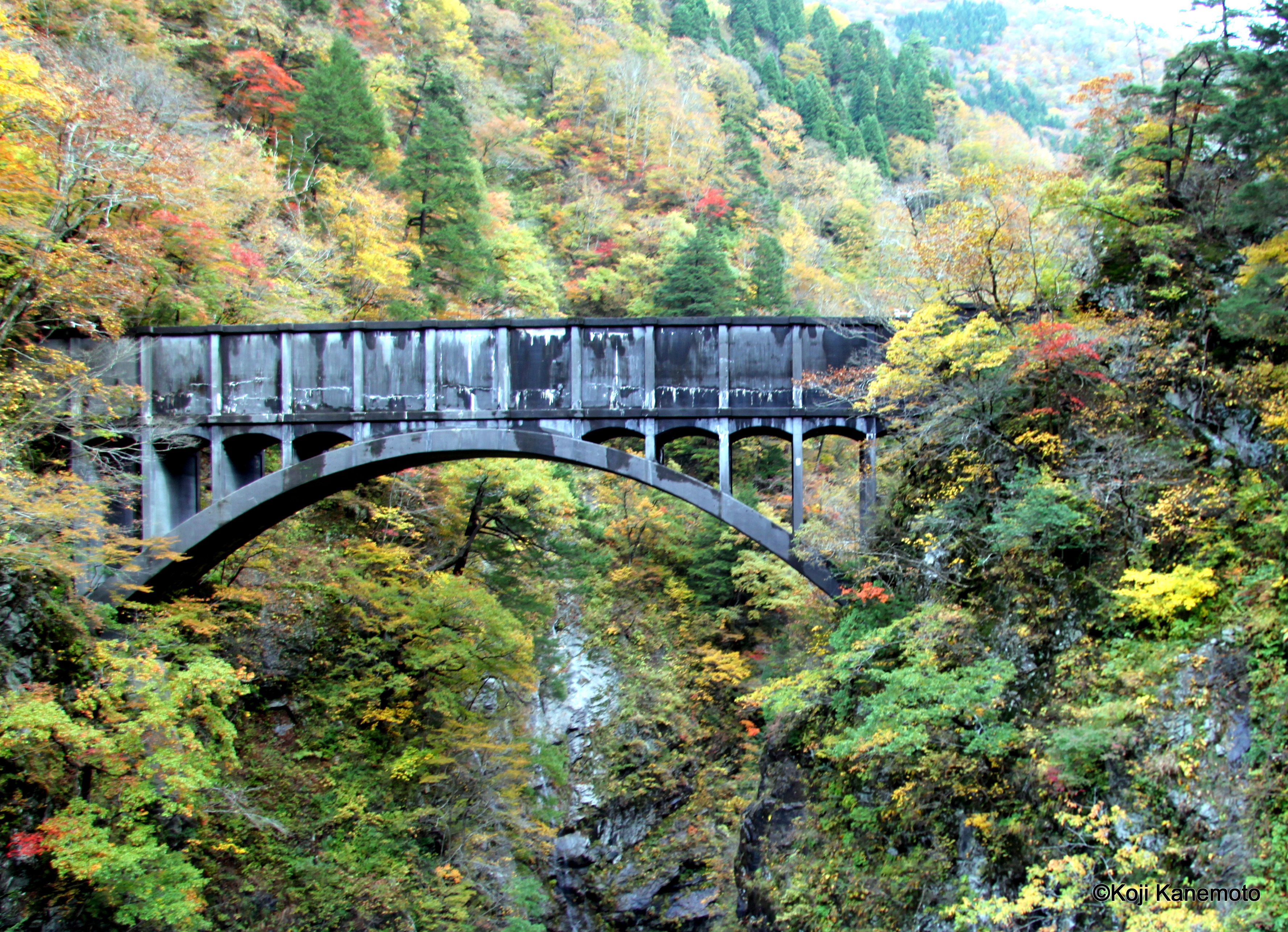
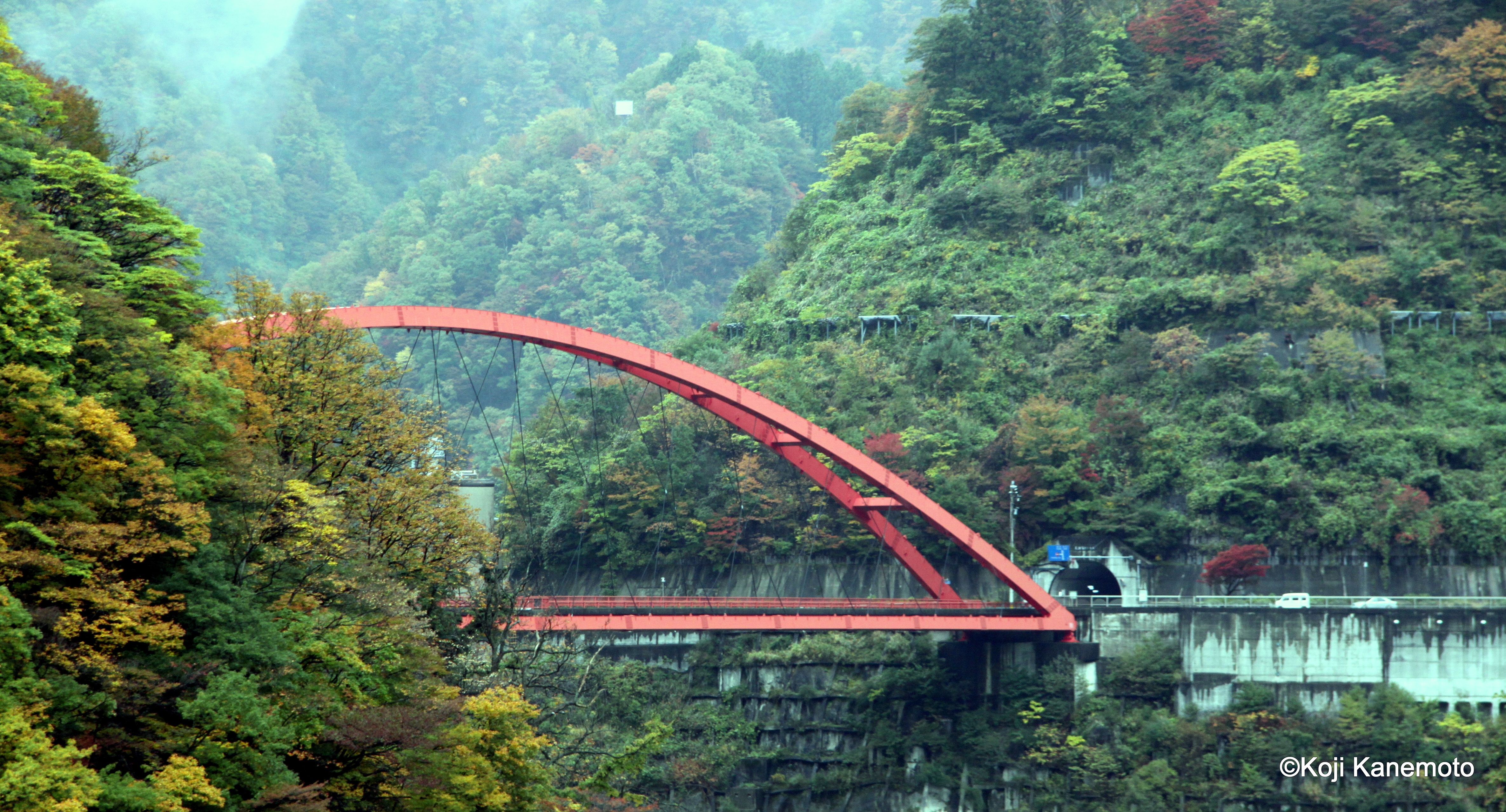
Their dining area was spectacular; just outside is the river and magnificent mosaic-colored hillsides – a post card panorama.
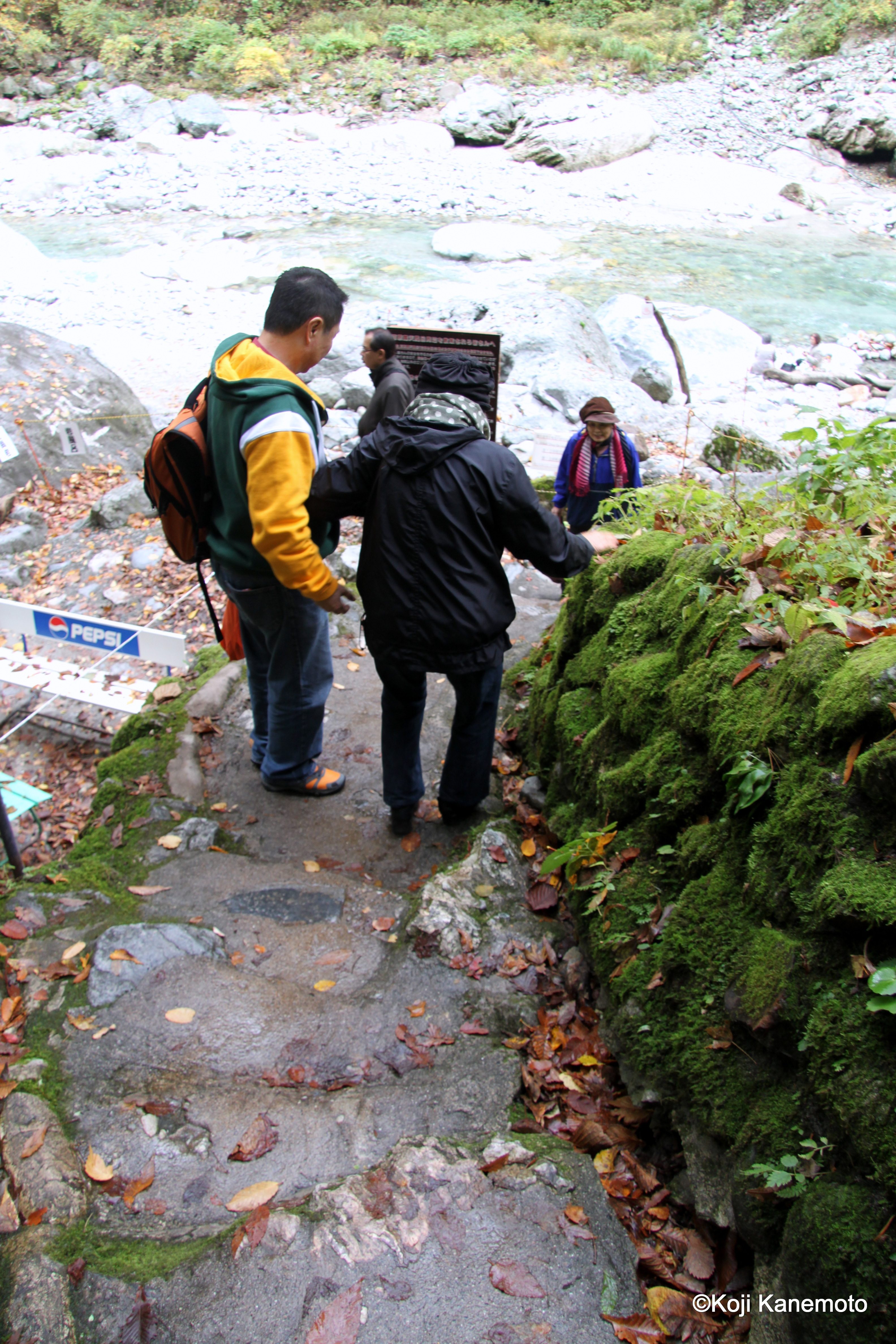
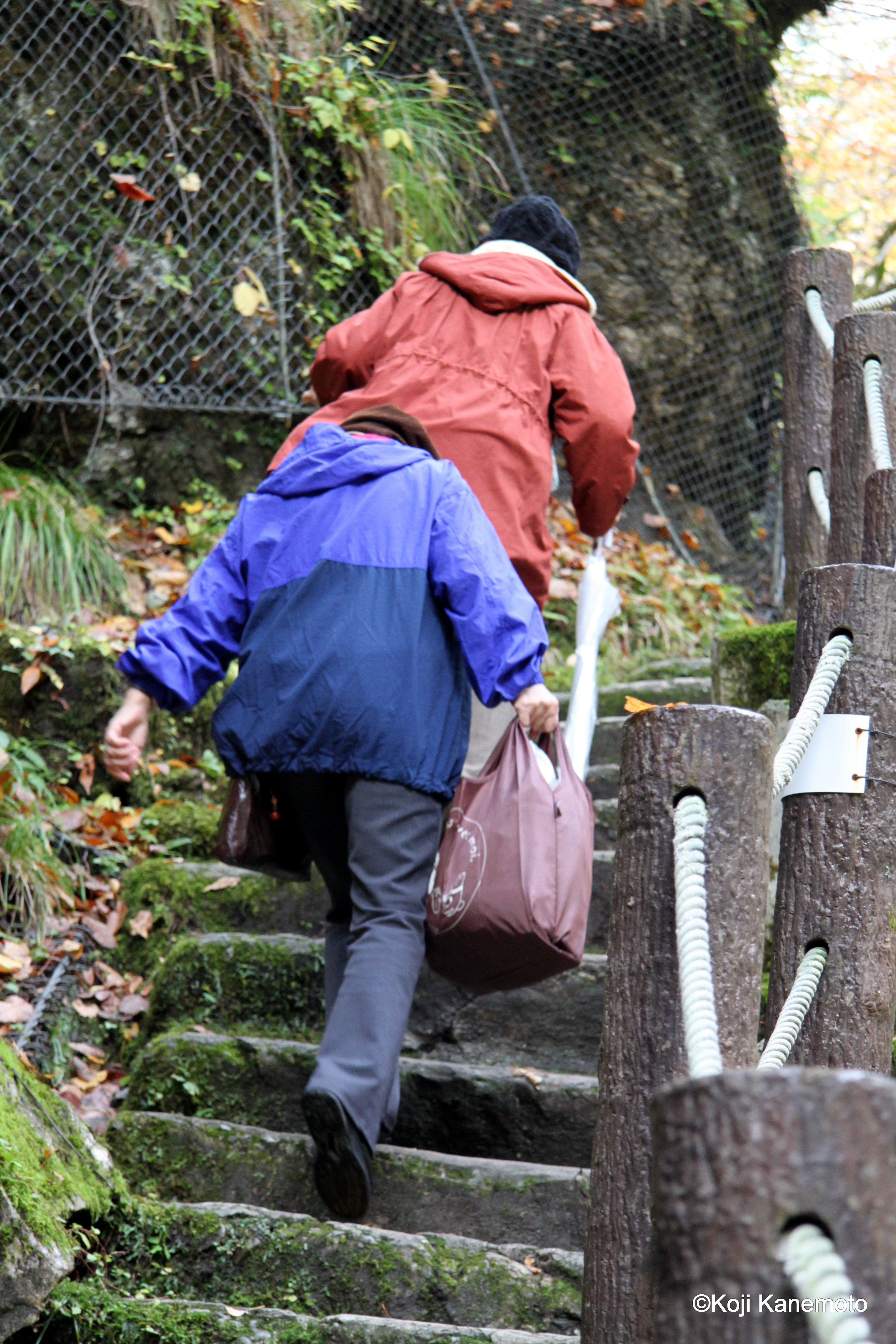
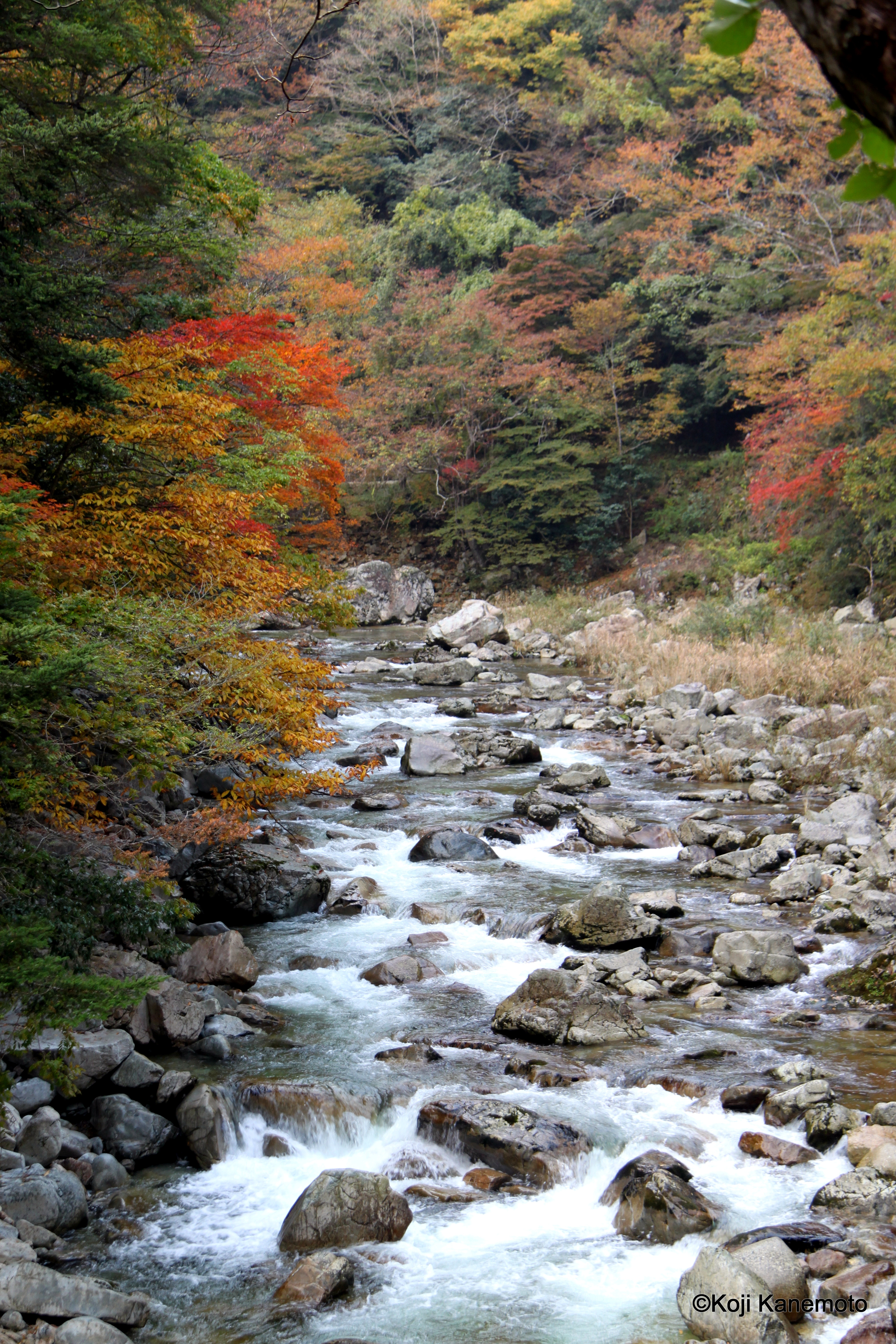
Kiyoshi’s gracious treat continued on the Kurobe Gorge Tram (黒部峡谷トロッコ). It is a a sightseeing train running on a very narrow track originally built to aid the construction of the Kurobe Dam. It follows a winding path along the river – something like 20 kilometers from the base station of Unazuki to the end. We we there unbelievably at their peak of the autumn color change. It is important to note we hiked a bit after getting off the tram at Kanetsuri Station – and my cousins below LED the way. While Masako has difficulty going DOWN stairs, she was a jack rabbit going up. Amazing. At 80 years of age.
My cousins (L to R): Tomiko (71), Masako (80), Namie (74) and Kiyoshi (65).
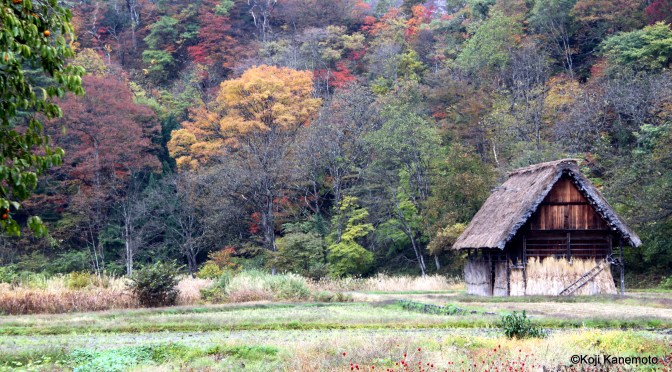
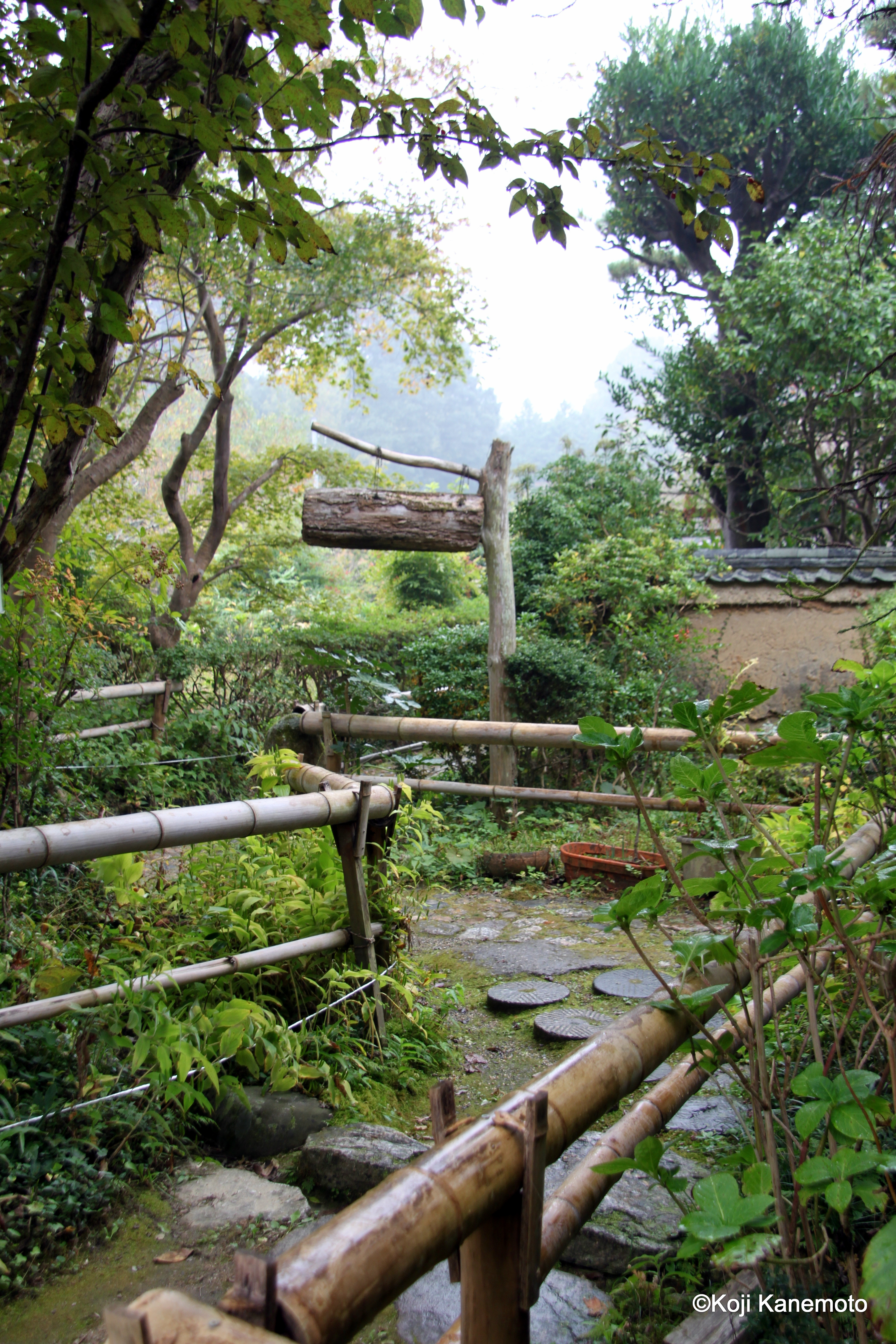
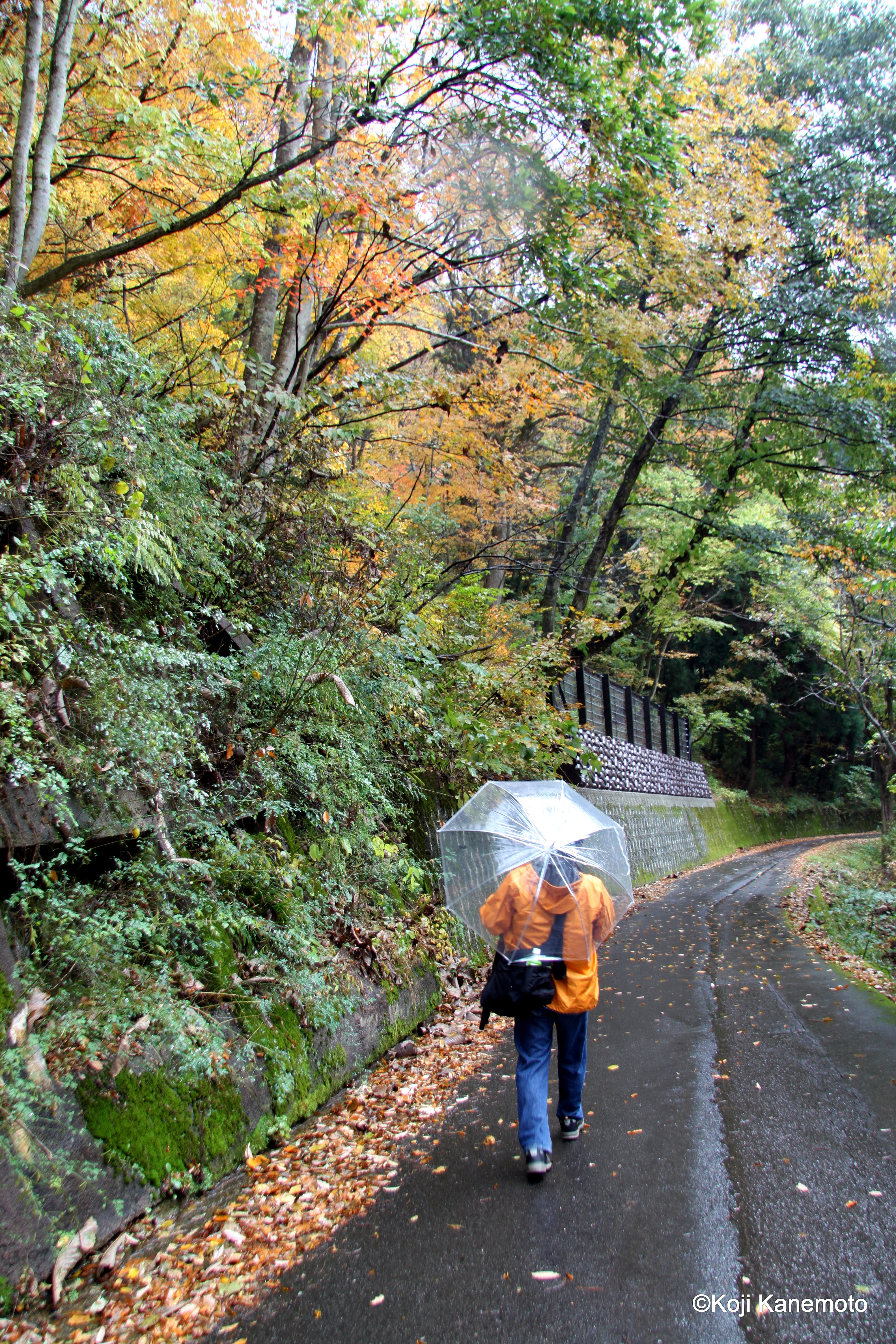
I will let the photos show you the grandeur we were so fortunate to experience. (Please note many of these were taken from the moving tram.)
AND A “I SPY WITH MY LITTLE EYE”… Can you spot it? There is a wild red faced monkey below.
__________________________
Prior to getting into the hot spring and public bath, I tried to relieve her anxiety.
I said, “When in Rome, do as the Romans do.”
She replied, “They sinned.”
__________________________
I was proud of my blue-eyed Irish lady friend. She got into the public bath and hot springs butt naked.
And even got her back scrubbed by Masako, a survivor of an atomic blast.
Imagine that.
From a Japanese hot spring, I have learned that spreading peace for the world starts as a power that emanates from within one person.
Embarking on a ten day vacation to a land far, far away needs a lot of one’s time to prepare… one reason for my recent absence from WordPress. Not that anyone would notice, of course.
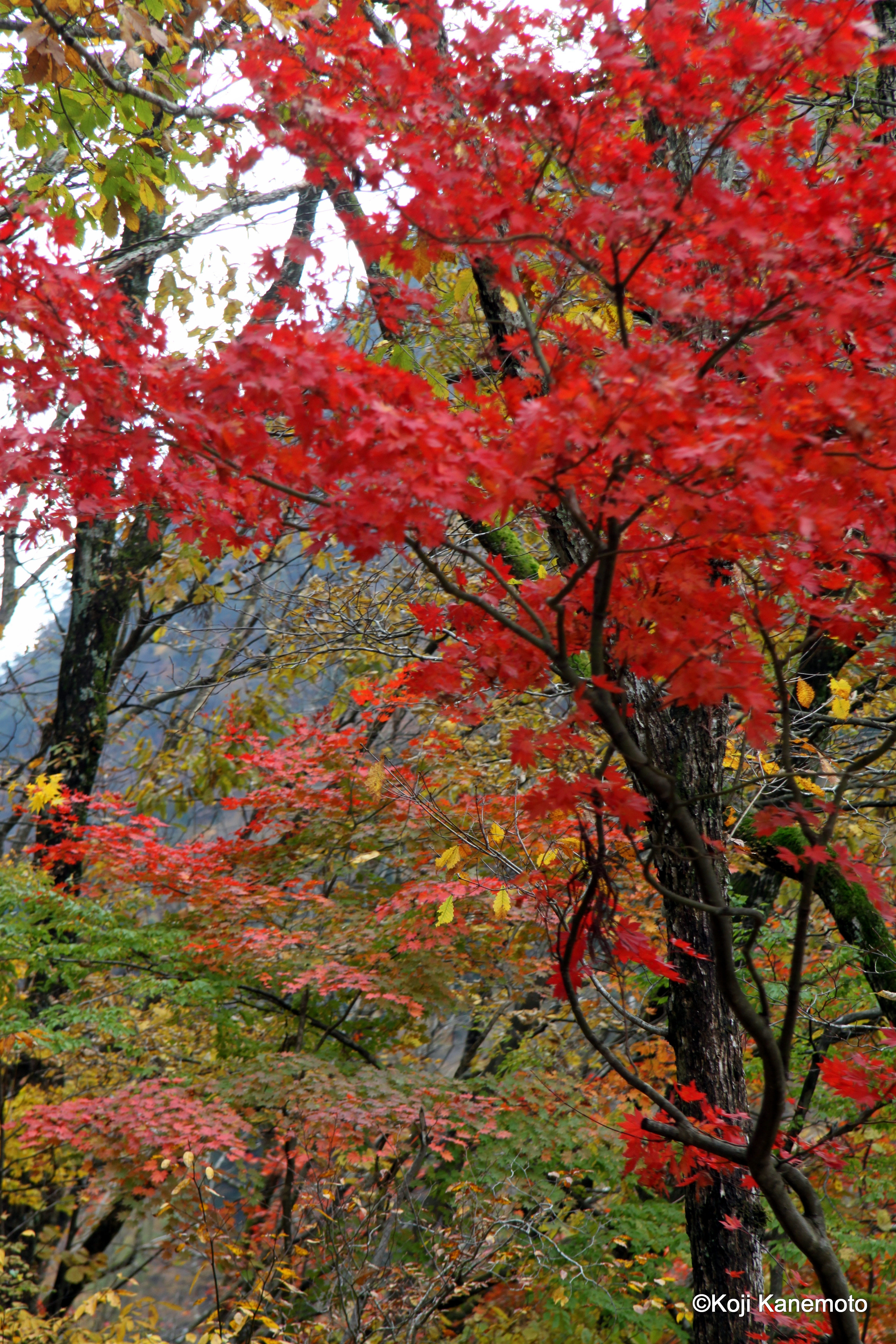
For now, just some colorful images of nature taken during the journey to Japan I immensely enjoyed… which would not have been possible without the unqualified help from my Hiroshima cousin Masako – after whom this blog is named – and her extended family. Hopefully, time will permit sharing more of this glorious journey – and enlightening in ways I could never have imagined.
My father’s decades old story about how he broke his elbow became the topic in the earlier story, “正覚時” (Shoukakuji).
Shoukakuji is the name of the Buddhist temple – a hop, skip and a jump from my father’s family home in Hiroshima.
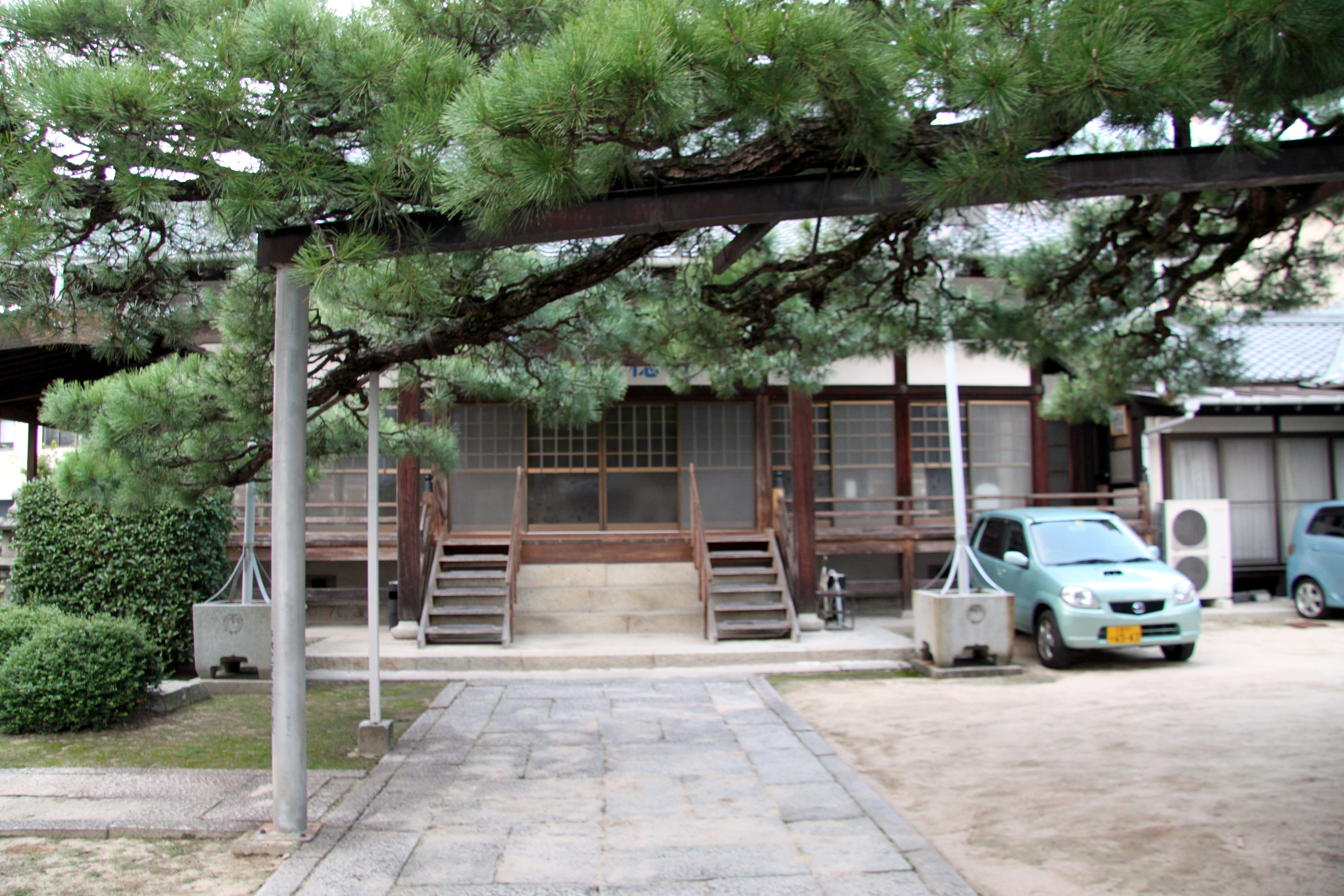
Temple entrance. My father’s home is behind me and to the right.
The temple’s reverends supported my family’s religious needs for over a century now.
Aunt Michie’s wedding.
Funeral services for my grandparents and my father’s siblings. Including my Aunt Shiz just this last September in “The Spirit of Aunt Shiz and Kharma“.
Including my Uncle Suetaro who was killed in action as an Imperial Japanese Army soldier on Leyte in the Philippines.
____________________________
When Masako-san, my son Takeshi and I walked to the temple in 2013 to investigate my dad’s story of how he broke his elbow, we were greeted by the Reverend. He was 90 years old and still had his wits about him.
While he did not recollect my father, he validated the placement of a large round rock under the pine tree that hasn’t been touched for as long as he’s lived at the temple…. And that’s a loooong time. I’m sure he was born there.
And that there was a big branch of a pine tree that has since broken off recently.
He said he knew my Aunt Mieko who died in 1939.
And miraculously, he mentioned Uncle Suetaro. The reverend said they played together as children and that he was always a jokester and smiling…and that he could hear him playing his “fue”, or flute, from his second story room at the house.
Until then, not even Masako-san knew Uncle Suetaro played a flute…but there was no proof.
Just the recollection of a 90 year old reverend.
____________________________
My tennis elbow pain kept me from retouching the old vintage photographs I had brought back from Hiroshima last September.
And the project was at a standstill since late October. That was as depressing as Obama V2.0.
But from three weeks ago, I am attempting to slowly restart the retouching project as my elbow pain has subsided greatly…and I came across the group photo you saw at the beginning here.
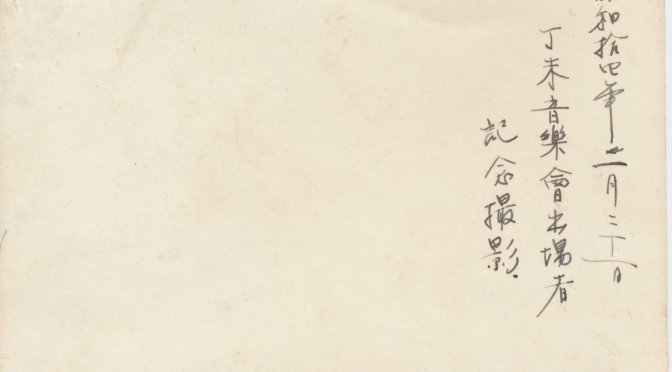
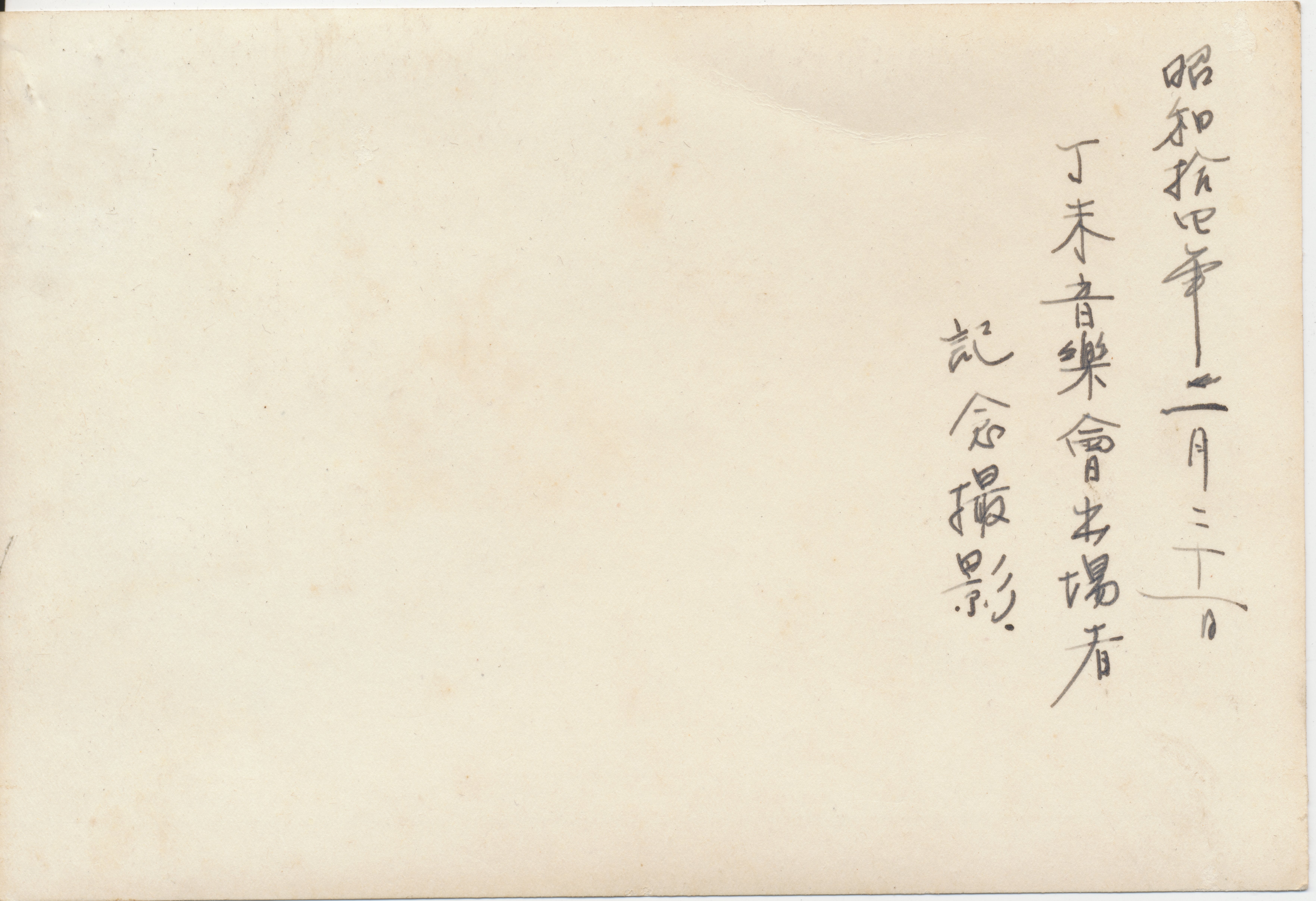
This was the backside since I know you ALL can read ancient Japanese:
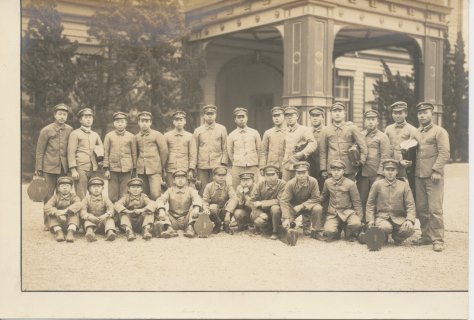
Written by Uncle Suetaro himself. I believe – BELIEVE – it says, “February 21, 1939. Performed for First Sino-Japanese War anniversary.”
As retouched:
As retouched. Uncle Suetaro is the slightly taller one just to the left of center. If you click on the image, it will enlarge. Look in his right hand.
But as I enlarged the image to begin retouching, something caught my (old) eye.
I noticed Uncle Suetaro was clutching something in his right hand.
A case.
A case more slender than the others in the group picture.
It’s not a trumpet or a trombone, that’s for sure.
Or for a cue stick.
It sure looks like a flute case.
Oh, heck. It IS a flute case.
I say so.
_______________________________
So words from the mouth of an old reverend started an eighty year old circle… to this vintage photograph of young boys.
All of whom likely lost their lives in a violent war.
Dad’s eyes got a teensy-weensy bit watery again today.
Perhaps its becoming a routine.
________________________________
Went to see Dad this morning. Took him his “bentou”, or Japanese lunch to-go, as a change of pace. They only serve America cuisine there.
Pork cutlet bento
Not that he complains. He doesn’t. But all the servers there know he WON’T eat fish. He makes sure of that.
Also took him “yokan”, “senbei”, “manjyuu”, and Morinaga caramel (his favorite from decades ago)… Oh. And “anpan”. Gotta feed his sweet tooth. Make him happy is all that matters now.
Another favorite of Dad’s – anpan
While he asked how “Sue-boh” is as usual (his favorite brother who was KIA), he – by coincidence – talked about how he broke his elbow again. 😉
But this time, I had the pictures I had taken last month with me! Blew his mind. He “kinda” remembered my son and I went to Japan, but he couldn’t comprehend how I got those pictures. Oh well. Anyways, the most important thing was that yes, that was the large stone he jumped from…but he asked, “Where’s the benjo? There was a benjo there behind the tree.” A “benjo” is kind of like an Japanese-style outhouse. 🙂 And that definitely was the (remnants of the) branch.
You should have seen his boyish smile.
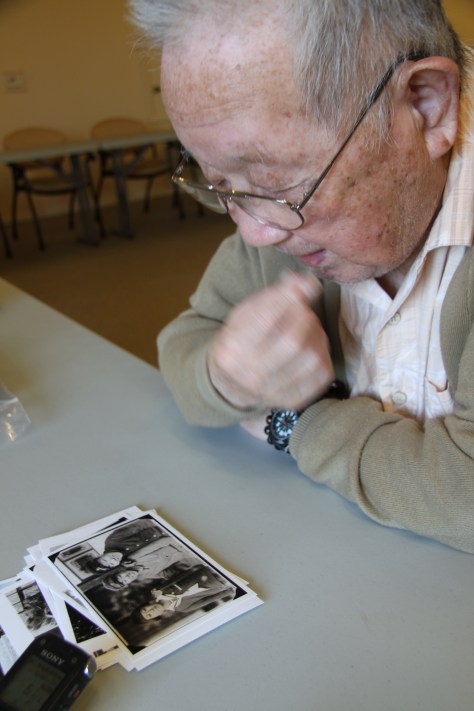
I took along what vintage pages I dared to from Grandmother Kono’s album today. I was concerned as they were so fragile… but Dad handled them gingerly.
He said there was a butcher shop in the brick building in the background. That brick building at King and Maynard is still standing.
He particularly liked the photo of him, Mieko and Suetaro… He had a nice smile. I wonder what was going through his thoughts then but I wasn’t going to interrupt.
He is smiling while looking at the three of them. By the way, the stone bracelet he is wearing was from Masako and Izumi. He says he doesn’t take it off but doesn’t remember where it came from. 😉
I think his eyes got a bit watery.
He said, “That was a long time ago,” and “懐かしい”
Just a teensy-weensy bit.
______________________________
About an hour later, he remembered looking at the vintage pictures.
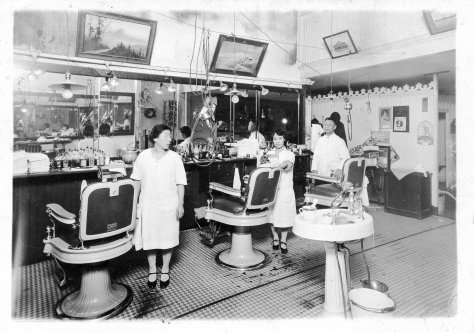
One of the finds from the 100 year old shed were photos from my Grandfather Hisakichi’s barbershop. It would appear these are from about 1917 through 1930.
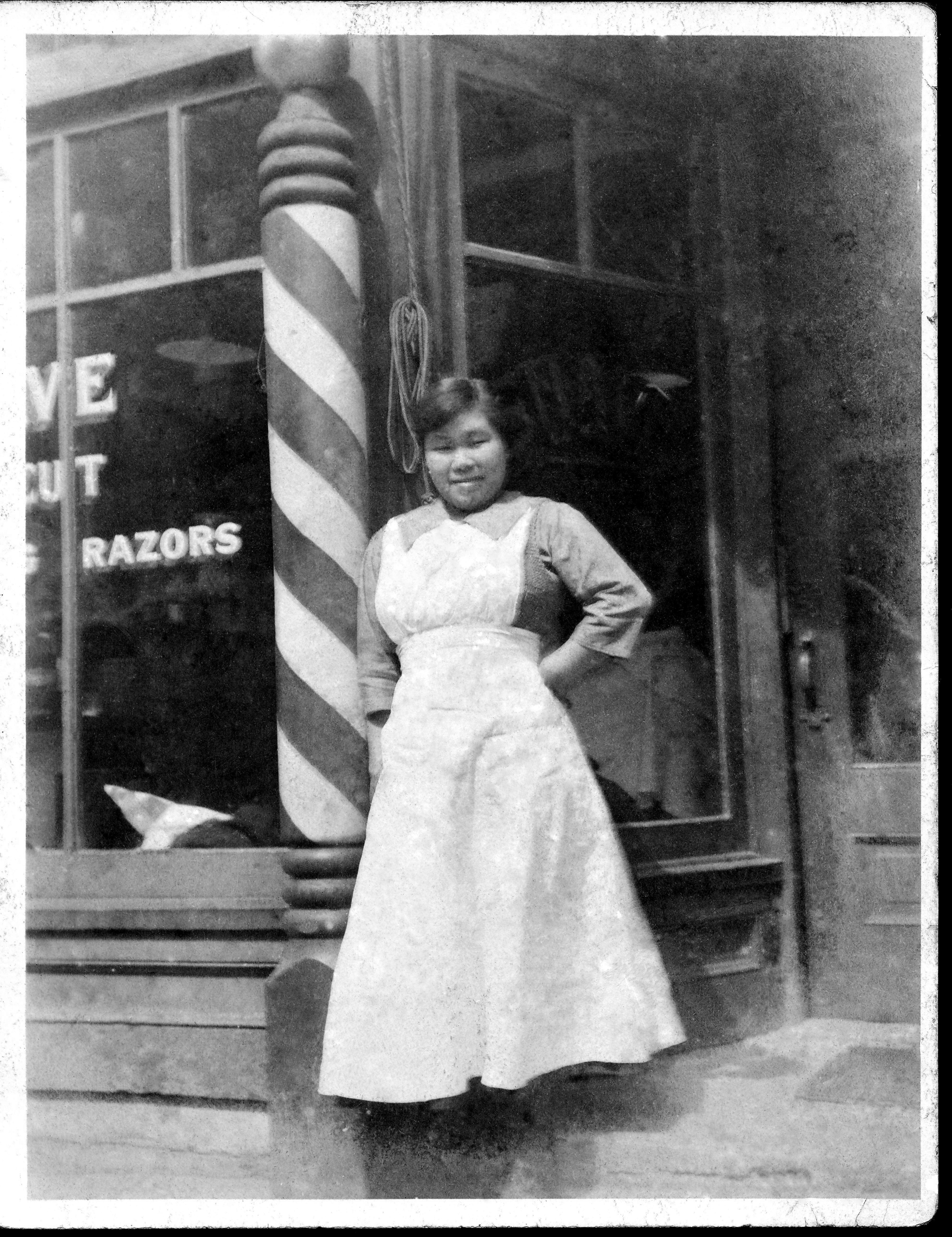
His shop was in the Hotel Fujii at 620 South King Street in Seattle, WA. Being raised here in America, it is not only striking to see my grandparent’s barbershop but it is so unlike those of other barbershop photographs of that time being manned by “non-Caucasians”. Is that best way of putting it? You can see the hair tonics that were used as well as the Koch porcelain barber chairs. Through the help of my friends interested in WWII history, we believe the calendar indicates shows “Thursday, October 9, 1930”.
Grandfather Hisakichi is at right. Due to the blur, we are uncertain if the lady on the left is Grandmother Kono…but the gal in the center is very attractive.
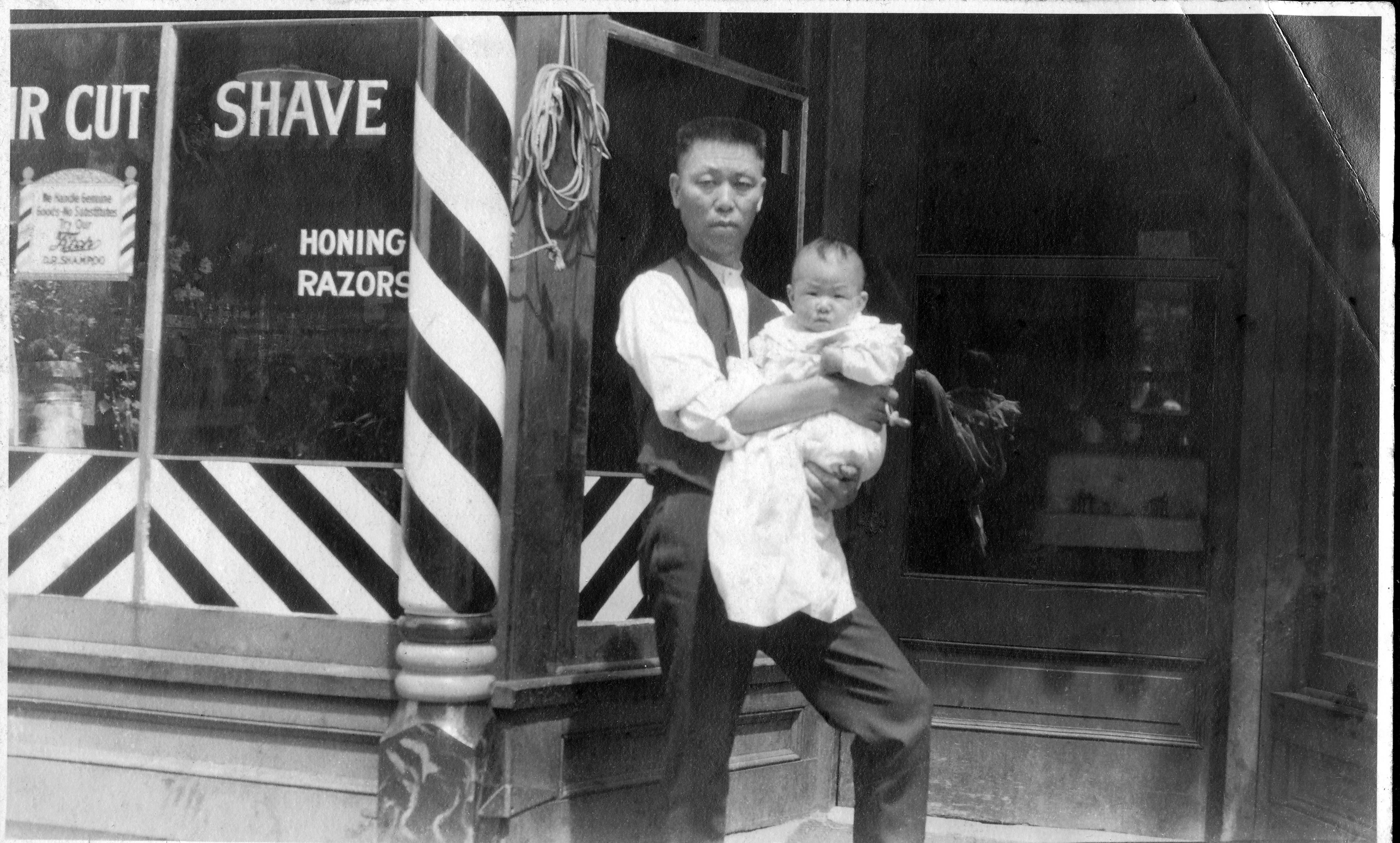
In this picture below, a “no nonsense” Grandfather Hisakichi is holding my Aunt Shiz; this would put the photo as being taken in 1917.
According to my dad a couple of weeks ago, Grandfather would work the shop by himself during the slow times but would bring in others as the season changed. They lived upstairs in a room at the hotel.
It is difficult to imagine he supported the family with this one barber shop but you would think he worked hard and was a sound businessman in a foreign country.
Oh… Since WWI was raging, he registered for the draft.
In the past several years, as his dementia progresses, Dad is repeating many times how he broke his elbow as a young boy… “Many times” like as in every four minutes. No…every two.
I thought, “He doesn’t remember he ate like a horse ten minutes ago… How can he remember something that happened 80+ years ago?”
Well, I just HAD to find out about his story… and I did.
_______________________________
The story (which never varies) is/was he was playing “oninga”, or tag, with the neighborhood kids. “There was nothing else to do then,” he would tell me. They would end up in the yard of 正覚寺 – pronounced “Shoukakuji” – the Buddhist temple which is a hop, skip and a jump from his home. No wonder he excelled in the triple jump at Nichu.
You can see a tiled roof on the tallest structure to the right of him. That is 正覚寺.
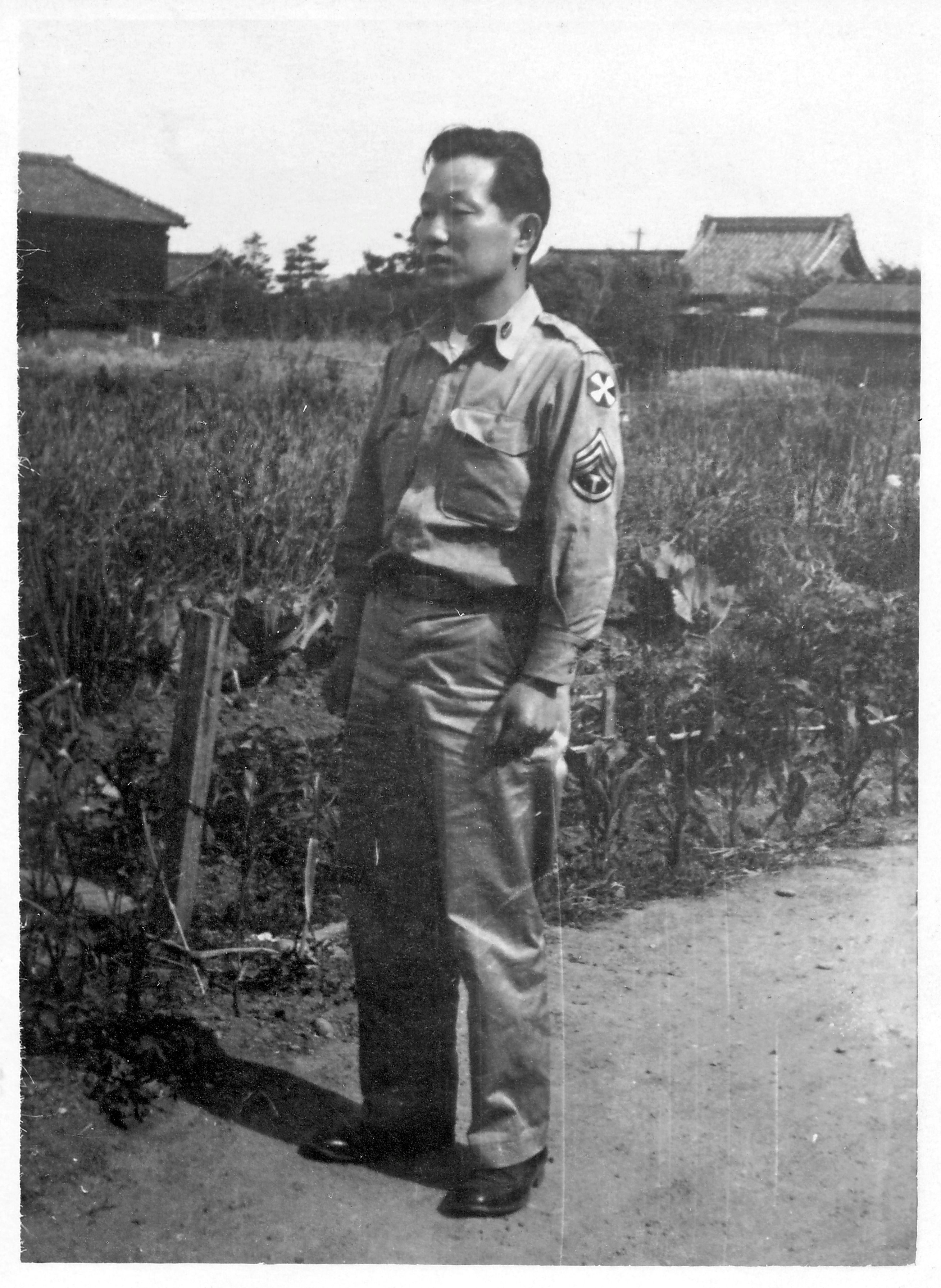
The tiled roof of “Shoukakuji” can be seen behind and to the right of Dad in this 1948 photo. He is standing alongside his childhood home.
For those who like visuals:
Satellite view of home and Shoukakuji, 2012.
He would tell me (over and over) that while playing tag, “…I tried to get away so I jumped on this big round stone then leaped up to a branch on big a pine tree in front of 正覚寺.”
Now that I know he did the broad jump at Nichu, I thought this jumping thing was therefore plausible. (Did I mention I’m a writer for “Mythbusters”?)
“Trouble is, I jumped too far so my hands couldn’t grab onto the branch. I slipped off the branch then broke my elbow when I hit the ground”.
OK. So now, after “An Atomic Spark From a 1937 Yearbook“, I also know he excelled in the triple jump at Nichu. Plausible. (See… More proof I am a writer for “Mythbusters”.)
To this day, he cannot completely straighten out his right arm. It’s crooked. He now tells this story to my youngest kids, Jack and Brooke… Every four minutes.
______________________________________
On September 7, 2012, I had to know. Off to 正覚時… But unlike my agile father of the 1920’s, I was walking very gingerly. There were four humongous blisters on my toes from walking in Japan and (from being tricked into) climbing Mt. Misen on Miyajima.
The sign at the entry gate, or “mon”. Shoukakuji’s middle character is written with an old Japanese character.
Indeed, there was a Japanese pine tree, or “matsu”. A huge one. You couldn’t miss it as you walk through the “mon”, or gate. It was so huge, the temple had steel braces installed to help hold these majestic branches up.
Steel posts and braces were installed to help hold up these ancient branches.
Off the to right, was the base of the tree. A puny trunk in relation to the Goliath branches… It was hard to believe at first this small trunk was the heart for this proud tree.
Then… at the base… was a large round stone. Could it possibly be? Plausible as we don’t know how long the stone was there… Am I tough?
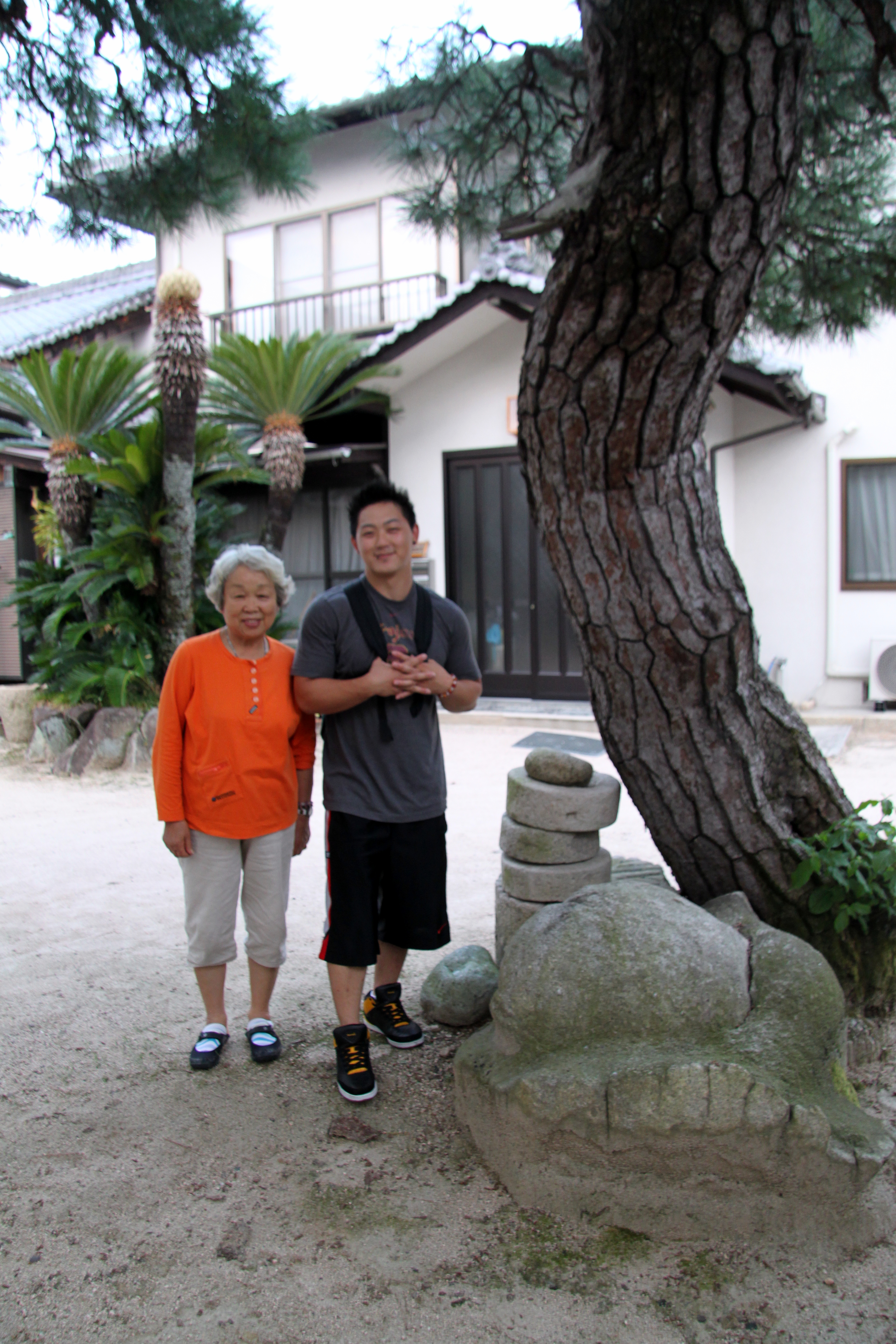
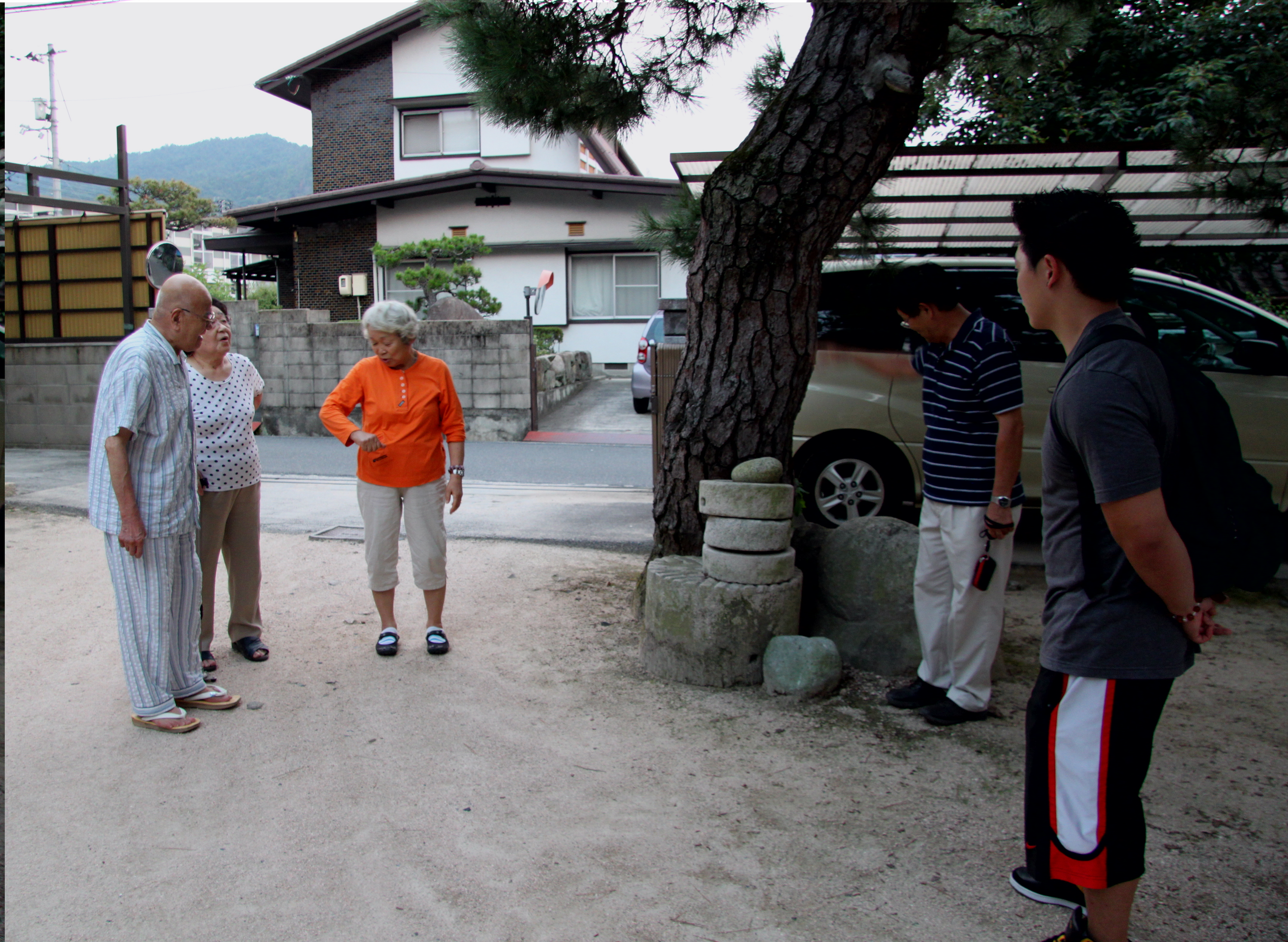
Masako and my son Takeshi stand next to the large round stone and pine tree made famous by my father some eighty-plus years ago.
But where’s the branch my father jumped for? Myth: Busted!… or so I thought.
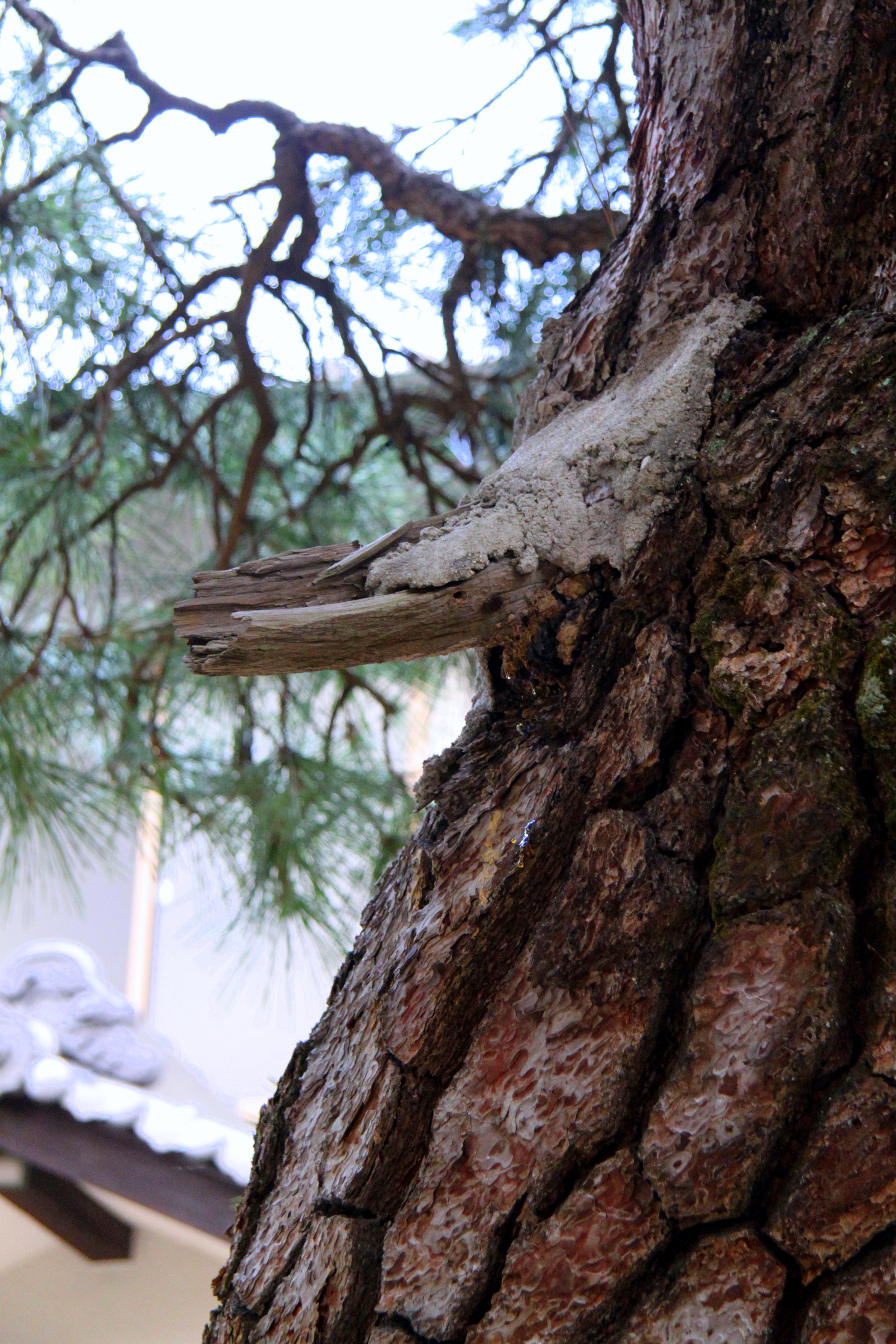
Then we saw it. Above my son Takeshi in the picture. The base of a broken branch. It was at the right height! OK… Myth: Plausible.
Here is the branch that Dad supposedly leaped for 80+ years ago…but fell and broke his elbow.
But conclusive proof was just beyond reach. There was no evidence as to age of the tree or how long the stone was there…
Then, as if Aunt Shiz summoned him, the reverend of 正覚寺 came out…with his wife. He was about 90 years old. Almost as old as my dad but he still had his wits about him. Thank goodness.
He told us he didn’t know my father personally…but that he played with Suetaro and Mieko, Dad’s youngest brother and sister! He knew Suetaro well, he said. He listened to Suetaro blow on his flute from the house in the evenings.
My Japanese wasn’t good enough so Masako stepped in… She explained to the elderly reverend how my dad (her uncle) had jumped from a large round stone at the base of a pine tree here 80+ years ago and broke his elbow.
Masako is mimicking my father’s broken right elbow and his story while my son Takeshi and cousin Kiyoshi watch. Kiyoshi was pointing to the stone to supplement the story.
Unbelievably, the reverend said with pride, “The pine tree is about 400 years old…and that stone has been there for as long as I can remember. It hasn’t been moved, either.”
Then the wife said that a number of years ago, the branch had broken off but it was very long. Then after it broke off, “…a swarm of bees made a home inside. We had to seal the crack unfortunately,” to account for the mortar on the branch.
Was his story a myth? Busted? Plausible? Confirmed?
Myth: Confirmed.
Dad wasn’t imagining ANYTHING. His memory is intact from that time.
A young Grandmother Kono takes a modeling pose in front of her Seattle barbershop. She cannot possibly have foreseen what the future holds in store for her.
The most wicked risk of a mother’s love for a child is loss, and the price of loss is grief… But the sheer passion of grief can become indescribable if a mother ponders on her decisions.
_________________________________
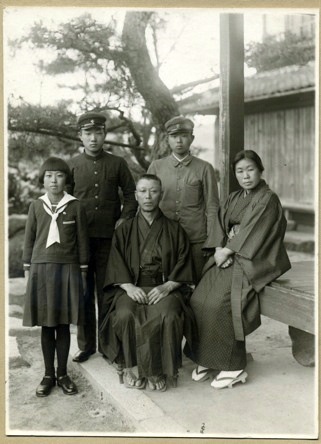
In Part I, we left when my father returned to Seattle to stay while leaving behind in Hiroshima his two youngest siblings and his parents. This was 1937. Before leaving, the family took this portrait with Grandmother Kono sitting on the sakura wood at the house. Suetaro is standing next to her:
One of the last portraits of the three siblings and my grandparents. Grandmother Kono is sitting on the sakura wood written about in “Souls of Wood“. Circa 1937
My father says that their younger sister Mieko was ill often. Indeed, she passed away in 1939 at just 15 years of age from an apparent kidney infection. Since my father was already in Seattle by that time, only his youngest brother Suetaro was left along with my grandparents. Most decisively, Grandmother decided Suetaro was not to return to Seattle when he turned 18. In “Masako and Spam Musubi,” she was very concerned over the harassment and intimidation she had received due to the threat of war against Japan. I also “feel” that Grandmother knew Grandfather was ill by the time she made the decision.
Sure enough, the very next year (1940), Grandfather Hisakichi passed away from stomach cancer. He was 59 years old. After raising Mieko for 15 years and marrying Hisakichi 31 years earlier in Seattle as a picture bride, only she and Suetaro were left in their home. War with America would start the following year. A war in which her three oldest surviving children called America home.
One family. One war. Two countries… One mother.
_________________________________
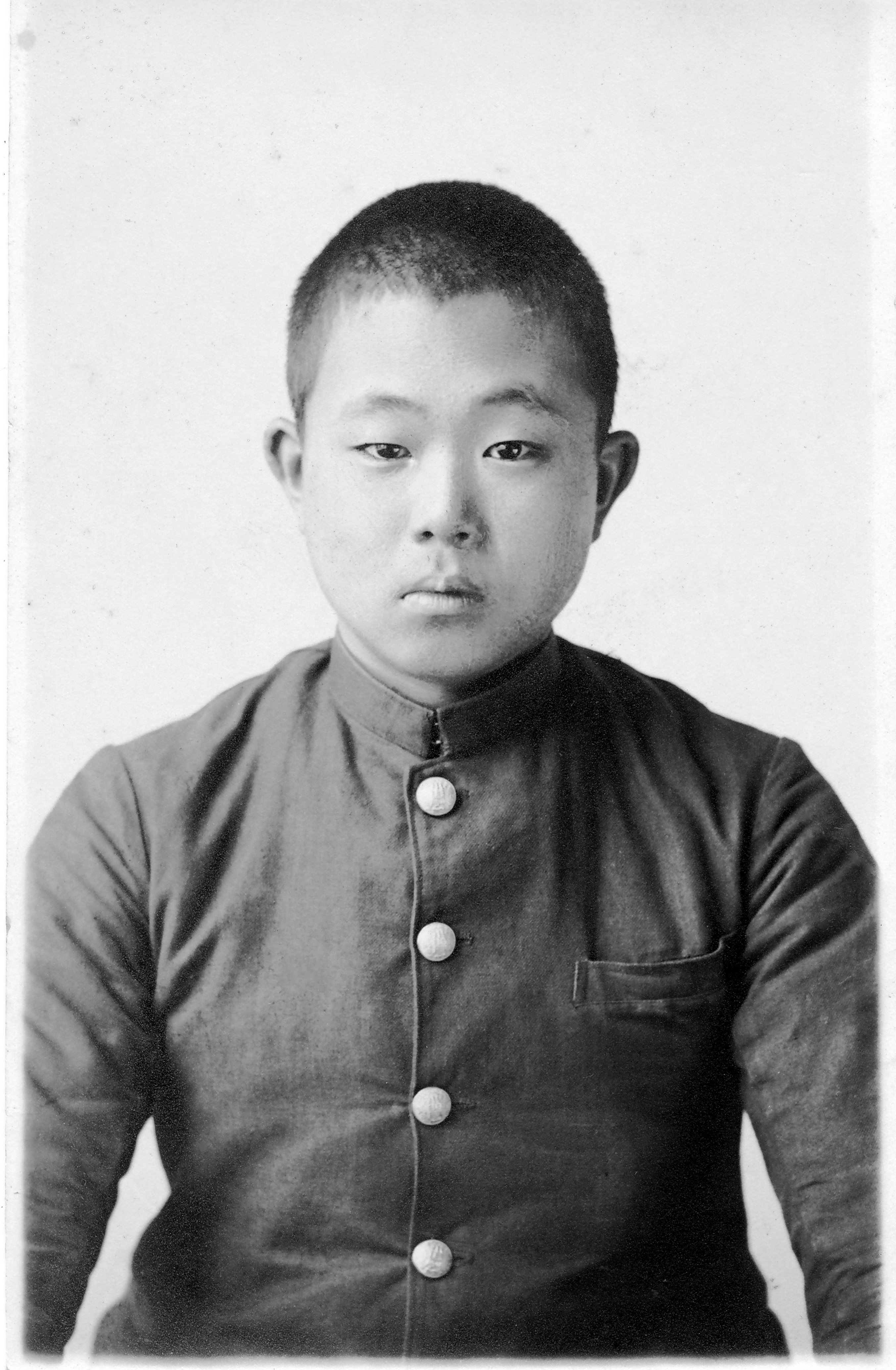
An undated school portrait of Suetaro. He looks to be about 14 years old.
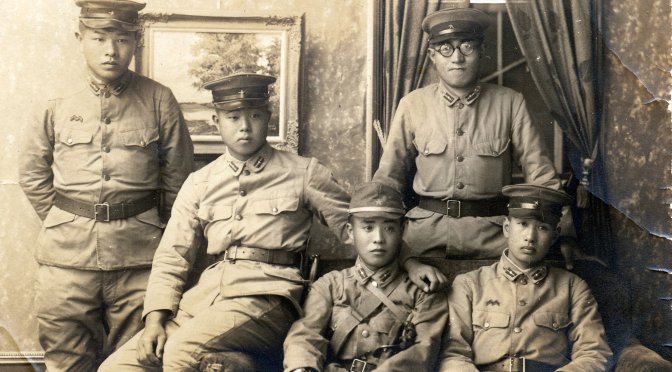
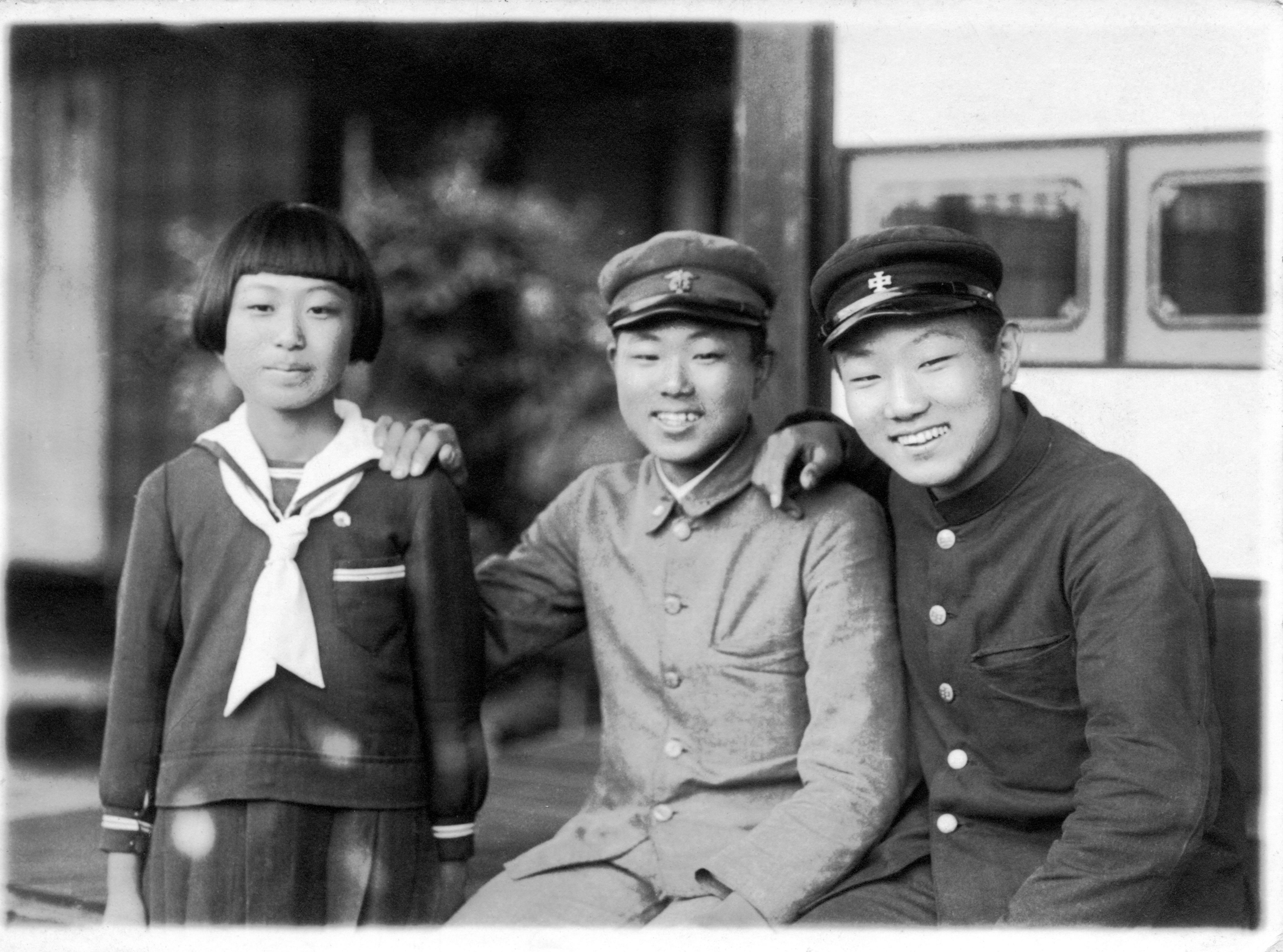
For reasons I have been unable to document, Suetaro became part of the Imperial Japanese Army. All Dad will say now is being taken by the Imperial Army was “part of life” back then. Below, he is sitting on the sofa’s arm to celebrate the young man in the center being sent to China’s Army HQs.
According to the handwritten date on the back, this photo of Suetaro below (on right manning a non-combat grade light machine gun made for training) was taken on May 10, 1939 at the “Hara Mura Training Grounds”:
Suetaro on the right. Dated May 10, 1939. I wonder what Grandmother Kono was feeling.
Here is Suetaro, perhaps in a posed photograph for PR purposes. It is of professional quality and taken on the same day as above:
Likely a professionally taken photograph of Suetaro. It was also taken on May 10, 1939 in Hara Mura.
I have a strong belief this was taken at the Fukuyama training grounds for his regiment, the 41st Infantry Regiment (unverified):
A proud looking Suetaro in his full Army uniform. I cannot tell if the handle on his katana, or “samurai sword”, is wrapped in silk or machine stamped. All military issued swords were numbered, by the way.
Another piece of his elusive history then emerged – but it was not from the 100 year old woodshed.
____________________________
Readers know that my Uncle Suetaro was killed in action as a Japanese soldier on Leyte. His regiment – the 41st Infantry Regiment – was annihilated by the US Army on Leyte. My Grandmother Kono was told he perished on July 15, 1945 – just a month before Japan surrendered. My father’s secret US Army unit, the Military Intelligence Service (MIS), had a direct hand in the high number of Japanese casualties – and the low number of American casualties. In other words, the MIS likely had a direct hand in the annihilation of Suetaro’s regiment. The MIS was comprised of Americans…of Japanese descent.
Dad as part of the MIS in post-war Japan.
It is not known if Grandmother knew of this fact. It would have been an overwhelming of her heart.
____________________________________
However, this is not a story on Suetaro’s life but about his life with his mother. In “Masako and Spam Musubi”, we know she had her second stroke after being informed by the remnants of the Japanese military of her beloved Suetaro’s death. The last Kanemoto in the family home was now… herself.
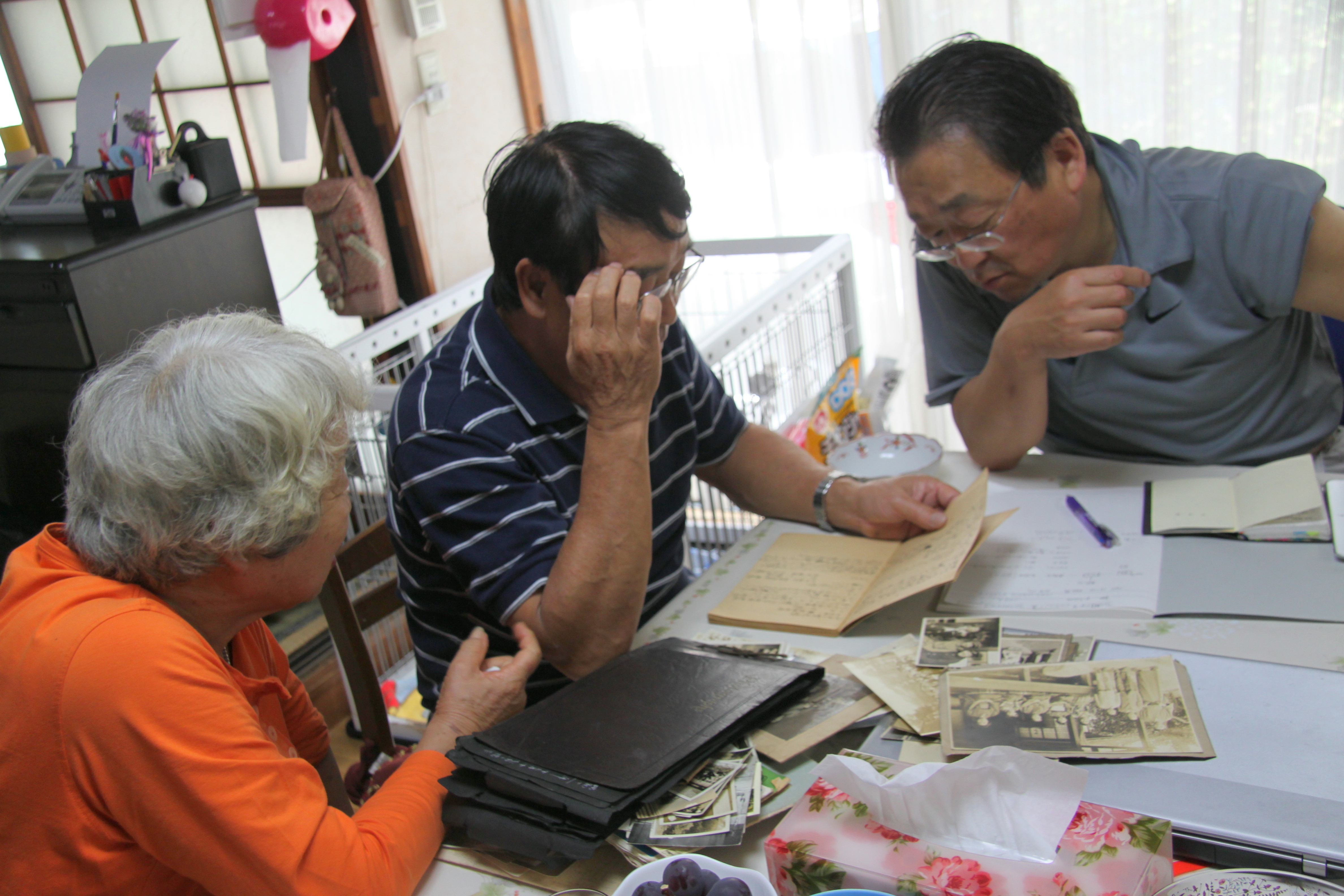
During my trip to the family home in September, my cousin Masako, her younger brother Kiyoshi, her son Toshiro along with my son were looking at vintage photos Toshiro uncovered just a couple weeks prior in the shed. A number were of Suetaro with my father and Grandmother. We were all quite emotional by then. Masako removed herself from the table; I assumed she was overcome. I didn’t stop her from quietly leaving thinking that.
Instead, she came back a few minutes later with something in her hand. It was a small notebook. Aged and frayed at the bindings. Her eyes were red.
It was Suetaro’s war diary. We were simply stunned. Masako had it secreted away. For decades. She chose to bring it out now. For closure. It was the right time.
Masako shocked all of us when she brought out Suetaro’s Army diary. (L to R) Masako, Kiyoshi and Toshiro, her son. The Kleenex box is there for my use.
It took us a few moments to realize what she had brought. It was brittle and smelled of old books. The paperstock was of low quality – more like newspaper stock – as paper was in very limited supply during the war years. We handled it as gently as possible.
The first few pages were of what he did during a short period of time; Suetaro’s writing was neat and in black ink.
Then the handwriting changed. Suddenly. It was hurried. Rushed. And in pencil.
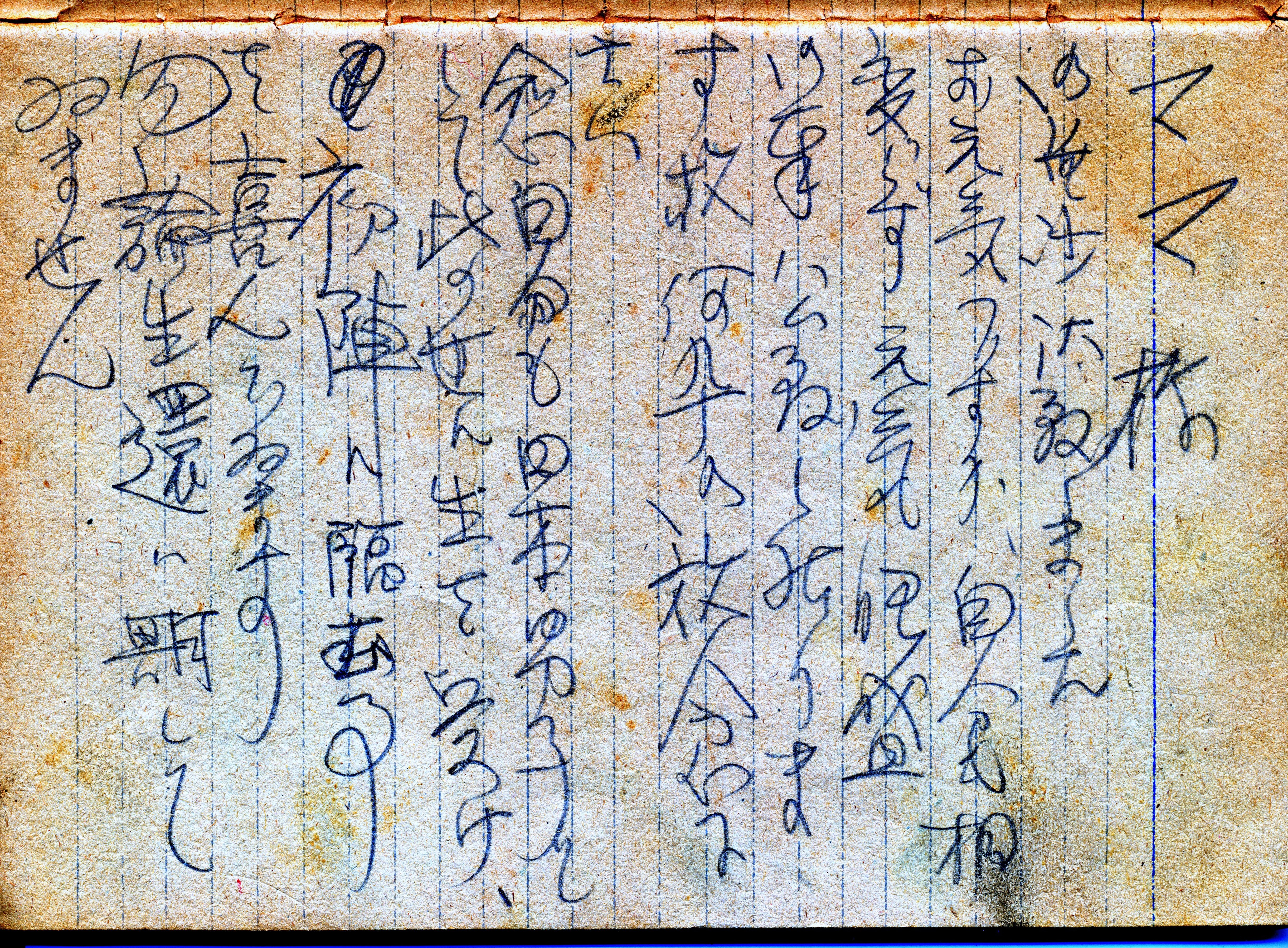
It was his farewell letter to his mother. My dad’s mother. My grandmother. It was dated March 3, 1944.
Kiyoshi is holding Suetaro’s farewell letter. It starts with “Dearest Mama” on the right.
Kiyoshi tried to read it; it was difficult as it not only was in his hurried cursive but in pre-MacArthur Japanese. Many characters are simply not used any more. Unused since 1945. Only a few people can read it – like my father. Suetaro’s brother. But we managed to read critical passages. I will include two pages as reference. However, these are very literal translations of a few sentences but needs be read in its entire context considering the environment was when he wrote this. It is easy to misunderstand or misconstrue his heart and soul at that moment.
Towards the left, it states, “初陣に臨むことを喜んでいます. 勿論, 生還を期してはいません”, or literally, “I am glad to be going to war and facing my first combat. Of course, I do not expect to be coming back.”
He writes, “今の時局は日本が起つか亡びるかの境です。どうしてもやり抜かねばいけないのです。兄さん達を救い出すことも夢見てます,” or “At this time, Japan is at the point of either winning or perishing. We must persevere as I still dream that we will free our older brothers.”
I stress this abbreviated presentation can be misunderstood. My interpretation is, “I willingly go to war for Japan as we are on the brink of winning or losing. By winning, Japan will free my older brothers from the concentration camps in the US.”
He will fight – and die – so that Japan will win. If Japan wins, they would take over the United States and by doing so, free my Dad and his older brother Yutaka from the concentration camp. At the time of his writing, both were imprisoned at the camp in Minidoka, Idaho after being relocated from Tule Lake, CA. (His nephew, Bobby, had already perished in Minidoka at the young age of six.) His older sister, my Aunt Shiz who passed away last month, was imprisoned at Manzanar.
Man, my eyes welled up. Everybody was in shock…even Masako once again.
_______________________________
I am unable to comprehend how my Grandmother must have felt reading that letter in 1944. Suetaro had secreted it away in the “butsudan”, or family altar. She had decided Suetaro was not to return to Seattle to join his elder siblings. Now, having read this letter, her regret must have been immense. Grief. She lost a piece of herself. A beloved piece.
Mieko had passed away. So did her husband in 1940. Now her youngest son writes he does not expect to return.
Could she have foreseen this fate while she happily stood in front of her Seattle barbershop near King St. and Maynard in Seattle in the 1910’s? I doubt it.
She would be alone. To ponder. To possibly regret to her last day.
A mother’s anguished solitude.
It is dated April 9th on the back with no year indicated. However, as my father took it when he was in the MIS, I will assume it is around 1948. Her face is worn.
Grandmother standing near King and Maynard in Seattle with (L to R) unknown girl, Dad and her loving hand on Suetaro. Circa 1925
My Grandmother Kono could not have possibly foreseen her future pain in solitude… But the anguish she endured seven decades ago brings our family together today along with a message to the world.
________________________________
Born on October 6, 1888 in a Hiroshima village called Furue, Grandmother Kono came into Seattle on February 4, 1909 via the Shinano Maru. She was a picture bride for my Grandfather Hisakichi.
She gave birth to seven children; all but one was born in Seattle. They were American citizens.
Uncle Suetaro (Soo-e-ta-rou) was #6 and born in Seattle sometime late in 1920 although I have been unable to locate his birth records on-line. His name (末太郎) implies “last boy (or child)” but as you can see in the damaged photo above, Grandmother and Grandfather appear to have had an “oops” moment. That’s Mieko, their youngest sister; she became truly the last child.
Uncle Suetaro is on the high chair with Dad standing next to him. They are in front of my grandparent’s barbershop on King St and Maynard in Seattle. The shop was inside Hotel Fujii (no longer standing). Circa 1921.
________________________________
While growing up, Uncle Suetaro was my father’s favorite sibling. Suetaro and dad were inseparable from what I am told. Dad’s nickname for him was (and still is) “Sue-boh”.
Suetaro was a happy child and always made people laugh and feel good – like Grandmother Kono. Suetaro and Dad played “oninga”, or tag, together frequently; there was no Nintendo or footballs to throw around in the 20’s. When Suetaro got old enough, they picked “matsutake” mushrooms together on Grandfather’s mountain property as told in “Masako and Spam Musubi“. When Grandmother made fish for dinner, Dad wouldn’t eat it – but Suetaro did. Suetaro ate everything.
This is my favorite photo of three of the youngest siblings; we uncovered it just this month in Hiroshima thanks to my cousin Toshiro:
The three youngest siblings: Mieko, Suetaro and Dad. A rare photo as all three are smiling – especially Dad. This portrait was also taken while they sat on the Hiroshima home’s sakura wood. My assumption is it was taken immediately before Dad left to return to Seattle.
Dad says they had one bicycle to share between them. On school days, they would walk to the train station together in the morning while one slowly rode the bike. They would leave it at a little shop which was still quite a ways away. However, whoever got to the bicycle first AFTER school got to ride it home – quickly. Leaving the other brother in the dust. And it was a long walk – especially in the summer heat and humidity. Perhaps it was the bicycle in the early portrait shown in “Souls of Wood“?
________________________________
Dad left Hiroshima soon after graduating from Nichuu High School at 18 years of age; he arrived back in Seattle on May 18, 1937.
Grandmother, Suetaro and Mieko were left behind in Hiroshima.
He would never see his favorite brother Suetaro or Mieko alive again… and Grandmother Kono will soon experience a demonic dread that will stay with her for the rest of her life.
________________________________
To Be Continued… A direct link to Part II is HERE.































 Masako and Spam Musubi