Category Archives: Atomic Bomb

The Pain of Survival and Aunt Michie – Part 2


Taken in 1945 after a B-29 bombing attack on Tokyo. There is little left of the city and many, many families were without food and homes. Sadly, there were thousands of orphans as well, many of whom would perish.

Human dignity is as crucial to an earnest life as is air, water and food.

Aunt Michie drew upon that dignity inside her to help her family and others survive the day to day ruthlessness of life during war and ultimately, the atomic bombing.

While her dignity was larger than life, Michie would ultimately sacrifice her health and well-being to ensure her family and others would survive…and survive strongly.

___________________________
obaachan
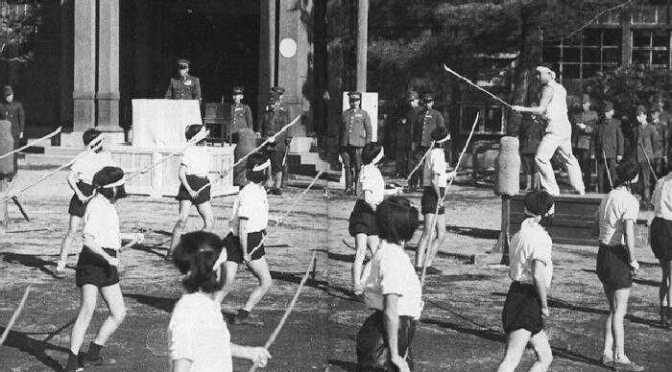
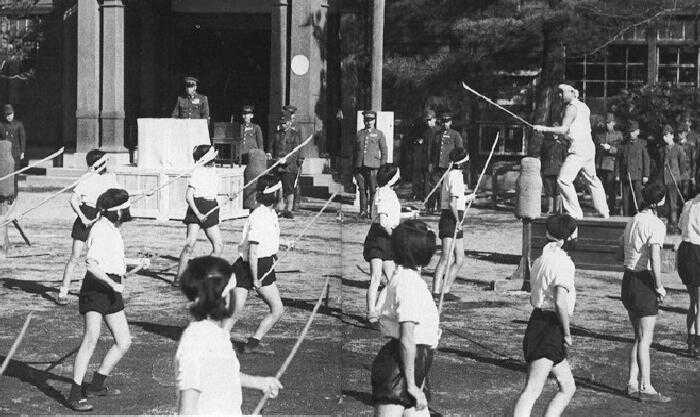
Japanese high school girls being drilled on how to use bamboo spears to ultimately repel “the invaders”. Notice the presence of the Imperial Japanese Army in the background observing.  Tokyo 1944.

By January 1945, Japan had already lost the war.  While the Japanese military leaders controlled the country and its path to ultimate destruction, the civilians took the brunt of war.  Many cities had been destroyed by US bombing raids leaving millions of families homeless.  There was not enough food to go around.  Many starved to death, especially orphaned children, if not from neglect as others would shut their eyes to them.

However, Hiroshima was largely spared from aerial attack.  The US did carry out bombing raids in March and April 1945 against military targets in Hiroshima but it was not frequent…but it was frequent enough to require air raid drills  The naval port of Kure though, where the battleship Yamato was built, was essentially destroyed in June 1945 by US Army and Navy bombing attacks.

HiroshimaBombingMap
A hand drawn map showing targets and damage to Hiroshima by US bombing raids including the atomic bombing. For a zoomable map, please copy and paste this link into your search bar: http://www.digital.archives.go.jp/DAS/meta/DGDetail_en_0000000611
Source: National Archives of Japan

___________________________

After her marriage in 1933, Michie was tasked to arduous farm labor at the Aramaki farm.  Their primary crop was rice.  She also gave birth to five children before war’s end: Masako (1933), Sadako (1936), Namie (1939), Tomiko (1942) and Masataka (1944).  Kiyoshi would follow in 1947.  She loved them unconditionally.

Michie image1
A happy Aunt Michie and likely Tomiko. Tomiko would soon be adopted by another family in the actual city of Hiroshima.  Undated but perhaps 1943.

On the farm lived Mikizo, his parents and Michie.  The four of them – and eventually three of her oldest daughters (a total of seven family members) – would work the land from a little before sunrise to sunset.  It was hard, arduous labor.  Back breaking work.  They did not have John Deere tractors or combines to aid them but had an ox to plow the fields with.  This was 24/7.

After all that hard labor, nearly the entire crop was taken by the Japanese military for the war.  They were allowed to retain a small portion of the crop for their own use.  As a result, rice was even further rationed for family consumption.  They had no choice.  On top of that, there was little else to eat.  They lived a meager life per my cousins.

__________________________

As the war dragged on, Japan was descending into the abyss…and it kept getting more and more darker.

In the story “Dear Mama”, Michie’s youngest brother Suetaro (my uncle) hurriedly wrote a somber good bye letter to Grandmother Kono in his war diary.  He was being sent off to war and certain death.

Farewell
Farewell sendoff for Suetaro who was heading to certain death. Michie is to his left and holding Masataka; Mikizo to his right. It is only an educated guess but the older man to the right of Mikizo is his father.  May 3, 1944.

I wonder how she really felt, knowing that Suetaro was going to fight to his death against the country in which his two older brothers and sister were imprisoned.  They were her brothers and sister, too.  An ugly internal conflict.

______________________________

The area around Tomo was nearly barren of younger, physically capable men.  All the men up to 35 years of age were taken by the army, regardless of their family status.  Mikizo was no exception.

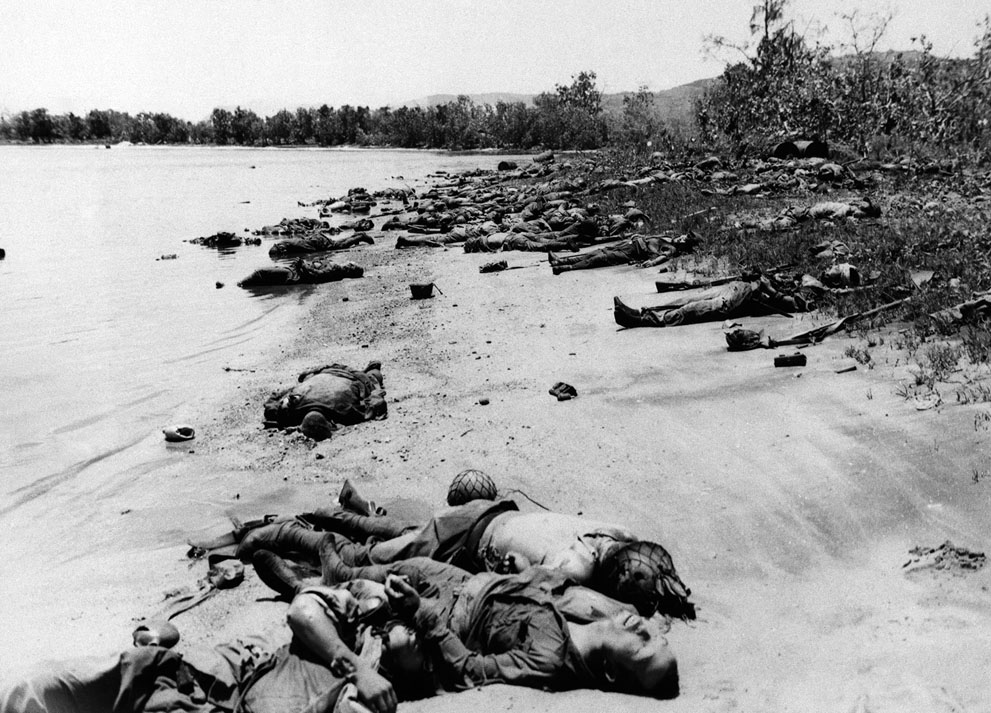
In late 1944, at 35 years of age, he was taken by the Imperial Japanese Army.  Suetaro foresaw that happening in his farewell letter; he warned Mikizo to fully cooperate with the officers and to do exactly as he was ordered.  This was because it was brutal even within the non-commissioned ranks of the Imperial Japanese Army; the training officers routinely beat recruits into submission.  These recruits were largely the men who were ordered to their deaths in “banzai charges” by the thousands.  They greatly outnumbered the “hard core” Japanese officers.
banzai killed
Aftermath of a banzai charge.

Aunt Michie’s family who tended to the back breaking labor on the farm was now lessened by one.  As with her brother Suetaro, she foresaw never seeing Mikizo again.

To make matters worse, her mother (my Grandmother Kono) suffered a cerebral infarction the day she learned Suetaro was being sent off to war.  She became paralyzed on her left side.  To get about the now empty house, she would have to pull herself around with her right arm.

On top of everything else – tending to the crops, the house and the children – Aunt Michie now had to care for her disabled mother.

Michie’s daily life was now further strained with even more stress…  Life must have appeared darker to Aunt Michie.

Michie’s willpower and dignity will now be on trial and severely tested.

But the struggles she will endure will have purpose.

She would not let her family down.

____________________________

To be continued in Part 3….
The Pain of Survival and Aunt Michie – Part I


img_0152_1_original
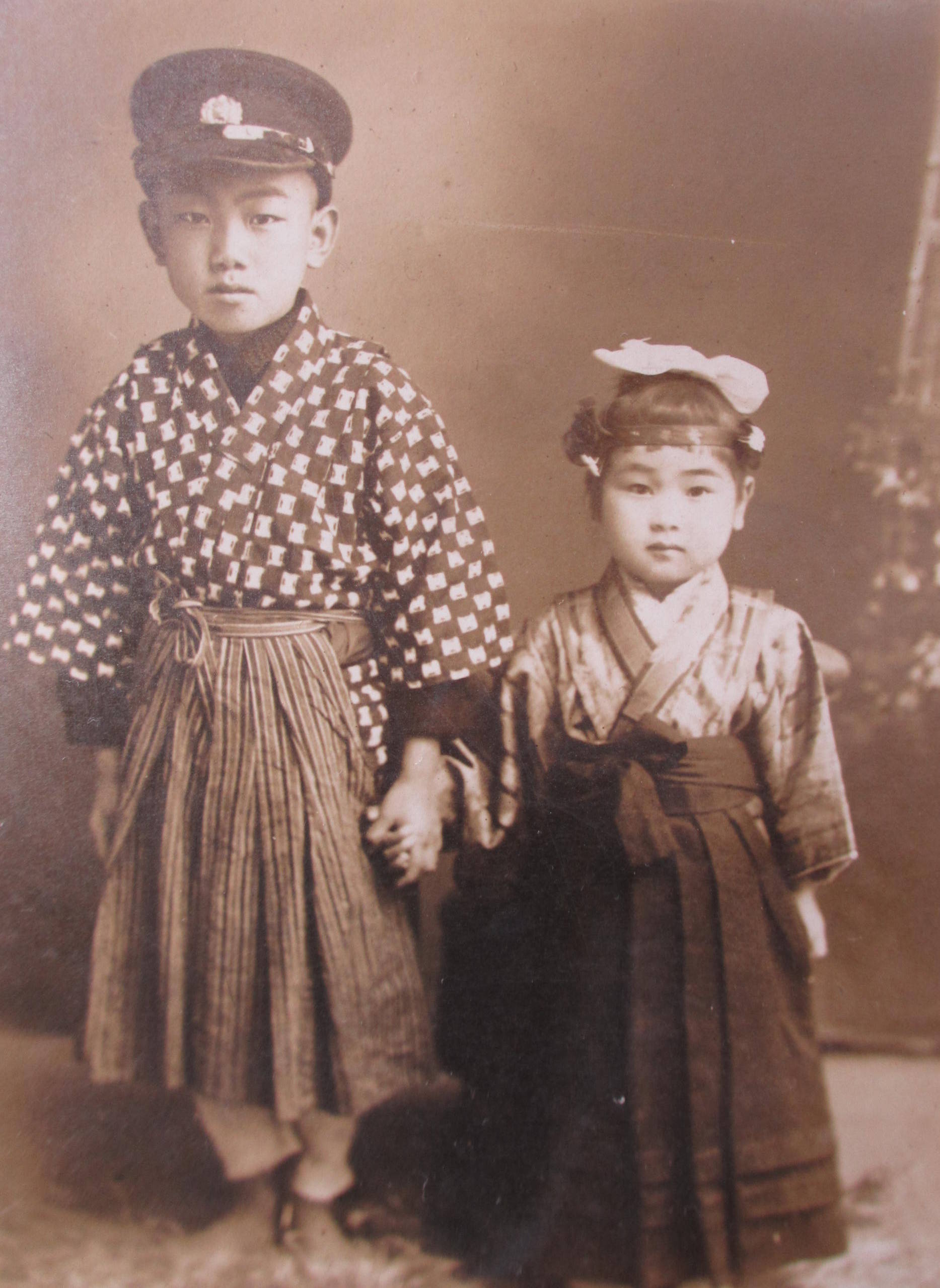
Uncle Yutaka and darling little Aunt Michie in Hiroshima. Circa 1918.

Life in Hiroshima was uncertain and grueling in 1945 – especially for women and children.  It is a fact that nearly all the men up to the age of 35 had been taken by the Japanese military.  For many, it was truly day to day.

Little food, clothing and medical care.  It all went to the military…and then there were the B-29’s and the bombings.  Devils associated with being on the losing side of war.

But at 8:15 AM on August 6, 1945, my Aunt Michie’s already tough life would be cast into wretchedness to test her mortal soul.  She was in her farm’s field clearing old crops on that hot summer morning.  There was an intense flash of light then the atomic bomb’s shockwave traveling close to the speed of sound slammed into her.  She was catapulted and hit the ground.

At the same instant, her oldest daughter and my cousin Masako – who was eleven and in her classroom nearby – was hurled across the classroom by the same shockwave.  The schoolgirls that were standing in front of her were pierced by shards of glass and debris.

Below is an eye opening re-enactment supplemented by computer simulation of the atomic blast in 1945.  Perhaps you can put yourself into Aunt Michie’s or Masako’s shoes on that morning and experience what they did:

After years of a most grueling life, Aunt Michie and her children would now face the searing pain of surviving.

__________________________

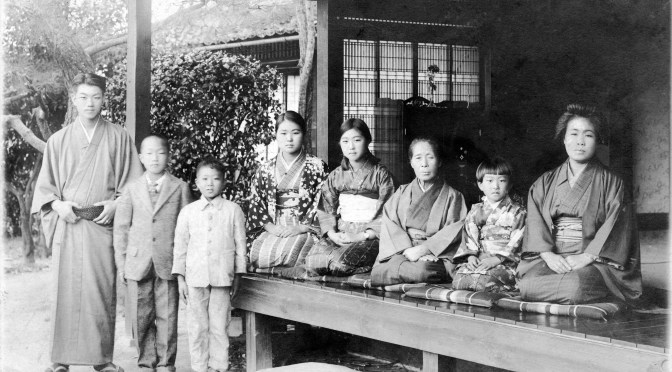
Even while giving shaves at my Grandfather’s barbershop in Seattle, Grandma Kono was busy in her early years of marriage.  She gave birth to Yutaka (1910), Hisao (1912) then Michie in 1914.  Other children followed: Shizue (1917), Dad (1919), Suetaro (c. 1921) and Mieko (c. 1924).  A total of seven.

y-image00-001
(L to R) Yutaka, Dad, Suetaro, MICHIE, Shizue, Great Grandmother Kame, Mieko and Grandmother Kono. Circa 1928, Hiroshima.

All seven of the siblings were born in Seattle…  All except for Michie who was born in Hiroshima.

My cousins tell me their mother Michie told them she would wistfully ask her family, “Why couldn’t I have been born in America like everyone else?!”  Lovingly, of course.

Aunt Michie never did get a chance to visit America.

__________________________

Dad’s siblings came to Hiroshima and half of them were able to return to Seattle to continue their lives as Americans before war with America.  But Michie lived her entire life in Japan.  She was the oldest sister to the siblings and helped Grandma Kono raise them.

Michie’s father (my Grandfather Hisakichi) was a devout Buddhist.  He required the family to chant Buddhist mantras daily; it was not “praying” but a way through which a follower “energized” himself to the teachings of Buddha.  Dad’s Hiroshima home to this day has the altar in the main room where they chanted; it is unchanged in nearly a hundred years having survived the shockwave from the atomic blast.

Fullscreen capture 2262014 120800 AM
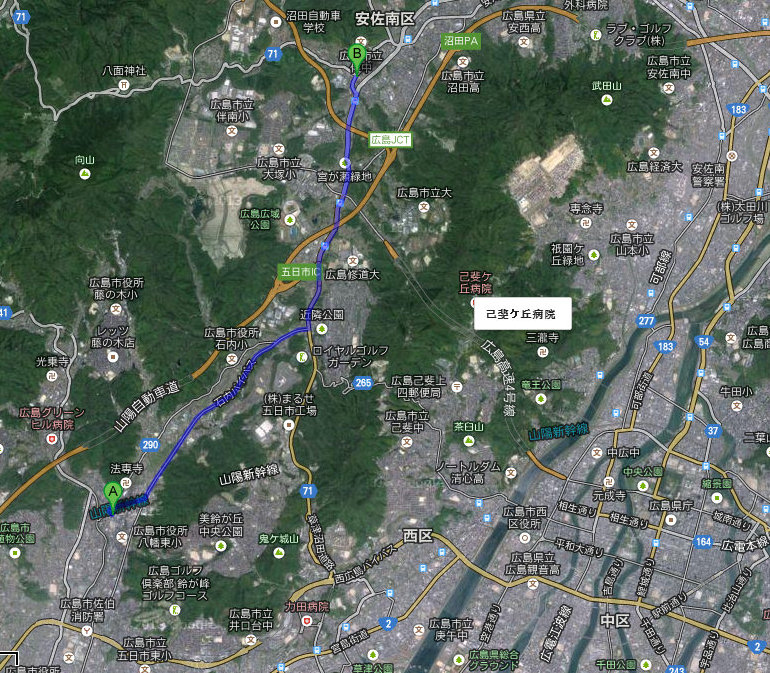
My father’s family home is at “A”; Aunt Michie’s home in the village of Tomo is at “B”.  About five miles separates the two homes.  The atomic bomb’s hypocenter is towards the bottom right where rivers split up.

According to well accepted family lore, a man from a village called Tomo came to the house one fateful day apparently to seek one of his daughter’s hand in marriage.  His name was Mikizo Aramaki.  He immediately went to the altar and chanted.  Grandfather Hisakichi was so impressed by his devotion to the Buddhist way of life that he immediately gave his daughter away in marriage…but apparently, Grandather gave away the wrong daughter – Aunt Michie.  It is said Mikizo had come seeking the hand of my Aunt Shiz.  (Aunt Shiz was the prize of the village according to my cousin Masako.)

Being of farming heritage, Mikizo had acreage and a home.  After Aunt Michie was told she was to marry Mikizo, she was, to say the least, not very happy.  I guess that is a slight understatement if I say so myself.  She argued – pleaded – with my Grandfather that she didn’t want to marry him and that she was not raised to be a farmer…but to no avail.

Aunt Michie was given away in marriage.  Done deal.

They wed in 1933.  She was nineteen years old.

_______________________

To be continued in Part II

“Dear Courageous Sailor” – a Letter from 1943


Marines82large
Marines escort Saipan civilians. It was estimated that 22,000 civilians died, most by suicide. It was traumatic for our young Marines to witness, too.

There is personal pain in a full-fledged war that only those who were fully involved can feel.  Those feelings will differ by how that person was involved.

We somewhat understand through survivors that a soldier, airman, sailor or Marine near or on the front lines will have an intimate kinship with instantaneous fear.  They know combat is immediate, unfair, cruel, and barbaric.  But hopefully, they know their families and country are behind them – perhaps giving them the edge to overcome their fears and survive.

And this is true for the enemy as well.  As I become more knowledgeable on the Pacific Theater during WWII, I have learned the young Japanese combatants had the same fears (please see “There’s No Toilet Paper in the Jungle of Burma“).  But unlike the Allied forces who had millions of tons of war materiel, food and medical care backing them, the Japanese military fell way short.

But what about the Japanese home front?  Have you paused to ponder that?  Were their countrymen any different from us in their ways of supporting their young men dying by the hundreds of thousands?

I never did myself until recently.

____________________________

I met Rob on the internet through his facebook page, “WWII U.S. Capture Photos“.  He focuses on the spoils of war, bringing back to the forefront the war souvenirs seized by military personnel.

He acquired a letter from a now elderly Marine who was fighting on Saipan in mid-1944. He had told Rob that he removed it from a Japanese corpse.

japaneselet2
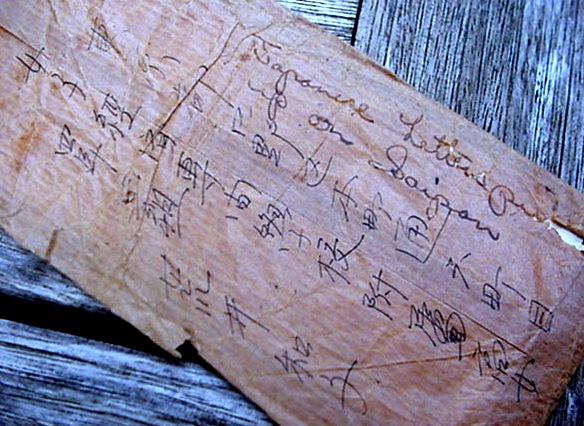
The now tattered envelope is anonymously addressed to”海軍の勇士様” or “Dear Courageous Sailor”.

Apparently, this letter had ended up to haunt the Marine who was at time very young and fighting for his life on Saipan.  The once young Marine is pictured in the center of this photo:

Marine Saipan
The young Marine who seized this letter is pictured in the middle. For an original image, please click on the picture.

Rob asked if my father could read the letter and translate it.

The letter was haunting Rob, too.

______________________________

My friend and I went to see Dad in October 2013.  Below, Dad is reading the letter taken by the then young Marine from Saipan in 1944.

IMG_1032

The backside of the envelope is below showing the sender’s name and return address.  The image was enhanced to bring out the writing.  The Marine had written “Japanese letter picked up on Saipan”.

The letter was anonymously addressed and sent by a young girl named “Kazuko Arai (荒井和子)”.  The return address shows she was a student of a girl’s economics school in Tokyo, Nakano City, town of Honcho (東京都中野区本町通六丁目女子経済専門学校 – 附属高女).  While I believe the school may have been at least damaged by the fire bombings, I may have located the successor school. It is called “Nitobe Bunka Gakuen” with its current address as 東京都中野区本町6-38-1.  (While I did send a blind email of inquiry to them in my far from perfect Japanese, there has been no response.  I doubt that there will be given the Japanese culture.)

culetter1

While the scans were of low resolution, the two pages of the letter are as follows:

japaneselet3
japaneselet4

Because my father  will be 95 next month, it was difficult to keep him on course.  In spite of reminding him to just read the letter in Japanese (I would understand most of it), he continually tried to translate its sentences into English.  Perhaps somewhere in his buried conscious, he is doing as he was trained by the US Army’s Military Intelligence Service.  Admittedly, there were about a half-dozen characters that were just tough to make out due to creases and lack of clarity.  And he wasn’t able to figure out one paragraph in particular…but I did!  Got one on my old man.

I also sought out help from my good Hiroshima cousin, Kiyoshi, and he filled in the blanks.

Kazuko wrote:

夏も過ぎさり戰局は日一日と厳しく今こそ物心はおらか私どもう総べてを国家に捧げつくすべきと秋となりました。
As summer passes and turns into autumn, the war situation is getting more severe and now we must physically and mentally dedicate ourselves for our country.

海上での勇士様にはお変わりなく軍務に御精勵(励)の事を存じます。
As a courageous sailor out at sea, I know your unwavering fighting spirit continues.

大東亜の全戦線に於いては、今や彼我の攻防戦は、まことに熾烈極めて居るという事等、すでに日々の報道により私共の耳に刻々傳えられてをります。
Per our (radio) broadcasts, we hear that the intensity of battle and such has increased for both sides at all the front lines in the Far East Asia theater of war.

山崎保代部陽長以下二千名ついに全員北海の島に於いて玉砕したこの事をラジオが私達に傳へるや私達は唯聲をのみ頭をたれるばかりでした。
A radio broadcast announced that Lt. General Yasuyo Yamasaki and 2,000 of his  garrison died honorably defending an island in the North Sea.  All we could do was bow our heads (in honor) and swallow our  grief (voices).

– – – – – – – – – – – – – – – – – –

[ NOTE: In researching this report, I discovered that Lt. General Yamasaki was assigned to defend the island of Attu.  He was killed with his remaining garrison in a banzai charge on May 29, 1943.  Please click on the following for more information:
My cousin Kiyoshi also found an extensive accounting of the Battle of Attu in Japanese with English translations for those who are interested.

– – – – – – – – – – – – – – – – – –

(Letter continues)

今私達は本当に容易ならぬ戰争の只中におかれている事を強く感じました。
Now, with the daily war situation, we strongly feel as if we are in the midst of the battle and realize (winning) will not be easy.

学校ではもうじき秋の軍動會が開かれますので一生懸命身体をきたへてをります。
Soon, it will be time for the autumn (military) athletic meet; I will train hard to strengthen my physique.

断じて米英女性には贁けない覧唔です。
We resolve to not lose against the American and English women.

ではどうぞう勇士様くれぐれ御身体御大事に大切にお国の為しっかり戰って下さい。御武軍を祈り致します。
So please, courageous sailor, sincerely take good care of yourself and fight hard.  I pray for your fighting spirit.

さよなら
Good bye.

_____________________

So now we realize that Japan also had a “home front”.

Perhaps they did not have a “Rosie the Riveter” like we did.

But the Japanese homeland did endure pain, fear and sorrow as we did…and depression.  They were not the inhuman creatures depicted on war posters and in propaganda of that time.  And thanks to Rob and the young Marine, we see a letter written in Tokyo by a high school girl named Kazuko Arai in the autumn of 1943 and simply addressed to an anonymous sailor.  Kiyoshi also believes that the watermarked stationery was of high quality and issued out of military stock for this purpose.

Sadly, we do not know the name of the sailor from whose corpse the letter was removed from, nor do we know if Ms. Arai survived the war and raised a family.

showa8
Picture taken at Kazuko’s school pre-war.

Things like this sort aren’t evident in our (current) history textbooks.  Now, WWII has pretty much been erased from school textbooks altogether, replaced by “politically correct” topics…that there was simply a war between Japan and America.  A disgrace to those who endured or died.

In closing, there is a diary written by a young Japanese doctor up to the time of the final banzai charge on Attu.  He was one of the attackers who was killed.  As mentioned in my other posts about the Military Intelligence Service, Japanese military forces were allowed to write diaries.  When these diaries were taken from the battlefield, the Japanese-Americans (Nisei) soldiers were able to read then extract valuable intel on the enemy – both for their battle front and their homeland.  In his last entry, the young doctor writes a goodbye to his wife and two small children back home.

Young Japanese doctor’s war diary

America


My best to you, America, for the New Year.

Image

Graciousness, Gratefulness and Grandeur


q00893001u00132
From http://www.entaijisou.com

My girl friend Linda fretted for a couple of weeks before going to Japan with me.

She fretted about the (we-know-they’re-coming) typhoons.

She fretted about the (we-don’t-know-they’re-coming) earthquakes.

But what did she fret about the most?  She fretted about getting butt-naked in front of my cousins for a Japanese-style bath at a hot spring in Japan.

Silly lady…  All Japanese do that.

Oops.  I forgot.  She is Irish with blue eyes.

Well, I guess if I were her and experiencing a panic attack, I’d just put a brown paper bag over my mouth… and drink all the scotch inside.

That would help.  After all, she is Irish.

___________________________

IMG_6615
The hot spring inn, “Entaijisou” or 延対寺荘.

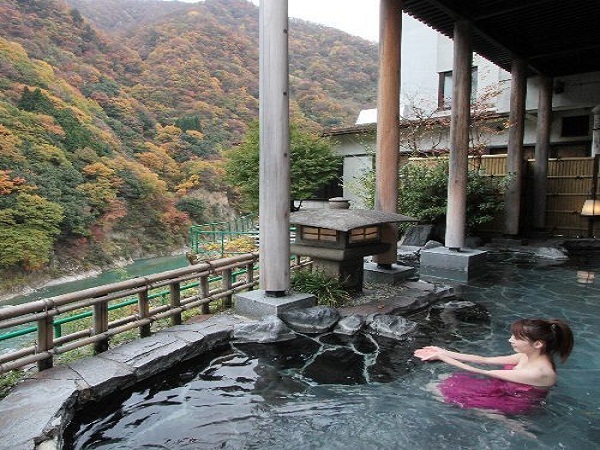
During our ten-day visit to Japan in November, my cousin Kiyoshi (Masako‘s youngest brother) treated us to a most wonderful journey to Toyama Prefecture, just inland from the Sea of Japan.  One such destination was famous for its hot springs and a beautiful gorge. We stayed at the inn called “Entaijiso (延対寺荘)” near “Unazuki Hot Springs (宇奈月温泉).”  Started in 1900, the hot spring’s water is naturally heated to a most perfect temperature and has an open-air spa area called a “rotenburo (露天風呂)”.  Literally, you are soaking outside under the heavens.  Butt-naked.

Of course, I was unable to take photos inside the bathing area for obvious reasons but here are other photos from their website to give you a taste of the relaxation that can be had.

qspa004   355206239

Yes, my Irish lady did go in with my (female) cousins!  In a form of endearment, my cousin Masako even washed her back.  Butt naked.  After relaxing in the water for a while then dry off, you notice your skin is just ultra silky smooth.  My cousins did say the geothermically heated ground water has therapeutic powers…  That there is some kind of magical healing power bubbling up.  I kind of doubted it.  But there IS something in the water. 🙂

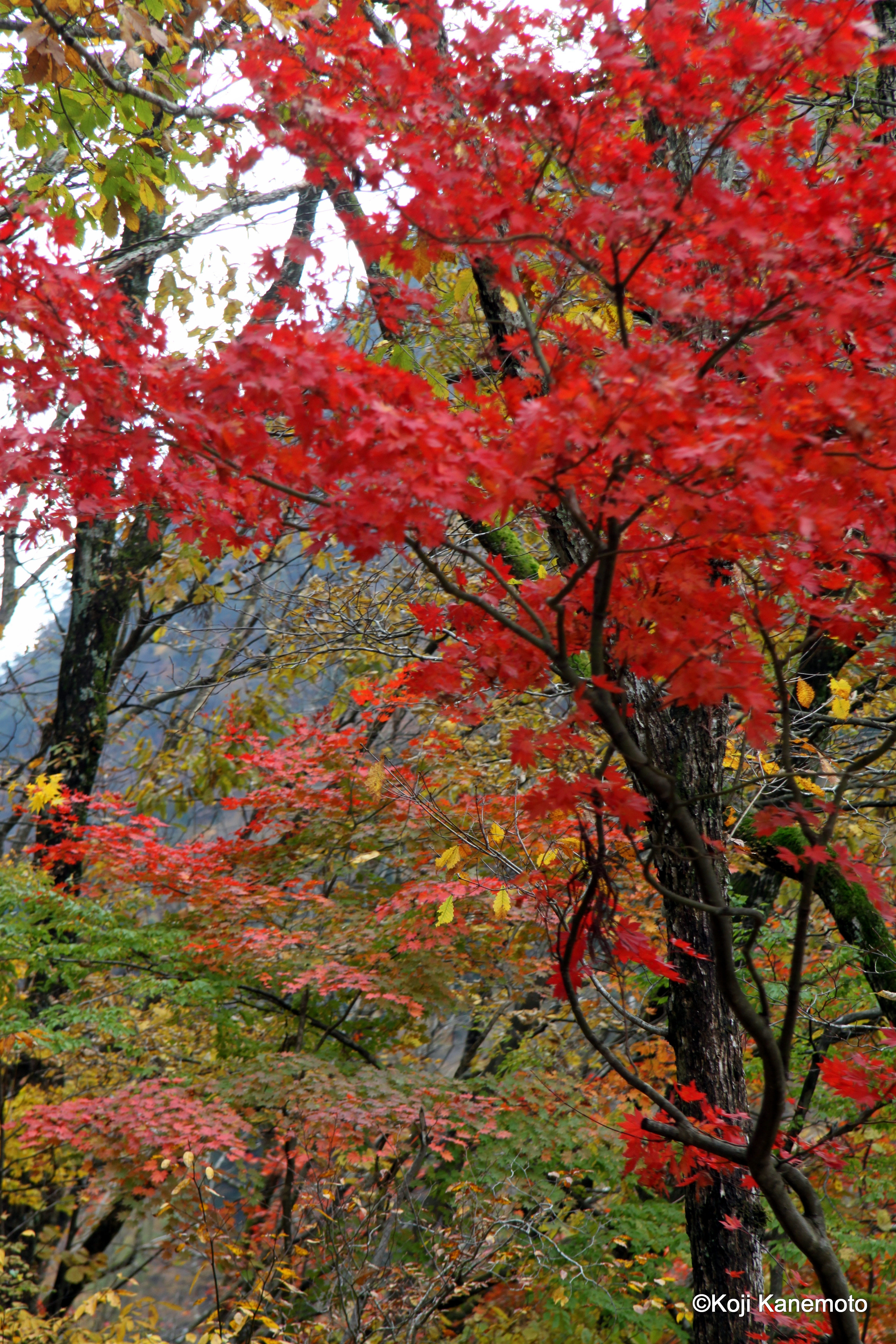
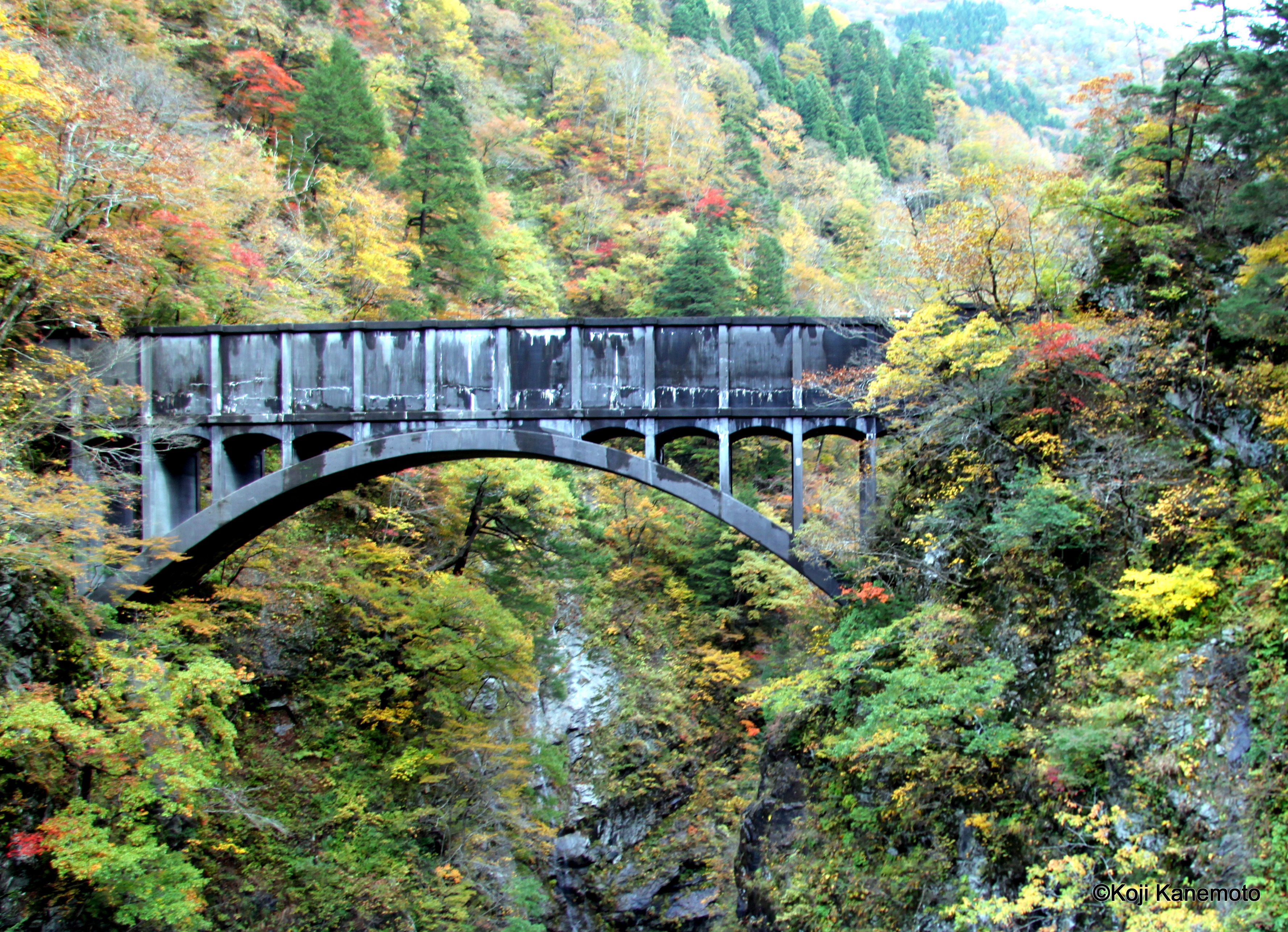
Their dining area was spectacular; just outside is the river and magnificent mosaic-colored hillsides – a post card panorama.

IMG_6623

IMG_6611

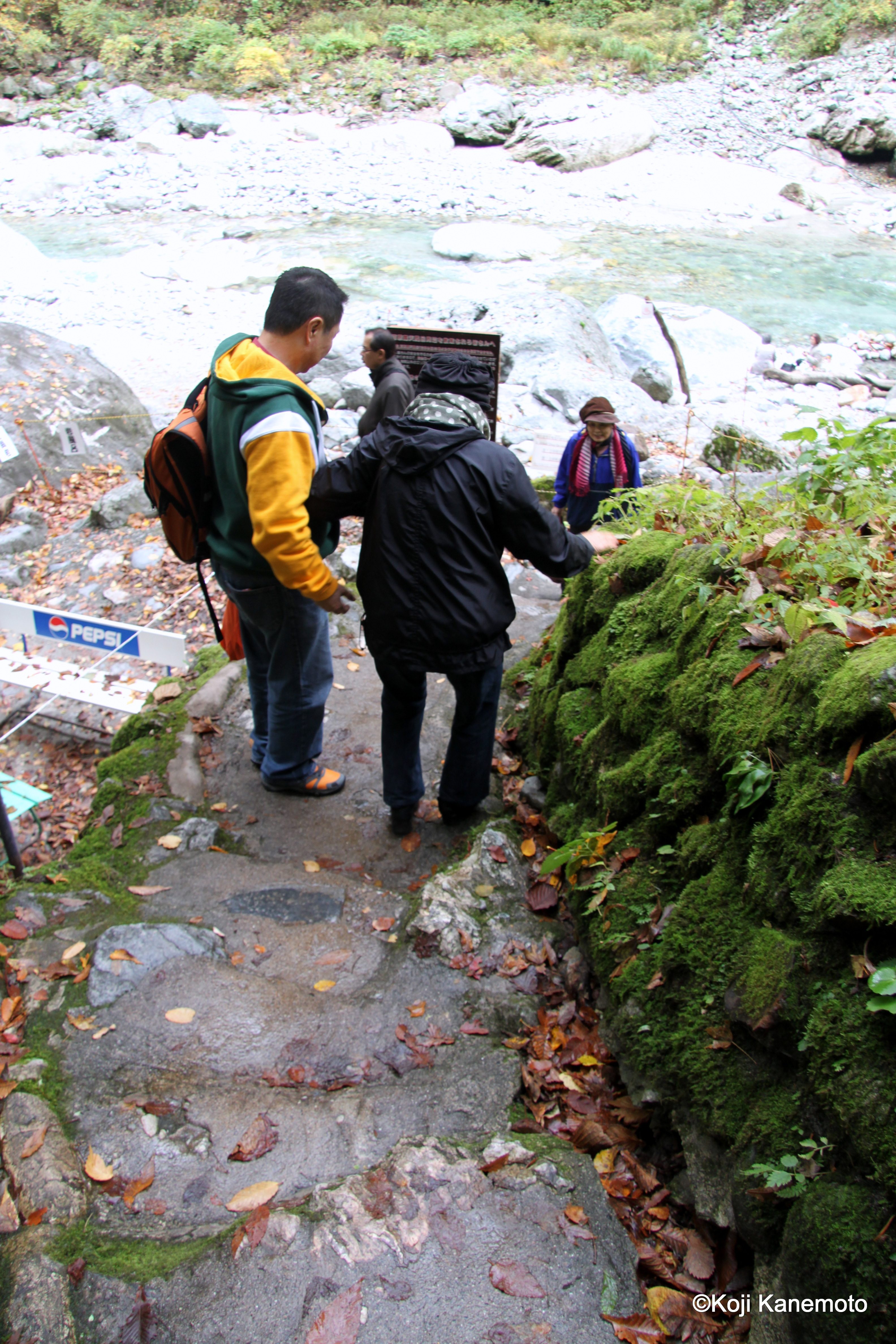
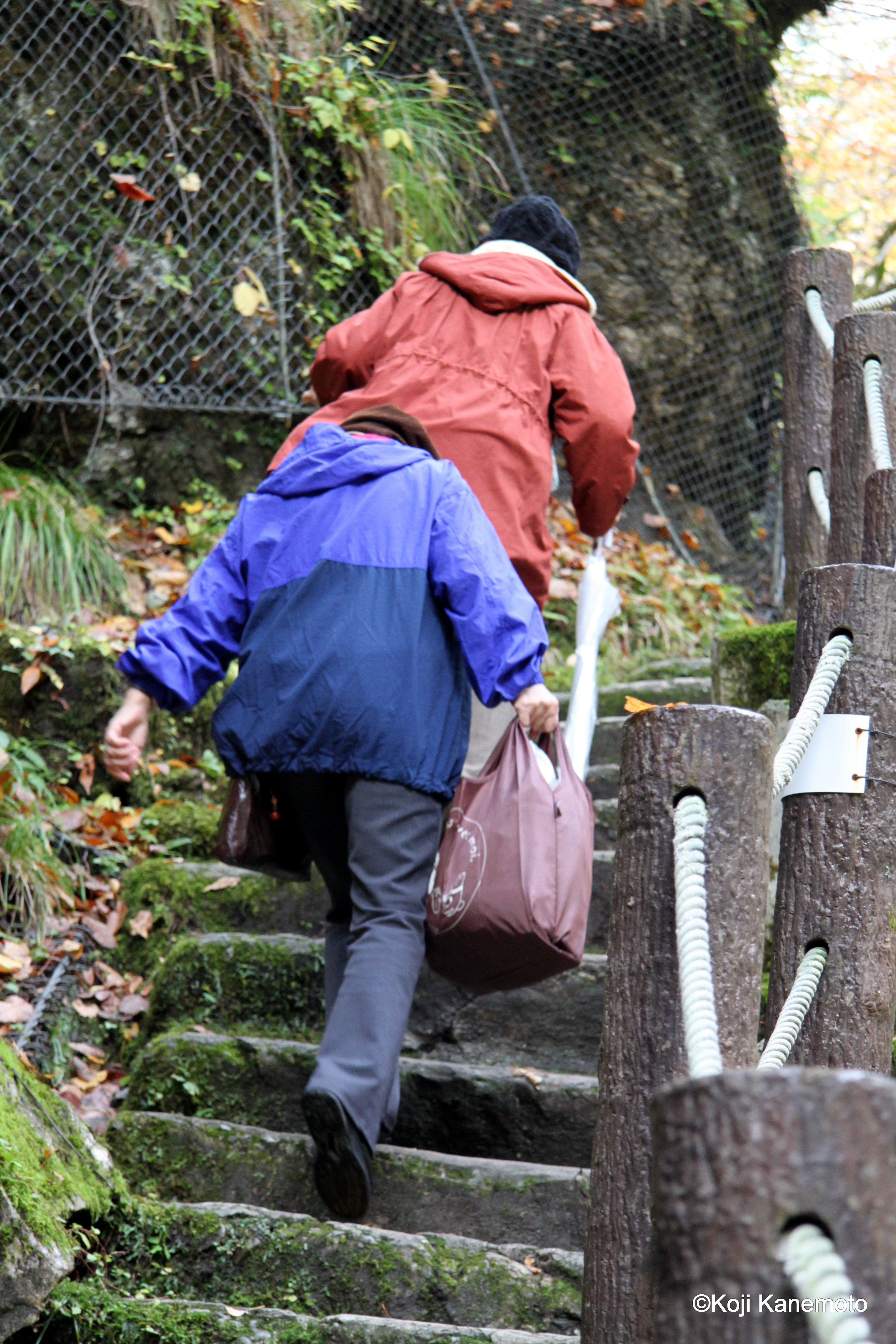
Kiyoshi’s gracious treat continued on the Kurobe Gorge Tram (黒部峡谷トロッコ).  It is a a sightseeing train running on a very narrow track originally built to aid the construction of the Kurobe Dam.  It follows a winding path along the river – something like 20 kilometers from the base station of Unazuki to the end.  We we there unbelievably at their peak of the autumn color change.  It is important to note we hiked a bit after getting off the tram at Kanetsuri Station – and my cousins below LED the way.  While Masako has difficulty going DOWN stairs, she was a jack rabbit going up.  Amazing.  At 80 years of age.

IMG_6628
My cousins (L to R): Tomiko (71), Masako (80), Namie (74) and Kiyoshi (65).

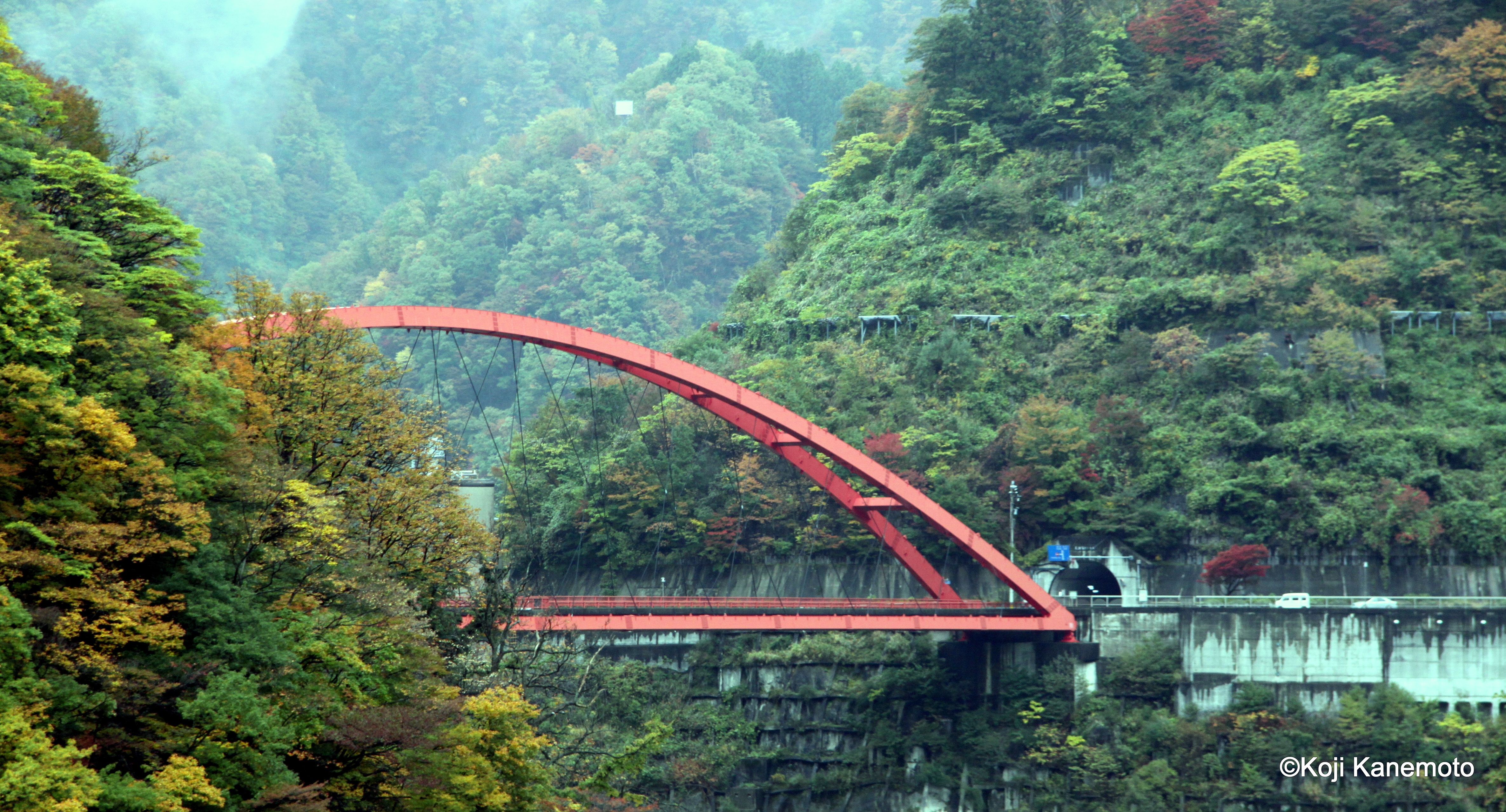
I will let the photos show you the grandeur we were so fortunate to experience.  (Please note many of these were taken from the moving tram.)

IMG_6919

IMG_6736

IMG_6789

IMG_6812

IMG_6850

IMG_6731

IMG_6982

IMG_6725

IMG_6985

IMG_6977

IMG_6988

IMG_7024

IMG_7029

IMG_6943

IMG_7047

IMG_7050

IMG_7015

IMG_7070cif76nib_original

IMG_7020

IMG_7080

11045645333_cf1fd0d47e_o

11045483675_ce338a3c77_o

IMG_7176

AND A “I SPY WITH MY LITTLE EYE”…  Can you spot it?  There is a wild red faced monkey below.

IMG_7167

__________________________

Prior to getting into the hot spring and public bath, I tried to relieve her anxiety.

I said, “When in Rome, do as the Romans do.”

She replied, “They sinned.”

__________________________

I was proud of my blue-eyed Irish lady friend.  She got into the public bath and hot springs butt naked.

And even got her back scrubbed by Masako, a survivor of an atomic blast.

Imagine that.

From a Japanese hot spring, I have learned that spreading peace for the world starts as a power that emanates from within one person.

Another Prison Camp Discovered


Not to bore anyone but a few of you readees may recall my dad abd older siblings were in essentially peison camps during WWII just for looking like the enemy.

Well, researchers found another prison almost forgotten due to obscurity. This prison camp was not far from Spokane.

While the prisoners were paid up ti $60 a month, they did build many mikes of road.

History is what we make of it.

But blogs like ours are sure better than the misguided media.

http://m.huffpost.com/us/entry/3663446

“It” and Memorial Day


From www.memorialdayfilm.com
From http://www.memorialdayfilm.com

In the 2012 limited release movie, “Memorial Day”, children are playing at their grandparent’s home in a rural setting. It is Memorial Day weekend.  A 13 year old boy stumbles across a dusty box in a barn.

The box is his grandfather’s WWII Army footlocker, emblazoned with the unit insignia of his famed unit, the 82nd Airborne.  It is filled with “souvenirs” he had brought home from war.

The young grandson probingly asks the grandfather for the stories behind the souvenirs to which he curtly answers no – and bitterly orders the boy to take the footlocker back to where he found it.

“It’s Memorial Day…” says the grandson.

“Damn straight it is,” barks back the grandfather.

The young lad digs in, not wanting to fall short in his quest for answers, and pushes the footlocker even closer to his grandfather.

The grandson then doggedly asks, “What is it I’m supposed to remember?”

Checkmate.

___________________________

Memorial Day.

In essence, a day to remember, honor and pray for those nameless souls who were KIA (Killed in Action).

To remember those that didn’t return from war.  Young boys.  Young men.

But as the young boy in the movie asked, “What is it I’m supposed to remember?”

Do YOU have an answer to that boy’s question?

I didn’t…and perhaps still don’t as I was not shot at, bombed or strafed…nor killed.

__________________________

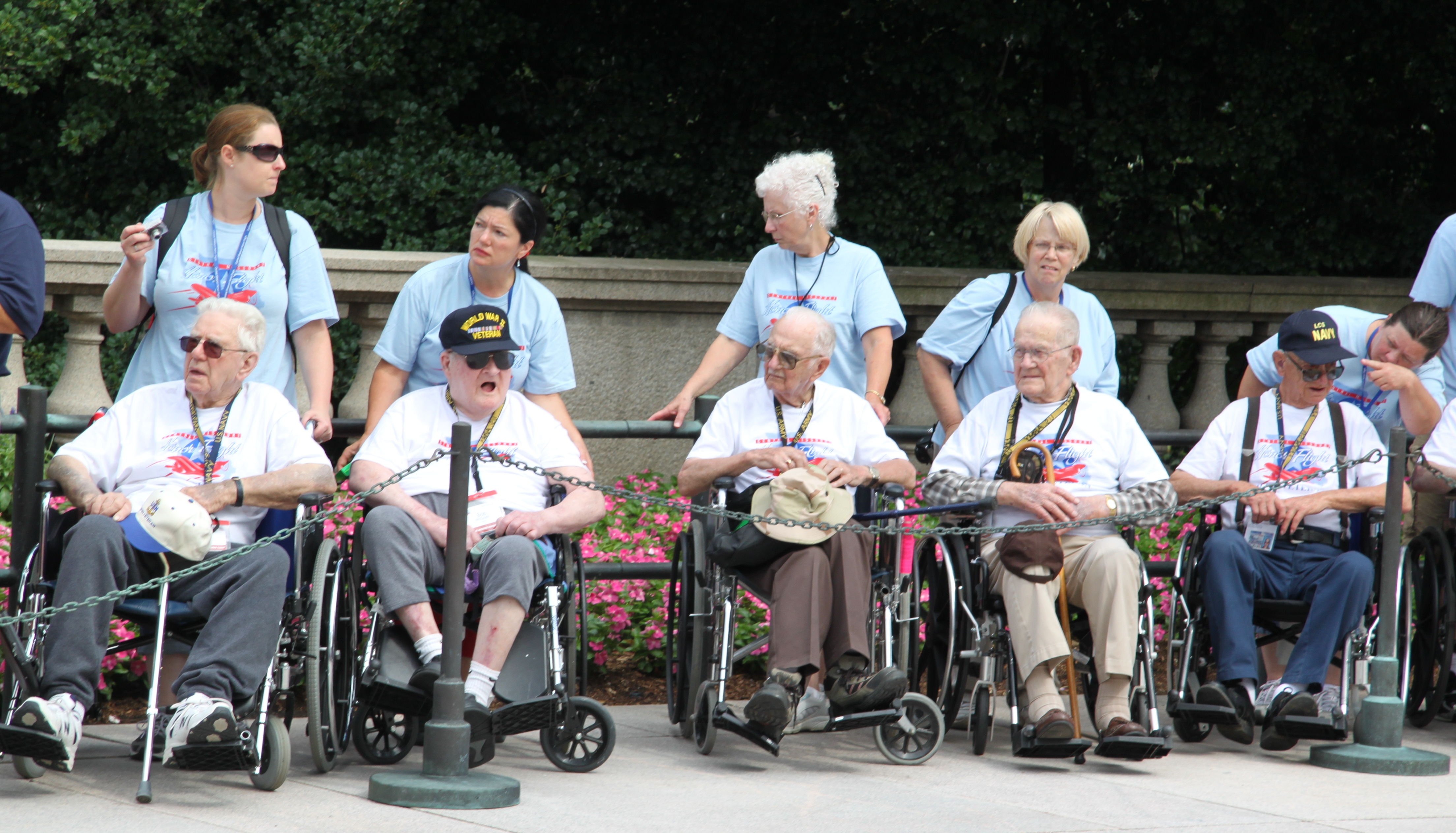
WWII vets at the Tomb of the Unknown Soldier. July 2010
My photo of WWII vets at the Tomb of the Unknown Soldier. July 2010

The only thing I do know is that WWII combat veterans do NOT want to talk about “it”.

And that’s our problem, I feel.  Because these combat vets are unable to share with us the horror they lived through 70 years ago, it helps diffuse the essence of Memorial Day.

They are unable to share for their own sanity’s sake.

As WWII combat survivors (a.k.a., now collectively known as “vets”) would bravely crack open their bottled abominations to talk about “it” with me, I will venture to blurt that possibly – just possibly – they feel unbearable guilt and shame for what they saw…or did…or did NOT do…  but that they survived to talk about “it”.

But their buddies didn’t.

___________________________

(Note: World War II is the focus of this story.  WWII was a cataclysm of never to be matched magnitude again.  There was wanton destruction of entire cities and civilians.  Inflicting casualties on the enemy was expected and accepted by the majority.  This is not to downplay Korea, Viet Nam or our current war on terrorism.  There are different rules of engagement now with much different social expectations by the “good guys”.)

Perhaps you will let me take a chance with trying to bring to light some of the “it” things you may or may not know…  If you can at least read about the combat experience, perhaps it will help YOU appreciate Memorial Day even more… and of those that are not with us today.

I’ve collected these personal observations, comments and facts from talking with several bona fide WWII combat vets and just plain reading.  Nothing scientific, of course.

So here goes:

  1. Nearing death, as grievously wounded young men take their last gasps, the most often said word was, “Mama”.
  2. Under fire, many would curl up into a fetal position shaking uncontrollably while their buddies would somehow raise their weapons to shoot back… only to get showered with their blood and brains as a enemy round obliterated his buddy’s head.  It is not about cowardice.  It is FEAR.
  3. About 25% of them peed in their pants.  About 10% shit in their pants.  (Old Man Jack did both…and he was not ashamed to say so.  Ergo, his quote from Two Old Men and a Father’s Day Anguish: “If you got killed with shit in your pants, you got buried with shit in your pants.”)
  4. Another 25% of these brave young boys and men were so scared or were so repulsed at the gore, e.g., at seeing liquified brains spewing from a shattered skull, they vomited.
  5. One Marine told me he was to silently kill a Japanese sentry using a makeshift garotte only to find the sentry had fallen asleep face up.  He couldn’t use the garotte as the enemy’s helmet was in the sand and the enemy could let out a scream if he used his Kabar.  At the appointed minute, my friend had no choice but to jump on the sleeping soldier and grip his Adam’s apple with all his might… to keep him from yelling, too.  He knew the enemy died when his body went limp and urinated.  My friend did, too.  He said he thinks he gripped the enemy’s throat for over two minutes.  His hands couldn’t stop shaking.  It was his first hand-to-hand kill.
  6. After hearing sounds at night, frightened soldiers or Marines would unleash a violent and impenetrable barrage of carbine and machine gun fire.  When they reconnoitered at day break, they discovered they had mistakenly slaughtered unarmed men, women and children.  They would vomit then, too.  (I can’t imagine what went on in their souls for the rest of their lives.)
  7. Sometime in 1943, Army psychiatrists took a survey of “frontline” troops.  Less than 1% said they wanted to go back into battle (I understand this was exclusive of the more higher trained units like the Rangers or Airborne).  Almost NONE of the Silver Star recipients wanted to go back.  But they did.
  8. Army psychiatrists found that 60 days was the limit for being on the front lines…before a soldier would crack.  Old Man Jack was out on the front for just about a year for his first deployment on “those stinkin’ islands”.
  9. A Nisei 442nd vet told me just the sound of the Nazi MG42 machine gun would make them shit in their pants.  It could fire up to 1,500 rounds a minute and chew through tree trunks behind which they were seeking cover.  Sometimes, a buddy’s top half would be separated from the bottom half by the MG42…and they saw it happen.
  10. Another Nisei vet told me they were on patrol when they came under a barrage.  As he and a buddy dove into a shell hole for cover, his buddy’s arm went into a rotting, foul mass of a decomposing German’s remains.
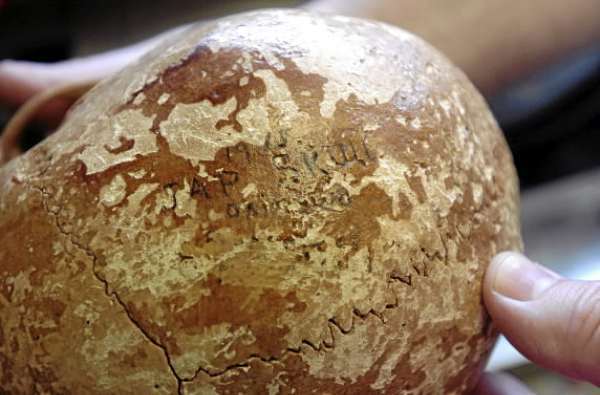
  11. Human souvenir hunting was rampant – and most extreme in the Pacific Theater.  Correspondents documented in their reports that a number of Allied military “boiled” Japanese skulls or left them out for the ants to eat away most of the flesh, then kept them.  Sailors would leave a skull in a net trawling behind their ship to cleanse them of flesh.  For some, the skulls were too large or awkward so they would keep ears or noses.  (In fact, Customs had issues with these skulls when a military man would bring them back to the US after discharge.)  And as Old Man Jack witnessed in “Old Man Jack-isms #4“, some would collect gold teeth.

    SKULL
    A souvenir skull. Someone had etched “1945 Jap skull Okinawa” onto it.
  12. In a battle report, several very young Marines cut off the heads from Japanese corpses, impaled them onto stakes and pointed the faces at the enemy across the way to taunt them.  When their commanding officer ordered them to take the severed heads down, they replied something to the effect of if we eat like animals, fight like animals and look like animals, we are going to act like animals.
  13. Old Man Jack mentioned something he called “squeakers”.  He didn’t elaborate on it too much but it’s when fear becomes so overpowering, men would get dry mouth or start gagging… a problem if you were an officer trying to give orders under fire to keep men alive.  They would “squeak”.
  14. “Take a very, very ripe tomato.  Throw it with all your might against a weathered cedar plank fence.  Listen to the sound of the impact.  That’s what it sounds like when a bullet hits your buddy.”  A Nisei vet told me that.

___________________________

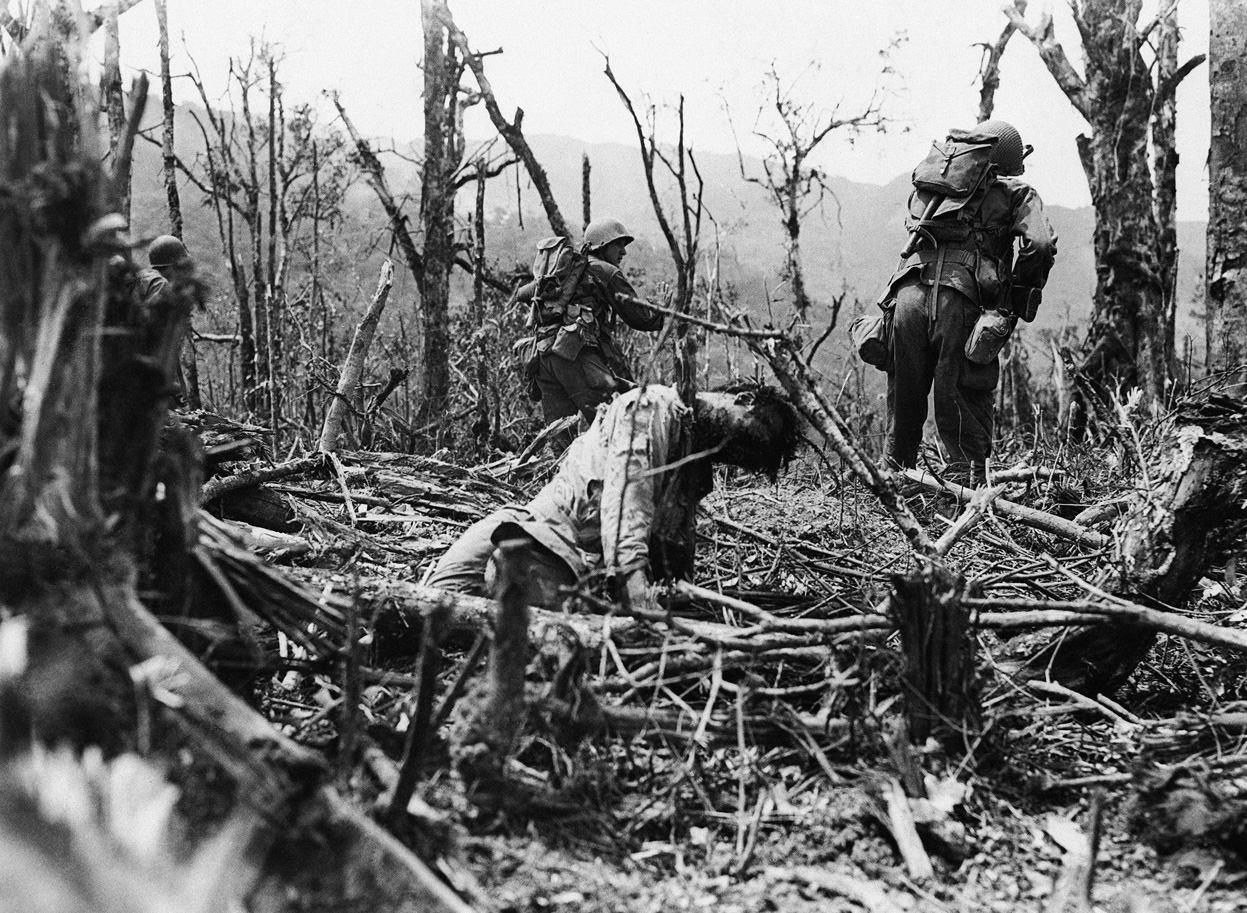
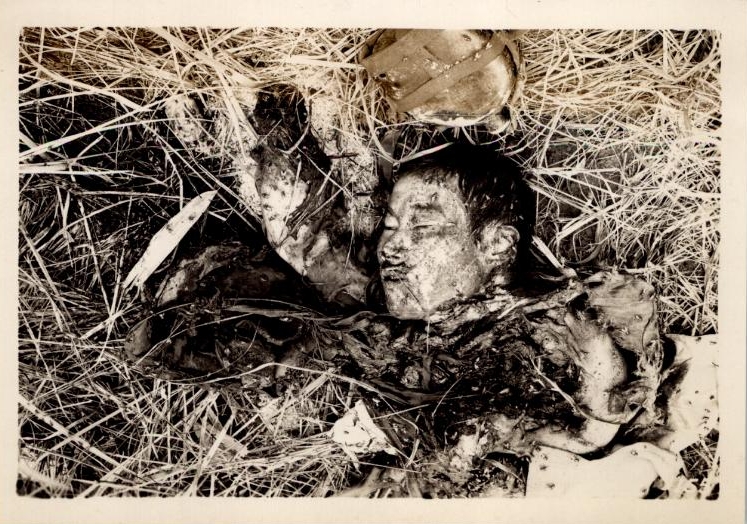
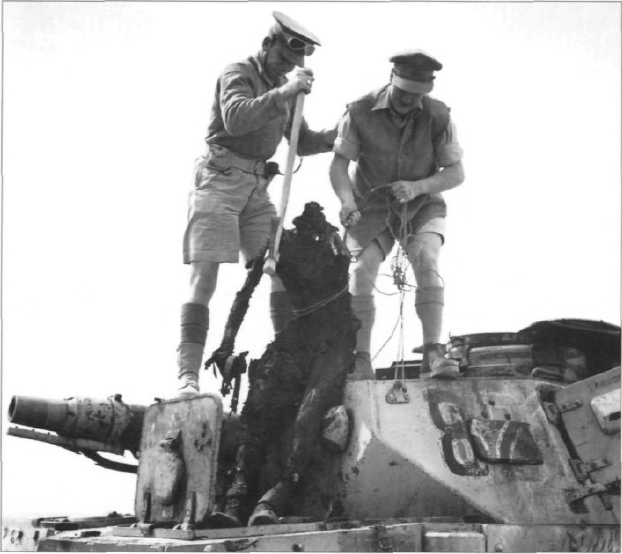
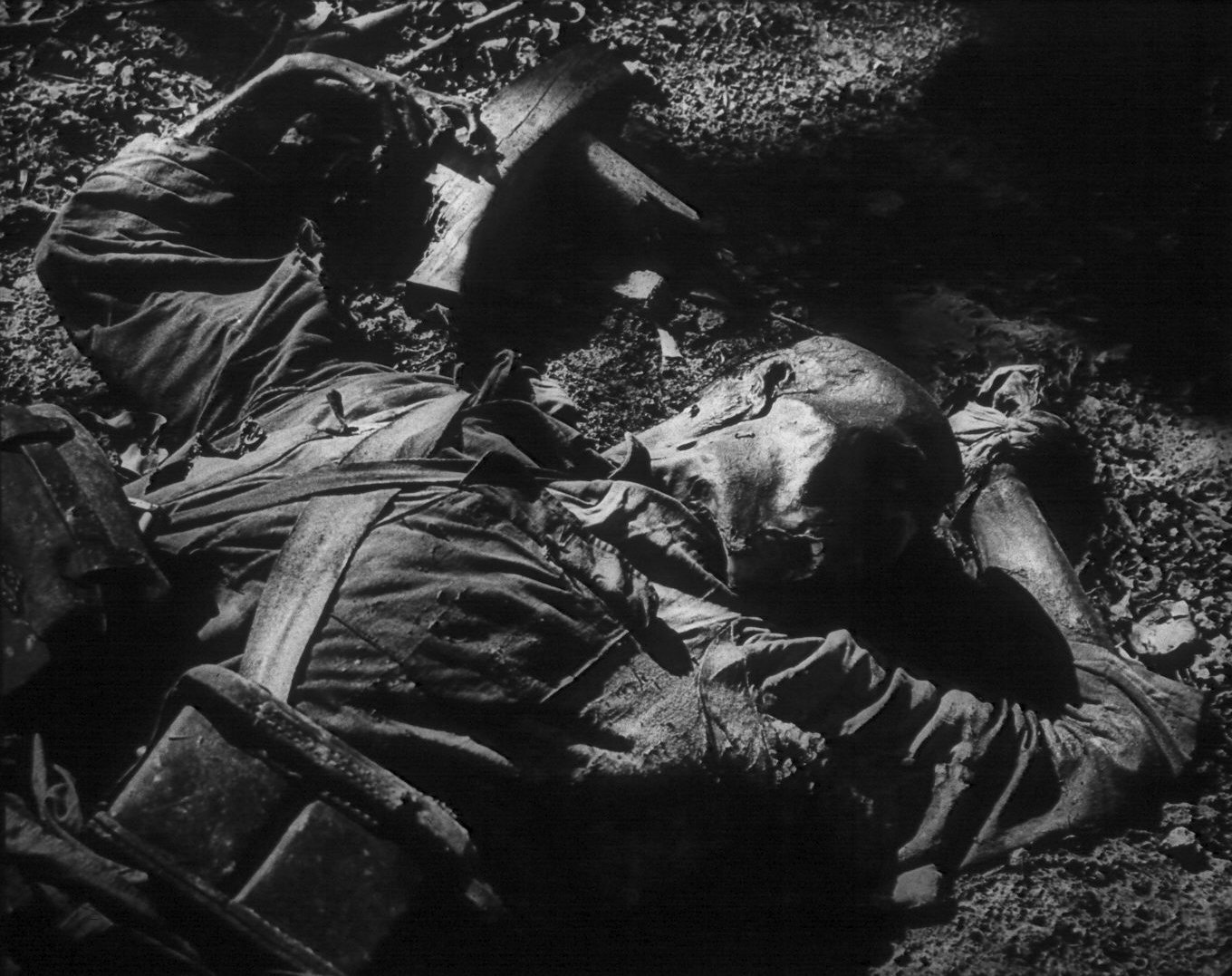
These next images, to be politically correct in today’s world, will be very upsetting to some so a warning to you…  But these must be seen to help comprehend why many combat veterans don’t want to talk about “it” and therefore, the difficulty in helping us answer, “What am I supposed to remember?”:

A frozen Nazi propped up like a road sign.
A dead and frozen Nazi is propped up like a road sign.
Non-chalant
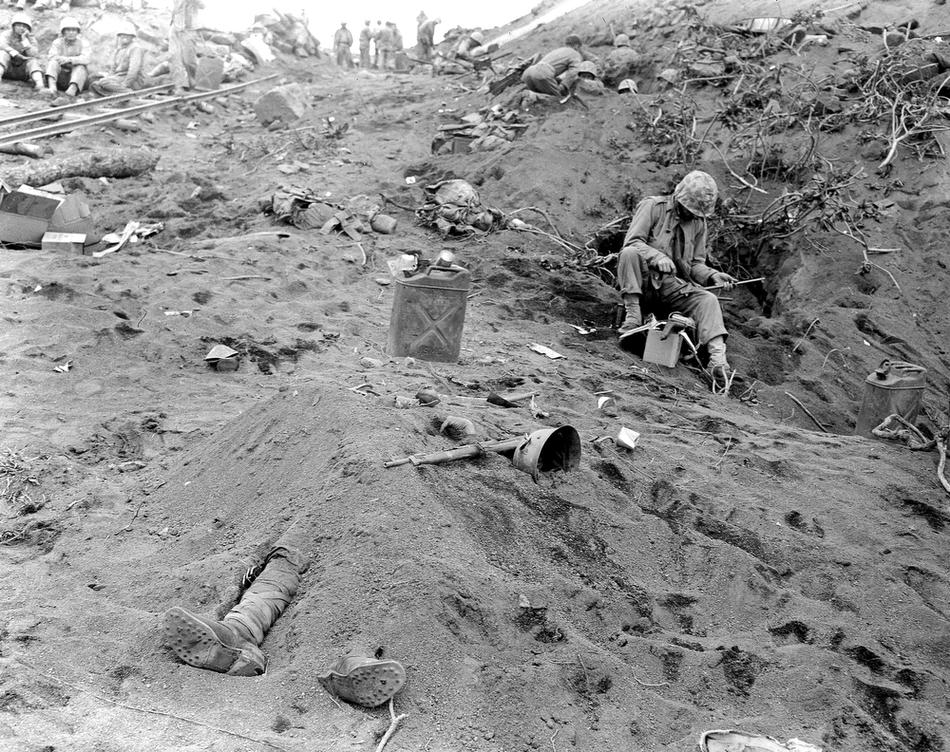
The booted feet of a dead Japanese soldier, foreground, and his hand protrude from beneath a mound of earth on Iwo Jima during the American invasion of the Japanese Volcano Island stronghold in 1945 in World War II. U.S. Marines can be seen nearby in foxholes. (AP Photo/Joe Rosenthal)
Perhaps this is similar to what Mr. Johnson saw during the Battle of Santa Cruz Islands and Guadalcanal where he was gravely wounded.  National Archives.
Perhaps this is similar to what Mr. Johnson saw during the Battle of Santa Cruz Islands and Guadalcanal where he was gravely wounded. Note the position of this dead sailor’s feet relative to his upper body. National Archives.
Okinawa
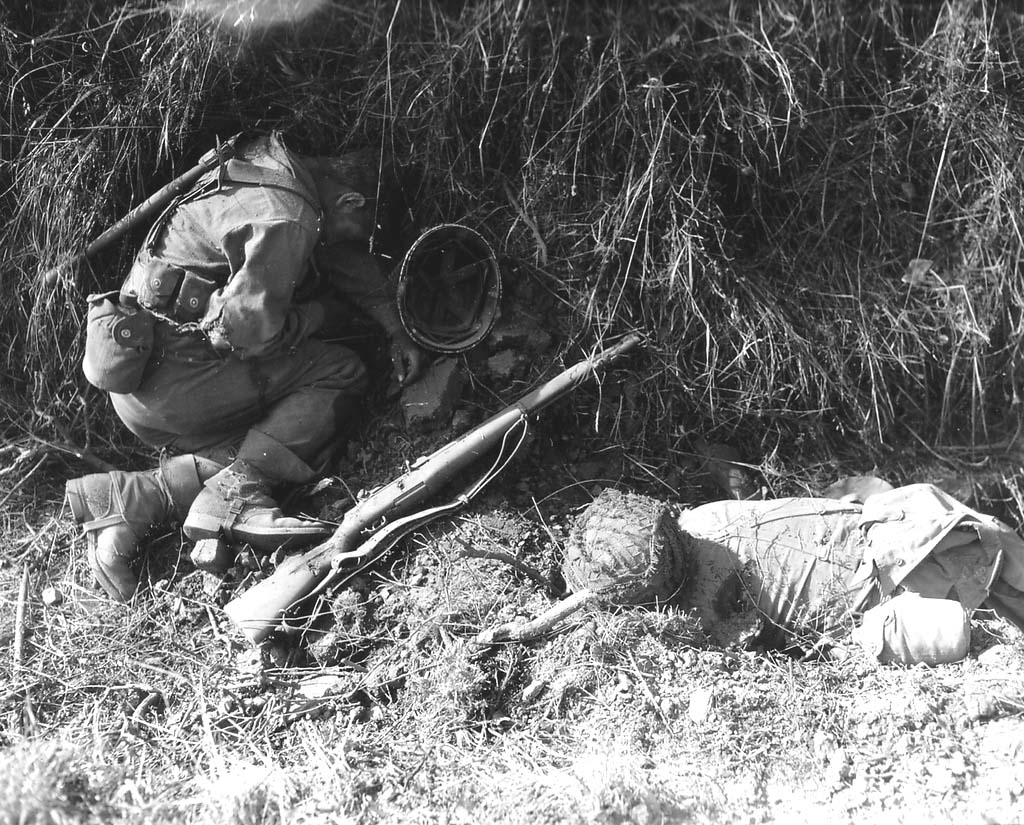
A US Army soldier lays as he died on Okinawa while the fighting continues around him. National Archives.
Dead Japanese soldier on Luzon, 1945. US Army photo archives.
Dismembered Japanese soldier on Luzon, 1945. US Army photo archives.
British military removing burned German corpse from knocked out tank. National Archives.
British military removing burned German corpse from knocked out Panzer IV tank. National Archives.
Dead Japanese soldier in advanced decomposition.  Perhaps this is what Old Man Jack tried to suppress in his recollection of "ID patrol".
Dead Japanese soldier in decomposition. Perhaps this is an example of what Old Man Jack tried to suppress in his recollection of his morbid experience in “ID patrol“.  US Marine Corps archives.
Two from the US Army 3rd Armored killed in action in France. National Archives.
j pilot
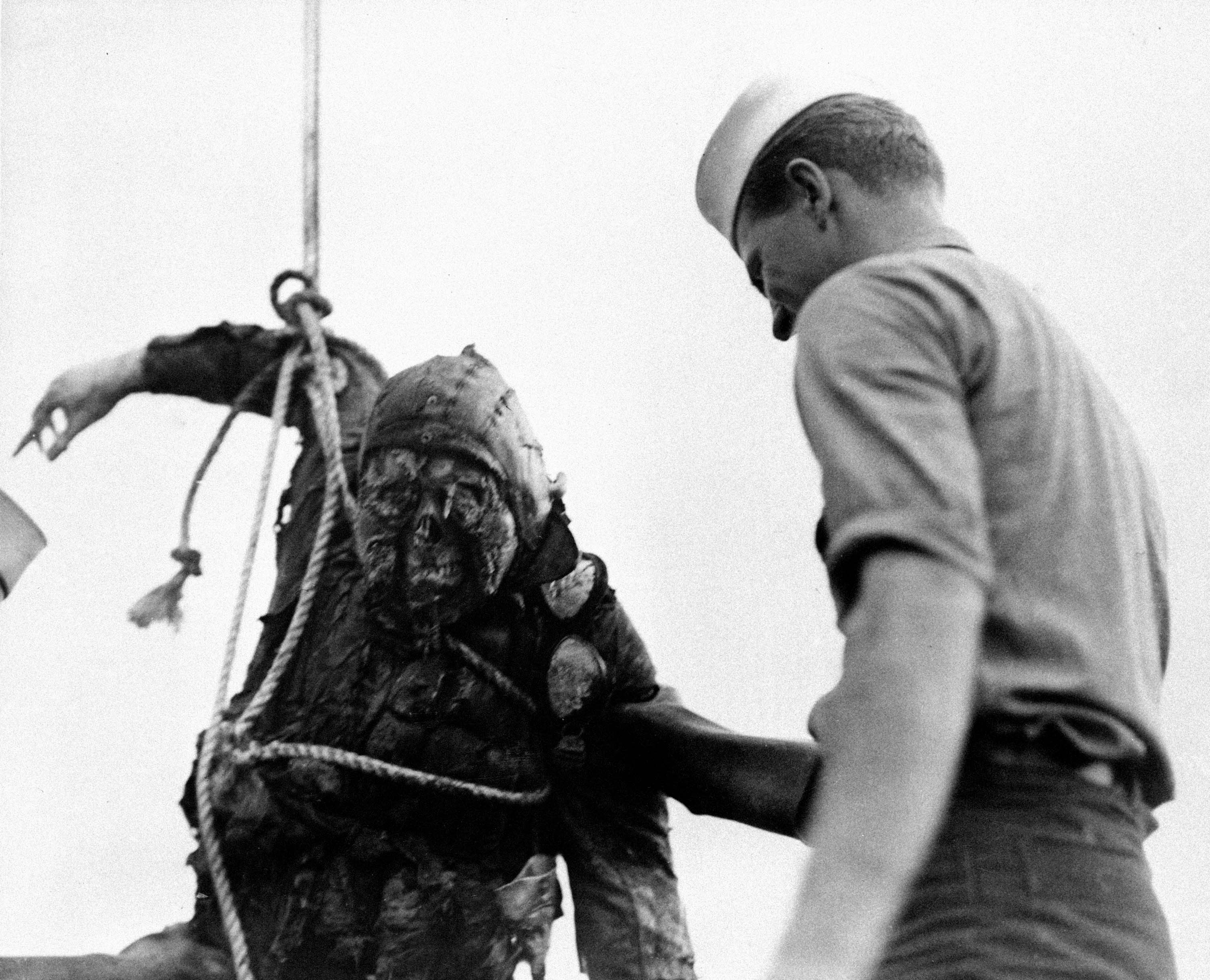
Dead Kamikaze pilot. Notice the rubber glove on the US sailor’s right hand.  US Navy.
flame
Dated March 3, 1944

Perhaps some of the other “it” they saw involved civilians.

russ fem
Records related to this photograph of a slain young Russian female indicate the photo was taken from a dead German’s wallet.
PolandDeadSister
A description that was attached to this photo state a young girl is led away from her sister who was just killed.  Notice the camera in the old man’s hand.  He also sports some kind of arm band.

_____________________________

So why these gruesome photos of carnage and violent death?

Are they REALLY necessary for you to see?

I believe so… and the preceding photos were relatively tame to be quite honest.  There are much more gruesome ones in private collections.  Old Man Jack had a collection but I only got a glimpse of ONE picture early in our relationship and it was of a severed Japanese head.  He never brought the photos out again.

But it’s important that Americans today understand “it” went to the hundreds of thousands of now silent US military graves… and “it” also remains tightly bottled up in the few surviving combat vets from WWII.

They have a right to keep “it” bottled up.  Vacuum sealed.  To keep their sanity although they relive and suffer horribly through “it” each night.

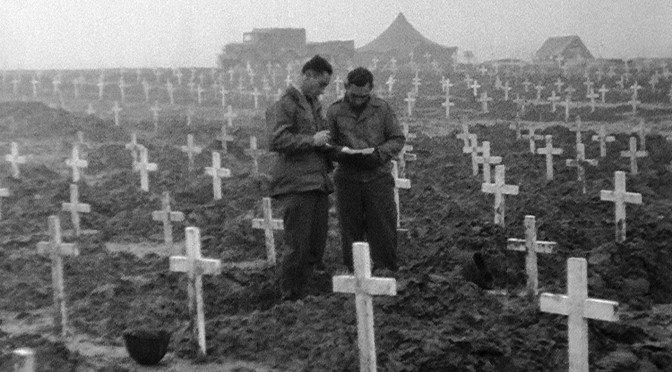
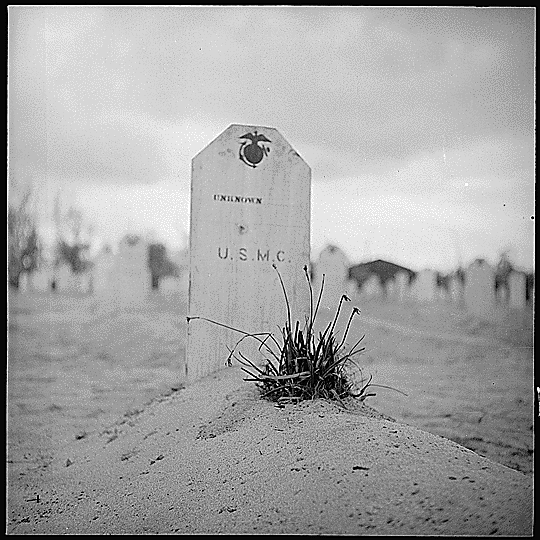
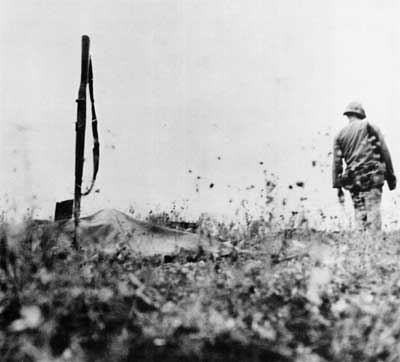
Field grave for an unknown US Marine.
Field grave for an unknown US Marine.  Some souls will never be identified.

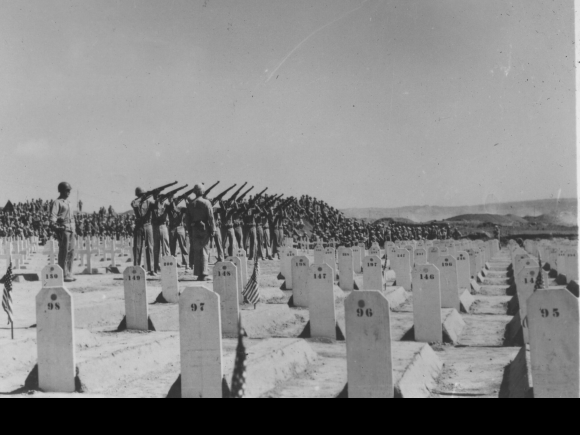
Thousands of graves on a “stinkin’ island”… all killed in action.

Iwo Jima
Iwo Jima.  US Marine Corps.
saipan burial
Saipan burial of a Marine killed in action.
French civilians erected this silent tribute to an American solider who has fallen in the crusade to liberate France. Carentan, France., 06/17/1944
French civilians erected this silent tribute to an unknown American solider who has fallen in the crusade to liberate France. Carentan, France., 06/17/1944
waves1
Some souls will never be found.
margrat
Somewhere in northern Europe.
iwo jima cem
Like this torn photograph of an Iwo Jima battlefield cemetery, memories of young boys who lost their lives so violently are fading away.

___________________________

Memorial Day.

To remember those killed.

But without seeing, understanding or accepting the horrible demise these young fighting men encountered ending their short lives, the true meaning of Memorial Day is lost.

It is not truly about the combat vets alive today or who passed away since war’s end…  but they sure the hell are part of it.  Those alive mightily grip a key to their secrets – preventing your entry into their private internal hell.

__________________________

I will remember this when I visit the graves of Old Man Jack and Mr. Johnson this Memorial Day and will think of their fallen comrades.

And I will thank them and their unnamed buddies when I enjoy my barbequed hamburger this Memorial Day weekend and a cigar.

They died for me.

So I could enjoy my hamburger and cigar.

And I shall

A final, short tribute to those resting in graves today:

Around the Corner


IMG_0733Memorial Day is around the corner…

What does it mean to you?

An Eight Decade Circle


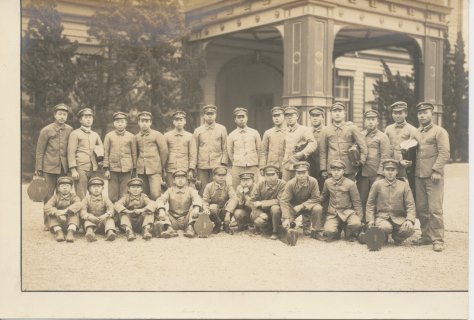
image0-014
Unretouched image of Uncle Suetaro’s band.

My father’s decades old story about how he broke his elbow became the topic in the earlier story, “正覚時” (Shoukakuji).

Shoukakuji is the name of the Buddhist temple – a hop, skip and a jump from my father’s family home in Hiroshima.

Temple entrance.  My father's home is behind me and to the right.
Temple entrance. My father’s home is behind me and to the right.

The temple’s reverends supported my family’s religious needs for over a century now.

Aunt Michie’s wedding.

Funeral services for my grandparents and my father’s siblings.  Including my Aunt Shiz just this last September in “The Spirit of Aunt Shiz and Kharma“.

Including my Uncle Suetaro who was killed in action as an Imperial Japanese Army soldier on Leyte in the Philippines.

____________________________

When Masako-san, my son Takeshi and I walked to the temple in 2013 to investigate my dad’s story of how he broke his elbow, we were greeted by the Reverend.  He was 90 years old and still had his wits about him.

While he did not recollect my father, he validated the placement of a large round rock under the pine tree that hasn’t been touched for as long as he’s lived at the temple…. And that’s a loooong time.  I’m sure he was born there.
And that there was a big branch of a pine tree that has since broken off recently.

He said he knew my Aunt Mieko who died in 1939.

And miraculously, he mentioned Uncle Suetaro.  The reverend said they played together as children and that he was always a jokester and smiling…and that he could hear him playing his “fue”, or flute, from his second story room at the house.

Until then, not even Masako-san knew Uncle Suetaro played a flute…but there was no proof.

Just the recollection of a 90 year old reverend.

____________________________

My tennis elbow pain kept me from retouching the old vintage photographs I had brought back from Hiroshima last September.

And the project was at a standstill since late October.  That was as depressing as Obama V2.0.

But from three weeks ago, I am attempting to slowly restart the retouching project as my elbow pain has subsided greatly…and I came across the group photo you saw at the beginning here.

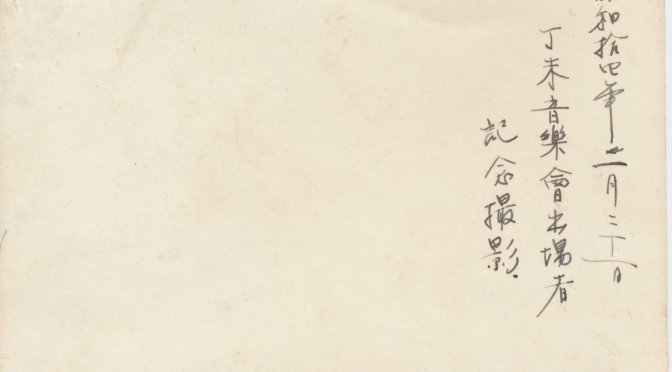
This was the backside since I know you ALL can read ancient Japanese:

image0-014back
Written by Uncle Suetaro himself.  I believe – BELIEVE – it says, “February 21, 1939. Performed for First Sino-Japanese War anniversary.”

As retouched:

image0-014retouched
As retouched. Uncle Suetaro is the slightly taller one just to the left of center.  If you click on the image, it will enlarge.  Look in his right hand.

But as I enlarged the image to begin retouching, something caught my (old) eye.

I noticed Uncle Suetaro was clutching something in his right hand.

A case.

A case more slender than the others in the group picture.

It’s not a trumpet or a trombone, that’s for sure.

Or for a cue stick.

It sure looks like a flute case.

Oh, heck.  It IS a flute case.

I say so.

_______________________________

So words from the mouth of an old reverend started an eighty year old circle… to this vintage photograph of young boys.

All of whom likely lost their lives in a violent war.

As did my uncle who played a flute.

My “Top Ten” Reasons Why Japan Lost the Pacific War…so Quickly


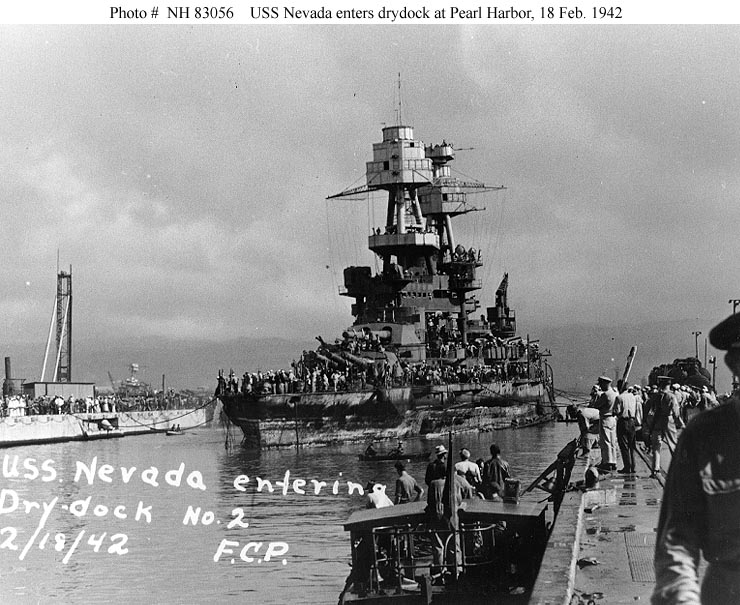
USS Nevada

OK.  Relatively speaking.  “Quickly”.

But we’ve been “at war” against terrorism – both foreign and now domestic – since 2001.  More than 11 years.

But the war against Japan started officially for us on December 7, 1941.  We were caught flat-footed.

Yet it was over by August 15, 1945.

Incredible.  In 3 years, 8 months, 8 days.  How could that have happened so quickly (relatively speaking)?  Have you ever thought of this timeline?

________________________

Well, I have removed my Kevlar flak vest for all you bloggers who love history – and who are immensely more versed and intelligent than I…or is it me?

Below herein is my “Top Ten” list of the reasons why Japan lost the Pacific War…so quickly.

I’d like to hear your opinions, corrections, or teachings.

Hunting season is open.  Rubber bullets are most suitable.

_______________________________

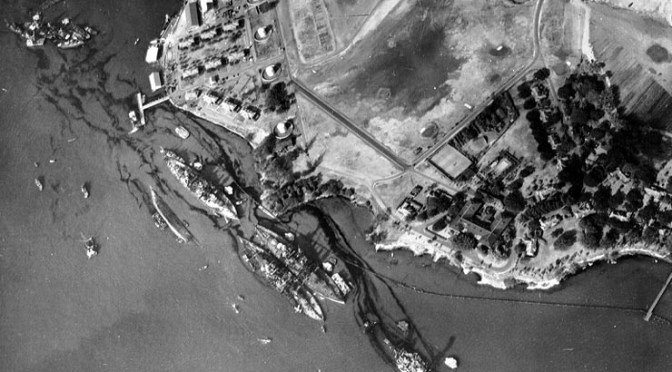
Damage from overhead – Pearl Harbor aftermath

1. Long Range Failure of Pearl Harbor Attack

a. Admiral Nagumo – placed in charge of the attack force by the Japanese Imperial Navy and NOT by Admiral Yamamoto –  failed to fully execute the direct orders issued to him by Yamamoto.

b. Attack plans skewed towards sinking of carriers (which were not there). Genda wanted to insure carriers were sent to bottom and therefore be unsalvageable. Because our carriers were not there, pilots overly concentrated on battleships or other less tactically important ships.

c. The ordnance used by the attacking Japanese was inappropriate for sinking battleships.  Besides, Pearl Harbor is way to shallow to allow for “sinking to the bottom of the ocean,” so to speak.

d. The first wave of Japanese torpedo bombers – although a complete tactical surprise – was a dismal failure with very few hits.

e. Failed to destroy dry docks and fuel dumps (Hawaii is an island country and had to import all fuel…like Japan).  Although there is the fog of battle, Nagumo (overly cautious) did not heed the strong advice from Fuchida who urged a third wave just for such purpose.

f. In light of “e” above, Yamamoto himself had one weakness: he did not see his submarine force has an OFFENSIVE weapon.  He failed to deploy them between Pearl Harbor and the West Coast of the US to target supply ships – which would have been carrying fuel, materiel and supplies to rebuild Pearl Harbor.

g. Nearly all ships damaged by the attack were refloated.

h. Insufficient training by Japanese Navy in preparation for attack.

i. Lastly – and for some foolish reason – they attacked on a Sunday morning.

2. Breaking of the Japanese Naval Code and the failure of the Japanese to accept it was broken.

3. 24-hour Repair of USS Yorktown after Coral Sea in Preparation for Battle of Midway.

USS Yorktown afire
USS Yorktown afire

4. Innovation of US Navy to Use CO2 for Fire Suppression.

a. US Navy would flood fuel tanks on ships with carbon dioxide thereby displacing oxygen before battle.

b. Japanese ships had useless fire suppression systems with fuel right alongside ordnance.

5. Innovation of Rubber-lined Fuel Tanks and Armor Protection for Pilots on US Aircraft

An example of the advantage of self-sealing fuel tanks and armoring.
An example of  survivability with self-sealing fuel tanks and armoring.  F6F Hellcat.

a. “Self-sealing tanks” in wings.

b. Impressive armor shielding for the pilot (especially in the Grumman F6F Hellcat).

c. Japanese planes had neither, leading to insurmountable casualties and easy shoot-downs, i.e., Japanese aircraft would “flame” or disintegrate under withering fire from .50 caliber guns.

Japanese planes did not have self-sealing fuel tanks

6. Battle of Midway

a. Huge tactical gamble by Nimitz in usage of Spruance as task force commander.

b. Tactical decision to launch torpedo planes early on by Spruance. While all but one pilot perished and no torpedoes hit, Mitsubishi Zeroes assigned to combat air patrol were at low altitudes since they shot down the torpedo planes.

c. Dauntless dive bombers (with US fighter cover) were able to dive relatively uncontested and caught Nagumo between launchings with ordnance scattered about.

d. Confusion by Japanese pilots that two US carriers were sunk. In actuality and while eventually sunk, the USS Yorktown had been hit in the first wave but the fires had been put out before the second wave attacked.

e. With the sinking of four Japanese carriers (see Fire Suppression above) and loss of valuable pilots, the Japanese Navy ceased to be an offensive force.

7. Production Might of the US

a. We had eight carriers at time of Pearl Harbor (in the Pacific and the Atlantic) but were down to two after the Battle of Midway.

b. We lost the Wasp, Hornet, Lexington and Yorktown by then.

c. The USS Enterprise was the last operational carrier. The “other” carrier, the USS Langley, was used only for training purposes and was out in the Atlantic.

d. By the time of the invasion of Okinawa in 1945, however, we had over 40 carriers as part of the assault fleet alone.

8. Semi-automatic M1 Garand rifle and the M-2 Flamethrower

a. Japanese military were burdened with reliable but bolt action Arisaka or failure-prone Nambu armaments.  (Bolt-action implies the shooter must lower his rifle to load the next round and then re-sight.)

b. The M-1 Garand took an eight-round clip.  The round had tremendous stopping power, was rugged and a rifle squad could lay down withering fire with the semi-automatic.  The shooter did not have to lower his rifle to load the next round and re-sight.

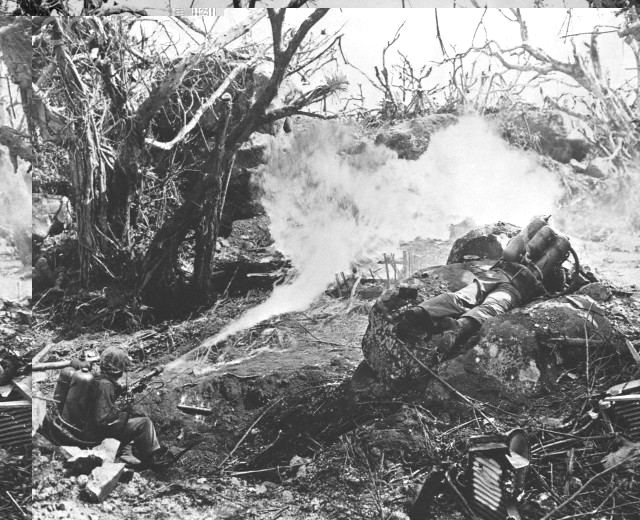
c. On Iwo Jima and other island battles, the Japanese were rarely seen. As such, the flamethrower was critical for success although accompanied by high mortality rates.

Marines carry the M1 Garand into battle at Tarawa Nov 1943
Marines Using Flame Thrower on Iwo Jima
US Marines using M-2 flamethrower against entrenched enemy on Iwo Jima

9. The Japanese-American (or “Nisei”) Soldiers in the Top Secret Military Intelligence Service (MIS)

Two of the Nisei secretly attached to Merrill's Marauders plan with General Stillwell.
Two of the Nisei secretly attached to Merrill’s Marauders plan with General Stillwell.

a. MIS secretly accompanied Marines and soldiers for every Pacific Theater amphibious assault or parachuted in with Airborne troops.

b. Nisei’s were the actual soldiers that listened in on Japanese Navy radio transmissions and NOT US Navy personnel. One transmission disclosed details on Admiral Yamamoto’s flight schedule which led to his shootdown.

c. Quickly translated captured major Japanese battle plans for Leyte Gulf (Z-Plan) and allowed for the lop-sided victory at the “Great Marianas Turkey Shoot”.

d. The invaluable intel provided by the MIS proved to the (generally unsupportive) top echelon that the Japanese military was near operational collapse in many combat areas.

10. The US Marine Corps

Marine catches up to comrades after covering fallen buddy with tarp and marking it with his M-1

____________________________

OK.  So what about the B-29’s or the atomic bombs/fire bombings?  Aren’t they some of the reasons Japan lost the Pacific War?

No.  Not in my humble opinion.

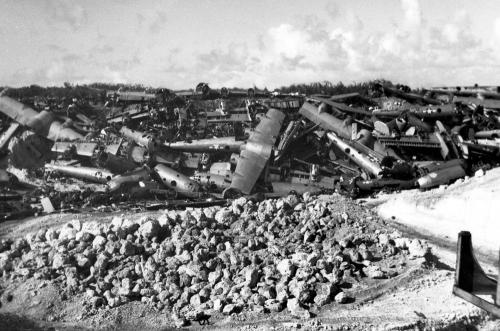
Tinian
B-29 boneyard, Tinian

Historical facts will show that the B-29s were largely ineffective until the time LeMay unleashed the firebombing campaign on March 9, 1945.  The first B-29s were deployed out of India and China in the summer of 1944.  For the first missions, about 20% failed to reach their target due largely to mechanical trouble.  Of the approximately 80% that made it to target, only a couple of bombs actually hit target.  Therefore, ineffective results.

Their engines were also prone to overheating in flight.  Criminy.

As for the firebombings/atomic bombings, it is my opinion Japan had already lost the Pacific War due to the ten summarized reasons above.  Intelligence obtained by the US Army MIS Nisei’s like my dad’s predecessors support that conclusion.  When the Nisei interrogated Japanese prisoners at the front lines, it was clear they were nearly without food, water, medical supplies or ammunition.   Their morale was also devastated.  For instance, Japanese soldiers that surrendered would say, “We were terrified.  For every mortar round we would fire at the Marines, ten rounds would come back.”  The Japanese needed to make every round count; the Americans didn’t.

Japanese soldiers – dead, wounded or captured – would have uncensored letters from home on their person.  After the Nisei translated those letters on the battlefront, they disclosed that their families, too, were without much food or water…and that morale was extremely low.

____________________________

So some Greek dude said centuries ago that, “In war, truth is the first casualty.”

Pretty smart.  But that applies even today – and certainly during World War II.

We were raised with certain textbooks for our history classes.  We believed in them.  We had no reason not to.

But the truth is, there are many versions of history.  Factual versions.  Incorrect versions.  Factual versions “edited” by the victors.  Factual versions written by the losers.  And new versions.  And versions to further patriotism.

But there is one thing for sure…  Said by one of the most brilliant minds this world has known:

“I do not know with what weapons World War III will be fought, but World War IV will be fought with sticks and stones.”

ALBERT EINSTEIN