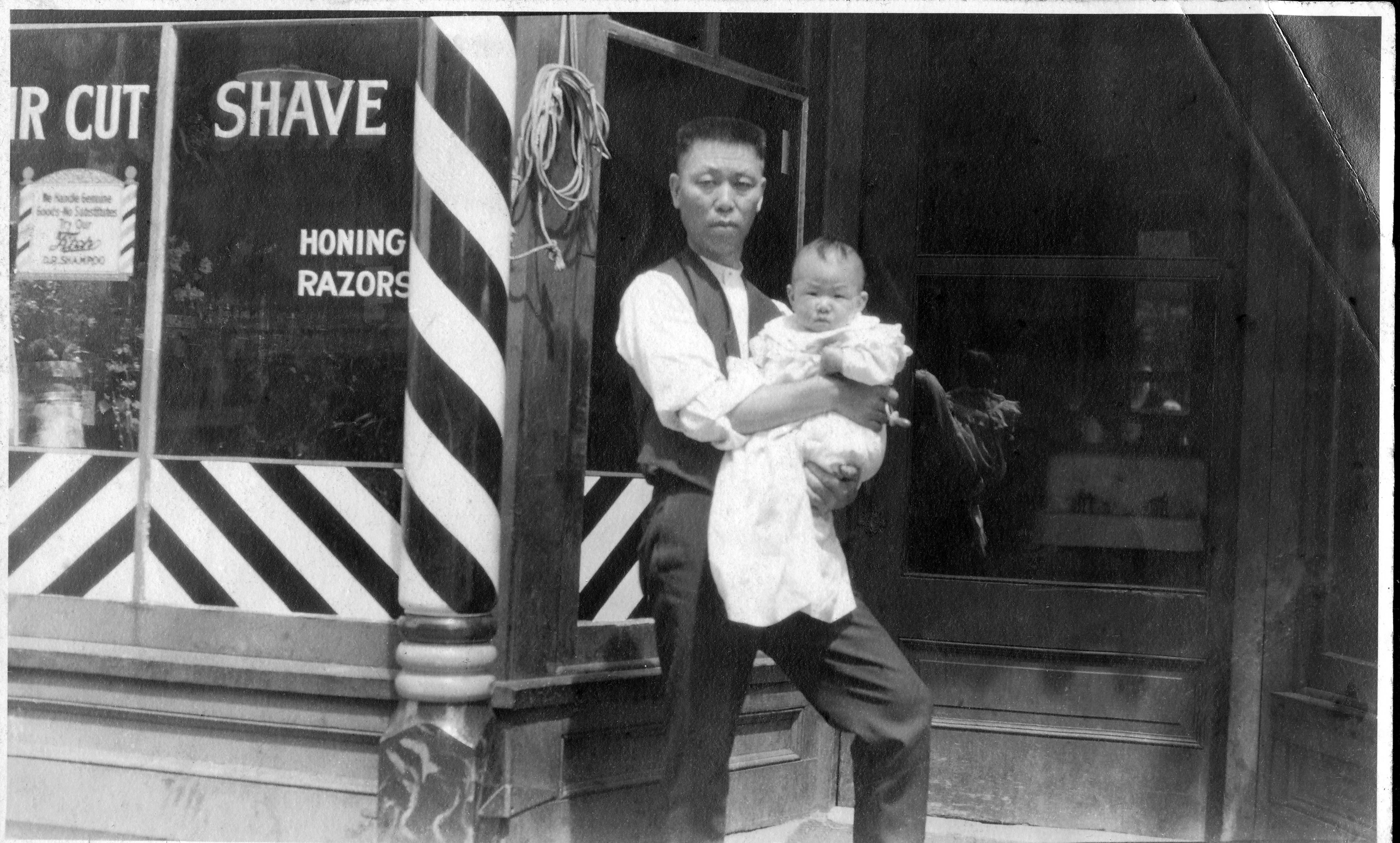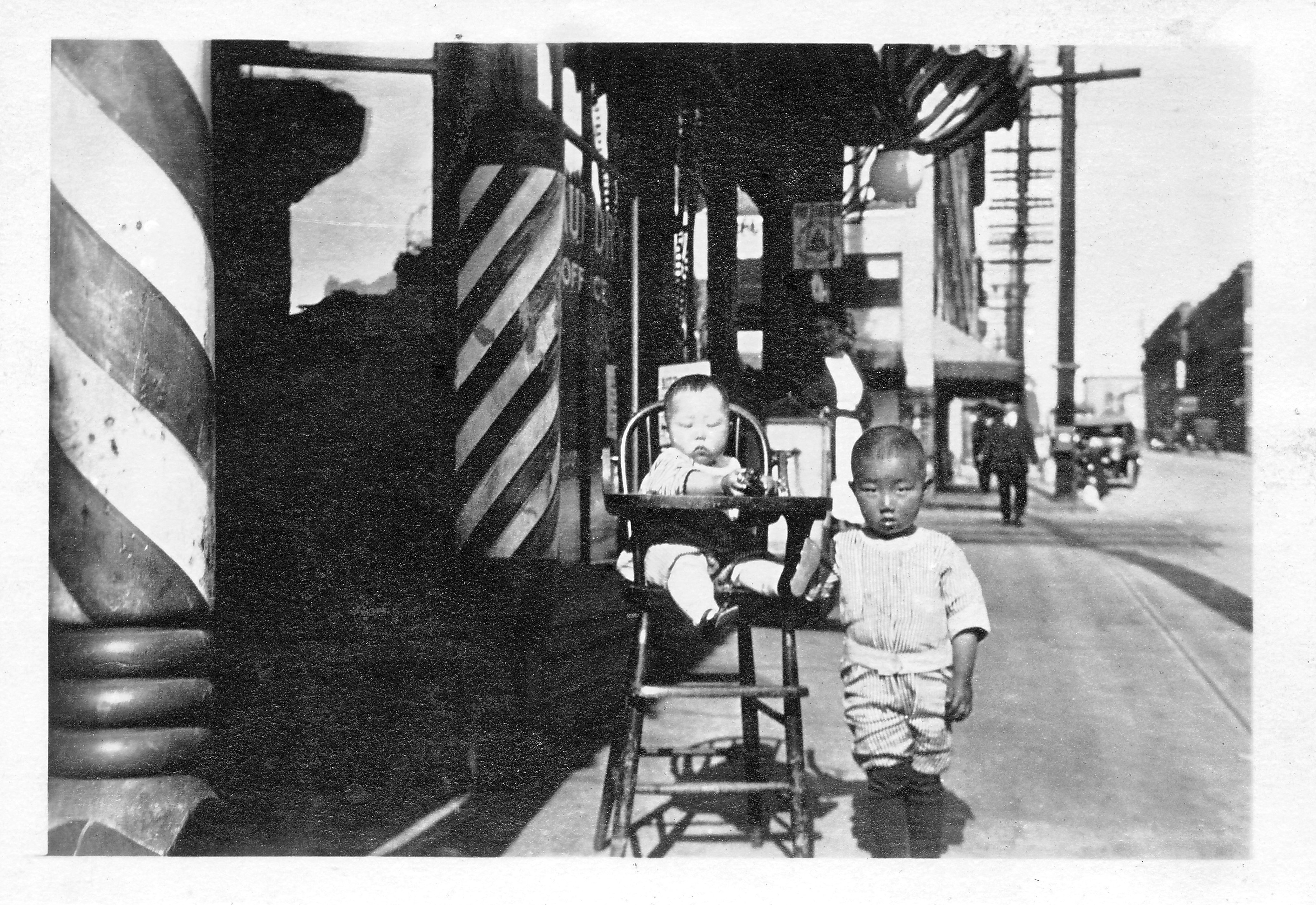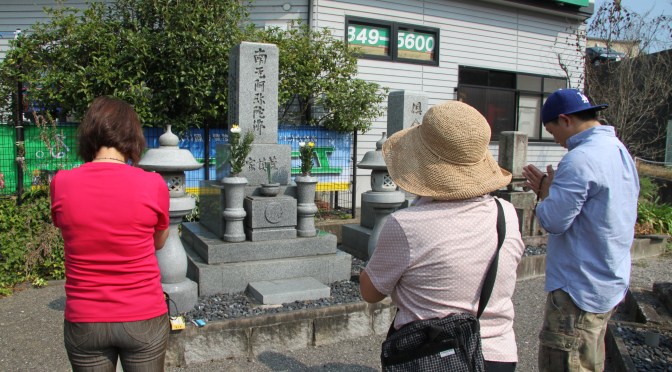
Category Archives: Hiroshima

The Pain of Survival and Aunt Michie – Part 5


japansurrender88
A rare photograph taken after listening to the Emperor’s surrender speech, August 15, 1945. There was a coup attempt the night before the speech was broadcast.

Although the violence of World War II was nearing an end, other aspects of the war could continue against Japanese civilians for years to come.

Their infrastructure was gone.  Essential assets such as manufacturing plants, machinery, trains, roads, housing, utilities, even fishing boats had been destroyed.

And most of all, food.

And Aunt Michie’s dignity – the entire family’s dignity – will continue to be tested until the late 1940’s.

____________________________
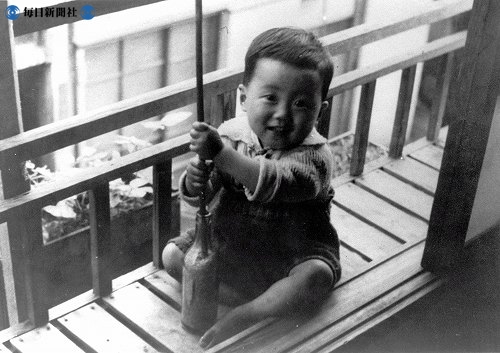
boy genmai mainichi
Dated April 1943. A boy poses holding a stick in a bottle filled with unpolished brown rice. This is not the polished brown rice you eat today at Panda Express. It was more wild. Japanese would insert a stick into a bottle partially filled with brown rice then repeatedly jab at the rice until the husk came off. It was low grade rice with the germ still on. (From the Mainichi Shimbun archives.)

For eons, Japan has been unable to produce enough rice for their people let alone food.  In fact, it was not until about the time Japan hosted the 1964 Olympics that Japan could produce enough rice for themselves.

The war took a terrible toll on regular folks from getting their “rice fix” – they were just not able to eat it.  This deprived them savoring it, the mental and biological satisfaction of just eating it.  Think of it this way – what if not just bread itself was kept from you but also the sweet smell of the freshly baked bread with the perfect crust..with melting butter?  Talk about attacks on your psyche: deprivation.  Deprivation for years.  Prolonged sensual deprivation makes for huge changes in one’s outlook on life.

Like the photo of the little boy, millions of civilians would acquire a wild form of brown rice (玄米 genmai) and de-husk them as shown.  Along with barley, it served as a substitute for the flavorful white rice with the higher calories.

_____________________________

Confronted by not only the absence of medical supplies, Aunt Michie’s house was now filled with 23 men, women and children with varying degrees of burns.  I doubt emergency rooms could handle such a sudden load of burn victims… but Michie’s family did.  On top of that, her house was damaged by the atomic bomb’s shockwave.  It pains me to even see in my mind what they had to do to make the house habitable enough so quickly to nurse the injured.

It was mayhem and Michie personally did not ask for this horrific situation… but now, on top of trying to provide medical care for 23 people, she was confronted with one ominous problem: how to feed them all.  There was no food left in the city of Hiroshima and it was just over the hill.  And any food left in the village of Tomo was fresh.  It would spoil quickly anyways in the heat as there was no refrigeration.  No supermarket.  No canned goods either.

She did as Aunt Michie only could.  She used her precious reserve of rice and only served it to the ailing victims.  I am sure she believed that would be the only way to truly help them survive as all of them were malnourished.  As a result of rationing the remaining rice to the victims, her own children who weren’t physically injured were delegated to survive on cooked pumpkins, stems, stalks or taro roots for the duration.

A huge, gut wrenching decision for Aunt Michie, I’m sure.
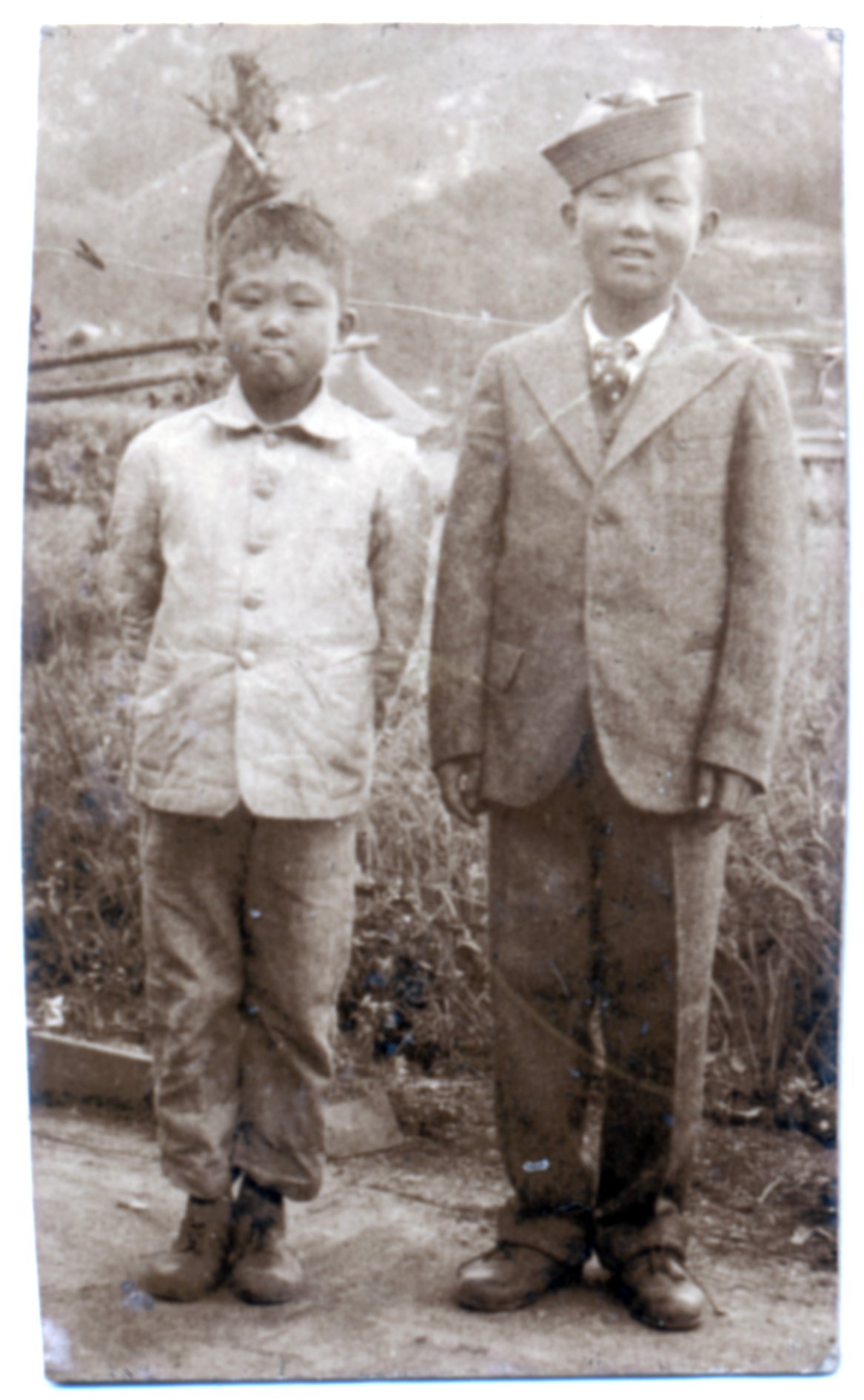
image0-012
Some of the wild grass or other vegetation boiled for emergency eating can be seen behind my father and Uncle Suetaro. Hiroshima, circa 1929. Copyright Koji Kanemoto

To help this dire situation, the Hiroshima aunt who was not badly injured went about the area with Mikizo’s parents scavenging for wild grass and other vegetation to boil.  That, too, became part of their food.  Although likely not very nutritious to say the least, there was no other alternative.  And it is important to note such wild vegetation they boiled or ate had been subjected to the black rain…

What do you have in your yard?

Perhaps you can somewhat understand why my cousin Masako thought Spam was the most delicious thing she ever ate.

____________________________

In spite of all Aunt Michie could do, my cousins tell me some of the burn victims’ injuries wouldn’t heal.  They had worsened.  Their wounds began to fester or decay for lack of a better description.  Pus formed.  There was nothing they could do.

The odor of the decaying flesh permeated out of the house.  They say you could smell it from the dirt road immediately outside.

It became so intense that people would hold their noses to scurry past the house.

None of my cousins who were there tell me they will ever forget that vulgar smell of rotting flesh… or death.  Never.

Just like Old Man Jack.

___________________________

IMG_5861
From Aunt Michie clockwise: Aunt Michie (holding Kiyoshi), Namie, Mikizo’s father, Masataka, Sadako, Masako, Mikizo and Mikizo’s mother. Taken in 1948 at their farmhouse where they cared for 23 victims. Courtesy of Kiyoshi Aramaki.

My cousins tell me some didn’t make it.

Others would pass away in the next couple of years from the effects of their injuries or radiation.

Nevertheless, the struggle for food and other essentials would continue…but my Aunt Michie’s immediate family survived.  Even Tomiko who was in Hiroshima proper.

And Aunt Michie’s dignity and strength reigned supreme.

They all made it to tomorrow.

__________________________

The surrender documents were signed by Emperor Hirohito’s representatives aboard the USS Missouri on September 2, 1945.

Unbelievably, Mikizo also survived the war.  Although taken prisoner upon Japan’s surrender as a soldier in the Imperial Japanese Army, he was released from Manchuria and allowed to return to his Hiroshima farm in late 1946.

To be continued in Part 6….

The Pain of Survival and Aunt Michie – Part 4


You can hardly tell this is a young girl anymore. As Masako and Mr. Tsukamoto told me, they were walking dead. Flesh literally melted off their bodies and dangled. Grotesque forms which were once human beings.

The aftermath of the bombing was no different from hell.  Not that I’ve seen hell nor that I would want to…

But Aunt Michie and my very young cousins saw it.

They visited hell.

_____________________________

a-bomb1
Atomic bomb survivors. Perhaps this is what Aunt Michie and her cousins saw in their search for relatives on the other side of the hill. If you notice the flask the young girl is holding to her lips.  It was likely filled with radioactive water.

Nearly all doctors and nurses within the city had been killed or seriously wounded on August 6, 1945.  If they survived the blast, they were likely to fall ill from radiation poisoning and they themselves would die within days.  All remaining medical supplies – which had been nearly non-existent due to the war – had been destroyed as well.  Most food – even unpicked fruits or vegetables – were contaminated with radiation as was water(¹).  Thousands of corpses plugged the rivers as they would go in to soothe their burns but would soon perish.

It is important to note that food rationing in Japan was much more extreme than what was imposed on the American public.  While the rationing in America began in May 1942, it started with just coffee and sugar.  In Japan, rationing of a far more extensive reach began in 1939 if not earlier.  It extended to nearly all first quality food stuffs.  Rice, barley, seafood, meat, soy bean paste and soy sauce, vegetables, fruit, seafood, etc.  Groups called “tonari-gumi” were established in villages and the like; they monitored and rationed food to the Japanese families based on what work they were doing, e.g., war production, number of family members along with their age and sex.  The rationing was so severe that when one family member died, the family did not report it.  The average caloric daily intake was cut down to less than 2,000 a day by 1945.

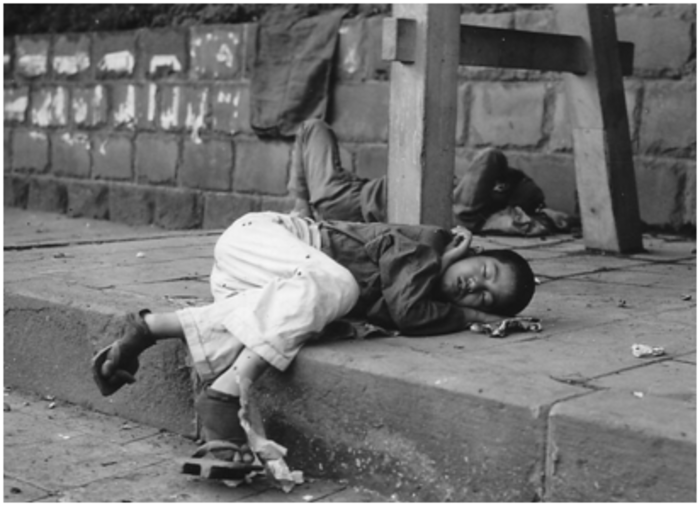
homeless_orphan_in_postwar_tokyo
Homeless orphan in Tokyo. He would have to be determined if he was to survive.

The Japanese civilians were starving, so to speak, and were without question malnourished.

Aunt Michie was no different.  She was hungry like everyone else and likely tired easily due to low nutritional intake and daily physical and emotional demands upon her.  It is important to have an understanding of her condition at this crucial moment in history.

________________________________

2-sadako1
Sadako – taken in early 1948 by my father while on furlough. She would marry a distant cousin (common cultural practice at that time) who was also badly burned in the atomic explosion.  She is wearing clothing my father bought for her at the Tokyo PX.

After the shock and black rain subsided, Aunt Michie’s thoughts immediately went to her treasured family.  According to my cousins, she went into her priceless family rice reserves and cooked real rice for the children.  Sadako, the second oldest, remembers to this day how she savored that bowl of rice, a definite luxury at that time.  While but a child of ten years and filled with anxiety about eating such a fine meal, she saw at that moment her mother’s love and affection for them was unconditional.

Aunt Michie’s thoughts went to the Aramaki family (aunt and uncle’s family) who lived in Hiroshima.  She had no way of knowing that day but they had become direct victims of the atomic bombing.  They had been burned over most of their bodies and had even been trapped under their destroyed house.  They managed to struggle with their searing injuries to Aunt Michie’s house to seek refuge and care.  They had realized that only strong family support would allow them to live.

Grotesquely, the path going over the 300 meter high hill which the relatives traveled became littered with scores of dead people.  Masako said they were unrecognizable lumps of flesh and died where they crumpled.  Many had their clothes burned away.  While thousands were killed instantly, other thousands suffered for days before dying from intense burns, radioactive poisoning and other injuries.  As radiation poisoning was unheard of amongst them, some were told they had dysentery and the like.  Many before dying oozed pus from their ears and blood ran from their noses.  You will not read this in any Western textbook.  In fact, the gruesome information about the days, months and years after August 6th was suppressed for a couple of decades by both governments.

While the dazed and immensely pained adults struggled to Michie’s farm, there were young children of the family unaccounted for(²).  Without hesitation and unbelievably, Aunt Michie – in her weakened state – pulled a two wheel cart over the hill to Hiroshima to look for them.

Over a hill.

大八車
I believe this to be the type of cart Aunt Michie pulled to Hiroshima to look for the unaccounted for children of the family. Kiyoshi called it a 大八車, or large two wheeled wooden cart.

Miraculously and while the details are lost, she found some of them and hauled them back to the farm on the cart, now laden with the additional weight of the children…  on the same road that was further littered with dead and dying people.  Think of the mental anguish Michie had to endure when dying people came up to her and asked for her help…  It would be difficult to not look at them.  It was more difficult to ignore them, I’m sure.

According to my cousins, a total of 23 people got refuge and care at Aunt Michie’s farm.  I understand many were relatives from the Aramaki side of the family.

There were more hurdles for Michie and her children immediately ahead – caring for the injured and dying.

_____________________________

526
You can tell which way this woman was facing when the bomb went off. Her left side is burned. Photo was likely taken after August 6, 1945.
Caring for Victim of Hiroshima Bombing
A mother looks after her child. This photo was also likely taken after August 6, 1945.
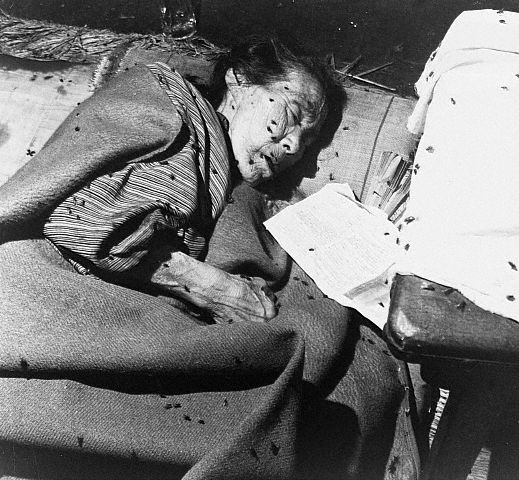
Victim of Hiroshima Bombing
An elderly woman lies dying on the floor covered with flies. Perhaps this is just one of the sickening sights Michie and her children have buried in their conscious.

The preceding photographs may show what Michie and the children were faced with.  And the children were just that – children.

How old are your children, by the way?

The older cousins recall that they, Michie, Mikizo’s parents and the less injured relatives took on a 24 hour a day field hospital of sorts to treat the injured.  It was stifling hot and humid; yet, they had to be given constant attention and there were so many of them.  I cannot imagine how exhausting this task could have been, especially when you are hungry and malnourished yourself.

pattern
Taken sometime after August 6, 1945. The side of her you see is what had faced the atomic explosion. The patterns are from her clothing she wore that day. It was where the dark patterns of her clothing had been in contact with her skin. Masako recalls vividly this type of pattern among the burn victims and that the maggots followed that pattern.

The common injury were burns.  Severe burns…and they had no medicine whatsoever.(³)  No Bactine.  No Motrin.  No aloe.  All Michie could do was to coat the burns with a type of cooking oil and bandage them with pieces of cloth.  She must have endured unlimited anguish in knowing she could not measurably lessen their pain and suffering.  There must have been constant crying and unbearable moans of pain.

And on their hands, blood from human beings.

3-namie1
Namie – taken in early 1948 by my father while on furlough.

Six year old Namie could never forget what she had to do.  Flies were swarming having sensed dying flesh.  Namie was tasked with shooing them away with a fan but they wouldn’t stay away.  And worse yet – time and time again, she had to remove the maggots that were feeding on dead flesh…with chopsticks.  I do not know if I could have done that…but Namie did.

The turmoil that must have stormed inside Aunt Michie to tell her daughters to do what they had to do for the sake of survival…and then to be stern with them and tell them to continue when they wavered or cried…  must have been punishing to her as a loving mother.  She must have wanted to cry.

Aunt Michie was the point woman.

And she fulfilled that role.

Her goal was to get everyone to tomorrow.

_____________________________

To be continued in Part 5….
Notes:

(1) Per my 2012 meeting with Mr. Tsukamoto in Hiroshima, water is the main theme of the Cenotaph at the Peace Park.  Survivors clamored for water.  Where there was well water, many survivors were suffocated as dozens more pressed against them for the precious liquid.  Please see “A 1937 Yearbook, the Atomic Bomb and Hiroshima” for further information and links to their personal story.

(2) The number of unaccounted for children is unclear.

(3) Mr. Tsukamoto recounted how they had to constantly mash yams and place them over their burns to temporarily lessen the pain.  They did that for over a month, he says.

The Pain of Survival and Aunt Michie – Part 3


Japanese-home-defense-training_1945
Japanese women being given “home defense training”. My grandmother on my mother’s side underwent such training on a Tokyo schoolground. 1945.

The Japanese home front had essentially collapsed by 1945.  Instead of focusing on food, supplies, building air raid shelters and organizing orderly evacuations of civilians, Japanese military leadership focused on misleading news reports and propaganda.  Millions fled the cities into safer rural areas(¹) on their own initiative but once there, supplies of daily sustenance was meager.

_______________________

In one’s own life, you are tested.  A good human being will at times prove oneself to be a good brother or sister, son or daughter, friend or life partner.  Some fail.  Some pass.

Aunt Michie was one who passed; her heart led her to care for others before herself.  It is as if she knew being good to others was the way to have a good life.

As an example, US air and naval forces ruled the skies and the seas.  A key staple of the Japanese diet – fish – had been nearly cut off  as fishing boats were attacked once out to sea.  Yet, when Aunt Michie came across sashimi, she traveled hours with Masako in tow to take a precious portion to her brother Suetaro at his army base in Fukuoka:

“…(Masako) remembers a couple of trips (to see Suetaro). It was not easy travel in war-torn Japan.  For one trip, Aunt Michie managed to take sashimi – in this time of little food, it was a tremendous treat and gift. On that trip, Masako remembers her mother stealthily sliding over to Uncle Suetaro the wrapped sashimi. He was being stared at by many of his fellow soldiers – they were not well fed either.  She remembers Uncle slowly turning so that the others could not see and quickly devoured the treat.”

(From Masako and Spam Musubi)

Aunt Michie could have eaten the precious sashimi herself…but didn’t.

___________________________

With her husband taken by the Imperial Japanese Army then dispatched to war in Manchuria, she was burdened with running the farm… still laboring to produce crops only to be taken by the military.  She would get up before sunrise, help prepare meals, tend to the family then toil in the fields.  And when her mother became partially paralyzed and alone in her own home five miles away, Aunt Michie knew she had to take care of her, too.  Michie was the last of her children left in Japan.

My Grandmother Kono – having suffered a stroke – is propped up from behind by Japanese “shiki-futon” for the picture. She would not see her son alive again. Taken in Hiroshima, May 3,1944.

While Michie and Grandmother Kono managed to get part-time care, Aunt Michie still took it upon herself to check in on her stricken mother.  My cousins tell me their mother Aunt Michie would take them along for the ten mile round trip to her Kanemoto family home.

No car.  No bus.  No taxi.  No trains or bicycles.  They had to walk.  After all, it was 1944 and fuel was a huge luxury.  One memory the youngest happily recollect is that they would take turns riding in some kind of baby stroller that Michie would push to Grandmother Kono’s.  Neverthless, it was still a great deal of effort and sacrifice on Michie’s part in any case… and she did this after working in the fields, too.

Masako will eventually end up caring for Grandmother Kono.

___________________________

IMG_5869
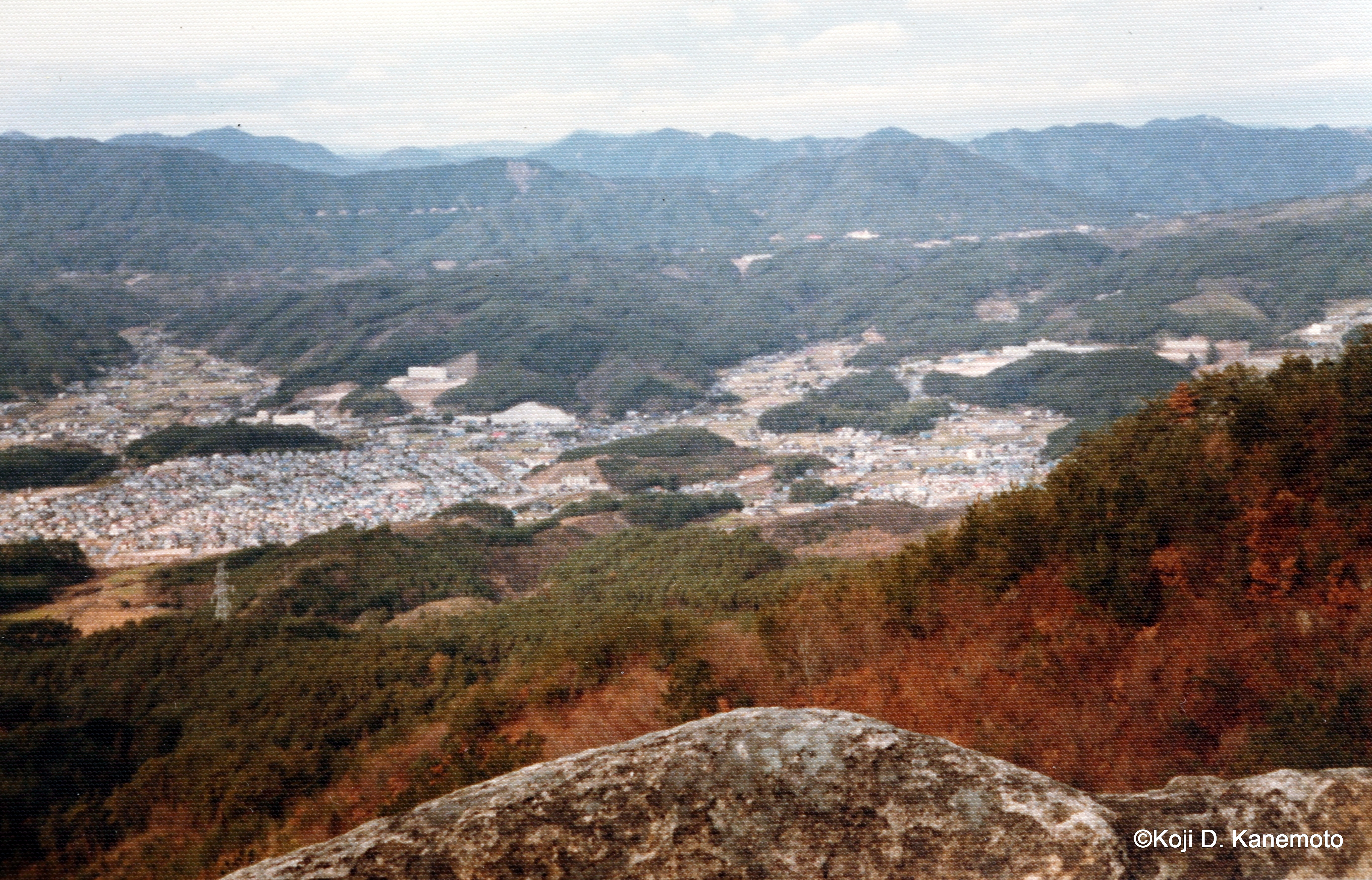
Family photo taken of the town of Tomo about 35 years ago atop the 300 meter tall hill separating it from Hiroshima. Hiroshima is directly behind. This short hill served to partially deflect the atomic bomb’s shockwave. Courtesy of Kiyoshi Aramaki.
IMG_5870
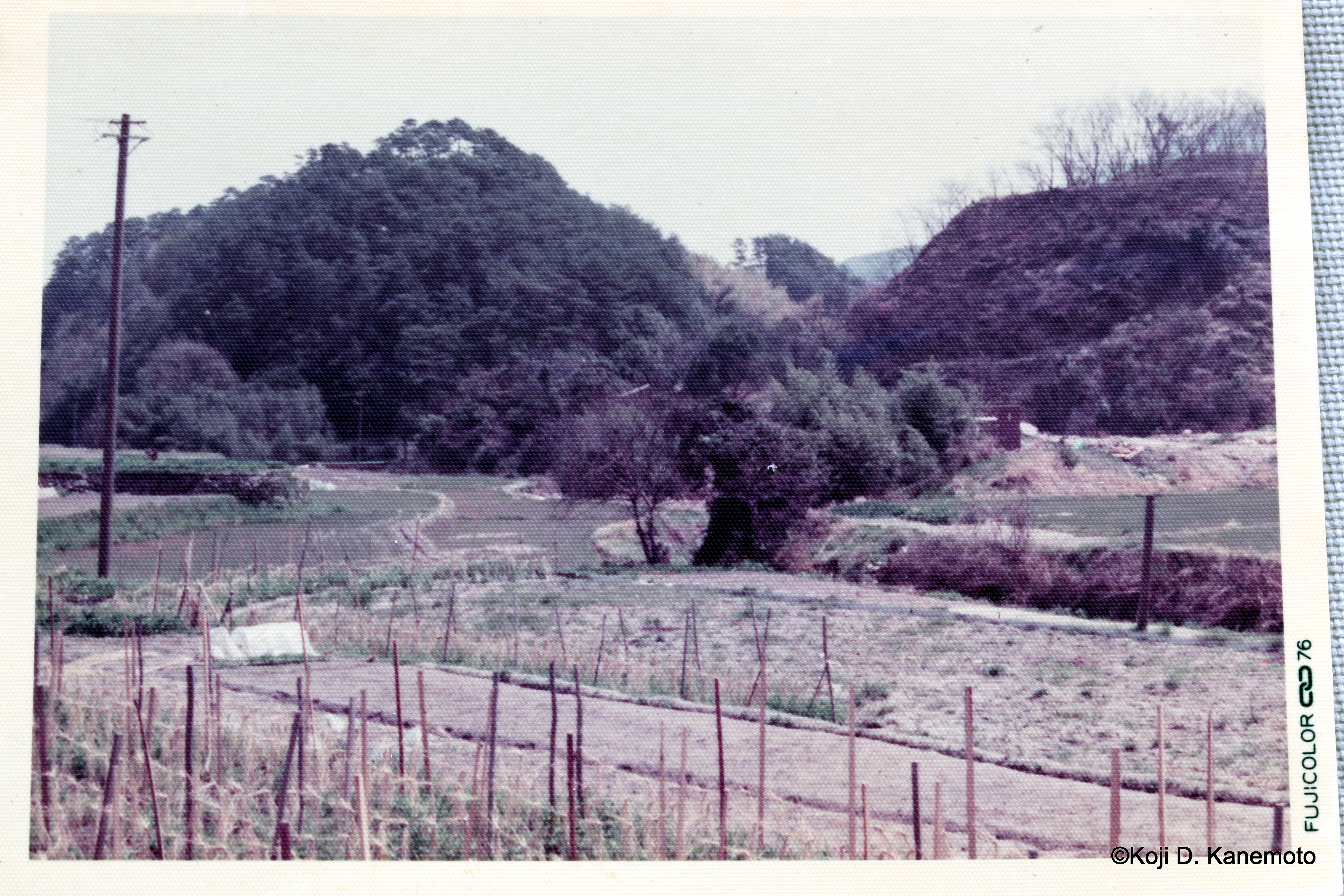
Per Kiyoshi, this was taken from the house and shows some of the field Michie had to cultivate. She was here when the shockwave hit. While the one on the right is no longer there, the family burial plot was between the two small mounds you see here. Courtesy of Kiyoshi Aramaki and dated 1976.

After picking herself off the ground, Aunt Michie saw an evil yet mystifying mushroom cloud slowly rising up beyond the 300 meter tall hill separating her village from Hiroshima proper.  At that instant, she knew her life had taken a wrenching turn for the worse… as if it could get any worse.

I cannot imagine what was going through her mind and heart watching that mushroom cloud rising.  She could not have even dreamed that it was one massive bomb, a couple of kilometers away, that could cause this sort of force and devastation.  It must have defied belief.

Hiroshima_10
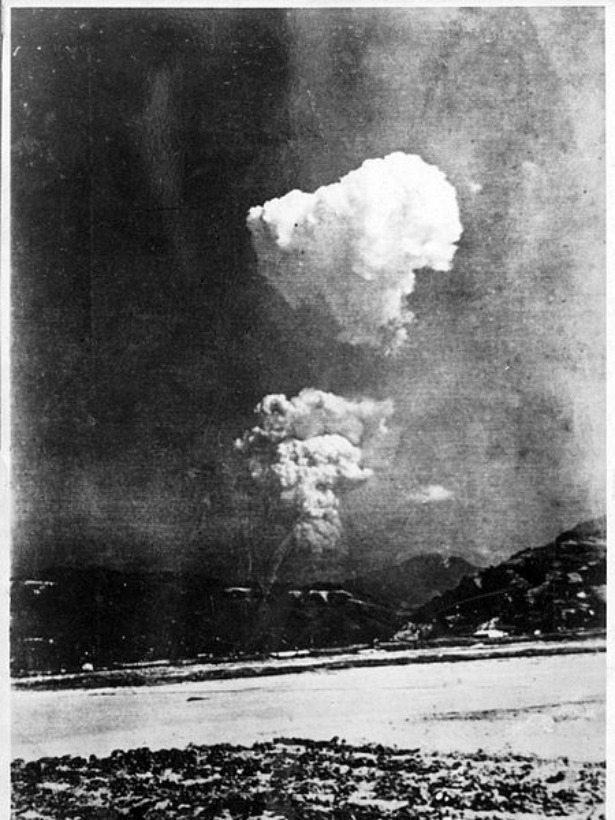
A relatively unseen image of the explosion, taken from a Kataitaichi, six miles east of Hiroshima. Michie was nearly due west and on the other side of the cloud. The cloud would reach 40,000 feet in just four minutes. It would ultimately rise to 60,000 feet. (Horikawa Elementary School)

According to Michie and my cousins, the shockwave blew out all the sliding doors, all the tatami mats were flung and the ceiling was shoved up in the house.  Try to imagine yourself being inside the house.  The same thing happened to Grandmother Kono’s house five miles south (See map in Part 1).

As per their daily air raid drill, they apparently all ran to the air raid shelter in the small hill behind their house.  After about half an hour and with the mushroom cloud still rising, a black, syrupy rain began to fall on them.  According to the cousins, Michie believed that the Americans were dropping oil from space.

She could not have fathomed it was contaminated with over 200 kinds of radioactive isotopes.  We now call it black rain.

IMG_6116
I took this photo of a preserved wall section stained with actual black rain from that fateful day. Hiroshima Peace Museum, November 2013.

Sadako, who was ten years old, clearly remembers their white blouses had turned black from the rain.  No one – absolutely no one – knew that other than staining skin, clothing, and buildings, but that ingesting black rain by breathing and by consumption of contaminated food or water, would lead to radiation poisoning.  Even flowers would bloom in distorted shapes and forms from the radiation.

_______________________________

With the enormity and the suddenness of the brilliant flash of light followed by a shockwave and the swirling mushroom cloud, Michie deep inside knew her world had forever changed.

Horror was to literally come into hand shortly to enforce that foreboding thought.

_______________________________

To be continued in Part 4….

(1) Albeit late, my mother’s family fled to the Fukui Prefecture in early July 1945 to escape the bombing of Tokyo.

The Pain of Survival and Aunt Michie – Part 2


Taken in 1945 after a B-29 bombing attack on Tokyo. There is little left of the city and many, many families were without food and homes. Sadly, there were thousands of orphans as well, many of whom would perish.

Human dignity is as crucial to an earnest life as is air, water and food.

Aunt Michie drew upon that dignity inside her to help her family and others survive the day to day ruthlessness of life during war and ultimately, the atomic bombing.

While her dignity was larger than life, Michie would ultimately sacrifice her health and well-being to ensure her family and others would survive…and survive strongly.

___________________________

obaachan
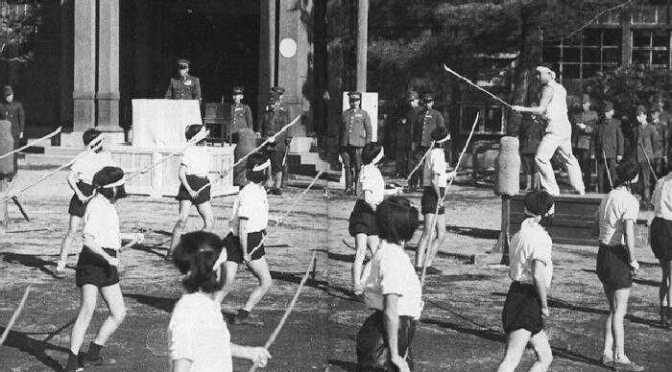
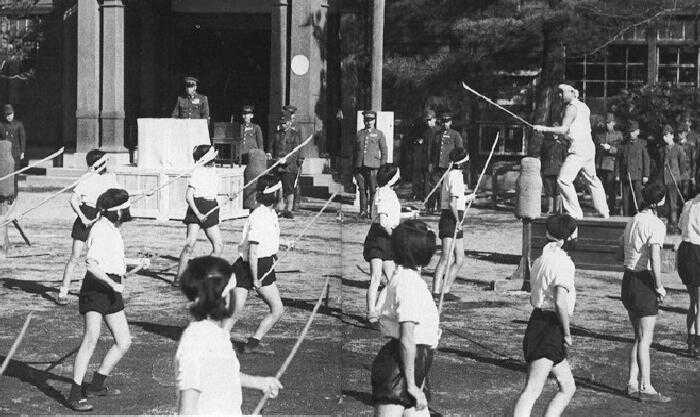
Japanese high school girls being drilled on how to use bamboo spears to ultimately repel “the invaders”. Notice the presence of the Imperial Japanese Army in the background observing.  Tokyo 1944.

By January 1945, Japan had already lost the war.  While the Japanese military leaders controlled the country and its path to ultimate destruction, the civilians took the brunt of war.  Many cities had been destroyed by US bombing raids leaving millions of families homeless.  There was not enough food to go around.  Many starved to death, especially orphaned children, if not from neglect as others would shut their eyes to them.

However, Hiroshima was largely spared from aerial attack.  The US did carry out bombing raids in March and April 1945 against military targets in Hiroshima but it was not frequent…but it was frequent enough to require air raid drills  The naval port of Kure though, where the battleship Yamato was built, was essentially destroyed in June 1945 by US Army and Navy bombing attacks.

HiroshimaBombingMap
A hand drawn map showing targets and damage to Hiroshima by US bombing raids including the atomic bombing. For a zoomable map, please copy and paste this link into your search bar: http://www.digital.archives.go.jp/DAS/meta/DGDetail_en_0000000611
Source: National Archives of Japan

___________________________

After her marriage in 1933, Michie was tasked to arduous farm labor at the Aramaki farm.  Their primary crop was rice.  She also gave birth to five children before war’s end: Masako (1933), Sadako (1936), Namie (1939), Tomiko (1942) and Masataka (1944).  Kiyoshi would follow in 1947.  She loved them unconditionally.

Michie image1
A happy Aunt Michie and likely Tomiko. Tomiko would soon be adopted by another family in the actual city of Hiroshima.  Undated but perhaps 1943.

On the farm lived Mikizo, his parents and Michie.  The four of them – and eventually three of her oldest daughters (a total of seven family members) – would work the land from a little before sunrise to sunset.  It was hard, arduous labor.  Back breaking work.  They did not have John Deere tractors or combines to aid them but had an ox to plow the fields with.  This was 24/7.

After all that hard labor, nearly the entire crop was taken by the Japanese military for the war.  They were allowed to retain a small portion of the crop for their own use.  As a result, rice was even further rationed for family consumption.  They had no choice.  On top of that, there was little else to eat.  They lived a meager life per my cousins.

__________________________

As the war dragged on, Japan was descending into the abyss…and it kept getting more and more darker.

In the story “Dear Mama”, Michie’s youngest brother Suetaro (my uncle) hurriedly wrote a somber good bye letter to Grandmother Kono in his war diary.  He was being sent off to war and certain death.

Farewell
Farewell sendoff for Suetaro who was heading to certain death. Michie is to his left and holding Masataka; Mikizo to his right. It is only an educated guess but the older man to the right of Mikizo is his father.  May 3, 1944.

I wonder how she really felt, knowing that Suetaro was going to fight to his death against the country in which his two older brothers and sister were imprisoned.  They were her brothers and sister, too.  An ugly internal conflict.

______________________________

The area around Tomo was nearly barren of younger, physically capable men.  All the men up to 35 years of age were taken by the army, regardless of their family status.  Mikizo was no exception.

In late 1944, at 35 years of age, he was taken by the Imperial Japanese Army.  Suetaro foresaw that happening in his farewell letter; he warned Mikizo to fully cooperate with the officers and to do exactly as he was ordered.  This was because it was brutal even within the non-commissioned ranks of the Imperial Japanese Army; the training officers routinely beat recruits into submission.  These recruits were largely the men who were ordered to their deaths in “banzai charges” by the thousands.  They greatly outnumbered the “hard core” Japanese officers.

banzai killed
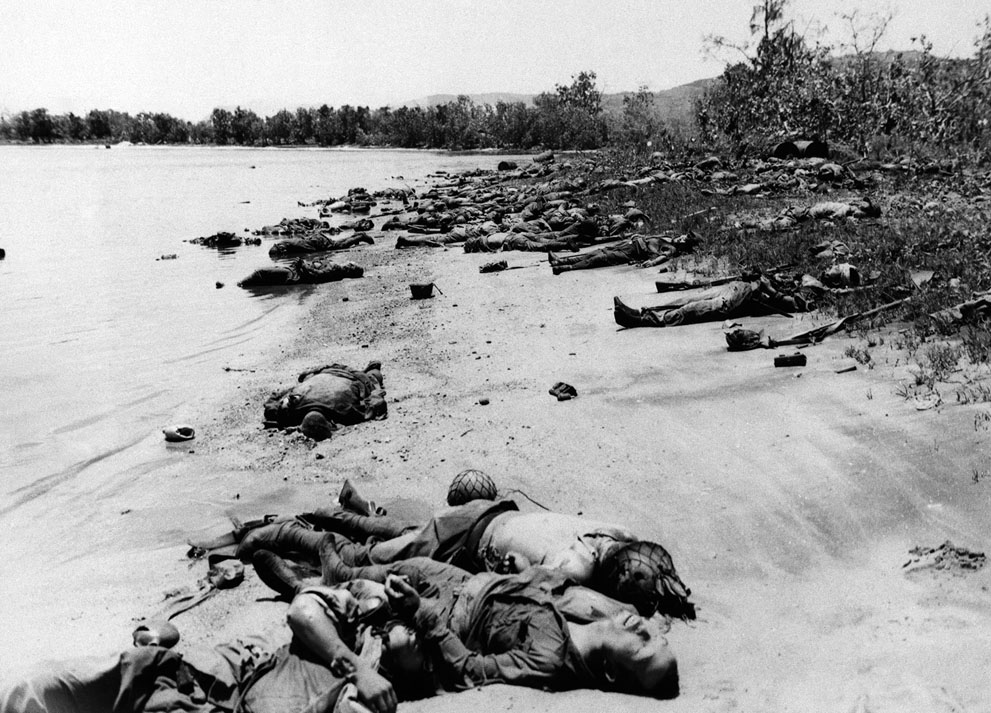
Aftermath of a banzai charge.

Aunt Michie’s family who tended to the back breaking labor on the farm was now lessened by one.  As with her brother Suetaro, she foresaw never seeing Mikizo again.

To make matters worse, her mother (my Grandmother Kono) suffered a cerebral infarction the day she learned Suetaro was being sent off to war.  She became paralyzed on her left side.  To get about the now empty house, she would have to pull herself around with her right arm.

On top of everything else – tending to the crops, the house and the children – Aunt Michie now had to care for her disabled mother.

Michie’s daily life was now further strained with even more stress…  Life must have appeared darker to Aunt Michie.

Michie’s willpower and dignity will now be on trial and severely tested.

But the struggles she will endure will have purpose.

She would not let her family down.

____________________________

To be continued in Part 3….

The Pain of Survival and Aunt Michie – Part I


img_0152_1_original
Uncle Yutaka and darling little Aunt Michie in Hiroshima. Circa 1918.

Life in Hiroshima was uncertain and grueling in 1945 – especially for women and children.  It is a fact that nearly all the men up to the age of 35 had been taken by the Japanese military.  For many, it was truly day to day.

Little food, clothing and medical care.  It all went to the military…and then there were the B-29’s and the bombings.  Devils associated with being on the losing side of war.

But at 8:15 AM on August 6, 1945, my Aunt Michie’s already tough life would be cast into wretchedness to test her mortal soul.  She was in her farm’s field clearing old crops on that hot summer morning.  There was an intense flash of light then the atomic bomb’s shockwave traveling close to the speed of sound slammed into her.  She was catapulted and hit the ground.

At the same instant, her oldest daughter and my cousin Masako – who was eleven and in her classroom nearby – was hurled across the classroom by the same shockwave.  The schoolgirls that were standing in front of her were pierced by shards of glass and debris.

Below is an eye opening re-enactment supplemented by computer simulation of the atomic blast in 1945.  Perhaps you can put yourself into Aunt Michie’s or Masako’s shoes on that morning and experience what they did:

After years of a most grueling life, Aunt Michie and her children would now face the searing pain of surviving.

__________________________

Even while giving shaves at my Grandfather’s barbershop in Seattle, Grandma Kono was busy in her early years of marriage.  She gave birth to Yutaka (1910), Hisao (1912) then Michie in 1914.  Other children followed: Shizue (1917), Dad (1919), Suetaro (c. 1921) and Mieko (c. 1924).  A total of seven.

y-image00-001
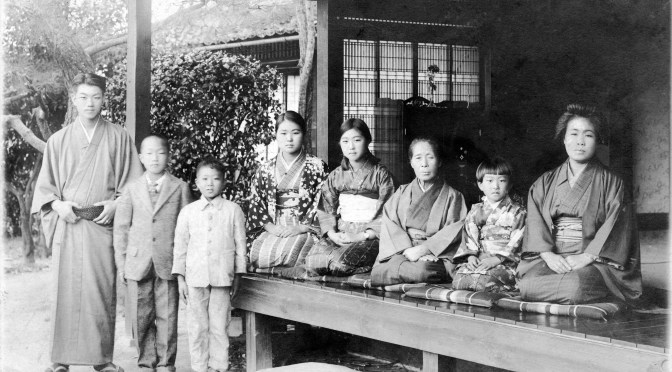
(L to R) Yutaka, Dad, Suetaro, MICHIE, Shizue, Great Grandmother Kame, Mieko and Grandmother Kono. Circa 1928, Hiroshima.

All seven of the siblings were born in Seattle…  All except for Michie who was born in Hiroshima.

My cousins tell me their mother Michie told them she would wistfully ask her family, “Why couldn’t I have been born in America like everyone else?!”  Lovingly, of course.

Aunt Michie never did get a chance to visit America.

__________________________

Dad’s siblings came to Hiroshima and half of them were able to return to Seattle to continue their lives as Americans before war with America.  But Michie lived her entire life in Japan.  She was the oldest sister to the siblings and helped Grandma Kono raise them.

Michie’s father (my Grandfather Hisakichi) was a devout Buddhist.  He required the family to chant Buddhist mantras daily; it was not “praying” but a way through which a follower “energized” himself to the teachings of Buddha.  Dad’s Hiroshima home to this day has the altar in the main room where they chanted; it is unchanged in nearly a hundred years having survived the shockwave from the atomic blast.

Fullscreen capture 2262014 120800 AM
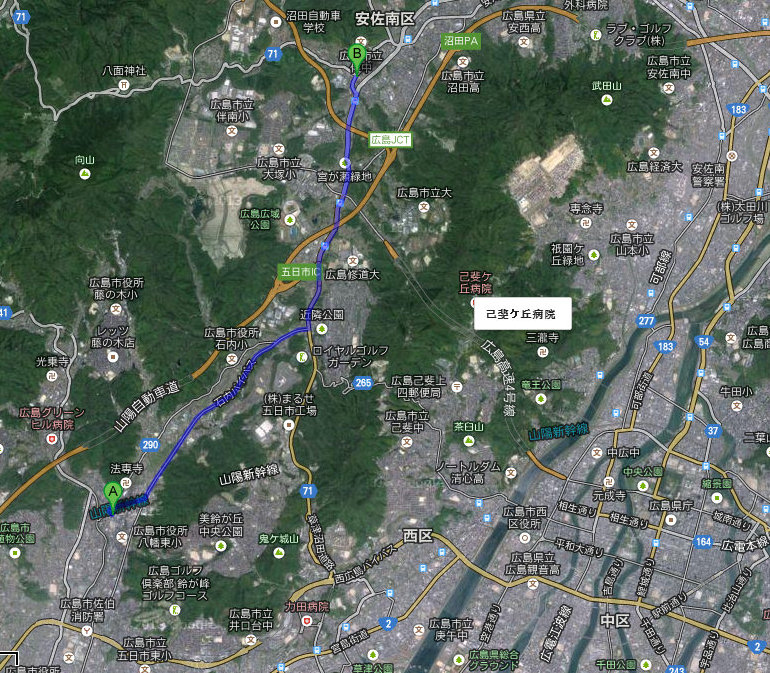
My father’s family home is at “A”; Aunt Michie’s home in the village of Tomo is at “B”.  About five miles separates the two homes.  The atomic bomb’s hypocenter is towards the bottom right where rivers split up.

According to well accepted family lore, a man from a village called Tomo came to the house one fateful day apparently to seek one of his daughter’s hand in marriage.  His name was Mikizo Aramaki.  He immediately went to the altar and chanted.  Grandfather Hisakichi was so impressed by his devotion to the Buddhist way of life that he immediately gave his daughter away in marriage…but apparently, Grandather gave away the wrong daughter – Aunt Michie.  It is said Mikizo had come seeking the hand of my Aunt Shiz.  (Aunt Shiz was the prize of the village according to my cousin Masako.)

Being of farming heritage, Mikizo had acreage and a home.  After Aunt Michie was told she was to marry Mikizo, she was, to say the least, not very happy.  I guess that is a slight understatement if I say so myself.  She argued – pleaded – with my Grandfather that she didn’t want to marry him and that she was not raised to be a farmer…but to no avail.

Aunt Michie was given away in marriage.  Done deal.

They wed in 1933.  She was nineteen years old.

_______________________

To be continued in Part II

Graciousness, Gratefulness and Grandeur


q00893001u00132
From http://www.entaijisou.com

My girl friend Linda fretted for a couple of weeks before going to Japan with me.

She fretted about the (we-know-they’re-coming) typhoons.

She fretted about the (we-don’t-know-they’re-coming) earthquakes.

But what did she fret about the most?  She fretted about getting butt-naked in front of my cousins for a Japanese-style bath at a hot spring in Japan.

Silly lady…  All Japanese do that.

Oops.  I forgot.  She is Irish with blue eyes.

Well, I guess if I were her and experiencing a panic attack, I’d just put a brown paper bag over my mouth… and drink all the scotch inside.

That would help.  After all, she is Irish.

___________________________

IMG_6615
The hot spring inn, “Entaijisou” or 延対寺荘.

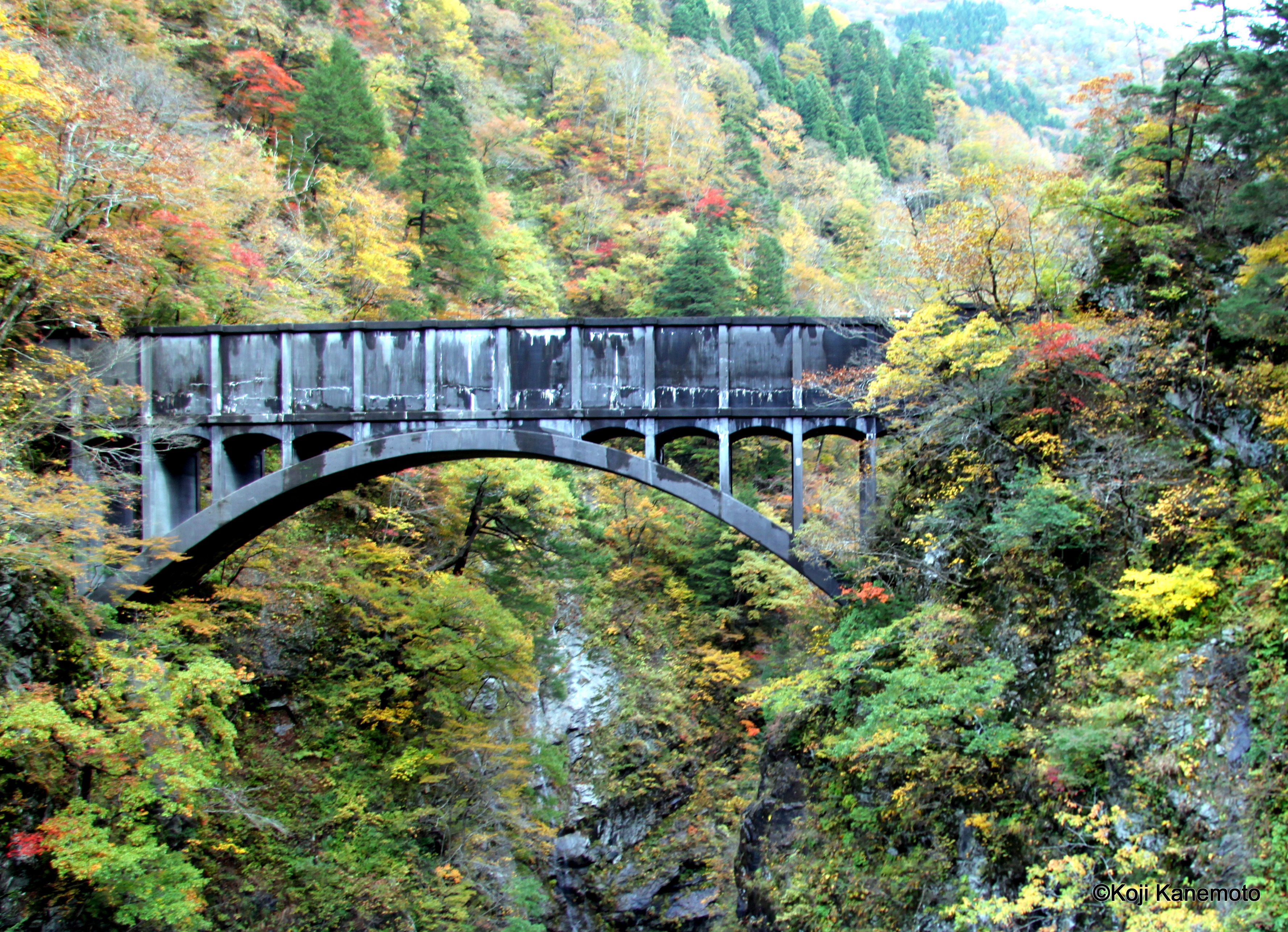
During our ten-day visit to Japan in November, my cousin Kiyoshi (Masako‘s youngest brother) treated us to a most wonderful journey to Toyama Prefecture, just inland from the Sea of Japan.  One such destination was famous for its hot springs and a beautiful gorge. We stayed at the inn called “Entaijiso (延対寺荘)” near “Unazuki Hot Springs (宇奈月温泉).”  Started in 1900, the hot spring’s water is naturally heated to a most perfect temperature and has an open-air spa area called a “rotenburo (露天風呂)”.  Literally, you are soaking outside under the heavens.  Butt-naked.

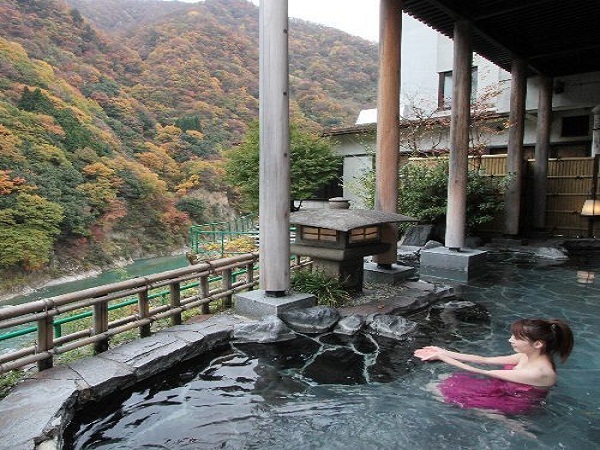
Of course, I was unable to take photos inside the bathing area for obvious reasons but here are other photos from their website to give you a taste of the relaxation that can be had.

qspa004   355206239

Yes, my Irish lady did go in with my (female) cousins!  In a form of endearment, my cousin Masako even washed her back.  Butt naked.  After relaxing in the water for a while then dry off, you notice your skin is just ultra silky smooth.  My cousins did say the geothermically heated ground water has therapeutic powers…  That there is some kind of magical healing power bubbling up.  I kind of doubted it.  But there IS something in the water. 🙂

Their dining area was spectacular; just outside is the river and magnificent mosaic-colored hillsides – a post card panorama.

IMG_6623

IMG_6611

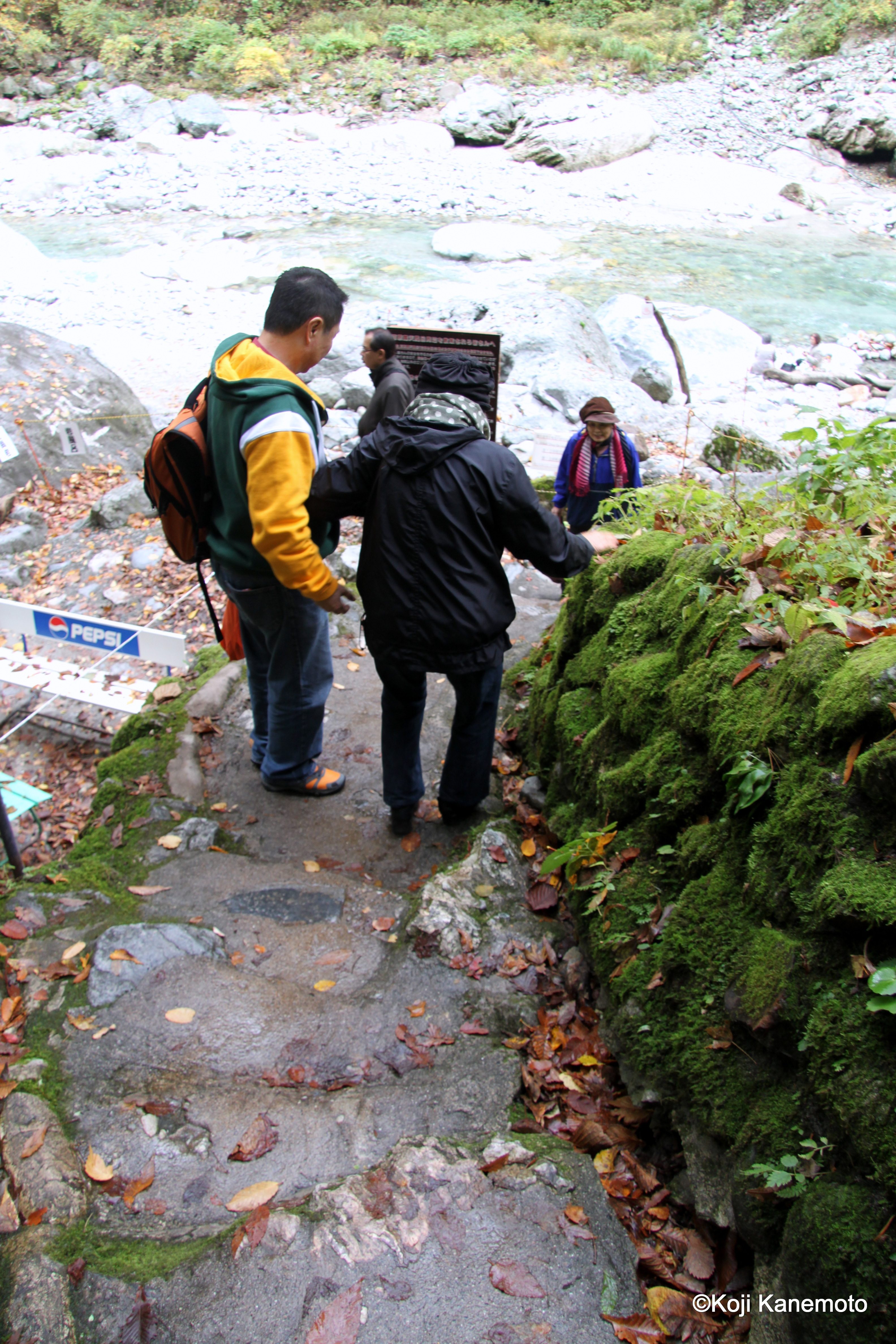
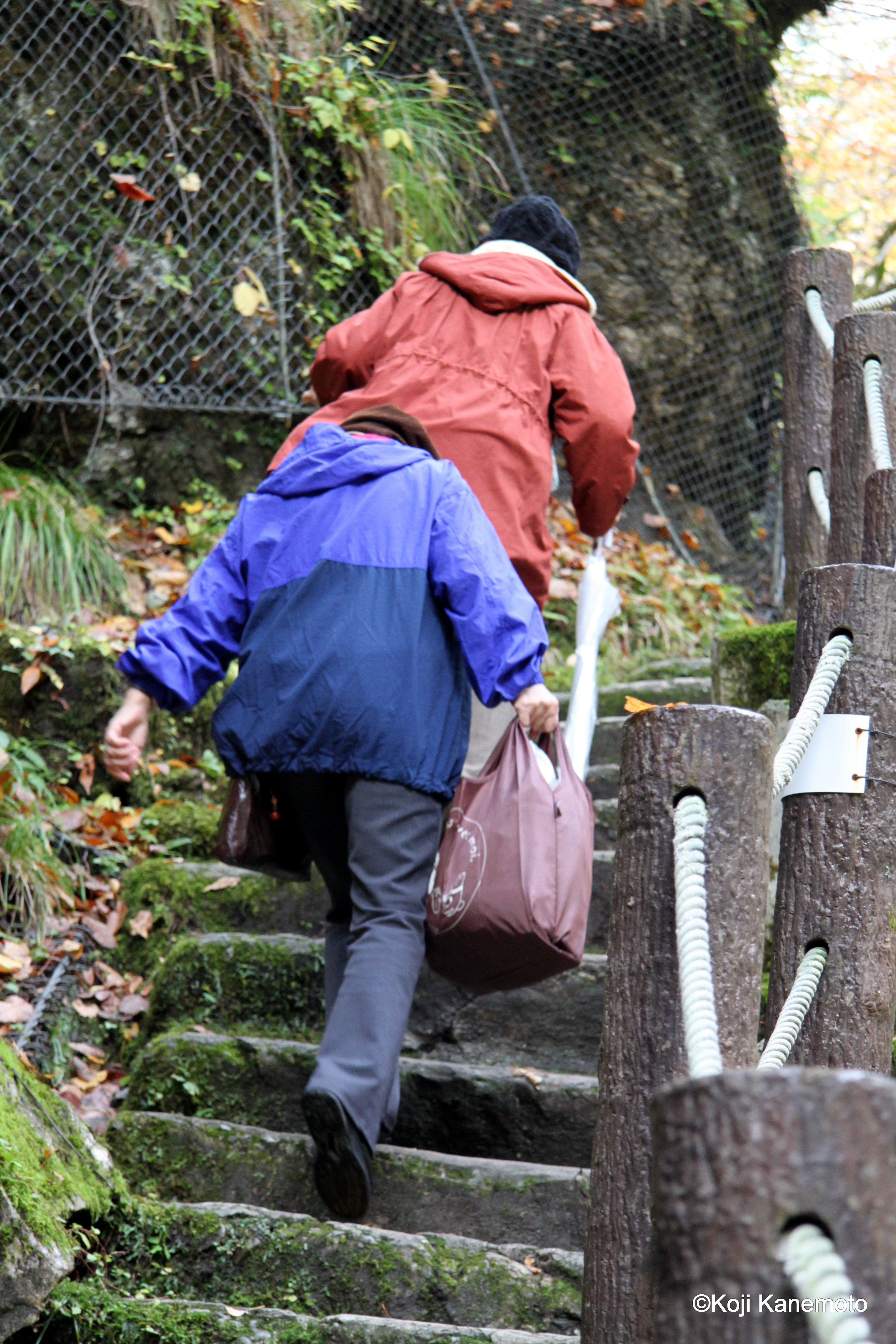
Kiyoshi’s gracious treat continued on the Kurobe Gorge Tram (黒部峡谷トロッコ).  It is a a sightseeing train running on a very narrow track originally built to aid the construction of the Kurobe Dam.  It follows a winding path along the river – something like 20 kilometers from the base station of Unazuki to the end.  We we there unbelievably at their peak of the autumn color change.  It is important to note we hiked a bit after getting off the tram at Kanetsuri Station – and my cousins below LED the way.  While Masako has difficulty going DOWN stairs, she was a jack rabbit going up.  Amazing.  At 80 years of age.

IMG_6628
My cousins (L to R): Tomiko (71), Masako (80), Namie (74) and Kiyoshi (65).

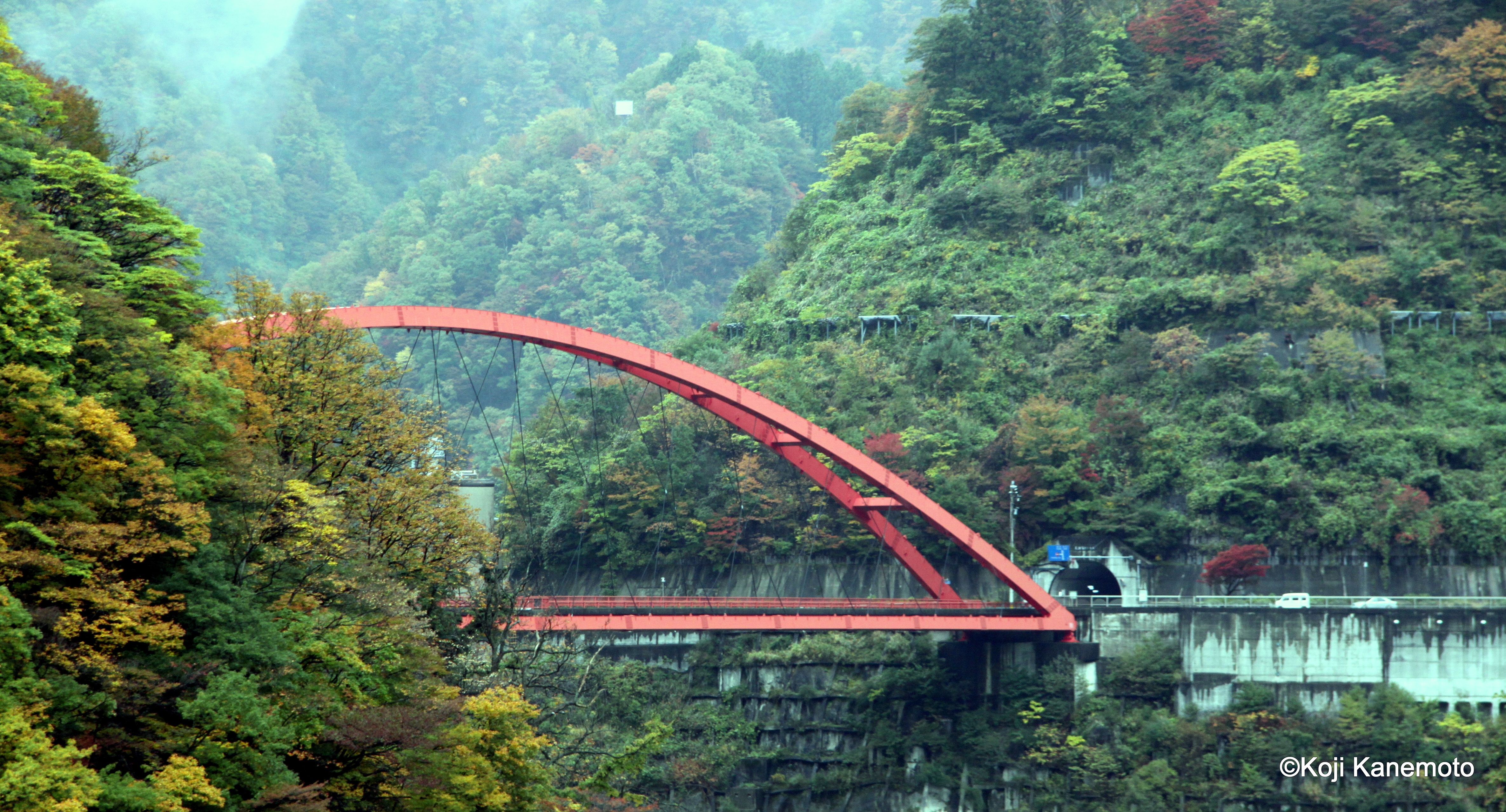
I will let the photos show you the grandeur we were so fortunate to experience.  (Please note many of these were taken from the moving tram.)

IMG_6919

IMG_6736

IMG_6789

IMG_6812

IMG_6850

IMG_6731

IMG_6982

IMG_6725

IMG_6985

IMG_6977

IMG_6988

IMG_7024

IMG_7029

IMG_6943

IMG_7047

IMG_7050

IMG_7015

IMG_7070cif76nib_original

IMG_7020

IMG_7080

11045645333_cf1fd0d47e_o

11045483675_ce338a3c77_o

IMG_7176

AND A “I SPY WITH MY LITTLE EYE”…  Can you spot it?  There is a wild red faced monkey below.

IMG_7167

__________________________

Prior to getting into the hot spring and public bath, I tried to relieve her anxiety.

I said, “When in Rome, do as the Romans do.”

She replied, “They sinned.”

__________________________

I was proud of my blue-eyed Irish lady friend.  She got into the public bath and hot springs butt naked.

And even got her back scrubbed by Masako, a survivor of an atomic blast.

Imagine that.

From a Japanese hot spring, I have learned that spreading peace for the world starts as a power that emanates from within one person.

Ten Beautiful Days


Embarking on a ten day vacation to a land far, far away needs a lot of one’s time to prepare… one reason for my recent absence from WordPress.  Not that anyone would notice, of course.

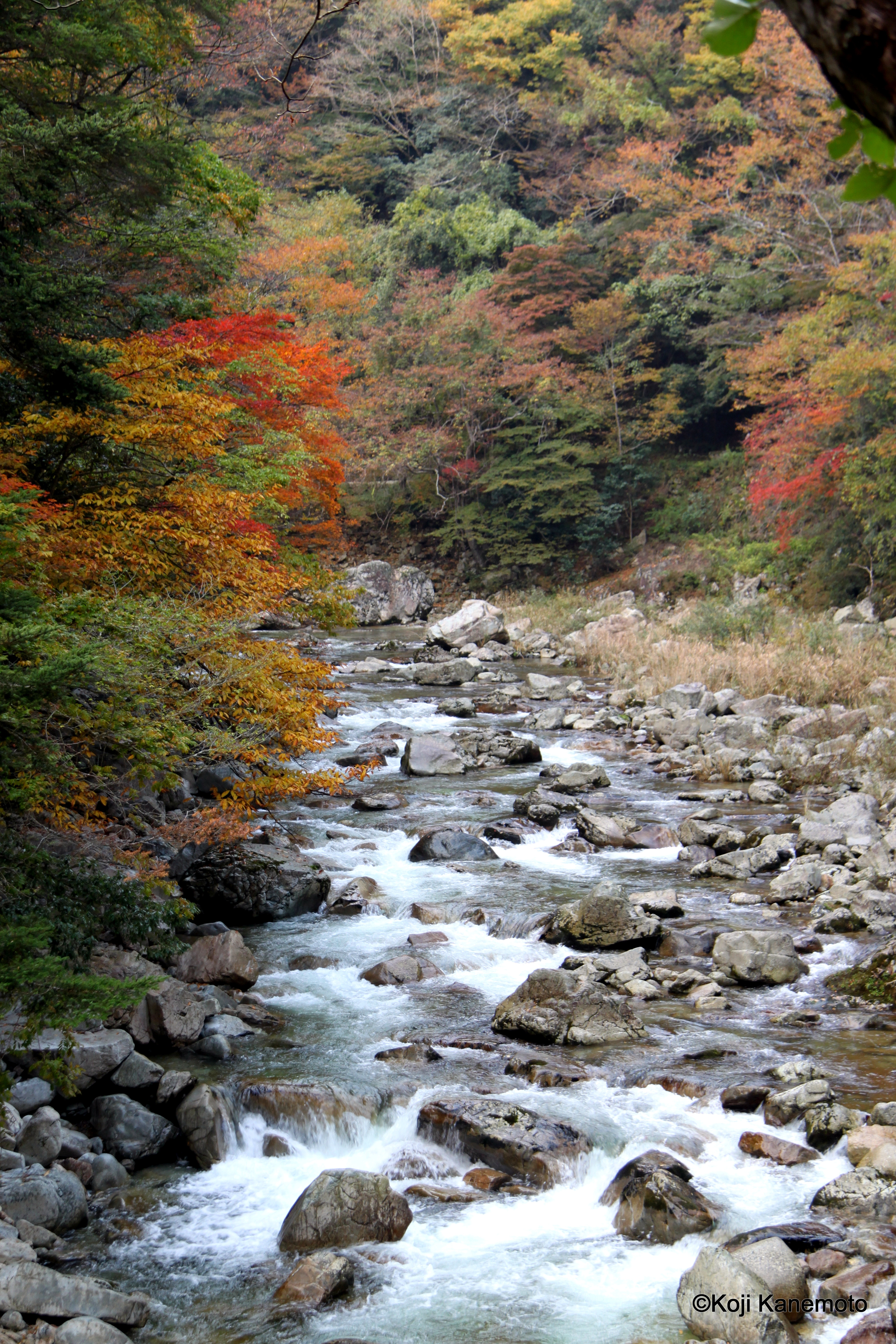
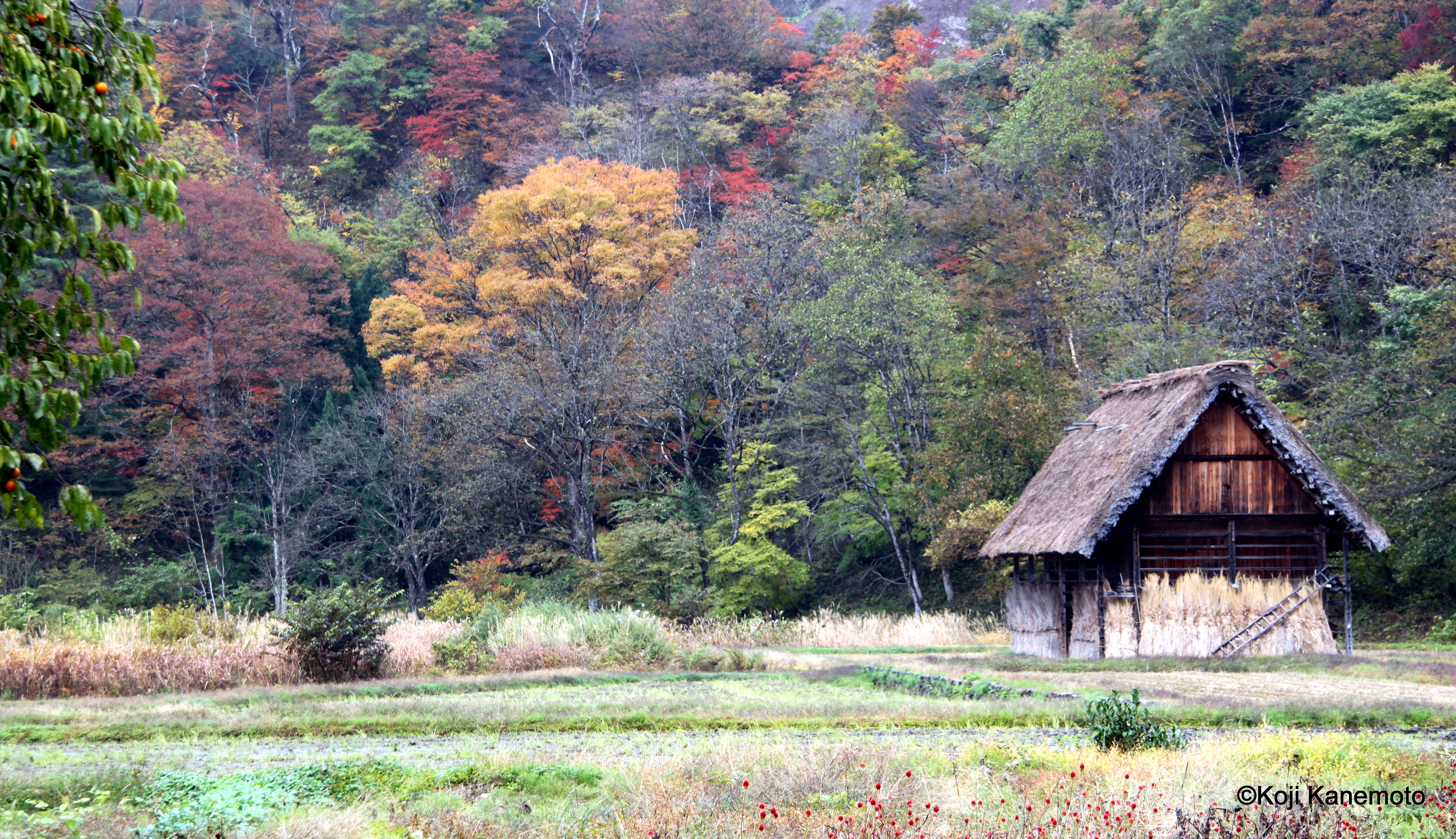
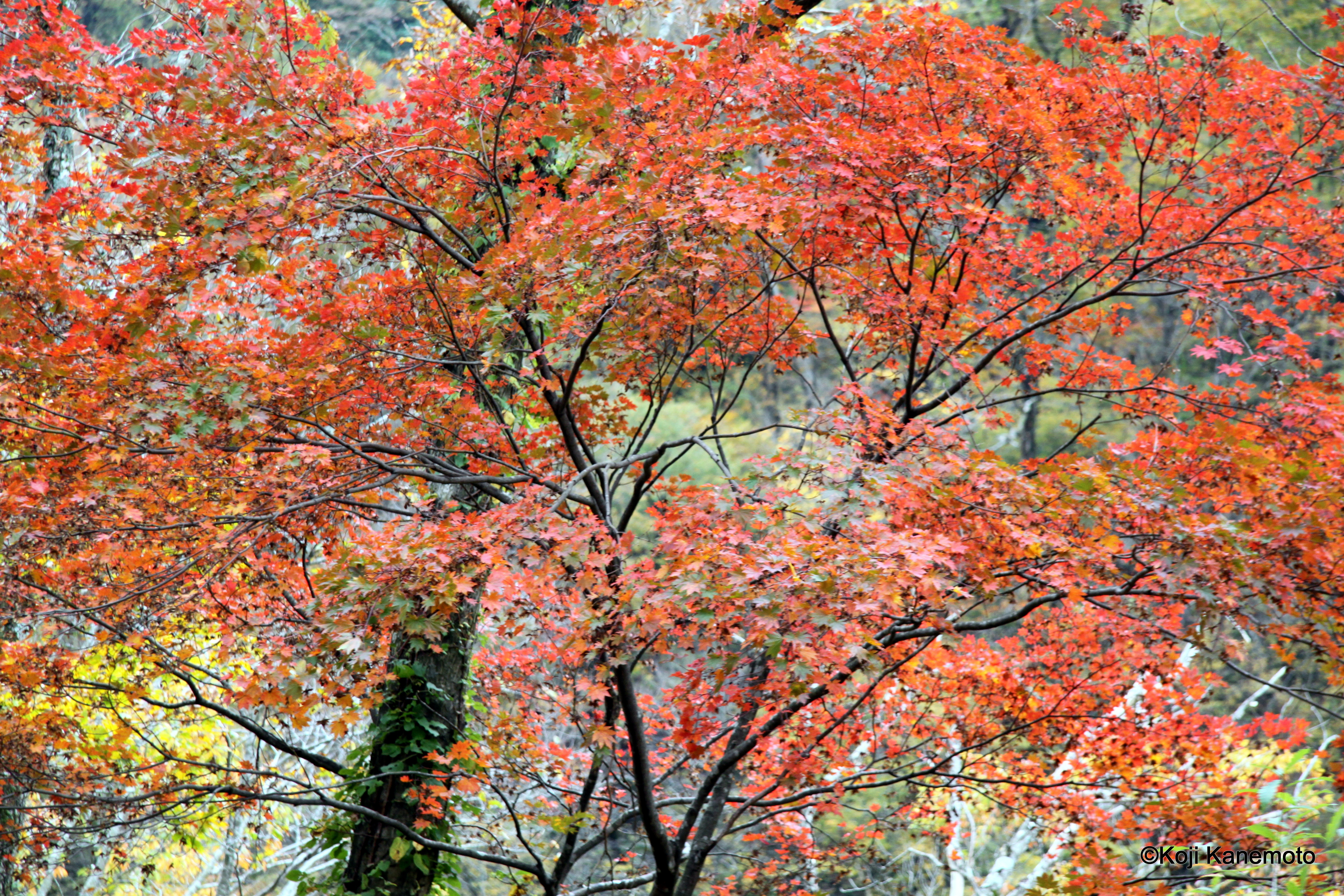
For now, just some colorful images of nature taken during the journey to Japan I immensely enjoyed… which would not have been possible without the unqualified help from my Hiroshima cousin Masako – after whom this blog is named – and her extended family.  Hopefully, time will permit sharing more of this glorious journey – and enlightening in ways I could never have imagined.

So for now… Japan in autumn.

IMG_6581

IMG_6066

IMG_6010

IMG_6210

1399582_464136303707487_401056106_o

IMG_6485

IMG_6164

IMG_6158

IMG_6207

IMG_6505

IMG_6052

IMG_6735

IMG_6154


Dear Mama – A Farewell Letter


image0-012
Uncle Suetaro (L) and my dad (R). Taken from the Hiroshima house with Mt. Suzugamine in background. Circa 1929

During my visit to my father’s childhood home in Hiroshima last summer, I was entrusted with hundreds of vintage family photos and mementos.  I brought them back here stateside, promising my Hiroshima family I would “restore” them.

Well, after a good start, I developed a painful case “tennis elbow” from using the mouse so much during the retouching process.  Sadly, it came to a screeching halt sometime in November last year.

But one very, very special item was entrusted with me – my Uncle Suetaro’s war diary.

Although born an American citizen in Seattle with the rest of his siblings, he was writing this war diary as a sergeant in the Japanese Imperial Army.

The last entry was a farewell letter to his Mother.

______________________________

The photo above had been secreted away behind another photo that was in Uncle Suetaro’s album.  He meticulously kept the album up to the time of war.  His oldest brother, my Uncle Yutaka, had conscientiously sent him family photos they had taken in Chicago and Los Angeles before imprisonment.  Suetaro complimented the photos with his beautiful Japanese calligraphy, written in a silver, whitish ink.

20131007_183754

The photo of Uncle Suetaro and my dad shown at the beginning was so very tiny – but there was something Uncle Suetaro loved about it to keep it.  I wish I knew what it was.

IMG_0451
Actual size

__________________________________

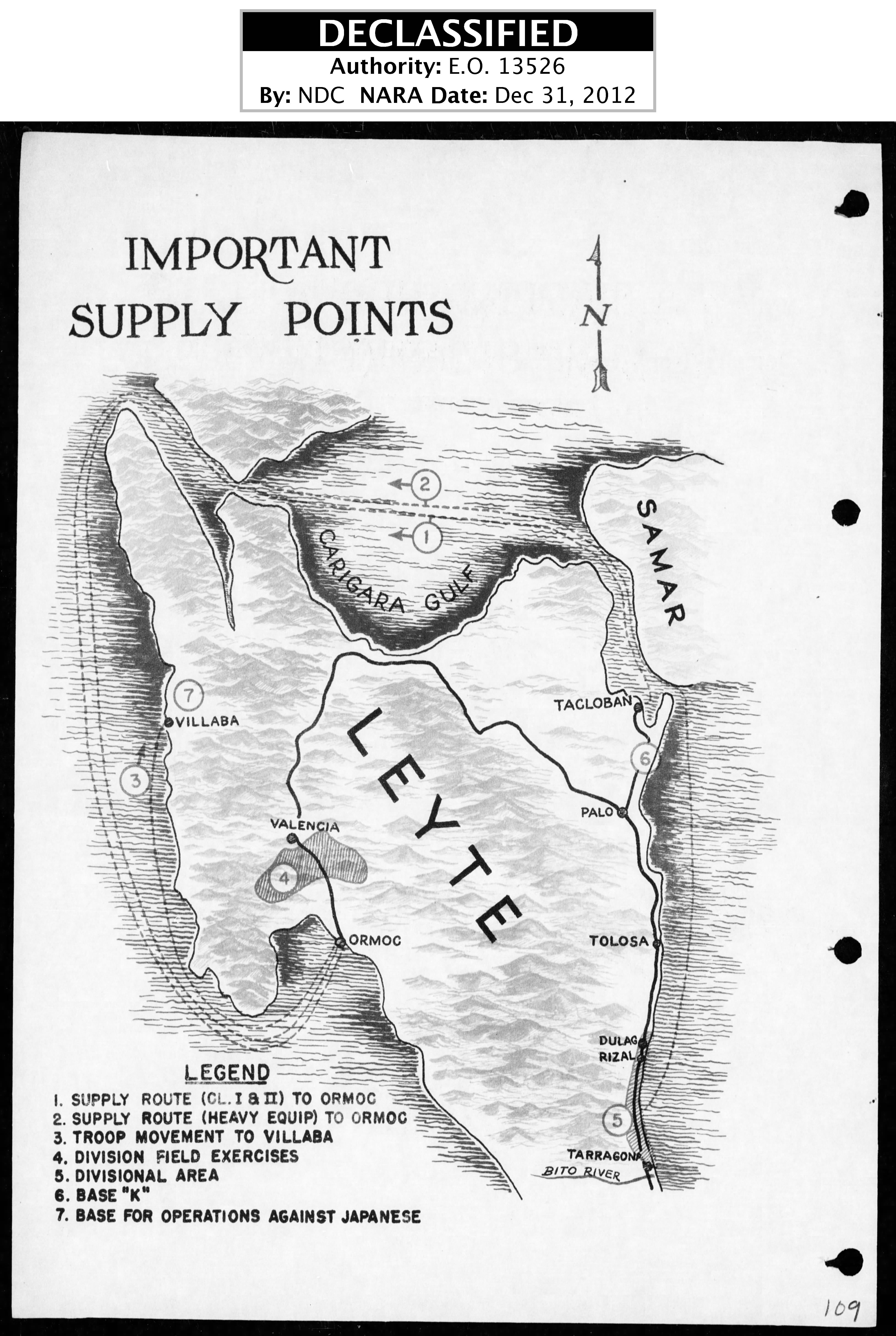
Uncle Suetaro was killed as a sergeant major of the Japanese Imperial Army on Leyte apparently near a town called “Villaba”.  Below is an actual page from a “war diary”, an official report written and published by the US Army.  Villaba is located on the western shore of Leyte but not far from Ormoc Bay, which was a killing field for Japanese ships by US aircraft.

Page 109
Source: US Army 81st Infantry Division Headquarters / Report of Operations

His remains were never recovered.  In the family grave are his tiny pieces of his fingernails and a lock of hair.  It was custom at that time to leave parts of your earthly body with your family as returning was unlikely.

Not much to bury… but it was better than not returning at all.

In a spiritualistic way, he had never left.

____________________________________

This is his farewell letter to his Mother (my Grandmother).

It is clear it was very hurriedly written.

With the help of my cousin Kiyoshi in Hiroshima and my dad, we’ve typed up Uncle Suetaro’s farewell letter – complete with old Japanese characters and translated as best possible into English.  When reading this, please remember these are the words as written as a soldier going off to fight the Americans – but he was once a young American boy born in Seattle, WA.

image0-038_originalhigh
Cover. His name is at the bottom.
金本 末太郎
image0-034_original
ママ様
Dear Mama,
御無沙汰致しました。
I am sorry for not writing for a while.
お元気ですか。 自分も相変わらず元気旺盛御奉公致しております故、何卒ご放念く
ださい。
How are you? As usual, I am full of life fulfilling my duty to my country so please feel at ease.
(元気で国のために力を尽くしてるので心配しないでください)
愈(いよいよ)自分も日本男子としてこの世に生を受け、初陣に臨むことを喜んでいます.
More and more, as I realize I was born into this world as a Japanese male, I am overjoyed to be going into my first combat.
勿論(もちろん)生還を期してはいません(生きて帰ることは思ってはいません)。
Of course, I do not expect to come back alive.
image0-035_original
併せ(しかしながら)自分に何事があっても決して驚かないように、また決して力を
落とさないよう平素より力強く暮らしてください。
And for you, Mother, whatever happens, do not be taken by surprise and please fight back with even more energy than you normally would.
24年の長いあいだスネかじりにて非常にご心配をかけ誠にすいませんでした。
I deeply apologize for these 24 years of worry and concern I have caused you.
お赦し下さい(おゆるし下さい)。
Please forgive me.
今の時局は日本が起つか亡びるかの境です。
At this time, Japan is at the boundary of either winning or perishing.
どうしてもやり抜かねばいけないのです。
We must persevere.
兄さん達を救い出すことも夢見てます。
I still dream that we can free our older brothers (from forced imprisonment in America by FDR – Ed.).
自分のことは決して心配せずお体をくれぐれも気をつけて無理をしないよう長生きを
してください。
Please do not worry about me but instead, please take it easy on yourself and live a long life.

(Note: Green indicates an edit inserted for clarification purposes.)

image0-036_original
何事あっても荒槇、小林の方に相談して下さい。
If something comes up, please discuss it with the Kobayashis or Aramakis.
金本家は絶対に倒してはいけないのです。
No matter what, do not allow the Kanemoto name be extinguished.
伴の兄さんもお召の日が必ずあることと思います。
Mikizou-san will also be drafted.
(荒槇幹造さんも必ず徴兵されることと思う)
歳はとっていても軍隊に入れば初年兵です。一年生です。
Although he is much older in age, he will be treated like any other draftee. As a young recruit.
絶対服従を旨とするようよく言って下さい。
Implore upon him to obey every command without question.
近所の皆さん、河野,倉本、白井、武田、永井、正覚寺、梶田、山城、山根、杉本、
辻、河野…、橋本,西本、松本繁人、小林、中本、新宅、武蔵、水入、土井、堀田、住岡、見崎、長尾、加藤、三好、内藤、島本、(Writing continues next page from here) 宮本先生、谷口先生、慶雲寺などの人によろしくよろしくお伝えください。
image0-037_original
ではこれにて失礼します。
With that, I will say farewell.
何時までも何時までもお達者のほどお祈り致しております。
I pray for all eternity for your good health and prosperity.
南無阿弥陀仏の御6文字と共に行きます。
I go blessed with the six realms of Namu Amida Butsu.
サヨウナラ
Sayonara
昭和19年5月3日
May 3, 1944
末太郎より   ママ様へ
From Suetaro To Mama-san

His farewell send-off is pictured below.  Masako-san believes Suetaro wrote the letter around this time.  It was at gatherings such as this when a Japanese soldier was given a “good luck” battle flag – the ones that many WWII combat veterans “removed from the battlefield” as souvenirs.  There are many cases now where their sons and daughters – or grandchildren – are making efforts to return such flags to the Japanese families.

One of the treasures found during our journey to the family home in Hiroshima this month. Uncle Suetaro is going to war and his death.
Uncle Suetaro (center) is pictured just before going off to war and his death.  You will notice my grandmother is missing from the photo; that is because she suffered her first stroke knowing her last son was going to his death.

_______________________________________

Bertrand Russell wrote, “War does not determine who is right – only who is left.”

He is correct.

On a much smaller scale, though, Grandmother Kono was all who was left in that house when war’s end came.  Her precious son Suetaro – who she kept from returning to America for the purpose of keeping the Kanemoto name going – was dead.  She was now alone.  I wonder how she felt.

A mother’s anguished solitude.

image1-007retouched
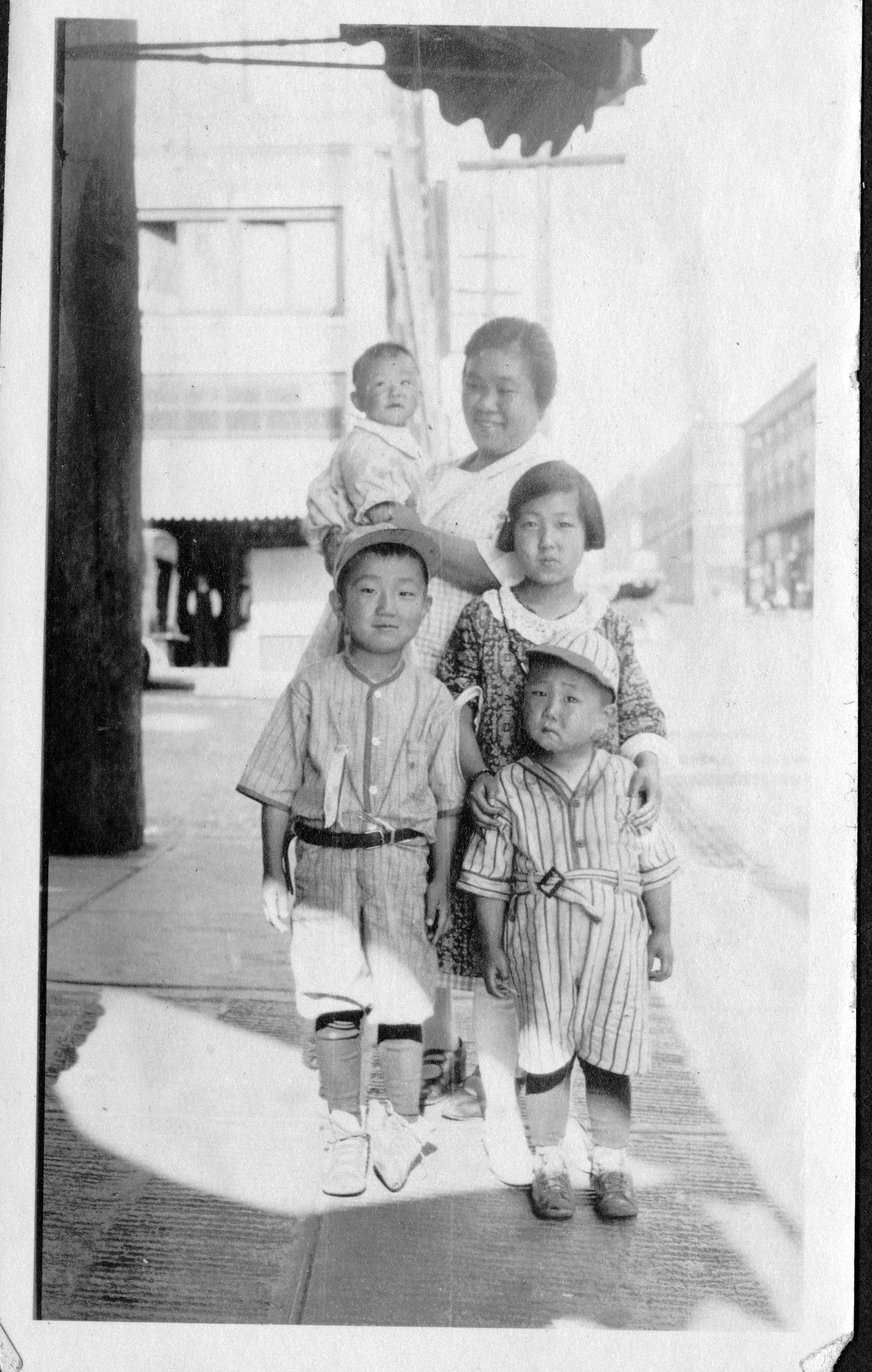
Grandma and four youngest children at the corner of King and Maynard in Seattle, circa 1926. From clockwise right-front: Suetaro, dad, Mieko, Grandmother Kono and Shizue.

(For other related stories:

A Mother’s Anguished Solitude, Part I

A Mother’s Anguished Solitude, Part II

Were Japanese Soldier’s Frightened?

Eighty Years Later…


Image

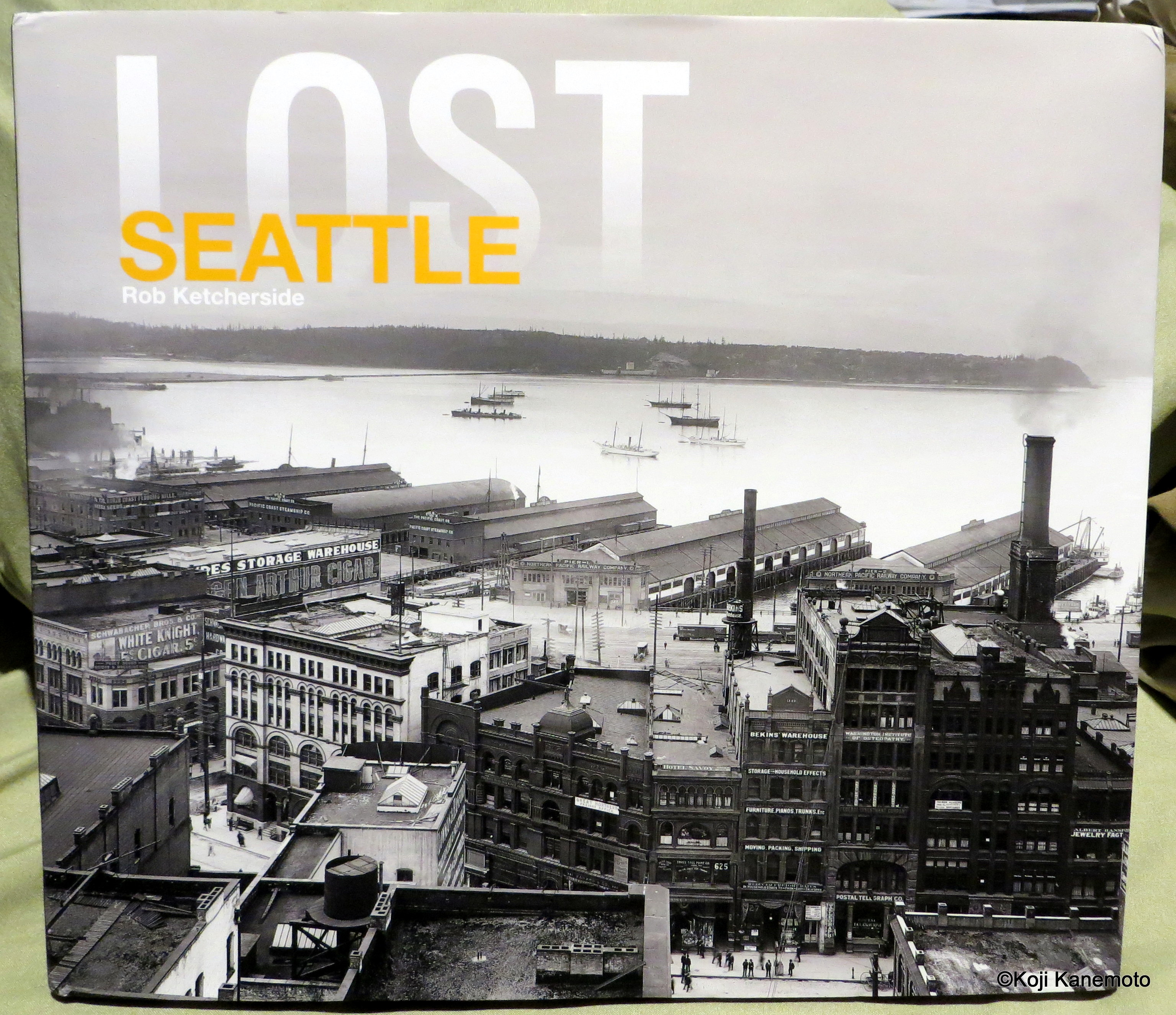
Eighty years or so after he posed for a photo, my Grandfather Hisakichi is in an American book.

Standing “Marine-esque” in his Seattle barbershop.

Incredible to me.

_________________________________

I had come to know Rob Ketcherside from flickr.  We had helped each other out looking at some old photos he had of Seattle – where all my aunts and uncles were born (except one).  He had some fascinating tidbits on some of my Grandmother’s photos.

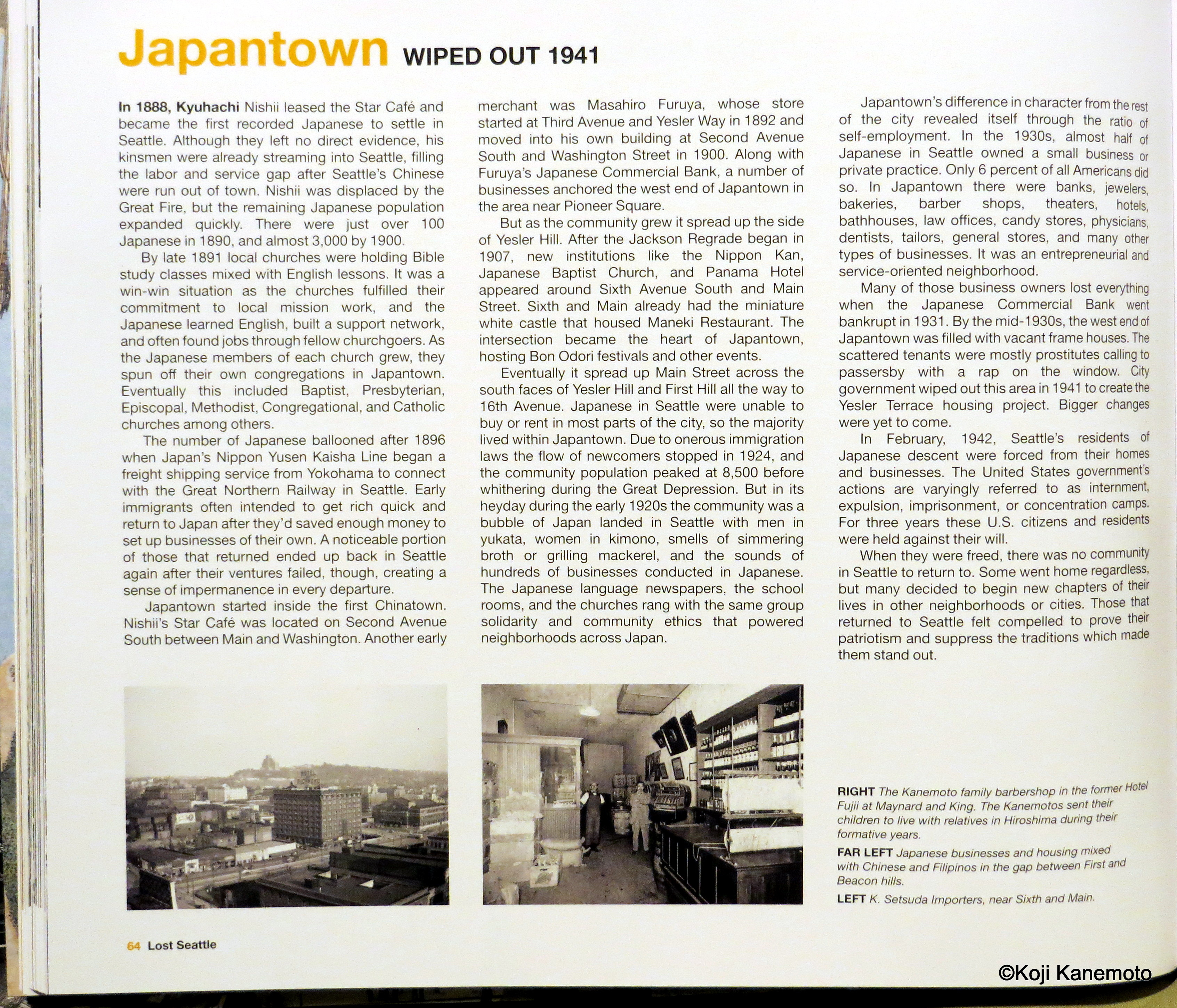
Well, it turned out he was an author.  He had been doing a ton of research into “lost Seattle” – skylines and communities now long gone.  With his fascination for “what was” (me, too!), those sights are now basking in sunlight once again through this mesmerizing book.

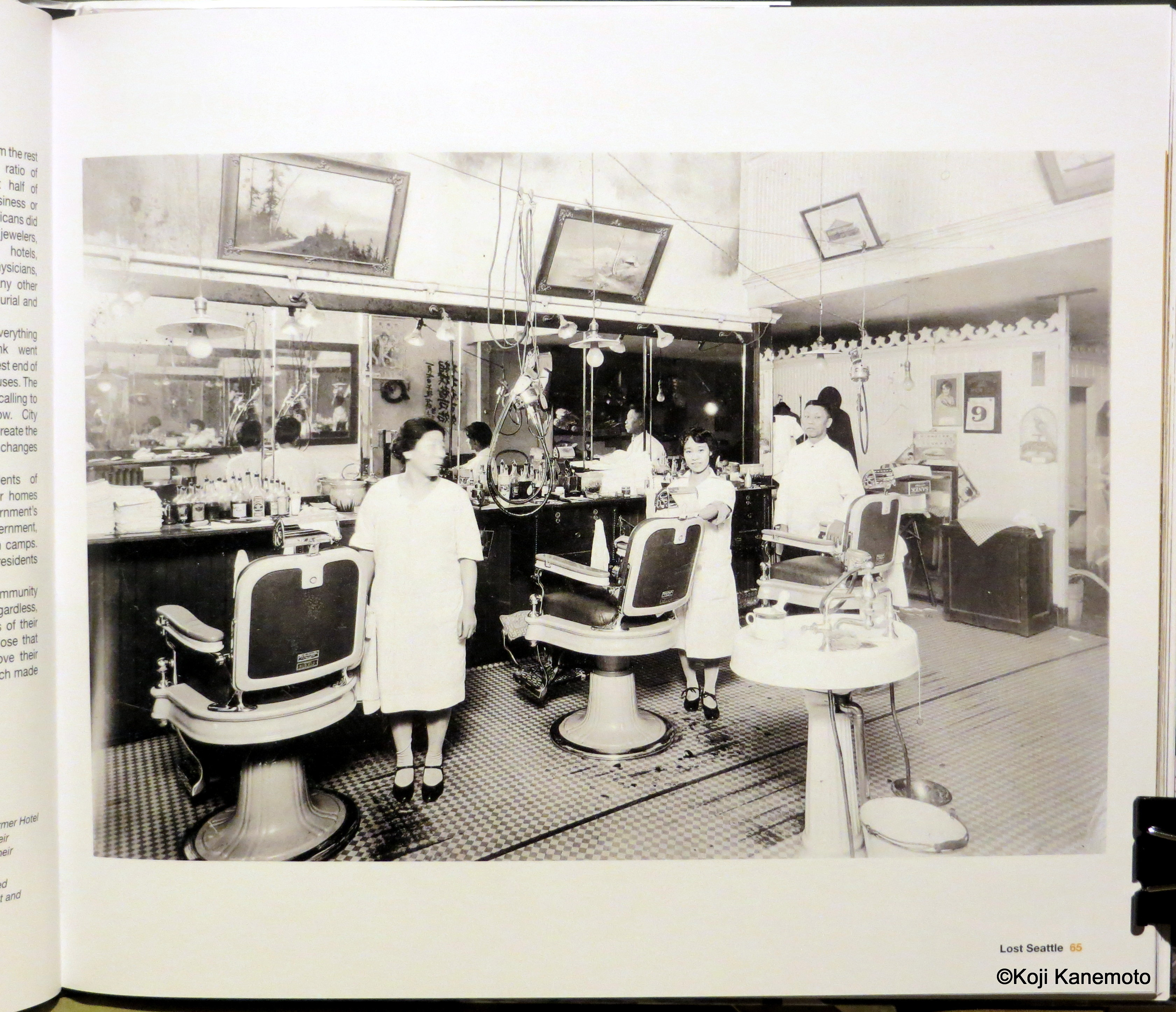
It was boosting to me when he asked if he could use one of the family’s vintage photos in his book; specifically, the photo of my grandfather’s barbershop.  It is on loan to me from my cousin Masako (yes, the Masako after whom my blog is named) who luckily kept these family treasures all these years.  It is more wonderful in that the home in which the photos were in survived the atomic blast – as did my family.

I hope Rob (and his publisher) don’t mind a couple of pages of his book are shown herein…and I’ll be picking up a few more copies to take back to Hiroshima in a few weeks.

In the description below, Rob also mentions Masahiro Furuya and his business.  As it turns out, both my dad’s oldest brother Yutaka and his best friend John Tanaka worked for Furuya…  And yes, that is the same John Tanaka my Aunt Shiz married.  Small world, yes?  Actually, Uncle Yutaka was the matchmaker.

Image

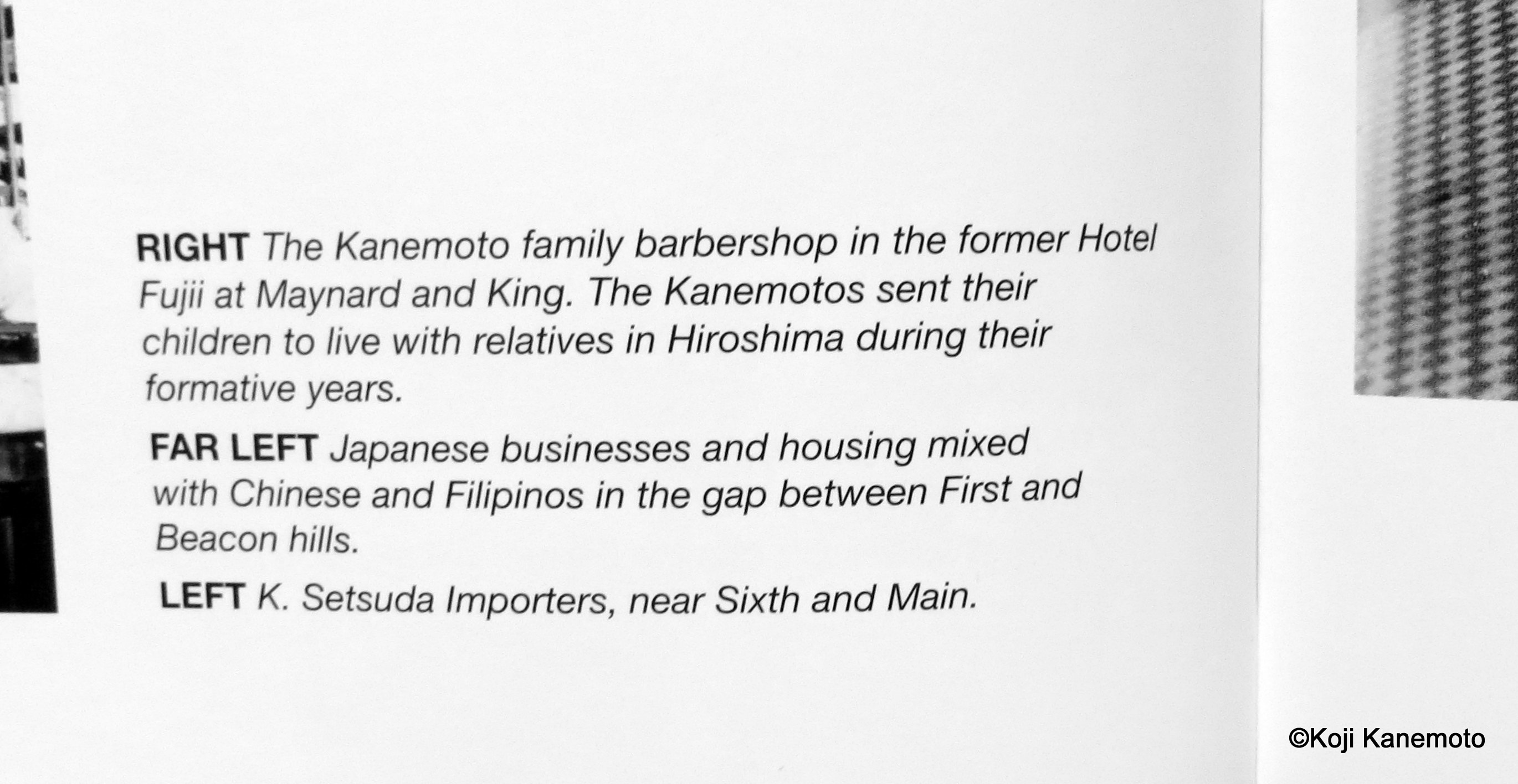
A close up of his photo caption from above:

Image

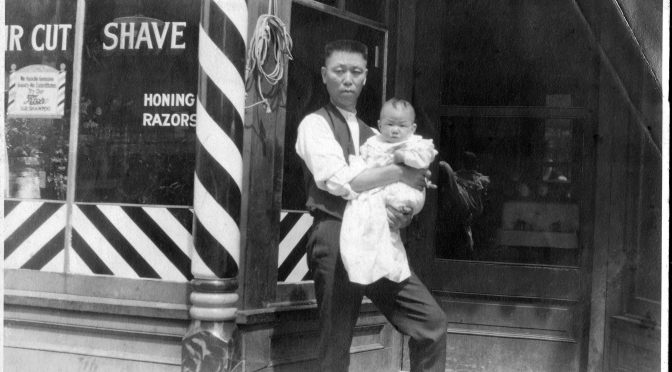
Grandfather is standing at the right-rear of his barbershop.  And the photo is a full pager in Rob’s book!  Cool!  Grandfather should be pleased.  In the original print, you can see the brand names of the hair tonics popular at that time.  The gal in the middle was quite a cutie, too.   I wonder what happened to her.  If she was still there in Seattle when war broke out, it is likely she went to the same prison camp my dad and uncle were incarcerated in.

Image
On an interesting note, the consensus is the calendar shows January 9, 1930.

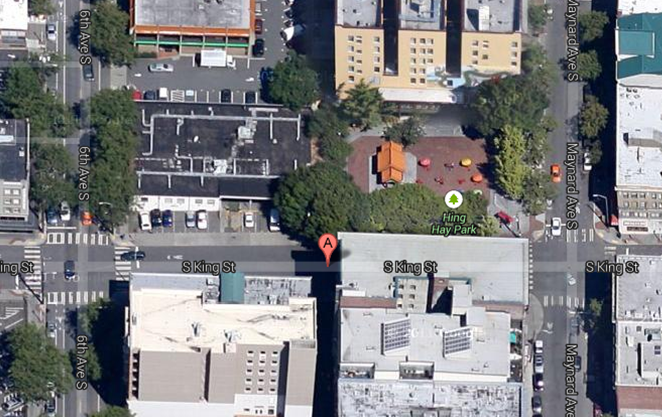
In concert with Rob’s massive research effort, gone is my father’s precious Hotel Fujii and my grandfather’s pride and joy barber shop.  It was demolished to make room for “Hing Hay Park” taking its place.

king st

Front of Barbershop
Grandfather Hisakichi holding Aunt Shiz in front of the barbershop. Circa 1918.
image0-005_original
Dad on right with his youngest brother Suetaro in front of the barbershop (circa 1922).  They are likely standing where the label “Hing Hay Park” is on the map above. As readers know, Uncle Suetaro was killed as a Japanese soldier by the US Army on Leyte on July 15, 1945.  Dad was imprisoned in Minidoka, ID at the time of his death.

Eighty years later.

My gosh.

And like the barbershop and Hotel Fujii, my dad is the last one standing out of seven siblings and two courageous grandparents.

Thanks, Masako-san and Rob.

I kinda wish my grandparents could have seen this.

Spunk


Spunk.  It’s not a word per Merriam-Webster.

But since English is my second language, I can use it out of naivete.

And I feel it means “internal spirit” or “internal push to do something”…

Like “Man, it took a lot of spunk to work like that.”

Of course, I understand it can refer to something else… You know, foreigners learn bad words first.

_________________________

So why bring up this word?  Are you afraid of getting spunked?

Well, America now has 478 million people that need to be spunkified.  That’s 478,000,000, folks.

Why?

All of these 478 million people are on food stamps.  That’s a lot of missing spunk.

First_food_stamps
Original food stamps.

Food stamp butter

I don’t know how many of them are citizens or have green cards or are “undocumented”.

Of course, there’s a number of the 478,000,000 folks just down on their luck…  But for the most part, the remainder have no spunk.

That’s how they live day to day.  On food stamps.  That the people WITH spunk for the most part are paying for.

________________________

Did you think 478 million was a big number?  Well, how about 78 billion…  That’s in dollars.  $78,000,000,000.  Three more zeros than 478,000,000.

That’s how much this food stamp program is costing us.

That’s how much of us “with spunk” are losing out of our paychecks.

Would you like to hear something more sickening?

$3,000,000,000 – three BILLION dollars – of that $78,000,000,000 is spent on ADMINISTRATION.  To me, that is plain sick.  Stupidity.  Unnecessary staff to meet stupid legalities.

_______________________

Obama said at the beginning that he believes food stamps is an economic stimulant.

Bull pucky.

The food stamp program started in 1939.  We were in the Depression.  People were hungry and crops and food stuffs were stockpiling on the farmlands.

food stamp old
One of the original food stamps poster. Circa 1939

So FDR came to a startling and brilliant idea – let’s give out free money to those that are hungry.  It’s free to them as working people had taxes taken from their pay.  Then the hungry can then buy the food stuffs stockpiling on our farms!  Win-Win-(Lose)!

Well, thank goodness, World War II began.  The Depression ended with the American will power to… work.  The food stamp program – which was experimental – officially ended in 1943.  About 4 million Americans received assistance in those four years.

______________________

Well…  Guess what JFK did in his first day in office in 1960.

Yup.  He signed an Executive Order.  (The same type of directive that put my father into those prison camps during WWII.  I hate those suckers.)

This Executive Order reinstated the food stamp program.  After, it was one of his campaign promises.

…And that’s all she wrote.  Now, one out of seven six Americans are on food stamps (called the SNAP program now).

1 out of 76.

And you know what?  It is true.  You can live a better life with food stamps and NOT working.  You even get free health benefits!

Food-Stamps-Monthly________________________

To some, this post will cause irritation if not anger.  For others, they are irritated or angry.  They are angry because the country’s majority has voted for this, in one way, shape or form… This minority of voters didn’t believe in an endless entitlement mentality…nor want it.

Indeed, a heckuva a people need to get spunkified.

Face it.  Our country is clearly headed in the wrong direction.  We are even furloughing our military.

Damn the lawyers and damn the minority rights activists.  It has moved too far towards the extreme in the past six years.

Make it hard to get free food.  Make them work for it.

This needs to be stopped…

(ps  This is just an opinion.  There is no right or wrong.  There is no intent to rile anybody and all constructive comments will be appreciated.)