Category Archives: World War II

The Truly Reluctant Admiral Isoroku Yamamoto – Part II


yama 22 yo
A young Isoroku Yamamoto as a cadet at Eta Jima Naval Academy.

Isoroku Yamamoto was NOT his birthname.  He was born Isoroku Takano, another surprise of buried history.

(And to make it easier for those who find Japanese names hard to follow, I will still refer to him by Yamamoto for this post.)

_________________________________

Indeed, his father Sadayoshi Takano, was a very proud and well respected samurai in the mid-1800’s. He lived his life as one. By this time, the samurai were peaceful and to while away their time, they studied art, philosophy and poetry. They were twiddling their thumbs, so to speak.

However, Admiral Perry showed up and caught the eye of many politicians and of a changing class of samurai who saw the European military style and assets.

The world had passed Japan by due to their isolationist ideals.

Tensions rose – the faction who wanted to keep Japan as it was and the faction who wanted change (modernization).  A bitter civil war erupted; it is referred to here in the Western World as the “Boshin War”.

soldiers in Western style uniform
The “modernized” Imperial Army soldiers as they were called instead of samurai. Notice the rifles and uniforms.. including boots. Samurai wore sandals.

Sadayoshi Takano, being the consummate samurai, chose to defend the existence of the samurai way of life and therefore isolationism.  While overall war casualties were low, indeed, he and his two oldest sons were wounded.

Unfortunately, he chose the wrong side.  His side, mired in old traditional ways of close quarter combat, i.e., samurai swords, was no match for the winning forces as they were armed with European rifles and cannon.(1)   Takano’s losing side even resorted to wooden cannon barrels bound with ropes towards the end.  They shot rocks instead of cannon balls and the wooden barrels would burst after but firing several rounds.(2)

yama last
A depiction of the traditional samurai (of which Yamamoto’s father was a member of) . They really had no chance against rifles and cannon.  They had to resort to using improvised wood cannon, bound with rope.  They shot rock for the most part and would burst after several shots.

After peace was achieved, the end results were that the samurai culture was abolished and troops were now called Imperial Army soldiers.  This period in history is referred to as the Meiji Restoration.(3)

______________________________________________

His Unusual Name

yama home
The Yamamoto home, heavily restored.

Being on the losing side, the proud samurai father Sadayoshi encountered a financially brutal life.  Because he had supported the wrong side, the victors would not give them employment. He, his wife and four sons wandered from place to place trying to survive. They decided to return to Nagaoka where they had a small shanty.

His wife died shortly after and Sadayoshi married her younger sister.  She gave birth to three more children: a girl and two boys.  Isoroku was the youngest, born in 1884.

yama 25
Sadayoshi Takano, Father

Admiral Isoroku Yamamoto had an unusual first name even by Japanese standards. In Japanese, it is spelled with NUMBERS: 五十六, or five-ten-six (56). It turns out his father Sadayoshi was 56 years old when Admiral Yamamoto was born. (Sadayoshi beat me by seven years. I last fathered at 49 years of age.)

Yamamoto was small; he was but 5’3″ as an adult. He was quite sickly in youth but he persevered; his father even kept a diary on his numerous bouts with the flu. (Like his father, Yamamoto himself ended up keeping detailed diaries.) At first, he attended missionary schools but never adopted the Christian religion – but he carried a Bible around and had critical exposure to this Western religion.

At his elementary school, there was a missionary named Mr. Newell.  With him, he achieved his introduction to the English language.  He would even stop by Mr. Newell’s house to have coffee of all things (very bizarre for 1890’s Japan) and further his exposure to Western culture and learning English – a very critical influence towards his rise to the admiralty.

_________________________________________

Another critical influence on his young life began when Mr. Newell moved to another city.  Once immersed in Western ways, he was now in an elementary school steeped in Japanese culture.

Although very poor, he was fortunate enough to be in Nagaoka and in 1894 began attending a progressive middle school, one of the largest in Japan.  With Japan’s modernization in mind, the school focused on Western technologies and sciences; yet, it expounded on the Japanese spirit.  Philosophies like individual responsibility and seeking opportunity, fortitude and cooperation were infused into the students.  The young Yamamoto absorbed it all, getting them embedded in his soul.  It would follow him for the rest of his life.

While not strong, he loved gymnastics and participated in a very small gymnastics program.  He knew he would have to try harder than the other boys due to his condition but he succeeded.  Gymnastics also becomes important in his naval career’s development as you will see.

He studied vigorously, realizing at his young age that to get out of this poverty, he would need to excel.  He knew some kind of scholarship or program would be the only way out.

His studious, serious nature paid off.  He placed second in the entire country in a very competitive entrance examination.  In the summer of 1901, at the age of 16, he therefore earned an appointment to the Japanese Navy’s Naval Academy on the small island of Etajima, just off the shores of Hiroshima.(4)

A young and focused Isoroku Yamamoto was on his way to become Admiral Nimitz’s most feared enemy 40 years later.

More to follow in Part III.

Part I is here.

______________________________________

Footnote:

(1) To clarify, both sides had rifles and used samurai swords. Takano’s Western armaments, however, numbered many times less.

(2) Another Hollyweird movie tries to depict this period of the Boshin War: “The Last Samurai” with the nutty Tom Cruise depicting an American soldier brought over to train the “winning” side on rifles.  He is captured by the “losing” side (the samurai) and at the end, fights for them.  Long story short, the fictional American soldier he portrays somewhat follows an actual man, a French soldier named Brunet.

(3) Meiji banned samurai from carrying swords; in fact, nearly all swords had to have their handles ground down so they would be difficult to wield. Sounds like California. However, my grandmother told me several times “the long nose, long legged invaders” (the occupying Americans of which my dad was one) came to each house and confiscated all ancestral swords. She tells me their ancestral swords that were taken away were from the 1600’s.

(4) Understandably, the occupying Americans shuttered the Naval Academy in 1946 but Japan reopened it in 1957. It is now home to Japan’s Maritime Self-Defense Force. I was extremely fortunate to have been given a personal tour in 1999 but the few pictures that were allowed are now lost. Their is a solemn memorial hall for kamikaze. Maybe that will be another post in the future.

The Truly Reluctant Admiral Isoroku Yamamoto – Part I


yama 16
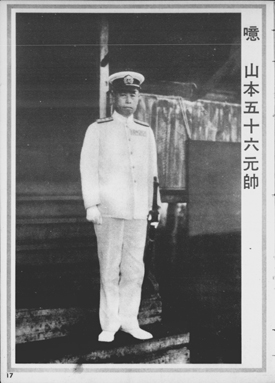
Admiral Isoroku Yamamoto shortly before his death in 1943.

“I fear all we have done is to awaken a sleeping giant and fill him with a terrible resolve”

Poppycock.

Admiral Isoroku Yamamoto never said that.

That “quote” was all Hollyweird, made famous by the 1970 film, “Tora! Tora! Tora!”

Fakenews at its finest.

That is ironic as the movie itself – one of the last epic movies of that magnitude with actual explosions and stunts – was pretty darn accurate.

___________________________________________________

In a slow return to blogging about WWII, I hope to provide some tidbits dug up from buried history about the man named Admiral Isoroku Yamamoto of the once feared Japanese Imperial Navy. I only wish to present unusual facts lost in history; certainly, your children will never read about him in school history textbooks. The textbooks don’t even mention Iwo Jima or World War II for that matter aside from only highlighting minority sacrifices in the US (Iwo Jima is now known as “Iwotou” as even the Japanese military misread the Japanese characters of 硫黄島.).

____________________________________________

Well before being ordered to plan the attack on Pearl and for the record, he was totally against having the US as a foe. He documented many times – privately and publicly – that to take on the Americans would mean the end of the Japanese Empire. His publicly voiced sentiments since the 1930’s in Imperial Army controlled pre-war Japan actually had him targeted for assassination. He was against warring with America that strongly. Imagine that.

For instance, before the imminent attack on Pearl, an aide to MacArthur (Gordon Prange, known as MacArthur’s personal historian) reported that he had one of Yamamoto’s personal letters. Prange claimed that Yamamoto had written in this letter to his close friend Ryoichi Sasakawa, “…to invade the United States would prove most difficult because behind every blade of grass is an American with a rifle.

Second Amendment, folks.

yama 15
Yamamoto in Washington, DC (year unknown). You can see the cherry blossoms surrounding the tidal basin

You see, Yamamoto had spent time in America as a diplomatic envoy (a role he detested) observing this nation. He even took English classes at Harvard, mastering it, studying the language late into the nights. He witnessed America’s production might, observing the Ford production lines and even went AWOL in a way, disappearing into Mexico living in attics and meager rations of bananas, bread and water. Not even the Imperial Japanese knew of his whereabouts.

His goal in Mexico? He had the military foresight to also take petroleum classes at Harvard. He wanted to observe Mexico’s oil fields – oil fields which Japan did NOT have, just like the island territory of Hawaii. He appeared so much like a hobo locals reported him to the Mexican authorities.

When questioned by the Mexican authorities, he told them he was a Commander in the Imperial Japanese Navy. They were in disbelief – so they wired the Japanese Imperial Navy. They replied to the effect that, well, there IS a Yamamoto in the United States but that was all they knew. The Mexican authorities were placated and Yamamoto continued on.

By the way, you may wonder how he could have even afforded that privately funded foray into Mexico. At Cambridge, Yamamoto had made a small fortune gambling. He was an excellent gambler. He learned to play bridge quickly and his American opponents lost nearly all the time. (1)

____________________

More to follow in Part II on his childhood, entry in the Japanese Imperial Navy, love life, pre-war political power in Japan, military career and the handicaps he was dealt being an admiral in the Imperial Japanese Navy.

Footnote:

(1) Yamamoto had actually amassed a tidy sum from gambling and took that with him to Mexico to fund his adventure. However, early into his foray into Mexico, he met a fellow Imperial Japanese naval officer who WAS stationed there. They became friends and as it turns out, this fellow was also a gambler – just a very poor gambler. He had incurred debt and he was to be rotated home shortly. Yamamoto couldn’t allow his new friend to return home in shame so Yamamoto gave him nearly all of his own winnings. The officer was then able to return home to Osaka without fear of shame. That is how Yamamoto ended up living like a homeless man.

Phantom Fury


What US Marines do…

I Am Abhorred


cn728ovb_400x4005627522214825210070.jpg
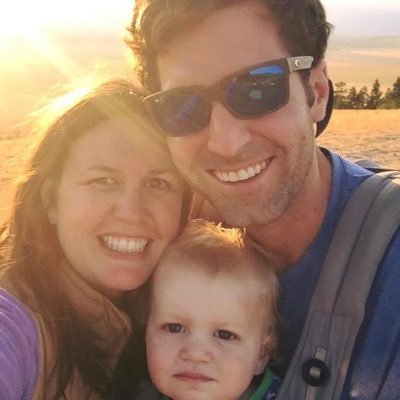
Photo by Sarah Sanders.

Several years ago, a certain “group” of people – comprised of citizens and non-citizens – screamed bloody murder when a PRIVATELY owned business declined selling their pastry to a gay couple.

Today, the same group of people are screaming for JOY when a PRIVATELY owned business told our Press Secretary they would not serve her and her party… not because of race, religion or sexual preference. Just “because”.

Believably, these people who are cheering the restaurant’s choice say, “They have the right to refuse service to anyone they choose,” just like the pastry shop.

I am abhorred.

I write this not to change your mind if you are part of this hating group; rather, to let others not of this group know there are others who feel disgusted this hypocrisy is raging – just based on unfounded hatred.

The Press Secretary is a hard working mother and wife as shown in their picture above (taken by Sarah Sanders)…and in a power position. Is this not what Liberals are preaching?

I cannot imagine the stress she is under just being wife and mother.

It…


“It…”

The suppressed demons combat vets brought back from war are not understood by the millions of Americans of today… and certainly not by the scum who kneel. It is an insult to those that died.

via “It” and Memorial Day

Two Old Keys to Memorial Day | Masako and Spam Musubi


It’s not about a three day sale or a BBQ, folks.

https://p47koji.com/2014/05/21/two-old-keys-to-memorial-day/

…and a Soldier Died Today…


The moving, poetic tribute begins at about the 20 second mark…

WWII – Packages from Home


Today is ARMED FORCES DAY!

Mustang.Koji's avatarMasako and Spam Musubi

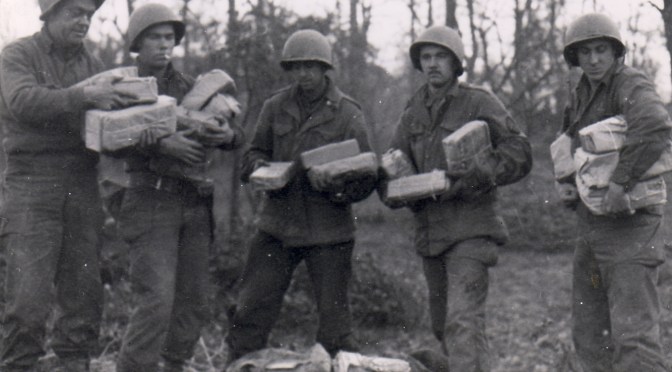
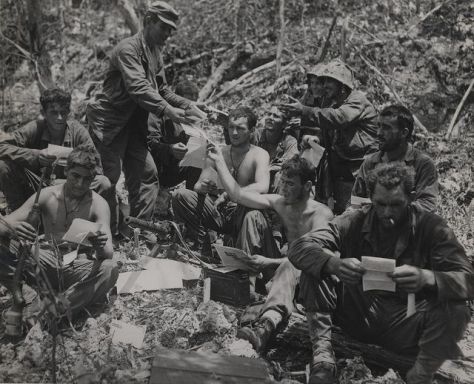
mail1 These Marines were fortunate to have mail call out in the Pacific during WWII. A package from home – with new socks perhaps being the ultimate gift – provided huge emotional uplifts.

During WWII, receiving a package from home was the ultimate morale booster for our boys in uniform.  These packages brought tremendous joy to the men, especially when they were near or at the front, subjected to the brutality and extremes of environments.
Upon experiencing the joy of receiving a parcel, very little could surpass finding the lingering scent of their girl’s perfume on a knitted muffler; candy and gum ranked up there, too.   Socks were also in high demand as socks wore out much more quickly than sweaters or mufflers and dry socks were essential necessities to ward off trench foot.  Indeed, trench foot¹ and frostbite took their toll on our boys in battle more than being wounded…

View original post 1,611 more words

The Passing of Dad


Dad was born nearly a century ago.

It’s amazing when you think of it that way.

February 25, 1919 in Seattle, WA to be exact.  Over 99 years ago.

The fifth of seven siblings born to Hisakichi and Kono Kanemoto, both legal immigrants from Hiroshima.

…but Dad passed away quietly at 99 years of age on Good Friday, March 30, 2018 in Los Angeles, CA – at the same facility where his older sister, my Aunt Shizue, passed away just a few years earlier at 95.

Just an eulogy in photographs of Dad:

1920a
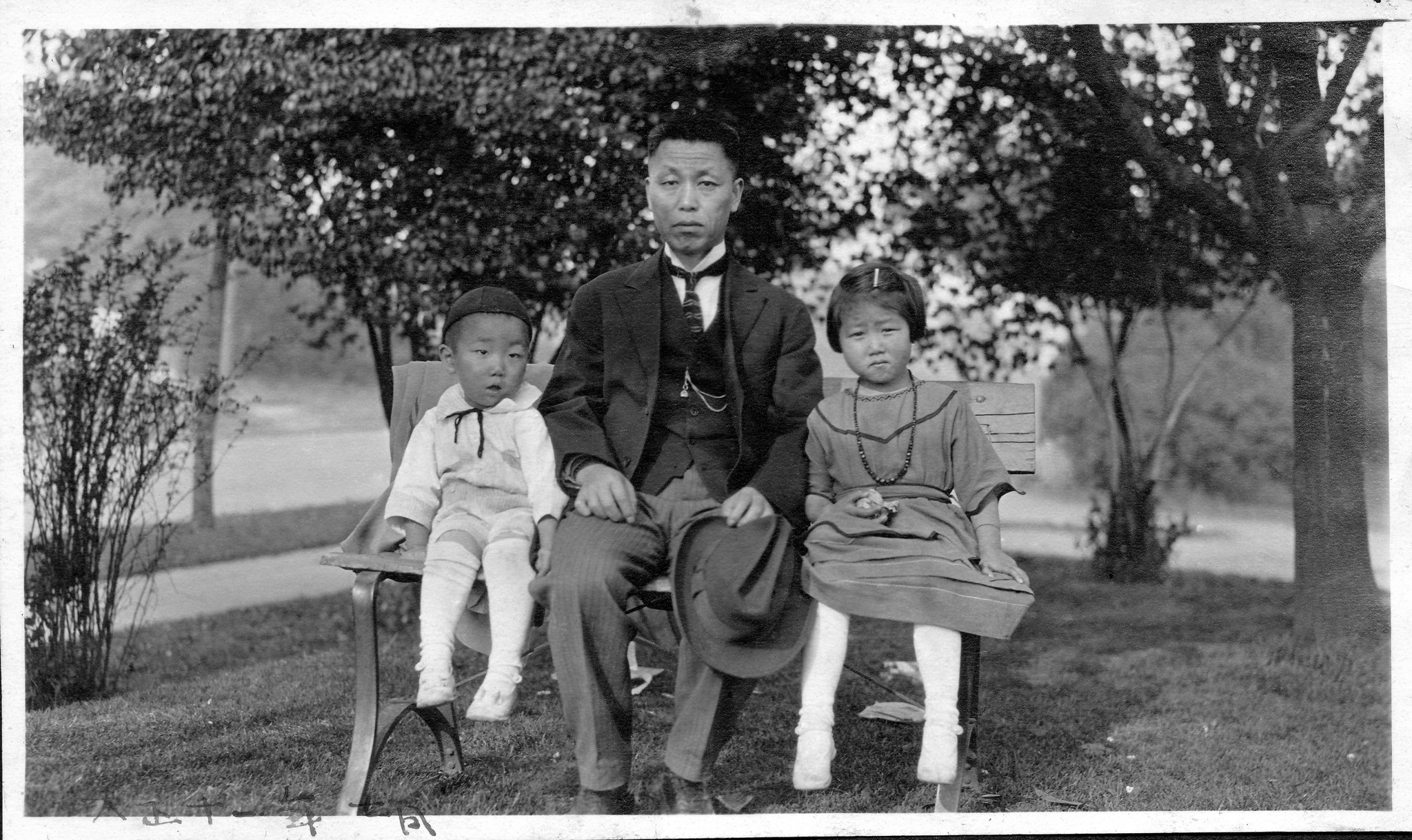
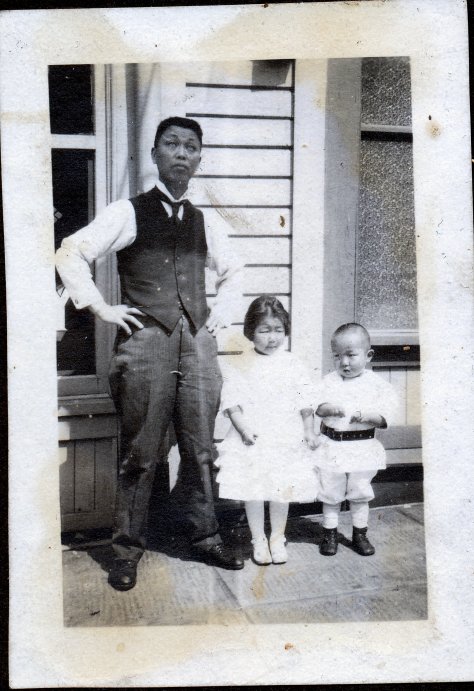
Dad on left, somewhere in Seattle with his father Hisakichi and older sister Shizue. Circa 1920.

1920
Circa1921, King and Maynard Streets, Seattle, WA

Dad at right with Grandpa Hisakichi and Aunt Shiz near their barbershop on King and Maynard, Seattle, WA. Circa 1922.


1923
Dad at far right. Grandfather holding Suetaro with Shiz holding a precious doll. Circa 1923, Seattle, WA.


1924
Dad second from left holding what appears to be a rice ball in front of their Seattle barbershop. Far left is Suetaro; to his right is Aunt Shiz. Circa 1924.


1924b
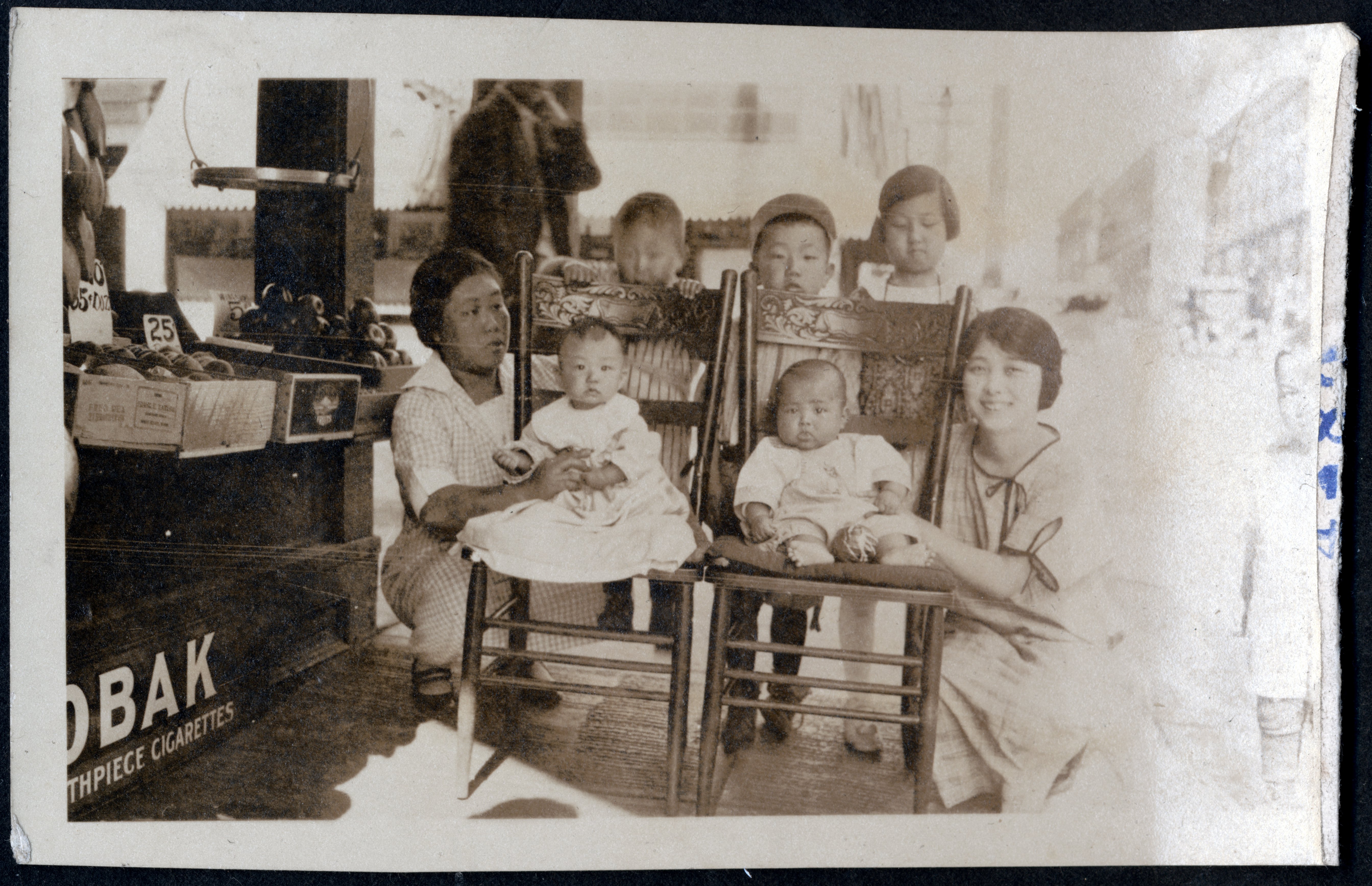
From left clockwise: Grandmother Kono, Suetaro climbing on chair, Dad with cap, Shiz, Mrs. Fujii and her son (?) and the youngest Kanemoto, baby Mieko who would pass away at 15 years of age in Hiroshima.  Circa 1925, corner of Maynard and King Streets, Seattle, WA.


1927a
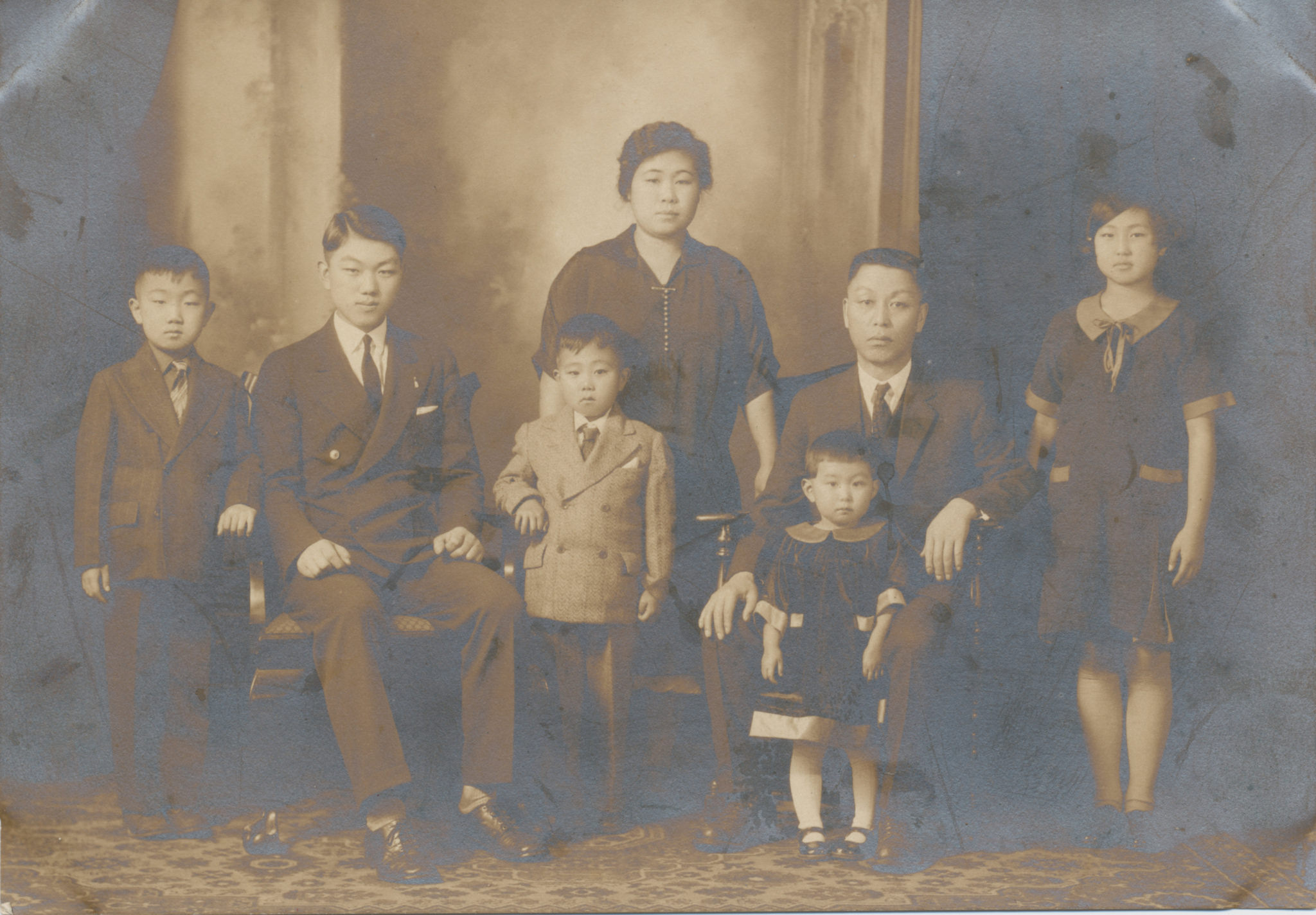
My guess is circa 1925; the youngest sister Mieko appears to be about two years old. Dad on left, Uncle Suetaro is the boy in the center (KIA as a sergeant of the Japanese Imperial Army on Leyte October 1944). By 1927, all but the oldest boy (Uncle Yutaka seated on the left) would be living in Hiroshima. Only two would return to the United States before the outbreak of war. Of those left in Japan, only my Grandma will be alive by war’s end.
This was taken in Seattle. The finish was heavily soiled by oils left by those who handled it decades earlier and could not be smoothly removed.


1928a
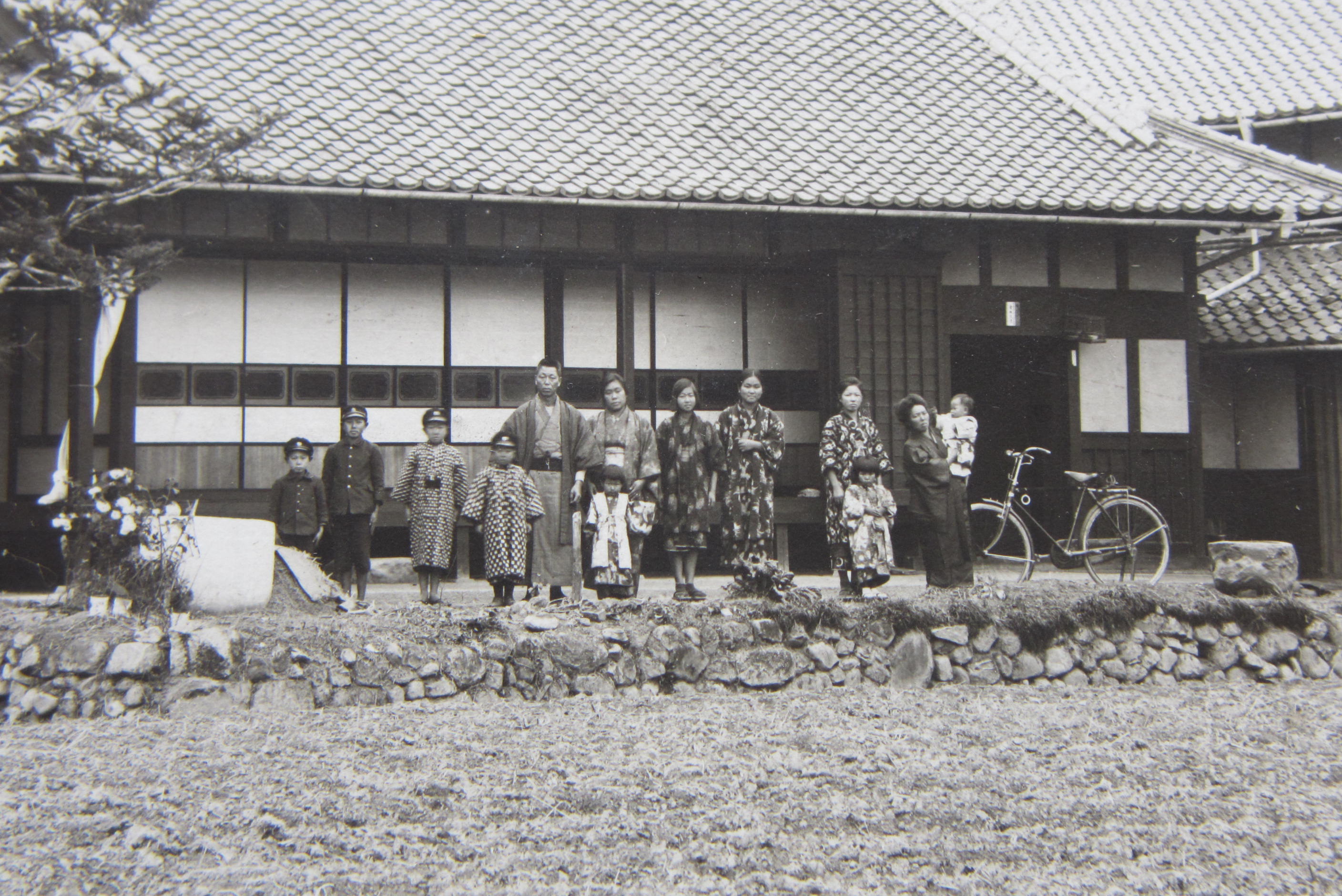
This is the first and oldest known photograph taken of my father’s Hiroshima home, still owned today by the Kanemoto family, circa 1928. Dad is the third from the left. The photo includes all of my dad’s siblings except for his oldest brother who had returned to Seattle and another brother who died at two years of age in Seattle.
The house was damaged by the atomic blast.


Dad on right next to his favorite brother, Suetaro. It is a tiny picture, about the size of a quarter, and it fell out from behind a larger picture glued in place in Granmother Kono’s photo album. Taken in front of family home in Hiroshima. My guess is 1928.


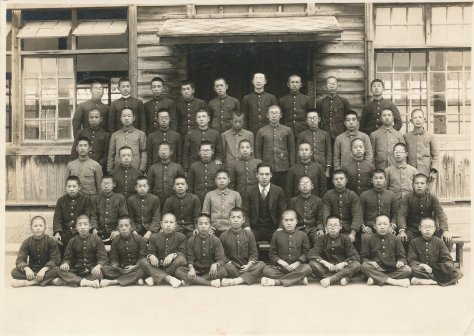
Dad is second from left, fourth row back in a lighter uniform, in a class photo at his Hiroshima high school, Nichu. It was totally destroyed by the atomic bomb. Sadly, the odds are tremendous all of his classmates were killed or wounded in the war as was his brother.  Up to a few years ago, he still remembered perhaps six of his classmates pictured. Dad was the last to pass away. Likely 1936.


I think of all the pictures of Dad spanning 99 years, this is the happiest I’ve seen him (right), posing at his Hiroshima home with his two younger siblings. Both siblings would pass away before the end of WWII. Circa 1936 is a guess.


Dad on his high school track team. He was a track star! Dad is in first row center, in white cap.


A page out of his Hiroshima high school’s yearbook: Dad in his senior high school portrait, bottom right. As verified by his predecessor high school administrative staff, he was the last one still living as of three years ago. He would return to Seattle after this. 1937.


Dad showing off his pride in his varsity sweater in front of his brother Yutaka’s home on Fir St. in Seattle. Likely taken between 1937 and Pearl Harbor.


Dad (standing) with his sister-in-law and my Aunt Haru and his oldest brother Yutaka holding his first son Seiichi Robert. Robert would die at six years of age at the Minidoka prison camp in 1944. All would be imprisoned three years later by President FDR, a Democrat. Taken in Seattle 1938.


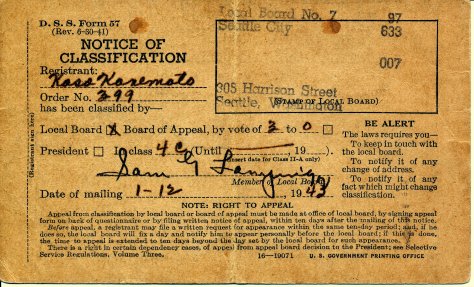
Dad’s draft card that classified him as an Enemy Alien (4c). Ironically, he had to carry it around in his wallet at all times while imprisoned at the Tule Lake and Minidoka prison camps – therefore the crease. 1943.


Dad preparing to ship out to Japan with the rest of his US 8th Army Military Intelligence Service buddies. He was one of the first graduates of the now US Army’s Defense Language Institute Foreign Language Center. Presidio of Monterey, November 1947.


Dad somewhere in Occupied Japan, March 1948.


Dad on his fateful day. Poor guy. I never heard him talk back to mom… ever. Tokyo February 1951.


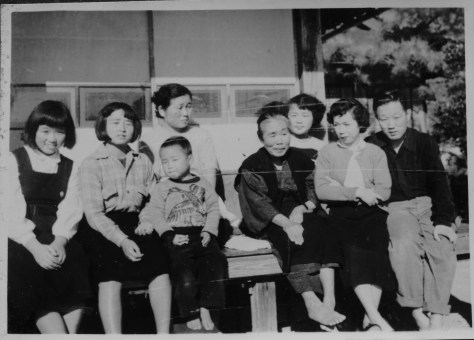
When Dad (at right) took mom to meet his Hiroshima relatives – including my Grandma (circa 1951). I can sense the tension between aristocrat Mom and coubtry woman Grandma Kono! LOL His mom would pass away in 1954, his oldest sister Michie (center) in 1963. All were survivors of the atomic bomb.


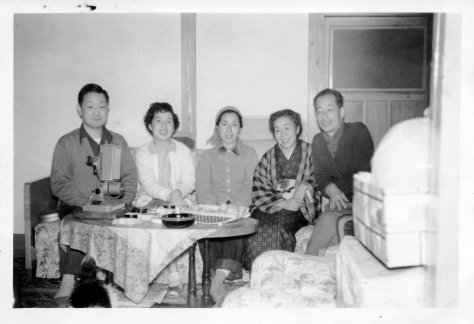
Likely taken soon after their wedding in 1951. Dad, mom, Aunt Eiko, Grandma and Grandpa. Notice the heavy metal 16mm Bell & Howell movie projector. I remember using it in Los Angeles as a kid. Tokyo.


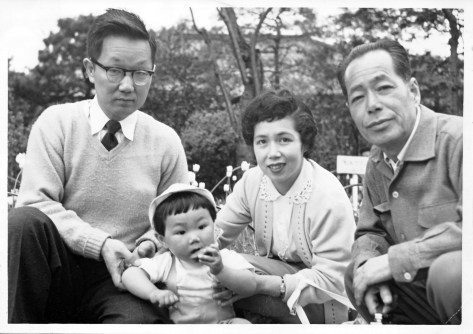
Dad of left with mom and Grandpa.  I’m the kid.  May 1956 – Tamagawa Park, Tokyo.


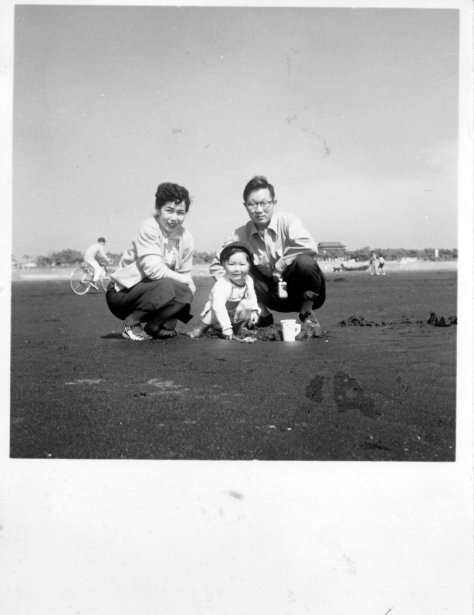
Dad with mom and me. Dad will decide to leave for America for good the next year. April 7, 1957 – Enoshima Beach, Tokyo


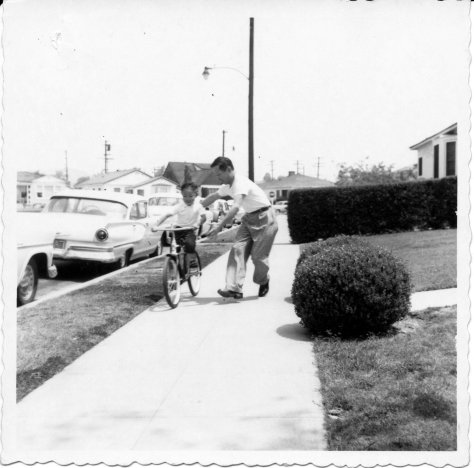
Dad watching over me trying to ride my first bike, a Sears Outlet J.C. Higgins. His beat up 1955 Ford Victoria Custom’s fender can be seen at left. Taken at home on Oakford Drive in East Los Angeles. Circa 1962


Dad in yellow sweater with some of mom’s Nisei friends. My guess is circa 1969. My guess also is that they have all passed away. East Los Angeles.


Dad still wearing that yellow sweater! His first new car (now eight years old in the picture) – a 1963 Mercury Meteor Custom – behind us at LAX, picking up Aunt Eiko and Uncle Paul (also a US 8th Army MIS veteran) who flew in from Tokyo. May 1971.


Dad with his older brother Yutaka and oldeer sister Shizue. Best guess is 1985, location unknown.


Dad (R) returned to Hiroshima for a vacation in 1997; Masako is in the center. This was taken at his family home. Notice the stepping stone; it is the same one Masako stood next to in a picture taken in 1948. Sadly, this would be his last time in his beloved Hiroshima.


Dad actually “died” on his birthday in 2010 when he slumped over just before eating lunch. My oldest daughter Robyn (back to camera) saved the day by jumping in then shaking him until his heart started beating again. What was funny was after starting to breathe again after about a minute, he had no idea anything happened. Paramedics tend to him. Irvine, 2010.


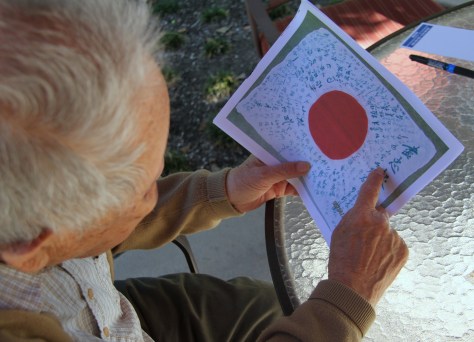
Dad in 2012 deciphering the names written on a captured Japanese battle flag from WWII. Some of the people who came across my WWII blogs contacted me about such souvenirs their grandfather’s brought back from the Pacific; they were hopeful Dad would be able to read the key names and village from where the deceased Japanese soldier came from in their attempts to return the flags.  I thought it good for him, just to keep his mind active.  Truthfully, there aren’t many left who can read these old characters.  Not even my mom or aunt could read them. Dad reads them like he was 18 years old.


This will be the last time Dad and his older sister Aunt Shizue would see each other. She would pass away quietly a short time later at the age of 95. Dad would pass away at the same facility.


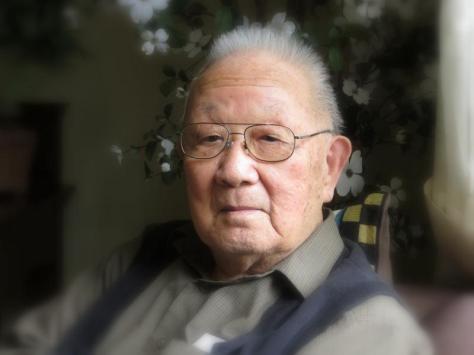
A cell phone portrait of Dad several years ago at his assisted living facility. After eating, the dining room servers would tell me Dad would sometimes come back a short time later, sit down, and begin to order breakfast again.  The server would say, “Koso, you just ate!” and he would say, “”Oh, yeah?  Pumpkin head.”


Dad in center at my oldest daughter’s wedding, January 2013. Photo courtesy of Toyo Miyatake Studios.


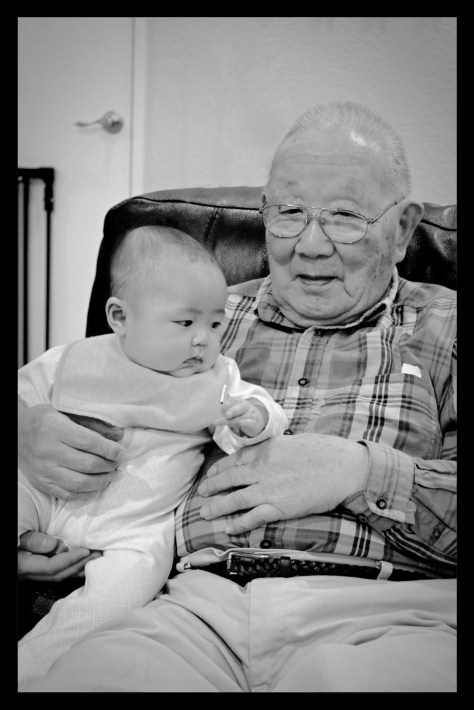
Although 96 years of age, Dad meets his only great-grandchild Emi. I think everyone was scared he was going to drop her. 2014.


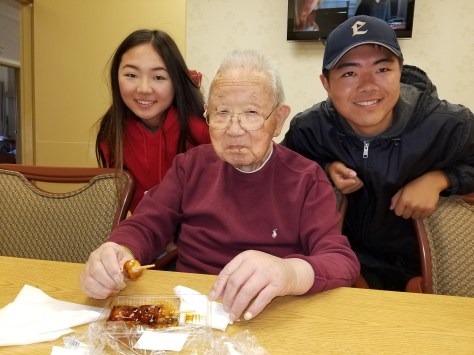
My last picture of Dad, flanked by my two youngest kids, taken on his 99th birthday last month. Yes, he is smiling because he got to eat his favorite sweet, “Odango”. February 2018, Los Angeles.


And my last video of Dad:

Dad, I wish I were a much better son…  but I know you are joyfully back playing “oninga” or jump-frog in front of your Hiroshima home with your favorite brother Suetaro.  I hope you have all the odango you can eat now.  You will be forever young.

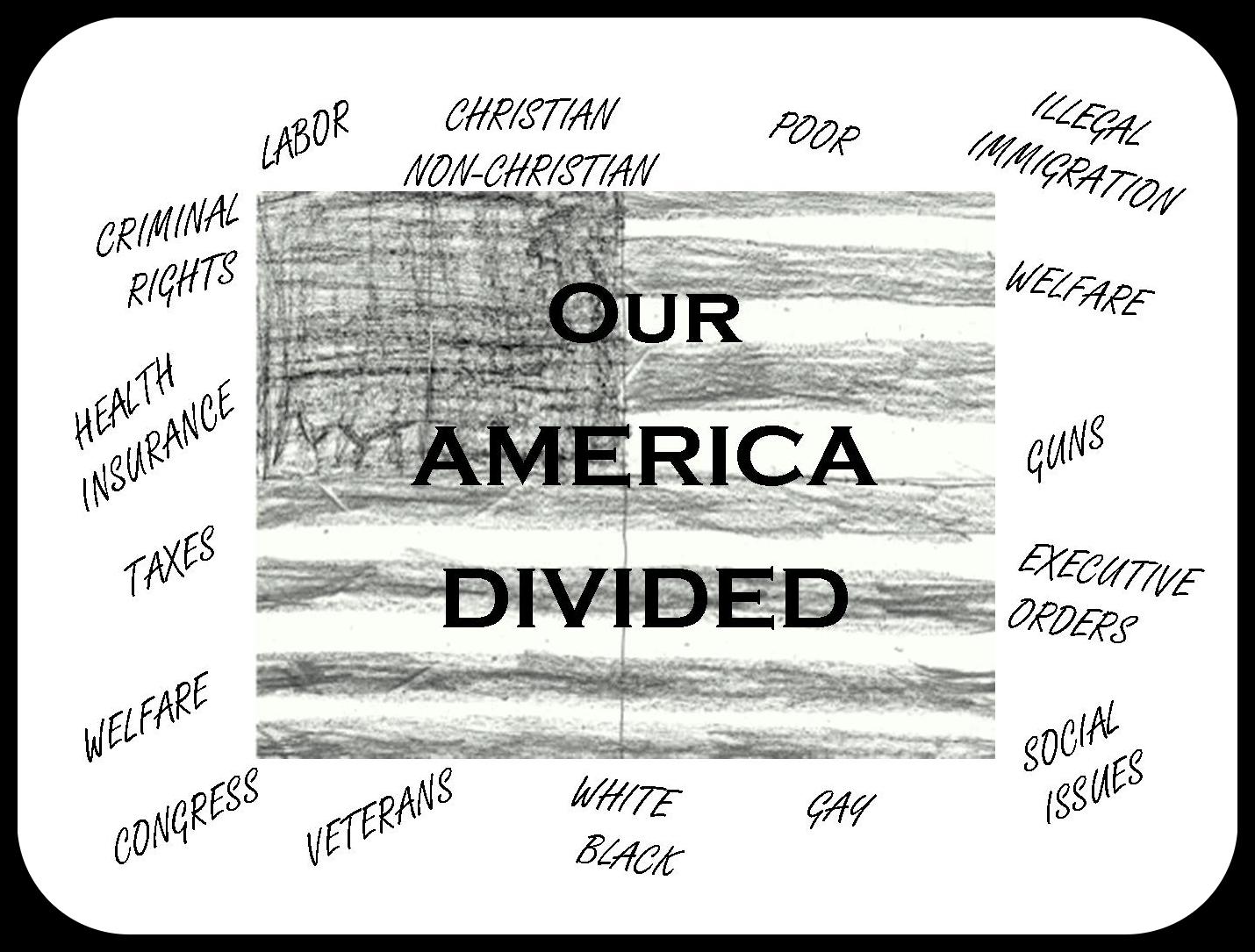
Our America Divided


I wrote this about four years ago, I think… and it is not re-blogged to change anyone’s mind on a topic, especially if you eat soap pods. More so, it is re-blogged to let others know they are not alone in how they feel. Remember, this was written about four years ago.

Mustang.Koji's avatarMasako and Spam Musubi

America Divided My feeble attempt to express my opinion…

Our United States has become less of a nation.

It is more than just split in half.  A nation cannot survive split in two.

Think of our country being not much more than local drug gangs fighting for their drug turf.

Their own street corner in their perceived territories.

Each gang with their own beliefs, their own mini-economies, their own cultures and in-fighting for control.

And killing those who invade their boundaries.

One gang is right.  The other gangs are wrong.

And they choose to ignore their neighborhood if not hold them hostage.

_________________________

To me, our nation no longer has collective major goals.

Heck, we Americans now may actually have less commonage with other Americans than ever before.

In my opinion, segregation by race fueled the beginning of disunion.

No.  I don’t condone segregation.  Of course not.  However, since the intense focus…

View original post 459 more words