The Pain of Survival and Aunt Michie – Part 4


You can hardly tell this is a young girl anymore. As Masako and Mr. Tsukamoto told me, they were walking dead. Flesh literally melted off their bodies and dangled. Grotesque forms which were once human beings.

The aftermath of the bombing was no different from hell.  Not that I’ve seen hell nor that I would want to…

But Aunt Michie and my very young cousins saw it.

They visited hell.

_____________________________

a-bomb1
Atomic bomb survivors. Perhaps this is what Aunt Michie and her cousins saw in their search for relatives on the other side of the hill. If you notice the flask the young girl is holding to her lips.  It was likely filled with radioactive water.

Nearly all doctors and nurses within the city had been killed or seriously wounded on August 6, 1945.  If they survived the blast, they were likely to fall ill from radiation poisoning and they themselves would die within days.  All remaining medical supplies – which had been nearly non-existent due to the war – had been destroyed as well.  Most food – even unpicked fruits or vegetables – were contaminated with radiation as was water(¹).  Thousands of corpses plugged the rivers as they would go in to soothe their burns but would soon perish.

It is important to note that food rationing in Japan was much more extreme than what was imposed on the American public.  While the rationing in America began in May 1942, it started with just coffee and sugar.  In Japan, rationing of a far more extensive reach began in 1939 if not earlier.  It extended to nearly all first quality food stuffs.  Rice, barley, seafood, meat, soy bean paste and soy sauce, vegetables, fruit, seafood, etc.  Groups called “tonari-gumi” were established in villages and the like; they monitored and rationed food to the Japanese families based on what work they were doing, e.g., war production, number of family members along with their age and sex.  The rationing was so severe that when one family member died, the family did not report it.  The average caloric daily intake was cut down to less than 2,000 a day by 1945.
homeless_orphan_in_postwar_tokyo
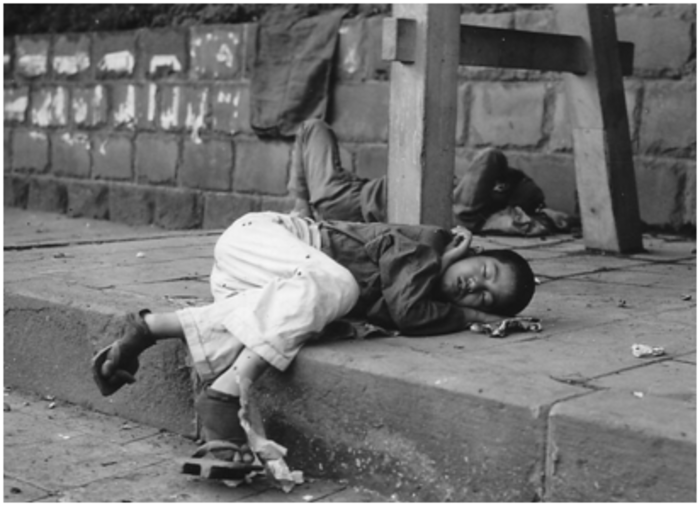
Homeless orphan in Tokyo. He would have to be determined if he was to survive.

The Japanese civilians were starving, so to speak, and were without question malnourished.

Aunt Michie was no different.  She was hungry like everyone else and likely tired easily due to low nutritional intake and daily physical and emotional demands upon her.  It is important to have an understanding of her condition at this crucial moment in history.

________________________________

2-sadako1
Sadako – taken in early 1948 by my father while on furlough. She would marry a distant cousin (common cultural practice at that time) who was also badly burned in the atomic explosion.  She is wearing clothing my father bought for her at the Tokyo PX.

After the shock and black rain subsided, Aunt Michie’s thoughts immediately went to her treasured family.  According to my cousins, she went into her priceless family rice reserves and cooked real rice for the children.  Sadako, the second oldest, remembers to this day how she savored that bowl of rice, a definite luxury at that time.  While but a child of ten years and filled with anxiety about eating such a fine meal, she saw at that moment her mother’s love and affection for them was unconditional.

Aunt Michie’s thoughts went to the Aramaki family (aunt and uncle’s family) who lived in Hiroshima.  She had no way of knowing that day but they had become direct victims of the atomic bombing.  They had been burned over most of their bodies and had even been trapped under their destroyed house.  They managed to struggle with their searing injuries to Aunt Michie’s house to seek refuge and care.  They had realized that only strong family support would allow them to live.

Grotesquely, the path going over the 300 meter high hill which the relatives traveled became littered with scores of dead people.  Masako said they were unrecognizable lumps of flesh and died where they crumpled.  Many had their clothes burned away.  While thousands were killed instantly, other thousands suffered for days before dying from intense burns, radioactive poisoning and other injuries.  As radiation poisoning was unheard of amongst them, some were told they had dysentery and the like.  Many before dying oozed pus from their ears and blood ran from their noses.  You will not read this in any Western textbook.  In fact, the gruesome information about the days, months and years after August 6th was suppressed for a couple of decades by both governments.

While the dazed and immensely pained adults struggled to Michie’s farm, there were young children of the family unaccounted for(²).  Without hesitation and unbelievably, Aunt Michie – in her weakened state – pulled a two wheel cart over the hill to Hiroshima to look for them.

Over a hill.

大八車
I believe this to be the type of cart Aunt Michie pulled to Hiroshima to look for the unaccounted for children of the family. Kiyoshi called it a 大八車, or large two wheeled wooden cart.

Miraculously and while the details are lost, she found some of them and hauled them back to the farm on the cart, now laden with the additional weight of the children…  on the same road that was further littered with dead and dying people.  Think of the mental anguish Michie had to endure when dying people came up to her and asked for her help…  It would be difficult to not look at them.  It was more difficult to ignore them, I’m sure.

According to my cousins, a total of 23 people got refuge and care at Aunt Michie’s farm.  I understand many were relatives from the Aramaki side of the family.

There were more hurdles for Michie and her children immediately ahead – caring for the injured and dying.

_____________________________

526
You can tell which way this woman was facing when the bomb went off. Her left side is burned. Photo was likely taken after August 6, 1945.
Caring for Victim of Hiroshima Bombing
A mother looks after her child. This photo was also likely taken after August 6, 1945.
Victim of Hiroshima Bombing
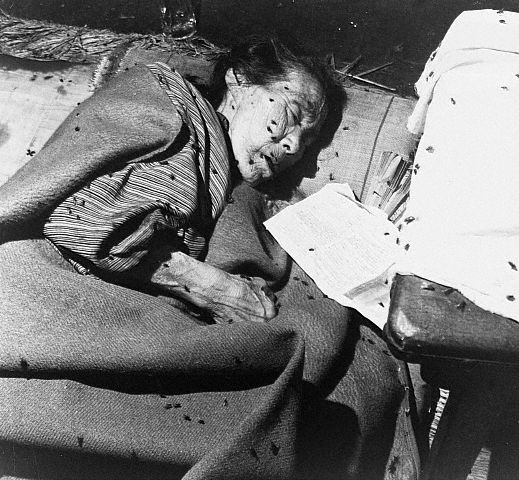
An elderly woman lies dying on the floor covered with flies. Perhaps this is just one of the sickening sights Michie and her children have buried in their conscious.

The preceding photographs may show what Michie and the children were faced with.  And the children were just that – children.

How old are your children, by the way?

The older cousins recall that they, Michie, Mikizo’s parents and the less injured relatives took on a 24 hour a day field hospital of sorts to treat the injured.  It was stifling hot and humid; yet, they had to be given constant attention and there were so many of them.  I cannot imagine how exhausting this task could have been, especially when you are hungry and malnourished yourself.

pattern
Taken sometime after August 6, 1945. The side of her you see is what had faced the atomic explosion. The patterns are from her clothing she wore that day. It was where the dark patterns of her clothing had been in contact with her skin. Masako recalls vividly this type of pattern among the burn victims and that the maggots followed that pattern.

The common injury were burns.  Severe burns…and they had no medicine whatsoever.(³)  No Bactine.  No Motrin.  No aloe.  All Michie could do was to coat the burns with a type of cooking oil and bandage them with pieces of cloth.  She must have endured unlimited anguish in knowing she could not measurably lessen their pain and suffering.  There must have been constant crying and unbearable moans of pain.

And on their hands, blood from human beings.

3-namie1
Namie – taken in early 1948 by my father while on furlough.

Six year old Namie could never forget what she had to do.  Flies were swarming having sensed dying flesh.  Namie was tasked with shooing them away with a fan but they wouldn’t stay away.  And worse yet – time and time again, she had to remove the maggots that were feeding on dead flesh…with chopsticks.  I do not know if I could have done that…but Namie did.

The turmoil that must have stormed inside Aunt Michie to tell her daughters to do what they had to do for the sake of survival…and then to be stern with them and tell them to continue when they wavered or cried…  must have been punishing to her as a loving mother.  She must have wanted to cry.

Aunt Michie was the point woman.

And she fulfilled that role.

Her goal was to get everyone to tomorrow.

_____________________________

To be continued in Part 5….

Notes:

(1) Per my 2012 meeting with Mr. Tsukamoto in Hiroshima, water is the main theme of the Cenotaph at the Peace Park.  Survivors clamored for water.  Where there was well water, many survivors were suffocated as dozens more pressed against them for the precious liquid.  Please see “A 1937 Yearbook, the Atomic Bomb and Hiroshima” for further information and links to their personal story.

(2) The number of unaccounted for children is unclear.

(3) Mr. Tsukamoto recounted how they had to constantly mash yams and place them over their burns to temporarily lessen the pain.  They did that for over a month, he says.

The Pain of Survival and Aunt Michie – Part 3


Japanese-home-defense-training_1945
Japanese women being given “home defense training”. My grandmother on my mother’s side underwent such training on a Tokyo schoolground. 1945.

The Japanese home front had essentially collapsed by 1945.  Instead of focusing on food, supplies, building air raid shelters and organizing orderly evacuations of civilians, Japanese military leadership focused on misleading news reports and propaganda.  Millions fled the cities into safer rural areas(¹) on their own initiative but once there, supplies of daily sustenance was meager.

_______________________

In one’s own life, you are tested.  A good human being will at times prove oneself to be a good brother or sister, son or daughter, friend or life partner.  Some fail.  Some pass.

Aunt Michie was one who passed; her heart led her to care for others before herself.  It is as if she knew being good to others was the way to have a good life.

As an example, US air and naval forces ruled the skies and the seas.  A key staple of the Japanese diet – fish – had been nearly cut off  as fishing boats were attacked once out to sea.  Yet, when Aunt Michie came across sashimi, she traveled hours with Masako in tow to take a precious portion to her brother Suetaro at his army base in Fukuoka:

“…(Masako) remembers a couple of trips (to see Suetaro). It was not easy travel in war-torn Japan.  For one trip, Aunt Michie managed to take sashimi – in this time of little food, it was a tremendous treat and gift. On that trip, Masako remembers her mother stealthily sliding over to Uncle Suetaro the wrapped sashimi. He was being stared at by many of his fellow soldiers – they were not well fed either.  She remembers Uncle slowly turning so that the others could not see and quickly devoured the treat.”

(From Masako and Spam Musubi)

Aunt Michie could have eaten the precious sashimi herself…but didn’t.

___________________________

With her husband taken by the Imperial Japanese Army then dispatched to war in Manchuria, she was burdened with running the farm… still laboring to produce crops only to be taken by the military.  She would get up before sunrise, help prepare meals, tend to the family then toil in the fields.  And when her mother became partially paralyzed and alone in her own home five miles away, Aunt Michie knew she had to take care of her, too.  Michie was the last of her children left in Japan.

My Grandmother Kono – having suffered a stroke – is propped up from behind by Japanese “shiki-futon” for the picture. She would not see her son alive again. Taken in Hiroshima, May 3,1944.

While Michie and Grandmother Kono managed to get part-time care, Aunt Michie still took it upon herself to check in on her stricken mother.  My cousins tell me their mother Aunt Michie would take them along for the ten mile round trip to her Kanemoto family home.

No car.  No bus.  No taxi.  No trains or bicycles.  They had to walk.  After all, it was 1944 and fuel was a huge luxury.  One memory the youngest happily recollect is that they would take turns riding in some kind of baby stroller that Michie would push to Grandmother Kono’s.  Neverthless, it was still a great deal of effort and sacrifice on Michie’s part in any case… and she did this after working in the fields, too.

Masako will eventually end up caring for Grandmother Kono.

___________________________

IMG_5869
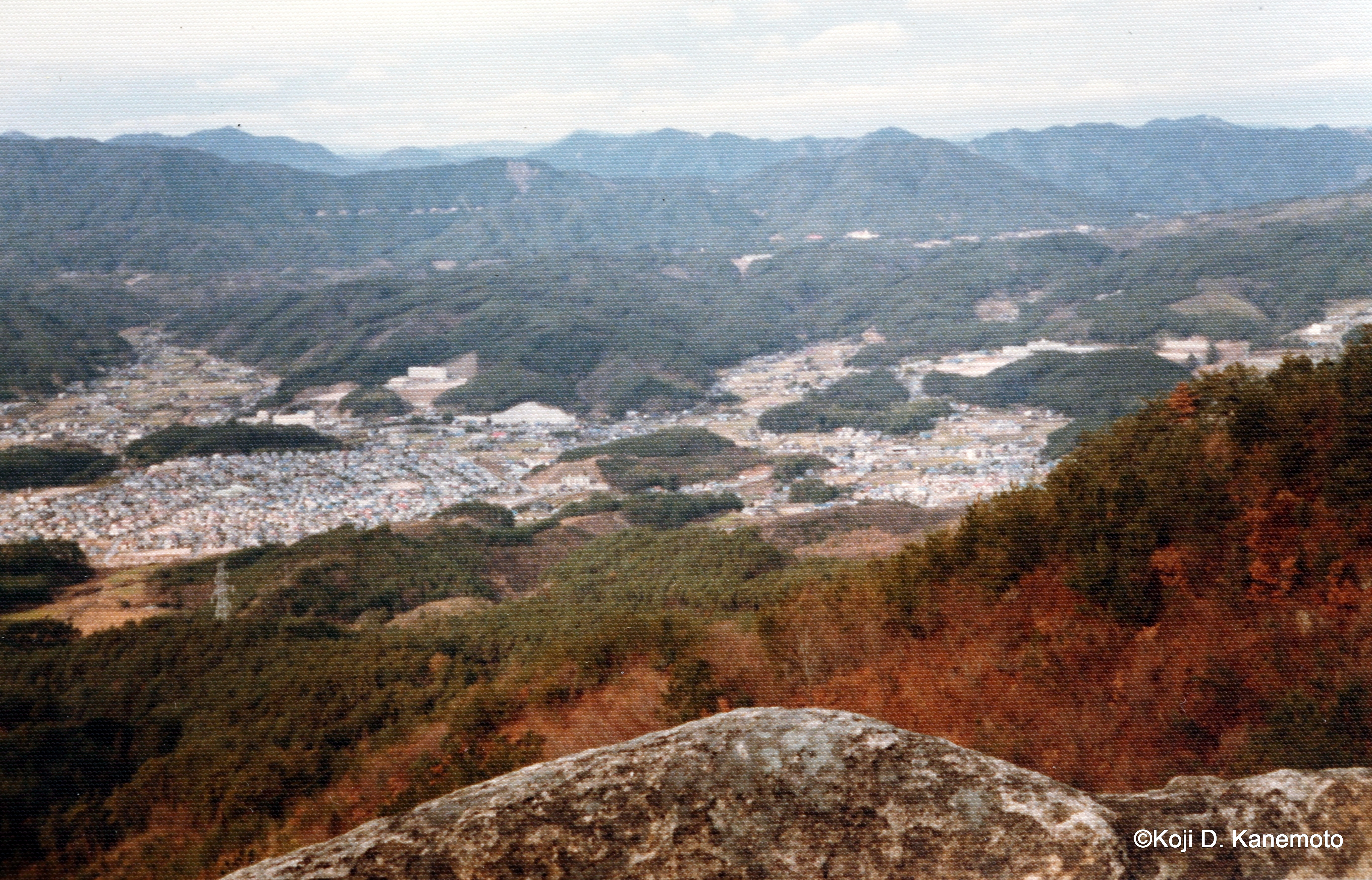
Family photo taken of the town of Tomo about 35 years ago atop the 300 meter tall hill separating it from Hiroshima. Hiroshima is directly behind. This short hill served to partially deflect the atomic bomb’s shockwave. Courtesy of Kiyoshi Aramaki.
IMG_5870
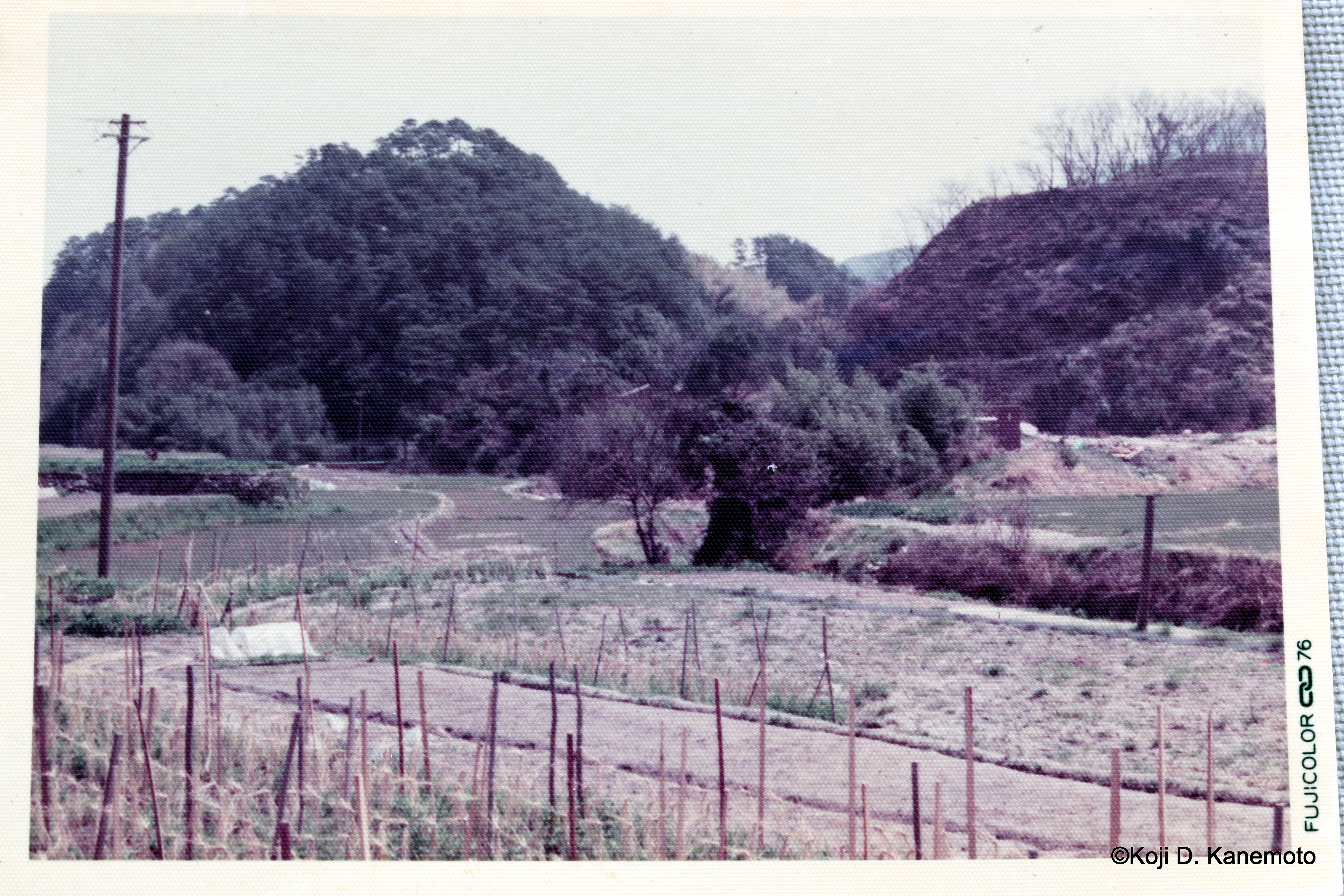
Per Kiyoshi, this was taken from the house and shows some of the field Michie had to cultivate. She was here when the shockwave hit. While the one on the right is no longer there, the family burial plot was between the two small mounds you see here. Courtesy of Kiyoshi Aramaki and dated 1976.

After picking herself off the ground, Aunt Michie saw an evil yet mystifying mushroom cloud slowly rising up beyond the 300 meter tall hill separating her village from Hiroshima proper.  At that instant, she knew her life had taken a wrenching turn for the worse… as if it could get any worse.

I cannot imagine what was going through her mind and heart watching that mushroom cloud rising.  She could not have even dreamed that it was one massive bomb, a couple of kilometers away, that could cause this sort of force and devastation.  It must have defied belief.

Hiroshima_10
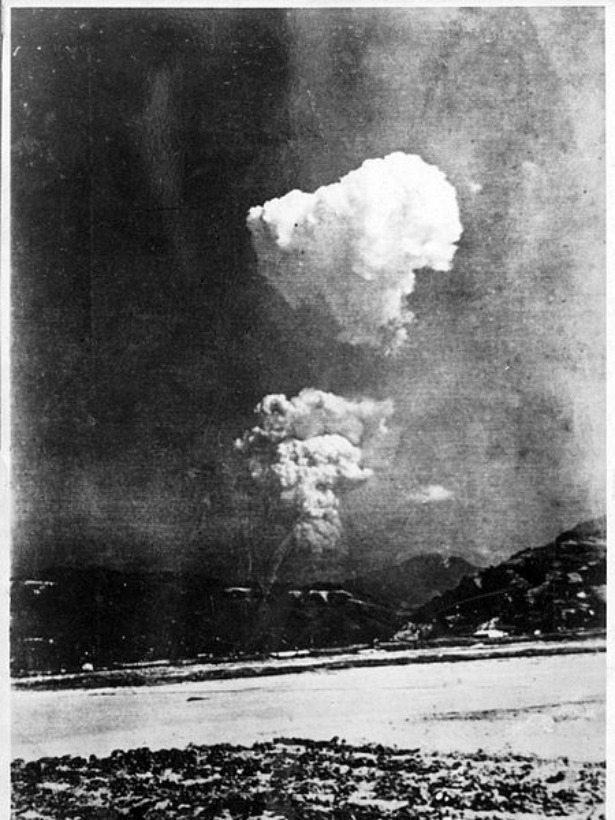
A relatively unseen image of the explosion, taken from a Kataitaichi, six miles east of Hiroshima. Michie was nearly due west and on the other side of the cloud. The cloud would reach 40,000 feet in just four minutes. It would ultimately rise to 60,000 feet. (Horikawa Elementary School)

According to Michie and my cousins, the shockwave blew out all the sliding doors, all the tatami mats were flung and the ceiling was shoved up in the house.  Try to imagine yourself being inside the house.  The same thing happened to Grandmother Kono’s house five miles south (See map in Part 1).

As per their daily air raid drill, they apparently all ran to the air raid shelter in the small hill behind their house.  After about half an hour and with the mushroom cloud still rising, a black, syrupy rain began to fall on them.  According to the cousins, Michie believed that the Americans were dropping oil from space.

She could not have fathomed it was contaminated with over 200 kinds of radioactive isotopes.  We now call it black rain.

IMG_6116
I took this photo of a preserved wall section stained with actual black rain from that fateful day. Hiroshima Peace Museum, November 2013.

Sadako, who was ten years old, clearly remembers their white blouses had turned black from the rain.  No one – absolutely no one – knew that other than staining skin, clothing, and buildings, but that ingesting black rain by breathing and by consumption of contaminated food or water, would lead to radiation poisoning.  Even flowers would bloom in distorted shapes and forms from the radiation.

_______________________________

With the enormity and the suddenness of the brilliant flash of light followed by a shockwave and the swirling mushroom cloud, Michie deep inside knew her world had forever changed.

Horror was to literally come into hand shortly to enforce that foreboding thought.

_______________________________

To be continued in Part 4….

(1) Albeit late, my mother’s family fled to the Fukui Prefecture in early July 1945 to escape the bombing of Tokyo.

I’m Gonna Sneeze…


I'm Gonna Sneeze...

Taken at Mt. Vernon, 2010.

Invited the 4th time to “In Explore” on flickr.com.

I feel pretty good about that since I’m just an amateur. You should see the other professional photographs in that group. Click on the photo then go to “in Explore” to see the other fantastic images from around the world.

The Pain of Survival and Aunt Michie – Part 2


Taken in 1945 after a B-29 bombing attack on Tokyo. There is little left of the city and many, many families were without food and homes. Sadly, there were thousands of orphans as well, many of whom would perish.

Human dignity is as crucial to an earnest life as is air, water and food.

Aunt Michie drew upon that dignity inside her to help her family and others survive the day to day ruthlessness of life during war and ultimately, the atomic bombing.

While her dignity was larger than life, Michie would ultimately sacrifice her health and well-being to ensure her family and others would survive…and survive strongly.

___________________________

obaachan
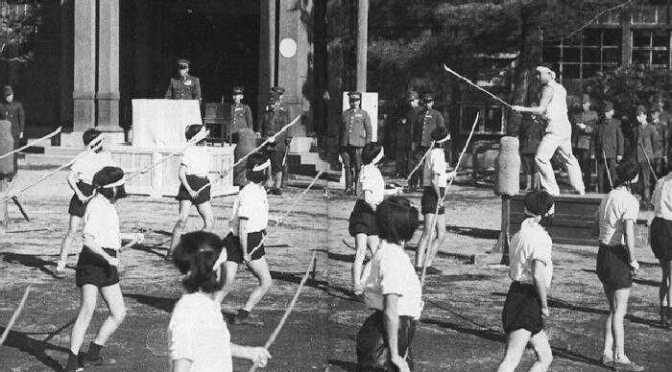
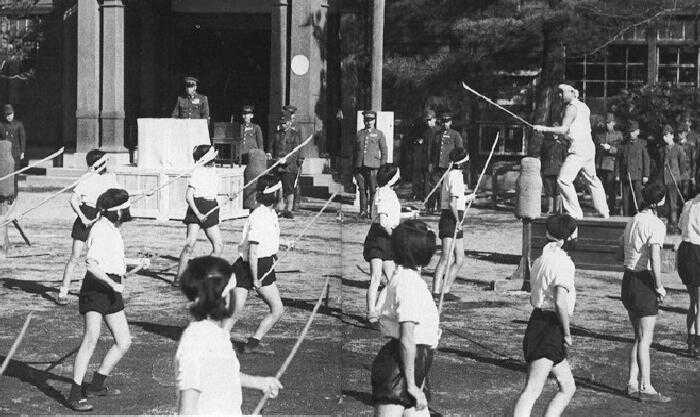
Japanese high school girls being drilled on how to use bamboo spears to ultimately repel “the invaders”. Notice the presence of the Imperial Japanese Army in the background observing.  Tokyo 1944.

By January 1945, Japan had already lost the war.  While the Japanese military leaders controlled the country and its path to ultimate destruction, the civilians took the brunt of war.  Many cities had been destroyed by US bombing raids leaving millions of families homeless.  There was not enough food to go around.  Many starved to death, especially orphaned children, if not from neglect as others would shut their eyes to them.

However, Hiroshima was largely spared from aerial attack.  The US did carry out bombing raids in March and April 1945 against military targets in Hiroshima but it was not frequent…but it was frequent enough to require air raid drills  The naval port of Kure though, where the battleship Yamato was built, was essentially destroyed in June 1945 by US Army and Navy bombing attacks.

HiroshimaBombingMap
A hand drawn map showing targets and damage to Hiroshima by US bombing raids including the atomic bombing. For a zoomable map, please copy and paste this link into your search bar: http://www.digital.archives.go.jp/DAS/meta/DGDetail_en_0000000611
Source: National Archives of Japan

___________________________

After her marriage in 1933, Michie was tasked to arduous farm labor at the Aramaki farm.  Their primary crop was rice.  She also gave birth to five children before war’s end: Masako (1933), Sadako (1936), Namie (1939), Tomiko (1942) and Masataka (1944).  Kiyoshi would follow in 1947.  She loved them unconditionally.

Michie image1
A happy Aunt Michie and likely Tomiko. Tomiko would soon be adopted by another family in the actual city of Hiroshima.  Undated but perhaps 1943.

On the farm lived Mikizo, his parents and Michie.  The four of them – and eventually three of her oldest daughters (a total of seven family members) – would work the land from a little before sunrise to sunset.  It was hard, arduous labor.  Back breaking work.  They did not have John Deere tractors or combines to aid them but had an ox to plow the fields with.  This was 24/7.

After all that hard labor, nearly the entire crop was taken by the Japanese military for the war.  They were allowed to retain a small portion of the crop for their own use.  As a result, rice was even further rationed for family consumption.  They had no choice.  On top of that, there was little else to eat.  They lived a meager life per my cousins.

__________________________

As the war dragged on, Japan was descending into the abyss…and it kept getting more and more darker.

In the story “Dear Mama”, Michie’s youngest brother Suetaro (my uncle) hurriedly wrote a somber good bye letter to Grandmother Kono in his war diary.  He was being sent off to war and certain death.

Farewell
Farewell sendoff for Suetaro who was heading to certain death. Michie is to his left and holding Masataka; Mikizo to his right. It is only an educated guess but the older man to the right of Mikizo is his father.  May 3, 1944.

I wonder how she really felt, knowing that Suetaro was going to fight to his death against the country in which his two older brothers and sister were imprisoned.  They were her brothers and sister, too.  An ugly internal conflict.

______________________________

The area around Tomo was nearly barren of younger, physically capable men.  All the men up to 35 years of age were taken by the army, regardless of their family status.  Mikizo was no exception.

In late 1944, at 35 years of age, he was taken by the Imperial Japanese Army.  Suetaro foresaw that happening in his farewell letter; he warned Mikizo to fully cooperate with the officers and to do exactly as he was ordered.  This was because it was brutal even within the non-commissioned ranks of the Imperial Japanese Army; the training officers routinely beat recruits into submission.  These recruits were largely the men who were ordered to their deaths in “banzai charges” by the thousands.  They greatly outnumbered the “hard core” Japanese officers.

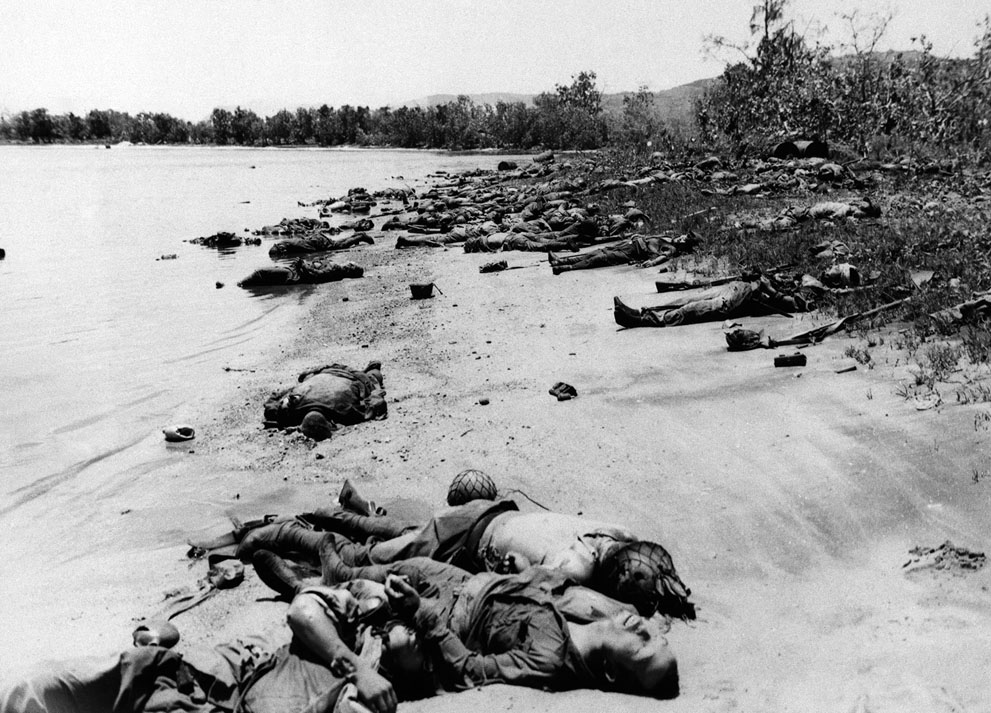
banzai killed
Aftermath of a banzai charge.

Aunt Michie’s family who tended to the back breaking labor on the farm was now lessened by one.  As with her brother Suetaro, she foresaw never seeing Mikizo again.

To make matters worse, her mother (my Grandmother Kono) suffered a cerebral infarction the day she learned Suetaro was being sent off to war.  She became paralyzed on her left side.  To get about the now empty house, she would have to pull herself around with her right arm.

On top of everything else – tending to the crops, the house and the children – Aunt Michie now had to care for her disabled mother.

Michie’s daily life was now further strained with even more stress…  Life must have appeared darker to Aunt Michie.

Michie’s willpower and dignity will now be on trial and severely tested.

But the struggles she will endure will have purpose.

She would not let her family down.

____________________________

To be continued in Part 3….

Somebody Say Strawberry?


abIMG_8040
My completed strawberry pie.

This old croaker of a former mechanic thought he could cook… again.

Will I ever learn?  Would someone padlock the kitchen please?

Actually, I had a request… for a homemade strawberry pie.

Daryl Strawberry first came to mind.

Duh.  I must have been on drugs, too.  What did I get myself into?  What was I thinking?  A strawberry pie?

____________________________

abIMG_8025
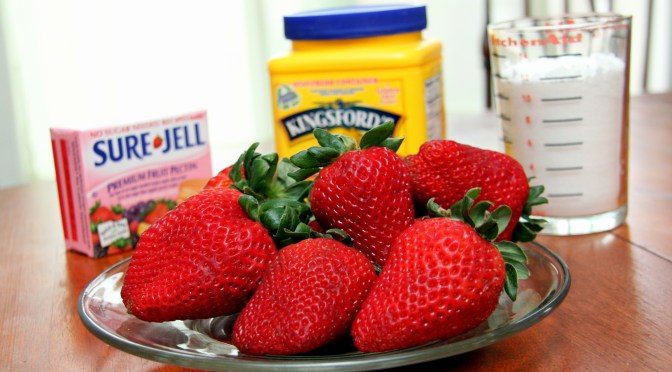
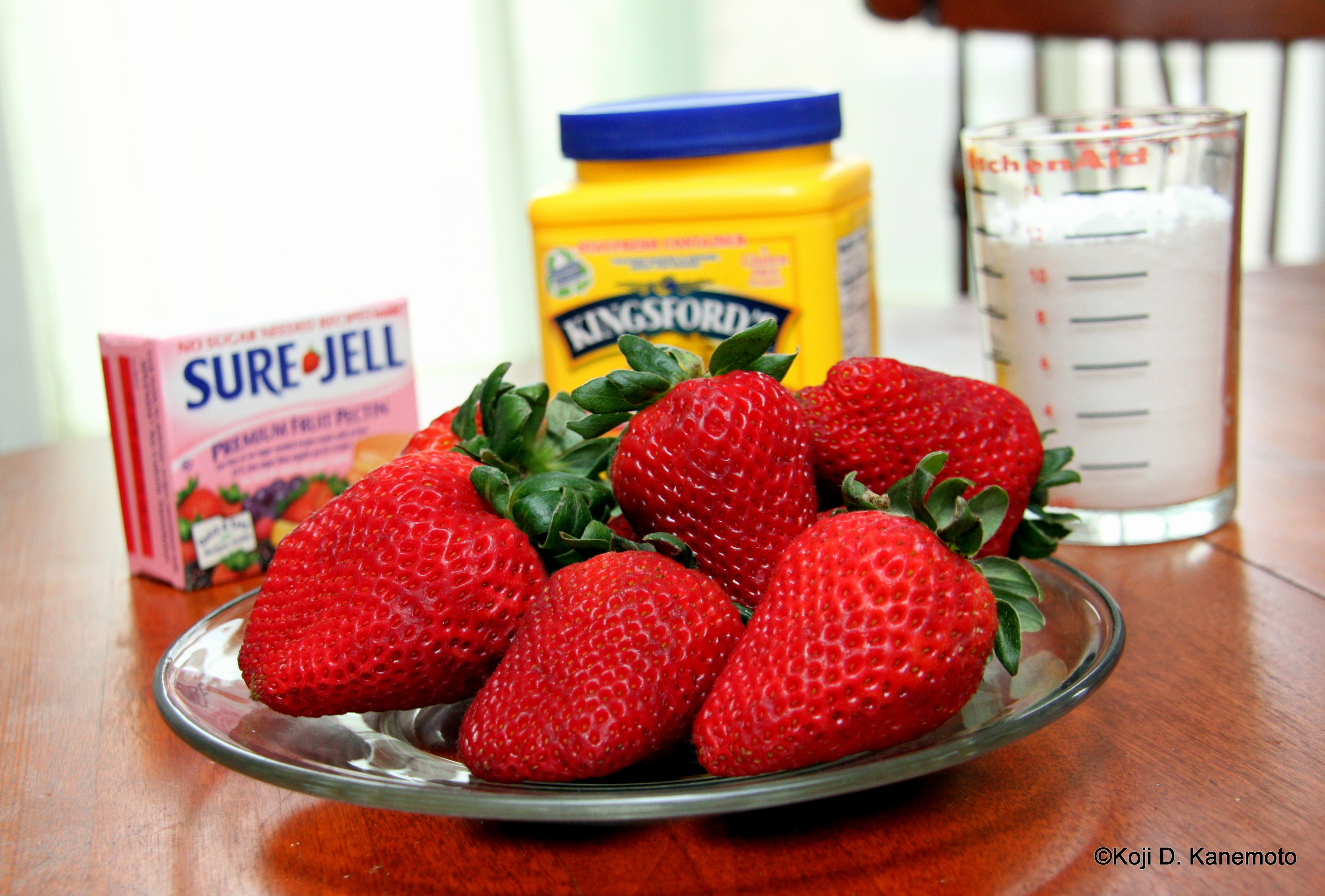
The key ingredients including the freaking huge strawberries.

So I found a recipe in Cook’s Illustrated once again.  It looked easy enough.

And there weren’t too many ingredients: sugar, cornstarch, pectin, fresh lemon juice and salt…… and strawberries.

Lots of strawberries.

____________________________

Well, Cook’s Illustrated failed me this time.

They didn’t write down what SIZE of strawberries to get – just a weight.

Blasphemy.

I thought strawberries were all about the same size.  You know.  Size doesn’t matter.

____________________________

Well, the FRESH strawberries I ended up buying were too big.  Freaking too HUGE.

Geez.

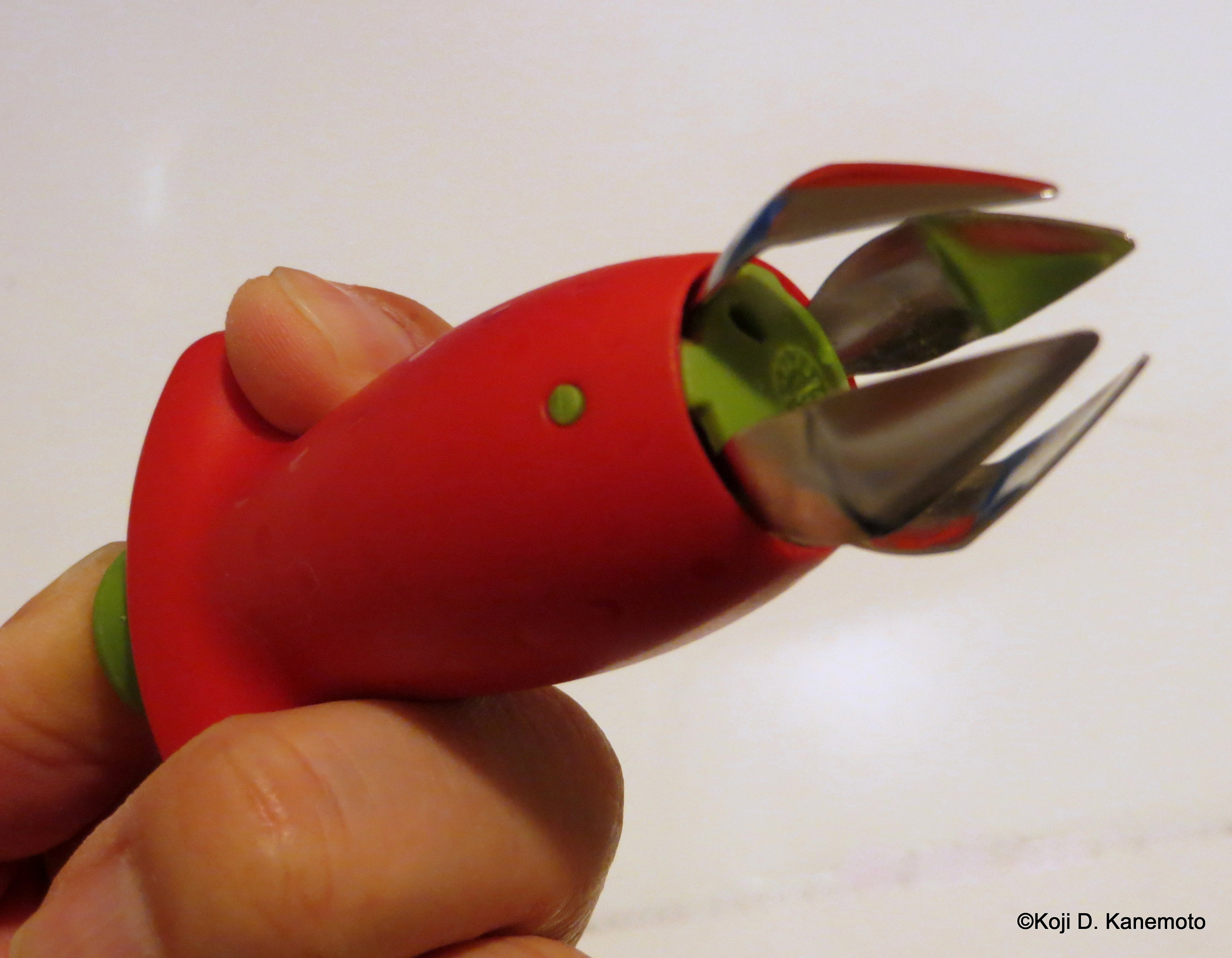
And there were LOTS of them.  And they needed to be hulled.  Heck, I knew I would eventually slice my fingers trying to hull them all with a knife so I cheated.  Mechanics love tools, right?  I bought this fancy-schmancy huller for seven bucks.

IMG_7741
For size comparison purposes, I took a picture of the gizmo alongside one of the freaking huge strawberries I bought. It is all Cook’s Illustrated’s fault indeed for not explaining what size strawberries to get.
IMG_7743
This is what it looks life after you press that green button on this fancy-schmancy gizmo made by Chef’N Corporation. You push it into the strawberry, let go of the button and twist. It worked great! But I learned it is better if you remove the sepals first (I found out that’s what the little green leaves on the top of the strawberry are called.).

What a deal.  Hulling was now a piece of cake!  (Shhh…  Quiet.  My little Cake Boss may hear.)

___________________________

The recipe called for whole strawberries.  But because the strawberries I bought were so freaking huge, they looked like bowling balls in the pie crust.  While I didn’t know if it was taboo or not but I decided to cut the strawberries in half.  I was worried that all that juice would leak out and make the crust feel like you were biting into a sponge.

(I cheated again and got pre-made crusts; it really shrunk big time after baking as you can see in the picture.  I will endeavor to make the crust from scratch next time.  Oops.  Someone stop me from trying that, please.)

__________________________

Well, aside from the glaze not becoming transparent enough and the incredible shrinking crust, the pie turned out tasting great.

I will write a scathing letter of complaint to Cook’s Illustrated.  They did not consider that old berry-brained former mechanics like me would actually try to follow their recipes.

I will also write a letter to President Obama and have him execute another Executive Order to change the law – that Cook’s Illustrated must write their recipes so that old former mechanics will understand.

But why complain.

I will just go to Marie Callendar’s next time and buy a strawberry pie for $8.99.

Obama: American Troops Don’t Matter


His comment regarding the parents of two American soldiers killed from “inside jobs” in Afghanistan hits my heart. Good article. I hope you will read on this very important matter.

Our America Divided


America Divided
My feeble attempt to express my opinion…

Our United States has become less of a nation.

It is more than just split in half.  A nation cannot survive split in two.

Think of our country being not much more than local drug gangs fighting for their drug turf.

Their own street corner in their perceived territories.

Each gang with their own beliefs, their own mini-economies, their own cultures and in-fighting for control.

And killing those who invade their boundaries.

One gang is right.  The other gangs are wrong.

And they choose to ignore their neighborhood if not hold them hostage.

_________________________

To me, our nation no longer has collective major goals.

Heck, we Americans now may actually have less commonage with other Americans than ever before.

In my opinion, segregation by race fueled the beginning of disunion.

No.  I don’t condone segregation.  Of course not.  However, since the intense focus on racial segregation began – heightened by media beliefs and TV – in the 1950’s, a new mutated “segregation” has been kindled…and it is a roaring wildfire.

It’s no longer just the color of our skin.

We’re segregated by how we think and see things – in totality.

It’s about how we live and how we look upon how others live.  That’s segregation.

Religion.  Culture.  Even what language should be spoken.  Or is it languageS?  All segregation.

Look at our children’s textbooks.  Our views of their content and what is taught in the classroom varies drastically by how you think – or were raised.  Segregation.

____________________

We can’t even talk about certain subjects with people you meet.  You have fear of setting them off.

Health insurance.  Welfare.  Guns.  Executive Orders.  Terrorism.  Foreign policy.  Even approving driver’s licenses for illegal immigrants.

You name it.  I think it is absurd.

____________________

flag stars

This mutated concept of segregation is inflamed by our own political leaders and on a daily basis.  And the media, unfortunately, incite the segregation amongst peoples here, American citizen or not.  There is no reason to explain why here.

Every key event is made more severe, more infinitely dismembered by the politicians and media to suit THEIR agendas.  As government grows, we everyday people strongly contract to share our own beliefs only amongst small groups.  Not as a collective community of Americans.  A type of ugly segregation actually encouraged by those who lead us and by those “reporters” who elect to report an incomplete story to benefit their revenues or popularity.

And as national and state governments grow uncontrolled, our leaders go further blind and deaf, mired in their own re-elections, partisanship and haughty view of themselves.  So much so that never since the Civil War has there been so much movement towards secession.  And if not by state, by breaking up within a state.

_____________________________

union attacked
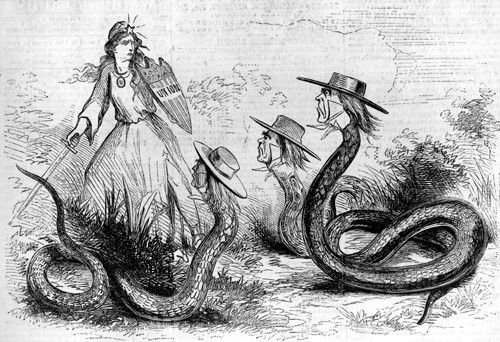
The union being attacked by deadly snakes.

Is there a civil war in store?  In 1861, it is written these were likely the major causes for the Civil War:

  1. Income and social disparity between the “North” and the “South”
  2. State versus federal rights
  3. Strong disagreement between pro- and anti-slavery states
  4. The election of Abraham Lincoln as President.

Sound familiar?  Look at my illustration at the top.  I’m no artist but I hope the message is clear.

I believe we will have another Gettysburg.  No, not with cannon and Gatling guns… Besides by that time, only the criminals will have guns.  But our union will become irreparably weak in all significant aspects if something doesn’t heal our wounds.  The upcoming elections will be key, in one way or another, no matter what your beliefs are.

I think we are in deep shit.

What about you?

Hmmm….


image

Can it be Spring in Long Beach?

Nahhh…..

Nothing Is Over


Serious thoughts to ponder as a country…

Passing the Baton


20140208_171502
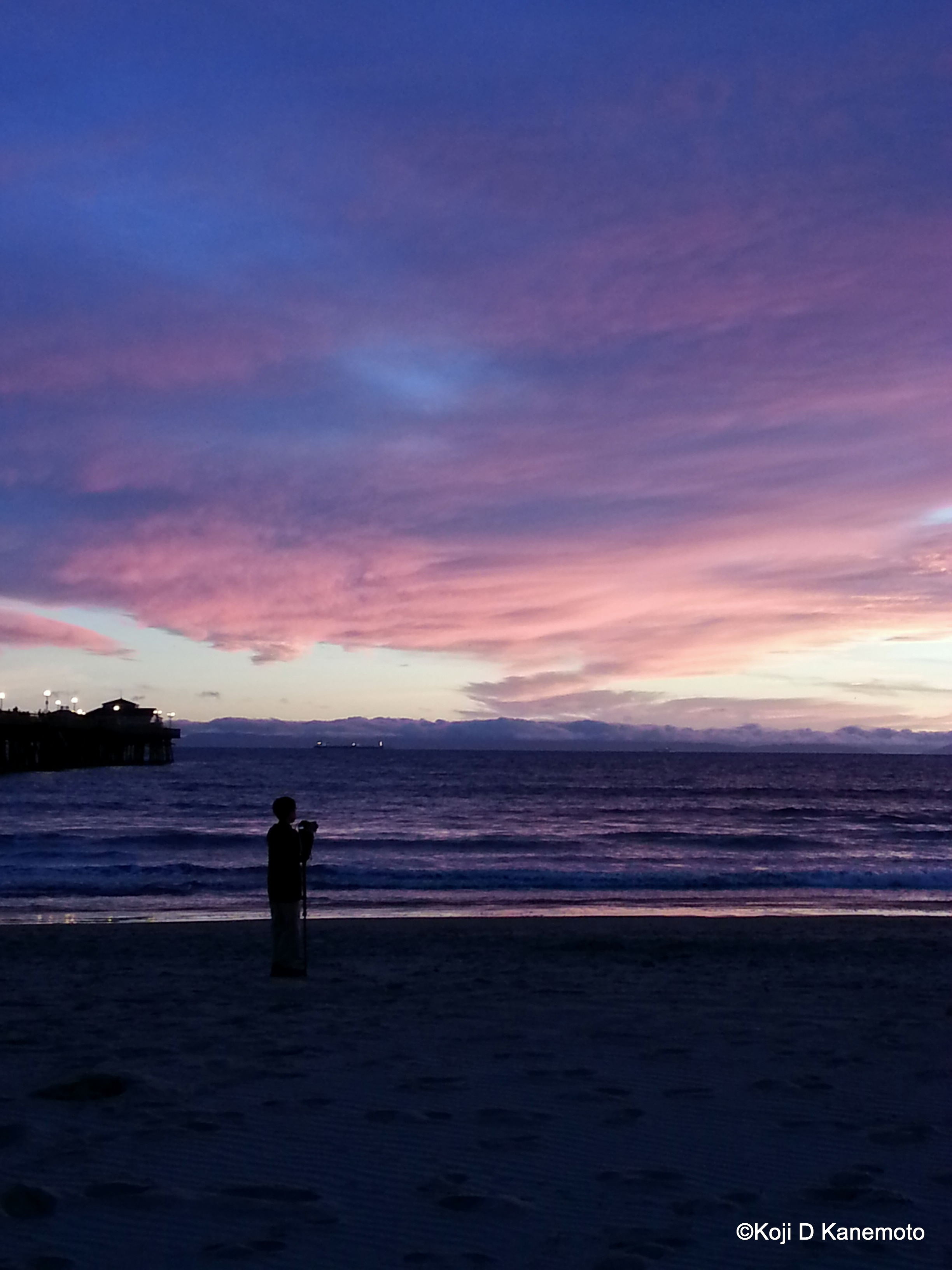
My twelve year old son Jack at the Seal Beach Pier.  He just began taking pictures at this time and I wanted to capture that moment.  I guess that’s the photographer in me.

With all the researching, translating and documenting I’ve done on our family history during the past several years, I’ve come to the realization I was living in the past.  And as time marched by, I wanted more time…but now, that time has gone.

I reflected on the near future; in the past month, things have changed.  Things that cannot be undone.  And I realized, too, that in addition to passing on what I’ve learned about our family history through these blogs, I need to pass the baton on as well for tomorrow.  Small things.

_____________________________

For as long as I can remember, I’ve held a camera in my hand… from the time I was perhaps eight years old.  I vividly recall looking down on the ground glass of my dad’s Rolleiflex TLR.  And I know it was my grandmother or aunt who sent me a “Fujipet” 120 film camera from Japan as a gift.  It had a plastic lens.  There were two levers, one on either side of the lens; you pressed one down with your left finger to cock the shutter.  Then with your right finger, you pressed the other lever “to take the shot”.  I took a bazillion shots during our 1964 road trip to Chicago and burned through a lot of 120 film.  I don’t think mom was too happy.

image0-109b
I’m in the center; dangling from my neck is the Fujipet 120 film camera. The “model” on the left is my cousin Jane.  Chicago, circa 1964.

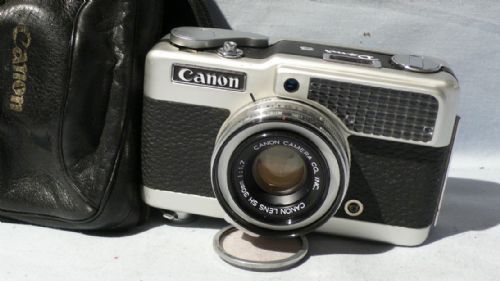
When I was twelve, I spent a summer in Tokyo; I was born there.  My Aunt Eiko got me my first “real” camera: a Canon Demi-S.  It shot 35mm film but in “half-frame”.  In other words, if you had a 36-shot roll of film, you would get 72 shots – plus about four or five more at the end.  I loved it.  It even had a built in light meter, a soft case and a wrist strap.  It went everywhere I went.  I even bought yellow and red filters.  I used it to take photos of the TV set when Armstrong landed walked on the moon…but none of the images came out because I wanted to use my new fancy-schmancy electric strobe with a DC cord.  I got great pictures of our RCA color TV, though.  LOTS of great pictures of our TV set.  But on one – just one – you can BARELY make out Armstrong as he stepped of the Lunar Module.

demi s
The Canon Demi-S, complete with the soft case. Under the lens, there is even a filter that enhances skin tones when shooting color.

While I did take one class in photography, everything else was self-taught through the years.  Trial and error.  That means lots of moolah down the drain…literally.  I had a full darkroom in my parent’s house at one time.  I must have developed and processed over a thousand rolls and printed thousands of pictures.  While I did win a few contests in sports photography, I never learned the critical things that define a pro…like my bud Alan Miyatake (but I did best him in ONE contest. LOL).

Since becoming a young adult, I’ve always been the “photographer”…  taking pictures at events, parties, of this and that…  I don’t know if I was any good at it but people always seemed to ask me to take photos.  Perhaps because I took them for free.  But finally, I took snapshots at my own daughter’s wedding…and not someone else’s daughter for a change.

_______________________

As I was taking my kids back to their mother’s two weeks ago, my twelve year old son surprised me by asking if he can have a “real” camera.  Totally out of the blue but I was happy.  He wanted to take pictures like his old man.

So yesterday, we headed towards the nearby beach; he wanted to take pictures of the sunset!  I handed him my (getting old) Canon DSLR and monopod and while in the car, I gave him a crash course on shutter speed, f/stops,  and ISO.

But he asked, “But don’t you just push the button, Papa?”

So with temps in the high 50’s (cold for us here) and a chilling wind, I gave him some basic instructions and I left him pretty much alone.

He took on his own challenge.

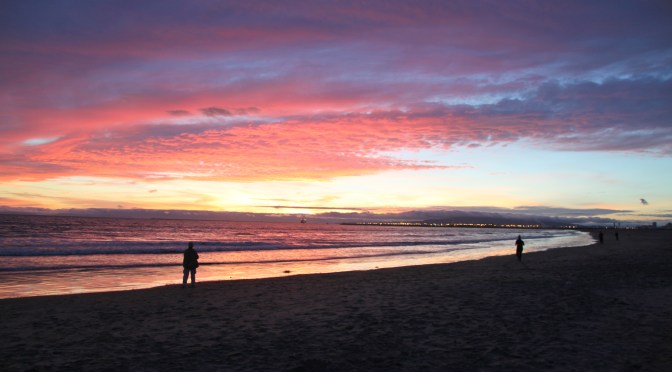
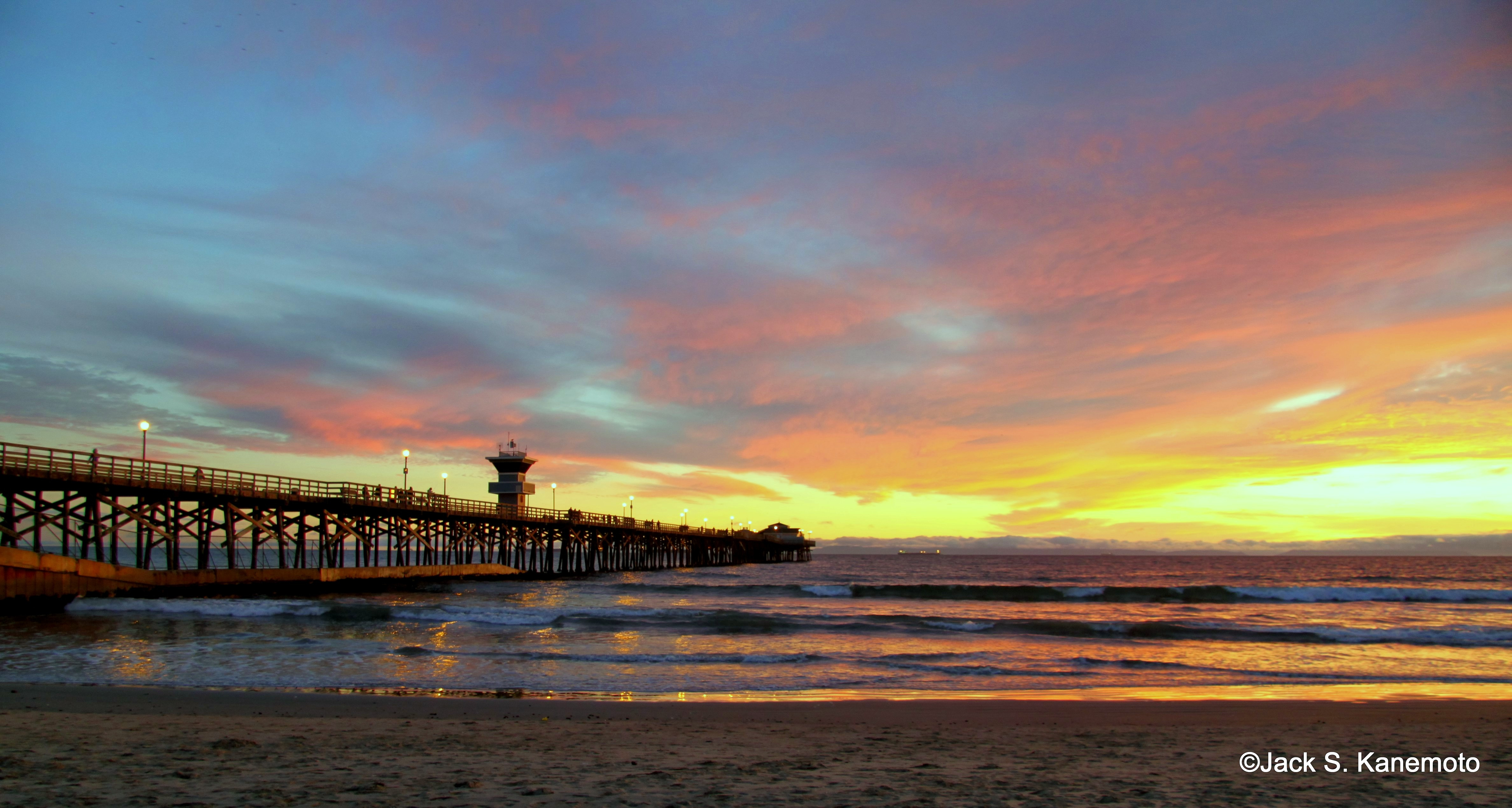
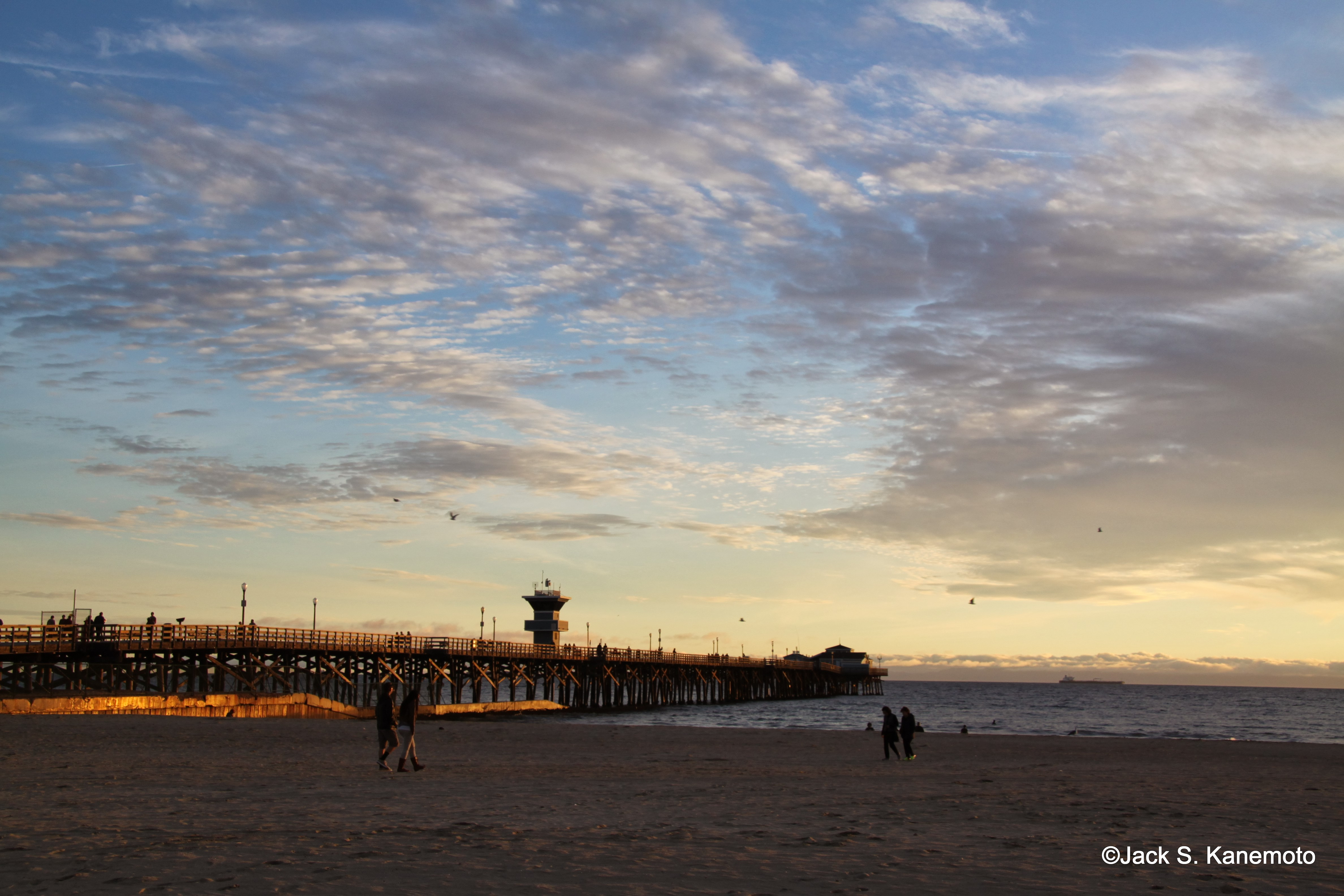
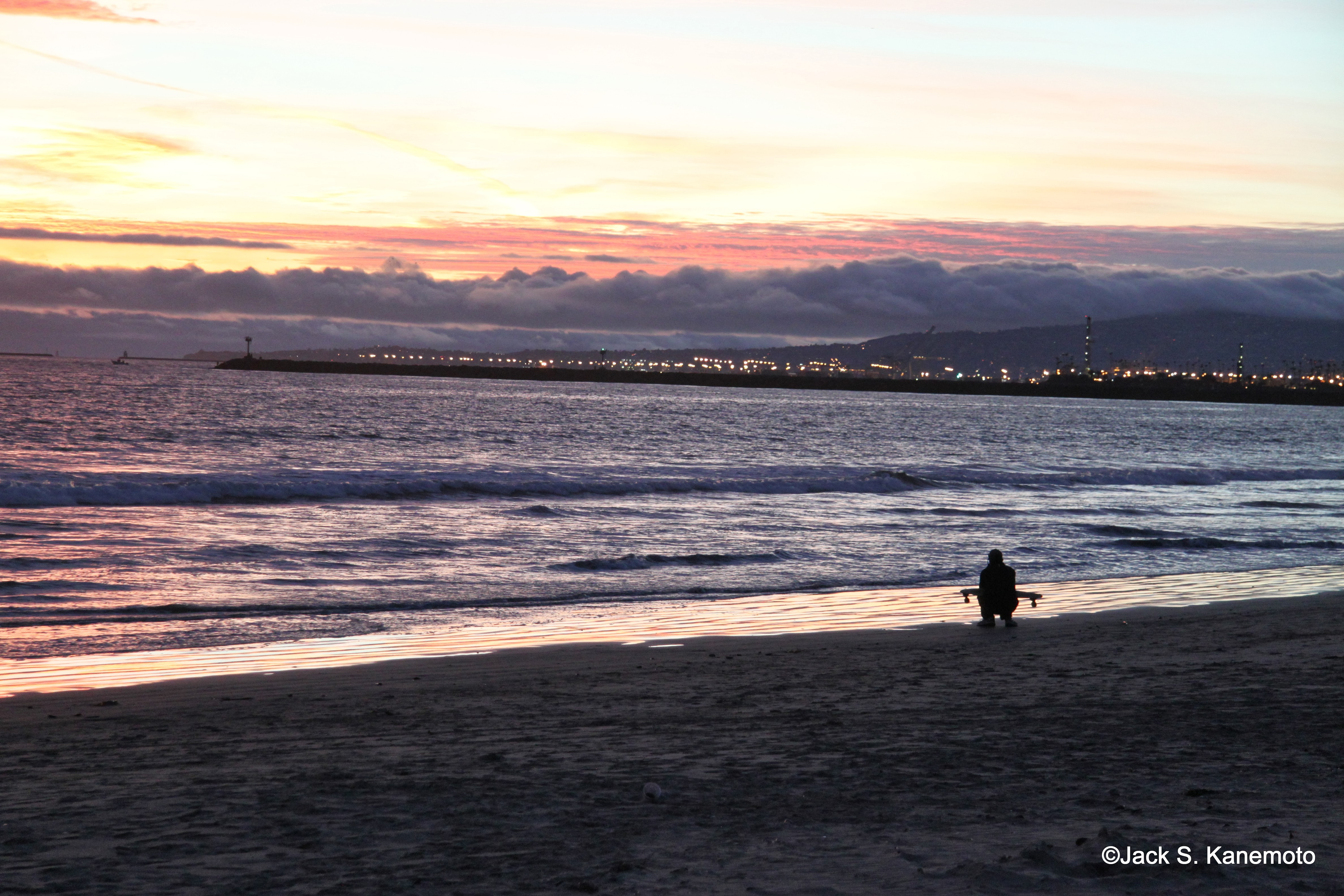
Here are a few of his photos; sure, I edited them a bit but he did darn well for his first time.

IMG_7914

IMG_7929

IMG_7880

IMG_7775

IMG_7943

Must be in his genes.

_______________________________

As I watched Jack from a distance in that chilling wind, feelings of being alone and lament swirled.  Sadness that time has surged by with tomorrows dwindling.  It felt as if I was looking at myself…  fifty years ago… with that Fujipet camera with a plastic lens dangling from my neck.

20140208_173952
My son Jack must be thinking of his next shot…

I hope he continues.  The family needs a photographer.

True stories about World War II – One war. Two Countries. One Family