Tag Archives: Navy

Mr. Johnson, USMC – Part IV


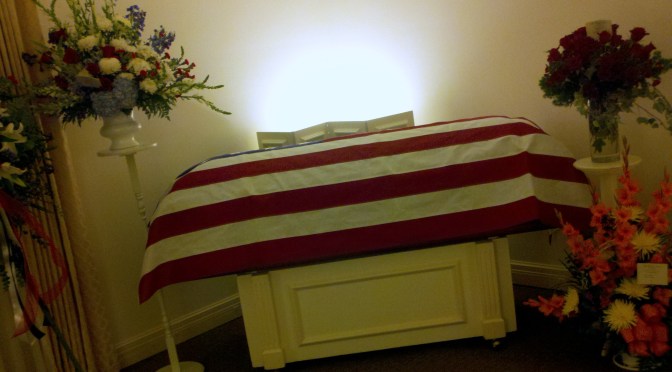
Just two months after Old Man Jack passed away, so did the young boy who stood in the US Marine Corps Recruiting Station in Louisiana in 1942.

The man who told me funerals don’t do a damn for him anymore.

Mr. Johnson was gone.

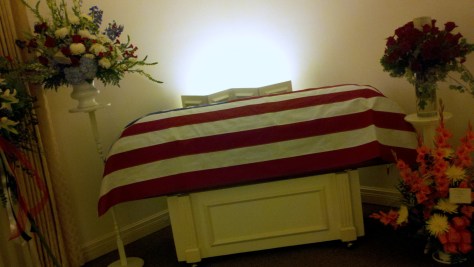
The cremated remains of Mr. Johnson

___________________________

The neighborhood was in shock.  I had waved to Mr. Johnson just three days earlier while he and Marge gingerly got out of their car.  I said in a louder than normal voice from across the street: “We’re still on for breakfast on Saturday, right Mr. Johnson?”  We were to go have breakfast and chat about Old Man Jack – and perhaps learn more of Mr. Johnson.  Instead, he died suddenly just three days later.  Three days.

After 66-1/2 years of marriage, Marge was now a widow.  A sudden illness took his last breath away when bombs could not 70 years earlier.  He was 89 years old.

Marge surprised me when she asked if I would video Mr. Johnson’s funeral.  I told her it would be my privilege.  I was elated to be of some service to her.

___________________________

After Old Man Jack’s funeral, Mr. Johnson invited me over after I got home from work that night.  That was when he volunteered that story about how “he got suckered into becoming a Marine”.  Lovingly, of course.  You could tell he had esprit de corps in his blood to that day.  He was proud of not having BEEN a Marine, but of BEING a Marine.  He had all the right to be.

He also talked about how he met Marge.  What a wonderful story it was.  I will try to capture the essence of what he told me.

_____________________________

By early 1944, Mr. Johnson (now a sergeant) had been taken off the front lines to recover from his grave wounds.  He was “pretty messed up,” as he put it.  Didn’t say much more.  He was put in charge of the motor pool at Camp Pendleton during convalescence.

The base commander’s wife, a proper lady, he said, had come to the motor pool to get her car fixed up.  Mr. Johnson said it was a beat up Chevy especially on the inside but it was better than most for those times.

After she commented on the car’s condition, Mr. Johnson said he’ll do his best to make it more presentable.

He had come to know an upholsterer in Oceanside so Mr. Johnson arranged for the interior to get tidied up some.  He also had it painted.  She was elated.

I wish I had jotted down the commander’s name.  Darn.

_____________________________

Sometime towards the latter part of ’44, he said, there was some scuttlebutt about a big operation that was brewing.

But then, the base commander called Mr. Johnson into his office.

“Johnnie,” he said, looking through his file, “you’re pretty used up.  I’m sending you to rehabilitation.”

So off he went.  While Mr. Johnson used “a hospital out in San Bernardino” as a description, the hospital was likely somewhere near the mountains because he mentioned Lake Arrowhead.

As I write this, there is a good probability it was Naval Hospital, Norco, as it was officially called back then.

Naval Hospital, Corona

_____________________________

During rehabilitation, he ventured to a USO dance being held at the hospital.  The USO was such a morale booster for these young men.  Mr. Johnson was no exception.

There, against the wall, he said, was this pretty young thing.  It was Marge.  She was studying to become a nurse…which she did.

…and if I understood him correctly, they got married the day after he got discharged from the Corps in 1945.  It sounded like if Marge just didn’t want a husband that would go off to war, let alone as a Marine.  She got her way, of course:
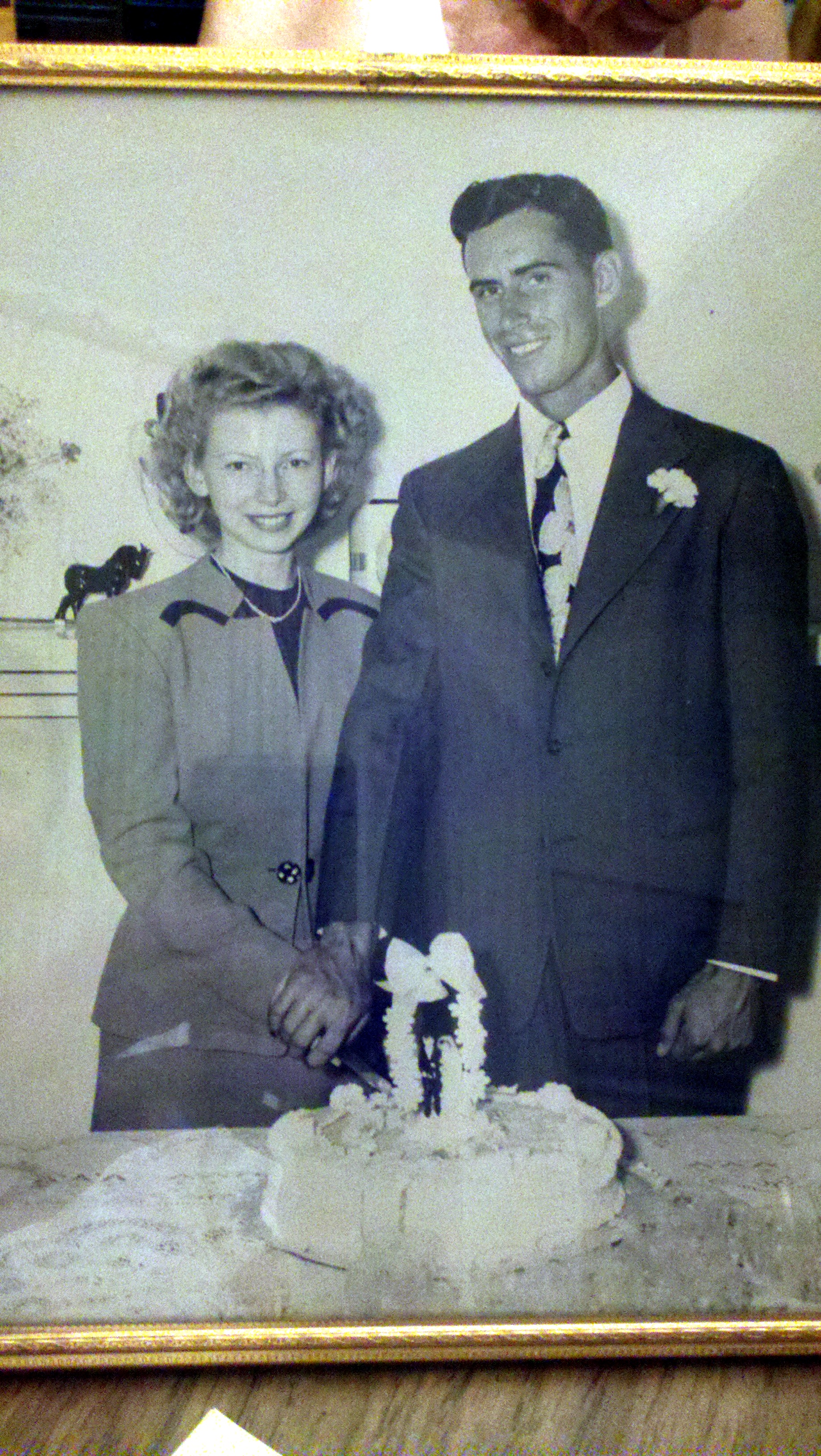
Marge and Mr. Johnson on their wedding day in 1945.

Don’t you think they are a gorgeous couple?  A gift of chance… and war.

(As a historical note, the “scuttlebutt” ended up to be… Iwo Jima.  Part of the 3rd Marine Division, Mr. Johnson said that in a way, he was glad he didn’t go…  Not that he DIDN’T want to go but because of what the Marines horribly found out after the first waves landed ashore.  He learned from the Marines that made it back that all vehicles that went ashore in the first couple of days were sitting ducks for enemy artillery.  This was made worse by all the volcanic ash being spewed up by the artillery rounds, just choking off the engines just minutes later because it would clog up the air filters.  Some of boys were burned alive, he was told, after their vehicles got hit…in the same vehicles he was in charge of at Camp Pendleton.)

_____________________________

One reason why I was never able to find any military record on Mr. Johnson became obvious on his funeral day; that’s when I – and the other neighbors – found out his name wasn’t Johnnie, but Doreston.
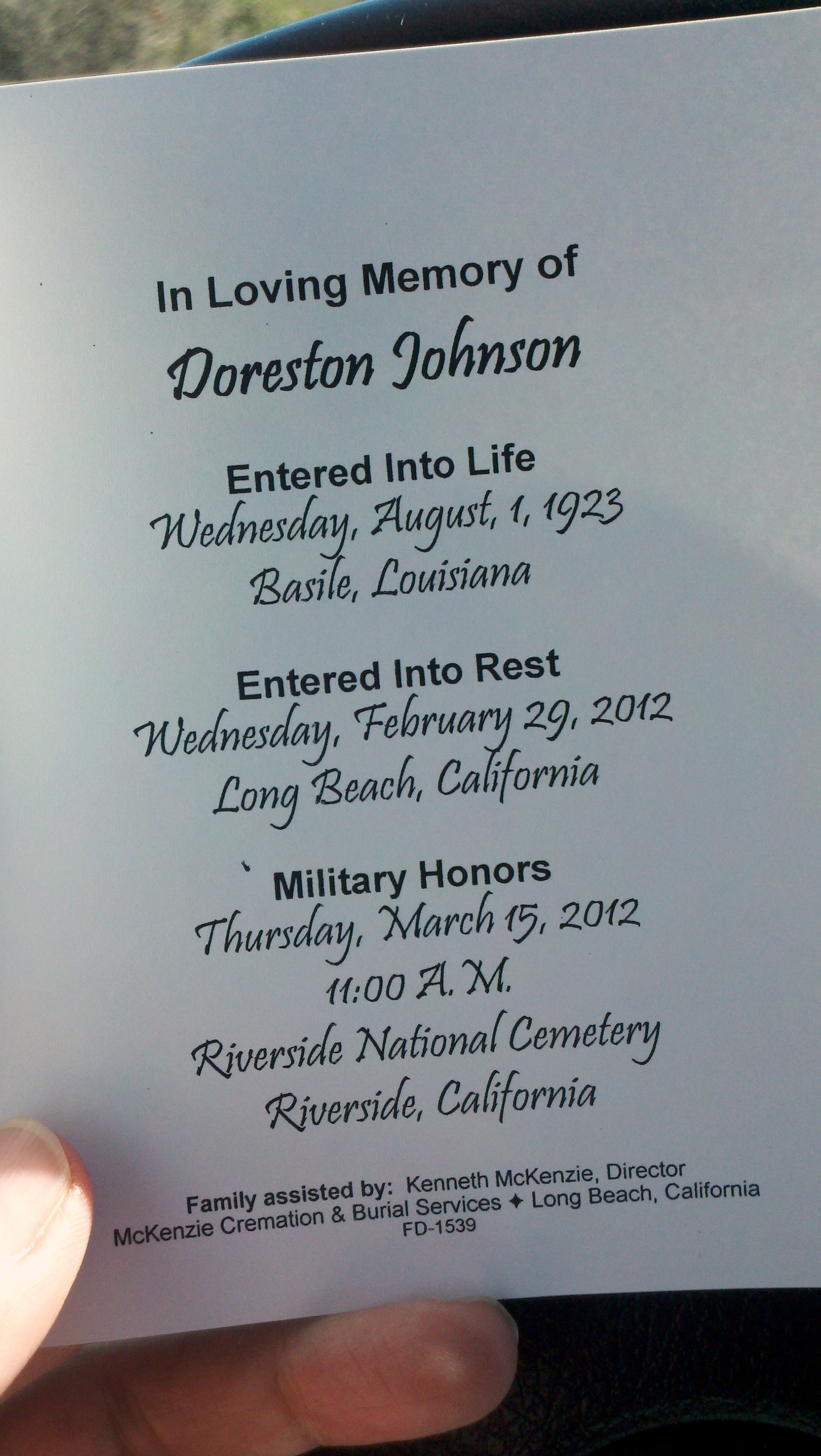
“Doreston”

I was partially successful in videotaping Mr. Johnson’s funeral.  It wasn’t as smooth as I wanted it to be for Marge’s sake.  There was a bit of disorganization and miscommunication, too.  Many of us following the hearse were just waiting in our cars wondering what to do next…when I saw the Marine burial detail getting ready to escort Mr. Johnson’s urn to a covered area.  Time for a mad dash.

A couple of notes about the video below if you wish to watch…

  1. I’m not much an editor but I managed to insert the “Marine’s Hymm” from my all-time Marine Corps classic, “Sands of Iwo Jima”.  Gives me goose bumps every time.  It starts a bit after the 1:00 mark.
  2. There is some footage at the National Medal of Honor Memorial; Mr. Johnson would be interred just yards away.  Sgt. Hartsock is my friend’s first husband who was posthumously bestowed the Medal of Honor.  You will also see the names of some of the 22 Nisei’s who were also bestowed the Medal of Honor during WWII.
  3. The bugler you see is a long-time friend of Mr. Johnson.  I understand he is also in his 80’s and volunteers his services everyday.  A very fitting and personal tribute.
  4. This was also the first 21-gun salute I was ever able to have the honor to witness in person.  I am glad it was for Mr. Johnson:

_______________________________

During this time, and now armed with his true first name, I was pretty determined to uncover some of his unspoken valor during the Solomon Islands Campaign and the Battle of Santa Cruz Islands…and I was partially successful.

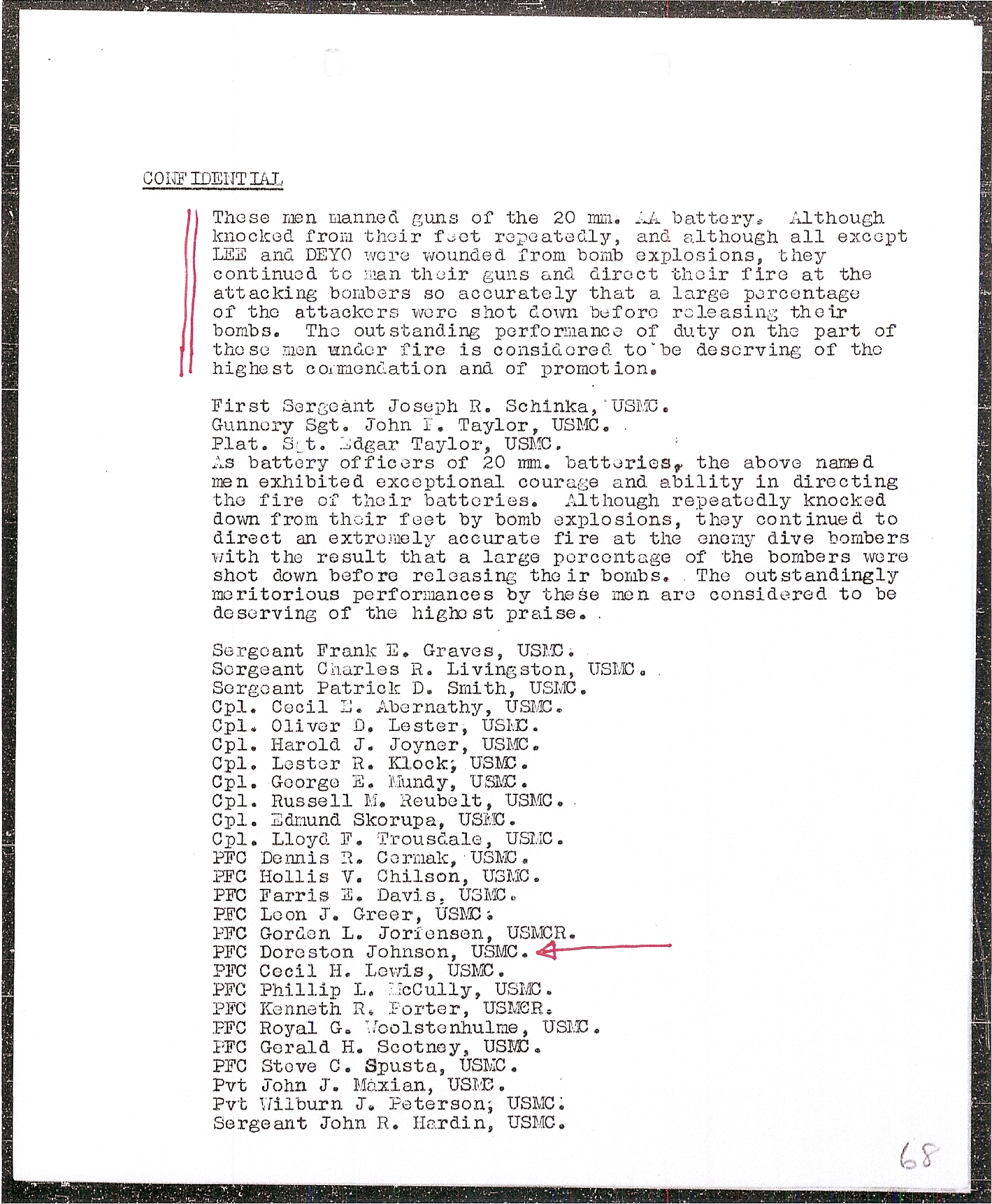
These are two pages from CINCPAC’s official, confidential after battle report.  They were called “War Diaries” and are daily operational journals created by various naval commands throughout the Navy during WWII (The Marine Corps is an arm of the US Navy).  I was only able to find this single battle report for the Solomon Islands Campaign:
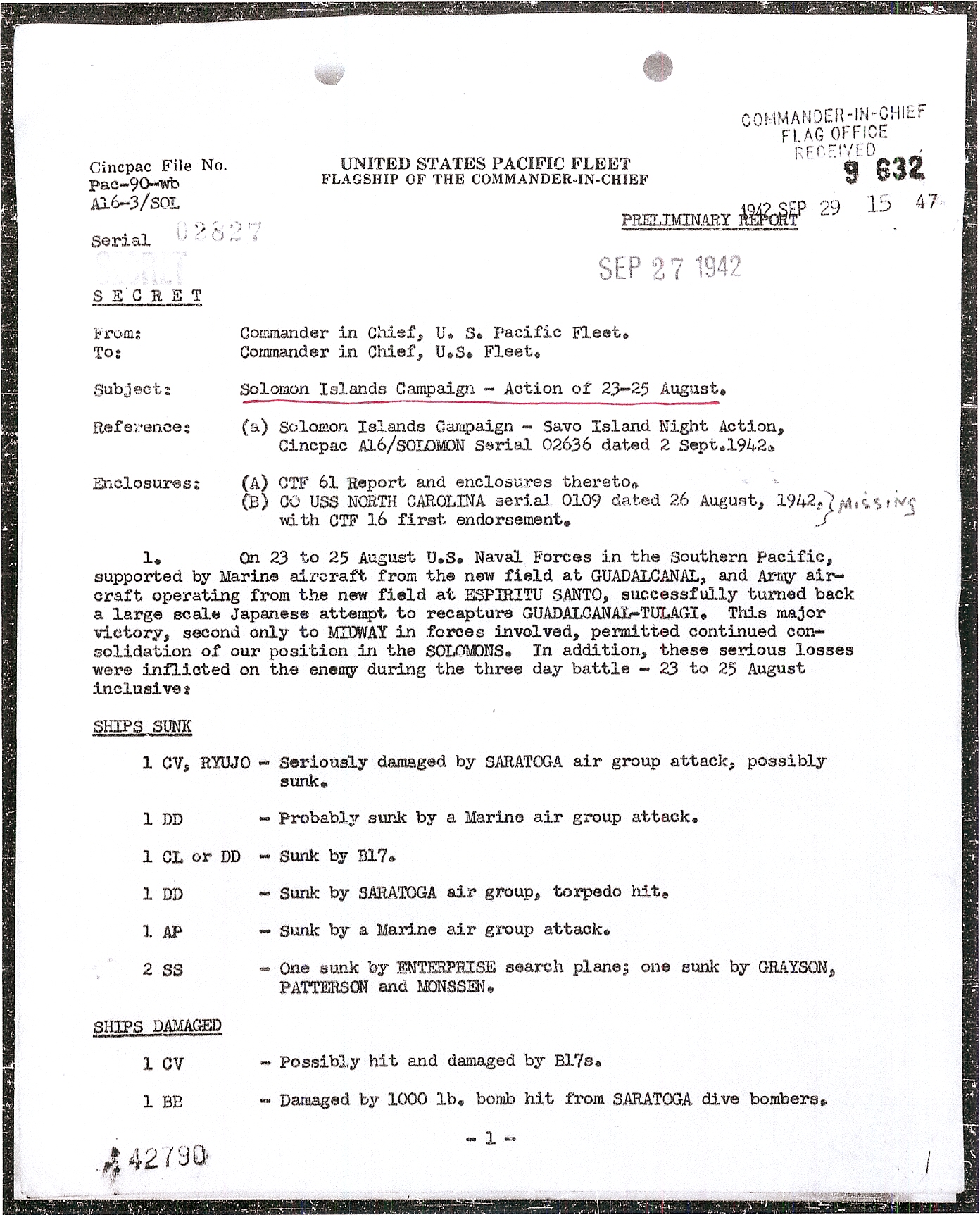
War Diary, Cover Page
Specific page recognizing Mr. Johnson’s valor under fire.

I do NOT know for sure if Mr. Johnson fought on the islands but Old Man Jack never mentioned anything except him serving on the Big E…

_________________________________

As for Mr. Johnson’s wounds, Old Man Jack muttered once “Johnnie was hit twice.  The last time was pretty bad.”  He didn’t say more.

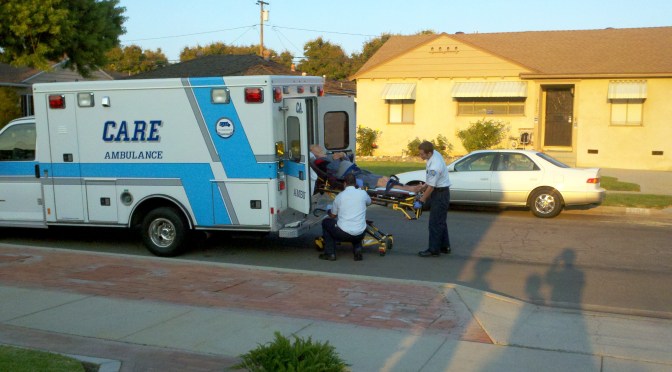
But Mr. Johnson collapsed at his house in 2011.  Marge called me over to help while waiting for the ambulance.  Mr. Johnson was on his side, left hand gripping the bed sheets and right arm pinned in under his body.  He was too big for me to lift him off the floor by myself.  So I yelled, “C’mon, Marine!  Get your sorry ass off this floor!”  Seriously.  With that, he grunted, grabbed the bed sheets one more time, and together, we got his upper body onto his bed…

But in the process, I saw his chest.

His first fall in the house. Marge’s shadow is the one on the left. My little house can be seen beyond the ambulance’s cab. (Edit)

My god.

The scars.

______________________________

Tears of Remembrance and Closing

Two days after the funeral, I had finished putting the video together for Marge.  We watched it together on my laptop as she didn’t have a DVD player that worked.  Dry eyes had to take a back seat.  She was so grateful.

But she called me at work a couple of days later.  She asked if I could stop by after work again…and show her the video one more time.  I was so surprised by her request…but so happy.  She must have liked it.

When I played it for her – and when the “Marine’s Hymm” from the John Wayne iconic classic “Sands of Iwo Jima” began playing, her left hand began to rhythmically and softly beat to the theme song… ever so softly. Then her head bobbed along with the beat. That broke me.
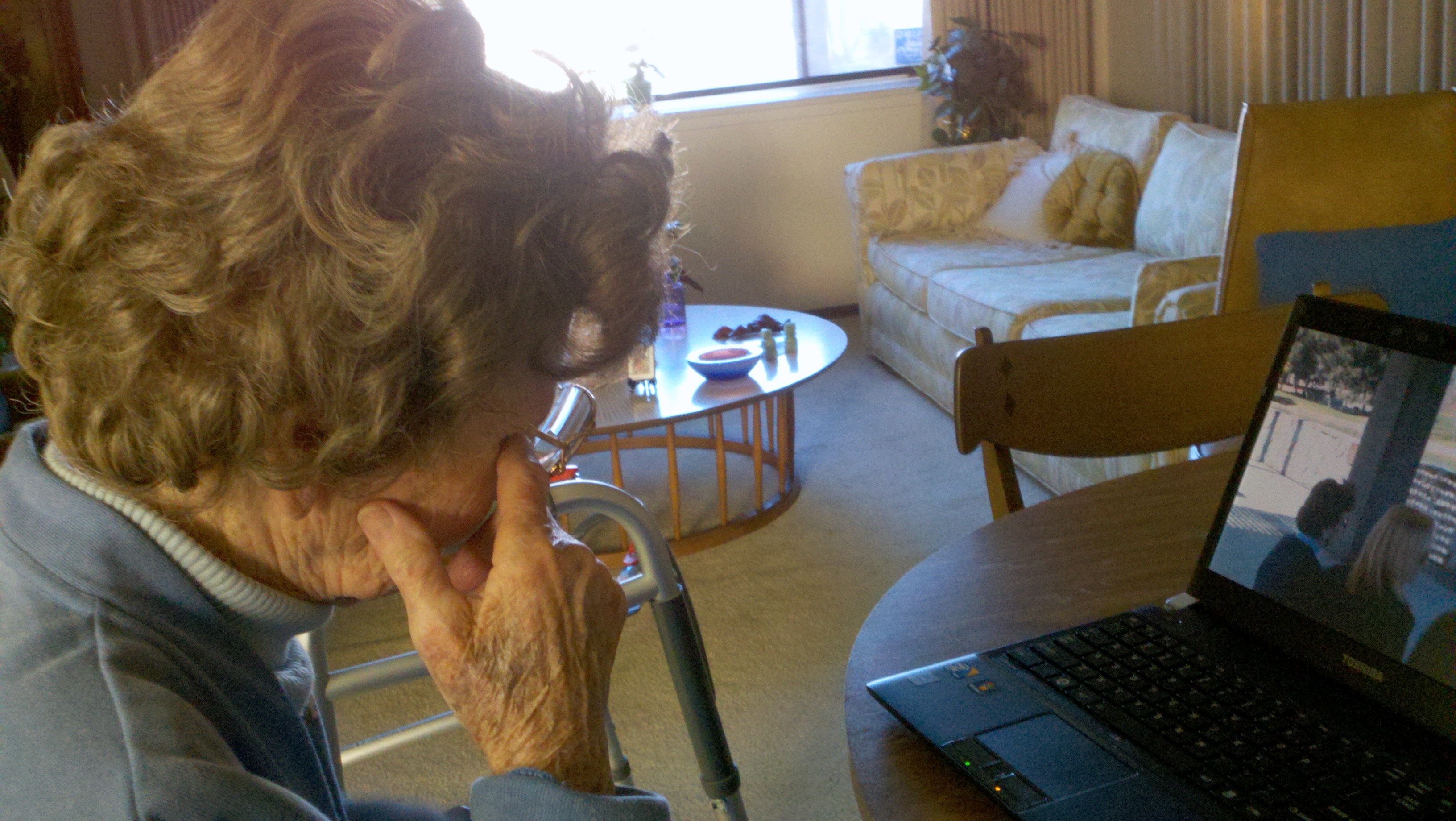
Tears of Remembrance – Marge, now a widow after 66-1/2 years of marriage

She asked me again to explain the page from the Solomon Islands Battle Report which clearly states how he valiantly fought and incurred his wounds… Then when the 21-gun salute played on the screen, that was it…   She broke down.  I cannot imagine how large those floodgates may have been for her emotionally.

She thanked me immensely…

But it was so humbling as it was me who wanted to thank her and her husband… the same young boy in that Louisiana recruiting station who did what he had to do… and had enough humanity left in him to forgive.

The Greatest Generation…  May they go in peace.
Mr. Johnson, USMC – Part III


I figured if Mr. Johnson wanted to tell me more, he would have.

But as with Old Man Jack, I never asked for more.

I believe that’s how these combat vets want it.

They don’t want to be quizzed about what they said or asked to describe more.

They will tell you some things of what they experienced.  Probably to let the devils out that have been eating away at them for 70 years.

They have a built in limiter to keep more memories from popping back up…the things they saw or did that they try so hard to suppress to stay sane.  Every minute for the rest of their lives.

They deserve that respect.  Always.  And you feel honored they felt enough confidence in your character that you would accept what they were telling you as is.

I feel they appreciated that.

___________________________

I was alone with Old Man Jack during visitation. It was good as I was able to say good-bye in private… The mortuary didn’t invest in good quality Kleenex, though.

Mr. Johnson and I walked together into the little chapel where Old Man Jack’s funeral service was being held.  His flag-draped coffin was proudly presented up front.

It was mostly relatives as all his friends had passed away before him.  I felt distant as I don’t recall ever seeing them visiting with Old Man Jack.  But they were relatives.

Mr. Johnson and I were likely the only ones there outside of family besides a daughter of one of his fellow employees from the old Northrop plant.  We had met once when Old Man Jack was in ICU from a tremendously bad intestinal infection.

His only daughter Karen was busy going over things with the reverend.  You will have to excuse me if I used the wrong term for him; it was a Christian service and I am not.

Mr. Johnson and I sat next to each other in the back row.

__________________________

Here is Old Man Jack on our tiny patio deck, in his trademark blue plaid shirt losing another “chat” with his only child, Karen. I’m sure – in spite of his boasts – he lost to his lovely wife in a similar fashion through the years… Hence, “A man ain’t got a chance.

Karen finally approached us.  It was good to see her again.  I hadn’t seen her since she moved Old Man Jack up to their mountain home just five months earlier.

We greeted and it was already tough not to shed a tear.  She then said, “Koji, we have enough young relatives here to be pallbearers but I know you and dad were close.  I think he would like it very much if you would be one of his pallbearers.”

I looked at Mr. Johnson.  I guess I was unknowingly seeking his acceptance knowing they both fought a bitter war together.

Mr. Johnson smiled and nodded his head as if he knew I was asking him if it would be OK.

It was emotional.  My eye plumbing was already leaking a bit before but it broke loose.

After Old Man Jack fought on “those stinkin’ islands” and had nightmares for the remainder of his life, I was now going to help carry this great American on his last journey.

I kept the gloves in memory of Old Man Jack and the honor he allowed me.

It is a mark of the Greatest Generation.  Forgiveness.  Honor to the end.

_________________________

Just a short vid of the flag presentation to Jack’s daughter.  (I apologize for the video quality but they only sell the video cameras with the little swing out screen now.  It’s hard to get used to and hard to see the image in bright sun…and impossible to hold still…but towards the end, you can see Mr. Johnson sitting right behind her.)

I wondered what was going through Mr. Johnson’s mind after saying to me earlier “…funerals don’t do a damn thing for me anymore”.

He didn’t get teary-eyed once.  A true Marine, I thought.  I also briefly felt he had his mind on other pressing matters.

I was about to find out.

__________________________

After the ceremony, I helped Mr. Johnson back to my car.  He hadn’t said much at all nor showed ANY emotion.

I opened the car door for him; it would be a struggle for him to get back into my low-slung machine with his bad back and unsteady legs.

But he stopped short of getting in.  He towered over the roof of the car as he was standing on the curb next to other graves.  I remember clearly his right arm was on the roof of the car and his left was seeking support from the top of the passenger door glass.

Then he spoke.

“Koji, I’m sorry I was so curt with you in the car…when I said funerals don’t do a damn for me anymore.  I hope you’ll let me explain why.”

I didn’t know what was coming.  He continued but he had that look on his face.  The same glassed-over gaze Old Man Jack had when he was going to talk about something he was trying to forget.

“Koji, the Japs jumped us and they jumped us good.  Real good.  We were caught out in the open.  We had fighter cover but there was just a shit load of them.  Just too many.  They were coming down at us from every which way.”

He mimicked with his right hand that he had elevated towards the sky toy planes – just like we did when we were kids.  But these weren’t toys that day.  He was reliving a battle…but he didn’t say where or when.  Just like Old Man Jack.

“They just kept coming and coming.  We took a bad licking.  A real bad one.  We just kept reloading and firing at them.

We lost a lot of good men.”

He stopped for a moment.  He never once said he was on the Big E.

“I got put in charge of the Burial Detail.  There weren’t too many of us left that could get around.”  He was, I assume, talking about his fellow Marines.  He was a Private at that time and at the Battle of Santa Cruz; you will find out later how I discovered that.  But it’s not good when a young Marine private who was in boot camp just months earlier gets put in charge of a burial detail on board the greatest lady of the sea.

“I don’t know who the son-of-a-bitches were.  They were wrapped up in canvas and a shell would be put inside at their feet to weight them down.  Then we’d dump them over the side.  We’d salute.  Then we’d do it again…and again…and again.  I don’t remember how many times I saluted.  I didn’t keep count.  But that’s why funerals don’t do much for me anymore.  I had been in enough of them.”

__________________________

I was left humbled and voiceless.  Too late I realized Mr. Johnson WAS having sickening thoughts running through his mind – from the time when I asked him to help hold ME together.

And I was ignorant to even think he had his mind on other pressing matters during the funeral.

With that selfish request, I instead helped unleash some vile memories within him.

__________________________

Mr. Johnson himself would pass away shortly thereafter.

More to come in Part IV.  I hope you’ll stay tuned.

Mr. Johnson, USMC – Part II


Yes, Mr. Johnson was in for it.

The carnage he was to experience would be absent even from the worst possible nightmare a nineteen year old boy can possibly have dreamed.

Violence no young boy of 19 should have to endure.

He would have two lives after he stepped into that Marine Corps recruiting station: one of reality during the day and of a nightmare he would never awaken from at night.

____________________________

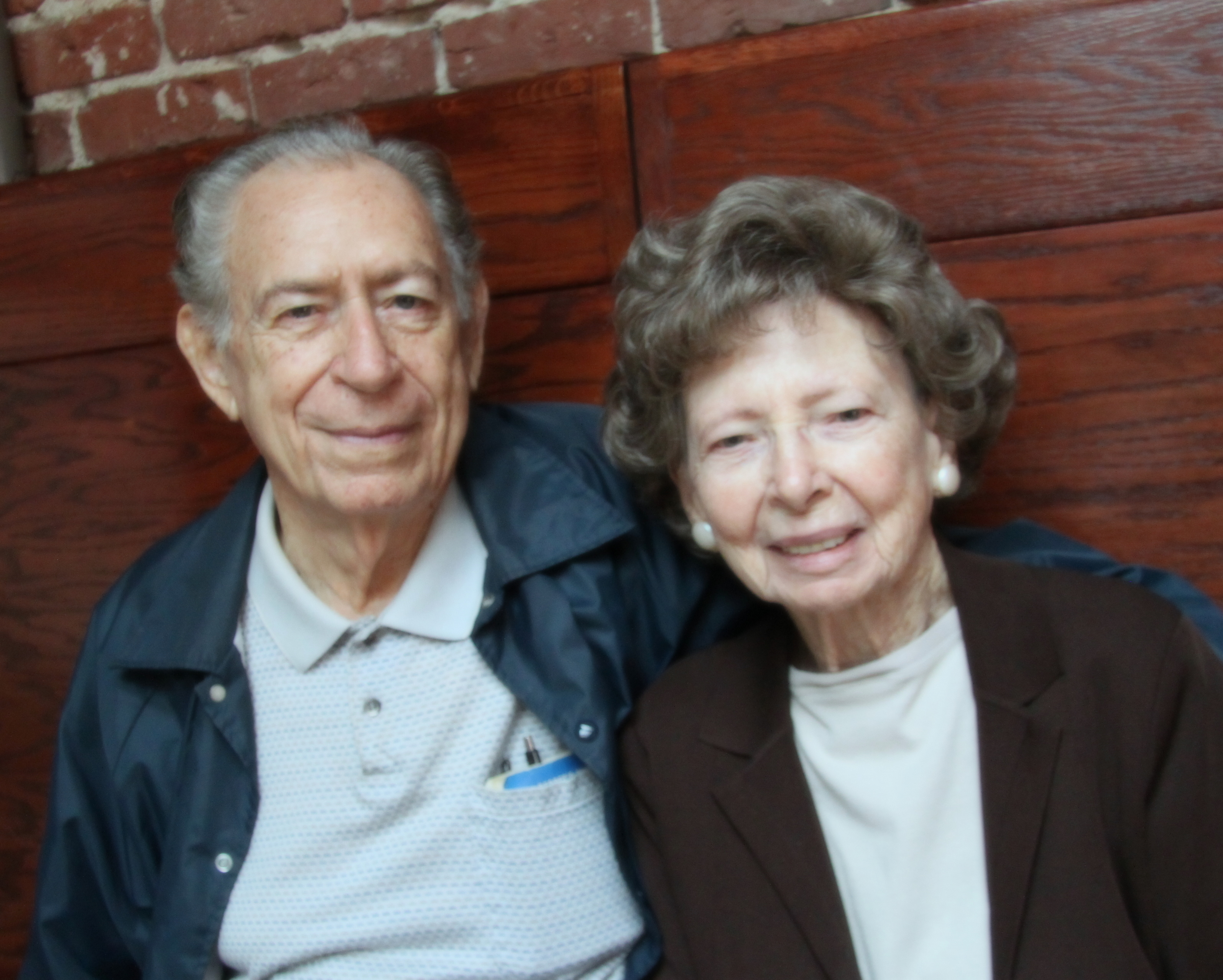
I took them to breakfast for a belated 66th wedding anniversary and 88th birthdays. It’s softened as that’s how Marge wanted it.  Seal Beach, CA. August 14, 2011.

I was not close to Mr. Johnson as I was to Old Man Jack; perhaps it was because for the first five years after I moved into this patriotic Naval neighborhood, he and his good wife Marge traveled about the US in their motorhome.  They were gone for perhaps six to eight months out of the year.  Man, did they enjoy seeing the US of A.  After all, he fought for her.

He stayed indoors most of the time when at home while Marge would walkabout during the warm summer nights with her wine and chat with neighbors and me.  She enjoyed her Chablis very much.  Slowly, her legs would give way to age.  Mr. Johnson’s, too.

____________________________

In the early part of 1942, Mr. Johnson found himself on a little boat out in the middle of the Pacific – the Big E.

The USS Enterprise.

CV-6.

She was one of only three operational carriers in the Pacific.  The Enterprise, Hornet and Yorktown.

The Battle for Midway

He was on his way to the Battle of Midway (Mr. Johnson did not tell me that.  Old Man Jack did.).  June of 1942.

A tremendous gamble of scarce naval assets and young men by Admiral Nimitz.

PFC Doreston “Johnnie” Johnson manned her anti-aircraft batteries as a US Marine.

Thousands of young lives were lost during the most critical sea battle – on both sides.  But the critical gamble paid off for the US.  The Japanese Imperial Navy lost four carriers.  They would never recover.

But we lost the Yorktown.  A tremendous loss for the United States…but the tide of war changed.

The USS Yorktown on fire at the crucial Battle of Midway. She would later be sunk.

Miraculously, the Enterprise escaped damage.

And as far as I understand, so did the young boy from Basile, Louisiana, Mr. Johnson.

At least physically.

_________________________

Guadalcanal and the Solomon Islands Campaign

His next trial would be Guadalcanal and the Solomon Islands campaign.

It would be an insult to to all the brave men that were there if I were to even try and express in writing what brutal sea combat was like.

I was not there.  But every young man there thought – every second – that there was a bomb coming at him.  Constantly.

Like hearing shrapnel from near bomb misses ricocheting off the batteries – or striking flesh.  The deafening, unending thundering of “whump-whump-whump” from AA batteries.  The yelling.  The sound of a mortally wounded enemy plane crashing into the water nearby with a likewise young pilot.  The screams of wounded or dying boys.

This is taken from a naval summary: “After a month of rest and overhaul, Enterprise sailed on 15 July for the South Pacific where she joined TF 61 to support the amphibious landings in the Solomon Islands on 8 August. For the next 2 weeks, the carrier and her planes guarded seaborne communication lines southwest of the Solomons. On 24 August a strong Japanese force was sighted some 200 miles north of Guadalcanal and TF 61 sent planes to the attack. An enemy light carrier was sent to the bottom and the Japanese troops intended for Guadalcanal were forced back. Enterprise suffered most heavily of the United States ships, 3 direct hits and 4 near misses killed 74, wounded 95, and inflicted serious damage on the carrier. But well-trained damage control parties, and quick, hard work patched her up so that she was able to return to Hawaii under her own power.”

“Repaired at Pearl Harbor from 10 September to 16 October, Enterprise departed once more for the South Pacific where with Hornet, she formed TF 61. On 26 October, Enterprise scout planes located a Japanese carrier force and the Battle of the Santa Cruz Island was underway. Enterprise aircraft struck carriers, battleships, and cruisers during the struggle, while the “Big E” herself underwent intensive attack. Hit twice by bombs, Enterprise lost 44 killed and had 75 wounded. Despite serious damage, she continued in action and took on board a large number of planes from Hornet when that carrier had to be abandoned. Though the American losses of a carrier and a destroyer were more severe than the Japanese loss of one light cruiser, the battle gained priceless time to reinforce Guadalcanal against the next enemy onslaught.

Regardless of who is correct – and we’ll never know for obvious reasons – Enterprise gunners shot down more planes at Eastern Solomons in 15 minutes and at Santa Cruz in 25 minutes than did the vast majority of all battleships, carriers, cruisers and destroyers throughout the entire war.

She was the last operating carrier in the Pacific.”

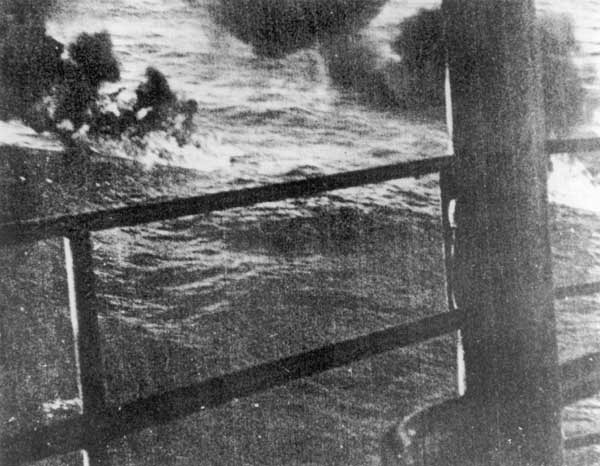
For those of you who are unfamiliar with the violence of World War II, perhaps these photos will give you an idea.

Try – just try – to imagine you are on that ship…  Nineteen years old.  The Japanese planes are shooting at you and dropping bombs on you.  Dead and wounded boys are everywhere.  Fires are raging…  The ship is listing…and through all this, you must continue to man your anti-aircraft guns…  Protecting the ship and the lives of your fellow Americans.

A Japanese bomb explodes on the USS Enterprise
One of the direct bomb hits.  All the young men in this area (Gun Group 3) were killed. Many could not be found.
The USS Enterprise under attack. A near miss but men were killed or wounded by the shrapnel.
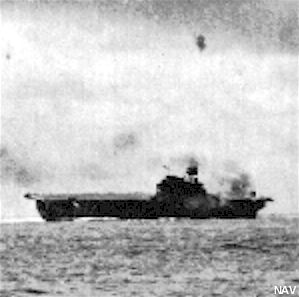
The USS Enterprise on fire. August 24, 1942. Mr. Johnson was on her.
A Val bomber on fire goes past the radar mast on the USS Enterprise. Perhaps one of Mr. Johnson’s rounds hit it.
Damaged hull from one of the near misses.
More hull damage from bomb shrapnel.
The USS Enterprise listing from battle damage.
Burning Japanese planes seen from the deck of the Enterprise. That’s how close they were. Up close and very personal.  Aug. 24, 1942.
Burial service at sea for 44 of the men after the battle at Santa Cruz. Oct 27 1942

Remember these young boys.  I always will.

Mr. Johnson was one of them.

Mr. Johnson was one of those wounded.

Twice.

And I have proof of his valor and guts on board as a US Marine.

___________________________

More to come in Part III.

Mr. Johnson, USMC – Part I


“Koji, funerals don’t do a damn thing for me anymore.”

That was Mr. Johnson’s reply while I was driving us to Old Man Jack’s funeral.  I had asked him to help hold me together as I knew I would fall apart.

“Oh-oh,” I thought to myself when I heard that curt reply.  “I guess I hit a nerve…”

_____________________________

Old man Jack on the left, Mr. Johnson on the right. Taken June 30, 2005.

Mr. Johnson was Old Man Jack’s next door neighbor.

Since 1953.

Nearly SIXTY years.  Hell, I ain’t that old yet.  Well, I’m close.

They got along real well for those 60 years… except Jack was a WWII sailor… and Mr. Johnson was a WWII Marine.  They reminded each other of it often.

Lovingly, of course.

Old Man Jack happily reminisced that “…us white caps would also tussle with them Marines ‘cuz they thought they were better than us”.  But Jack would have gotten the short end of the stick if he took on Mr. Johnson.  He towered over Jack and me…

And Mr. Johnson was a decorated WWII Marine.

Decorated twice…that I know of.

_____________________________

Our cozy neighborhood called him “Johnnie”.  I always addressed him as Mr. Johnson…He used to say, “Damn it, Koji.  I wish you’d stop calling me that.”

I never did call him Johnnie. I just couldn’t.

But in the end, we found out his real name was Doreston.  Doreston Johnson.

Born August 1, 1923 in Basile, Louisiana.  A tiny town, he said, and everyone was dirt broke.

I wish I knew why he wanted to go by “Johnnie” but later, I discovered Doreston was his father’s name.

_____________________________

After Jack passed away, I visited with him.  He opened up a bit.

The Depression made it tough on everybody but then war…

When war broke out, he was gung ho like many young boys at that time.

It was expected.  You were branded a coward if you didn’t enlist or eluded the draft.  You were at the bottom of the heap if you got classified 4F.

He said went to the Army recruiting station.  They said they met their quota, couldn’t take him right away and to try again next week.

He then went to the Navy recruiter.  They also said pretty much the same thing but that there was an outfit “over there that’ll take ya”.

It was the United States Marine Corps.

Notice the 1903 Springfield in this 1942 recruiting poster.

The Marines “took him”…right then and there, he said.

Mr. Johnson said, “I was a dumb, stupid kid at that time”  – slowly shaking his head…but with a boyish little grin.

____________________________

It was 1941…  When the United States Navy had their backs against the beaches…  MacArthur blundered after Pearl Harbor and thousands of soldiers were taken prisoner in the Philippines.

The country’s military was poorly equipped and poorly trained.  With outdated equipment like the 1903 Springfield and the Brewster Buffalo.  And most gravely, the US Navy was outgunned.

Mr. Johnson was in for it.

To be continued.  Mr. Johnson, USMC – Part II here

Dadgummit


OK.

Please allow me to beat this one to death.

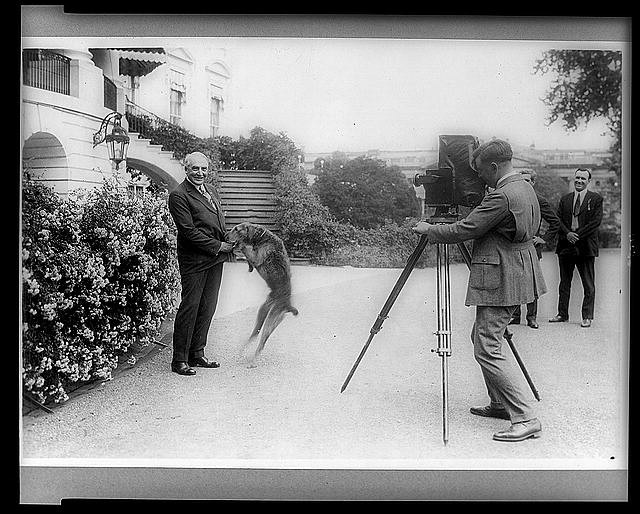
Yes.  President Harding’s last photos in my grandmother’s album.

OMG.  Leave it alone!

________________________

I found a copy of the actual event flyer from July 1923.

Now we can see an overview.  See what the Bell Street Pier looked like when President Harding rode in his motorcade.

You can make out train tracks.  Look at the far left – you can see the window locations on the building and…a pole.  You can also see blackness under what appears to be a short bridge and a railing that abruptly ends.  Important stuff.

The “PORT OF SEATTLE” with “BELL STREET PIER” signage can be signage can be seen at the far left.

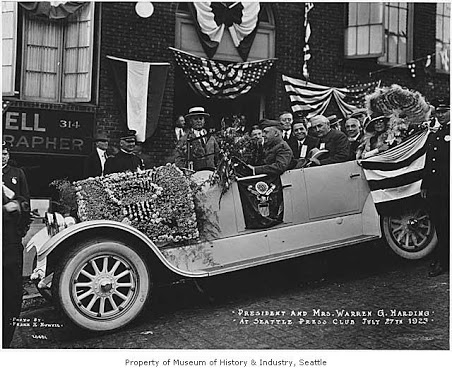
Upon studying “Grandma’s” photos further and in comparison to the “press” photo (below), I feel BOTH were taken within seconds of each other – but from opposite side of the motorcade.  Please note my scribbles:

“Grandma’s” on top, “press” below.

And note the following obervations:

  1. Pole – also painted white at the bottom;
  2. The prominent roof of a car (circled) parked along the pier and next to the pole;
  3. The group of four men marked with the proverbial “X marks the spot(s)”;
  4. The wooden railing in both of Grandma Kono’s photos; and,
  5. The US Marine Corps on one side of the motorcade, the US Navy on the other.

Amazing.  These are two rare images taken from different sides of President Harding and within seconds of each other.

BUT…….

With the flyer image, we now know train tracks ran along the pier.  Trains are also visible in the press photo.  There are MEN atop the rail cars.

Due to the angle, it is believed the photos in Grandma Kono’s album were taken from atop the rail cars.  Off to the left just outside the field of view in the picture (just like the grassy knoll in the famous Zapruder film of JFK’s assassination).

Ergo, I cannot fathom Grandma Kono climbing atop a rail car…let alone in a dress as was customary at that time for ladies.

Or would she?  Nah.

So…I don’t believe she herself took the pictures.

Dadgummit.

BUT……

Perhaps it was Grandpa Hisakichi!

OK.  Stop.

A Desire and President Harding


It was hard not to get caught up on the surprising photos Grandma Kono took of President Harding.

Taken in 1922 at the White House.

July 27, 1923.

Six days before the sudden death of President Harding.

I just couldn’t deny my natural tendency to research…with no goal to speak of.

And while I have hundreds of other vintage family photographs taken of up to a century ago to scan and retouch, I just had retouch President Harding’s pictures.  To bring back the excitement of that warm day in Seattle.

I was a bad boy.

And this story is unexciting unless you are into the past…and into a family’s past as well.

__________________________

It was most fortunate Flickr friend, US Navy veteran and author M. Shawn Hennessy (author of “Freedom’s Fortress“) offered assistance without any prompting.  What a guy…especially since he is on the mend after a bad spill on his bike.  He is sure to make a lot of friends with the TSA getting through airport security now.

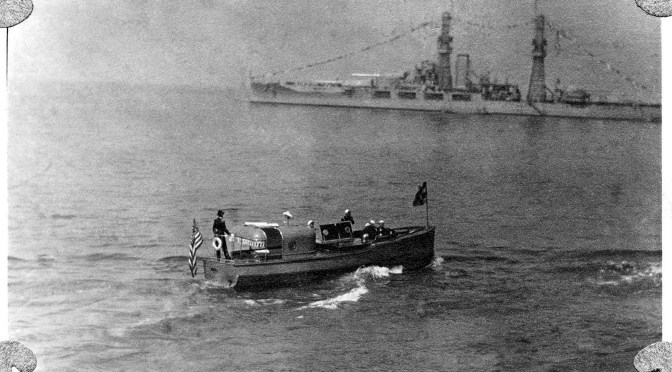
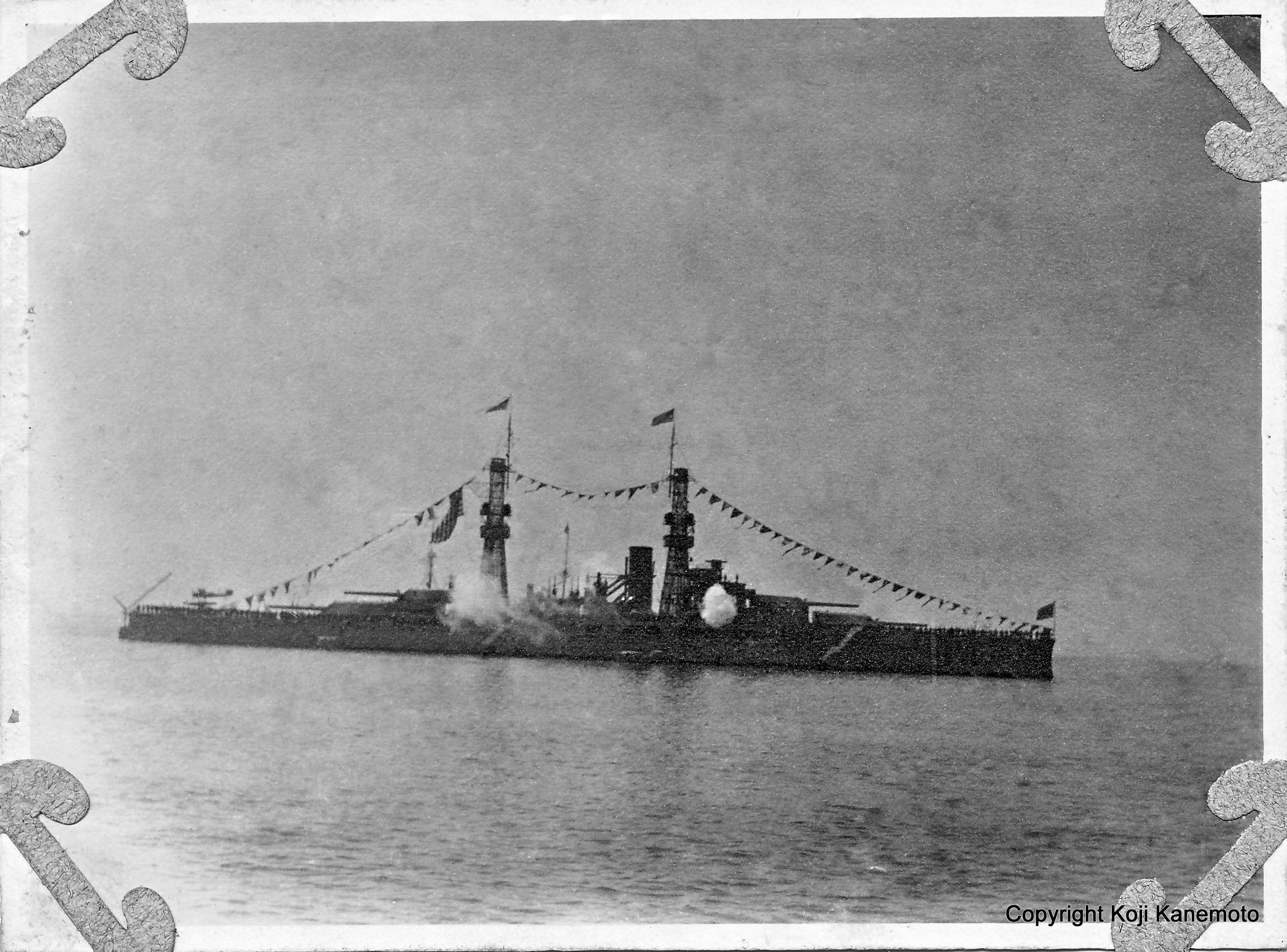
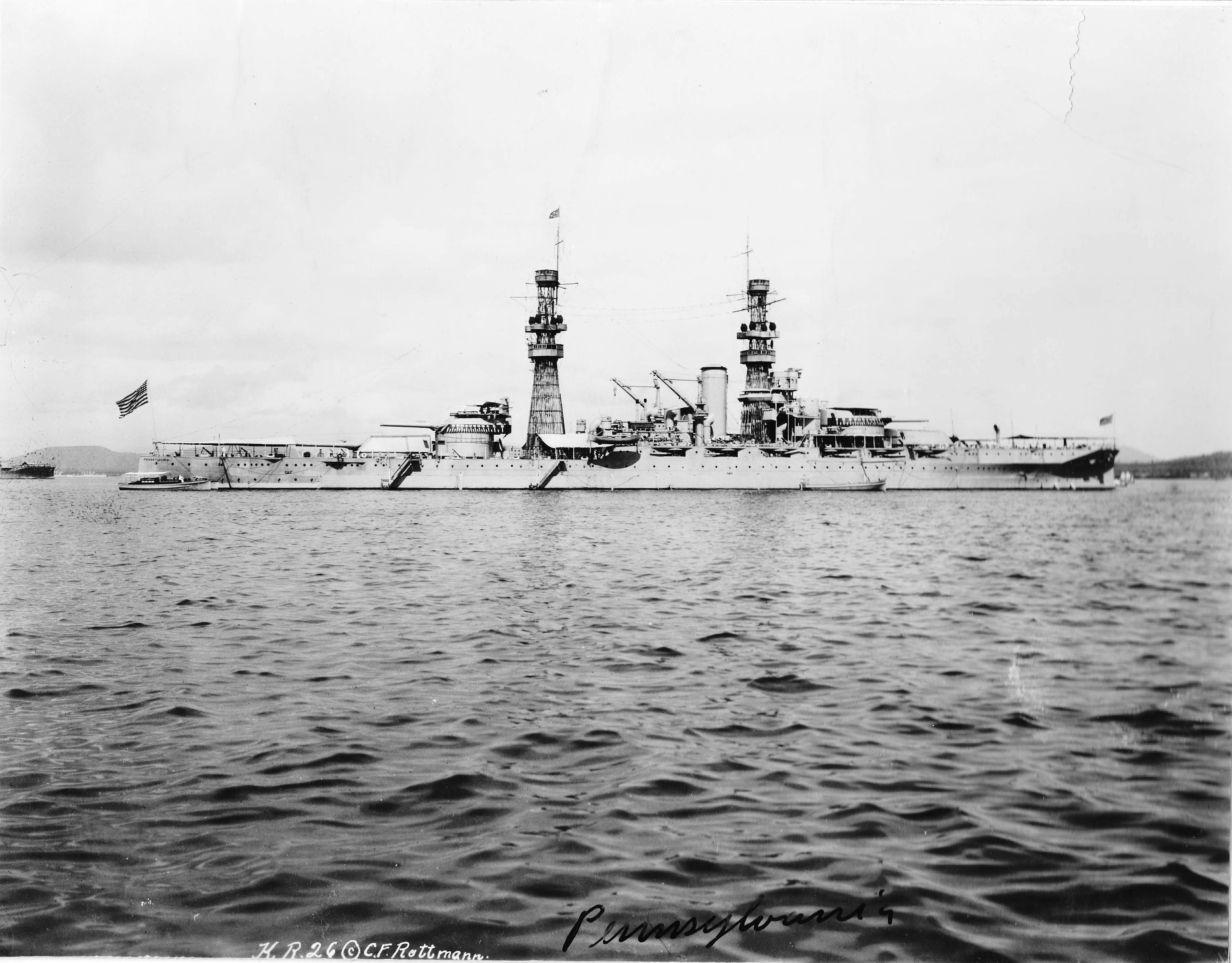
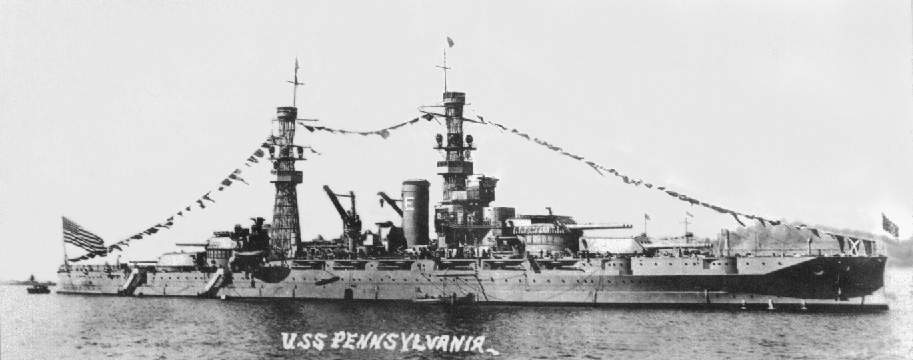
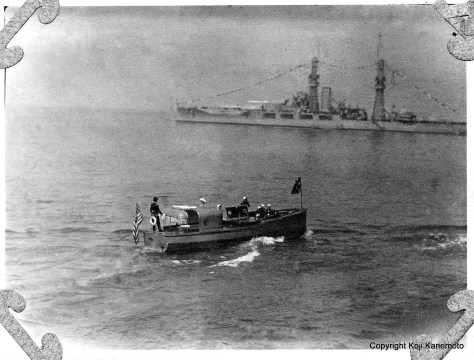
After some researching on his own, Shawn classified the battleship in Grandma Kono’s photo album as one from the Pennsylvania class.

After Shawn’s assist made it easy, she was identified as BB-38 – the USS Pennsylvania.  Interestingly, another battleship, the USS Idaho, was part of President Harding’s naval review – not the USS Pennsylvania.  It appears that President Harding boarded the USS Pennsylvania in Puget Sound for dinner although she was a frequent visitor to that area.

Grandma Kono’s picture as retouched:

A couple of vintage naval photographs of the USS Pennsylvania on the internet for comparison:

Archival photograph
Archival photograph

(Note: After FDR signed the Executive Order to imprison Japanese citizens on the west coast after Pearl Harbor, the FBI went into many private homes in search of “spy material” which definitely would have included any happenstance photo of the military.  It would be interesting to contemplate of what may have happened if my grandparents had remained in Seattle and the FBI came across these photographs in their home after Pearl Harbor.)

Her other picture of the USS Pennsylvania as retouched.  The shuttle does not have a civilian standing at aft as I previously noted.  We now see that he is a naval officer with his cocked hat and shoulder paulettes.

Admiral’s Barge

The photos in Grandma Kono’s album of President Harding’s motorcade were taken from a distance – not streetside.  That would become an interesting point.

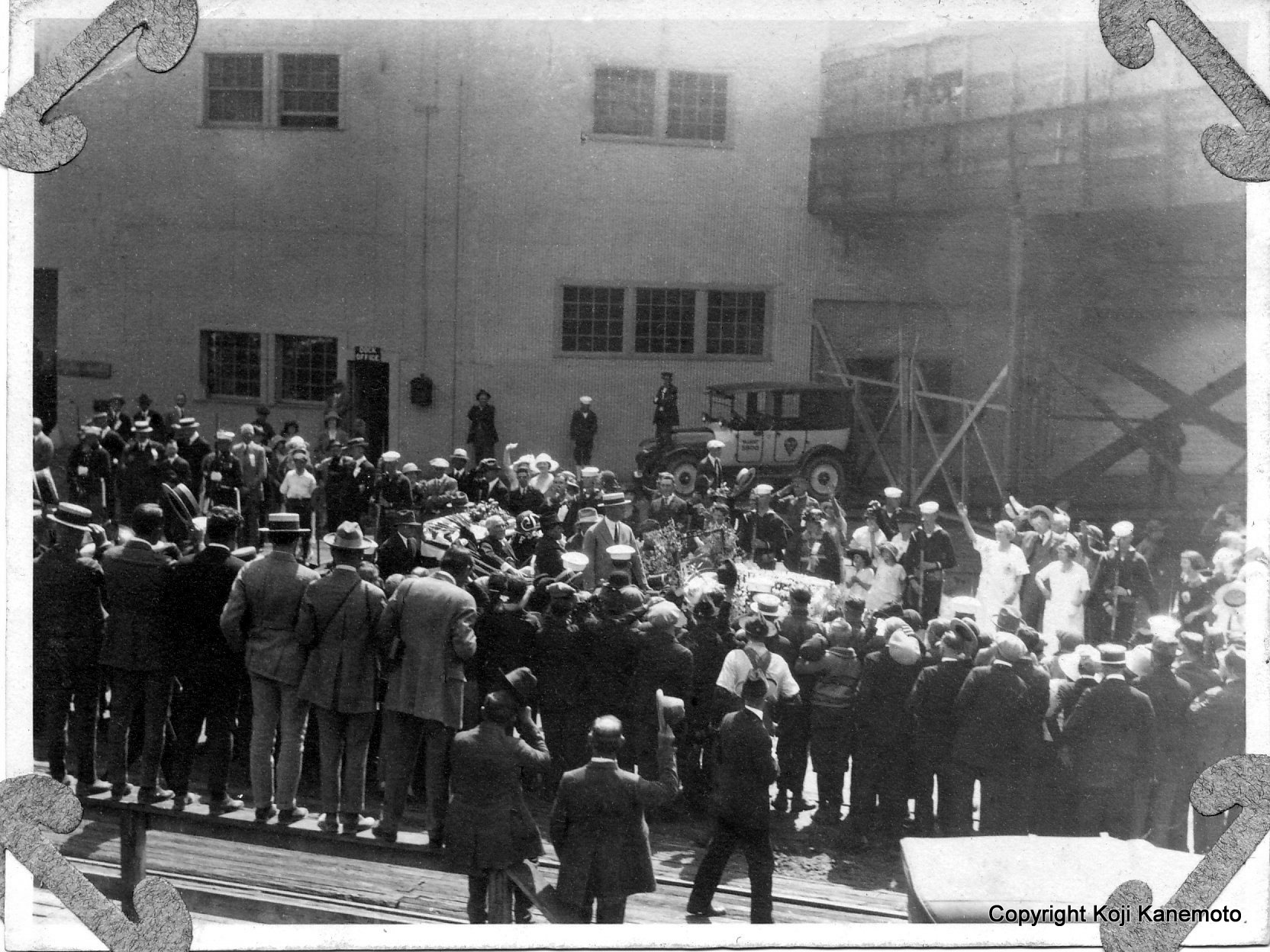
The retouched photos in Grandma’s album; in the first image, the limousine is between the US Marine Corps recruiting truck and a car’s rooftop.  Shawn identified the ship at dockside as the destroyer USS Hendersen:

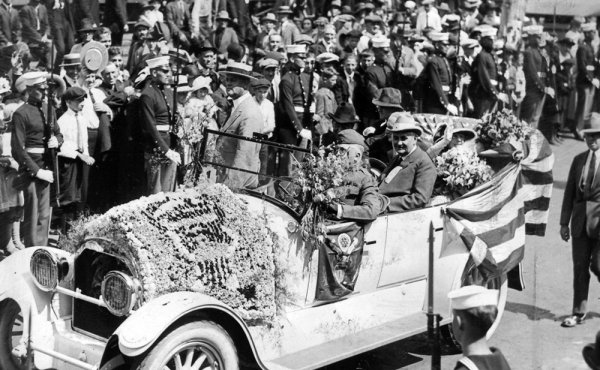
The closest view of the President in Grandma Kono’s album as retouched.

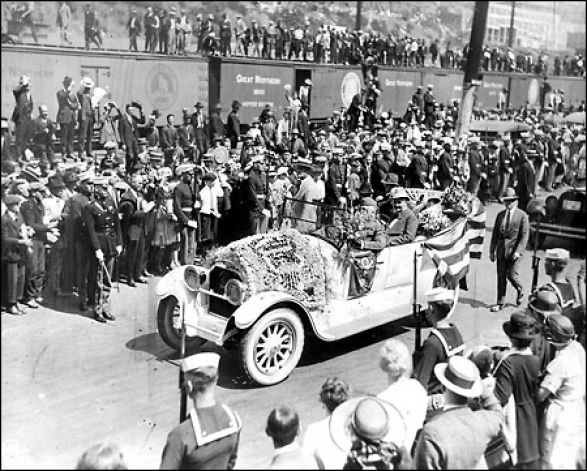
In scanning the internet, Shawn and I came across a few “press-type” professional photographs of the event; they were mostly taken from streetside.  Up close and personal.  The best image showing the details of President Harding’s limousine – down to the carpet of flowers on the hood – and the First Lady’s hat found by Shawn on the internet:

A professional press photo

Another view:

Scan the bystanders.  This is also a cropped image of the next photo.
This is the uncropped image of the previous photo.  Scan the bystanders.

If you enlarge the images and scan the bystanders, I did not see one individual with a camera to his or her face.  Many of the males were doffing their hat with one hand which further decreases the number of individuals capable of taking a photo.

As for the cameras of that time, they would have been of the collapsible bellows type or an early Brownie – which would have been literally a box with a small hole for the lens.  Both required two hands to operate properly.  In the family photos while camping somewhere near Seattle, I noticed a bellows-type camera.  Also important to note that is it was unlikely her camera would have been a Speed Graphic (4×5 film requires a dark slide thereby too much time) or a TLR (square negative with a reverse image in viewfinder).  It would be more likely she used 620 or 127 film in my opinion.

_______________________________

I also did not notice obvious non-whites in the crowds.

The significance of seeing only Caucasian bystanders?  Perhaps minorities may have decided to not be in the way…or there was no interest…or had to work as it was a Monday.  That leads me to the question of whether or not my grandmother was there to snap the pictures.  If not, from whom would she have received copies of these pictures?

_______________________________

My conclusively unsupportable conclusions?  That’s a sentence for sure.

No matter how you look at Grandma Kono’s pictures, they appear to be rare, personally taken photos outside of “authorized” photographs – military, government or newspaper.  They also show the “ambience” of the event being taken from a distance.

I also believe Grandfather Hisakichi would have been unlikely to have snapped the photos if he were there.  He was known to be strict and would have honored customs – like doffing his hat.  That would remove him from have taken the pictures of the motorcade as it required two hands to operate a camera of that era.  That leaves Grandma Kono – IF she was there.

Lastly, I believe the film used was either 620 or 127 (or similar) and not large format.  It is further supported by the print size (roughtly 2-1/2 x 3-1/2).  That would tend to support the belief that the photo was taken by an ordinary bystander and not a professional photographer.  It was also not taken by a Speed Graphic.

_____________________________

Hmmm…  After all this research, should I have been doing something else after all?

All I know for sure was that the photos of President Harding were taken on July 27, 1923 at the Bell Street Pier in Seattle.

That he was already ill.

That our 29th President would be dead six days later.

That I couldn’t spot any civilians snapping a picture.

And a desire to believe my Grandma Kono took these rare pictures of President Harding.

Private Photos of President Harding


Unbelievable.

The last few privately taken photos of an American president before his death were in an old Japanese lady’s photo album.

My grandmother’s.

________________________________

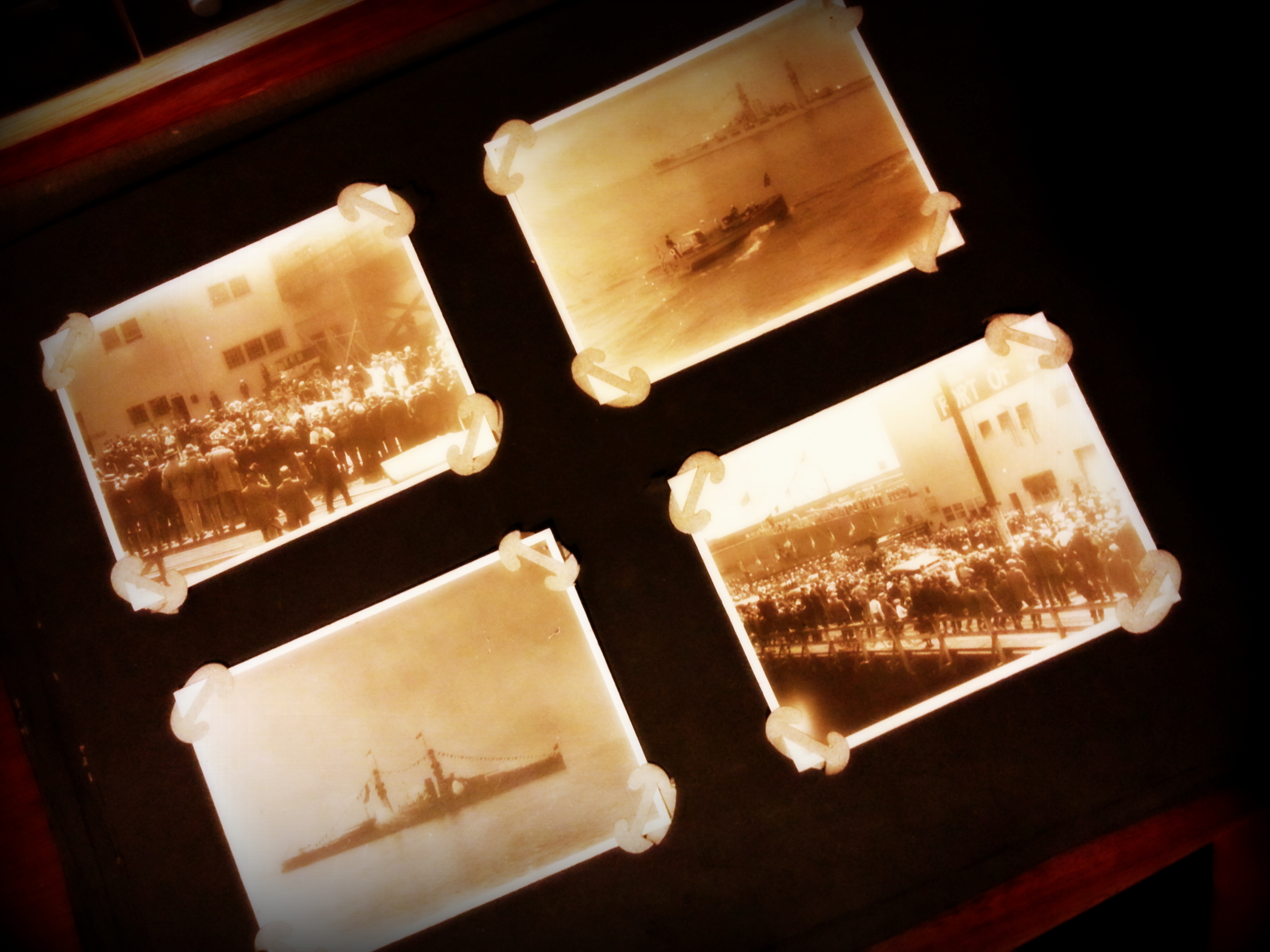
These four photos had intrigued me.  They had caught my eye earlier but there were other precious photographs to scan and retouch.

But the curiosity killed this old sourpuss.

I had to scan them… and there were fantastic discoveries.

_______________________________

President Harding, our 29th president, arrived in Seattle on July 27, 1923.  He was on a 40-day tour of the Western United States.

He would pass away just six days later.

_______________________________

After collaborating with a flickr buddy and author, Shawn Hennessey, we came to the conclusion that this indeed was President Harding’s motorcade at the Port of Seattle.  Of course,  we will never know for sure who took these photos but they are of the same size and finish of many of Grandmother Kono’s other photos of that time period.  Still, they are remarkably an incredible capture historically.

They are unretouched.  I thought they look better as-is.

A shuttle bears the colors and a civilian stands at the aft.  US Navy sailors are at the fore.
Shawn Hennessy believes this to be a Pennsylvania class battleship due to the single stack.  President Harding did review the fleet in the harbor (about 50 ships).

You can clearly make out the Port of Seattle signage with the beginning of “Bell Street Pier” on the building.  Note the US Marine and US Navy color guards.  It is likely President Harding’s destroyer that is docked at pier’s end.  The blanket of flowers can be seen on the hood of the President’s limousine, too.

Motorcade begins

The President can be seen closer below.  Of note is the agent standing on the limousine’s running board – or more specifically, his clothing.  Compare his clothing to other images you can find on the web.  You will see gentlemen doffing their hats to the President as he passes by.

President Harding.  He will pass away six days later in San Francisco.

__________________________________

Just a glimpse into American history – from a Hiroshima photo album.

I hope you all won’t mind if I feel Grandmother Kono took these pictures in 1923.

“Old Man Jack-ism” #4


“Koji, don’t let anyone tell you different.  War makes good boys do crazy things.”

That was the first time Old Man Jack shared something with me about the war in a voice of unfeigned remorse.  In turn, it was one of my first journeys in his time machine in which he allowed me to ride along.

Front row seats.  Free of charge.

It was in 2002 to the best of my recollection.  It was just before my littlest firecracker was born.

__________________________

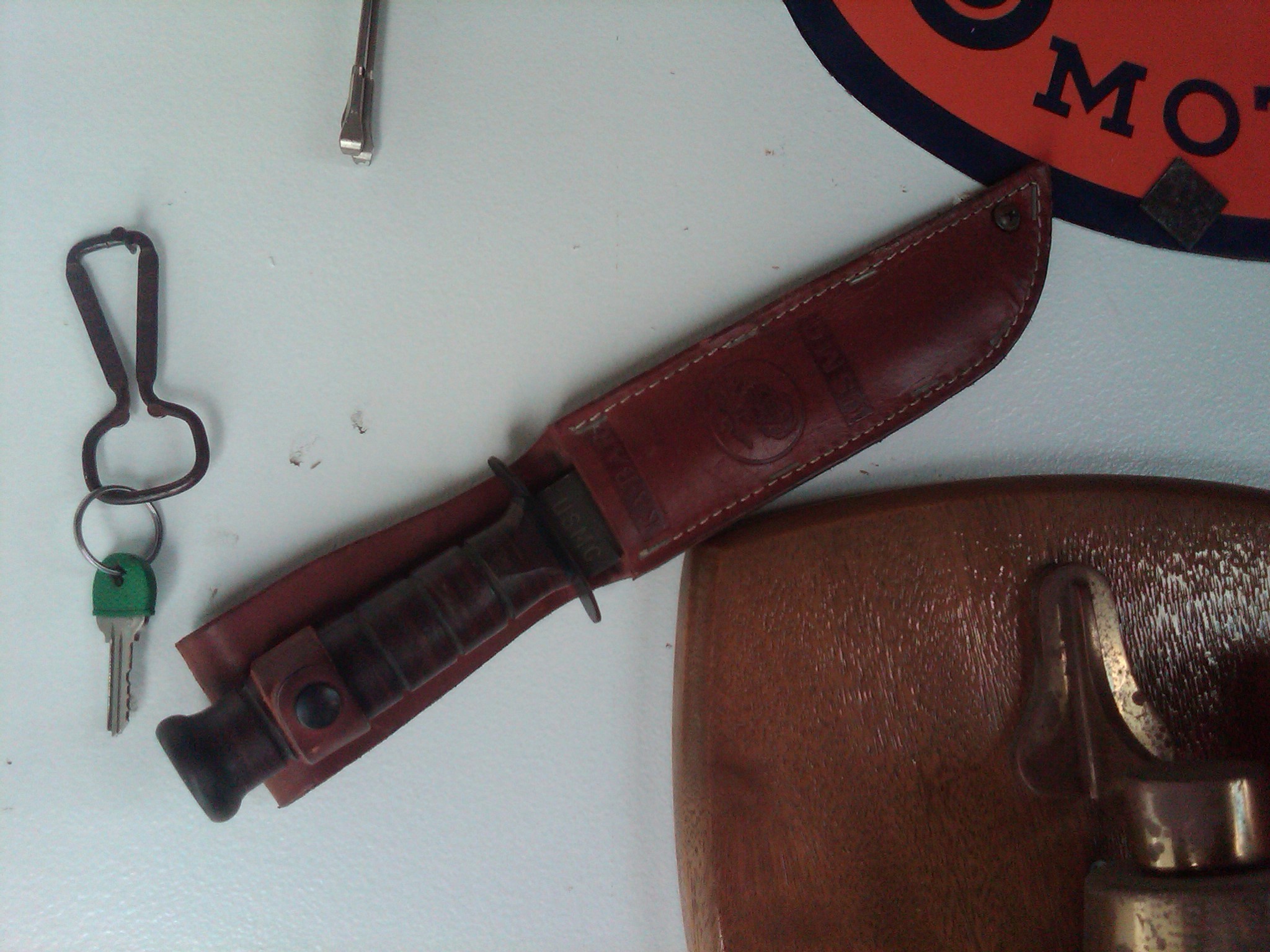
KA-BAR.  If you are a World War II US Marine who served on “those stinkin’ islands”, there is no explanation necessary.

My friend’s KA-BAR. He stated it was his grandfather’s who had served in the Pacific Theater. He allowed me to hold it. Its mass will stun you.

A KA-BAR was a Marine’s most prized personal possession.  It was always at their side.

They opened their C-rations with it.  Dug foxholes with it.  Chopped coconut logs with it.  Hammered nails with it.  Indestructible.

Most importantly, for killing.  Designed for slashing and stabbing.  Desperate hand-to-hand combat.  To the death.

The KA-BAR served them so well that many Marines who survived passed it down to their children.

Old Man Jack said several times, “I’ll tell ya – us white caps always tussled with the Marines ‘cuz they thought they were better than us…but there wasn’t anyone better at protecting your sorry asses with theirs when it came time.”

_________________________

(If you are prone to nausea, you should not continue to read this Old Man Jack story.)

I did not know this free ride was coming.  It was unexpected and spontaneous.  I recall that clearly.

That afternoon, he began describing something vile he witnessed during the war.  Today, I fully realize he was trying to vomit demons out from his soul.

He needed to.

Jack visiting at my house on Sept. 23, 2006. He would fall gravely ill about a year later.

________________________

He didn’t tell me what island; that would be his pattern up until his death.  If he was talking about something a young man should never have witnessed, he would never say what island he was on.  However, my educated guess as to the year would be late 1943 or early 1944.

Old Man Jack said to the best of my recollection that “…the Japs broke through our perimeter”.

“When the fighting broke out, most of us (the ground crew servicing Marine Corsairs) dove straight into the nearest foxholes.  I only had a .45 and I kept my head down except for a dumb ass split second or two…”  He tried to mimic what he did by extending his neck a bit and flicking his head left and right.

“All hell was breaking loose.  Men were screaming all over the place.  You could tell which rounds were from us and which ones were theirs.”

It was all over in a couple of minutes, Jack said.  “I did hear moaning then a CRACK from a .45 or a M1…”  A Marine apparently dispensed a wounded enemy soldier.

“I got up.  There was still a little yelling going on.  And I ain’t ashamed to say I started shaking real bad.  Then I see this kid (i.e., a Marine) dragging this wounded Jap; he was hit pretty bad but I could tell he was still alive.  The Marine grabbed his KA-BAR and sliced open that son-of-a-bitch’s mouth.  I could see the Jap was flinching.  The kid was trying to gouge out gold (from his teeth).”

Another Marine came over and shot the Jap dead with his .45.  The kid yelled, ‘Hey!  Why’d you have to go do that for?!’

The other Marine just looked at him for a split second and walked away.  I stopped looking.”

Jack then just slowly shook his head.

________________________

I remember Old Man Jack was looking down when he finished.  He had on a grey sweatshirt as winter was coming on.

Front row seats in his time machine of nightmares.  He just forgot to mention it was on his roller coaster he kept hidden inside.

He had other free tickets for me in the years that followed.

Old Man Jack-isms #3


One of the few times Old Man Jack would tell me what island something happened on, it would be humorous – as humorous as he could make it.

He HAD to laugh off some of the horror.  He needed to survive being under attack by his own thoughts.

_______________________

On January 16, 2011, eleven months before he passed away, we decided to go to Denny’s for breakfast.  He hated that place – except for their (gawd awful) coffee.  He loved their coffee.  And he complained about the coffee on the islands.  Imagine that.  Denny’s coffee couldn’t have tasted that much different.  Denny’s uses ocean water, too, you know, for their distinctive flavor.  Perhaps that is why he liked their coffee.

Jack with “Green Island” story and his tradmark grin – Jan. 16, 2011.

“Green Island” was Jack’s last combat station when he earned enough points to be rotated back home.  He told me when they yelled out his name, he just ran straight onto this makeshift pier where a PBy was starting up.  He jumped in wearing only his shorts and boots.  They took off.  He was on his way home.

(Click here if you wish to see official US Navy photos of Green Island when Old Man Jack was stationed there.)

In my internet research, I did come across some detailed battle history of Green Island.  I printed it out and not knowing how he would react (even after 11 years of friendship), I presented it to him before the (gawd awful) coffee came.  I didn’t want him to be TOO alert in case things didn’t go well. 🙂

Well, you can see his reaction.  He was “tickled and pickled” I went through the trouble.

________________________________

During breakfast, he told me about one detail he was assigned to on Green Island – the digging of new holes for latrines.   Never mind my eggs were over-easy.  But he’s gone through hell whereas I was spared.  This was everyday fare for him.

He told me he picked out two “dumb new guys” who thought they knew everything for the detail.  They went out where the other “used up” latrines were.  He ordered them to start digging new holes in this hard coral-like stuff not too far from the other “used up” holes while he “supervised”.

I knew I would get his goat if I interrupted him.  That was part of the fun.

So I interrupted him.  For fun.

“Jack…dig?  Why didn’t you just have them make a small hole then throw in a grenade?”

Well, I asked for it…  in Denny’s…  on a busy Saturday morning.

“You dumb shit,” he declared with that boyish grin.  “YOU could have been one of the dumb new guys.  YOU would have fit right in.  We didn’t need any more craters!  We had LOTS of craters – all around us!  So we dug holes like we were ordered to.  So shut up and listen!”

Whooo-ee.  That was fun… in Denny’s… on a busy Saturday morning.

______________________

I never asked him if he read the history on Green Island.  Later on, though, Old Man Jack said he had wanted to go back to those “stinkin’ islands” just to see.  It felt as if he wanted to let some demons out.

He never made it back.

Perhaps he’s there now saluting his young buddies he had to leave behind.

WWII Military Intelligence Today


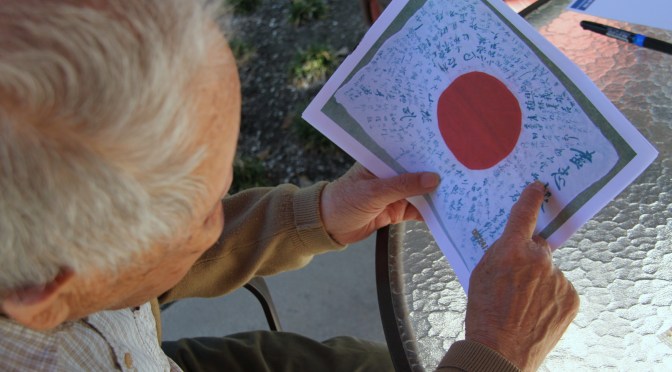
Dad is trying to read the name of the young man the Japanese war flag was signed for.  It is not as easy as you may think but the Japanese characters are not only written with a brush and charcoal ink, it is written in an artsy handwriting style.  Further, the characters used by pre-war Japan are largely not used anymore. (ps If you look hard enough, you can make out the bruising under his eye.)

World War II Military Intelligence techniques are still important and in use today – but for entirely different reasons.

___________________________

During the war in the Pacific, US military personnel were forbidden to keep notes or diaries in the event they were captured.  Nothing more disillusioning to be captured or killed, then have the enemy read about the ammo dump you just left from.  Especially for your buddies still stationed there.

On the other hand, Japanese soldiers were allowed to keep notes or diaries.  Apparently, the Japanese military saw the diaries similar to “water cooler gossip” at the office.

That was their downfall as Americans like my father translated such documents.  The Military Intelligence Service.  It was from these diaries that the Allies first began to see that the enemy were not the samurai of lore.

They had gripes of their commander – even by name.  They complained of starving, no ammunition, no water.  They also had uncensored letters from home – their families were starving, sick or had no home left for the soldier to come back to.

A mortar crewman wrote of how terrified they were to launch a mortar shell at the Marines as for every round they fired, the Marines would send ten back their way.

The MIS did their job faithfully back then on those hell hole islands.  Their job was to help kill the enemy.

______________________

The flag.

Today, albeit in a roundabout way, MIS veterans like my father are still doing their job.

Last week, a representative of the “Japanese American Veterans Association (JAVA.org)” contacted me again to enlist the help of my father.  As mentioned in an earlier short story, Dad was a “kibei“, or an American of Japanese descent who got schooling in Japan.  He was fluent.  More so, he still is fluent in reading the pre-war Japanese writing.  There really aren’t that many left with this ability.  Dad is 93.

Unfortunately, Dad had a bad fall the day the request came in.  He fell flat on his face and shattered his glasses in the process.

Apparently, a gentleman had in his family’s possession a captured Japanese flag.  Presumably, someone in his family brought it back as a souvenir.  Of course, if an Allied soldier brought one home, it may have been removed from a corpse.  In the best case scenario, it was taken from a prisoner.  You just didn’t find them laying around on the battlefield.

Dad on Saturday enjoying a “youkan”, or sweet bean jelly. He has a pretty good sweet tooth.

According to the request, the owner of the flag stated he wanted to return it if possible to the family.  Not an easy task – even for “I Dream of Jeannie”.  These flags were created at the farewell party of a soldier who was going to be dispatched to the war and certain death.  There is usually the name of the person for whom the flag was presented.  If you are lucky, the flag may have a city or town written.  I’m sure my Uncle Suetaro received one.

Even for Dad, the complicating factor is not knowing how to read a Japanese character.  It is HOW it was written.  These were all signed by brush and charcoal ink.  The ink lasts forever since it is carbon.  But have you ever tried reading signatures?  Try your hand at this one:

You get the picture.

_________________________

Anyways, Dad – and while his glasses were shattered in the fall – was able to say the person for which the flag was signed was likely for a Mr. Tokio Miyake.  Unfortunately, there was no true town or city named specifically.  Nevertheless, we were able to make out what appears to be “Kurayoshi Mayor”, or the mayor of “Kurayoshi”.

Last night, I did a little reserch and almost unbelievably did find a town named Kurayoshi.  I tracked down the town’s website and sent a blind email (in my broken Japanese) to the mayor’s office and asked if there was a mayor named “Furuya” during the war.

We’ll see.

_________________________

While my Dad did not participate in the hostilities, his Nisei unit did their job and greatly shortened the war according to General MacArthur.  The Nisei’s job was a true secret weapon.

Hopefully, this no longer secret weapon can serve some peacetime good and bring two families to peace.
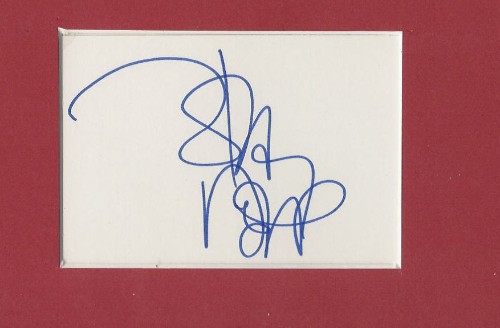
Oh.  That was Johnny Depp’s signature.  Thought you ladies may like that.