Old Man Jack entrusted me with his house keys “…in case he shot himself in the foot” as he put it. Now covered in dust is Old Man Jack’s favorite baby – the F4U Corsair albeit a toy. He would push that button in once in a while, listen to this toy’s engine sound and watch the prop spin… It would echo a bit in my hallway…
I looked at these two old keys in my hand. They belonged to Old Man Jack and the thought of Memorial Day instantly crossed my mind.
I heard from my good friend, that the recently refurbished RAF Grafton Underwood Memorial, has been ‘attacked’ by as yet unknown people or persons and has had the two flags (the Union flag and the Stars and Stripes) that flew on the masts, removed and burnt.
This is particularly sad as a lot of hard work had gone into the refurbishment after a long battle with local land owners and officials.
The good news is that the memorial itself was not harmed and that the ‘opening’ will go ahead as planned. Veterans of Grafton will be joind by locals as the memorial is dedicated and officialy opened. A fly past by the B17 ‘Sally B’ is also scheduled to take place at the dedication.
Why people do such things is beyond me, I can only hope that they are found and dealt with appropriately.
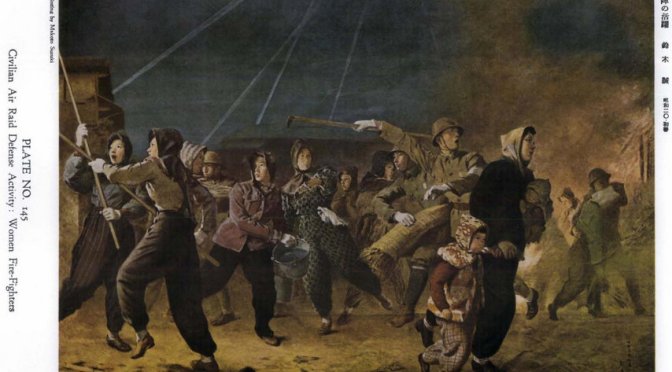
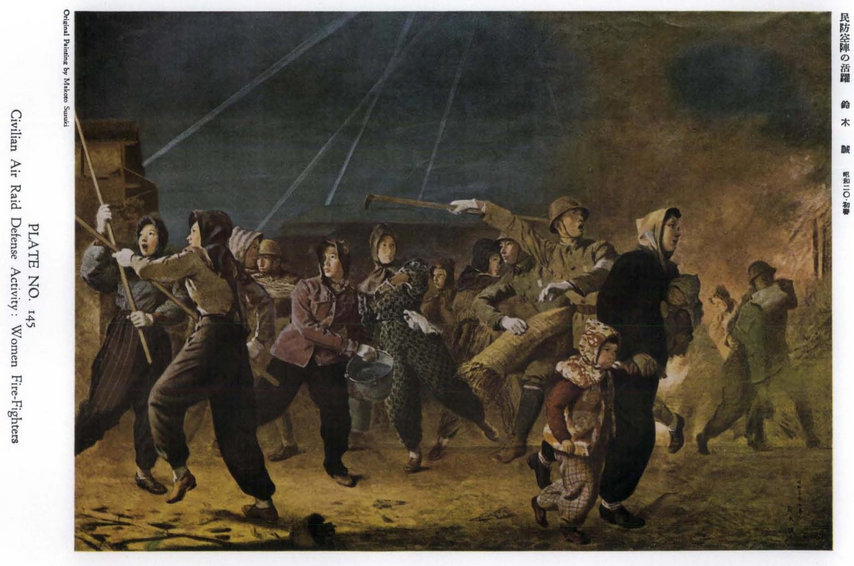
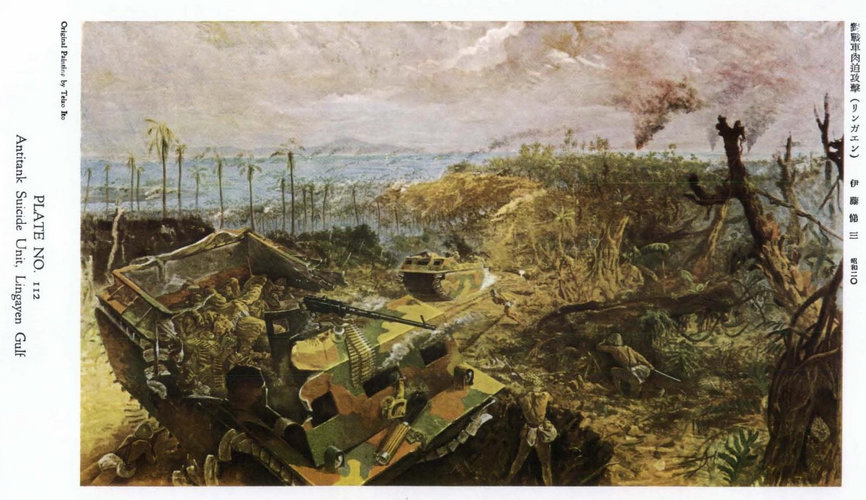
Mitsuko went about Tokyo seeking artists to paint war scenes from the Japanese point of view. This task was made much easier as Willoughby gave her permission to ride about in her own private jeep. This was a definite indicator of his affection for Mitsuko as all Japanese women were prohibited from even riding in any Allied military vehicle, let alone have one assigned to her.¹ With her purse flush with cash from Willoughby, Mitsuko paid starving artists large sums of money for art pieces depicting the war from the Japanese point of view. It was reported that she paid these artists up to several hundred dollars for one piece; this caused great dissension amongst the Japanese men who were assigned to compile the history. At that time, a year’s average salary rarely exceeded $150. Many of these men were also former Japanese military and were required to address their superiors as if they were still in the military. Kawabe ran the group as if it were still his army. Some of them found it dishonorable to be even working “for the invaders”, as my Tokyo grandmother liked to say.
Japanese artwork from “Reports of General MacArthur Japanese Operations in the Southwest Pacific Area Volume II Part II”, Page 472. US Army
Fraud was suspected with respect to Kawabe and Arisue. To further their spying, they asked for and received a tidy sum of money from Willoughby to supposedly increase spying activities on the Communists in the surrounding Asiatic regions. Similar to what is happening today but on a grander scale, some of these supposed spies just “disappeared” after receiving a supposed cash payment. While the CIA apparently came to the conclusion there was a scam going on, they failed to take remedial action.
In a further documented twist, the subservient Hattori was himself pursuing his own agenda in secret. Actually, he had two secret and separate agendas.
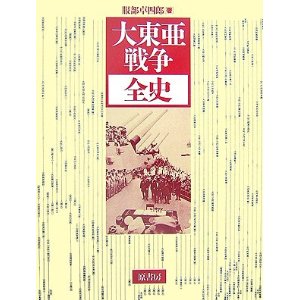
Hattori’s condensed 大東亜戦争前史 , or “The Complete History of the Great East Asia War”. It is also in DVD.
First, as he solely determined what would go into the Japanese-version of the history, Hattori was absconding with selected crucial documents that came across his desk. He had schemed that once “the invaders” left, he would write his way into history by publishing his own “true” version of the war against the Allies. By 1953, he was partly successful in that he did put together an eight volume history entitled “大東亜戦争全史”, or “The Complete History of the Great East Asia War”.
Second, he was gung-ho to re-arm the new Japan. It is reported that by 1949, the brilliant planner Hattori had drawn up a four division army with key officer positions already determined, complete with detailed arms and logistics laid out.
He passed away in 1960. In another twist of fate, his original publication was condensed into a thousand page book and published five years later under the same title.²
________________________________
As for Willoughby, he also pursued his own agenda. Yes, he was motivated to glorify his commanding officer, General MacArthur, in the history books. Using the funding from G-2, the project moved along out in the open. Most anyone knew about it although it was done under a military intelligence umbrella.
However, in late 1947, G-2’s history department requested copies of the documented history. In a bewildering response, Willoughby replied by saying it was not ready; he also replied in like for the Japanese volumes. But what made it bizarre was that he stated it was but MacArthur’s personal record – a report, if you will – of what happened during the war… Essentially, that it was not an official US Army publication. As such, it would not be subject to review and approval by the US Army prior to publication. However, in a kind gesture, Willoughby indicated they would receive copies once it was published.
Willoughby went to a former Army officer, General Stackpole, in 1948; he owned a publishing company specializing in military history. Due to the immenseness of the volumes, Stackpole declined participation on the grounds it was too large a printing effort for his company. Willoughby then sought out Japanese printing companies but they were still in shambles from the war. He was unsuccessful. It was reported unofficially that MacArthur had known, at least, of the attempt.
Eventually, five samples of the “report” were published in 1950 by a Japanese printing company with the assistance of Washington. However, during this time, Willoughby – for (their) mutual protection – ordered all extraneous documentation collected during this five-year project that may jeopardize MacArthur’s hero status destroyed… and they were. Even notes and drafts were burned. The burning was supervised on March 2, 1951 by two US Army officers assigned to Willoughby’s history detachment.
The reasoning and significance behind this burning at that time is now clear. On April 11, 1951, President Truman relieved General MacArthur of his duties for his handling of the Korean War. To give you an idea of the volumes of documentation collected yet remaining after the burning, MacArthur brought back 32 footlockers full of documentation. Willoughby himself brought three more which apparently contained the galley proofs. He claimed these were MacArthur’s personal property… a diary of sorts. Willoughby managed to convince the government to finally print the “report” in 1953; however, MacArthur intervened and squashed the agreement citing the documentation was full of errors and was just a draft. It was not printed.
MacArthur did sell his memoirs for nearly $1 million in 1963 but like Hattori, MacArthur passed away soon thereafter in April 1964 and ironically never saw his memoirs published.
Nevertheless, the US Army finally did publish the two-sided “history” of WWII in 1967 after MacArthur’s death. The publication is entitled “Reports of General MacArthur” and can be read online at several websites. Previously owned hard copies are also available online. It is immense. From what I understand, the Army disclaimed any responsibility over its accuracy throughout its four volumes. It does contain the original Japanese artwork sought out by Mitsuko.³
Willoughby passed away in October 1972 in Naples, Florida. He is buried in Arlington.
_________________________________
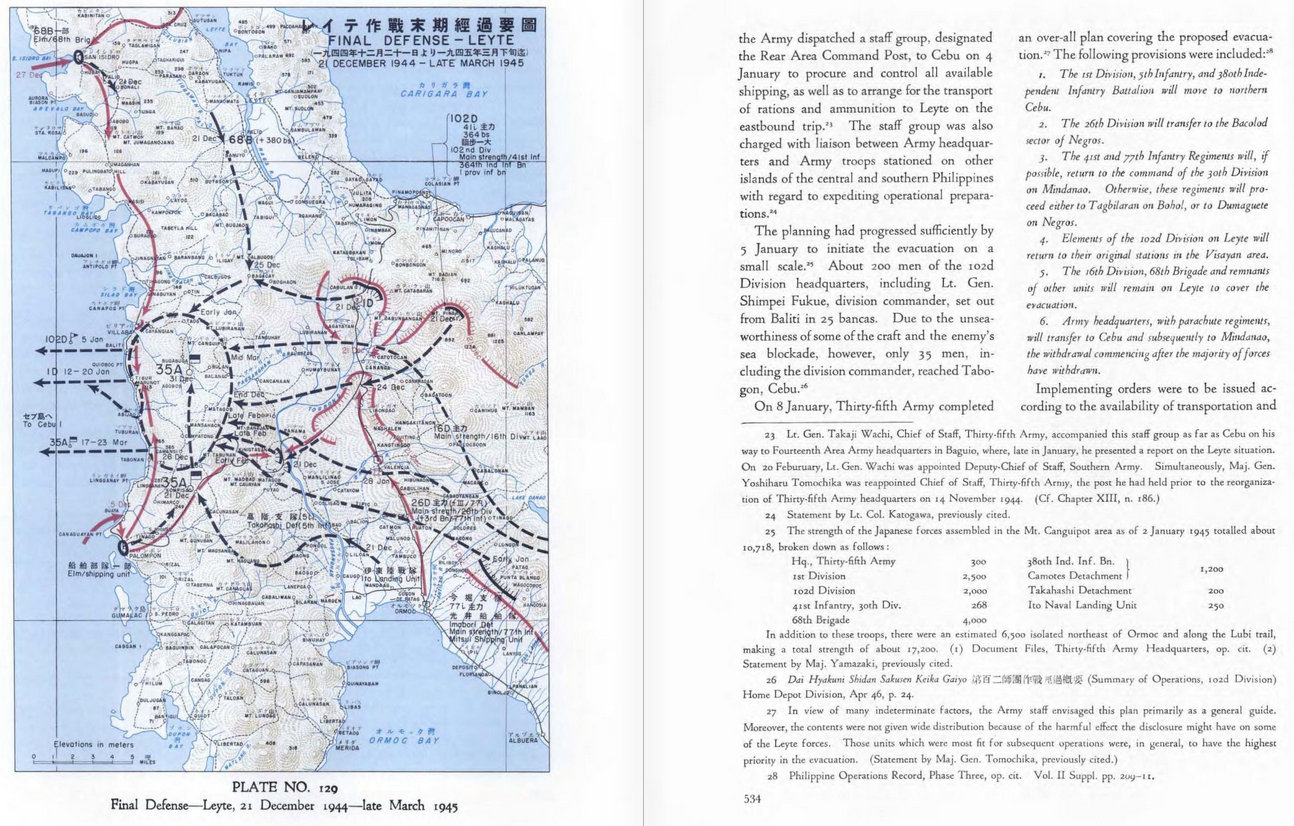
“Reports of General MacArthur”. Page 533. While the Imperial Japanese Army informed my grandmother Uncle Suetaro was killed on July 15, 1945 at Villaba, this battle report is unfortunately dated for March 1945.
In closing, I came across some information in the “Reports of General MacArthur” as to the action that potentially led to the combat death of my own Uncle Suetaro on Leyte near a village called Villaba…on Page 533 of Volume 2, Part 2. My Hiroshima cousins believe he was assigned to the Imperial Japanese Army’s 41st Mixed Regiment; it had been annihilated on Leyte. He was reportedly killed on July 15, 1945 but it is clear per MacArthur’s “report” that centralized Japanese army command on Leyte had ceased in March 1945 per this Japanese record.
Perhaps finding out exactly what happened to my Uncle Suetaro will only occur in a fairy tale. To realize I will never find out is my dragon to slay.
____________________________
Footnote:
1 Though I have yet to see one photo, my mother and aunt claim our Uncle Taro took them around what was left of Tokyo in his US Army jeep. Uncle Taro was a Private in the US 8th Army’s Military Intelligence Service.
2 Unbelievably, it is available on Amazon Japan.
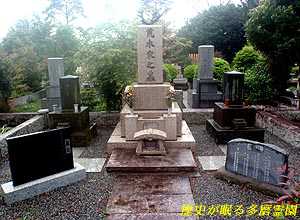
3 Although I have scoured Japanese websites, only scant sentences can be found about Mitsuko. Her fate is unknown to me except for her grave marker.
As I watched “How to Train Your Dragon” on Blu-Ray for the third time with my kids, it became clear that knights in shining armor kill dragons…and only in fairy tales.
A tremendous Einstein moment for this old geezer.
But then I realized that sometimes, what we read about WWII history can be sort of a fairy tale, complete with a knight in shining armor trying to slay a dragon… the dragon being what truly happened in war.
History becomes what the writer – or a leader – wants it to be in the public domain.
_____________________________
Unknown to many is that another battle raged after the surrender of Japan. It was about what was to be recorded as an official history of WWII. It was a battle involving glorification, greed and politics of both the victors and the defeated.
And of course, it involved General of the Army Douglas MacArthur.
First, a quick opinion and summary of MacArthur from this arm-chair (amateur) historian’s viewpoint.
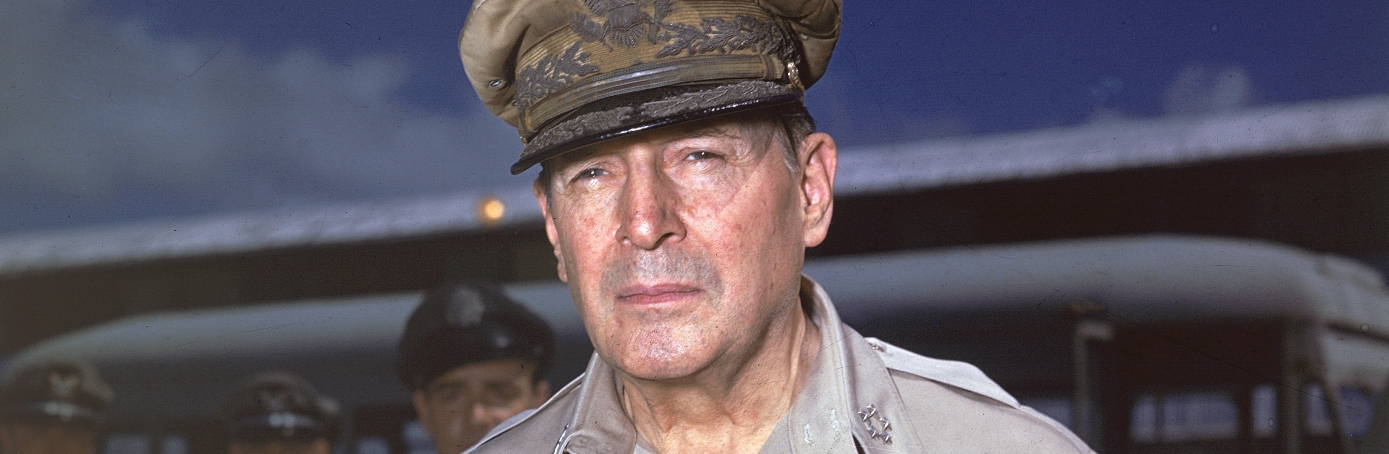
MacArthur had a helluva an ego as did George Patton and Bernard Montgomery. He was suspicious, short tempered, short on patience and embittered. MacArthur – as did Patton – studied military history extensively; he loved Napoleon. As commander, he failed to appropriately alert the troops under his command in the Philippines immediately prior to Pearl and worse yet, in the hours after. He had to flee the Philippines on a PT boat along with his family to avoid capture leaving behind his troops. However, supported by a brilliant, top notch staff and highly critical intel derived from intercepted then deciphered Japanese transmissions, he was highly successful in winning the war in the Pacific. He was a hero at war’s end to his great gratification. He was so loved by the American public that quite a few babies were named Douglas.
____________________________
Primarily due to a ridiculously small and inexperienced staff, only a relatively short written history of WWII in the Pacific emerged in late 1946 to the chagrin of MacArthur. He immediately then placed Major General Charles Willoughby in charge of generating an “official” history.
Willoughby was in charge of the US Army’s G-2 (i.e., military intelligence) in the Southwest Pacific theater of war and was trusted by MacArthur. (I briefly reported on Willougby in “Ike, a German-American Soldier”.) Having a heavy German accent, Willoughby was very loyal to MacArthur, pompous and stoutly anti-Communist. He seized the opportunity to “write the history” on victory in the Pacific under MacArthur’s leadership.
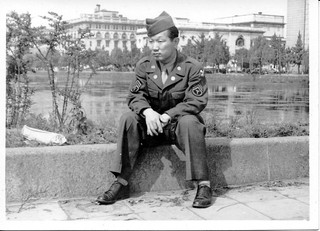
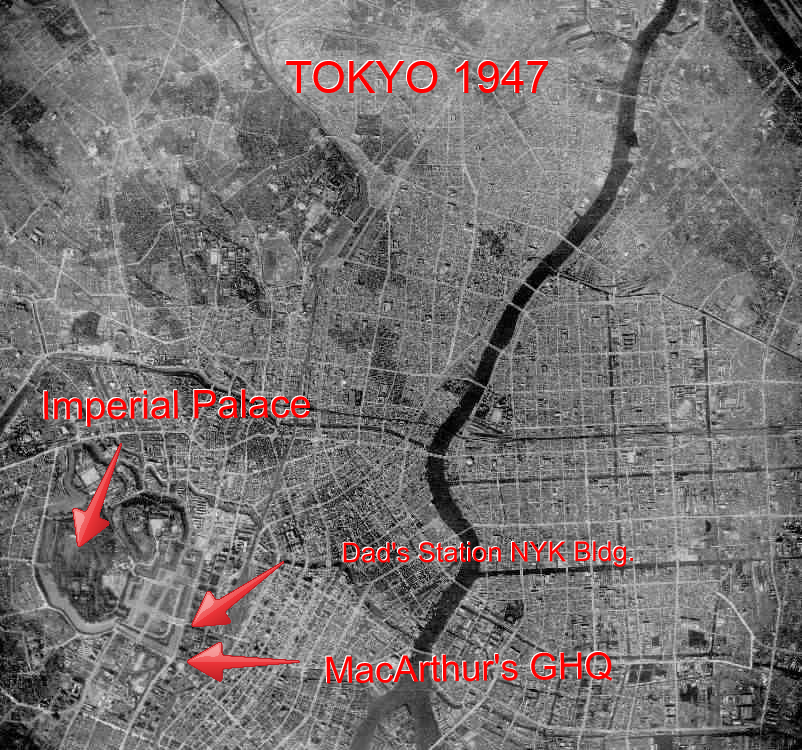
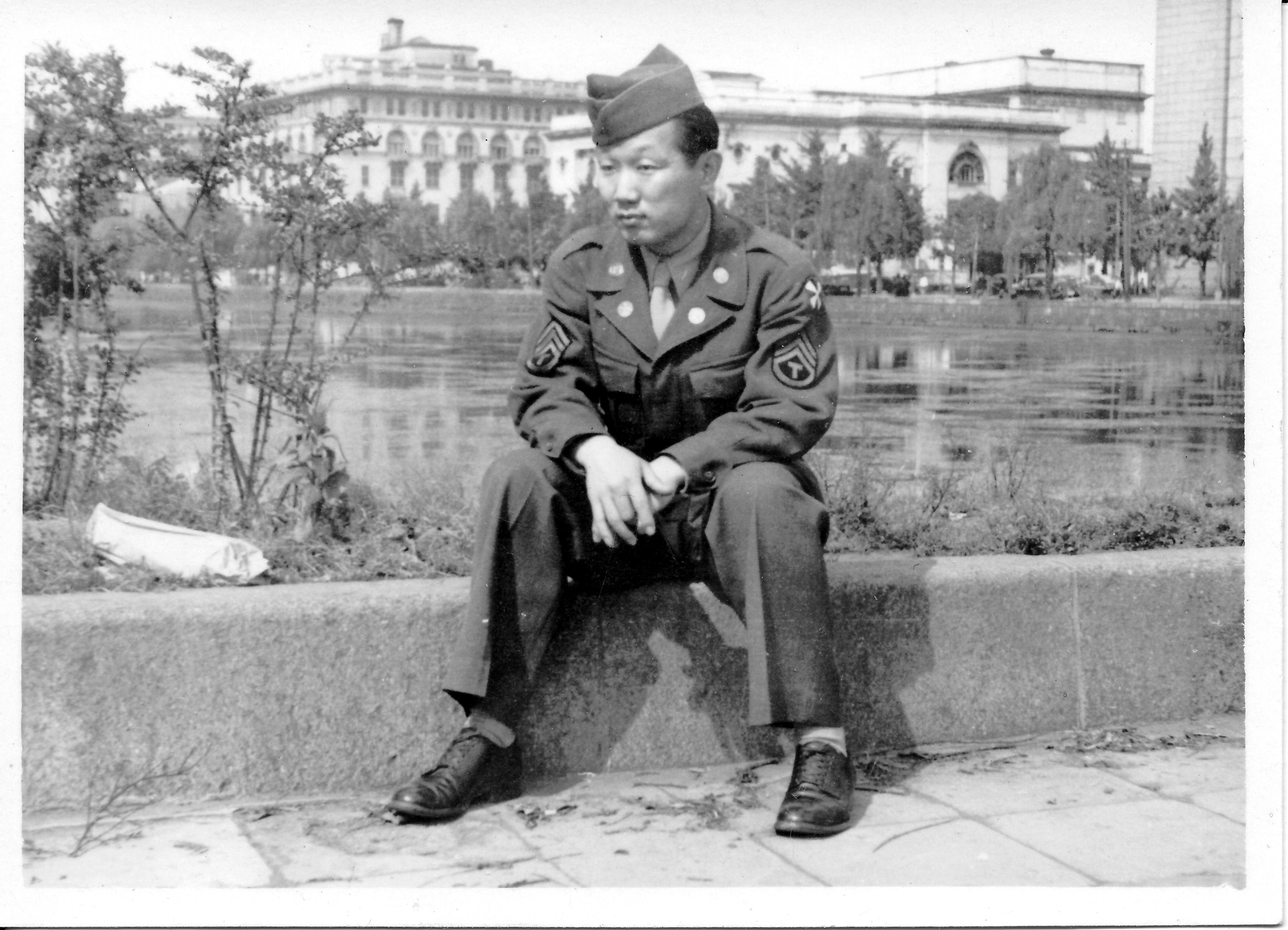
The tiny staff then blossomed under Willoughby to over 100 and was headquartered on the 3rd floor of the “NYK Building (Nippon Yusen Kaisha)” just a block from MacArthur’s GHQ in the Dai-Ichi Seimei Building; both are situated directly across the Imperial Palace. (Coincidentally, my dad was stationed in the NYK Building on the 4th Floor as a US 8th Army Technical Sergeant, 3rd Grade in Willoughby’s G-2. He is pictured below with the edge of MacArthur’s GHQ seen on the extreme right. The NYK Building is off the picture to his left. Behind him is the moat of the Imperial Palace.)
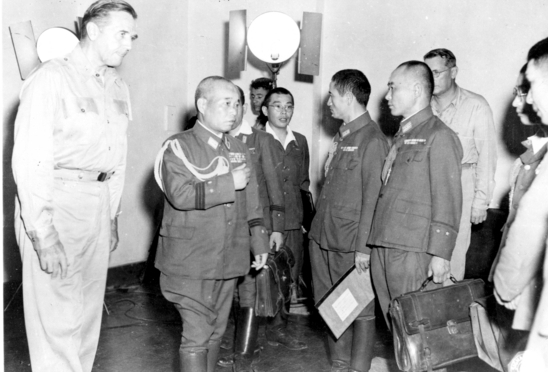
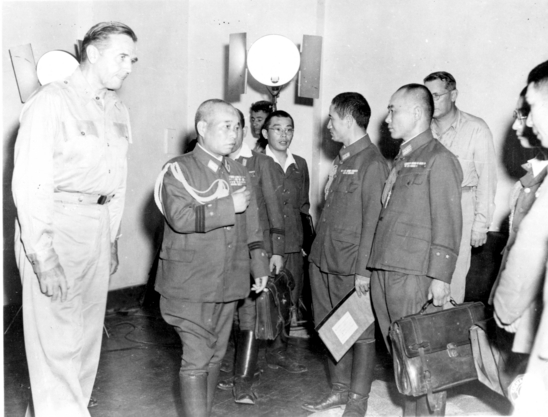
Seeking glory in this mission, Willoughby recruited by the end of 1946 top Japanese military officers, spies and even war criminals. Each had their own personal goals and copious amounts of US money flowed into these Japanese hands. One Japanese officer who Willoughby met in Manila was the Imperial Japanese Army’s Lt. General Torashiro Kawabe (photo above). Amazingly, because Kawabe also spoke German very well and was anti-Communist, he and Willoughby struck it off well.
A short time later, still in 1946, Willoughby met Lt. General Seizo Arisue who was the intelligence chief for the Imperial Japanese Army. By sheer luck, Arisue was also fluent in German and a staunch anti-Communist and reported he had the extensive spy network in place mentioned above. A triad had thus formed and the project to document history took off but with a twist: to Willoughby’s credit, he foresaw a “dual” history. As history always gets written by the victor, Willoughby wanted two volumes. One would be the US side of the story, the second volume to be Japan’s.
In early 1947, Willoughby was introduced to a former colonel who served at the Imperial General Headquarters in Tokyo during the war. His name was Col. Takuhiro Hattori. Hattori was known to both Kawabe and Arisue as a genius in planning and organizing. Hattori eventually became the person from Japan’s side to determine what went into the war history.
Generous money flowed through Willoughby to Kawabe and Arisue, reportedly to help fund the spy network. Along the way, they brought in an “Issei” (a Japan-born first generation immigrant to the US like my grandfather) plus a university professor named Mitsutaro Araki. He also received education in Germany but no history would be complete without sexual escapades. Professor Araki’s wife was a socialite who used her beauty to charm others, primarily men. Her name was Mitsuko Araki. As a bit of trivia, Mitsuko was the only Japanese who was allowed free, unhindered entry/exit to GHQ. It was believed the CIA concluded she and Willoughby were having an affair.
In his efforts to make his recorded history unique, Willoughby paid Mitsuko to find and compensate artists who could paint battle scenes from Japanese eyes. He felt photos were too ordinary plus many were from US sources.
My dad’s oldest brother, Uncle Yutaka, in the back row, center. He is posing with the Block kitchen crew at the Minidoka, Idaho “War Relocation Center”, circa 1944. Notice their living quarters behind them. They lived in plywood barracks covered only with tar paper. There was no plumbing nor toilets installed. Photo courtesy of my stateside cousin, Janice (Kanemoto) Hew.
So you likely see from reading Parts 1 through 4 of “What Did FDR Know” that Japan really never had a chance… A chance to win WWII.
Their chances were nearly nil largely due to the US breaking two key Japanese codes. One was JN-25, the code used by the Imperial Japanese Navy. The other, as we’ve read, was “Purple”, the secret cipher used by the Japanese diplomats. Simply put, we knew exactly what they were doing as well as what they were going to do in all aspects.
____________________________
A Family Example of What Happened
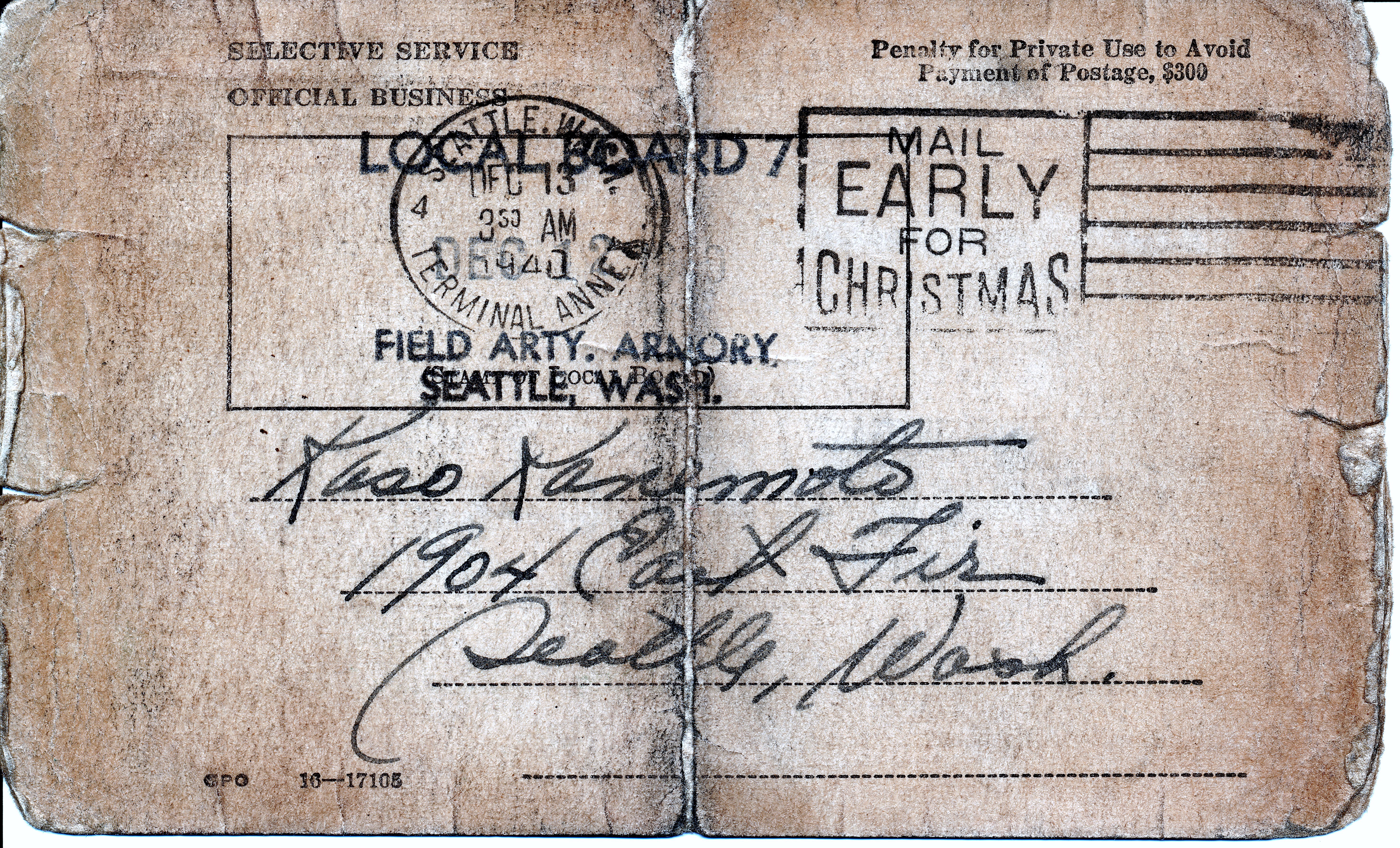
My father’s draft card before Pearl Harbor, postmarked December 13, 1940. As a US citizen, he was eligible for the draft and classified 1(A):
My dad’s revised draft card mailed to him while imprisoned at the Tule Lake “War Relocation Center”, postmarked January 19, 1943. This is now official notice he was now classified 4(C) – Enemy Alien. The address bears his address (block number) at the Tule Lake “War Relocation Center”:
Interestingly, the cards are creased as he was required to carry it in his wallet at all times. All American males of draft age were…even if they were imprisoned in a dusty, barren dry lake bed in California stripped of all rights.
Armed guard at the Tule Lake Concentration Camp. My father, uncle, aunt and cousins were there so he was guarding them. US Army Signal Corps, May 23, 1943.
Ironic, isn’t it?
___________________________
But what did FDR know about “suspect” activities by people of Japanese descent living in the US on the West Coast before Pearl Harbor? Most importantly, of the extent and magnitude of their “suspect” activities? We’re talking espionage. What could have prompted his ordering the “evacuation” of such people from the west coast of America?
But don’t get me wrong; it was not just the Japanese. People of German descent loyal to Nazi Germany also did spy…as did people of Italian descent. Some were loyal to their homeland, not the US. But certainly it was not ALL of them. Let’s not forget the famous East Coast docks were run by the Italians, too. Certainly, if one wished to “spy” and report on ship movements, there could not have been a better way. Being dock workers, they know what supply ship left when…and with what. After all, they loaded them. A number were sent to the bottom of the Atlantic by the waiting U-boats.
Let’s explore this a bit further.
____________________________
Since we are addressing “suspect” activities, here’s an interesting sidebar to this story.
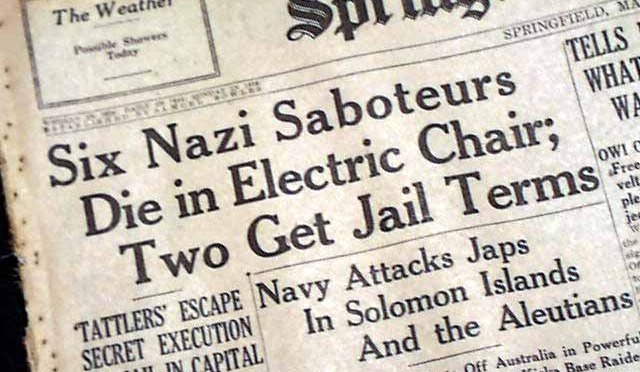
Did you know that eight German saboteurs were caught on American soil whose combined cases were brought before a special session of the Supreme Court on July 29, 1942? Did you know they came ashore from submarines in mid-June with greenbacks worth over $2 million today, explosives and even James Bond-like devices? The case was referred to as the Ex parte Quirin. It was named as such because of the lead saboteur, Richard Quirin. Quirin had lived in the US for a dozen years and became the first spy “trainee” of this group once he returned to Germany.
In short, six of the eight got to sit in the electric chair just about ten days later… On top of that, a one saboteur (Herbert Haupt) actually went to live with his father in Chicago. The father also helped him apply for a job and get a car. Another saboteur, Werner Thiel, actually handed some of the money over to his once room mate and business partner, Anthony Cramer; they owned a deli but it had failed. But it is interesting to note that in spite of this event, there was not a mass imprisonment of German nationals or their American-born offspring from this incident which made the US Supreme Court.
__________________________
The MAGIC Intercepts Distribution Process
Because the US had broken the ultra-complex “Purple” code in 1939 used by the Japanese diplomats, FDR was able to at least see exactly what the Japanese diplomatic corps was doing before Pearl Harbor.
Lt. Cmdr. Arthur McCollum. US Navy Photo
ONI (Office of Naval Intelligence) had established a secret delivery system for the intercepted Japanese military and diplomatic intelligence (MAGIC) for FDR in the winter of 1940. Lt. Com. Arthur H. McCollum of ONI, and the author of the “McCollum Memo”, was the distribution officer; his name was on 151 USN routing slips in the National Archives.(¹) These routing slips provided a trail to a large collection of Army and Navy MAGIC ultra secret deciphers from monitoring Japanese communications; these were presented to FDR, the top military chiefs and several key members of the Administration between February 1940 and December 7, 1941. Sometimes, when McCollum deemed he had a “hot” item, he would personally deliver the message to FDR; otherwise the President’s naval aide made the delivery as per below.
According to Stinnett (1):
“The Japanese intercepts destined for FDR were placed in special folders. Captain Callaghan (Naval Aide to FDR) was responsible for the safety of the documents. Roosevelt read the original copy but did not retain any of the intercepts. Each original was eventually returned to the folder and stored in McCollum’s safe at Station US in Washington. There they remained, available for White House review. Shortly after December 7, when Congressional critics began to question the administration’s failure to prevent the Hawaii attack, all records involving the Japanese radio intercept program—including the White House route logs and their secret content—were locked away in vaults controlled by Navy communications officials.“
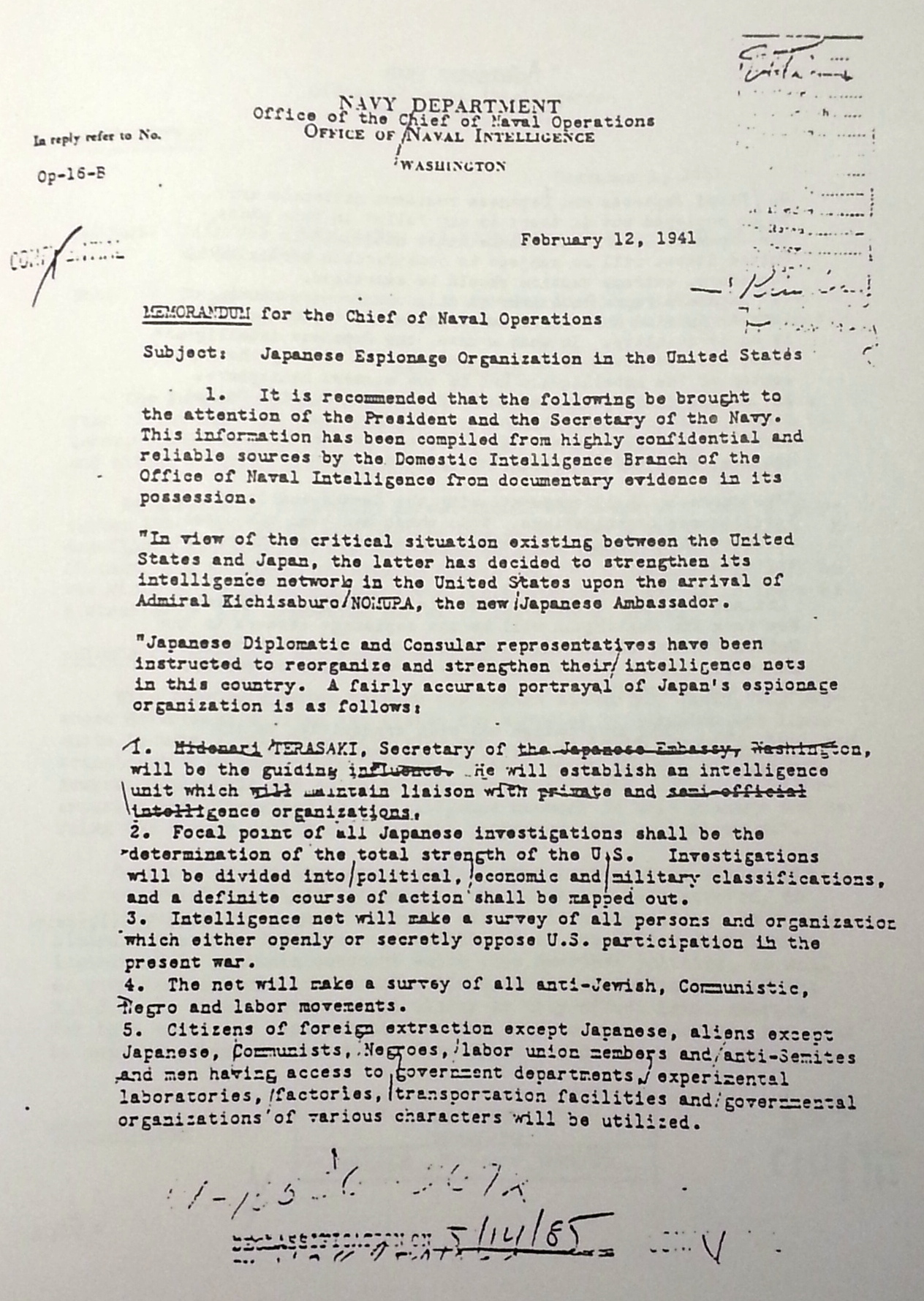
These intercepts would include those related to Japanese espionage efforts. This twenty-two month monitoring program prior to Pearl Harbor also allowed FDR and key staff to anticipate and analyze Japan’s reaction to the provocations advocated in the McCollum Memo.(²)
________________________
So what did some of the MAGIC intercepts and other investigative reports include before Pearl Harbor and up to the imprisonment of about 117,000 people of Japanese descent against their will? We already know per “What Did FDR Know – Part 3” that Tokyo instructed its American-based diplomats to covertly begin putting together an espionage network. In fact, because we had broken the Japanese codes, the US “listened in” on Admiral Isoroku Yamamoto in February 1941; he clued in Captain Kanji Ogawa, Japan’s top intelligence officer, of the intentions of attacking Pearl Harbor. Yamamoto wanted to give Ogawa enough time to put together his own military-based network in the event of war.
ONI memo generated for FDR, dated February 12, 1941. This was based upon the Purple deciphers, with Tokyo instructing American-based diplomats to set up their espionage nets. Source: “Magic” by David D. Lowman.
Prior to the message instructing diplomats to energetically strengthen their espionage efforts, there were already Japanese spies living on the west coast. Under the disguise of language students, Japanese military agents (primarily IJN) had already established their network including a small number of Issei and Nisei, militaristic Japanese organizations, Japanese clubs and business fronts. This facet was led by Lt. Cmdr. Itaru Tachibana of the IJN. In June 1941, however, this ring was smashed. Tachibana, and unbelievably a former chauffeur and business secretary to Charlie Chaplin named Toraichi Kono, had tried to recruit a former US Navy seaman (Al Blake) but Blake turned him in. While Tachibana and his lieutenants were deported, detailed searches of their living quarters provided detailed records of their espionage network. This detail included names of residents of Japanese descent as well as a number of organizations.
While not a historian, the following is a summary of what I deem to be key MAGIC intercepts in addition to other information gathered by other entities such as the FBI. In addition to information contained in the previous four parts, the thirst for intelligence by the Japanese was high:
February 5, 1941 – Tokyo instructed the diplomats to come up with a contingency plan in the event something were to happen (i.e., war). To always exercise due care and to look at Central/South America for continuing intelligence efforts.
February 15, 1941 – Tokyo directly asked for intelligence on materiel movement (especially planes and ships), non-military cargo vessels, troop movements, production of planes and arms, military training activities, etc.
April 24, 1941 – This intercept disclosed that Tokyo wanted a status update of its previous orders in regards to: (1) keying in on intelligence instead of propaganda, (2) recruiting of agents for the ring, and (3) established standards for reporting such information.
May 9, 1941 – The Los Angeles office reported that they “…have already established contacts with absolutely reliable Japanese in the San Pedro and San Diego area, who will keep a close watch on all shipments of airplanes and other war materials…” Further, they shall “…maintain close connections with the Japanese Association, the Chamber of Commerce and the newspapers.”
May 19, 1941 – the Japanese Embassy in Washington requested $500,000 more cash to further their recruiting for intelligence gathering purposes, i.e., entertainment, bribery, etc.
June 10, 1941 – To prevent an international scandal, this intercept recommended that it be made to look as if Kono’s friends were supporting him financially for his defense and to keep the IJN out of further suspicion on the arrest of Tachibana. It was recommended $25,000 be offered as a bribe to Kono; the memo stated in part “…in view of the danger that he might give evidence unsatisfactory to TACHIBANA.”
October 4, 1941 – specifically asked for intelligence on any change in sea or air patrols or warship movements and the immediate reporting thereof.
October 28, 1941 – in one of many transmissions reporting naval ship movements, the Seattle diplomats reported in detail the sailing of fifteen Coast Guard vessels. They also reported their four-inch guns were upgraded to five-inch guns.
November 29, 1941 – Tokyo ordered the San Francisco diplomats to report in detail all arrivals, departure dates and destinations of ALL commercial and war ships in the Pacific, Indian Ocean and South China Sea. (Note: this was not transcribed until December 4, 1941.)
December 6, 1941 – Seattle diplomats reported the departure of the carrier USS Saratoga from Bremerton, WA.
Please note there were hundreds of these types of transmissions, both from and to Tokyo. In addition, there were quite a few official FBI reports detailing espionage activities. These reports also included names and businesses that were involved. The FBI was not privy to MAGIC intercepts.
______________________________
FDR signed Executive Order 9066 on February 19, 1942 which had the effect of forcibly relocating all persons of Japanese ancestry – both citizens and aliens – out of the west coast’s Pacific military zone and into War Relocation Centers. The much later publicized objectives of the order were to prevent espionage and to protect persons of Japanese descent from harm at the hands of Americans who had bitter anti-Japanese attitudes.
______________________________
Dad in his US Army duds, Tokyo 1947. The Emperor’s Palace is behind him to his left. MacArthur’s GHQ is off to the right (Dai-Ichi Sei Mei Building).
So what is the point of this story, the last installment of “What Did FDR Know?”
Some say people like my dad were imprisoned because of their race. In other words, they were discriminated against, pure and simple.³
Some say people like my dad were imprisoned because “FDR wanted to protect the Japanese from hate crimes”. After all, my grandmother was egged while she lived in Seattle. Some Japanese girls were taunted or worse, molested, assaulted or raped. Indeed, there was hysteria.
Some say people like my dad were imprisoned because of the espionage activities. And from the above, we do see some were taking part in espionage activities. In other words, the US wanted to ensure we won the war in the Pacific with the fewest amount of lost lives as possible and espionage was certainly a risk. But if that were the case, how would the US go about removing Japanese suspected of espionage? Just knock on specific homes and businesses and arrest specific men…but leave the others to go about their daily lives?
If they did that, wouldn’t Tokyo suspect their “secret” transmissions were being intercepted? How else would the US have known who to arrest? And if Tokyo did suspect that, what if they changed their codes? We’d be in the dark again intel-wise. More of our military would therefore possibly lose their lives. (NOTE: It is true not one person of Japanese descent was tried and convicted of espionage. However, it is my amateur opinion that they were NOT tried to maintain secrecy about the broken codes. Case in point: the Supreme Court above. Certainly, the fact we listened in on their espionage activities would have become public knowledge from testimony.)
So what do you think? How does this compare to what you were taught?
(ADDENDUM – July 23, 2014
As a good fellow mentioned, the third paragraph immediately above can be read to imply my dad was suspected of espionage activities. He was not.)
___________________________
In my opinion, our breaking of the Japanese codes was America’s greatest secret weapon.
It was not the atomic bomb.
___________________________
NOTES:
(1) Per “Day of Deceit: The Truth About FDR and Pearl Harbor” by Robert Stinnett.
(2) There was a brief period in 1941 when FDR himself was removed from the MAGIC distribution list.
(3) In 1988, President Reagan signed the Civil Liberties Act. The Act approved paying each surviving Japanese or Japanese-American $20,000 each for being unlawfully stripped of their rights for no reason other than race. (My dad, four uncles, four aunts and seven cousins each did receive payment as did other more distant relatives.)
But I don’t know if “anniversary” is the correct term. Is it commemoration? Hard to say since so many young lives were ripped away from the world so violently. Many were never found.
Blogger Mustang had forwarded some “then and now” images last week but here is another one. If you get past the first two images (a then and now), please click on the subsequent images singularly to see the “now” photo. Look at all the young faces…and realize that many must have been killed in the next months…or days.
It is hard to believe thirty years have passed since President Reagan commemorated the 40th Anniversary of D-Day – in person.
I feel his love and support for our military – and Nancy – is without question.
But few people recall that President Reagan gave not one, but TWO stirring and emotional speeches that day at Normandy.
The first and most replayed speech was the one at Pointe du Hoc, flanked by surviving soldiers of the United States Army Ranger Assault Group.
Below is an average shell crater at Pointe du Hoc; that is my daughter standing in it back in 1999:
Shortly afterwards, President Reagan gave a second speech… in front of The Wall of the Missing at Normandy American Cemetery and Memorial. Private Zanatta was in the first wave hitting Omaha Beach; his daughter Liz wrote to President Reagan about what her father told her about that day. During this speech and while reading passages from the letter, even the unflappable President Reagan becomes overwhelmed with emotion. While the beginning of the video contains important recordings from that day in 1944, his emotion-laden speech begins at the 0:30 mark:
I feel this is one of his most moving speeches. At the end, he says, “…a D-Day veteran has shown us the meaning of this day far better than any President can.”
I pray in my own way for those young souls who were killed – on both sides – as well as their families.
We will not see a mass of humanity assembled for such purposes ever again…and the remaining representatives of that humanity are leaving us each day.


 Old Man Jack entrusted me with his house keys “…in case he shot himself in the foot” as he put it. Now covered in dust is Old Man Jack’s favorite baby – the F4U Corsair albeit a toy. He would push that button in once in a while, listen to this toy’s engine sound and watch the prop spin… It would echo a bit in my hallway…









 Masako and Spam Musubi
