So tonight, the kiddies asked if I could make something new. Something different.
Not my Fettuccine Alfredo nor my grilled chicken with lemon and chive pan sauce nor my szechuan tofu…nor Hamburger Helper.
Nor green eggs and ham – but it was close.
They asked for bowtie pasta with (classic) pesto.
Like the one they ate at California Pizza Kitchen.
Egads.
____________________________
So Cook’s Illustrated came to my rescue again. They had a recipe AND even a video!
Now…if I could only follow the instructions. And I was determined NOT to leave a bag of groceries at the check out line like my blogging bud Jan Morrill did when she made pesto. 🙂
____________________________
Per Cook’s Illustrated’s recipe, the ingredients were simple:
2 “packed” cups fresh basil
2 tbsp “packed” flat leaf parsley (i.e., Italian parsley)
1/4 cup pine nuts (raw)
3 (skewered) garlic
7 tbsp extra virgin olive oil
1/4 cup grated Parmesan Reggiano
(The trouble here in SoCal is the drought. EVERYTHING is getting expensive. Fresh pine nuts were $8.99 for a small carton!)
Also, note the type of parsley:
It does taste different and with all that garlic, I felt the parsley was important. 🙂
Boil the water but do NOT salt yet. Skewer the three cloves of garlic and submerge in the boiling water for about 30 seconds then plunge into an ice bath. Mince but it needn’t be too fine as it will go into the processor.
After generously salting the boiling water, start to boil the pasta while keeping a measuring cup in the colander; you need to remember to reserve about 1/2 cup of the water.
After toasting the pine nuts in a skillet over medium low heat for about 3 to 4 minutes, everything went into the food processor except for the Parmesan and the water. Scrape down the sides with a spatula as necessary until you get a relatively smooth mixture. You should still be able to make out small pieces of the basil. (Oh, you had to put the basil and parsley into a Ziploc and pound it maybe a dozen times to bruise the leaves before throwing them into the processor. Doing so helps release the savory oils.) Salt as necessary.
This is what it should look like:
The rest is easy. When your pasta is al dente, reserve about 1/2 cup. Add about 1/4 cup of the reserved water into the pesto along with the Parmesan. Toss with the pasta and you’re done!
A good number of pies have come out of my oven during the past six months to be taken to parties and such. Even to a cigar lounge. Fortunately, there have been no claims of food poisoning – so far.
But I ended up buying a few more Pyrex pie plates (They work great provided you place them on a preheated cookie sheet – helps brown the bottom.). But what to do with them when pies are on hold? They just lay in my pots and pan drawers.
Well, my very good friend from the 1980’s, Tom G., had a “fishy” time last weekend. Tom is an avid fisherman and got shot at in Viet Nam. He was drafted and did his duty as an American (unlike Clinton). His dad saw combat as a gunner in a B-24 Liberator during WWII. His family has indeed served the US of A.
Anyway, Tom went out on a fishing boat and everyone on board hooked tuna like crazy… except for Tom. Just kidding! He snagged his limit of five so we were recipients of fresh tuna!
What does fresh tuna have to do with pie plates?
Lots.
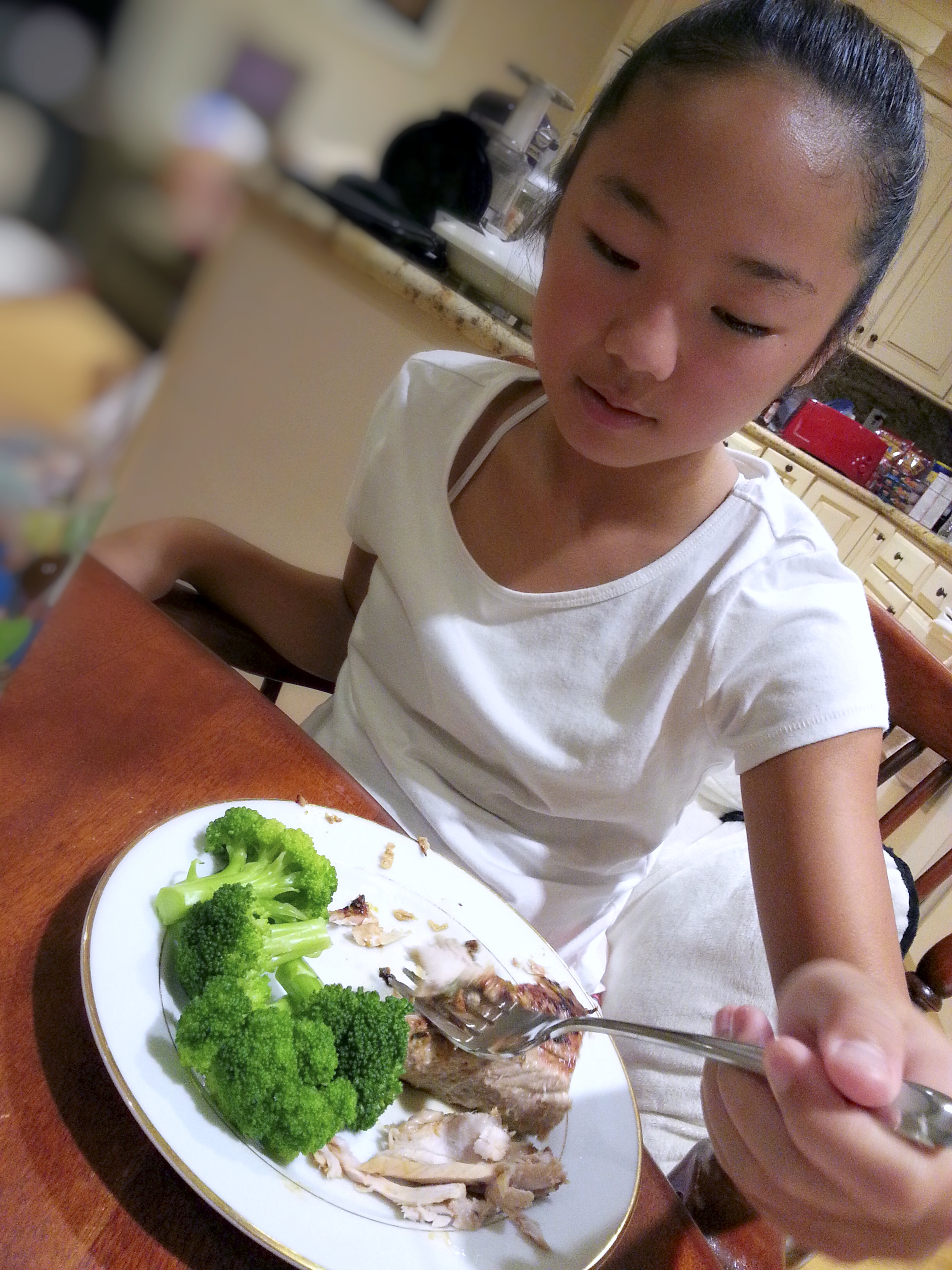
As my kids “whine” about eating, i.e., “Pasta again, Papa?”, I decided to try something different – and easy… and hopefully, the kids would eat it. That’s where the pie plates come in.
I decided to try the “Garlic and Ginger BBQ Tuna”. Couldn’t go wrong, I thought, as I know the kids’ll eat (almost) anything if it has soy sauce and garlic in it.
The marinade was simple:
2 tbsp soy sauce (I have a ton of that)
2 tbsp Japanese rice vinegar (I have a ton of that, too)
1 tbsp sesame seed oil
Freshly rated ginger (Use the side of a spoon to scrape off the outside.)
Minced garlic
Chopped green onion
Pepper (I used the Japanese kind)
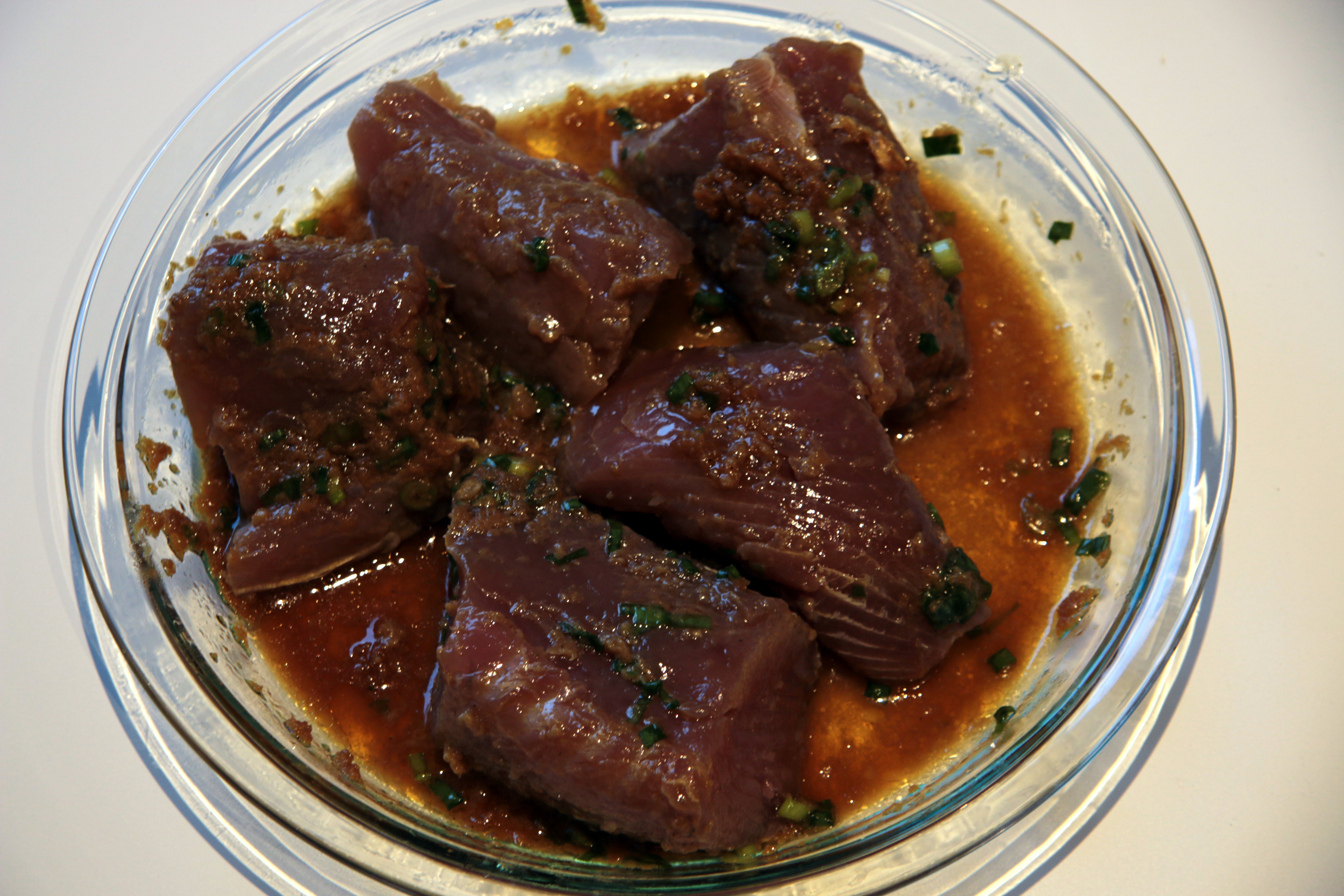
Ready to get grilled!
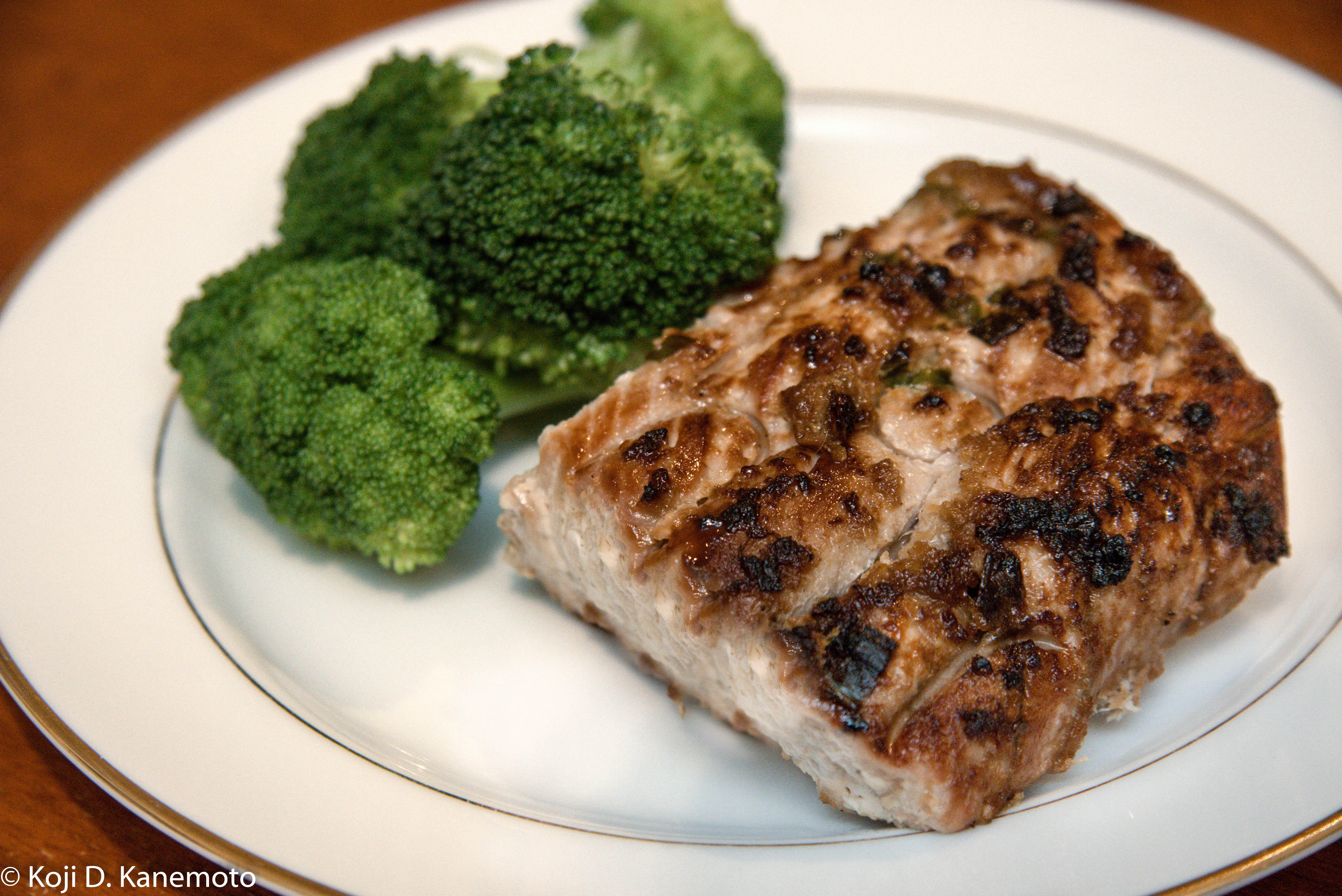
All went into a Pyrex pie plate (which I have a ton of) and the tuna was marinated for about 30 minutes in the fridge (turned after 15 minutes). Onto a dilapidated Weber BBQ grill over medium heat they went, four minutes each side (I had to slightly over-grill them as my son Jack wouldn’t eat it if he saw just a touch of red). Three minutes may be sufficient, too.
They turned out good!
So if you have an unused Pyrex pie plate and a great friend like Tom, try it!
Chef Cathy Thomas (from whom some of my recipes come from) turned me onto these delightfully yummy tangerines. They are grown in Ojai, California; we are right after the start of the season which may run into late May or early June.
These savory Pixies are:
• Easy to peel
• Sweet
• Juicy – did I say JUICY?
• Seedless
• And my kids love them
Chefs use them in their salads when it calls for tangerines. They are that good.
I obtain mine from Melissa’s Produce, four pounds for about $18. They can be shipped anywhere and will arrive fresh.
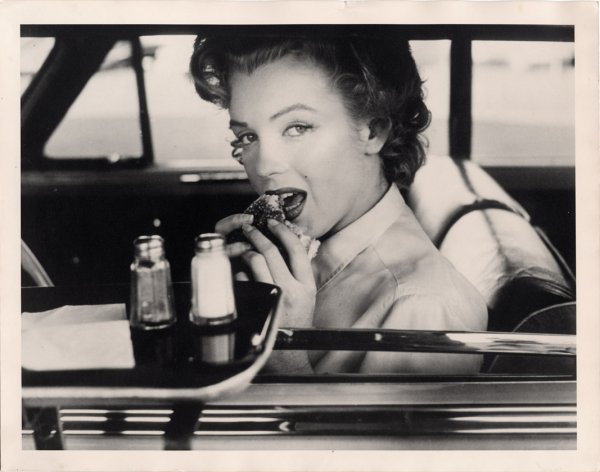
Marilyn Monroe eating an old-fashioned hamburger at a drive-in hamburger stand. Photo by Philippe Halsman.
Nearly all Americans would agree that hamburgers are the All-American icon. A simple grilled ground beef patty, salted and peppered, slathered with mayo, mustard and ketchup then sandwiched in a plain bun.
At least that’s how I know them. Oh, hold the pickles, please.
Now, us kids that grew up watching “Bewitched” and “I Dream of Jeannie” have given birth to a generation that has taken a simple thing and made them into $15 gourmet, fancied-up, mushroom-covered (expensive) cuisine. Do you think I like Elizabeth Montgomery and Barbara Eden? Drool…
But I don’t know if I like the “change”.
Back to this in a minute, folks.
The fancy hamburgers – not the drool.
___________________________
Dad had always owned Fords when he could finally afford getting a car. I guess that’s where I get my Ford passion from.
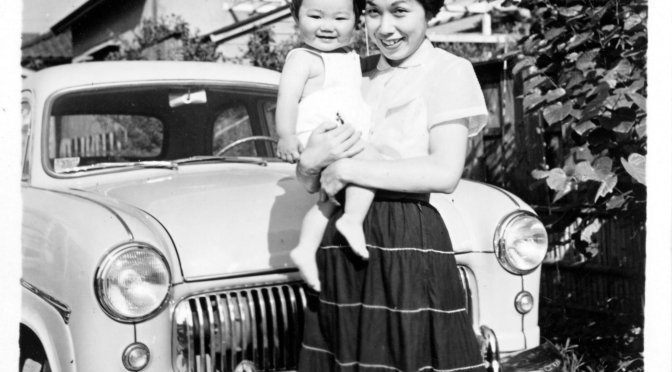
Aunt Eiko holding me in front of my dad’s Ford Consul automobile. If you are reading my past stories about WWII, you will know that only the occupying Americans could afford to buy a car. Her husband was awarded the Congressional Gold Medal. Occupied Japan, Tokyo, July 5, 1955.My dad’s ’57 Ford Fairlane parked on Enoshima Beach, Tokyo. I’m thinking it was a dark green. April 1957.
After leaving Japan for the last time in the late ‘50’s after the Occupation ended, my pop bought his first new car stateside in 1963 – he was 44 years old. It was a two door Cascade Blue 1963 Mercury Meteor custom hardtop; a king of obscurity to say the least, but to a kid of about ten, it was Flash Gordon’s rocket ship. Unlike Hillary, it was easy to love this car.
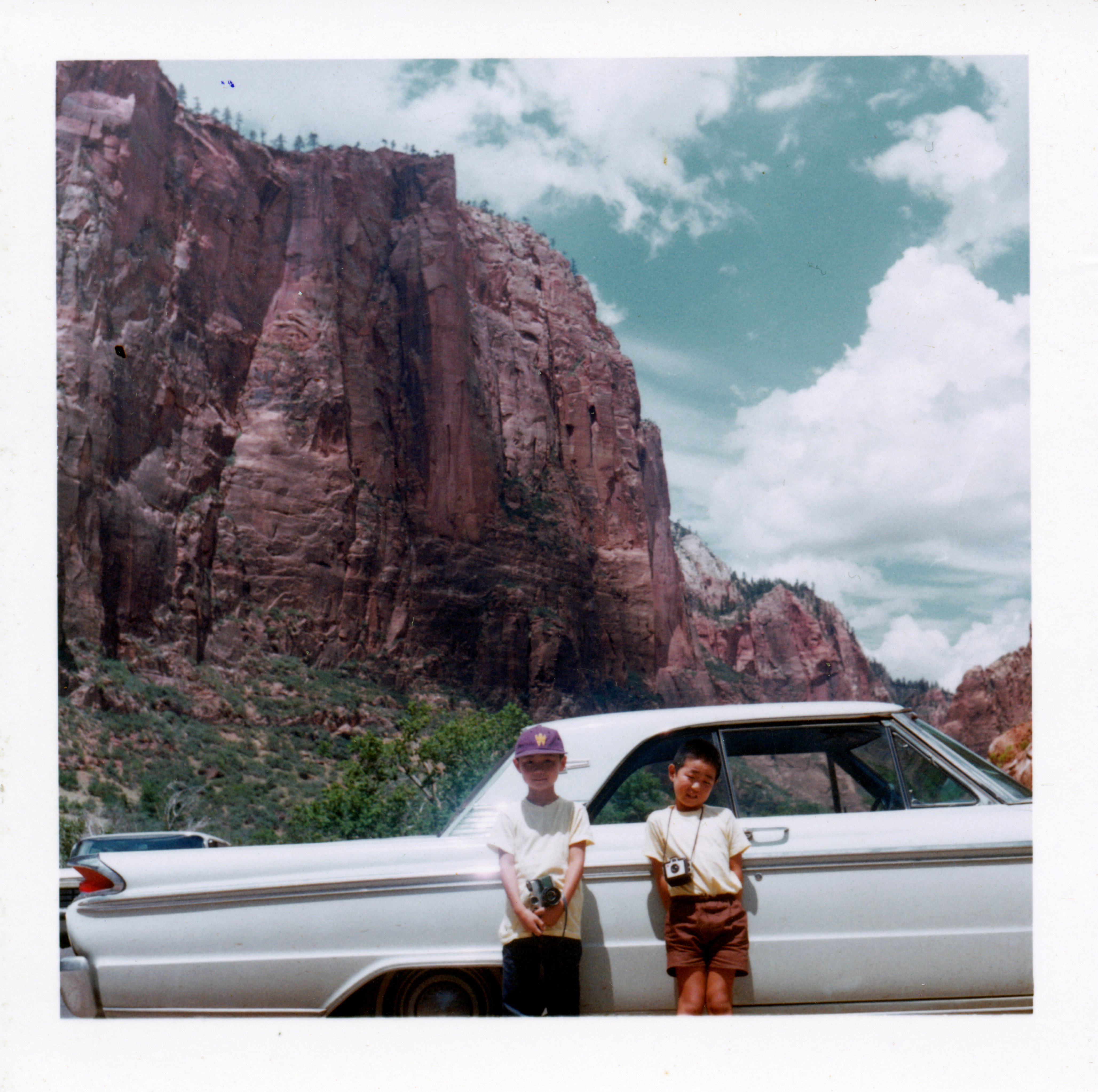
On a road trip to Chicago in 1964. I’m still holding onto my Fujipet camera with dad’s 1963 Mercury Meteor behind us. This may have been in Utah.
Don’t get me wrong. It wouldn’t get a choice spot if valet parked. I say wouldn’t as my old man couldn’t afford valet, let alone a family dinner out. But to me, the rocket ship had a chrome finish AM push-button radio – turn the dial on the right, find a station, pull out a button, then push it back in to set it. Trouble is I did it a dozen times each time I got into the car. But all I cared about was KFI 640 AM, the Dodgers’ station. The golden voice of Vin Scully… and Fairly, Gilliam, Wills and I forget who played third. They were World Series champs that year.
Six adults could get into this rocket ship with room to spare – eight of us little Japanese folks and a dog. The cargo hold in back swallowed up my Sears JC Higgins bike in one gulp with enough space leftover for Frank Howard. (I saw him hit the scoreboard in right field with a home run.)
Unless my aging grey matter is dissolving at warp speed (maybe it is), there were ash trays with shiny covers in each armrest…and this was for the back seats. It was a favorite depository for my Bazooka chewing gum but I kept the wax covered cartoon that came with it.
Pop kept it for quite some time. I passed my driver’s license test in it on my 16th birthday. I got a 96 only because she claimed I never looked in the rear view mirror. Poppy cock. I always look in the rear view mirror for cops. Even back then.
And as it was the only car we had back then, I also drove my date to one of my senior proms in it (I went to two.). And the answer is, “No,” if anyone was wondering…but I’m sure she was disappointed. Well, maybe not.
The four-wheel drum brakes were spectacular…not. Instead of rubber meets the road, it was like rubber met the world’s supply of Vaseline while fighting the pull to the left… and this was at 25 mph. Steering? An oil tanker’s captain would do well. Turn the wheel a lot; see the slight change in direction a few seconds later. Pat Brady and Nellybelle turned better – and that was out in the desert on sand.
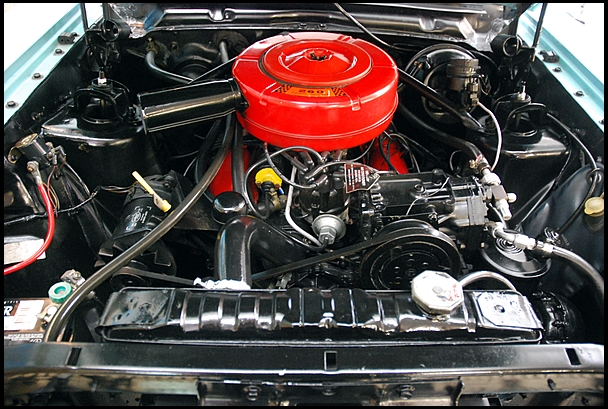
The Mercury Meteor’s 260 cid V-8.
I overhauled the epoch 164 hp 260 cid V8 sometime around 1976 in our garage. At 13 years of age, she had become an old girl. She had become a V6, meaning it had lost compression in two cylinders. I remember setting zero lash, then three-quarters turn of the ratchet for the hydraulic lifters during the overhaul. The distributor was the biggest headache, of all things. It was like extracting an impacted molar and only after using copious amounts of Liquid Wrench in place of laughing gas did it finally come out. “Older” Blue Oval guys know what I’m describing.
___________________________
Back to today’s elegant hamburgers and change.
Instead of the push-pull AM radio, my youngest son – who was seven when I bought it – similarly discovered my ’08 Mustang GT had a “My Color” dashboard light feature. Now I know how my pop felt as my son forced me to experience every color of the rainbow while driving at night – every time. It was like being at an all-night disco club.
Bazooka bubble gum and ashtrays are no more but treasure hunters will be pleased after exploring the map pockets. No disappointments there. I promise… especially after my little Cake Boss had sat in the back. Latex gloves are highly recommended before exploring.
Overhaul it? After all, my GT’s got a 281 V8, only twenty-one more cubes than my pop’s…but it pumps out a magnificent 505 hp thanks to her Roush supercharger and Carmen pulley. Hell, I’m afraid to change spark plugs. Who would imagine in 1963 there would be a TSB on just how to R&R spark plugs?
My Roush supercharger and gizmos.
And unlike my pop’s ’63 Merc which ran on simple mechanical principles (but threw physics principles out the window for the so-called braking), the computing power in my Mustang would cause Einstein to strike a pose like Captain Morgan.
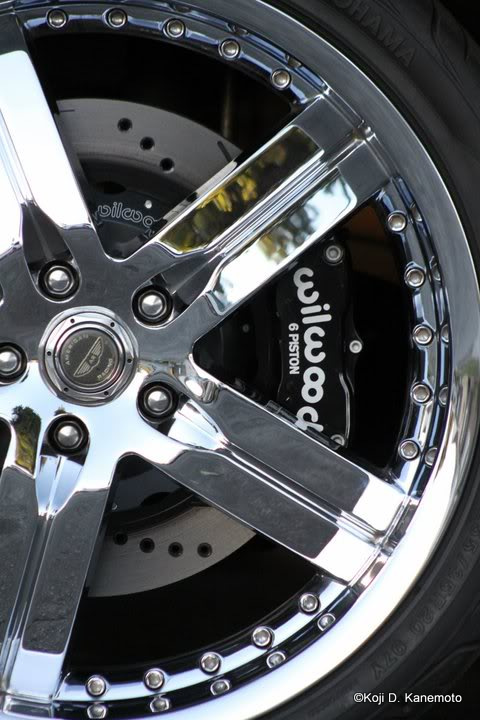
And today’s stunning braking power is the true reason for seat belts – it compassionately keeps your head from being continually used to redesign the windshield. The aftermarket Wilwood six-piston disc brakes I installed with slotted and cross-drilled rotors exacerbates the stop-on-a-dime tendencies… which is a good thing.
The Wilwood Six Piston disc brakes on my Mustang.
____________________________
So it appears the delicious, basic hamburger of the 1960’s has been brought into the 21st Century. Kids that watched Elizabeth Montgomery and Barbara Eden fooled with the wonderfully simple ground beef and bread formula to give us today’s foodie gourmet burger…and we can still listen to Vinny’s golden voice, to boot. Glorious.
And well, with 505 hp at the crank instead of 164 hp, it’s hard to complain. Neither do my kids when they hear the whine of my Roush supercharger. They like to scream. But it’s a shame my pop’s ’63 Mercury Meteor won’t be swept into anyone’s museum.
Well, my little Cake Boss asked for me, her servant, to make her some brownies. And since I had all the ingredients at the house, I decided to do it from scratch…again.
Wasn’t someone supposed to tell me to stop this non-sense?
____________________________
Sugar, salt and unbleached flour are not shown. As a side note, I much prefer Hershey’s unsweetened chocolate. It’s a lousy photo but that’s a foil-lined baking pan in the background.
Per my yes-yes beacon, Cook’s Illustrated, the classic brownie should be moist, not “goopy” or dry. The chocolate flavor should most of all be decadent – especially for my little Cake Boss. Gotta raise her right, you know.
Like avoiding the supermarket pre-mixed who-the-heck-knows-what’s-in-it stuff.
Well… it’s really ‘cuz I wanted to avoid the uncomfortable situation experienced after baking the little Cake Boss a classic white double-layer birthday cake. The little Cake Boss almost fired me because I didn’t do as she told me to.
_________________________
Some of the easy steps:
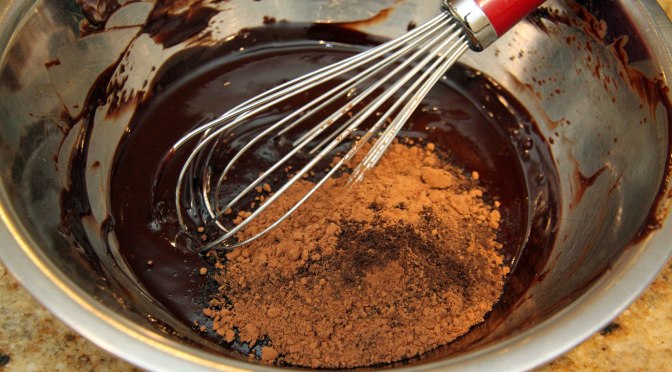
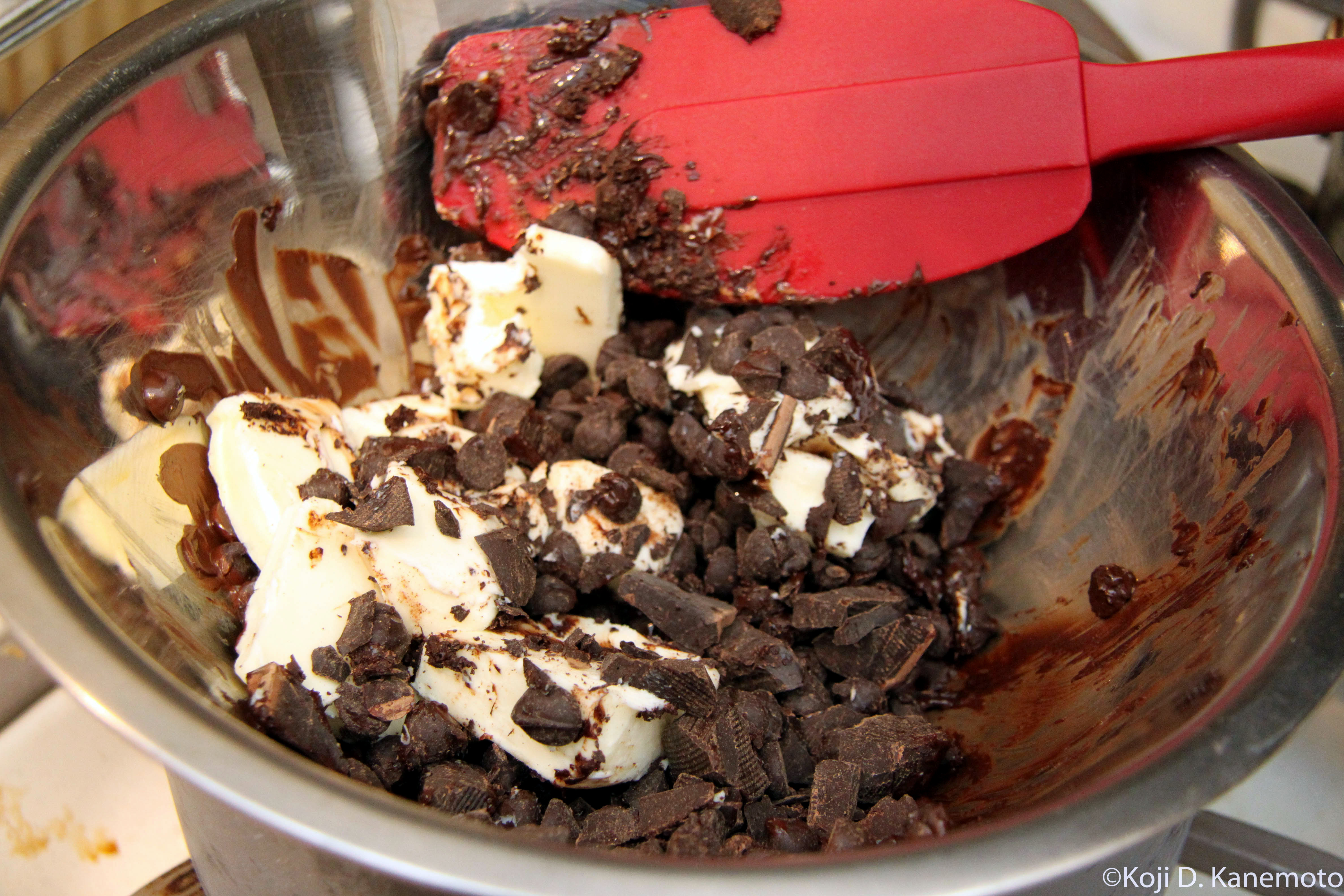
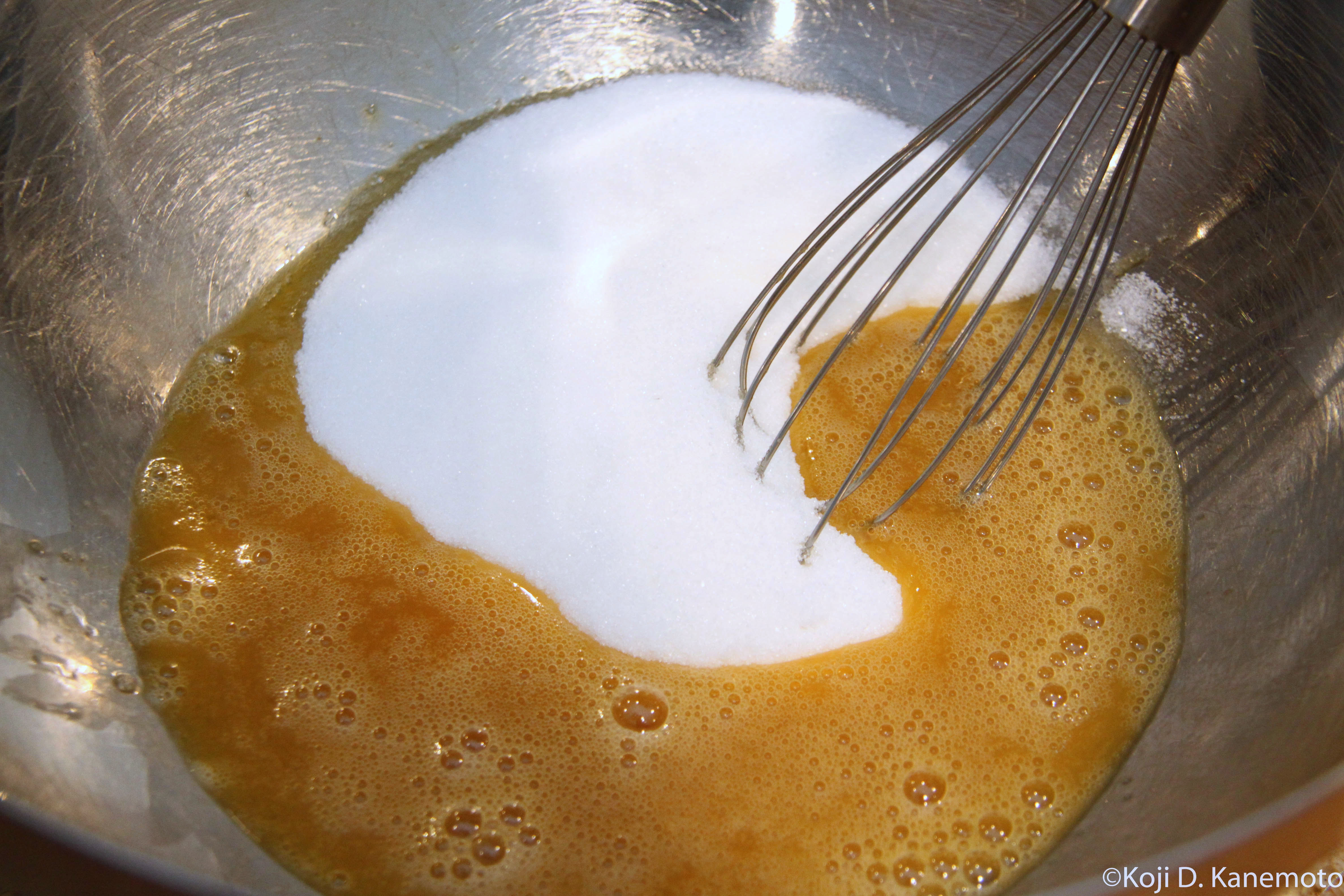
Melting the chocolates and butter over barely simmering water. Gotta keep stirring! Just like my homemade chocolate truffles.After it all melts, whisk in the cocoa and espresso powder. Set aside.Whisk eggs, sugar, vanilla extract, and salt. You then whisk while pouring in the still warm chocolate yumminess. Fold in the flour and pour into a foil-lined baking pan. Smooth over as best possible then bake at 350 degrees for about 35 minutes.Don’t overbake! I’ve learned my oven runs on the hot side and items need to be rotated. It’s perfectly done if it domes slightly and some sticky brownie crumbs stick to a toothpick. Very logical (unlike the illogical “Common Core Mathematics” now being taught in elementary schools).
After cooling for two hours, lift out the brownies with the foil liner and pig out!
__________________________
Actually, this first batch of homemade “triple-chocolate espresso brownies” came out REAL good as the little Cake Boss came back for a second piece.
Making a pie crust from scratch is really pretty easy. Tried it for the first time.
But rolling out the pie dough… Now that’s a bitch. (Pardon my French.)
But I did it… Sorta.
____________________________
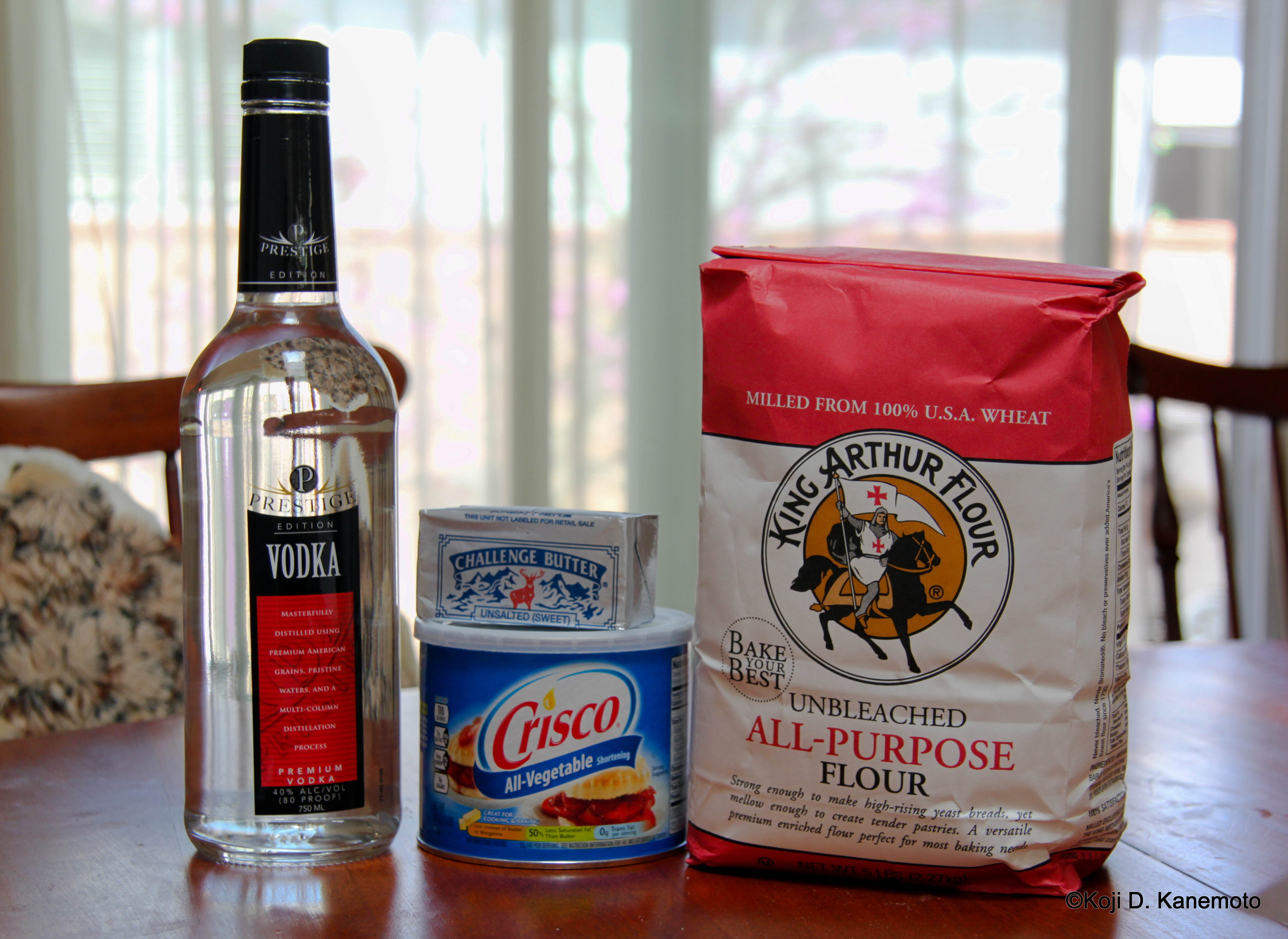
Yes, the Cook’s Illustrated recipe called for vodka. No sense paraphrasing it so this is what they said:
“The problem is that dry pie dough is impossible to roll out. We needed a soft, pliable dough for rolling—that is, one with plenty of liquid—but a dry dough when it came to baking. The solution turned out to be, surprisingly, vodka. By using a quarter cup of ice water mixed with the same amount of chilled vodka, we could add a high amount of liquid and create a dough that was moist enough to roll out easily, but still tender after baking. While gluten forms readily in water, it doesn’t form in alcohol, and vodka is 40 percent alcohol. The alcohol vaporizes in the oven, so that no trace of vodka is detectable in the finished crust.”
Well, it really worked except when this old former mechanic decided to deviate from said recipe by leaving it in the oven to bake for three extra minutes.
And letting the dough get too warm while rolling it… if you call it rolling. LOL Instead of being circular, it ended up looking more like Patrick Star of Spongebob.
Oh well.
__________________________
Let’s get down to the evidence:
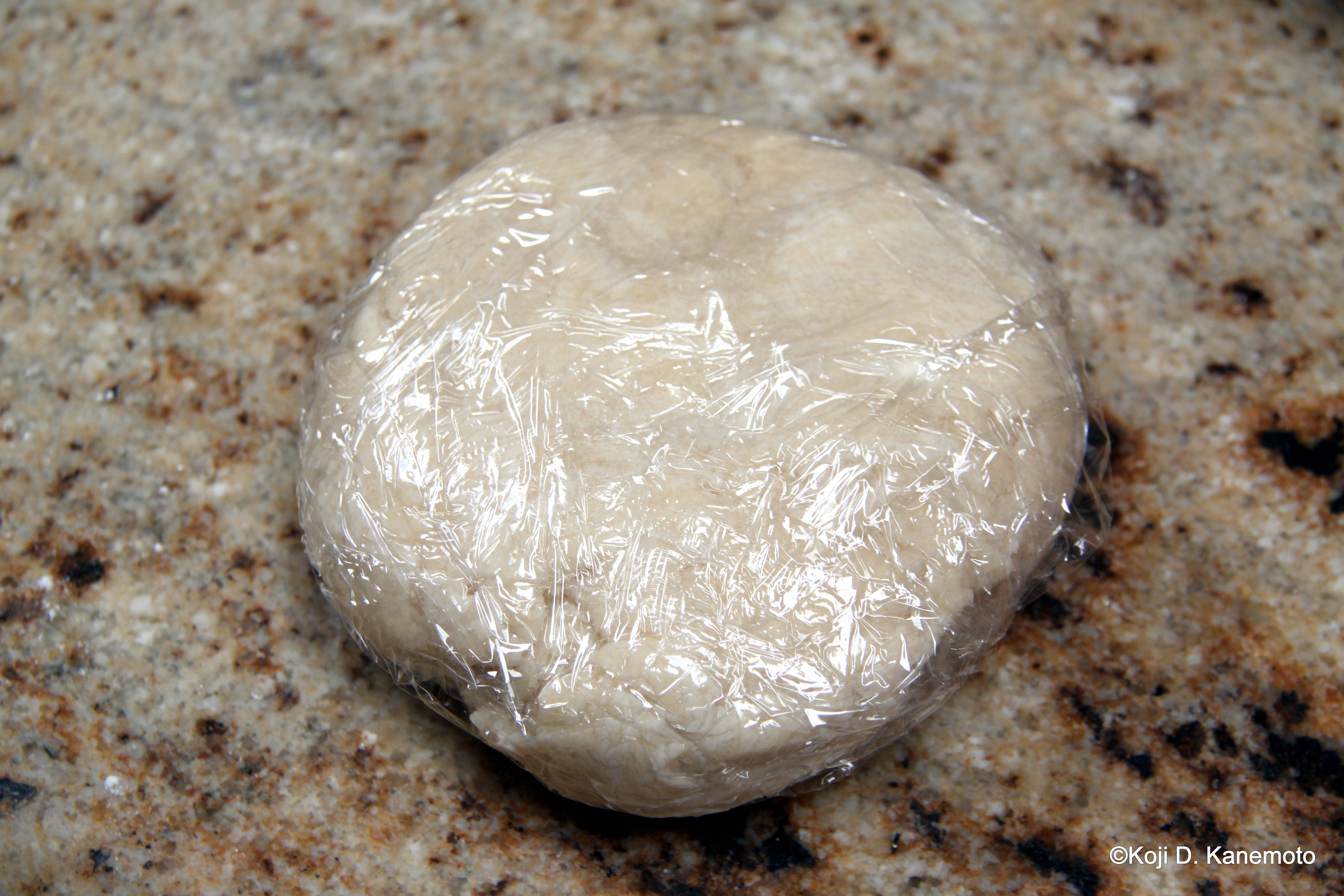
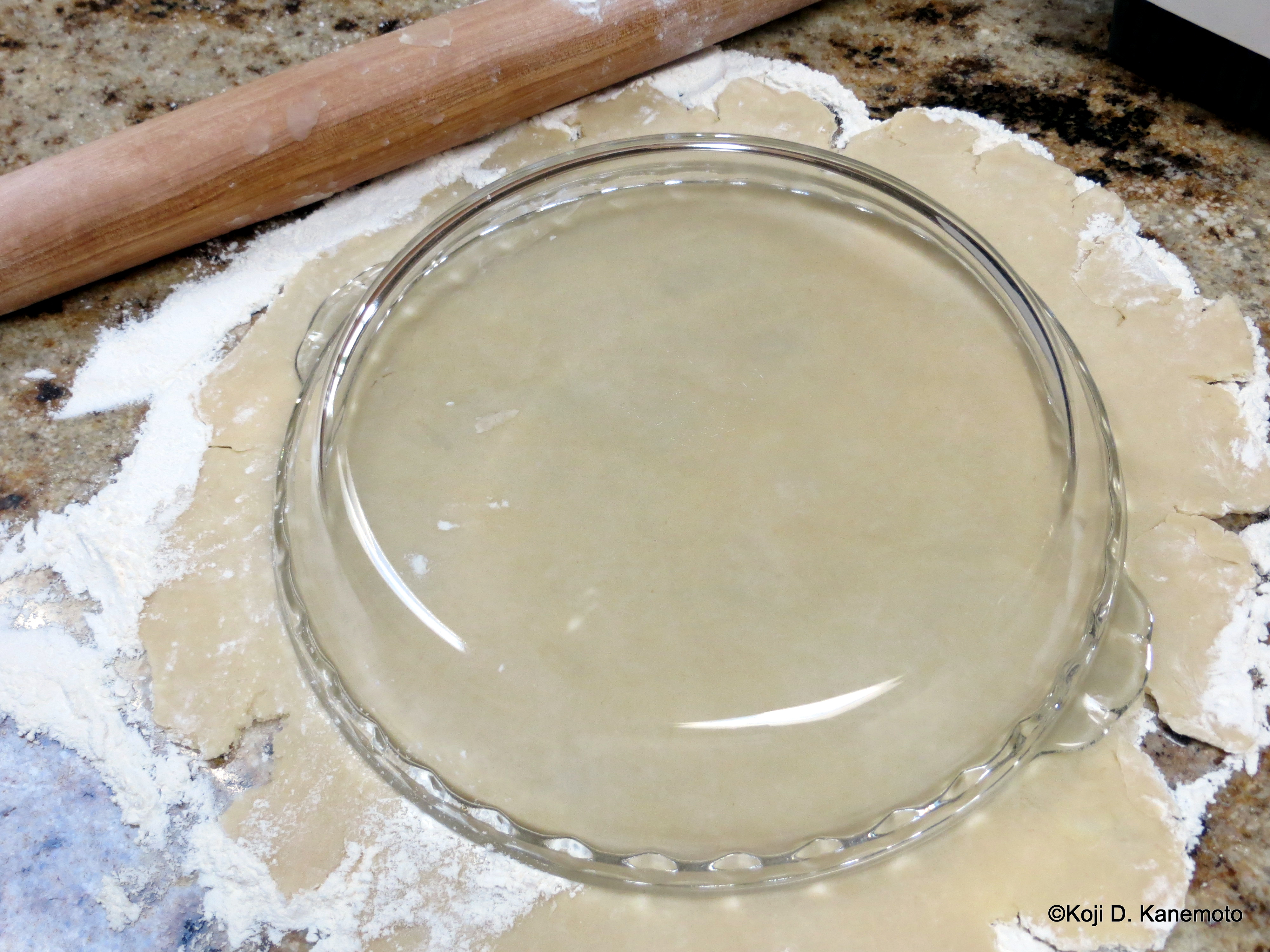
Pulse 2/3rds of the unbleached flour together with the sugar and salt.After adding the chilled vegetable shortening and unsalted butter, process no more than ten seconds. Separate dough into two or three sections then add remaining flour. Watch out for the cloud.After adding the remaining flour and about four to six pulses, dough should look like this. Don’t overdo it.Transfer to mixing bowl, add water and vodka, and fold. Should be tacky.Form a four inch circle, wrap in plastic wrap then refrigerate at least 45 minutes.Liberally dust. I was dumb enough to use my granite counter top…which was still warm from basking in the afternoon sun. I also forgot to dust the top before rolling. 🙂Patrick Star in disguise. Making the dough til now was a snap. Rolling it? HA!It needs plastic surgery…but don’t laugh. 🙂A burned fait accompli. You can see the results of my uneven rolling! In fact, the right side slid down! I actually had to throw it back into the oven as that section was still moist… The bottom ended up looking like graham crackers it was so toasted!It didn’t look TOO bad when it was filled up with strawberries covered in PERFECT glaze… not like jello and certainly not runny! Anyways, my good USAF neighbors got half of it; I think he may have flung out the pie crust from 30 Angels as a lethal weapon.
_______________________________
Well, the dough certainly was easy to put together.
This (aging) former mechanic did it…but didn’t follow the instructions at the end. In short:
Dust the top of the dough before rolling. LOL
Learn to roll out the dough evenly. Double LOL
Roll it in the early morning before the granite counter top feels like the Sahara. Duh
The secret is the vodka and keeping the ingredients chilled.
Oh. Don’t burn the crust nor watch Spongebob before rolling.
“When it comes to giving, some people stop at nothing.”
– Vernon McLellan
That was Aunt Michie. She gave all of herself and of her life strength to others because her heart knew no other way.
_________________________
At the moment Aunt Michie watched the ugly mushroom cloud rise from her field that day, her older siblings – my dad, Aunt Shiz and Uncle Yutaka – were all imprisoned in the “war relocation centers” scattered about the United States. These were truly prisons and the popular view is that FDR imprisoned them “for their protection” because they looked like the enemy.(¹)
Life within these “camps” was “sub-standard”. They were forced to live in small, shoddily built wooden barracks covered only with tar paper with little or no privacy. No running water inside their barracks – they had to go wait in line outside, whether it be rain, snow, dust storm or searing desert sun to use public latrines or showers. Food was served in mess halls on pot metal plates at specific times, just like in the military. The food was miserable according to Dad and worse yet, they had to wait in line again. For the first month or so of imprisonment, he said all they had was liver, powdered eggs and potatoes.
But then again, he said it was food.
Aunt Michie and her family were near starving in Hiroshima while dad was imprisoned in the good ol’ US of A.
_________________________
Taken at the Kanemoto home in Hiroshima, 1951 and soon after my parents wed. (L to R) Sadako, Namie, Aunt Michie holding a young Kiyoshi, Grandma Kono, Masako, mom and dad. Courtesy of Kiyoshi Aramaki.
It is assumed like for the rest of America, Dad and his older siblings heard the news of the atomic bombing but while in the camps on or about August 8th… that one enormous bomb had wiped out Hiroshima. There must have high anxiety and anger as many of the inmates in Dad’s camp (Minidoka) were from Seattle; they had family in Hiroshima as their parents had immigrated from there.
My cousins tell me that sometime after war’s end, Michie’s “American” siblings – my dad, Uncle Yutaka and Aunt Shiz – managed to re-establish contact with Grandmother Kono and Michie. With the Japanese infrastructure destroyed, it was a miracle. And it was no easy task as letters to and from Japan were not only prohibited, it was impossible. There was no telephone in the villages where Grandmother and Michie lived.
But her American siblings somehow managed to send much needed clothing to them. When my father finally reached Hiroshima while a sergeant in the US 8th Army, he carried two duffle bags full of C-rations, candy and Spam. They said it was a feast for them after years of hunger.
Dad in front of his Hiroshima home – April 1948
Sadako (who savored the white rice Michie made them on the day of the bomb) told me at a farewell dinner two years ago that she fondly remembered my dad taking them to a market of some kind where he bought her a little coin purse. She remembered Dad gave her the money to buy the little purse and was told she could keep the change. She remembers then handing the change – which was a LOT of money back then – to Michie who humbly accepted it. Sadako said she cherished that little coin purse for years.
______________________________
EPILOGUE
From exhaustive laboring on her farm… to taking precious sashimi to her brother Suetaro… to walking ten miles with children in tow to care for Grandmother Kono after her stroke… to the pain of learning of her brother being killed in action… to being thrown onto the ground and watching a huge mushroom cloud rise over a small hill… to pulling a wooden cart over a hill… to tirelessly aiding the victims… and most of all, sacrificing her own health for the sake of others…
She never gave up in those thirty years. Would you have? I don’t believe I would have had the fortitude.
But because her soul would not quit, she got everyone to tomorrow… but in doing so, her own tomorrows dwindled.
Michie is still here. The fruit of her sacrifices can be seen today in her six children, all of whom have lived – and are still living – full, joyous lives.
Four of Michie’s children with my son and I. The four at the left front were at Aunt Michie’s farmhouse after the atomic bomb; Hitoshi was there as a burn victim. Hiroshima – September 8, 2012At breakfast – Endaijisou Hot Springs, November 2013. Tomiko was at home when the atomic bomb went off; the house was destroyed.
They have their mother, Michie, to thank and they cherish that… and that they were all there at the farmhouse when she looked at each one of them intently one last time before leaving this world.
A most grand mother.
And yes…
They all love food to this very day.
________________________________
I wish to deeply thank my Hiroshima cousins for sharing their memories of their life with Michie with us.
Like all Hiroshima citizens I have met, they simply pray for peace.
NOTES:
(¹) There are declassified US intelligence documents which show that a small number of Japanese and Japanese-Americans were performing espionage. Intelligence was able to determine this by intercepting and decoding secret Japanese communications. This information was given a cover name of MAGIC and these documents were typed up for FDR and a very small number of trusted officials. However, rounding up the spies would clearly indicate to the Japanese that their code had been cracked. These documents present another view contra to the widespread belief that FDR imprisoned the Japanese and Japanese-Americans from discrimination and war time hysteria. In other words, FDR used that hysteria as a cover story; by doing so, he was able to remove the “spies” from the West Coast without alerting the Japanese. FDR also stated in communications that there would be “repercussions” from such action.
A mother holding her child in Ebisu, a part of Tokyo, and in front of her corrugated tin hut. 1946. National Archives.
Indeed, the difficult struggle for food in enough quantities and quality continued. Black markets for food flourished, particularly in larger cities.
Housing in the cities, however, was extremely tough. As an example, after many cities were bombed out, millions flocked to Kyoto. MacArthur and other Allied military leaders omitted Kyoto as a target for its ancient cultural richness. Many Japanese had heard of that by war’s end and trekked to Kyoto in hopes of finding a roof over their heads. Unfortunately, all living spaces were occupied. No rooms were available, even at a huge premium.
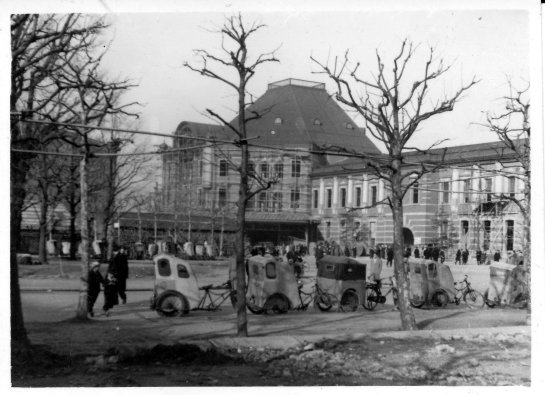
Even in 1948 – three years after war’s end – Tokyo still had tremendous scars as can be seen in one of my father’s photographs below:
The trees bear the scars of the firebombing. Tokyo Station is in the background being rebuilt with the aid of the US military. Notice the “jinrikisha” lined up in front; they were the equivalent of taxis today and were pulled or pedaled by Japanese men to make a living. Cars will not be available for about ten more years. Taken by my father in March 1948 while serving in the US 8th Army under General Eichelberger.
______________________________
Soon after the bomb was dropped, the hostilities finally ended. However, food and essential goods continued to be largely absent. Amazingly, my cousins who went through that hell choose to reflect on these post-war years positively. That is, reflecting on it as a miserable time will but cause a wound to fester. They had seen enough of festering wounds.
But let us step back a year in Aunt Michie’s life.
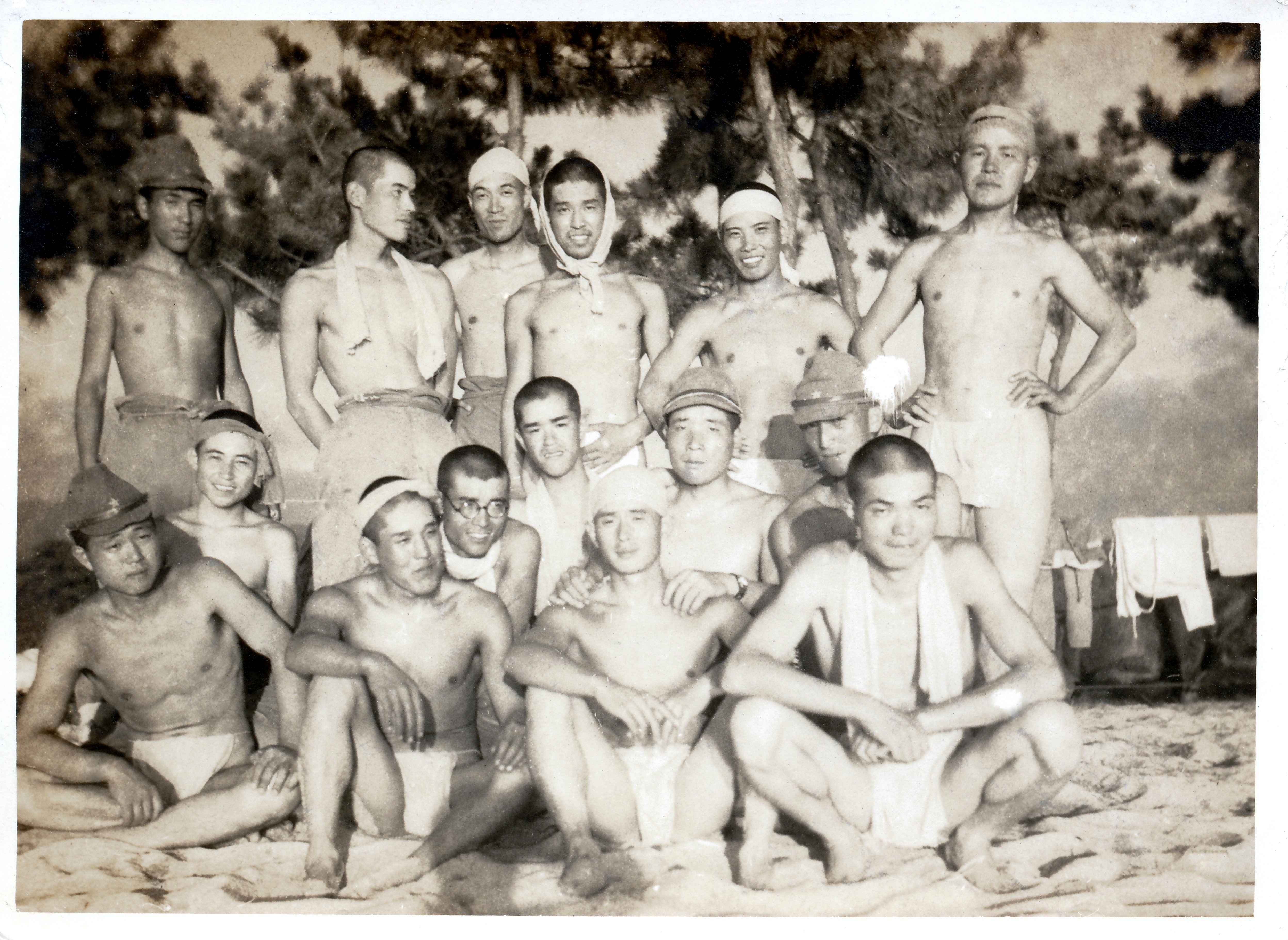
Uncle Suetaro is pictured at the bottom left with his Army buddies. You can see how lean they are due to insufficient nutrition. August 11. 1943.
One month before the surrender, Grandmother Kono was informed by the remnants of the Japanese military that her son Suetaro was killed on Leyte fighting as an Imperial Japanese soldier. The date of death was recorded as July 15, 1945. The Emperor capitulated just one month later. Of course, we have no record of that communication nor when Grandmother Kono was actually told, but the bomb was dropped just around this time, we believe.
A little more than a year earlier, around March 3, 1944, Suetaro walked to Tomo and Masako’s school. He wrote a farewell note on a chalkboard at Masako’s elementary school to say good bye as he was off to war. Masako remembers he had written to be a good girl and that he was sorry he couldn’t say good bye in person. The family took their last family picture with Suetaro (Part 2); he was flanked by his older sister Michie and Mikizo.
We believe the next day, Aunt Michie went to the train depot to say good bye to Suetaro. She was very fond of him and “his American citizenship”. Everyone loved the fun Suetaro and she apparently talked of him often after his death. But at that farewell, deep down, she knew it would be the last time she would see him. I wonder how she felt watching the train disappear.
This photo was in Grandmother Kono’s photo album. Flag waving school girls stand on the right. After talking about it with Kiyoshi, we believe this was the send-off Aunt Michie went to – to see her brother Suetaro go off to war and certain death. Kiyoshi indicates that a professional photographer took these types of photos at the train station and that the pictures would be offered for sale. 1943.
Soldiers rarely came back. Per tradition, he had left Grandma Kono some of his nail clippings and some of his hair. That is what is in the family crypt.
For hundreds of thousands, entire bodies would never be found. This was true for America, England, Australia, Russia or Germany.
But at least part of him remains there in Hiroshima.
The cousins tell me Aunt Michie grieved for days after his departure… and that she was torn apart when she learned of his death.
The bomb would fall just days later.
______________________________
According to the family, even shortly after the bedlam caused by the bomb, Aunt Michie continued to care for her stricken mother by walking to her house five miles away when she could. My dad said the road was “pretty” level but that since it is Japan, there were hills along the way, especially near Ishiuchi, a small village.
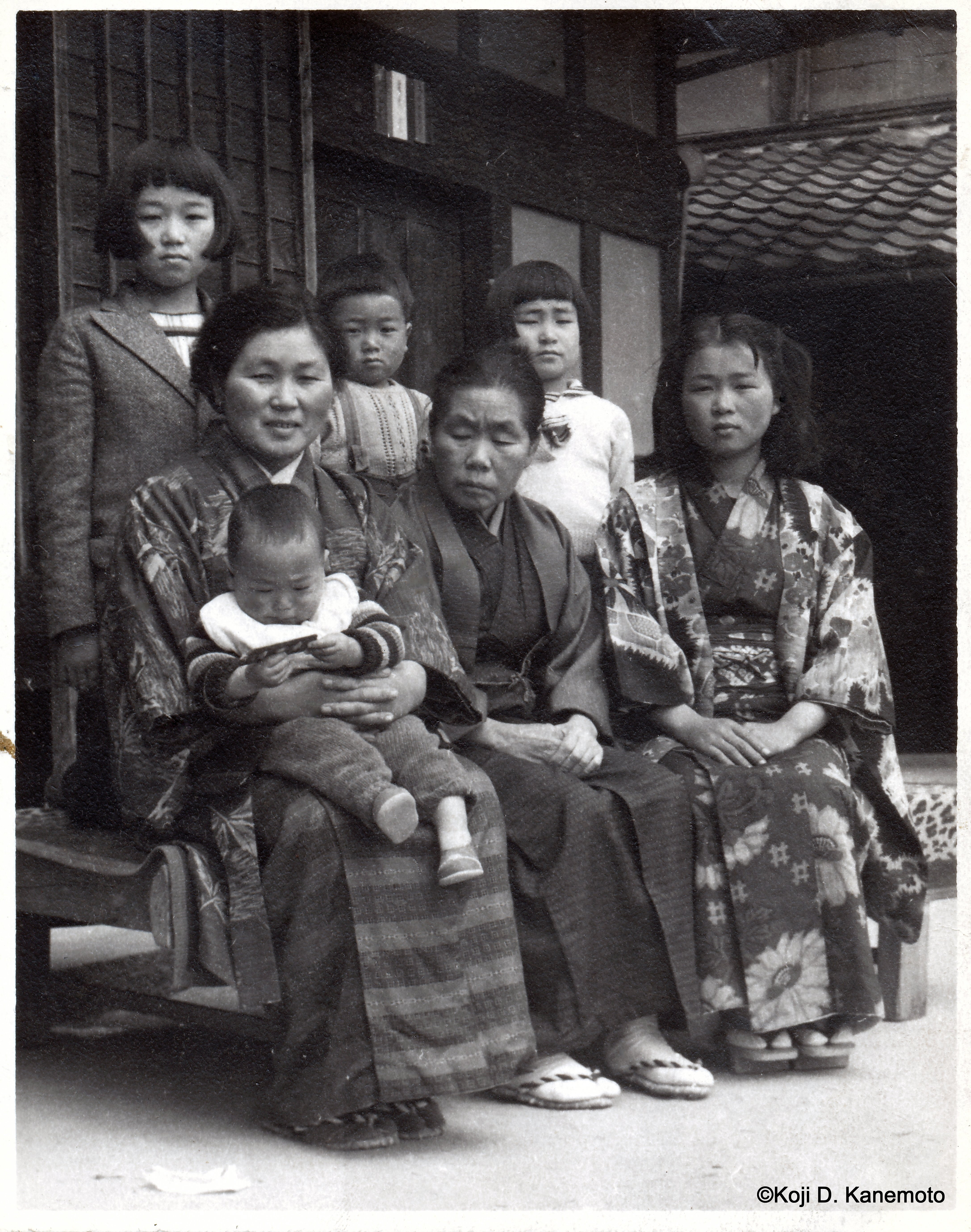
Taken by my father in April 1948 in front of the Hiroshima family home. Holding the baby Kiyoshi, who was born in the home, is Aunt Michie then clockwise – Sadako (who savored the white rice), Masataka, Namie (who pulled maggots out with chopsticks), Masako (who was thrown across her classroom by the shockwave, and Grandmother Kono (who did shaves at her Seattle barbershop).
In December 1947, Aunt Michie started to have contractions while walking over such a hill. She was able to make it to Grandmother Kono’s house where she gave birth to Kiyoshi, right then and there. No, no doctor…no nurse… and Grandmother Kono could not help due to her stroke. It is said she was very happy that the birth took place at her childhood home. She grew up there along with her American siblings. She had felt safe.
___________________________
My cousins believe their mother, Aunt Michie, gave all of herself for her children and her family. In spite of malnourishment, she toiled in her farm’s fields, cared for Grandmother Kono, gave her all in the bomb’s aftermath, set the example for her children. She put everyone before her.
But soon after giving birth to Kiyoshi, she developed kidney problems.
They tell me that medical care then was still pretty non-existent so she had no choice but to ride it out. However, she pushed herself back into working the farm too soon to care for her children, her own stricken mother and other household duties. That was Aunt Michie.
Cousin Kiyoshi remembers massaging his mother’s swollen legs after a day’s work. He also fondly remembers perspiring trying to keep up with Aunt Michie on a hot, humid summer day as they walked up a hill overgrown with thick, green wild grass. There was a “石じぞう”, or a stone figure representing Buddha, alongside a ridge overlooking a blue Hiroshima Bay. Kiyoshi will always remember that moment, looking at his mother with perspiration running down her face and the blueness of the bay.
In retrospect, they feel that if Michie had taken some time to rest and more often that she may have regained her health.
On May 29, 1963, she was laying in the same farmhouse in which she nursed the 23 injured people that fateful day. Her kidneys were giving out. She opened her eyes one last time and looked lovingly at each of her children who were gathered about her then closed them. Thirty years after her father gave away her hand in marriage at 19, after 30 years of a life heaped with physical and emotional demands one after another, world changing events and family tragedies… After enduring the pain of survival, Aunt Michie left this world. She was but 48.
In September 2012, I visited Aunt Michie for the first time. Masako is flanked by her daughter Izumi and my son Takeshi. Similar to the hot summer morning when she was knocked down by the shockwave, it was hot and humid that day. Now, I feel it was appropriate.
Aunt Michie conquered all and gave her life to others so they could get to tomorrow… and she did that with dignity and unconditional love for her children.




















 Masako and Spam Musubi